
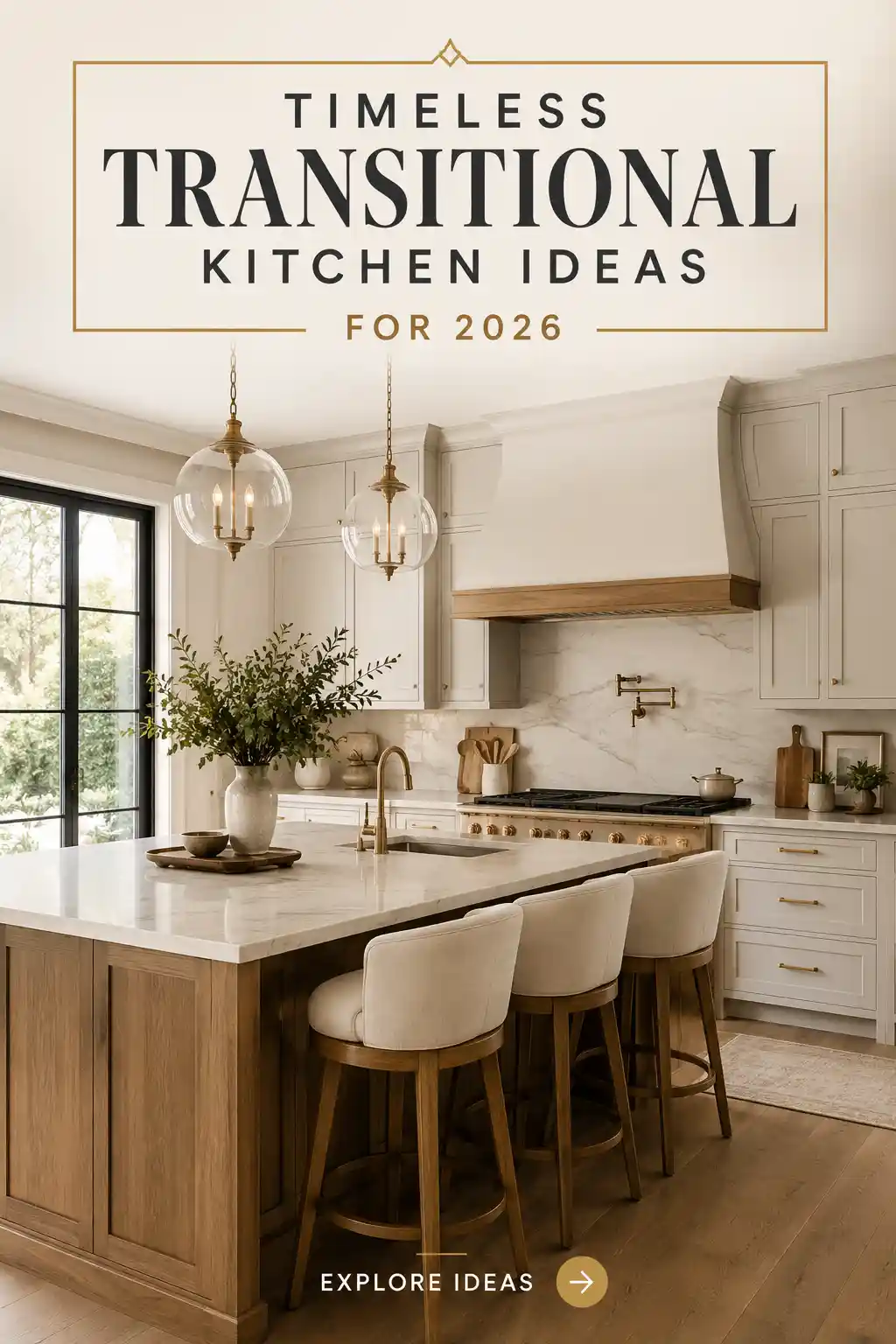
Finding the perfect balance between the cozy charm of traditional design and the sleek efficiency of modern aesthetics is the hallmark of the transitional kitchen. As we look toward 2026, the trend is shifting toward ‘longevity design’—creating spaces that feel current today but won’t feel dated in a decade. By blending clean lines with warm textures and mixing heritage details with contemporary finishes, you can create a culinary sanctuary that is as functional as it is beautiful. Explore these curated ideas to refine your home’s heart.
High-Contrast Grounding with Dual-Tone Cabinetry

Creating a visual anchor in the kitchen is often achieved through high-contrast cabinetry. By pairing bright, airy white upper cabinets with a darker, moodier island in charcoal or navy, you create a sophisticated balance that feels both modern and grounded. This approach prevents a white kitchen from feeling too sterile while avoiding the heaviness of an all-dark room. To keep the look transitional, incorporate warm metal accents like brushed gold or champagne bronze, which bridge the gap between the stark contrast and the overall warmth of the home.
The Quiet Confidence of Tailored Panel Work

True longevity in kitchen design often comes from restraint. Tailored cabinetry with subtle recessed panels provides a structural elegance that transcends temporary trends. Instead of overly ornate carvings or completely flat modern slabs, this middle-ground approach offers a clean architectural feel. By choosing a muted neutral palette like greige or mushroom, the focus shifts to the quality of the craftsmanship and the precision of the lines. This style is perfect for homeowners who want a space that feels polished and expensive without being ostentatious or overly formal.
Dramatic Natural Stone Focal Points

In 2026, the kitchen backsplash is evolving from a mere protector of the walls into a primary piece of art. Utilizing dramatic, book-matched natural stone—such as marble, quartzite, or soapstone—creates an immediate sense of luxury. When the stone is paired with simpler, more understated cabinetry, it becomes the hero of the room without overwhelming the space. The key to keeping this look transitional is to maintain a balance of textures; pairing a highly polished stone surface with matte cabinetry ensures the room feels layered and intentional.
Warm Oak Accents and Creamy Neutrals

To move away from the coldness of all-white interiors, designers are leaning into the warmth of natural wood and creamy palettes. Integrating white oak accents through open shelving, island bases, or ceiling beams adds an organic element that softens the clean lines of transitional design. When paired with cream or off-white cabinetry, the result is a space that feels like a gathering hub rather than just a utility room. This combination evokes a sense of timelessness and comfort, making the kitchen feel welcoming for slow mornings and long dinner conversations.
Architectural Symmetry for Visual Harmony

Symmetry is a core principle of traditional design, but when executed with modern materials, it becomes a powerful transitional tool. Centering the focal point—whether it is a professional-grade range hood, a large window, or a sculptural sink—and mirroring the elements on either side creates an immediate sense of order and calm. This balanced approach reduces visual clutter and gives the kitchen a curated, intentional feel. By keeping the color palette neutral, the architectural symmetry becomes the primary design statement, ensuring the space feels timeless and serene.
Curated Mixed Metal Finishes

The old rule of sticking to one metal finish is being replaced by a more curated, layered approach. Mixing metals—such as pairing a statement brass faucet with stainless steel appliances and matte black cabinet pulls—adds depth and personality to a transitional kitchen. This technique makes the space feel as though it evolved over time rather than being bought as a matching set from a showroom. To keep it cohesive, choose one dominant metal and use the others as accent pieces, ensuring the tones complement each other without clashing.
Airy, Light-Filled Open Concept Flow
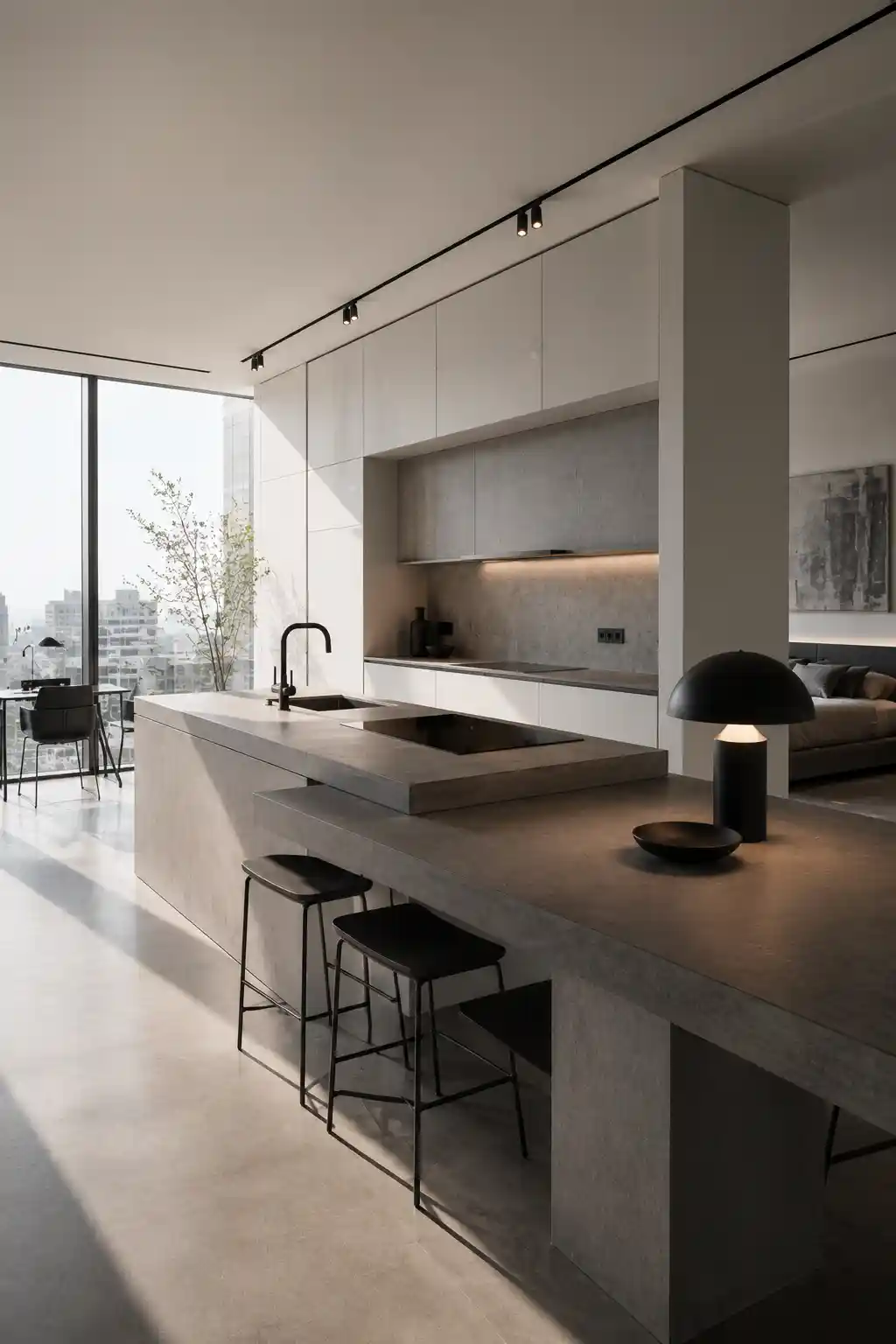
Maximizing natural light is essential for a kitchen that feels fresh and modern. By utilizing an open-concept layout and incorporating large windows or glass doors, you can blend the indoor cooking space with the outdoor environment. In a transitional design, this lightness is balanced by traditional elements like chunky crown molding or a classic farmhouse sink. The result is a bright, breathable atmosphere that enhances the mood of everyone in the room. Using light-reflective surfaces, such as polished quartz or satin-finish paint, further amplifies this airy feeling.
Sculptural Lighting as a Design Statement

Lighting is often the ‘jewelry’ of the kitchen, and in transitional spaces, it is the perfect place to introduce a modern edge. While the cabinetry and flooring may remain classic, oversized sculptural pendants or a contemporary linear chandelier can instantly modernize the room. Choosing fixtures with mixed materials—like hand-blown glass and brushed metal—adds a layer of sophistication. These pieces draw the eye upward and create a focal point that bridges the gap between the traditional bones of the house and a forward-thinking design aesthetic.
The Evolution of the Modern Shaker Cabinet

The Shaker cabinet is a staple of transitional design due to its versatility, but for 2026, we are seeing a shift toward slimmer profiles and more adventurous colors. Moving away from stark white toward muted tones like sage green, dusty blue, or soft terracotta allows the kitchen to feel personal and current while maintaining a classic silhouette. The simplicity of the Shaker style ensures that even with a bold color choice, the kitchen remains timeless. Pairing these cabinets with clean, modern hardware completes the balanced transitional look.
Integrating Seamless Appliance Panels
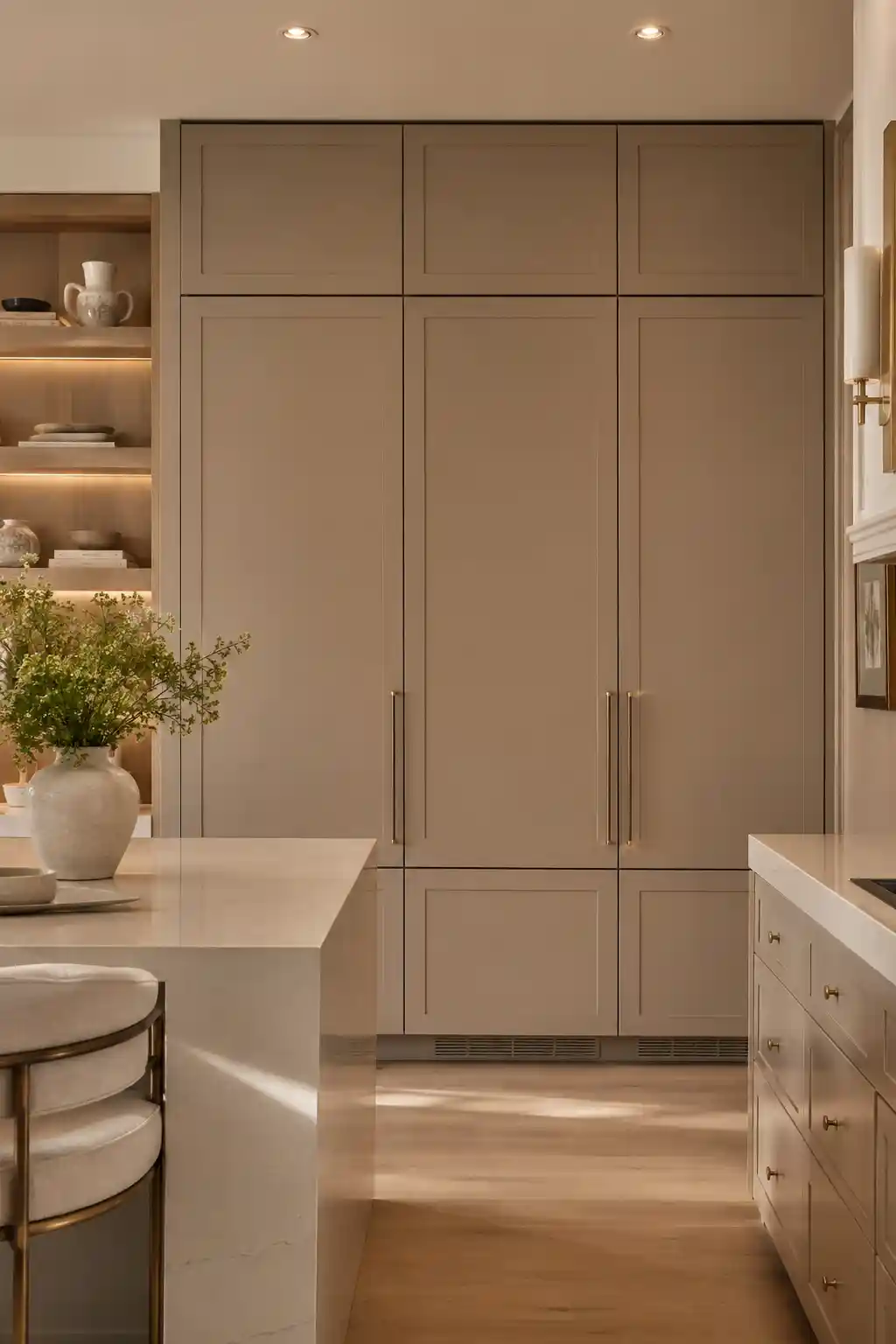
For a truly streamlined look, integrated appliances are a game-changer. By hiding the refrigerator and dishwasher behind custom cabinetry panels that match the rest of the kitchen, you remove the visual noise of stainless steel and create a continuous flow of color and texture. This allows the architectural details of the cabinetry to shine and gives the kitchen a more furniture-like appearance. This approach is ideal for those who love the efficiency of a modern kitchen but prefer the warm, cohesive aesthetic of a traditional home.
Layering Texture with Zellige and Handmade Tiles

Texture is what prevents a transitional kitchen from feeling flat. Instead of perfectly uniform tiles, introducing handmade options like Zellige or artisanal ceramics adds a layer of organic imperfection. The subtle variations in tone and the undulating surfaces of these tiles catch the light in a way that feels authentic and lived-in. When paired with the crisp lines of modern countertops and cabinetry, these textured elements provide the ‘soul’ of the design, ensuring the space feels handcrafted rather than mass-produced.
Warm Wood Tones and Painted Contrast

Combining natural wood grains with painted surfaces is a hallmark of the transitional style. A rich walnut or mahogany island provides a stunning contrast against soft, painted perimeter cabinets, bringing a sense of heritage and warmth to the room. This pairing works because it balances the ‘cool’ feeling of paint with the ‘warm’ feeling of nature. To keep the look modern, ensure the wood is finished in a matte or satin sheen rather than a high-gloss polish, allowing the natural beauty of the grain to take center stage.
The Sophistication of a Muted Color Palette
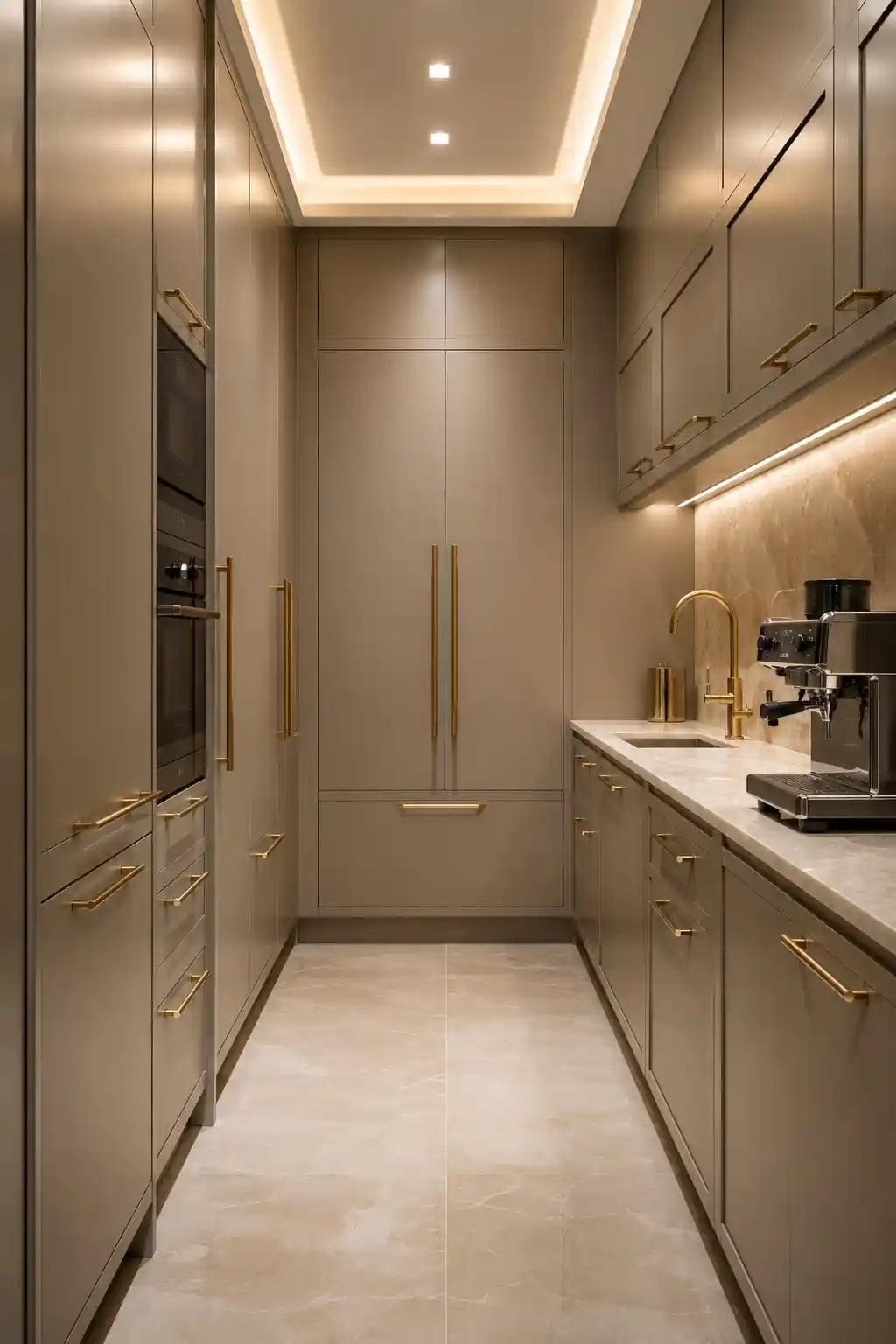
While high contrast is popular, a monochromatic, muted palette can create a space of unparalleled sophistication. By layering different shades of the same color family—such as mushroom, taupe, and cream—you create a subtle depth that feels calm and cohesive. This approach emphasizes form and light over color, resulting in a kitchen that feels expansive and serene. The key to success with a muted palette is to vary the textures; combine a matte cabinet finish with a polished stone top and a woven jute runner to keep the space from feeling one-dimensional.
Blending Vintage-Inspired Fixtures with Modern Flow
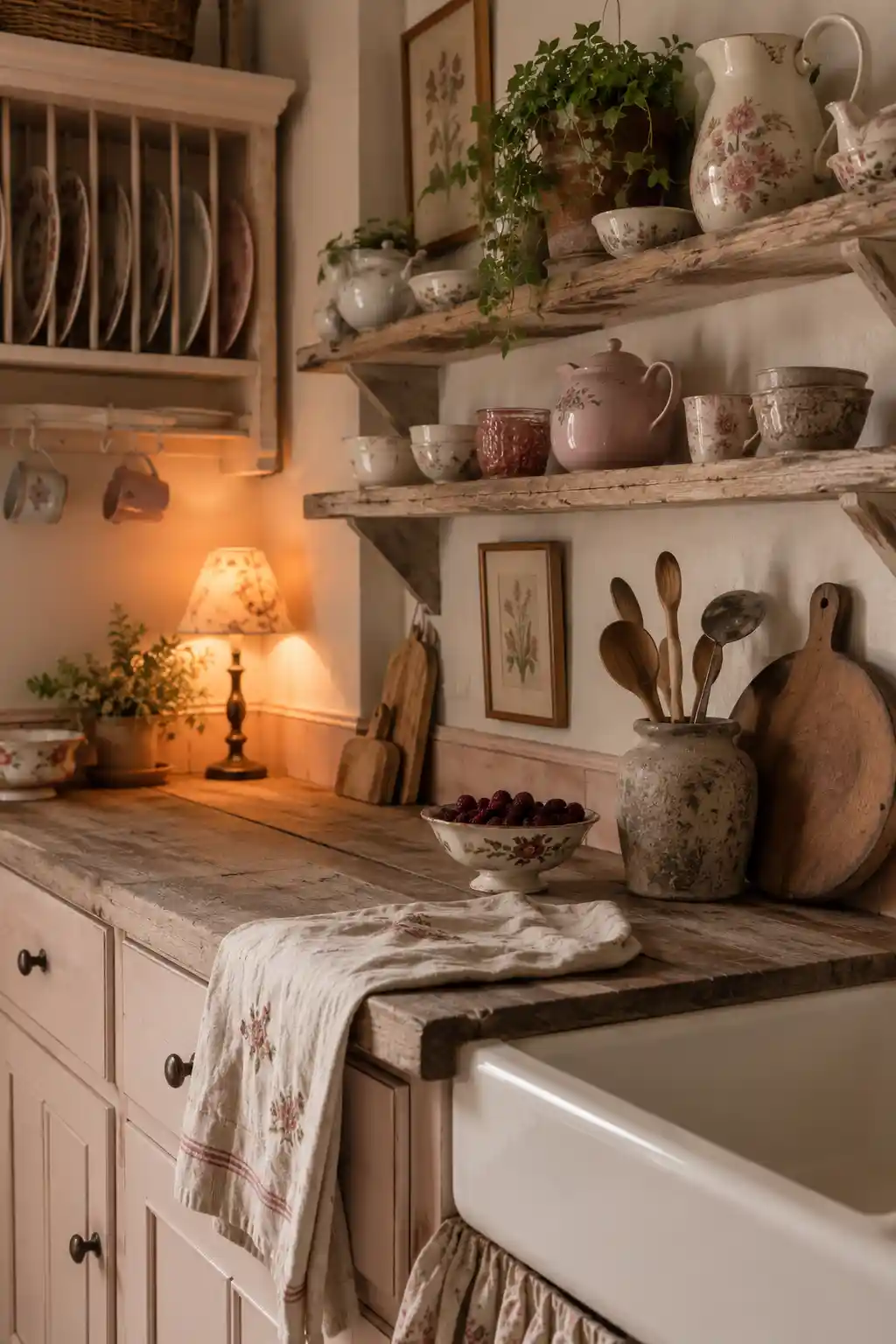
Adding a few ‘heritage’ pieces can give a new kitchen an instant sense of history. A deep apron-front farmhouse sink or a traditional bridge faucet brings a nostalgic, rustic charm that balances the efficiency of a modern layout. The secret is to keep these vintage-inspired elements few and far between; when they are surrounded by clean lines and contemporary lighting, they act as curated accents rather than making the room look dated. This blend of eras is exactly what defines the transitional aesthetic.
Quiet Luxury Through Premium Materiality
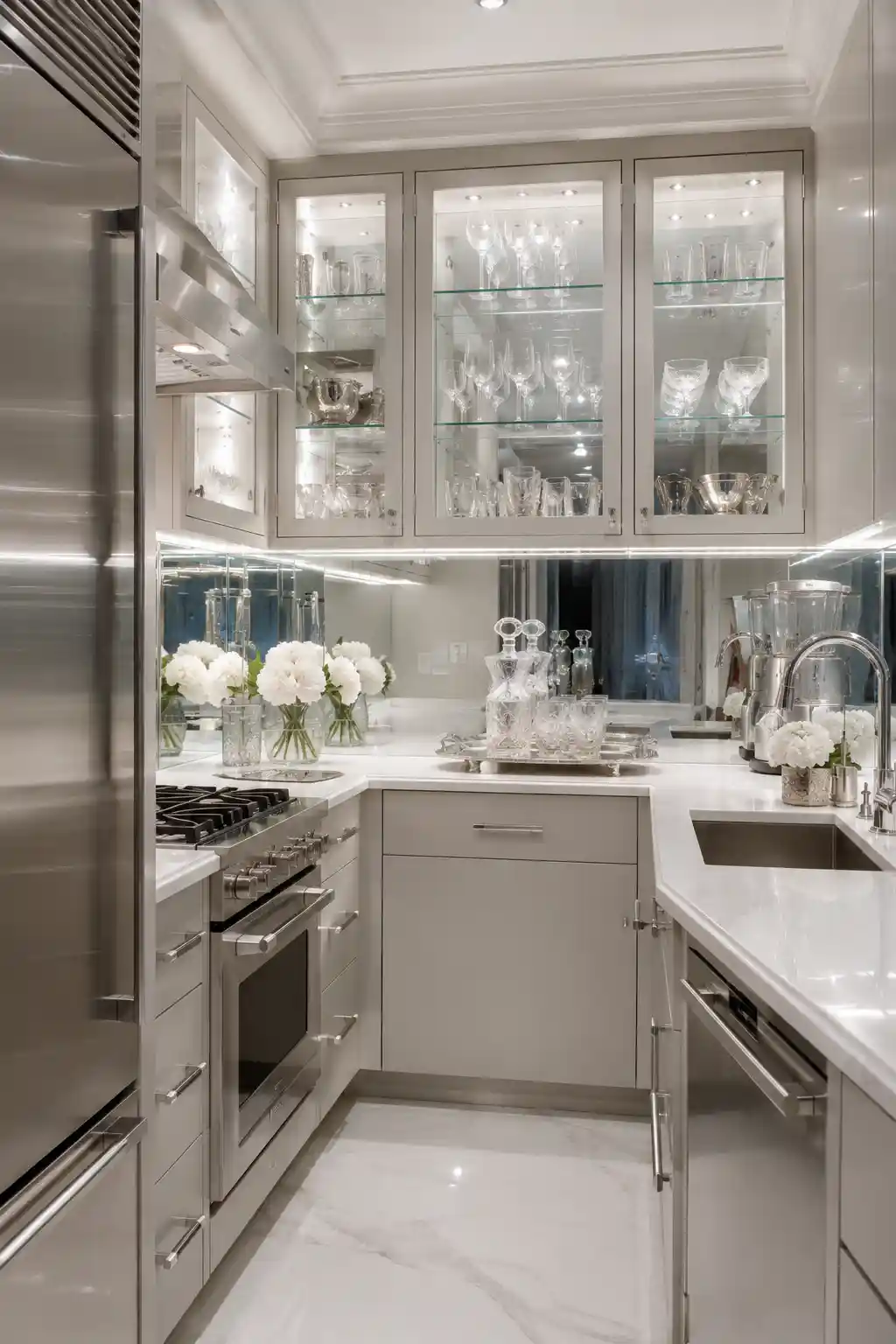
Quiet luxury in the kitchen is about prioritizing quality over quantity. Instead of adding excessive ornamentation, this design philosophy focuses on using the highest grade of materials—such as honed quartzite, solid brass, and sustainably sourced hardwoods. The luxury is felt in the weight of the hardware and the smoothness of the stone. By keeping the design simple and the colors neutral, the premium nature of the materials becomes the focal point, creating a space that feels timelessly elegant and effortlessly expensive.
Creating a Multi-Functional Gathering Hub

The transitional kitchen of 2026 is more than just a place to cook; it is the social heart of the home. Designing for longevity means creating a space that accommodates multiple activities, from meal prep to homework and cocktail hours. An oversized island with comfortable seating encourages guests to linger, while a thoughtful layout ensures the cook is never isolated. By combining professional-grade functionality with the warmth of a living room, the transitional kitchen becomes a versatile space that evolves with the needs of the family.