
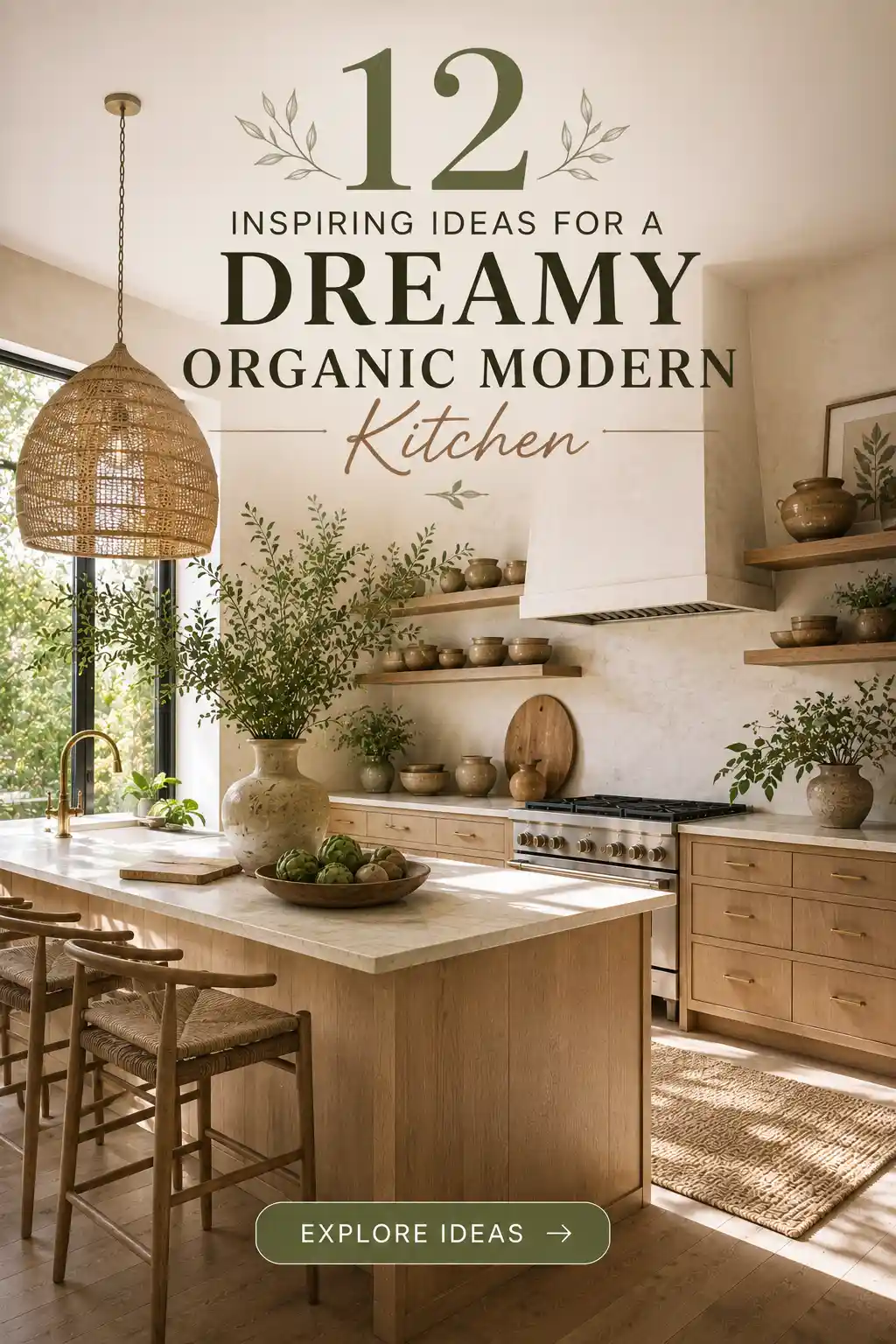
Creating an organic modern kitchen is all about finding the perfect equilibrium between the raw beauty of nature and the sleek precision of contemporary design. This aesthetic transforms the heart of the home into a serene sanctuary, utilizing a palette of earthy tones, sustainable materials, and mindful layouts to evoke a sense of calm and luxury. Whether you are planning a full-scale renovation or looking for small, impactful updates, integrating organic elements can breathe new life into your cooking space, making it feel grounded yet sophisticated. Discover how to blend tactile textures with minimalist forms to achieve a timeless look.
The Timeless Appeal of White Oak Cabinetry
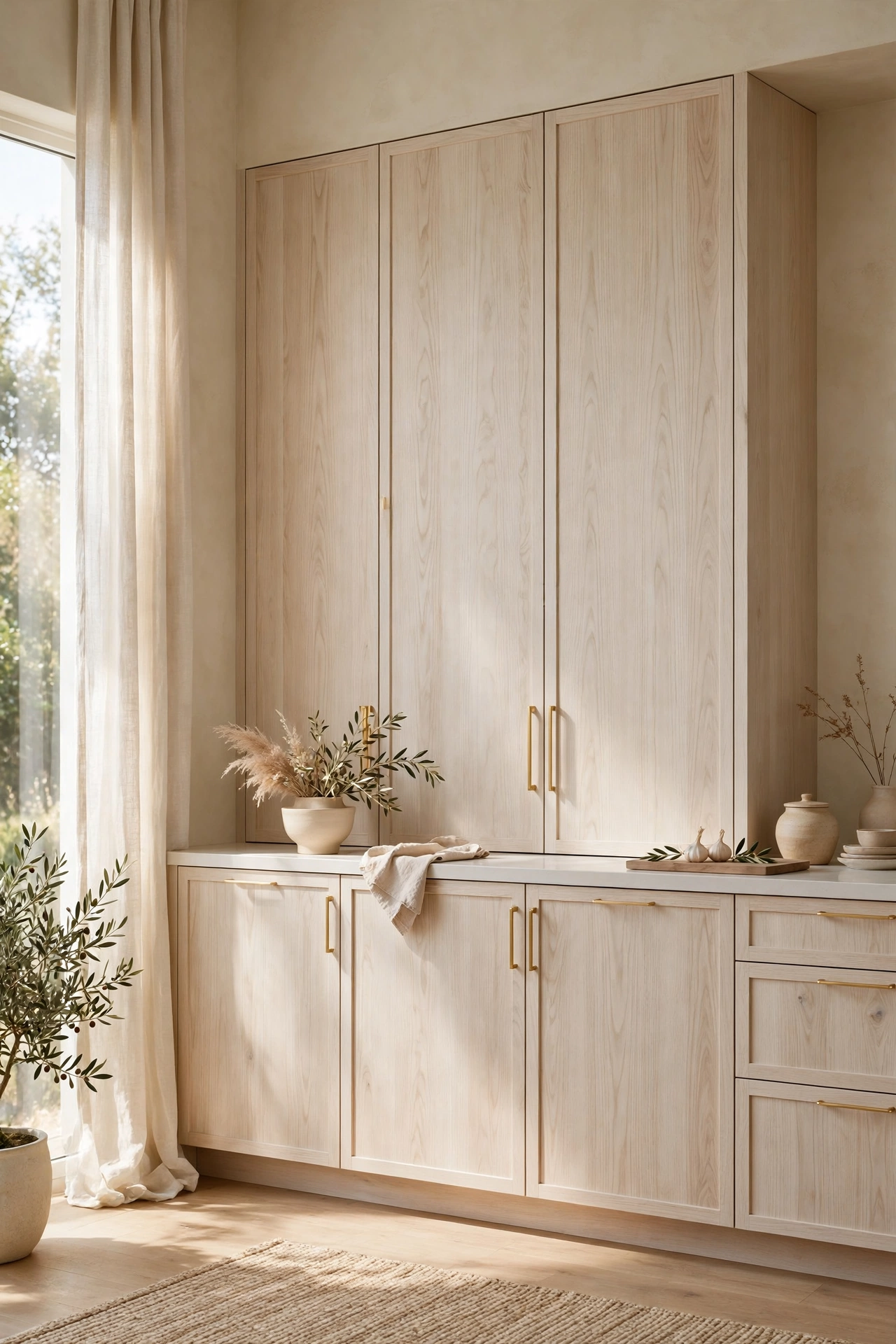
White oak is a cornerstone of the organic modern aesthetic, providing a light and airy foundation that prevents a kitchen from feeling too heavy or dark. Its soft, sandy tones and subtle grain patterns create a seamless transition between indoor and outdoor environments, making the space feel more connected to nature. To keep the look contemporary, opt for flat-panel or slim shaker-style doors that emphasize clean lines. When paired with neutral walls and light-colored stone, white oak adds a layer of warmth that makes the kitchen feel welcoming without sacrificing its high-end, minimalist appeal.
Adding Depth with Walnut Floating Shelves
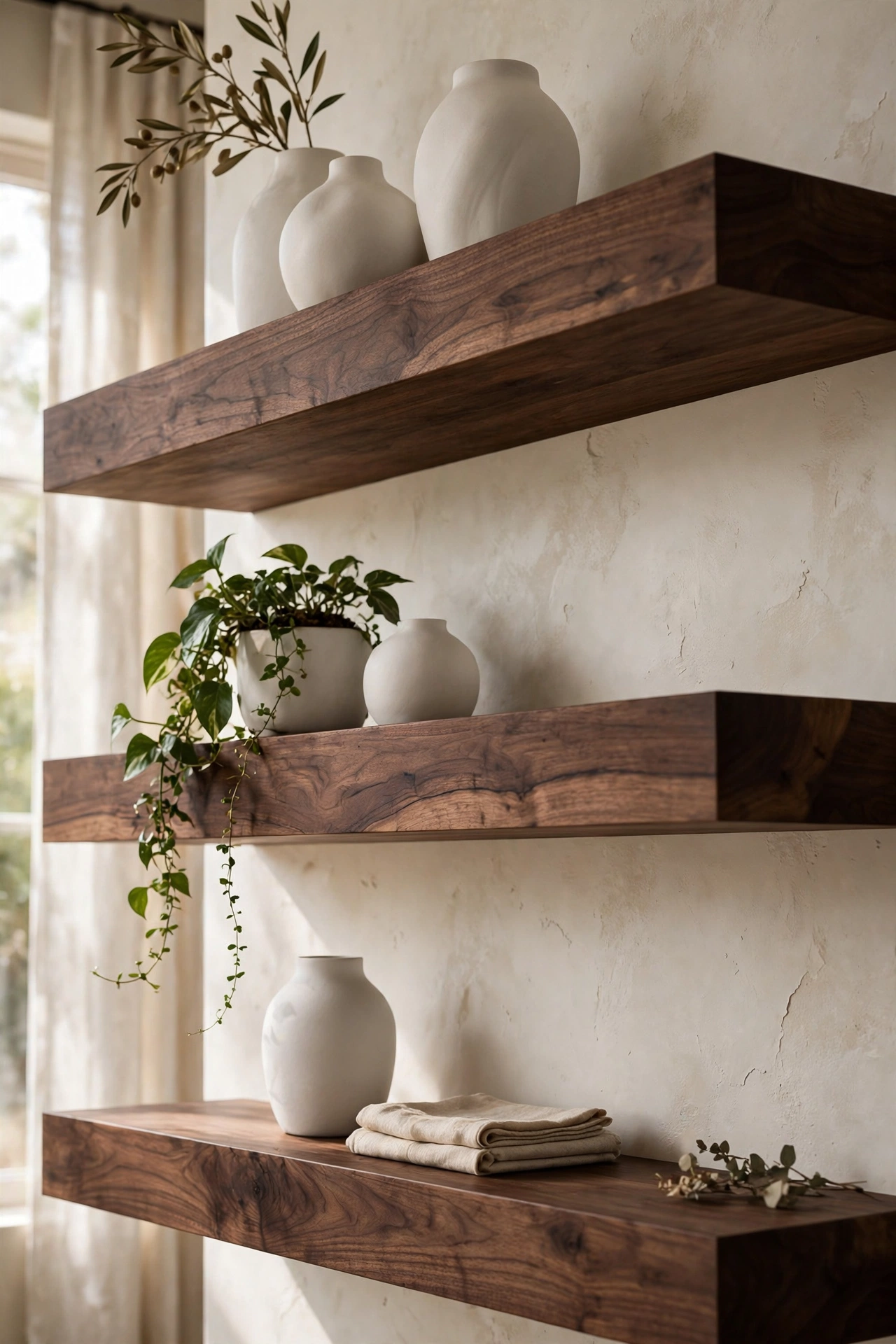
While light woods provide airiness, dark walnut introduces a necessary contrast that adds visual weight and sophistication to the room. Floating shelves are an excellent alternative to upper cabinetry, as they open up the sightlines and allow you to showcase curated ceramics, artisanal glassware, and organic cookbooks. The rich, deep tones of walnut ground the space, creating a focal point that feels both intentional and cozy. For a balanced look, ensure the shelves are styled minimally to maintain that clean, uncluttered organic modern vibe that prioritizes quality over quantity.
Tactile Luxury with Natural Stone Backsplashes
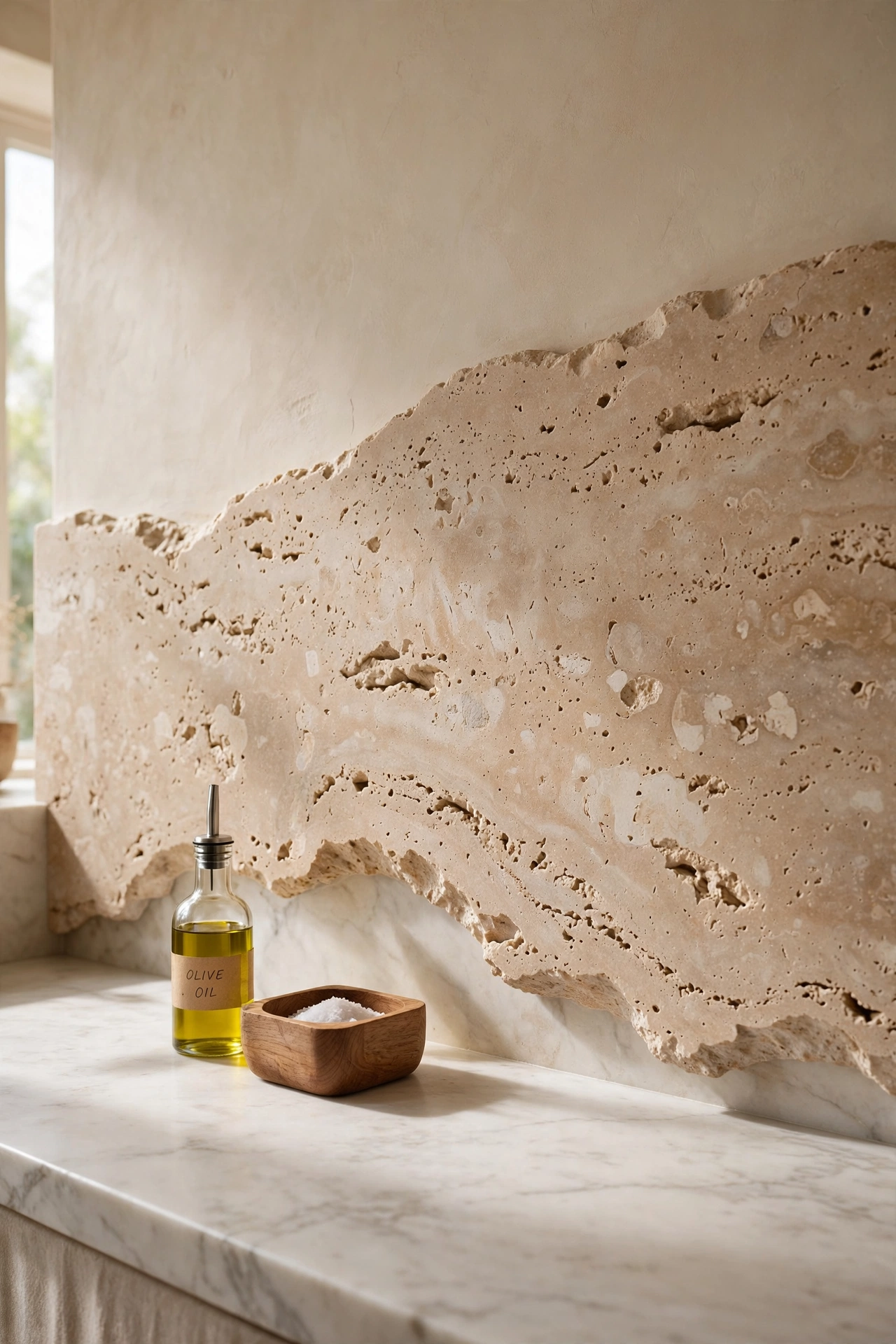
A backsplash is the perfect place to experiment with tactile materials that bring an earthy energy into the kitchen. Moving away from standard subway tiles and embracing natural stone like travertine, limestone, or unpolished marble can instantly elevate the organic feel of the space. The slight imperfections and natural veining of the stone provide a sense of authenticity and timelessness. To enhance the modern side of the design, keep the grout lines minimal or use a color that blends perfectly with the stone for a monolithic, high-end appearance that feels like a piece of art.
Serene Palettes Using Muted Earthy Tones
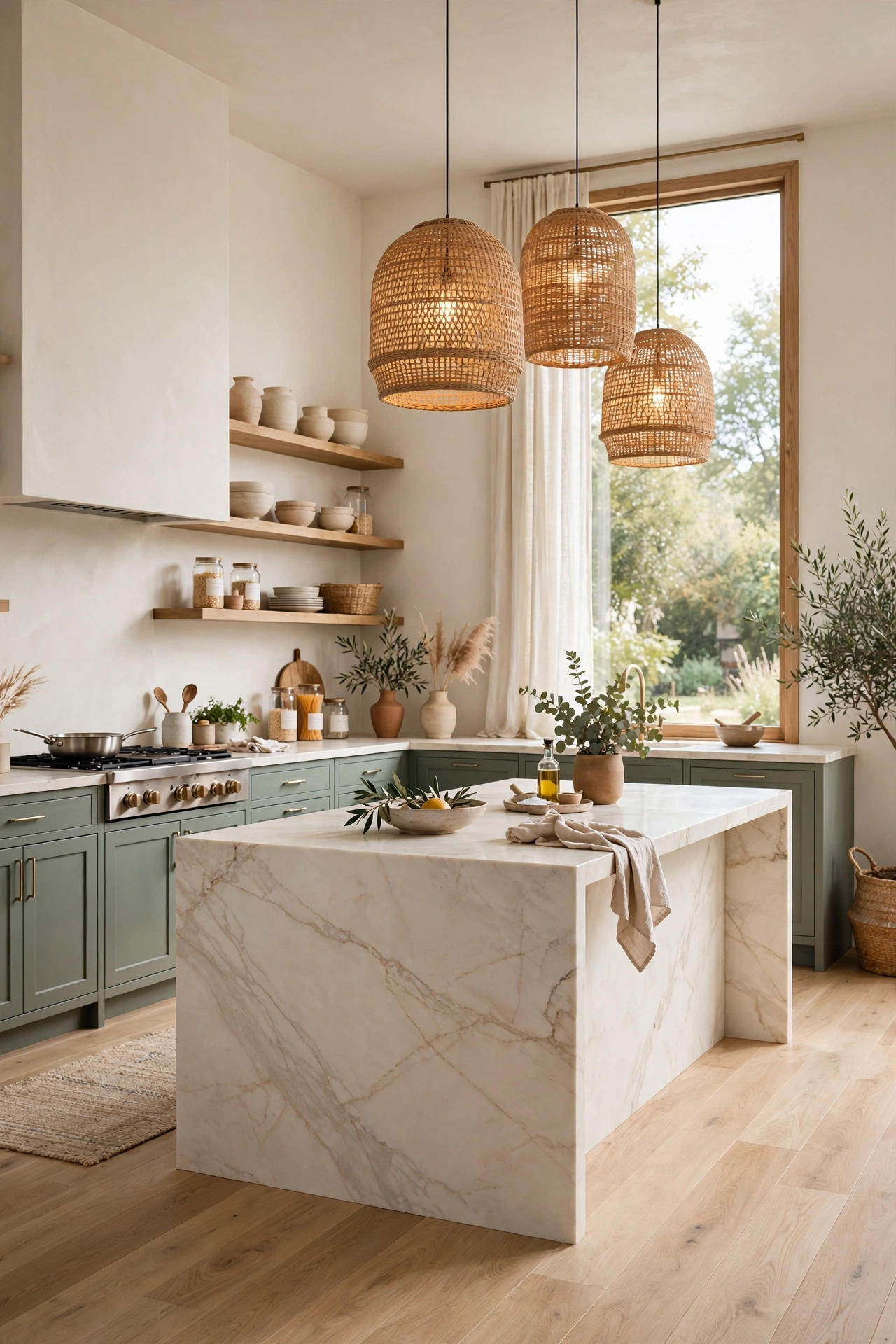
Color plays a pivotal role in establishing the mood of an organic modern kitchen. Instead of stark whites or bold primaries, lean toward muted earthy tones such as sage green, soft terracotta, sandy beige, or dusty blue. These colors mimic the natural world and have a psychological effect of reducing stress and promoting tranquility. By using these hues on the lower cabinetry or an accent wall, you can add personality to the room while keeping the overall atmosphere subdued and elegant. These tones pair beautifully with natural wood and stone, creating a cohesive and grounded environment.
The Art of Minimalist Layouts and Hidden Storage
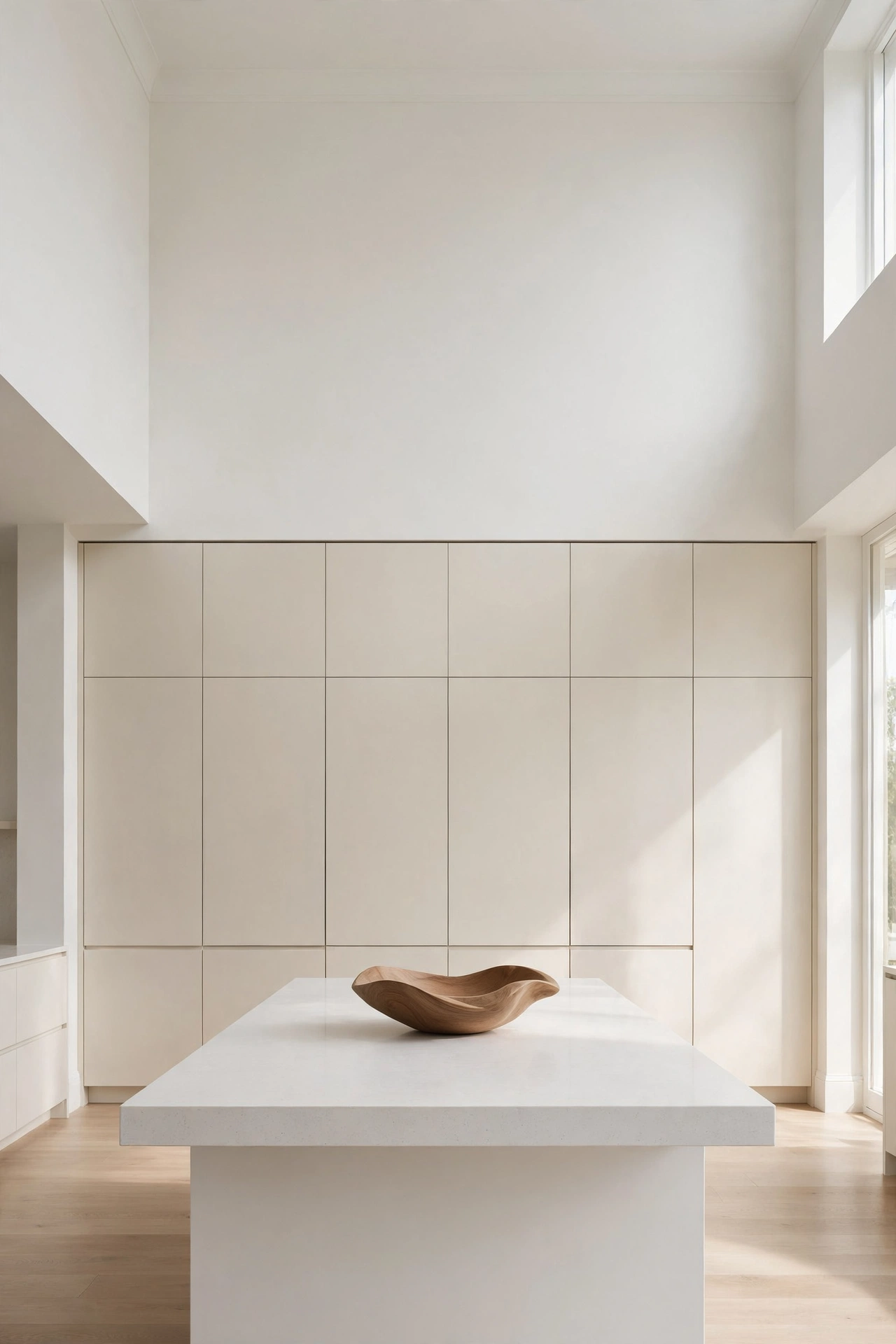
Minimalism in an organic kitchen isn’t about removing everything, but about ensuring that everything has a purpose and a place. Implementing hidden storage solutions, such as integrated appliances and pull-out pantries, allows the architectural beauty of the materials to shine without the distraction of countertop clutter. When the visual noise is reduced, the focus shifts to the textures of the wood and the quality of the light. A minimalist approach creates a sense of mental clarity and space, making the kitchen feel like a peaceful retreat rather than a chaotic workspace.
Blending Mixed Wood and Modern Metal Finishes
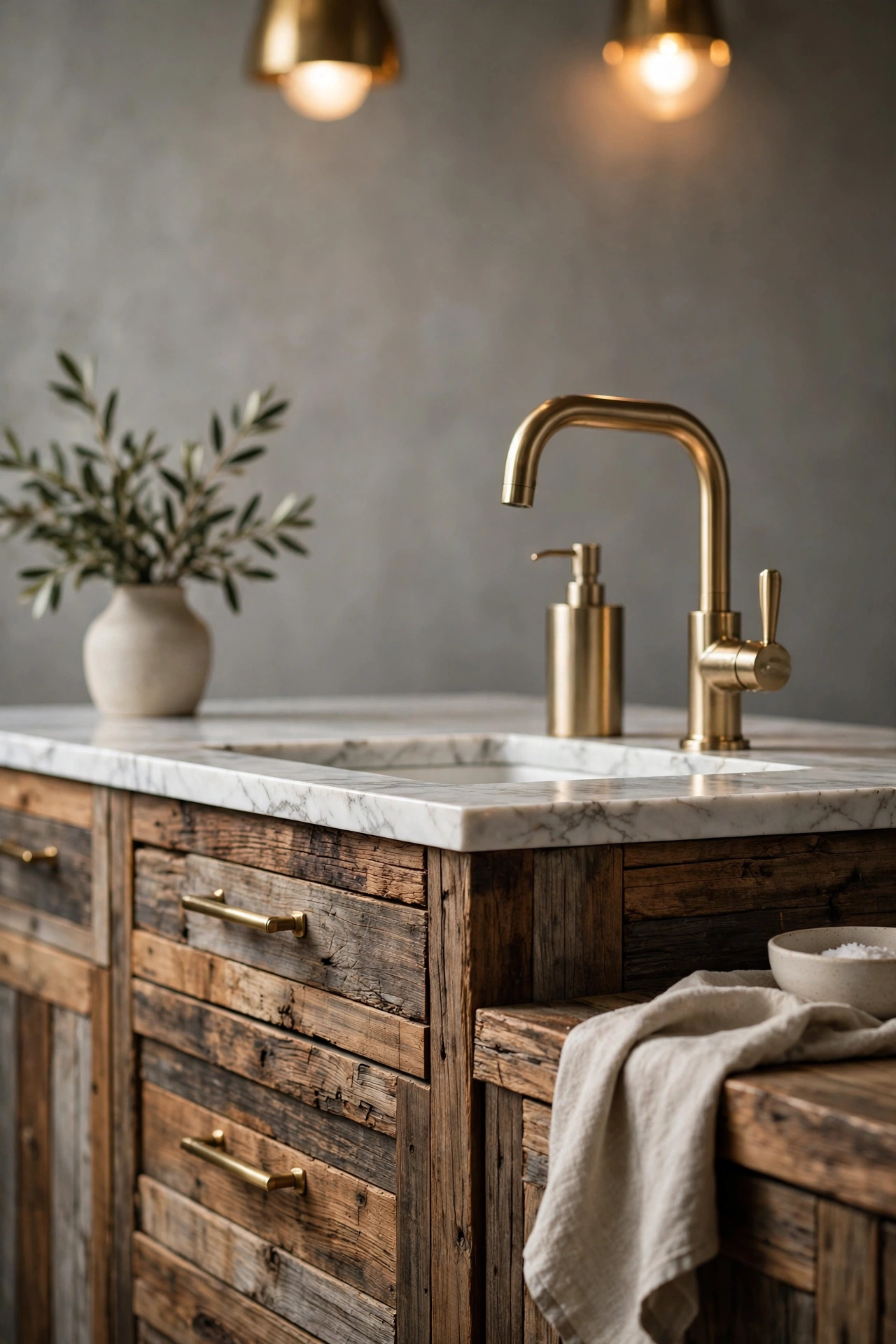
The tension between rustic wood and polished metal is what gives the organic modern style its edge. By pairing raw, reclaimed timber with sleek finishes like brushed brass, matte black, or polished nickel, you create a sophisticated contrast that feels curated. For example, a heavy wooden island topped with a thin, elegant metal edge or cabinets with minimalist brass pulls can bridge the gap between cozy and contemporary. This mixing of materials prevents the room from feeling too rustic or too clinical, resulting in a balanced, multi-dimensional design.
Maximizing Natural Light and Airy Volumes
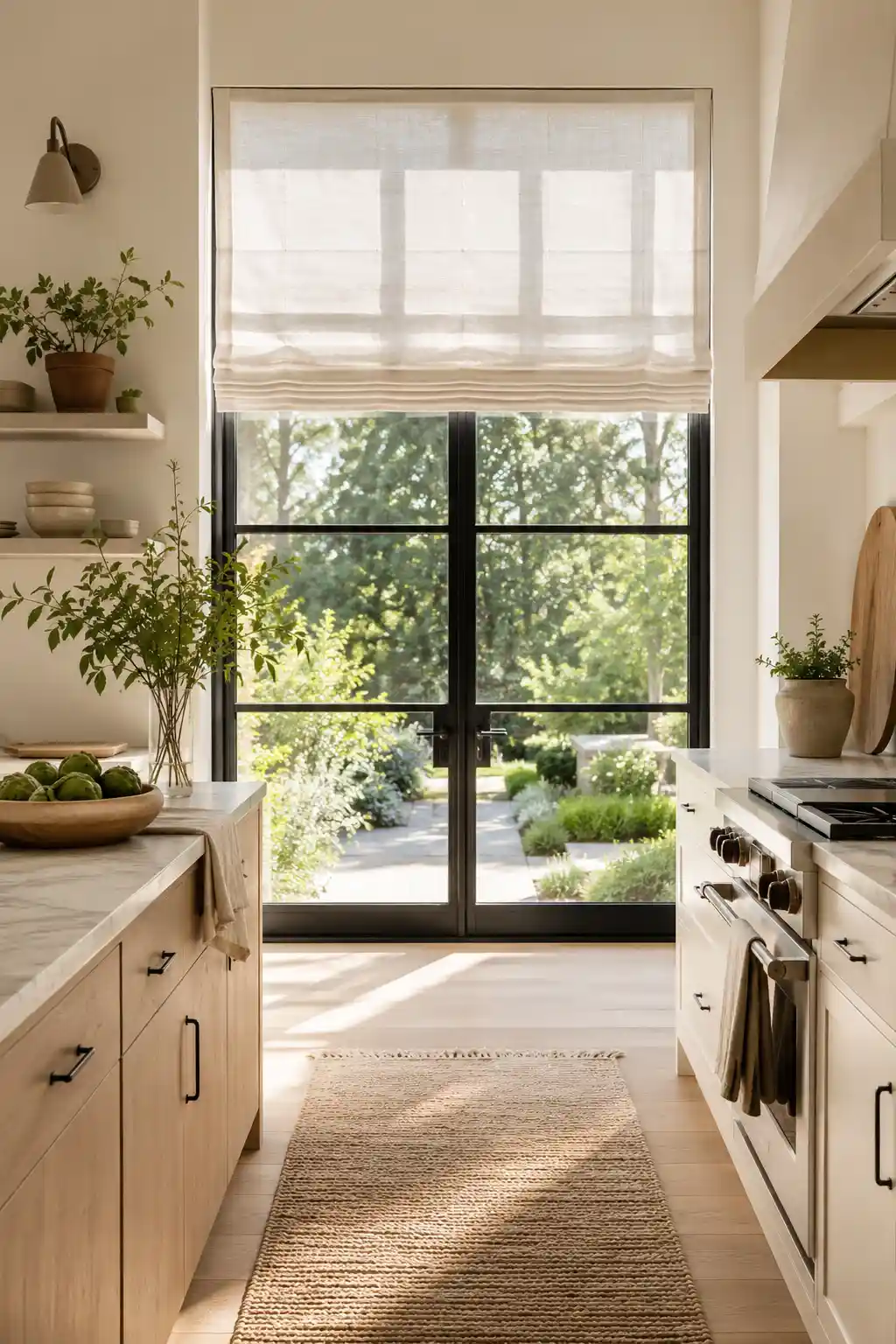
Natural light is perhaps the most important ‘material’ in any organic design. Large windows, skylights, or glass doors not only brighten the space but also blur the line between the interior and the surrounding landscape. When sunlight hits natural textures like wood grain or stone veining, it enhances their depth and beauty. To maximize this effect, use a light color palette for the walls and ceilings to reflect the light further into the room. The result is a kitchen that feels expansive, breathable, and full of life, shifting the mood throughout the day.
Sophisticated Use of Fluted Glass Cabinetry
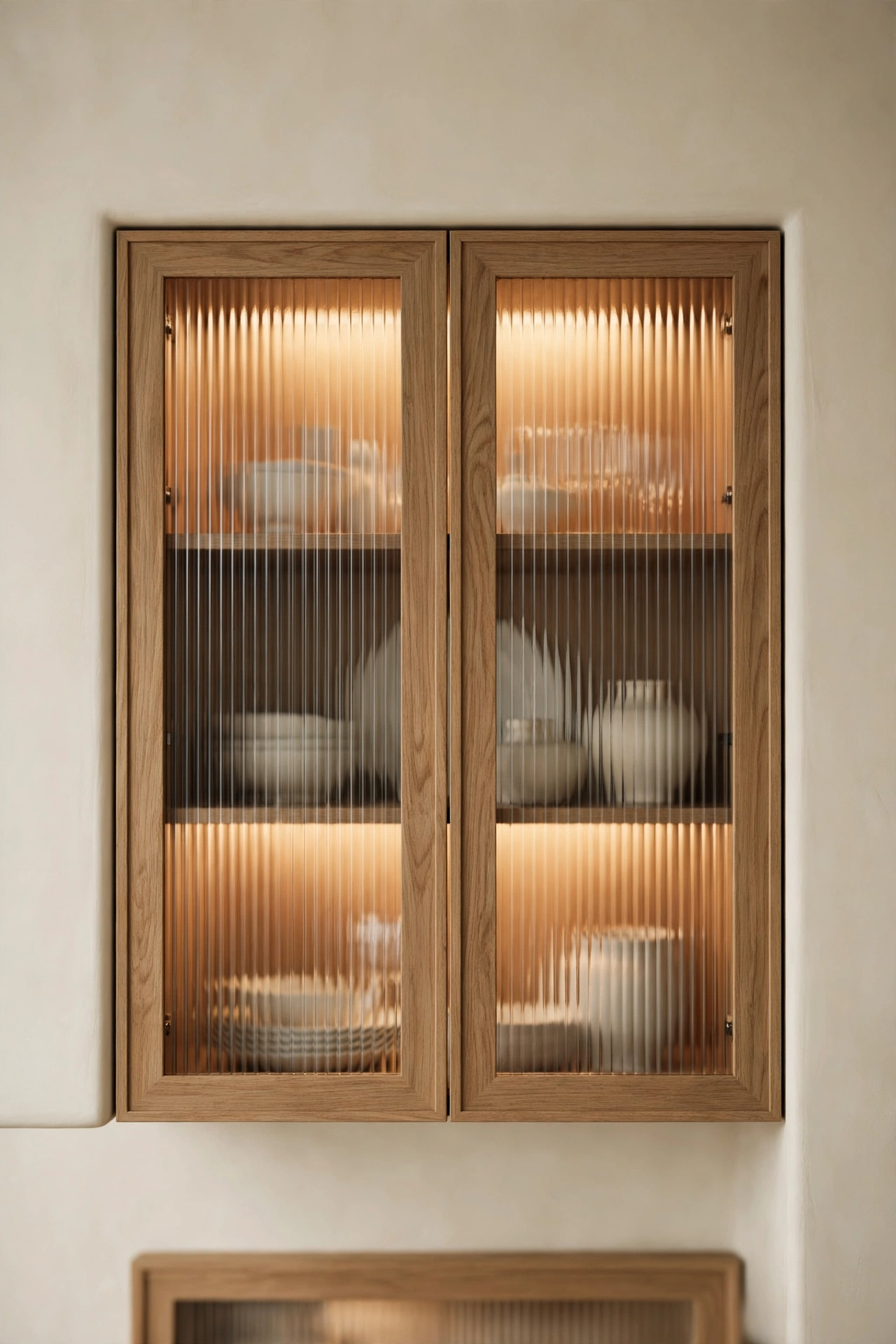
Glass cabinetry adds a layer of lightness and transparency to the kitchen, but fluted or reeded glass takes it a step further by adding texture and privacy. This design choice allows you to display your favorite dishware while obscuring any clutter, creating a soft, diffused visual effect. The vertical lines of the fluted glass echo the verticality of modern architecture and provide a subtle rhythmic element to the room. When paired with internal warm LED lighting, these cabinets become luminous features that add a touch of luxury and depth to the overall design.
Integrating Modern Farmhouse Elements
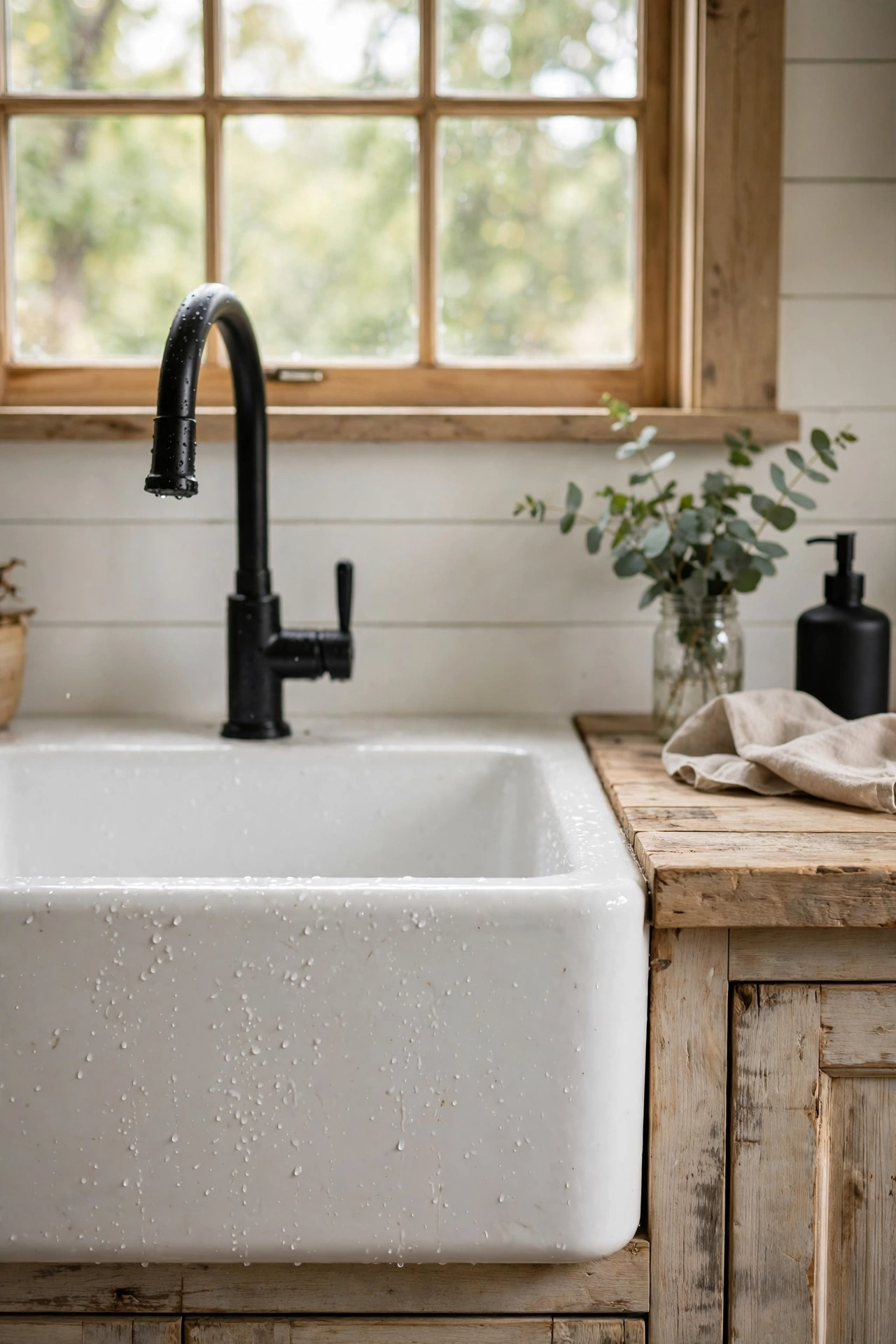
Bringing modern farmhouse elements into an organic modern kitchen adds a sense of nostalgia and comfort. A classic apron-front farmhouse sink is a functional statement piece that anchors the room in a tradition of home-cooked meals and gathering. To keep this from feeling too country, pair the sink with streamlined cabinetry and a neutral, monochromatic color scheme. Using reclaimed wood for the countertops or a few vintage-inspired accents, such as a woven rug or a ceramic crock, adds character and warmth, making the space feel lived-in and loved.
Designing Statement Islands with Mixed Materials
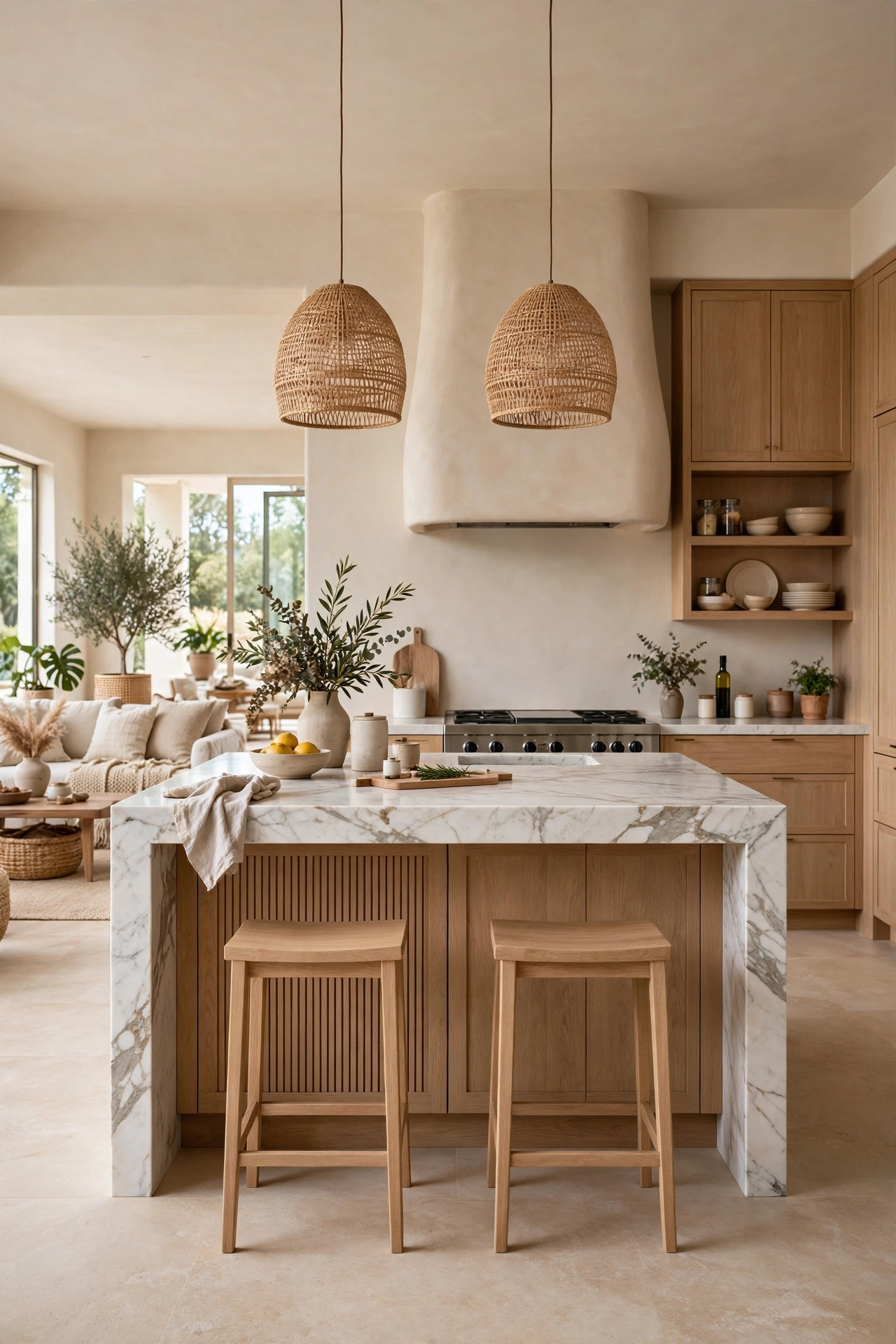
The kitchen island is often the centerpiece of the home, and in an organic modern design, it serves as the perfect opportunity to showcase mixed materials. A waterfall marble edge provides a sleek, continuous flow of stone that feels architectural and luxurious, while a wooden base adds the necessary organic warmth. This combination ensures the island is not just a utility surface, but a sculptural element within the room. By choosing a layout that allows for ample movement and seating, the island becomes a social hub that blends high-end aesthetics with everyday usability.
Adding Architectural Interest with Exposed Beams
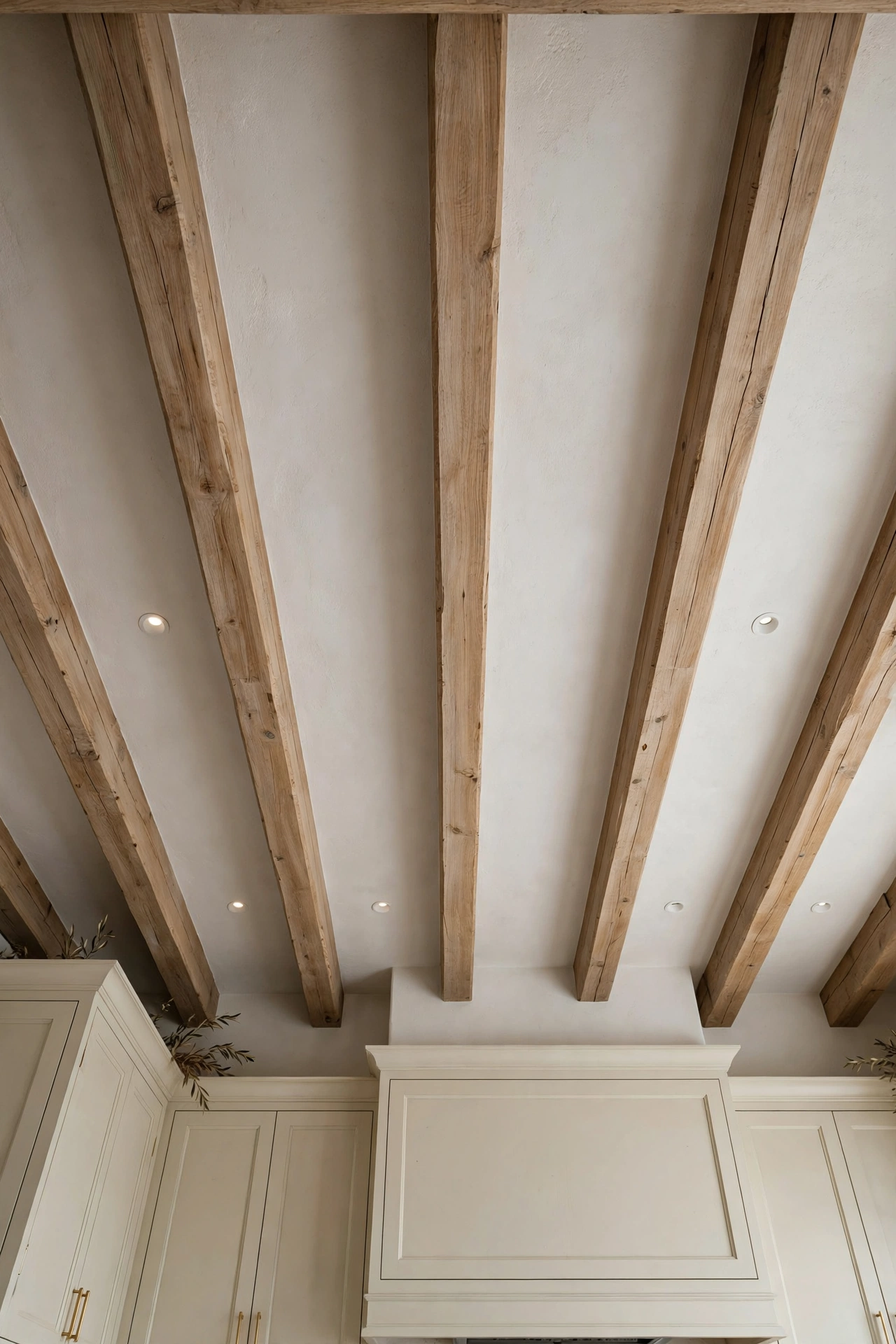
Exposed wooden beams draw the eye upward, adding architectural height and a sense of structural honesty to the kitchen. Whether they are original structural elements or decorative additions, beams bring a rustic charm that balances the clean lines of modern cabinetry. For a contemporary organic look, choose beams in a light-toned wood like ash or white oak to keep the ceiling feeling light and open. This design element introduces a rhythmic pattern to the overhead space, creating a cozy, sheltered feeling that reminds us of traditional craftsmanship and natural building materials.
Bringing Nature Indoors with Biophilic Design
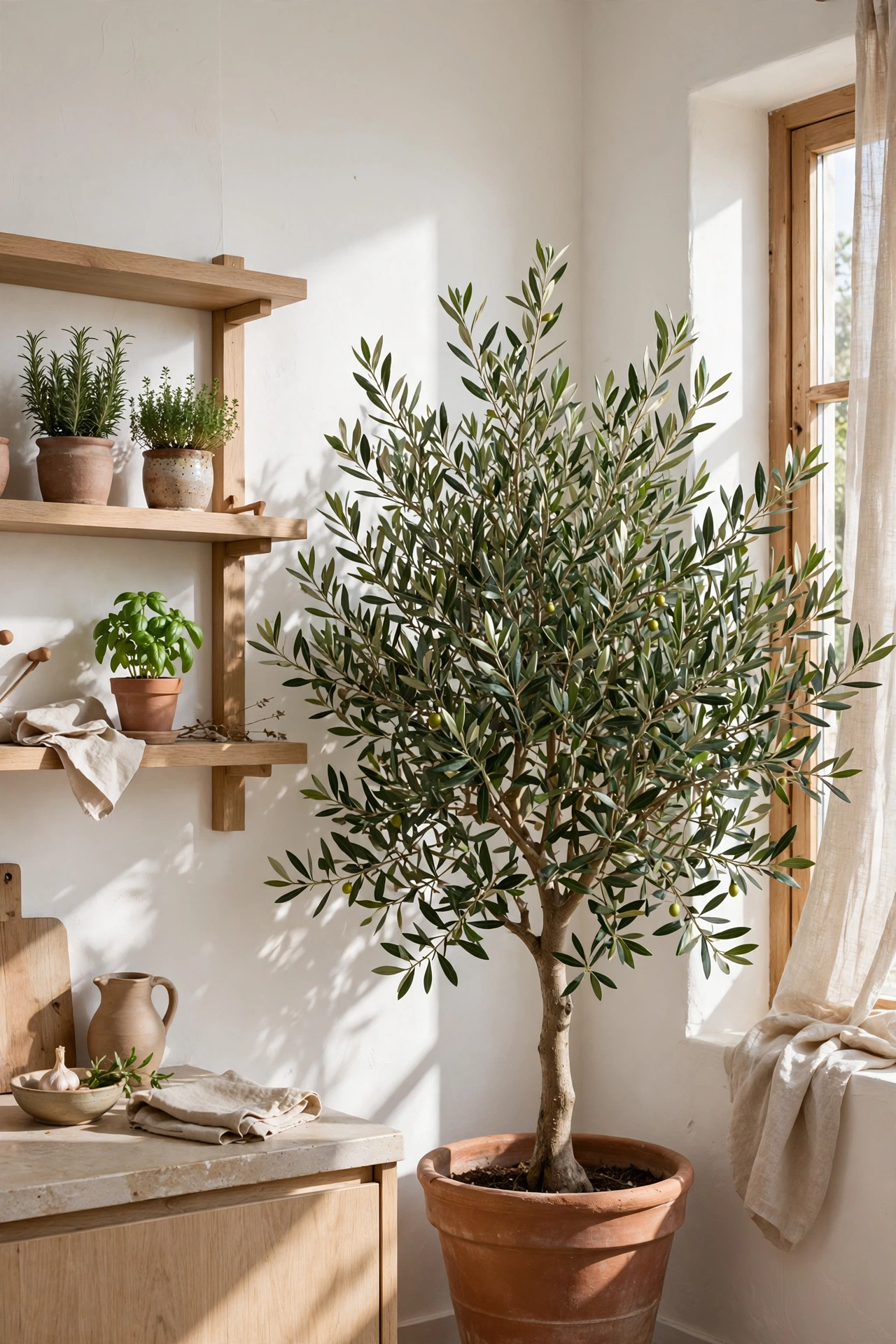
Biophilic design is the practice of integrating nature directly into our living spaces to improve well-being and air quality. In an organic modern kitchen, this can be as simple as a dedicated herb garden on a sunny windowsill or a large, sculptural olive tree in a terracotta pot in the corner. The vibrant green of living plants provides a stunning contrast to the neutral tones of wood and stone, injecting energy and freshness into the room. Beyond the visual appeal, the presence of greenery creates a calming environment that fosters a deeper connection to the natural world.