
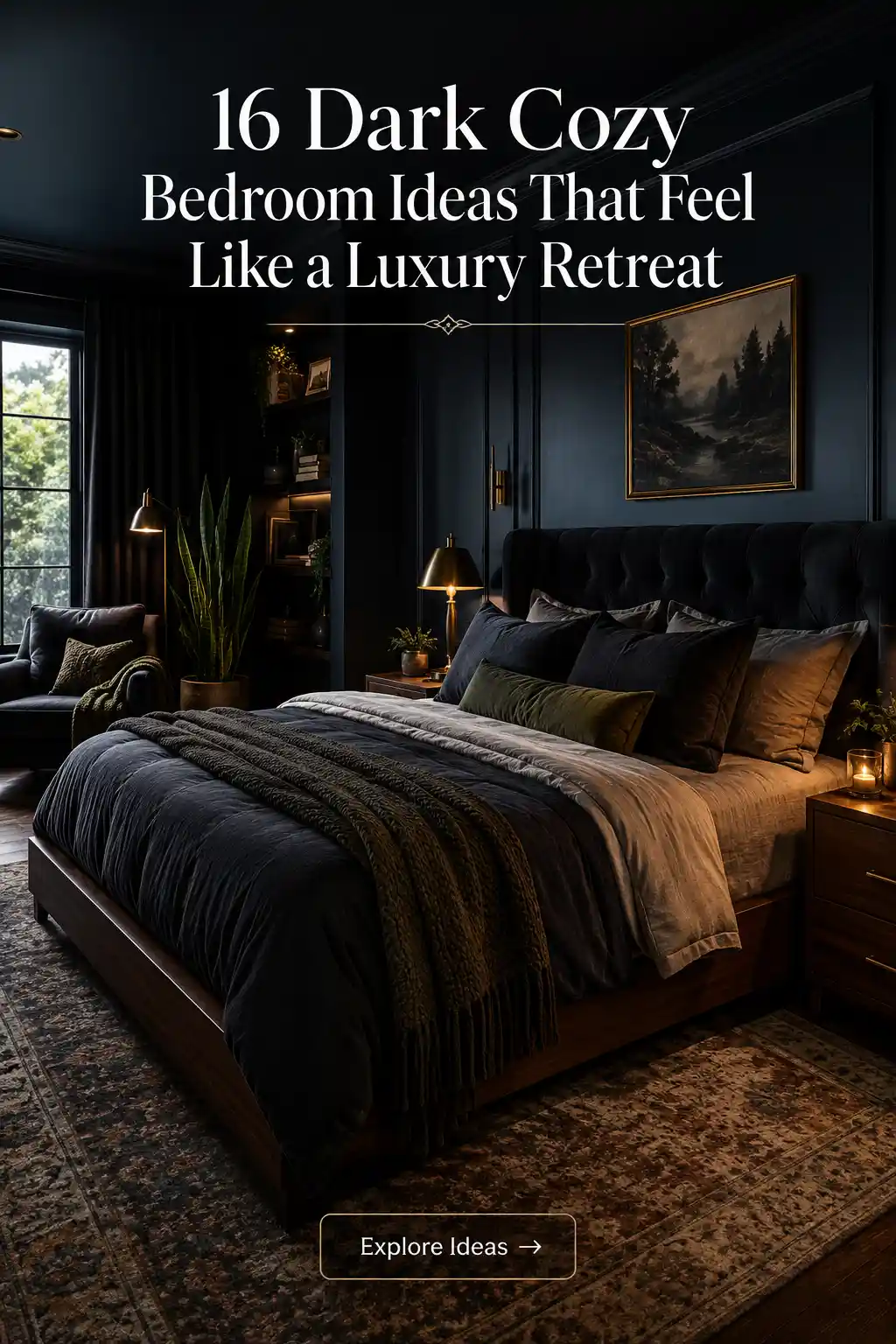
For too long, the design world has pushed the idea that bedrooms must be bright and white to feel open. However, there is a profound, enveloping comfort that only a moody palette can provide. Transitioning to a dark aesthetic isn’t about making a room feel smaller or gloomier; it is about creating a sophisticated cocoon that signals to your brain that it is time to disconnect. By focusing on the interplay between deep tones, rich textures, and strategic lighting, you can transform your sleeping space into an intimate retreat that feels both luxurious and protective.
The Enveloping Depth of Midnight Blue Walls
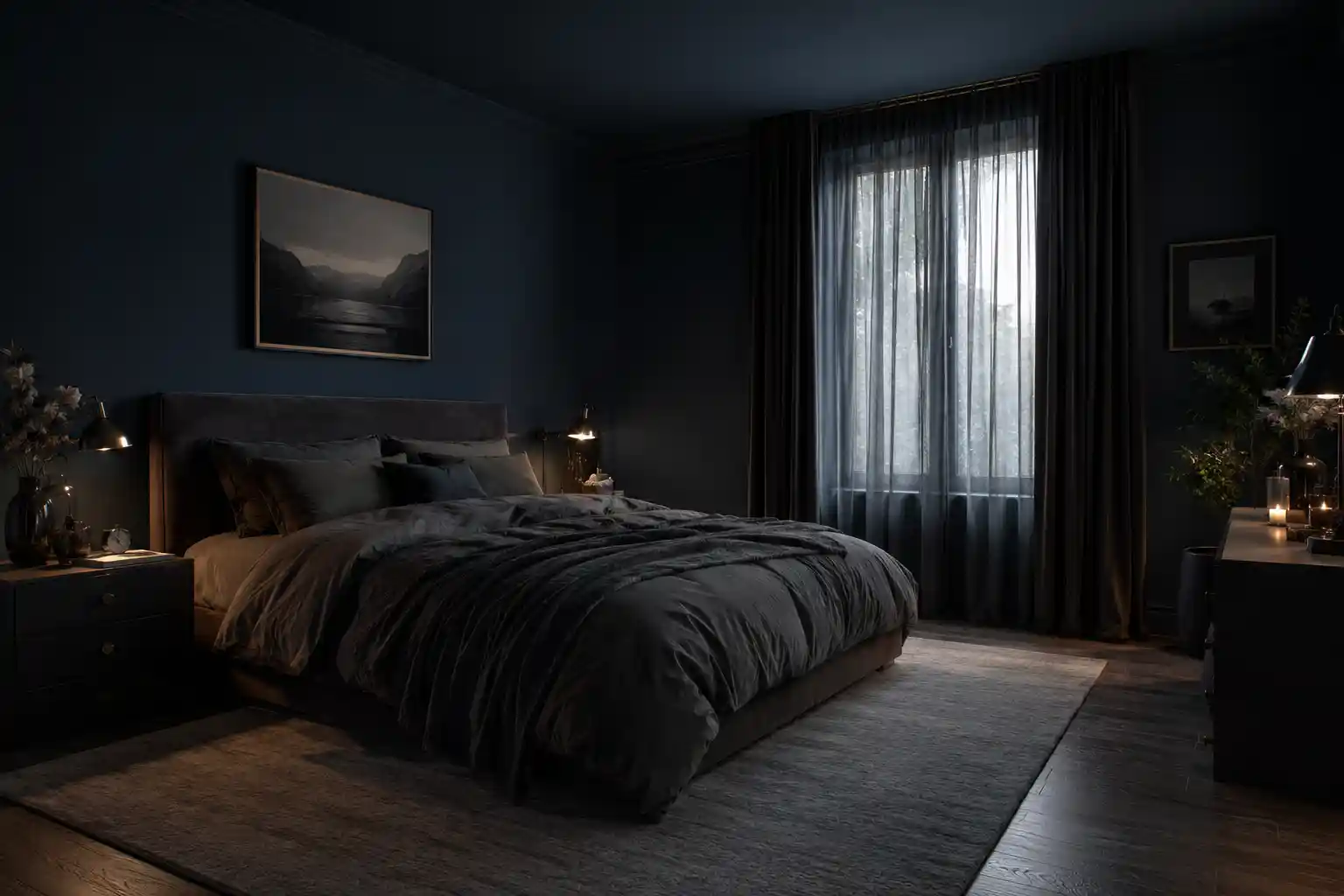
Choosing a deep navy or midnight blue for your walls is one of the most effective ways to create instant intimacy. Unlike stark white, which reflects every bit of light and can feel clinical, dark blue absorbs light in a way that blurs the boundaries of the room. This creates an optical illusion of infinite depth, making the space feel like a secure sanctuary rather than a confined box. To keep the look sophisticated, opt for a matte finish to avoid harsh glares and pair the walls with warm wood accents to balance the cool tones.
Layering Tactile and Rich Fabrics

In a room dominated by dark colors, texture becomes your primary tool for adding visual interest. Without a variety of materials, a moody bedroom can feel flat or oppressive. The key is to mix and match fabrics that react differently to light. Pair the light-absorbing quality of heavy velvet with the organic, breathable texture of linen and the structural weight of a chunky knit throw. This tactile layering not only looks high-end but also creates a physical sensation of warmth and comfort that invites you to relax.
Strategic Ambient Lighting Layers
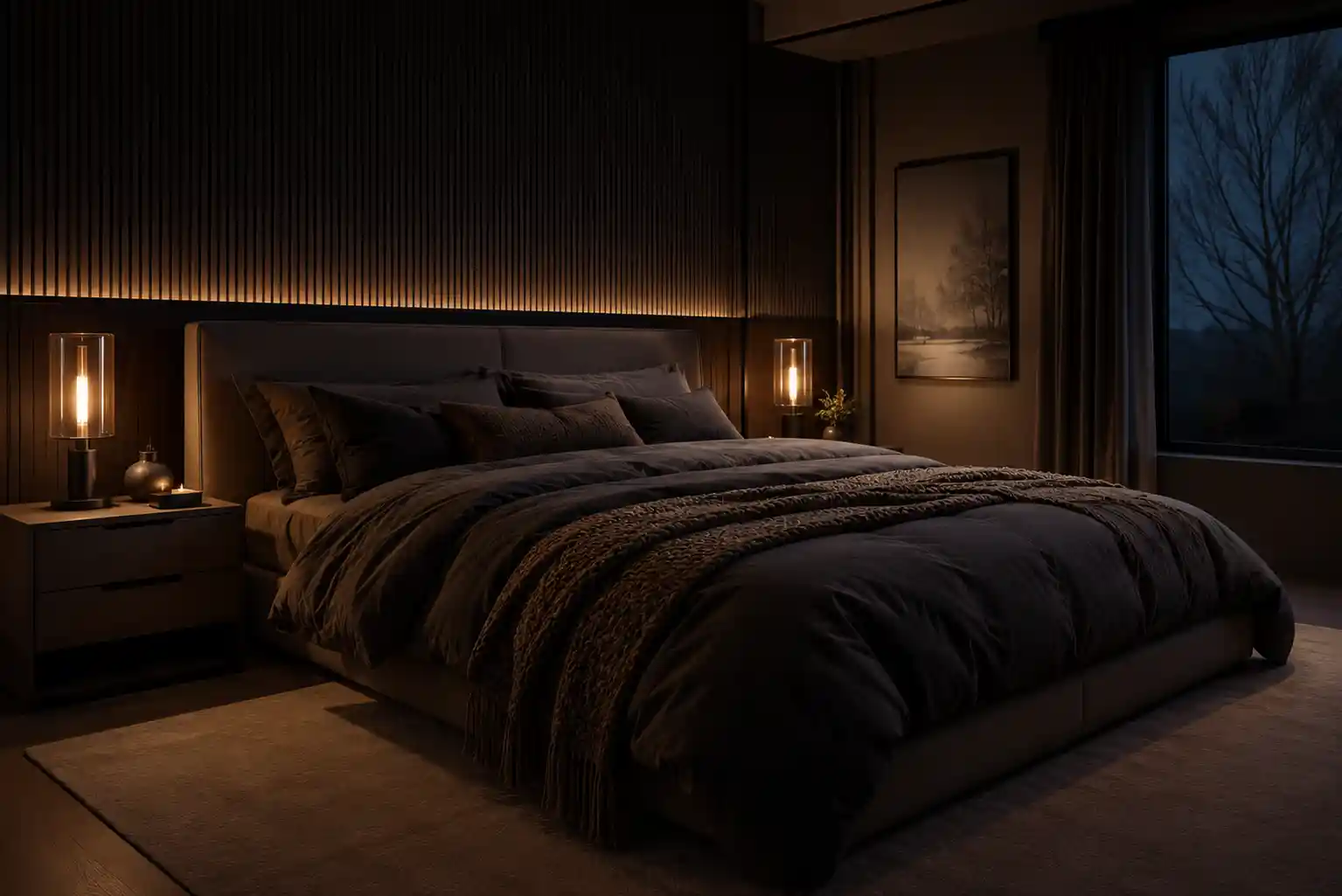
The fastest way to ruin a cozy dark bedroom is by using a bright overhead light. To maintain a moody atmosphere, you must rely on layered, localized lighting. Focus on warm-toned bulbs (around 2700K) that mimic the soft glow of candlelight. Incorporate a mix of dimmable bedside lamps, small accent lights tucked into corners, and perhaps some subtle LED strips under furniture. By creating pockets of light and shadow, you guide the eye across the room and create a serene, calming environment perfect for winding down.
Grounding the Space with Dark Wood
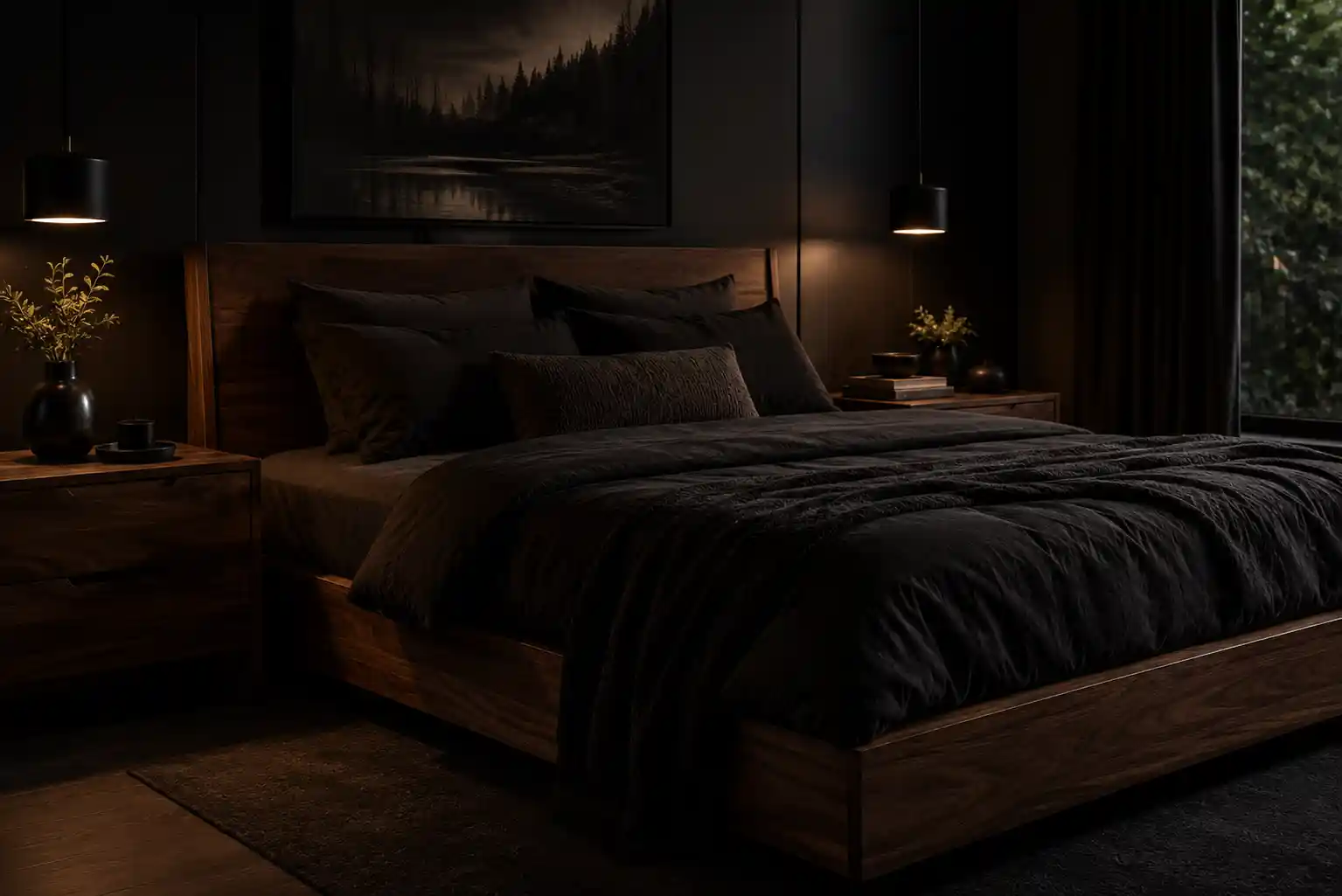
Adding dark wood furniture to a dark room might seem counterintuitive, but it actually provides necessary architectural weight. Richly grained walnut, ebony, or deep-stained oak adds a sense of permanence and luxury to the space. A solid dark wood bed frame acts as a visual anchor, grounding the room and preventing the dark walls from feeling like they are floating. The natural patterns in the wood grain introduce an organic element that breaks up solid blocks of color, adding sophistication and a timeless, designer feel.
Creating a Focal Point with a Black Headboard
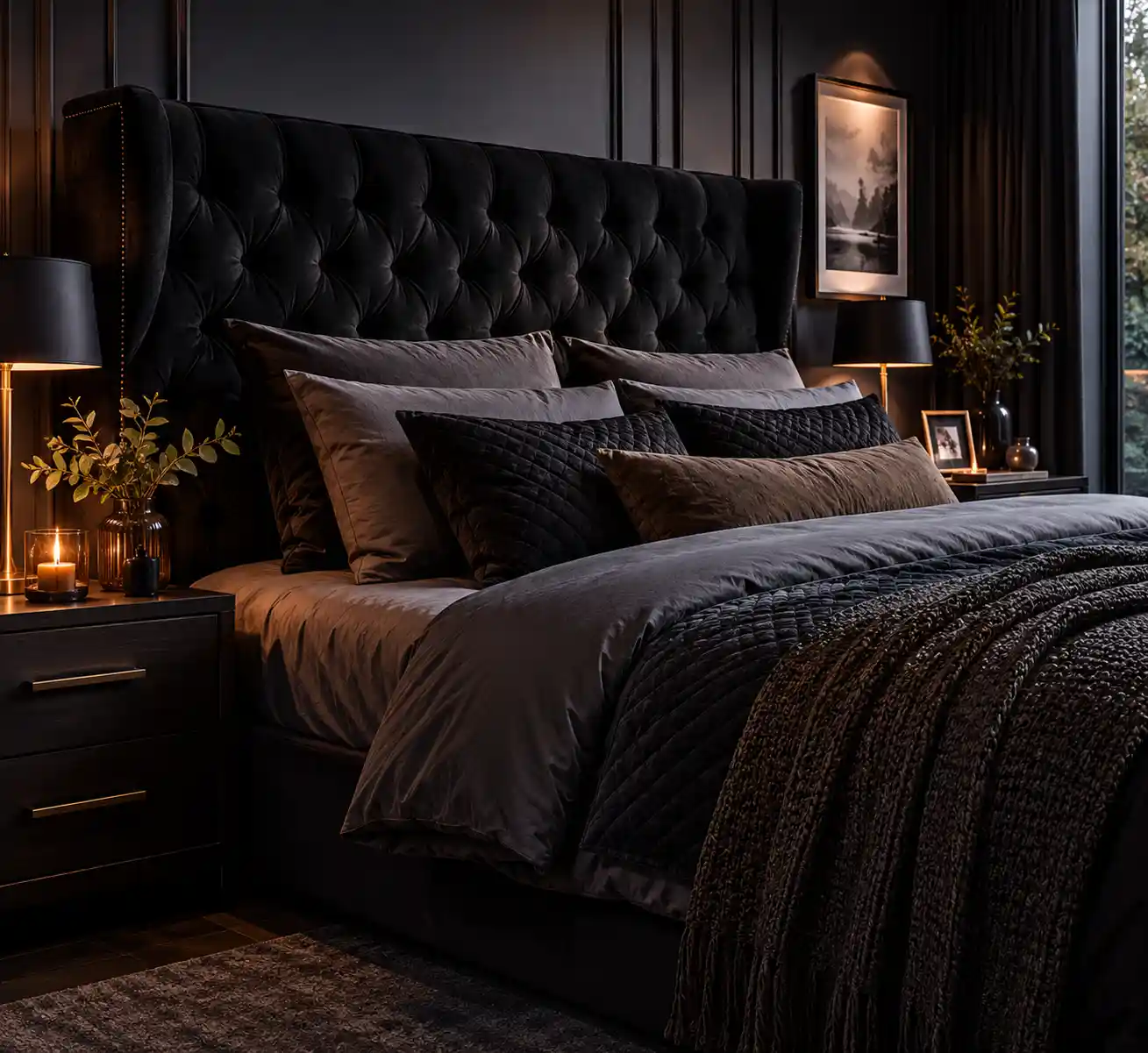
If painting every wall a dark hue feels too daring, start with a bold statement piece like a black headboard. Whether you choose a sleek minimalist wooden design or a plush, tufted velvet version, a black headboard instantly draws the eye and creates a clear center of gravity for the room. It provides a sophisticated backdrop for your pillows and linens, allowing you to experiment with different bedding colors while maintaining a cohesive, high-contrast look that feels curated and intentional.
The Art of Effortless Layered Bedding
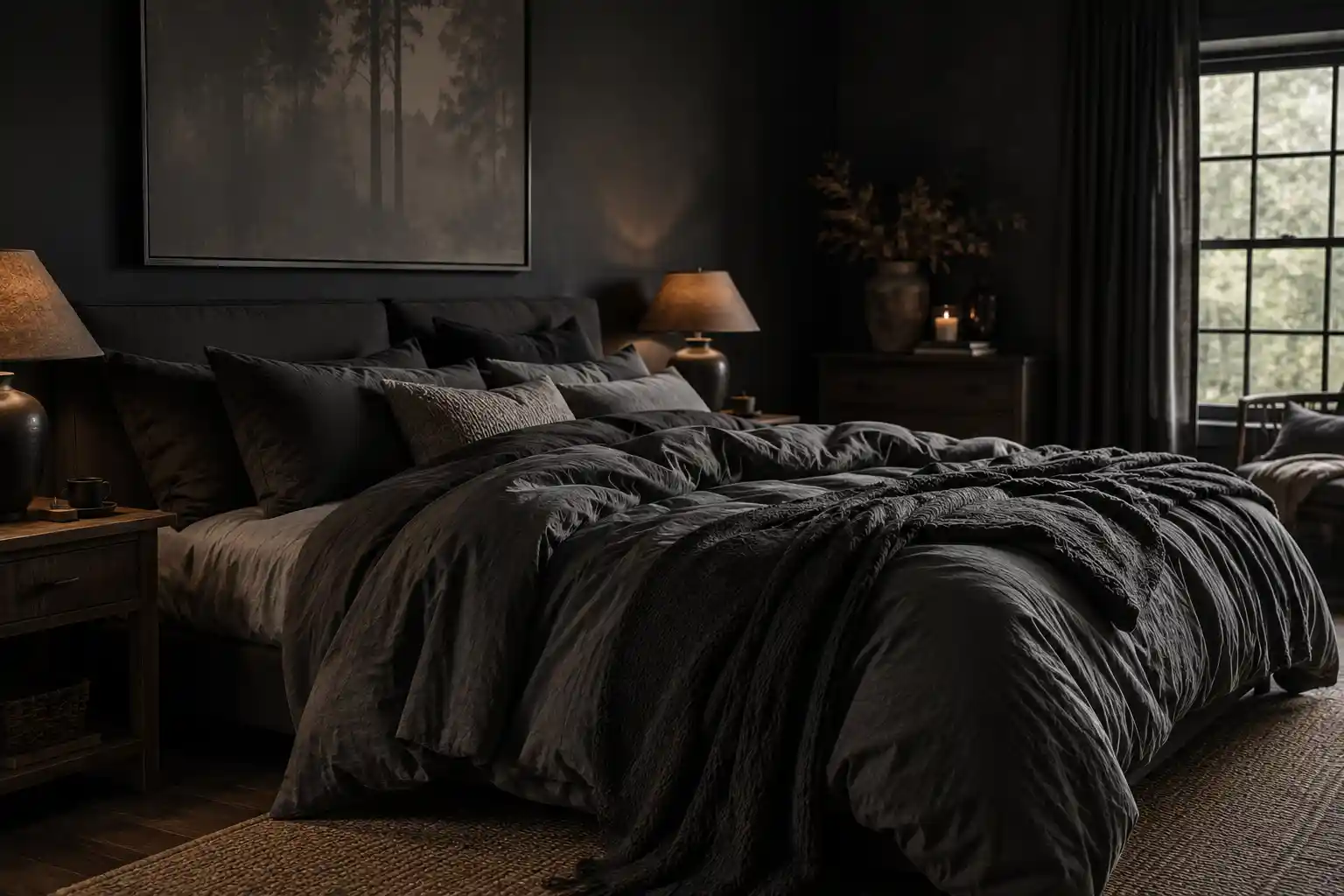
A dark bedroom is the perfect place to embrace the lived-in luxury aesthetic. Instead of a perfectly tucked bed, lean into a layered look that feels inviting and effortless. Start with a base of high-thread-count sheets in charcoal or slate, add a voluminous, oversized duvet that spills over the edges, and finish with a deliberately tossed textured throw blanket. This approach breaks up the visual weight of the bed, making it look less like a piece of furniture and more like a cozy destination.
Injecting Moody Jewel Tone Accents
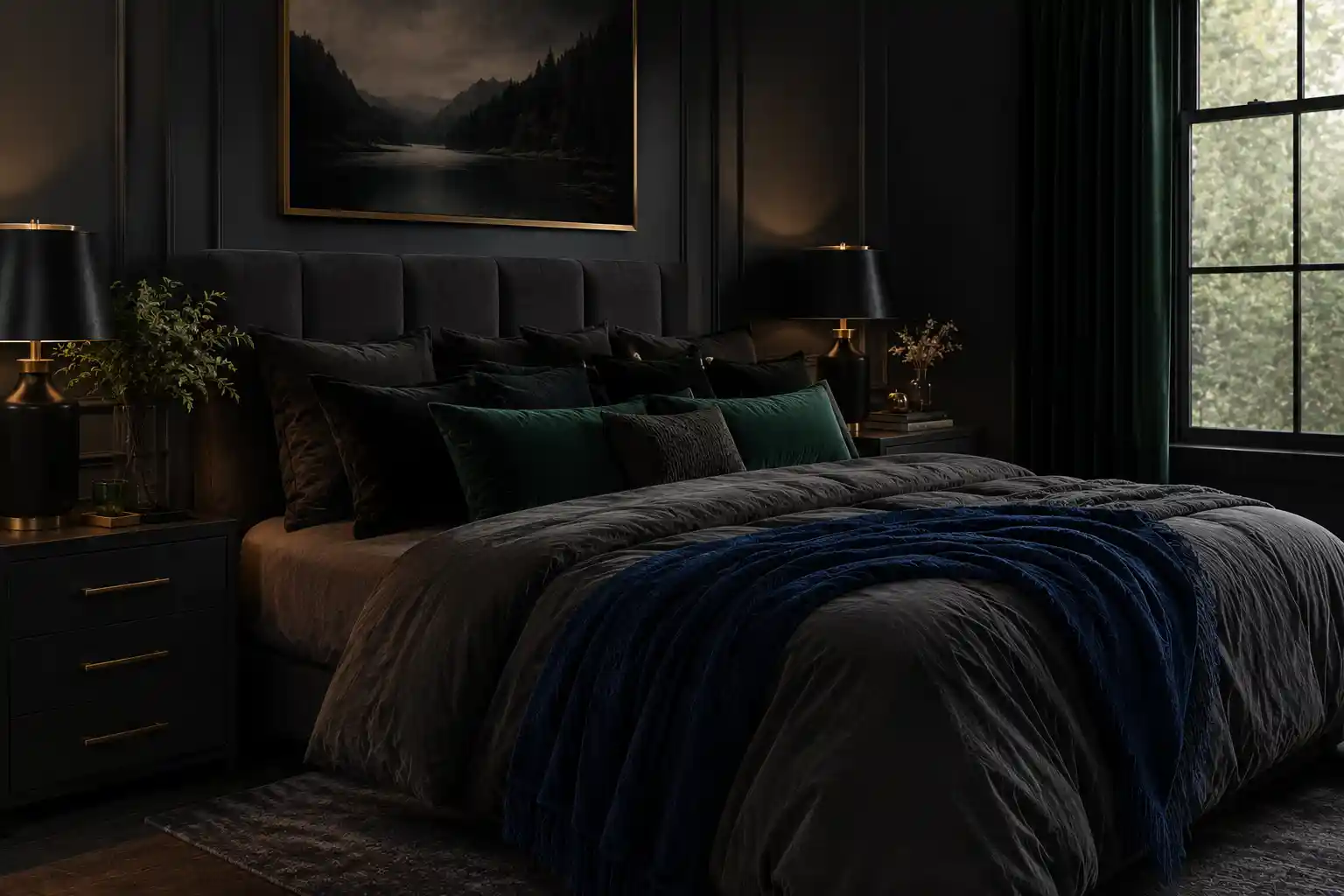
While black, grey, and navy form a great base, adding deep jewel tones can prevent a moody room from feeling monochromatic. Emerald green brings a sense of organic tranquility, sapphire blue adds a layer of mystery, and burnt orange or deep amethyst provides a subtle warmth. The trick is to use these colors in accents—such as throw pillows, a small armchair, or a piece of art—so they pop against the darker backdrop without overwhelming the serene, low-energy vibe of the sanctuary.
Designing a Dedicated Reading Nook
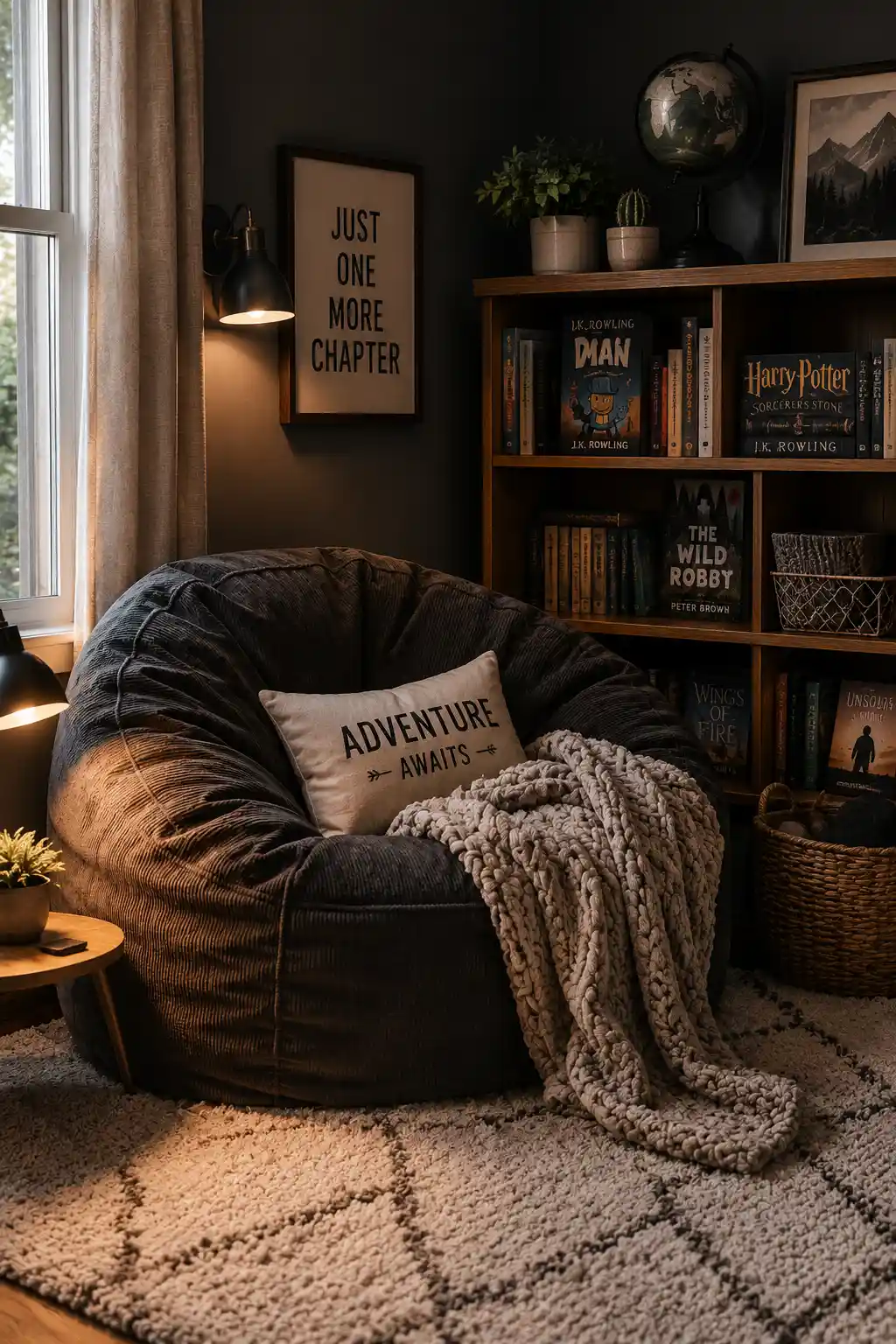
Most bedrooms have an underutilized corner that can be transformed into a secondary escape. By adding a plush, low-profile armchair and a small side table, you create a dedicated zone for relaxation away from the bed. A focused reading light is essential here, as it creates a tight circle of illumination that makes the rest of the room fade away. This micro-destination adds a layer of functionality to the room and encourages a slower, more mindful evening routine.
Adding Warmth with Plush Area Rugs

The physical transition from a warm bed to a cold floor can instantly break the cozy mood. A thick, high-pile area rug in a deep tone not only provides warmth underfoot but also helps with sound dampening, making the room feel quieter and more secluded. For an extra touch of luxury, try layering rugs. Place a smaller, high-texture sheepskin or woven rug on top of a larger, flat-weave charcoal rug. This adds immediate visual depth and a professional, designer-led feel to the flooring.
Adding Drama with Dark Botanical Patterns
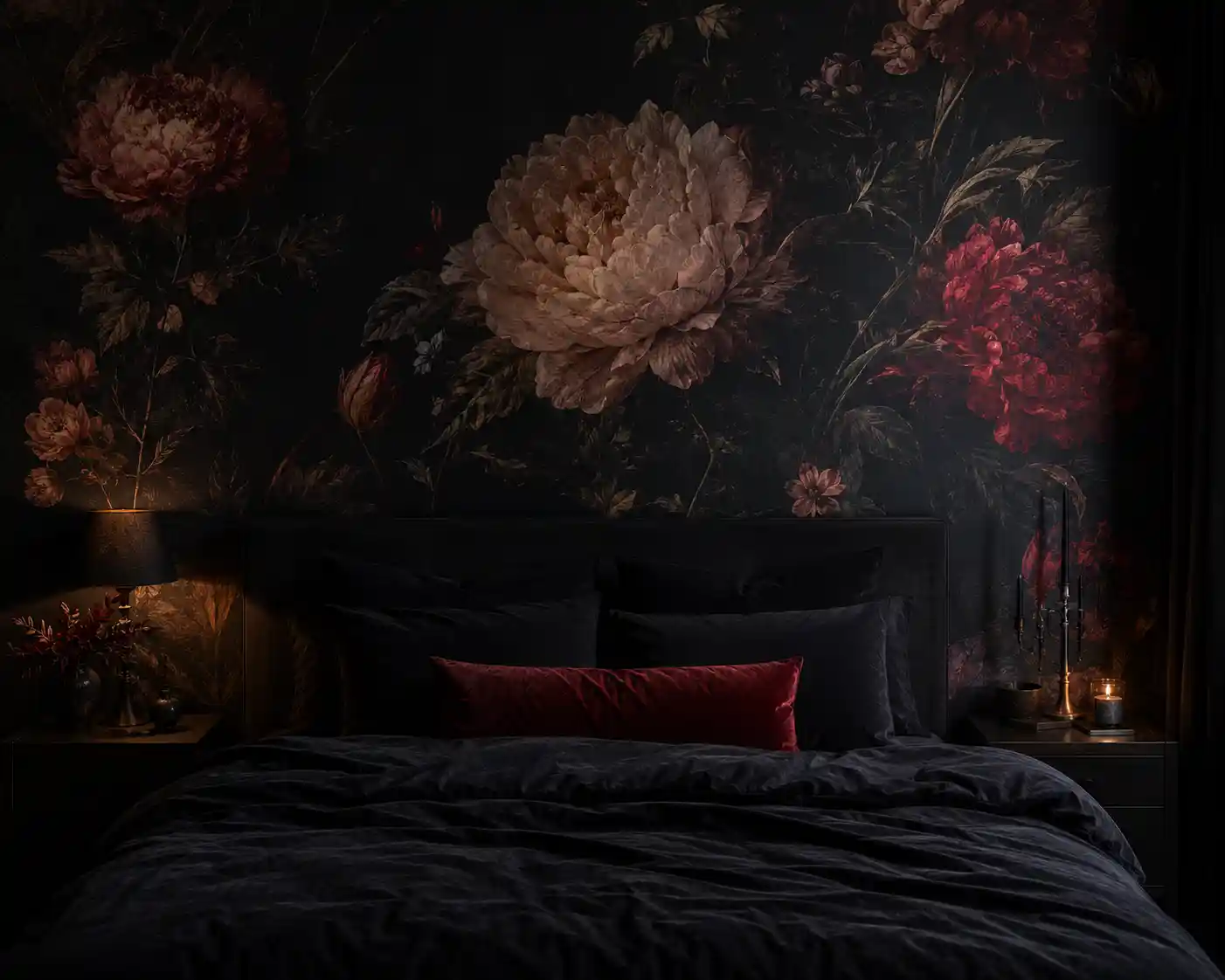
For those who want a bit of romantic drama, dark floral patterns are a stunning choice. Whether it is a full accent wall of botanical wallpaper or a few heavy velvet pillows with floral embroidery, these patterns introduce movement and an organic element to the room. The contrast between the dark background and the muted floral hues creates a sophisticated, slightly gothic atmosphere that feels like a high-end boutique hotel. It adds a layer of storytelling and personality to the architectural space.
Incorporating Soulful Vintage Decor
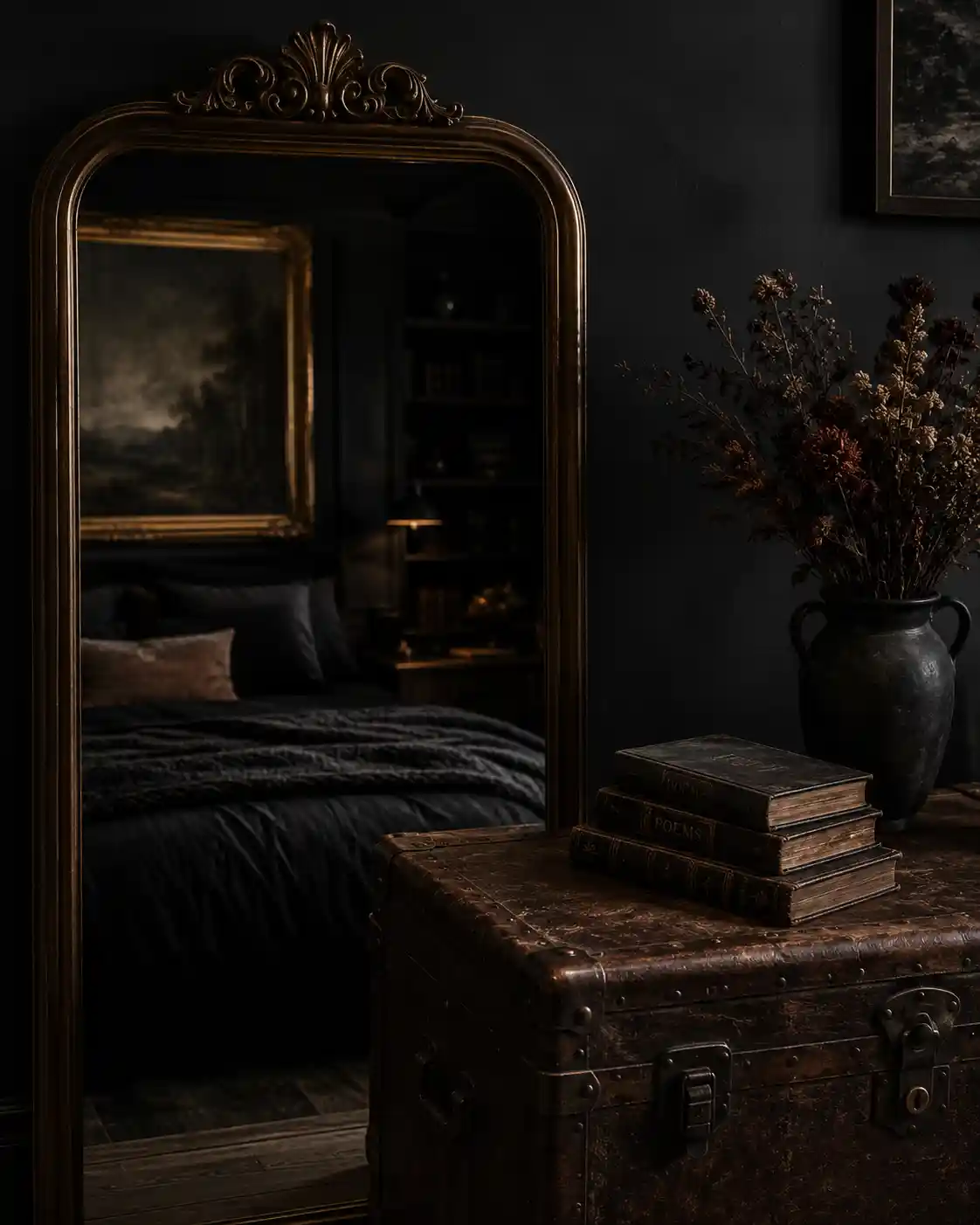
To avoid the look of a sterile showroom, a moody bedroom needs items with a history. Vintage elements like a weathered leather trunk, an antique brass mirror, or a collection of old leather-bound books add a sense of soul and narrative. The imperfections of vintage pieces—the patina on the metal or the wear on the wood—introduce a human element that new furniture cannot replicate. These details make the room feel curated over time rather than bought from a single catalog.
Immersive Wall Murals for Dreamy Depth
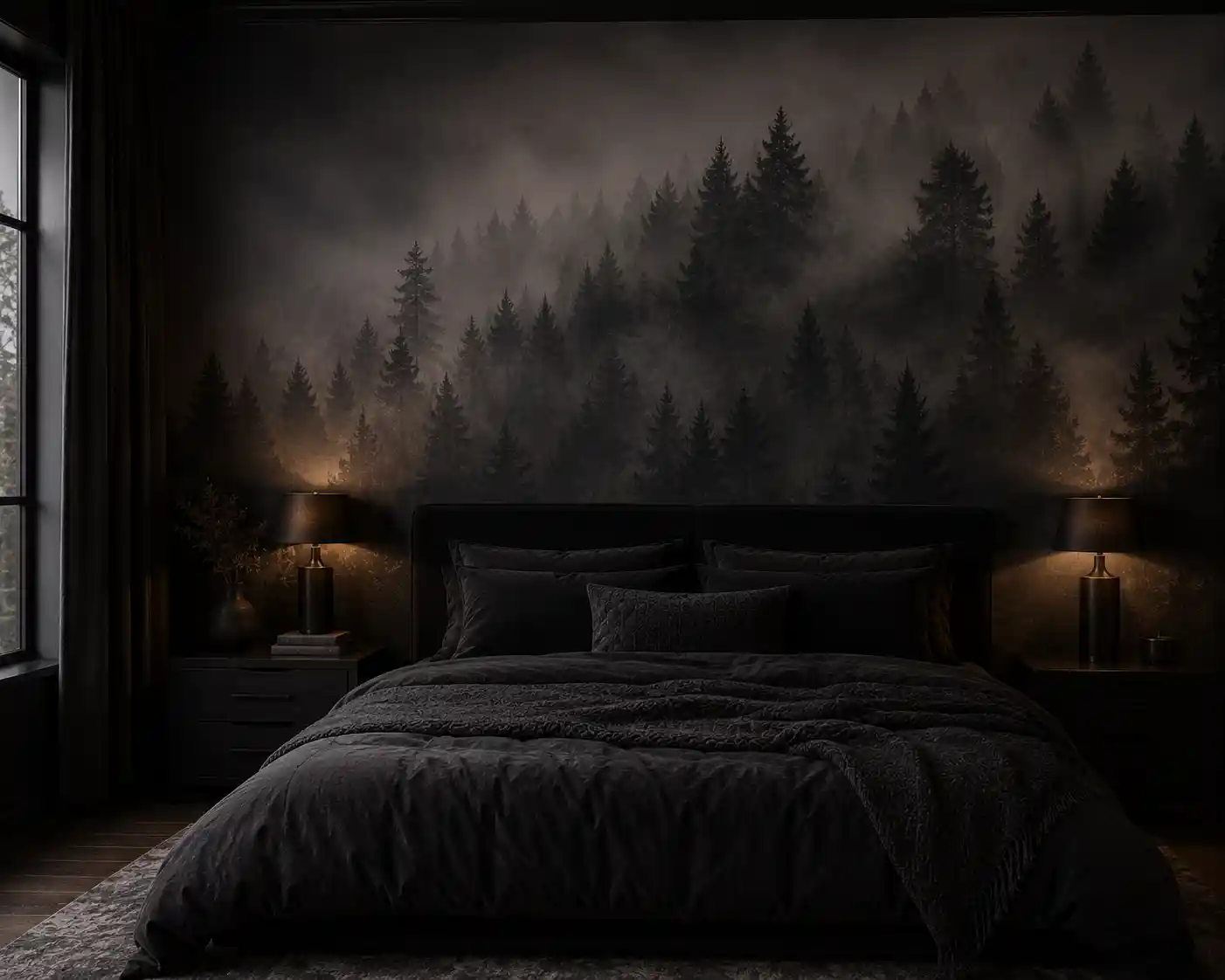
If solid paint feels too static, a custom wall mural can transform the entire energy of the room. A misty forest scene, a celestial star map, or an abstract watercolor design in deep tones can make the walls feel as though they are opening up into another world. This adds a surreal, dreamy quality to the space, providing a soft visual focal point that encourages relaxation and introspection as you prepare for sleep. It turns the architecture of the room into a piece of immersive art.
Maintaining Calm with Hidden Storage
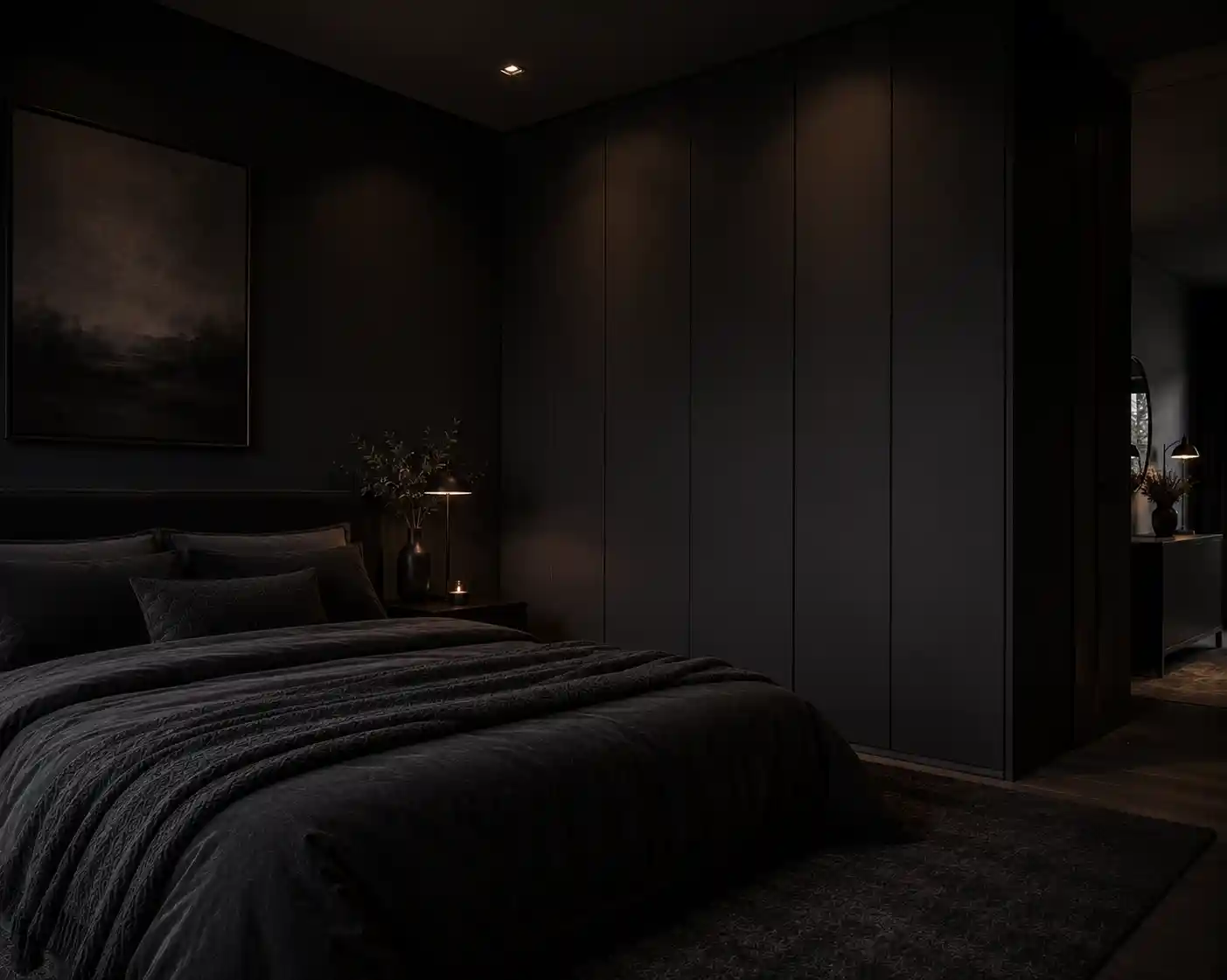
Clutter is the enemy of a relaxing atmosphere, and in a dark room, messy piles of clothes or papers catch light in awkward ways, creating distracting shadows. The secret to a high-end moody look is integrated, hidden storage. Consider hydraulic lift beds for hidden under-bed compartments or built-in wardrobes painted the exact same color as the walls. When the storage blends into the architecture, the lines of the room remain clean, allowing the focus to stay on the textures and the mood.
Bringing Life with Low-Light Greenery
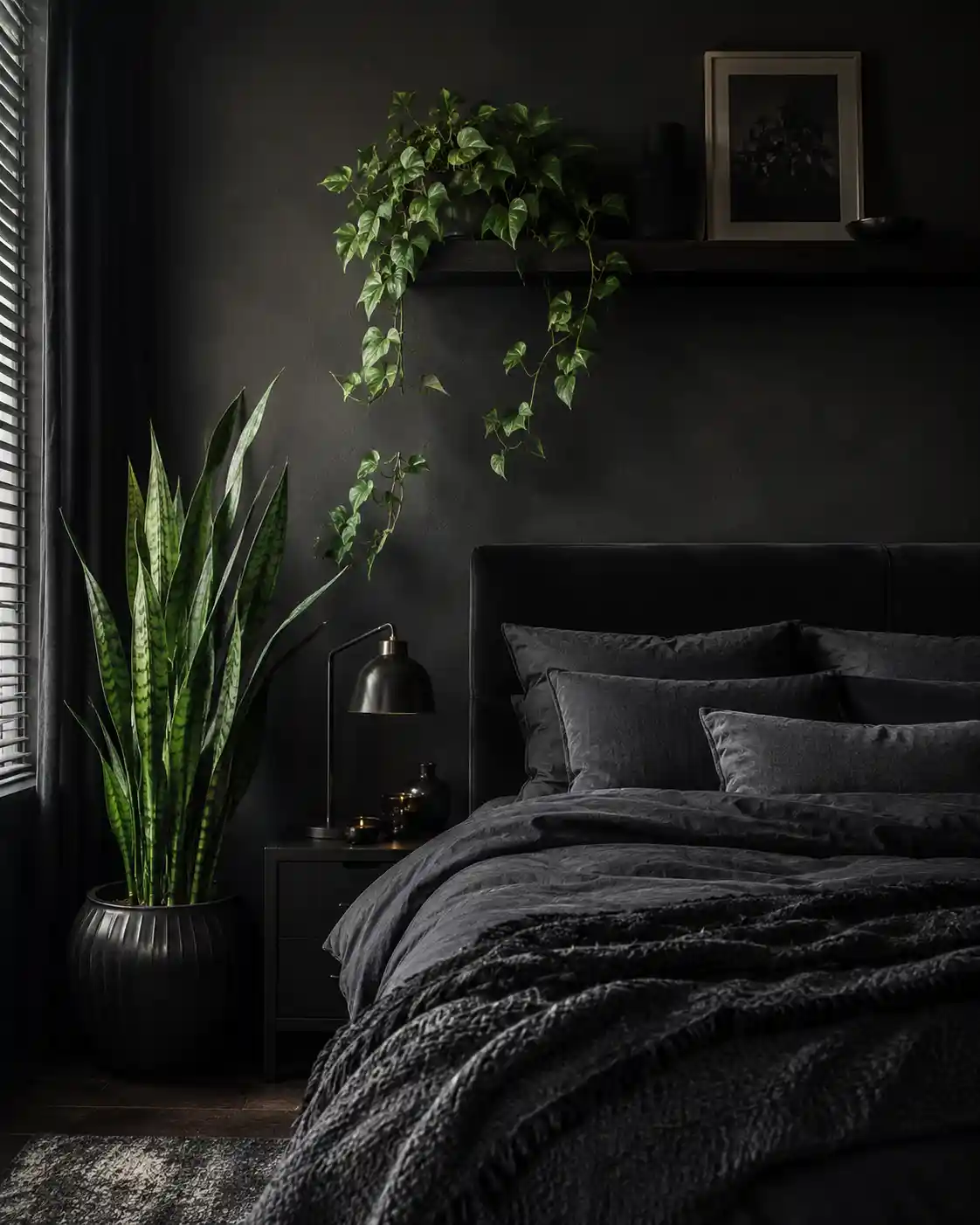
The addition of living plants creates a brilliant visual contrast in a dark bedroom. The vibrant, chlorophyll-rich greens of low-light plants like Snake Plants, ZZ plants, or Pothos seem to glow against a moody backdrop. Not only do plants purify the air, but they also introduce a natural, organic softness that balances the heavy colors and hard edges of the furniture. Placing trailing plants on high shelves creates a cascading waterfall effect that adds vertical interest and a sense of freshness.
Curating Personal Art and Mementos
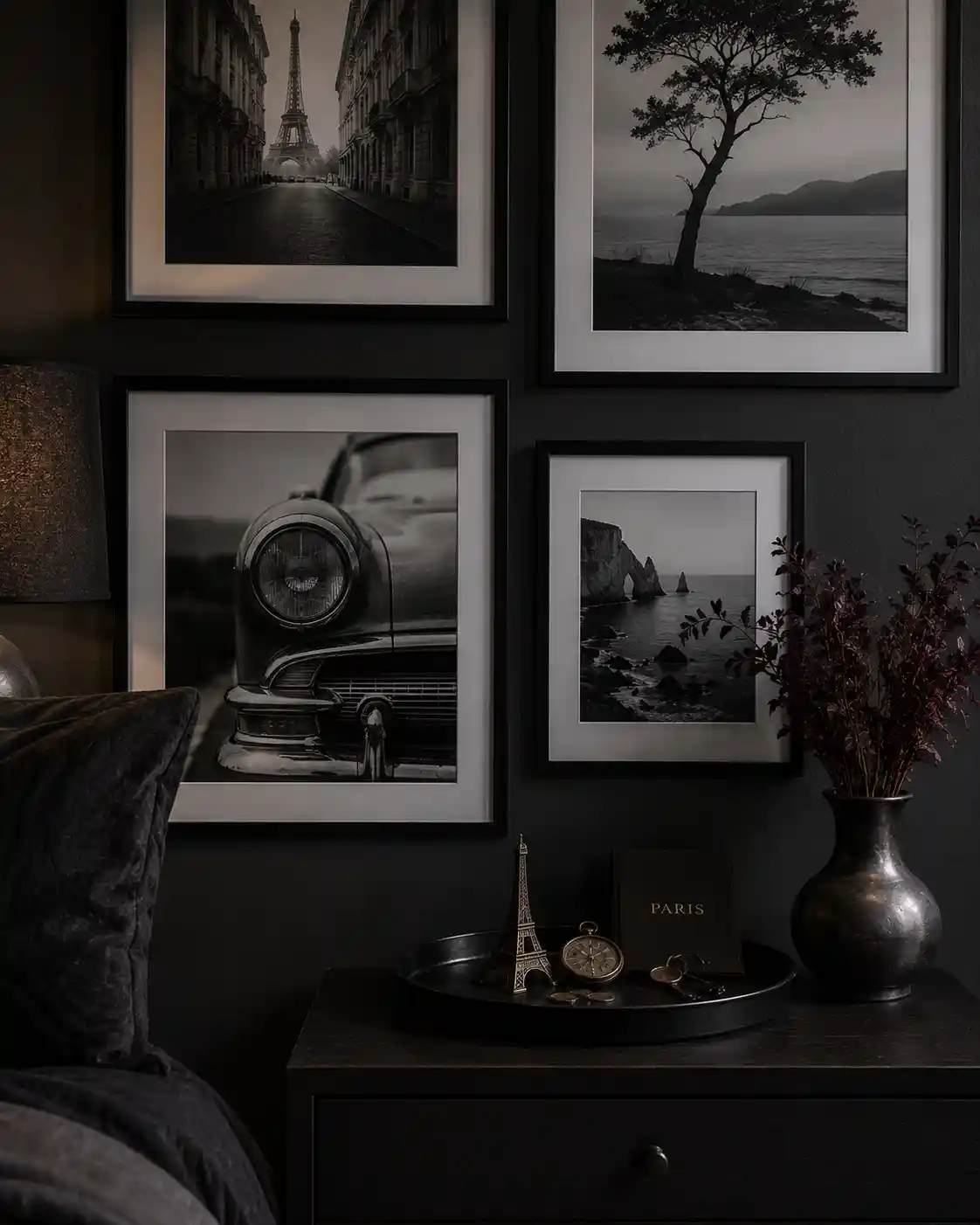
Ultimately, a bedroom should be a reflection of the person who sleeps there. To make a dark space feel like a home rather than a magazine set, incorporate personal curation. A gallery wall of black-and-white photography, meaningful mementos from travels, or a favorite piece of abstract art adds emotional depth. When these items are displayed against a dark backdrop, they take on a more gallery-like quality, making your personal history feel like a curated exhibition within your own private sanctuary.
The Fifth Wall: Dark Ceiling Treatment
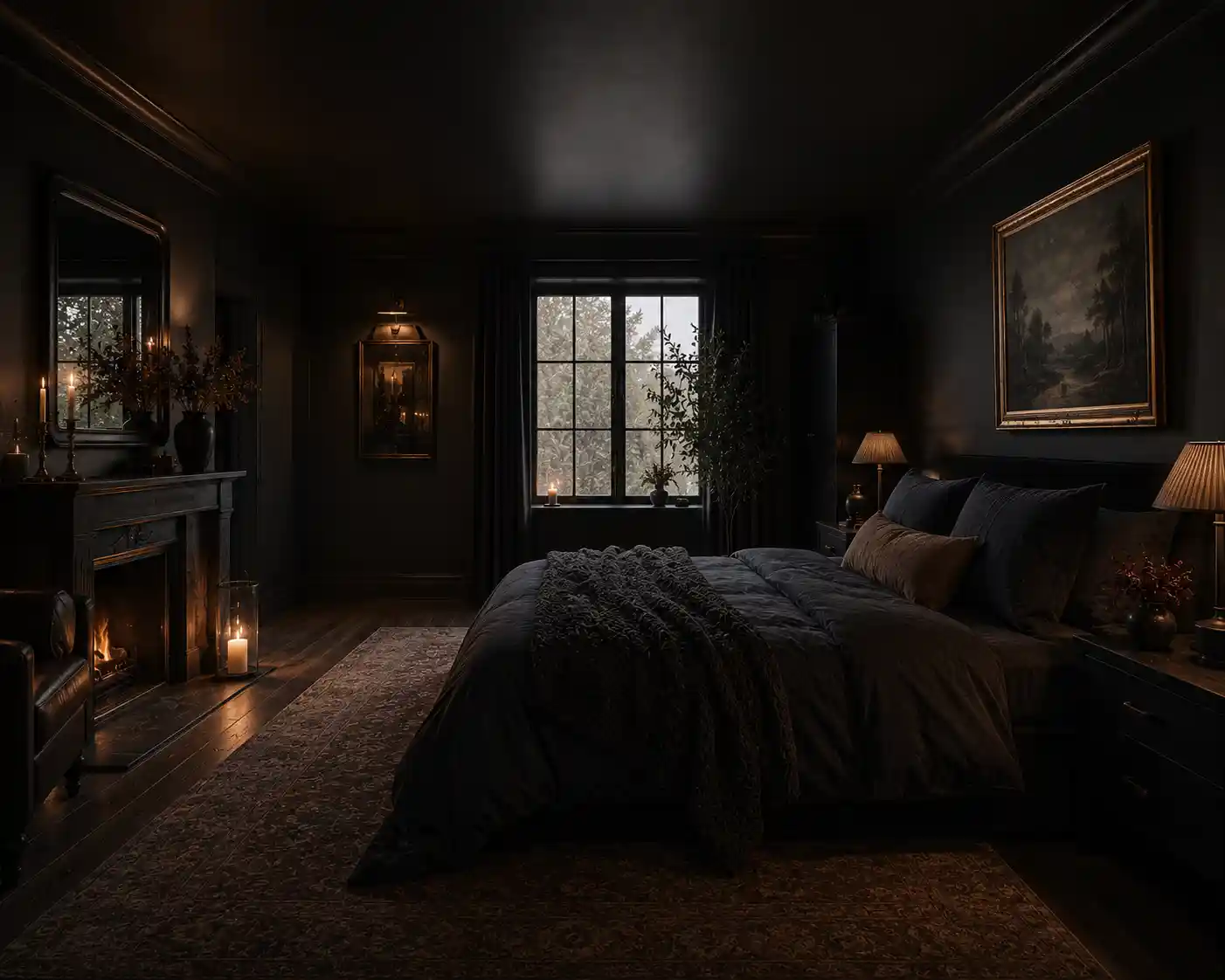
For the ultimate immersive experience, don’t forget the ceiling—often called the fifth wall. Painting the ceiling in the same deep hue as the walls removes the harsh contrast of a white ceiling, creating a true cocoon effect. This technique makes the room feel more cohesive and enveloping, effectively wrapping the space around you. When paired with warm, low-level lighting, a dark ceiling makes the room feel like a protective shell, enhancing the sense of security and intimacy that defines a truly cozy moody bedroom.