
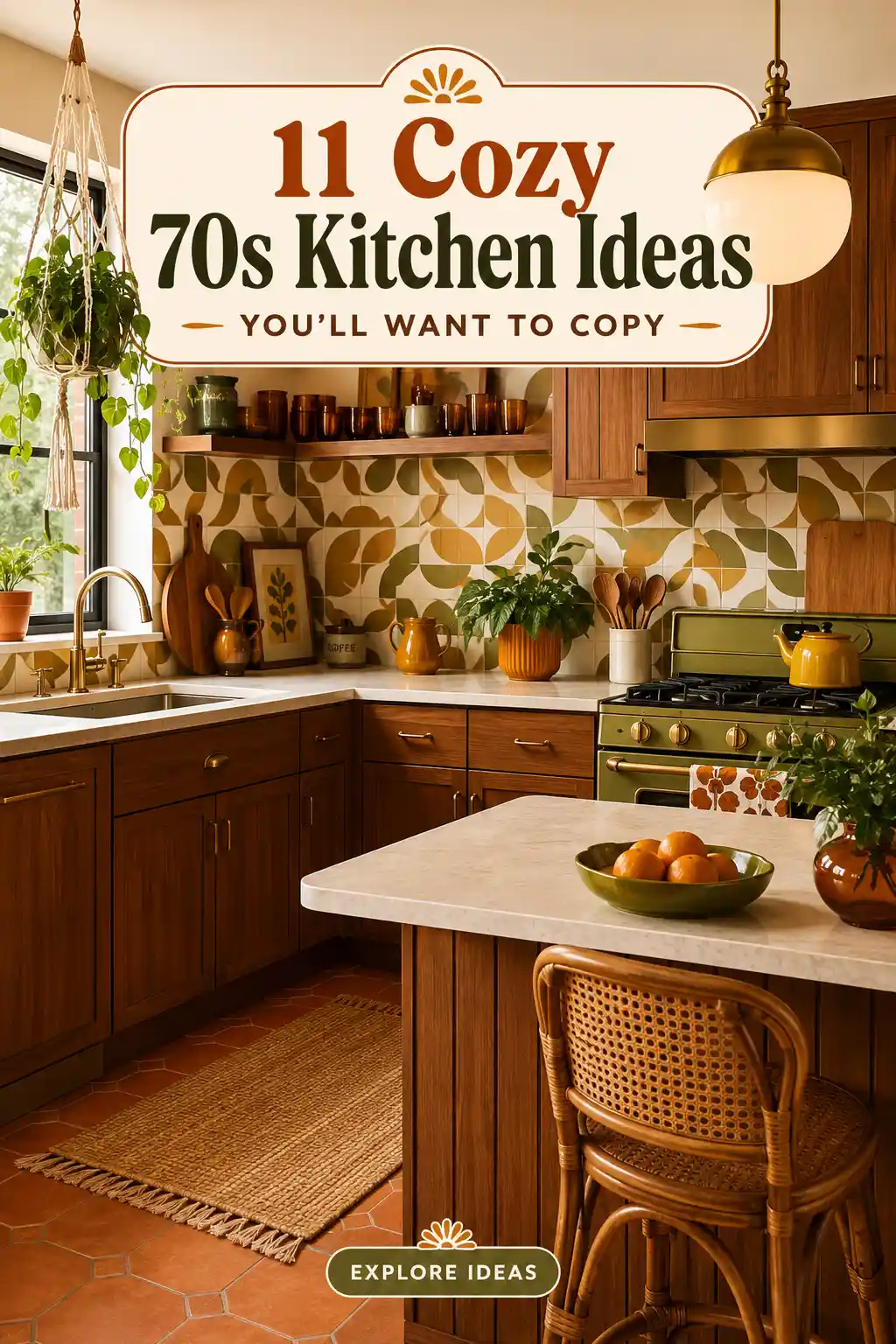
Bringing the essence of the 1970s into a modern kitchen isn’t about recreating a dated time capsule; it is about capturing the era’s legendary warmth and soulful texture. The goal is to move away from the sterile, all-white aesthetic of recent years and embrace a palette of earthy tones, rich woods, and tactile materials. By blending retro charm with contemporary functionality, you can create a space that feels lived-in, welcoming, and deeply characterful. Whether you are a homeowner ready for a refresh or a renter looking for reversible swaps, these ideas will help you curate a nostalgic sanctuary.
Embrace Rich Wood Cabinetry
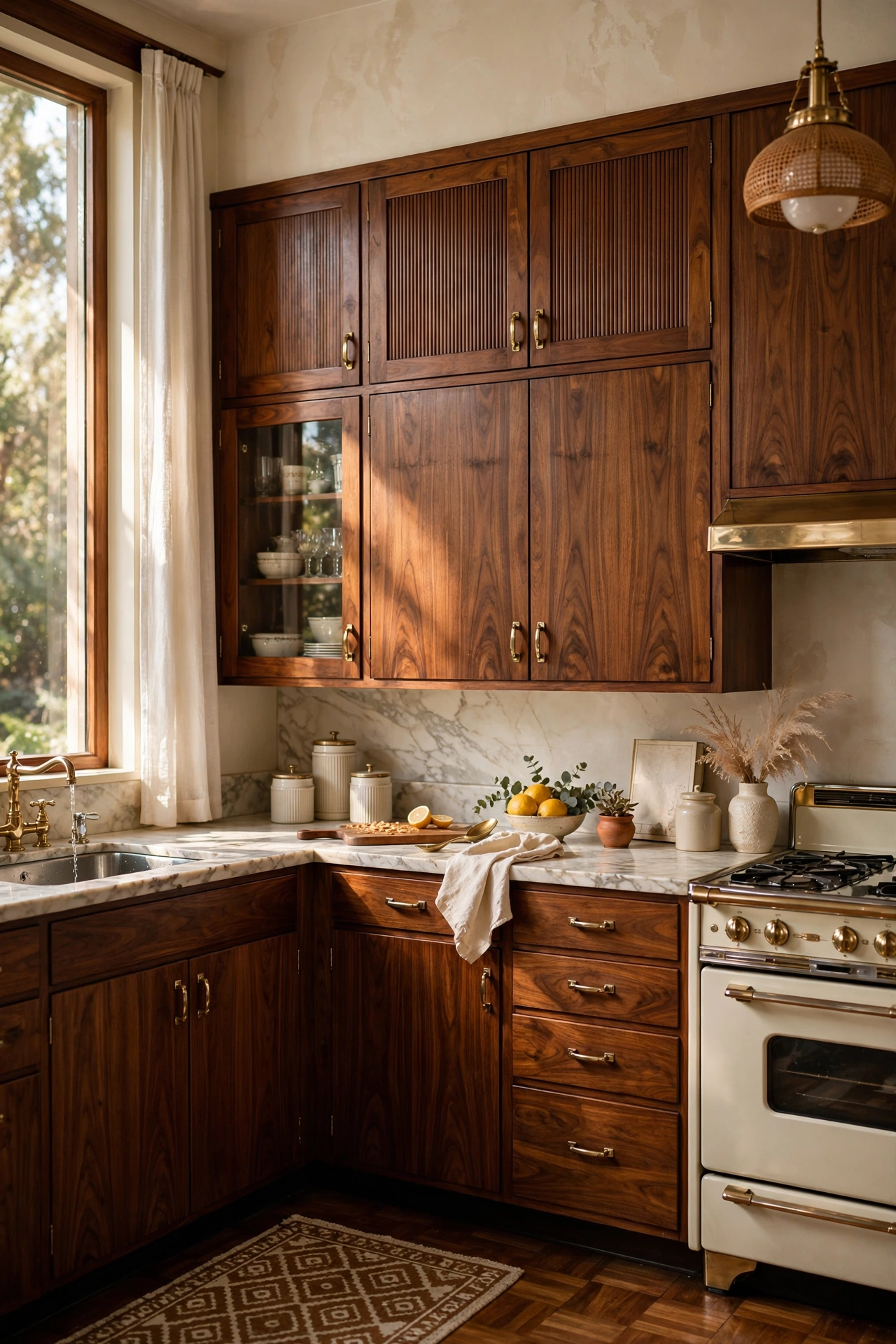
The foundation of any truly retro kitchen lies in the warmth of the cabinetry. While modern trends have leaned toward stark whites and grays, the 70s were all about organic richness. Opting for walnut, oak, or pine cabinets brings an immediate sense of grounding and coziness to the room. If you aren’t in a position to replace your cabinets, consider adding open wooden shelving or using a high-quality wood-grain contact paper for a renter-friendly transformation. The goal is to showcase the natural beauty of the wood grain, which adds a layer of tactile luxury and visual depth that paint simply cannot replicate.
Layer in Muted Earth Tone Accents
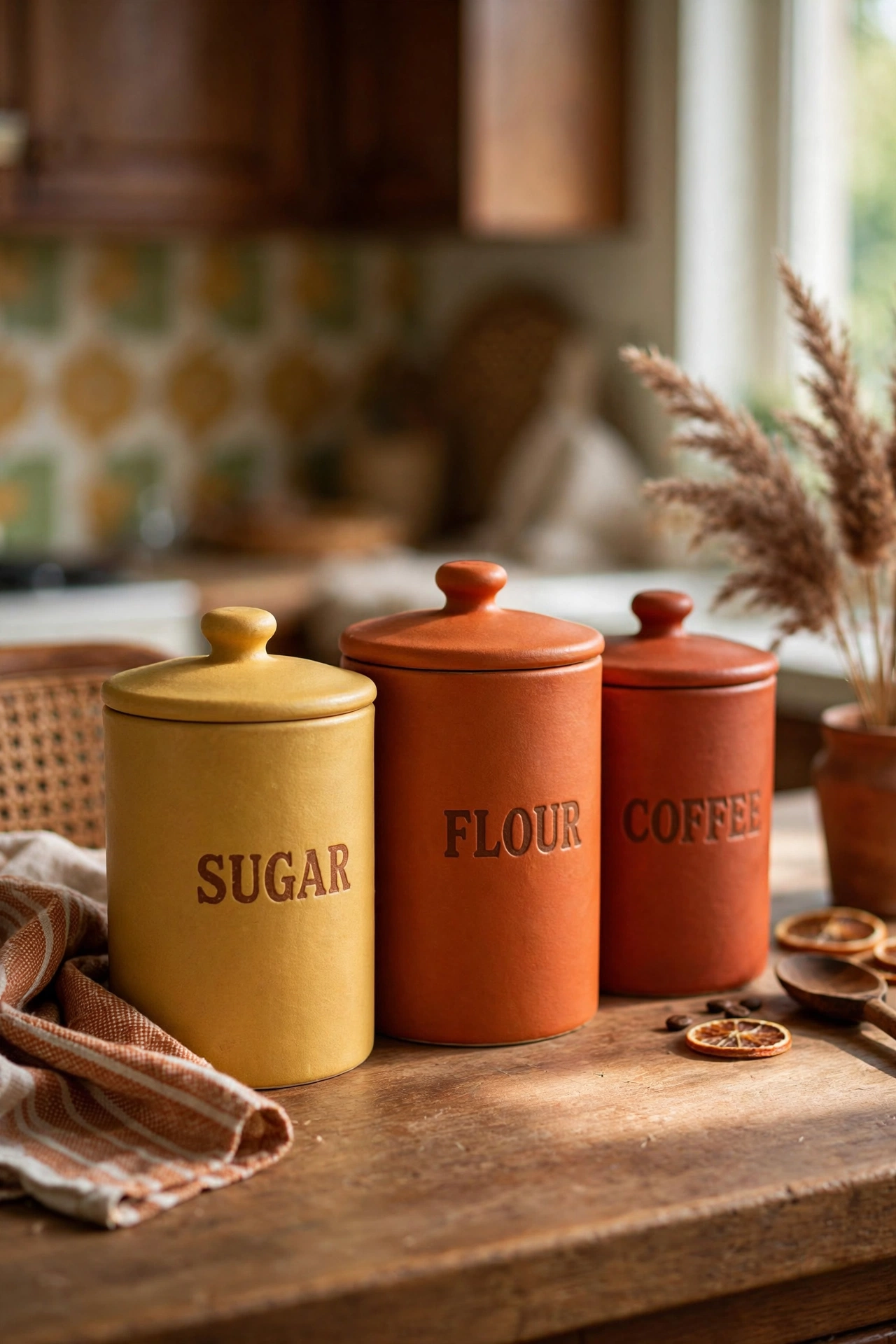
To capture the 70s spirit without making the space feel dated, focus on muted, dusty versions of the era’s most iconic colors. Instead of a loud, saturated avocado green, try a sage or olive tone. Instead of a bright gold, look for a soft mustard or ochre. These colors work best when introduced through smaller, swappable accents such as a retro stand mixer, ceramic crocks, or a colorful tea kettle. By scattering these earth tones across your counters and open shelves, you create a cohesive color story that feels curated and intentional rather than overwhelming.
Install Bold Geometric Wallpaper
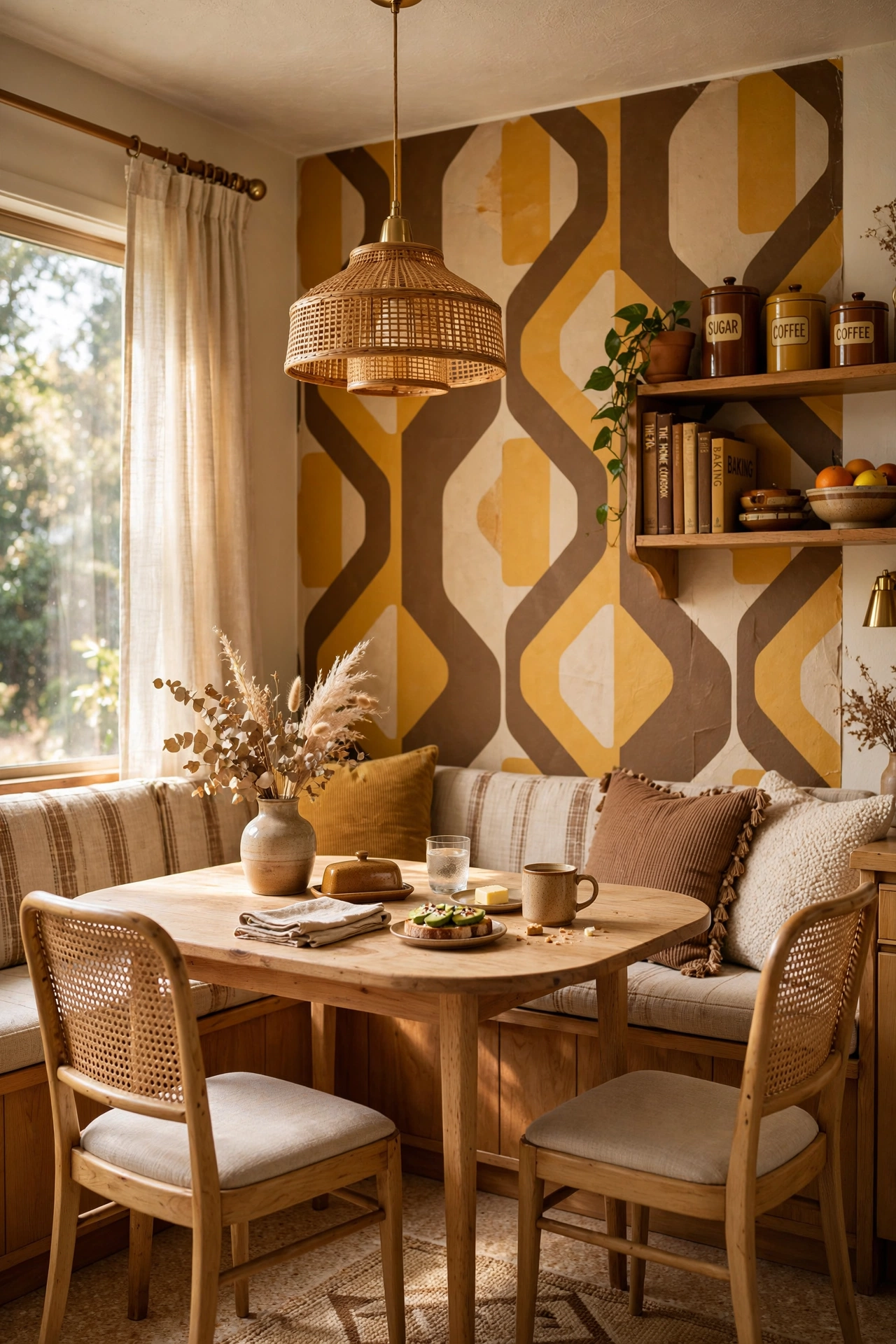
Wallpaper was a defining element of 1970s interior design, and it remains one of the most effective ways to inject personality into a kitchen. Focus on large-scale geometric patterns or oversized stylized florals in warm hues like rust, brown, and gold. To keep the look modern, apply the wallpaper to a single accent wall, the back of a bookshelf, or a small breakfast nook rather than the entire room. For those in rental properties, peel-and-stick options provide a high-impact visual change that can be easily removed, allowing you to experiment with bold patterns without a permanent commitment.
Add Iconic Globe Pendant Lighting
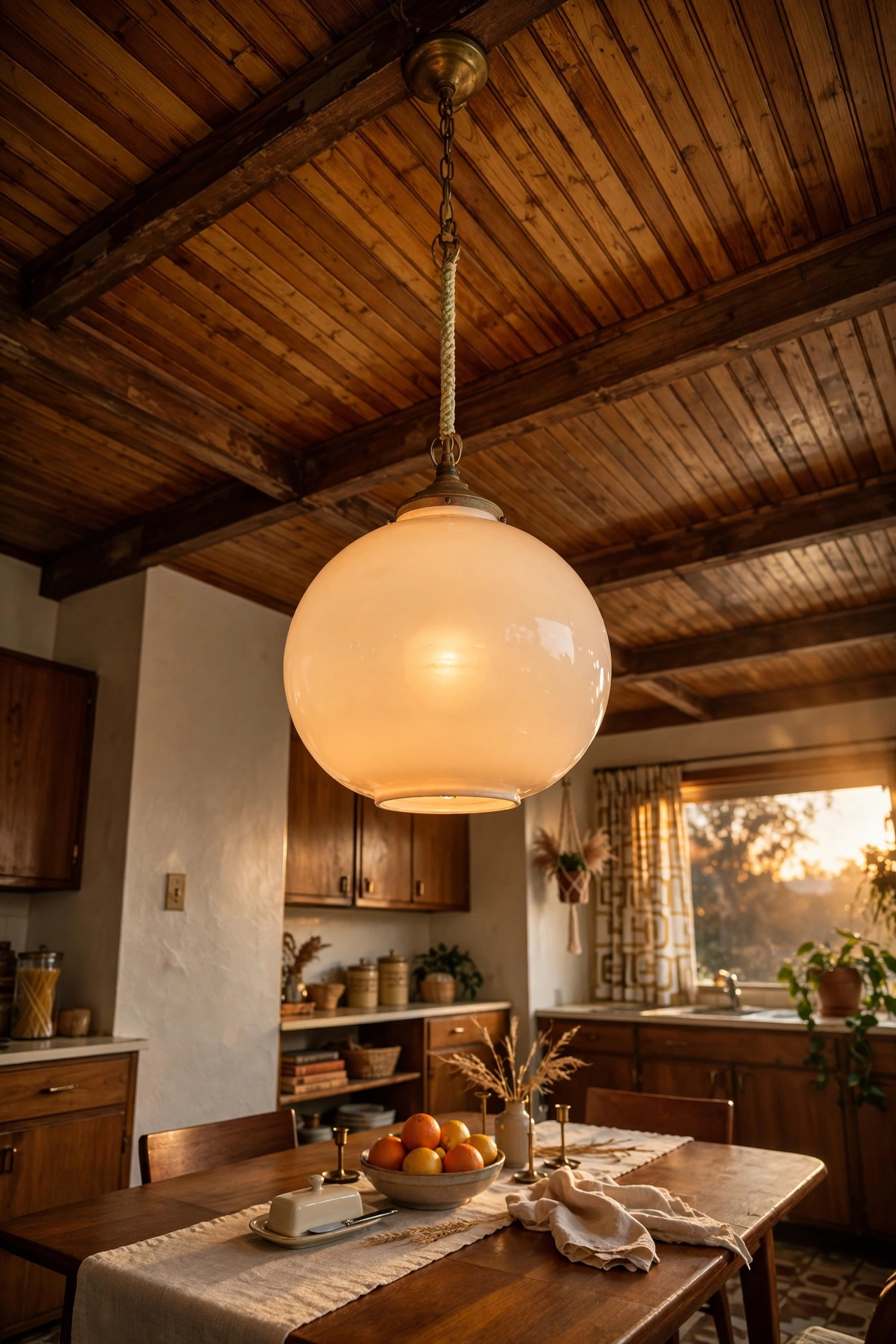
Lighting is often the fastest way to shift the mood of a room. The 70s favored soft, diffused light, and nothing achieves this better than a globe pendant or a milk-glass fixture. To truly nail the era’s aesthetic, hang your pendants lower than you normally would; this creates a more intimate, cozy glow over a kitchen island or dining table. Pair these fixtures with warm-toned LED bulbs (around 2700K) to ensure the light remains golden and inviting, avoiding the clinical feel of bright white light and enhancing the warmth of the wood surroundings.
Swap Hardware for Brushed Brass
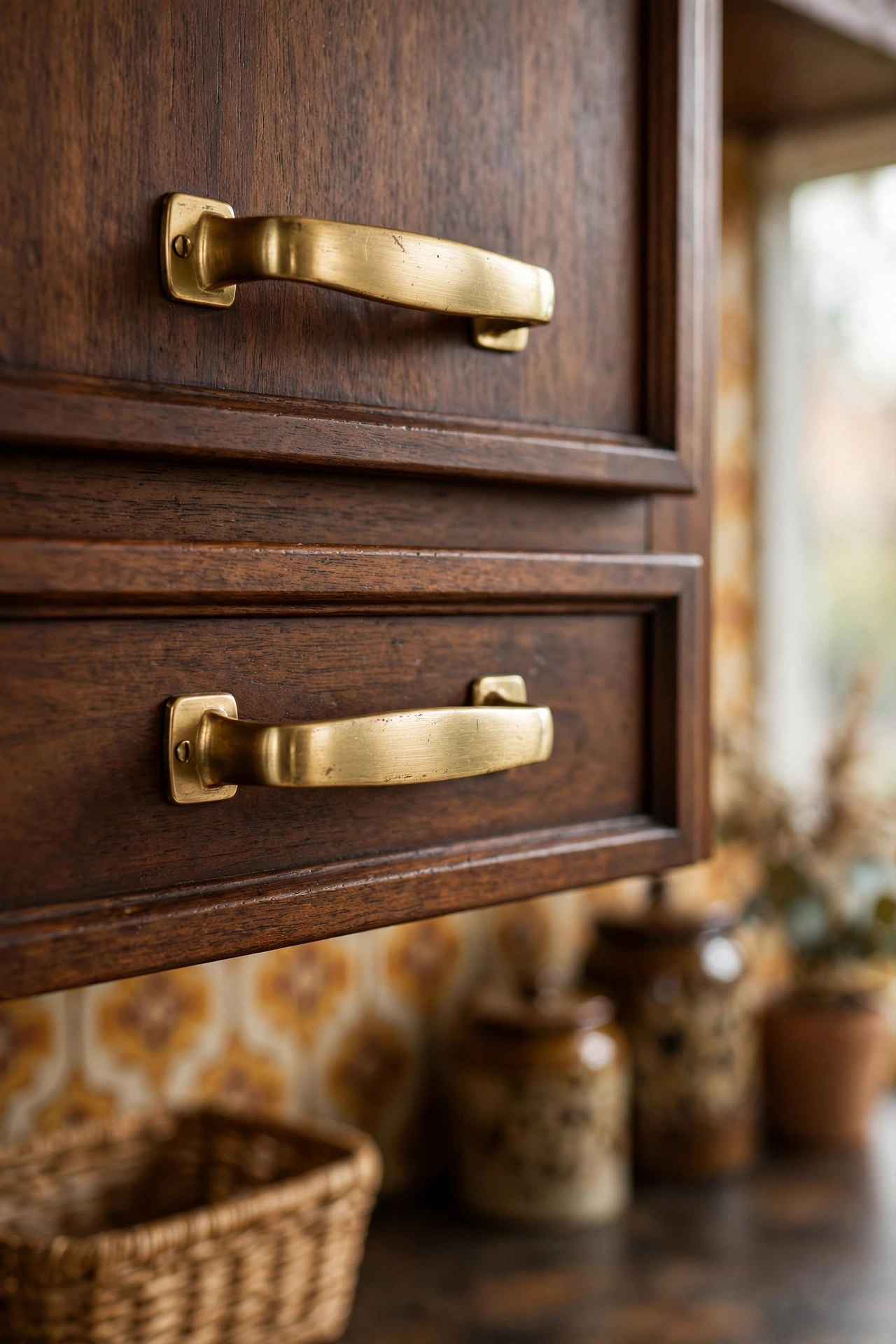
Updating your cabinet hardware is a small investment that yields a massive visual return. Replacing standard chrome or black handles with brushed brass or antique gold pulls instantly shifts your kitchen’s vibe toward a warm retro aesthetic. Brass complements the earthy tones of wood and paint, tying the entire room together with a consistent metallic thread. This simple swap adds a touch of sophistication and timelessness, proving that you don’t need a full renovation to change the character of your space. It is an effortless way to add a polished, high-end feel to vintage-inspired decor.
Style Open Shelves with Amber Glassware
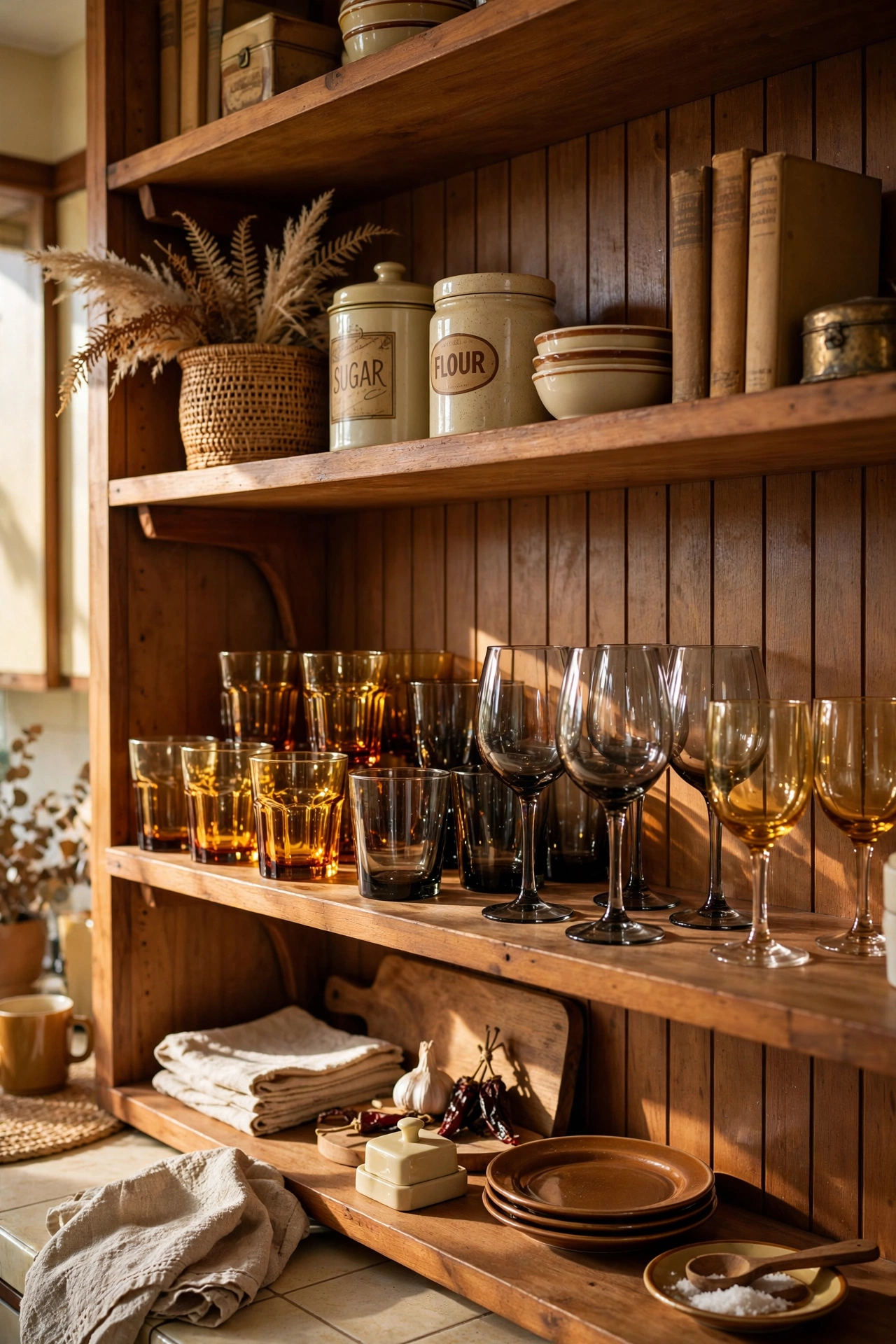
The 70s loved a good display, and open shelving is the perfect place to showcase a collected look. Instead of hiding everything behind cabinet doors, use floating wooden shelves to display vintage glassware in amber, smoked grey, or olive green tones. These translucent colors catch the light beautifully and add a layer of sophisticated texture to the walls. To prevent the shelves from looking cluttered, keep the arrangement edited and balanced, mixing functional pieces like ceramic mugs with purely decorative vintage finds. This approach makes the kitchen feel personal and lived-in.
Introduce Terracotta or Checkerboard Floors
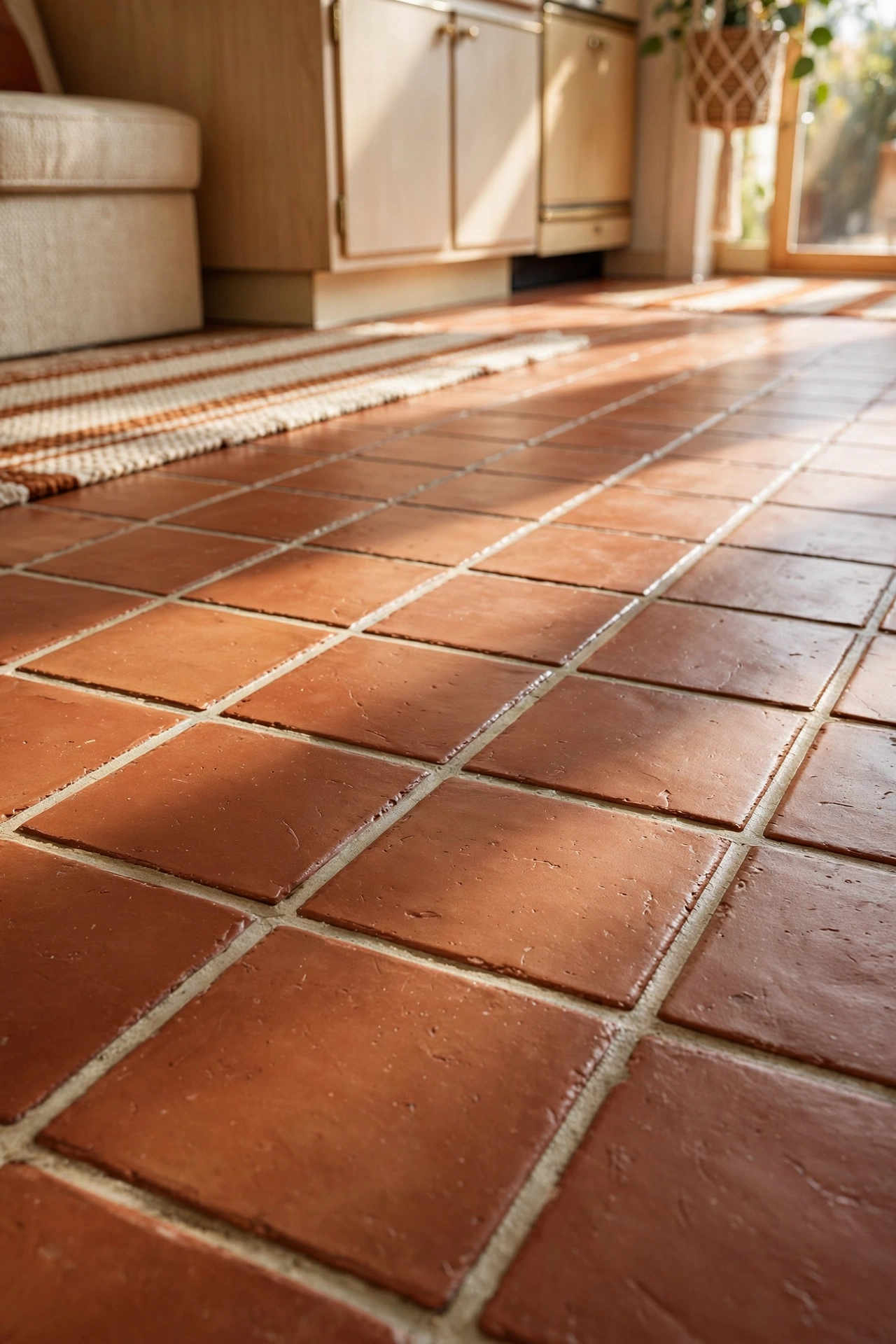
The flooring serves as the anchor of the entire room, and the 70s were known for floors with immense personality. Terracotta tiles provide a rustic, earthy foundation that pairs perfectly with wood cabinetry. Alternatively, a checkerboard pattern in muted tones—such as cream and tan—adds a playful yet structured retro element. For those who cannot replace their flooring, high-quality vinyl peel-and-stick tiles offer a convincing alternative that mimics the look of stone or patterned tile. A warm floor transforms the room from a utility space into a cozy destination.
Incorporate Textured Rattan Seating
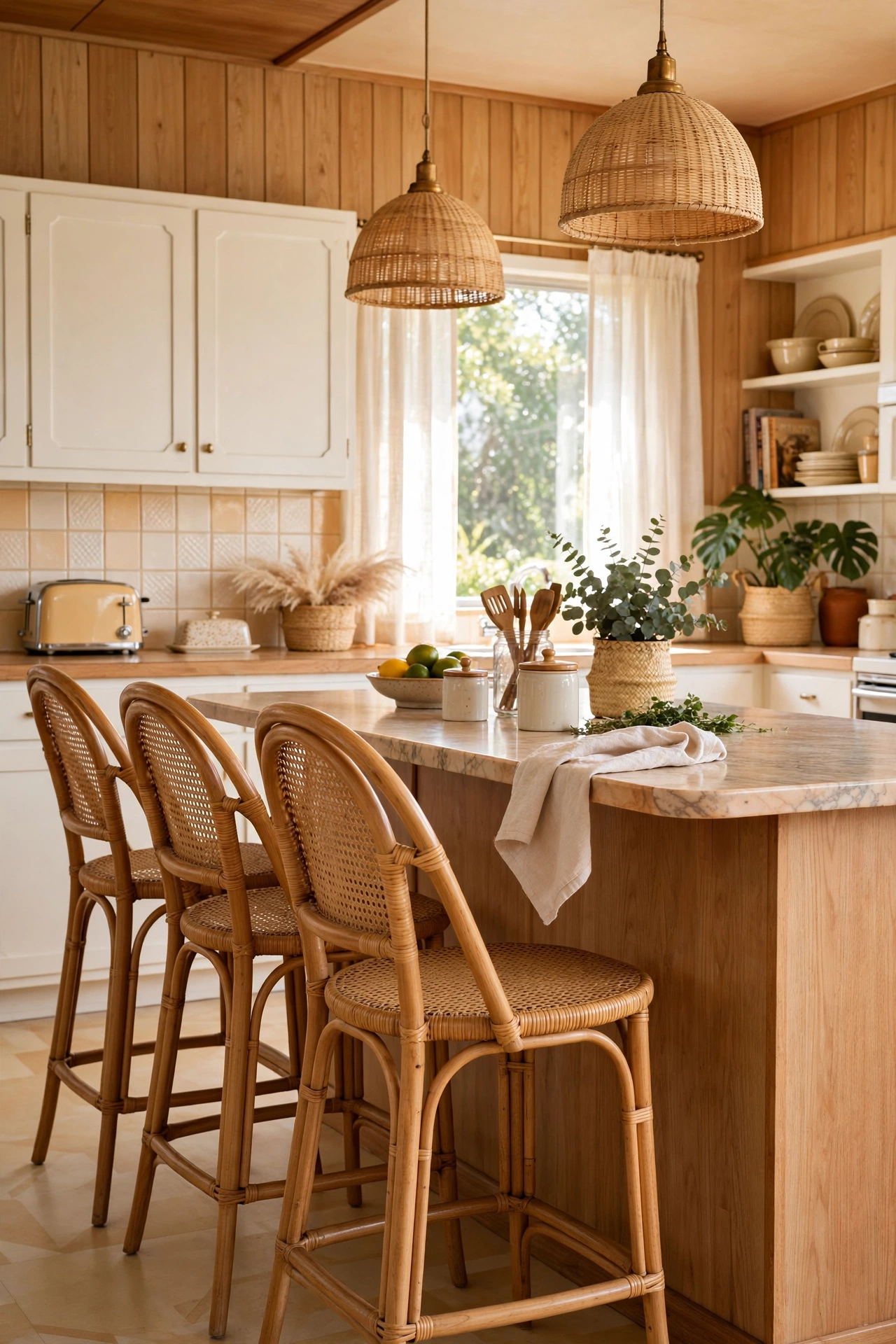
Introducing natural fibers is key to softening the hard lines of a kitchen. Rattan and cane seating, such as barstools or a breakfast chair, bring a bohemian 70s flair that feels light and airy. The organic texture of woven cane contrasts beautifully with smooth countertops and polished wood, adding visual interest and a sense of ease to the room. Rattan is also incredibly versatile and easy to find in vintage shops, making it a budget-friendly way to introduce a high-design element that feels both timeless and era-appropriate.
Create a Cozy Breakfast Nook
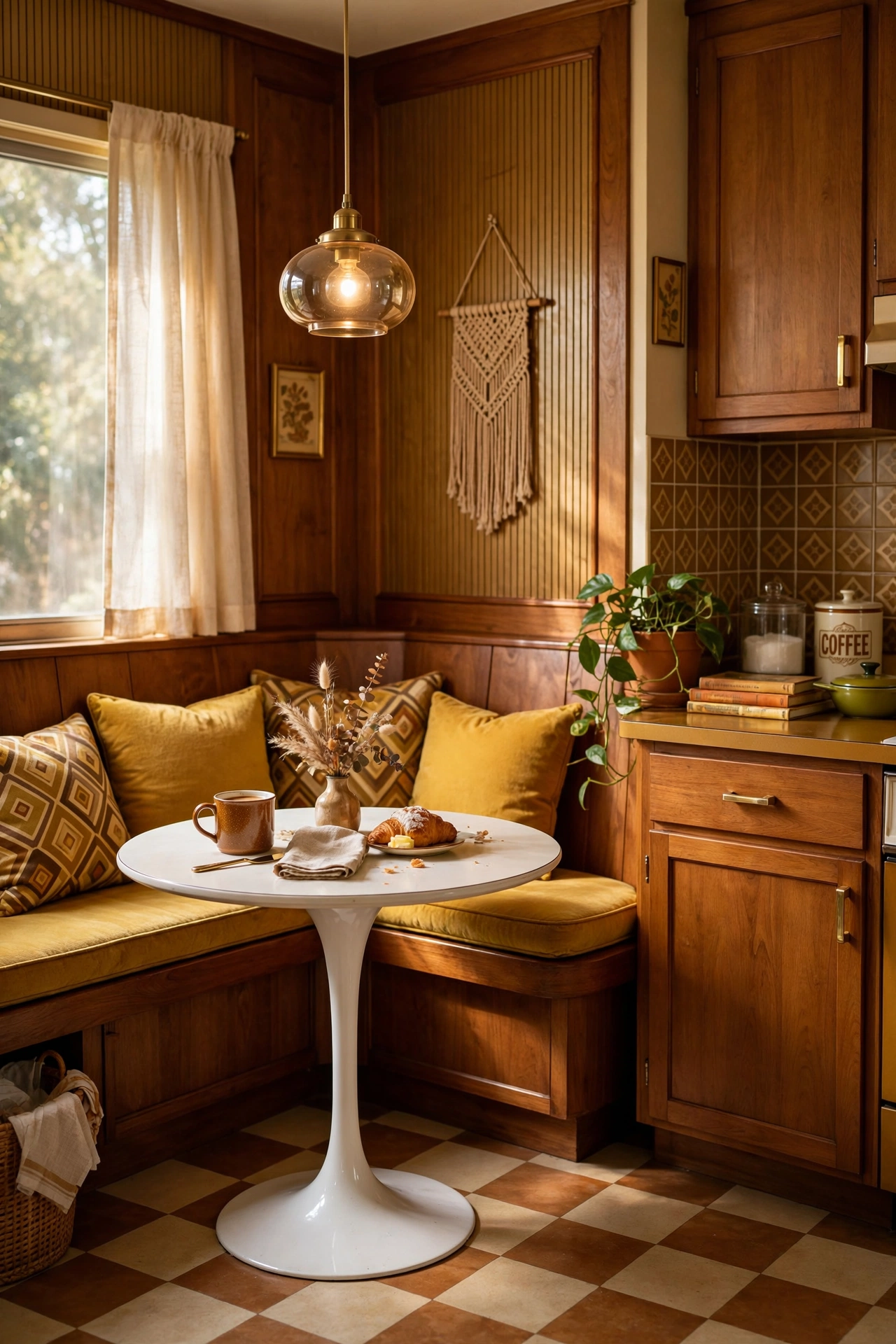
A dedicated breakfast nook is the epitome of 70s comfort. By utilizing a corner of the kitchen for a built-in bench or a small round table with upholstered seating, you create an intimate spot for morning coffee and conversation. Enhance the coziness by adding thick cushions in earthy tones and a small, low-hanging pendant light directly above the table. This design choice prioritizes the kitchen as a social hub rather than just a place for food preparation, encouraging a slower pace of life and adding a layer of residential charm.
Add Hanging Greenery and Macrame
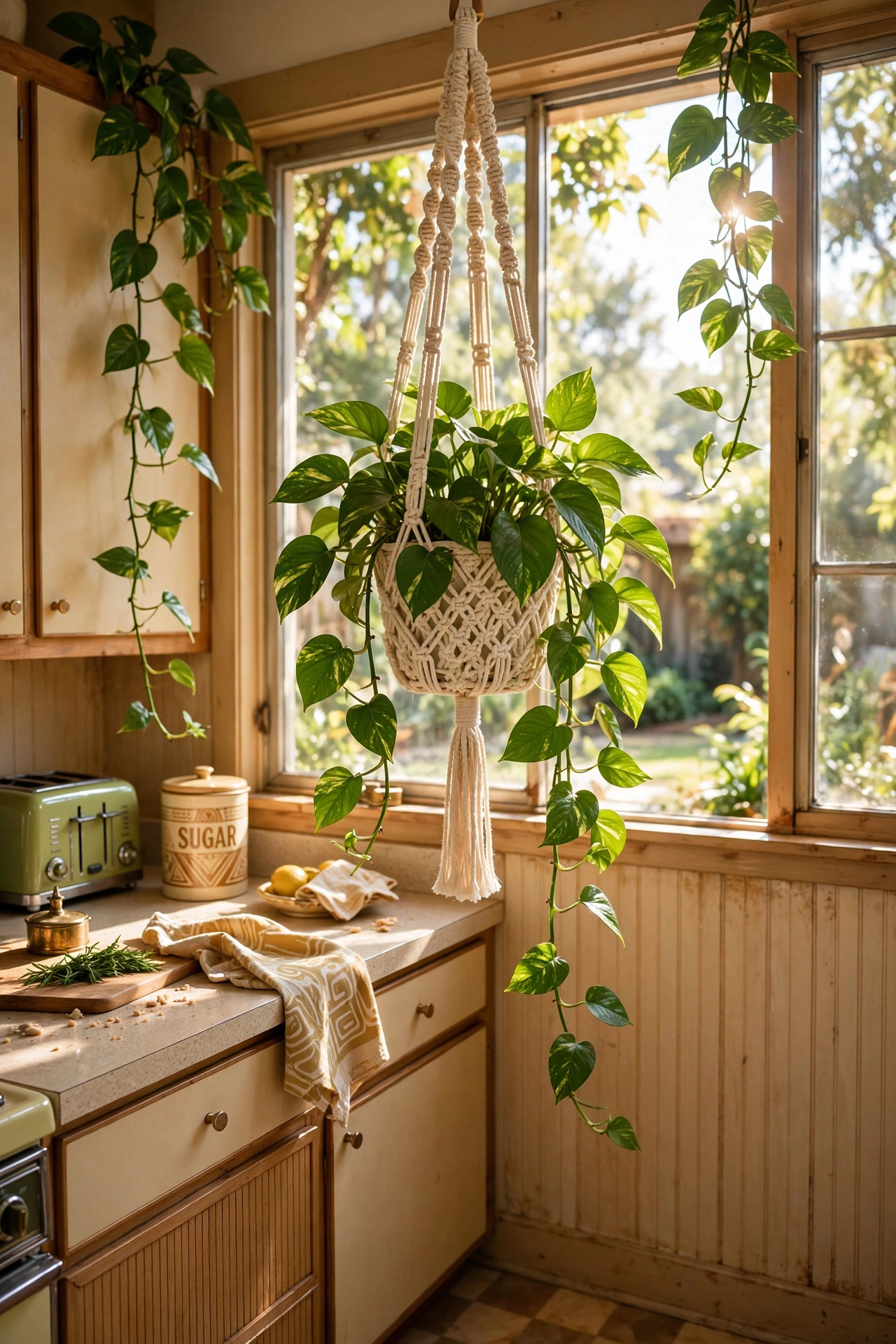
No retro kitchen is complete without the presence of nature. The 70s saw a massive surge in indoor gardening, and bringing this back adds a fresh, living contrast to the warm earthy palette. A trailing pothos or a spider plant suspended in a handcrafted macrame hanger by the window is a quintessential 70s detail. The greenery breathes life into the space, while the woven texture of the macrame complements the rattan and wood elements elsewhere in the room. It is an effortless way to blend a boho aesthetic with retro warmth.
Layer in Vintage-Inspired Textiles
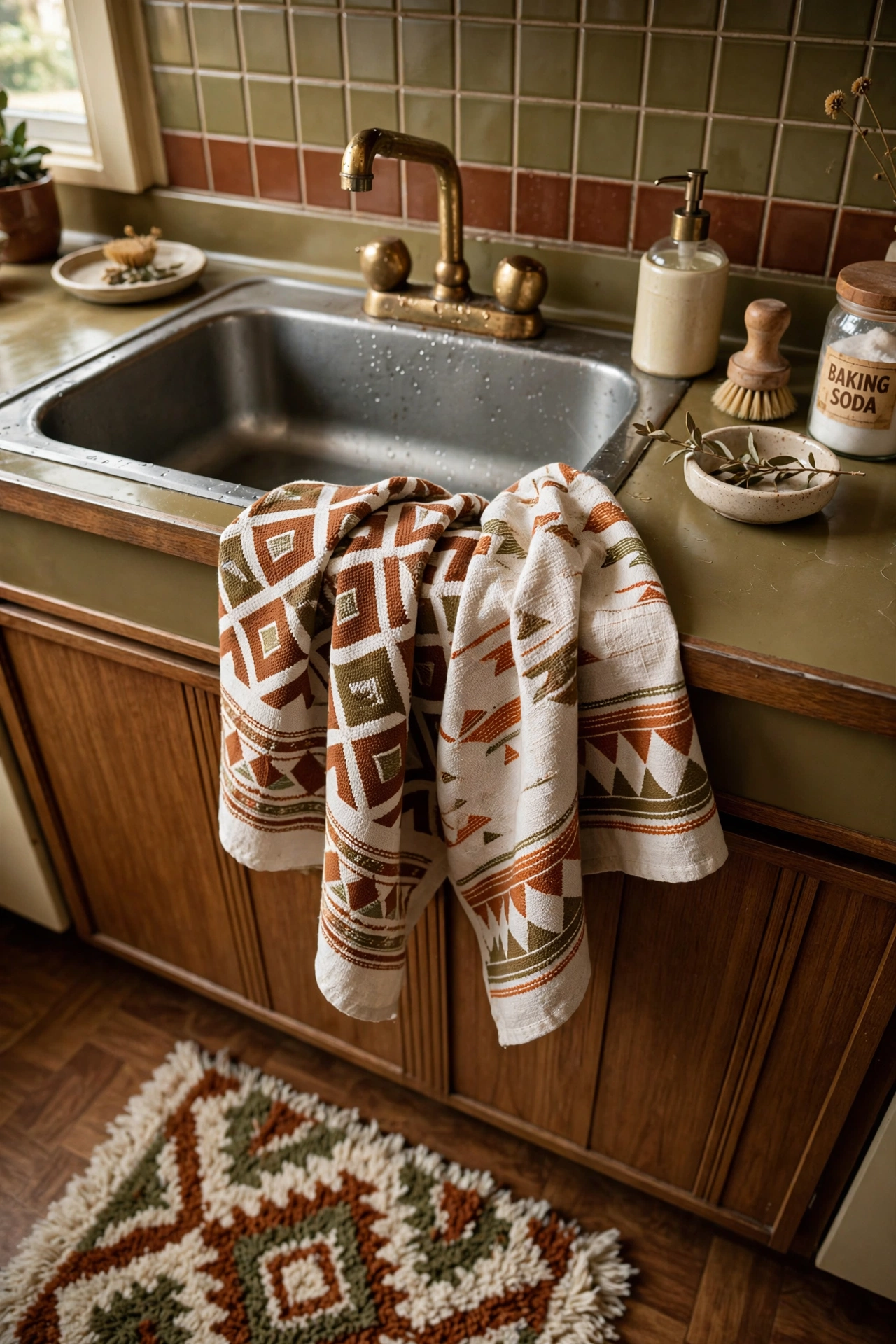
Textiles are the final layer that transforms a kitchen from a designed space into a home. Incorporate patterns through linen tea towels, a geometric table runner, or a small, plush shag rug placed strategically by the sink to add comfort underfoot. Focus on fabrics with a tactile quality, such as heavy cotton or wool, in a coordinated palette of rust, mustard, and olive. These elements are easily swapped according to the season, allowing you to refresh the look of your kitchen without any permanent changes while maintaining that cozy, nostalgic atmosphere.