
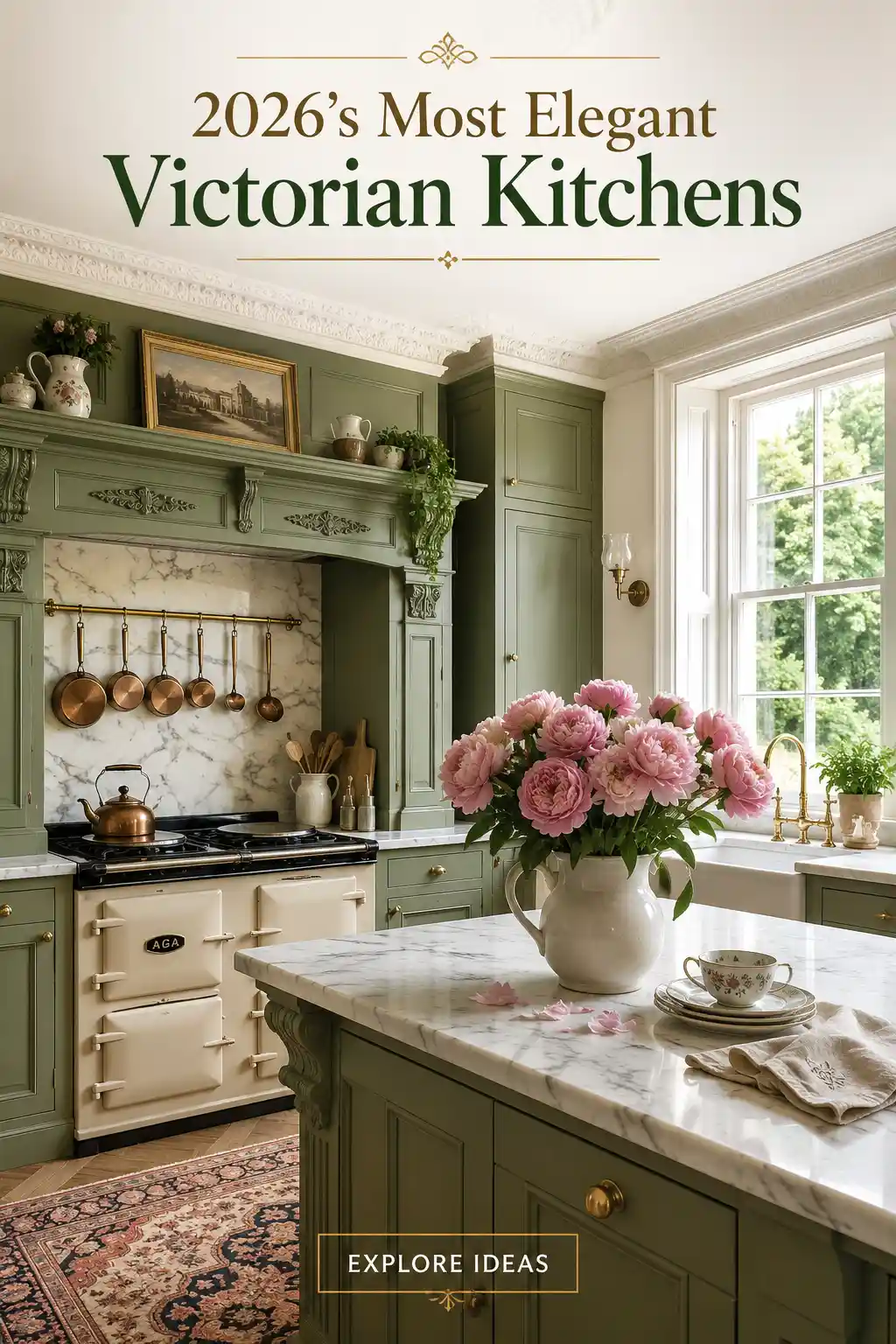
Bringing the opulence of the 19th century into the modern home requires a delicate balance of historical grandeur and contemporary utility. For 2026, the trend is shifting toward a more livable luxury, where ornate millwork and deep palettes meet airy textures and smart layouts. Whether you are renovating a period property or simply adding vintage soul to a new build, these inspirations prove that Victorian elegance is far from dated—it is a celebration of craftsmanship and personality.
Muted Sage and Natural Wood Harmony
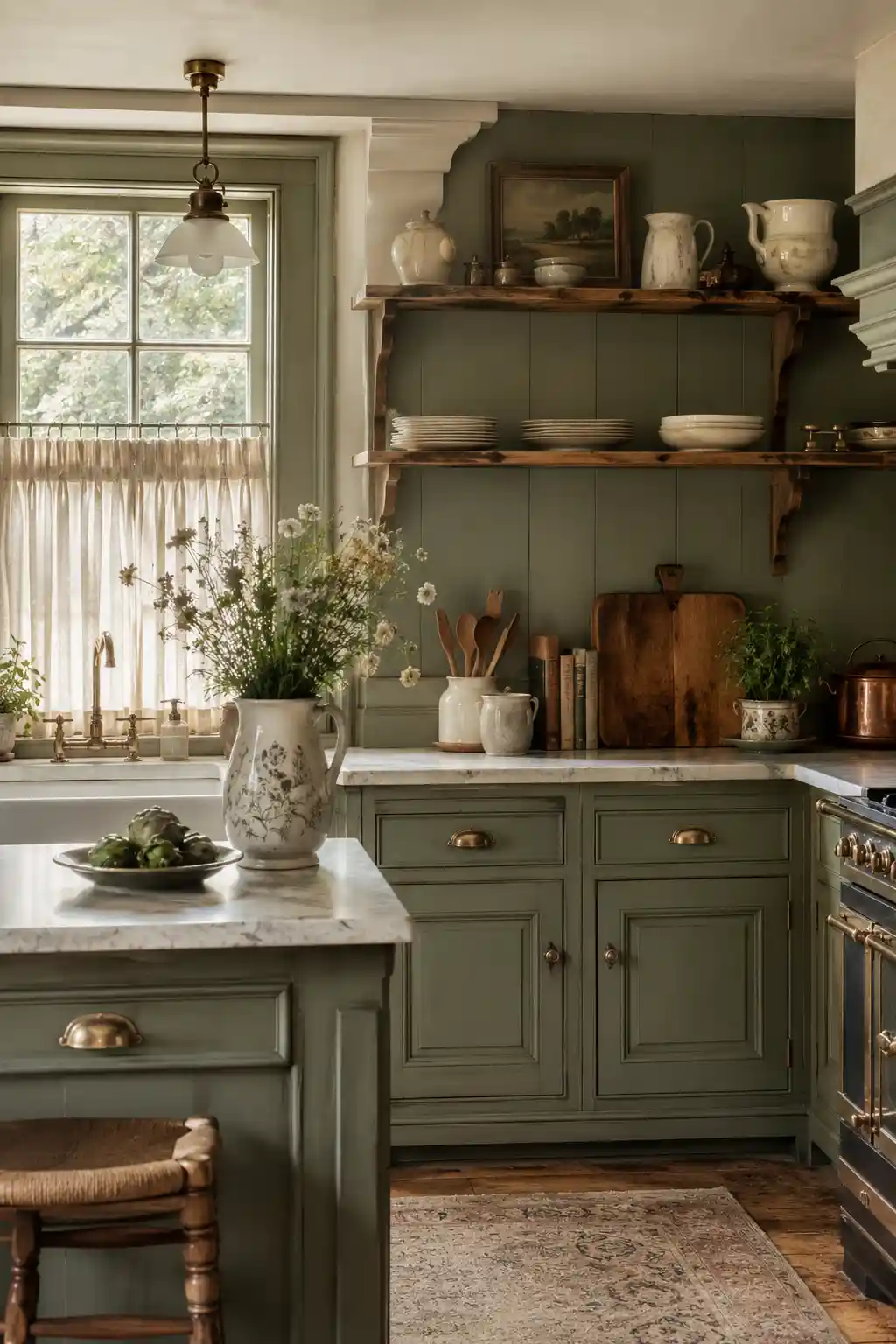
Creating a serene atmosphere begins with a palette that mirrors the natural world. Muted sage cabinetry offers a sophisticated yet calming foundation, especially when paired with the organic warmth of reclaimed pine shelving. To achieve this look, focus on layering soft textures; think linen curtains and woven jute runners that soften the hard lines of the cabinetry. This approach blends the structured elegance of the Victorian era with a rustic, cottage-core sensibility, making the kitchen feel like a sanctuary for slow mornings and homemade baking.
Deep Claret and Polished Brass Opulence
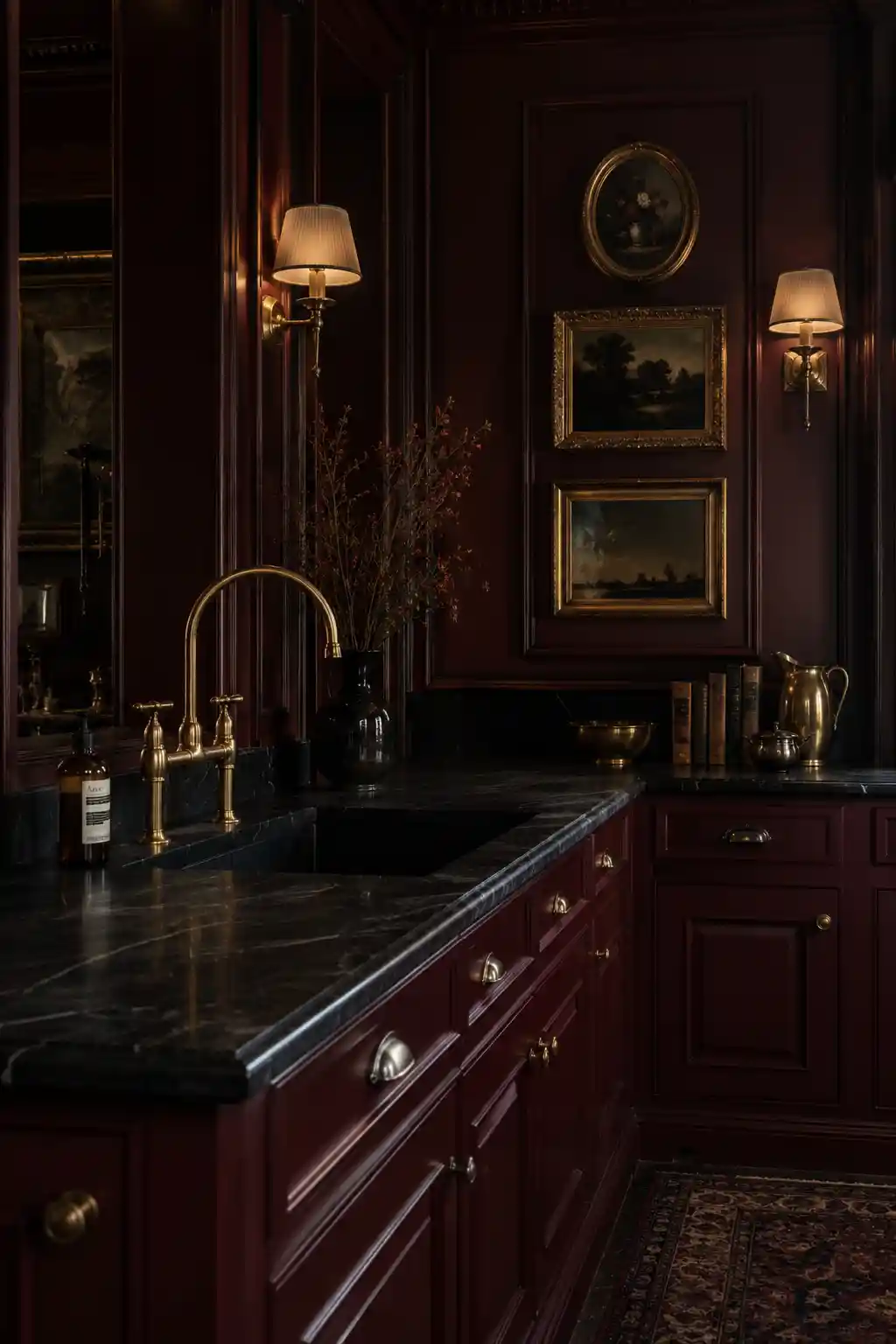
For those who crave drama, a deep claret or burgundy color scheme brings an immediate sense of regal sophistication. This bold choice works best when contrasted with high-shine elements like polished brass hardware and faucets, which act as jewelry for the room. To keep the space from feeling too enclosed, integrate carefully curated art pieces and reflective surfaces. This design is less about utility and more about atmosphere, evoking the feeling of a historic London townhouse where every detail is an expression of luxury.
The Provençal Victorian Fusion
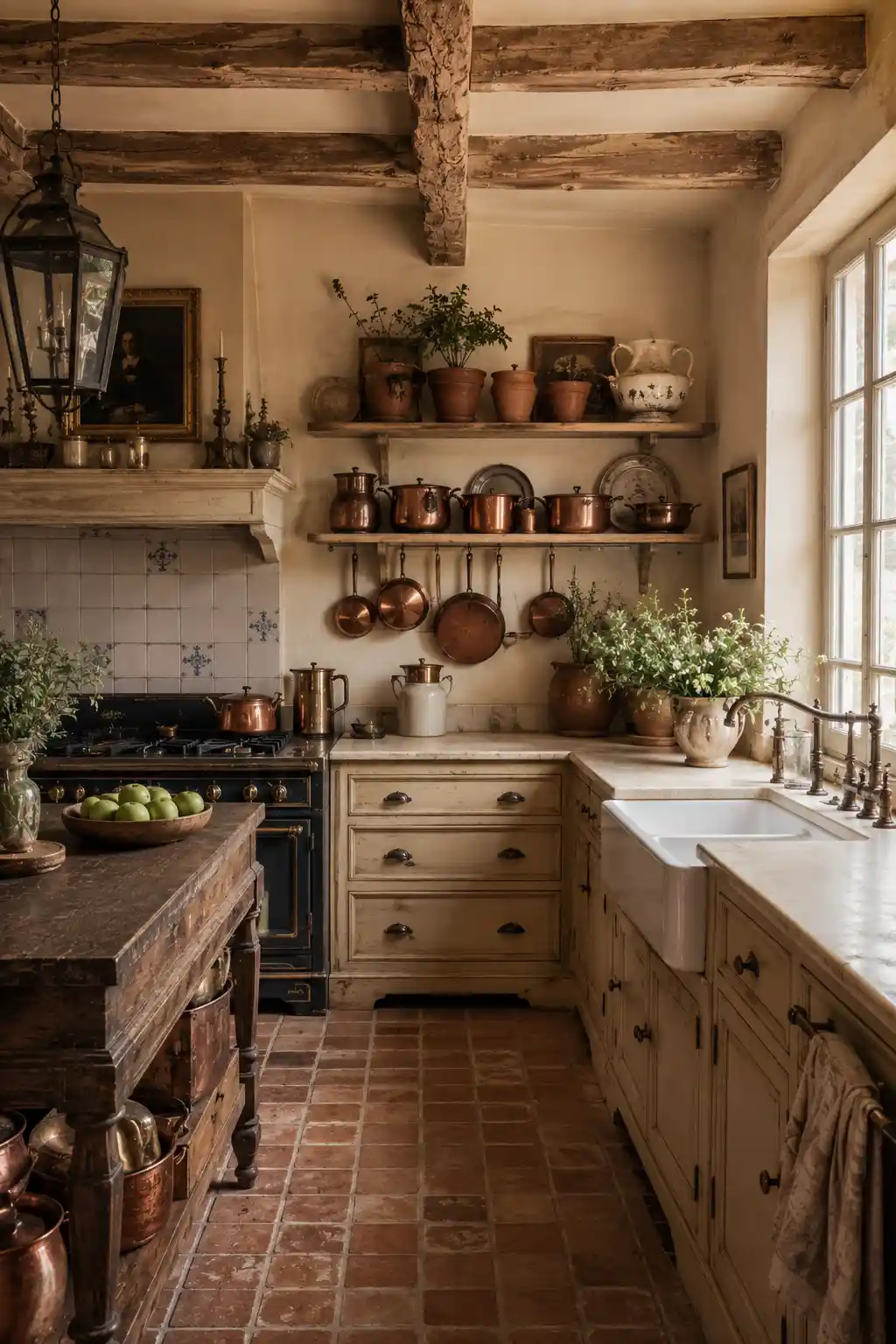
Merging the structured lines of Victorian design with the effortless charm of the French countryside results in a space that feels both curated and lived-in. The key here is the use of earthy materials—terracotta floors and exposed oak beams provide a grounding contrast to the refined cabinetry. By incorporating copper cookware and open shelving, you invite a sense of culinary passion into the room. It is a romantic style that prioritizes the joy of cooking and the beauty of imperfection.
Heirloom Maximalism and Gilded Accents
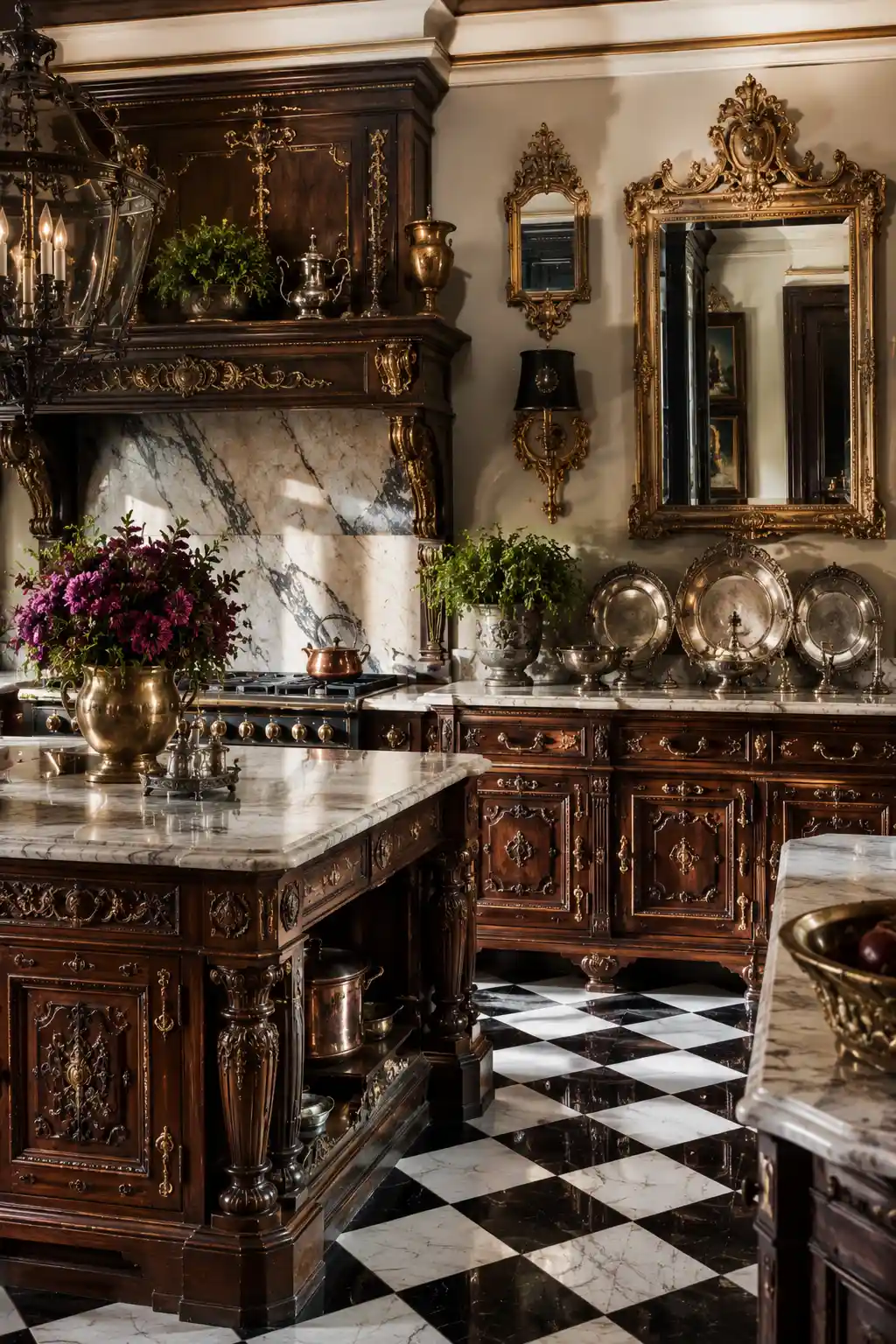
Maximalism in the Victorian sense is about celebrating a lifetime of collection. To execute this look, start with a bold foundation like a classic black and white checkerboard marble floor. Incorporate a statement piece, such as a heavily carved walnut island, and surround it with treasures: gilded mirrors, antique silver, and ornate porcelain. The secret to keeping this from feeling cluttered is intentionality; every piece should feel like it has a story, creating a rich, tapestry-like environment that feels opulent and personal.
Heritage Olive and Cream Americana
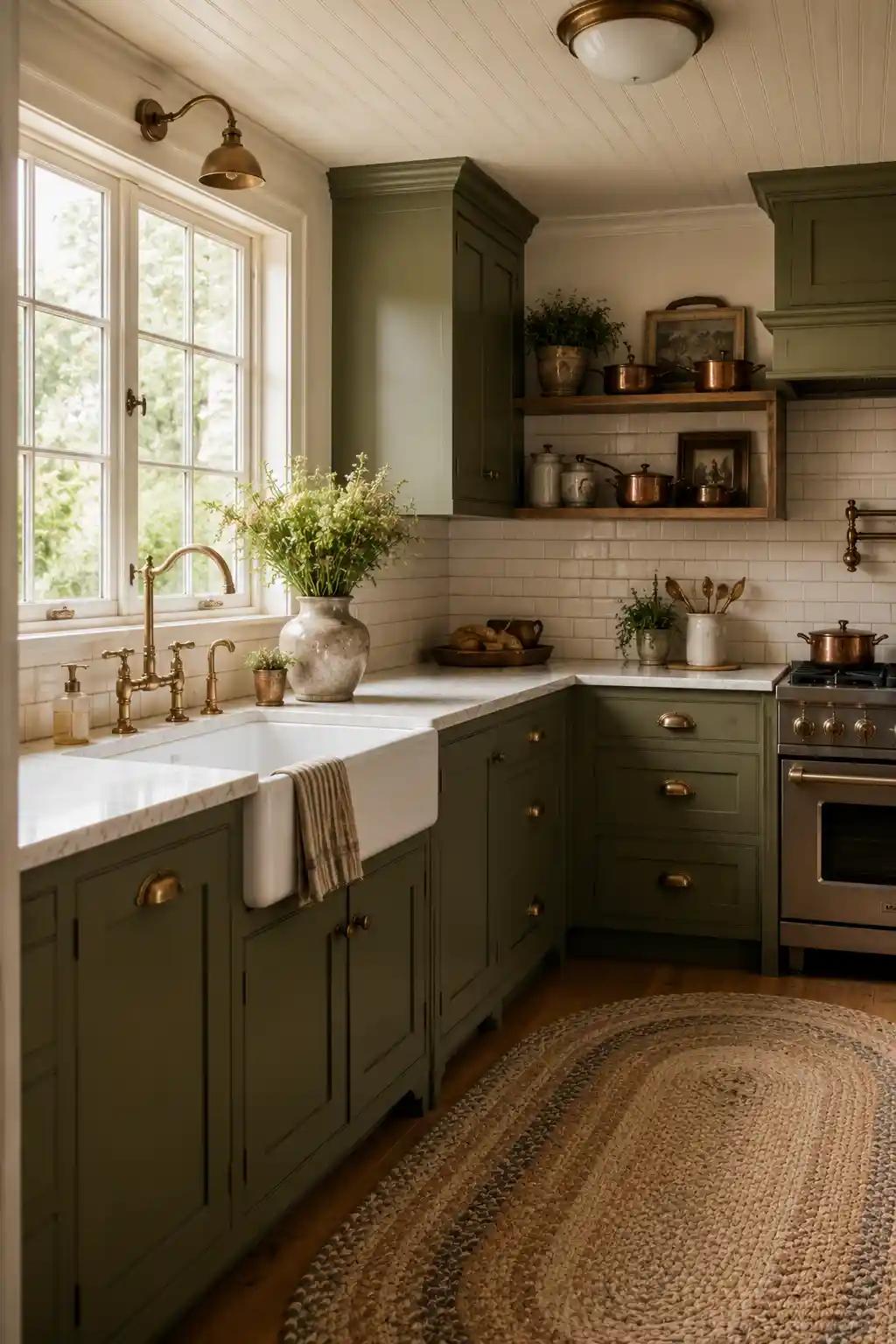
A heritage olive and cream palette creates a timeless look that bridges the gap between Victorian formality and early American comfort. The olive green provides a grounded, organic feel, while the cream accents keep the space feeling bright and open. By using traditional Shaker-style cabinetry and antique brass hardware, you honor historical design while maintaining a clean, functional layout. This style is perfect for families who want a kitchen that feels enduring, warm, and immune to passing trends.
English Garden Eclectic Charm
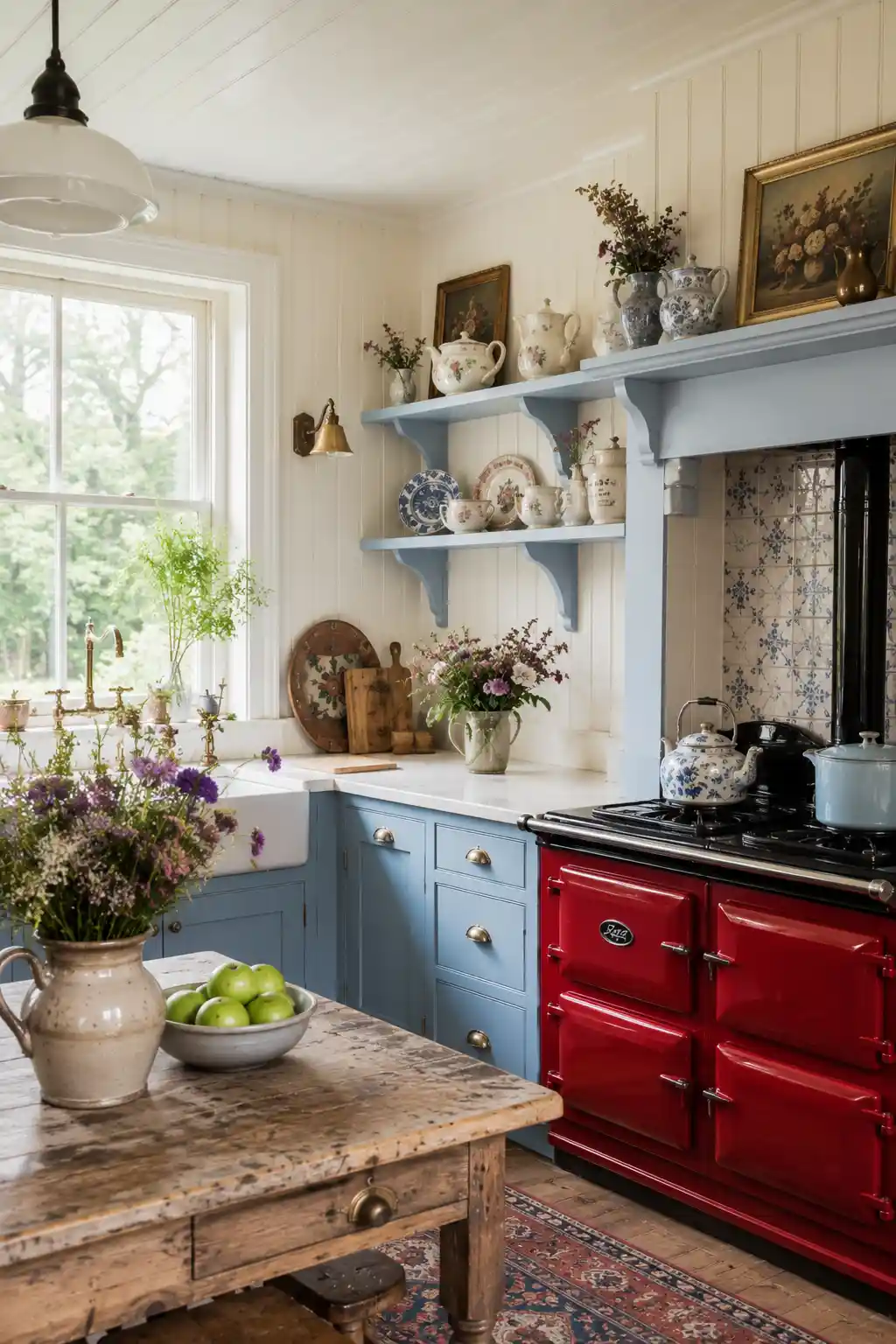
The English Eclectic style is all about whimsy and color. Pairing pale blue cabinetry with a striking red range stove creates a visually stimulating contrast that feels cheerful and welcoming. To lean into this aesthetic, embrace a curated clutter of vintage ceramics, floral textiles, and fresh botanical arrangements. This design encourages a playful approach to decor, where the goal is to create a space that feels like a sunny afternoon in a countryside cottage, full of soul and character.
Ethereal Manor Luxe in Celadon
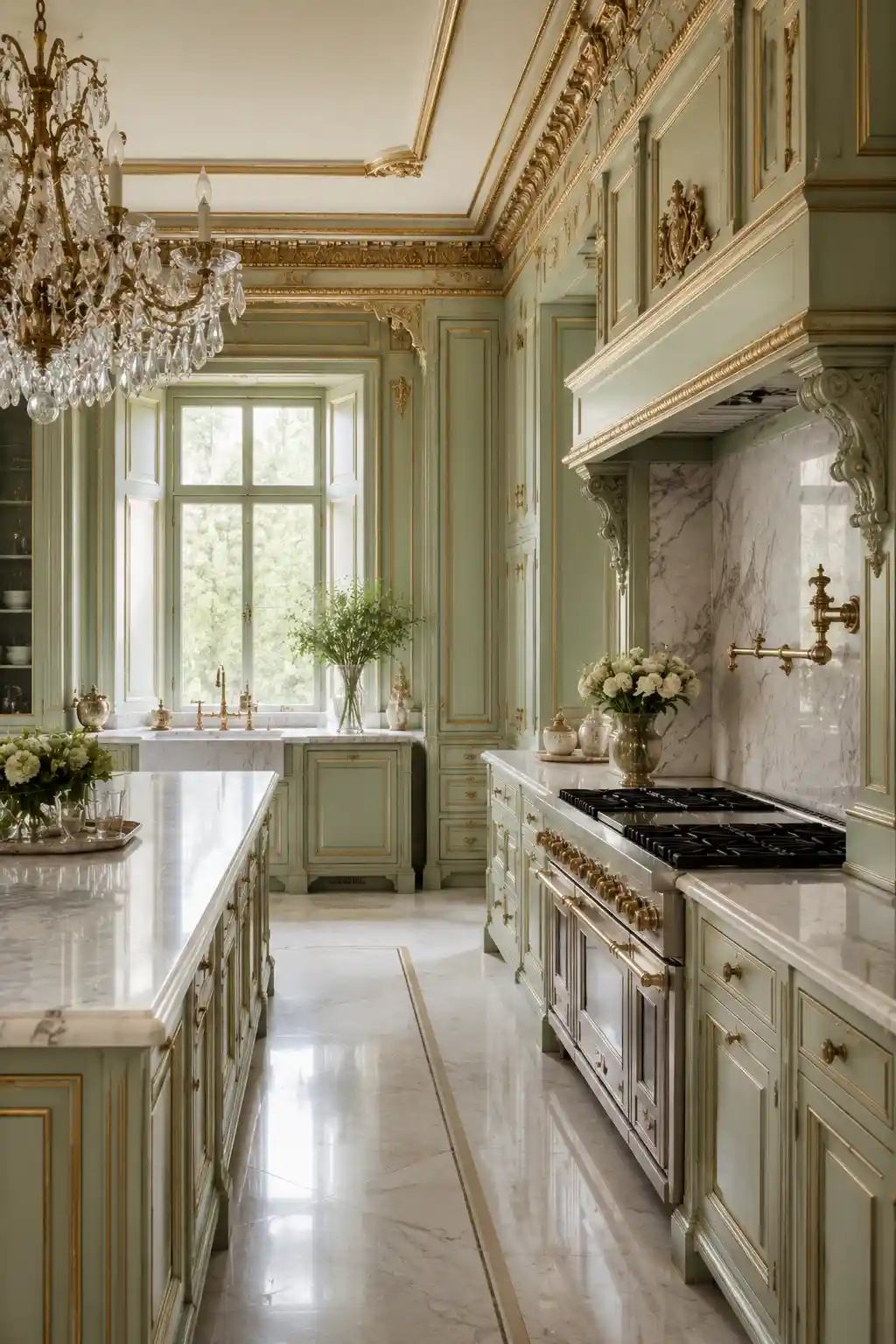
For a kitchen that feels like a breath of fresh air, celadon green paired with expansive white marble is the ultimate combination. This palette evokes the lightness of a grand manor house, where high ceilings and intricate moldings create a sense of architectural importance. The addition of a crystal chandelier adds a final touch of luxury, transforming the kitchen from a utility space into a formal room. This look is ideal for those who want their home to feel luminous, sophisticated, and airy.
Midnight Noir and Crystal Decadence
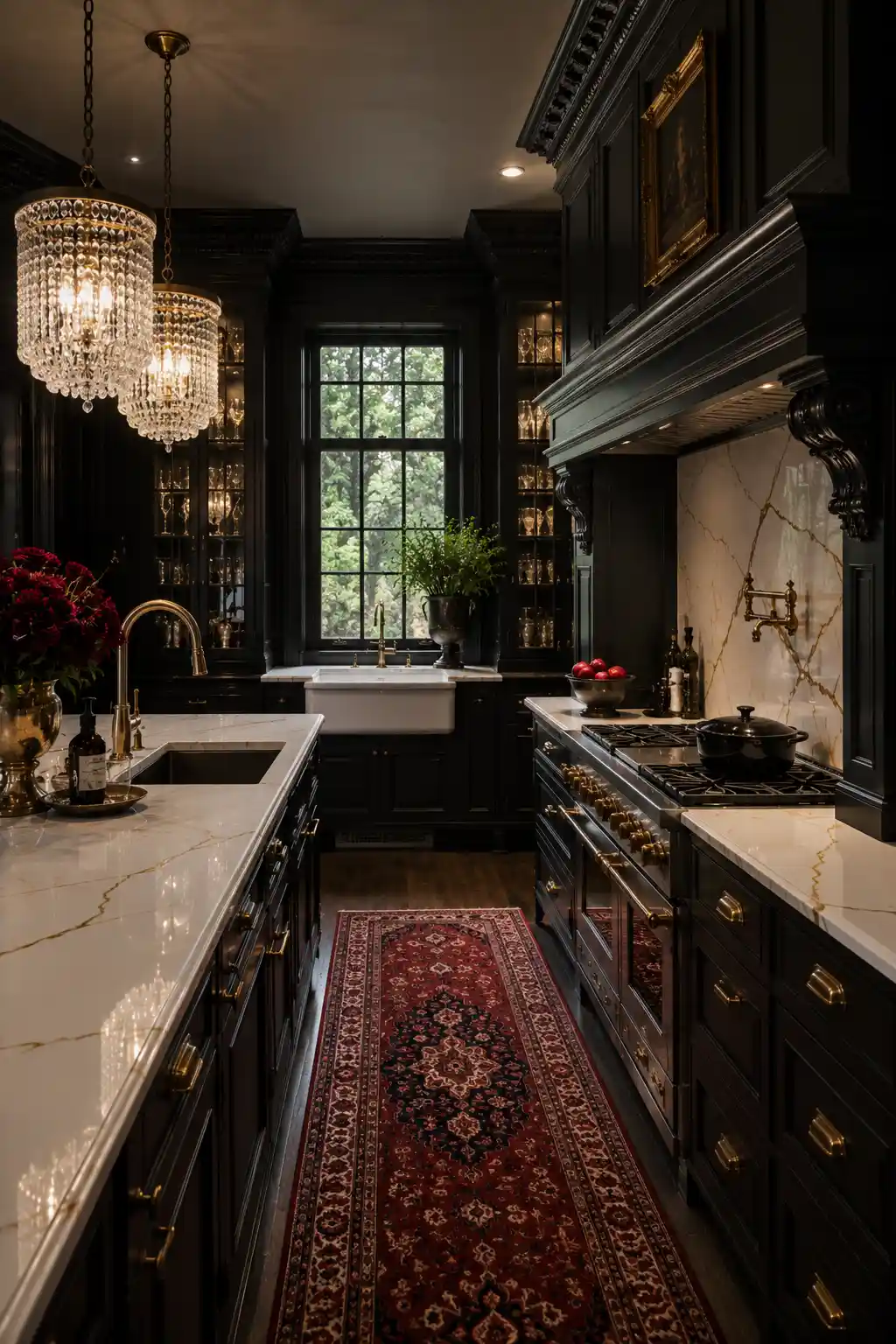
Dark and moody kitchens are making a powerful comeback for 2026. By using matte black or deep charcoal cabinetry, you create a dramatic backdrop that allows other elements to shine. Crystal pendant lighting provides a necessary sparkle, cutting through the darkness with sharp, elegant highlights. To add warmth to this high-contrast environment, integrate a rich textile, such as a red Persian runner, which introduces color and soft texture to the sleek, hard surfaces of the room.
Rustic Beadboard and Earthy Tones
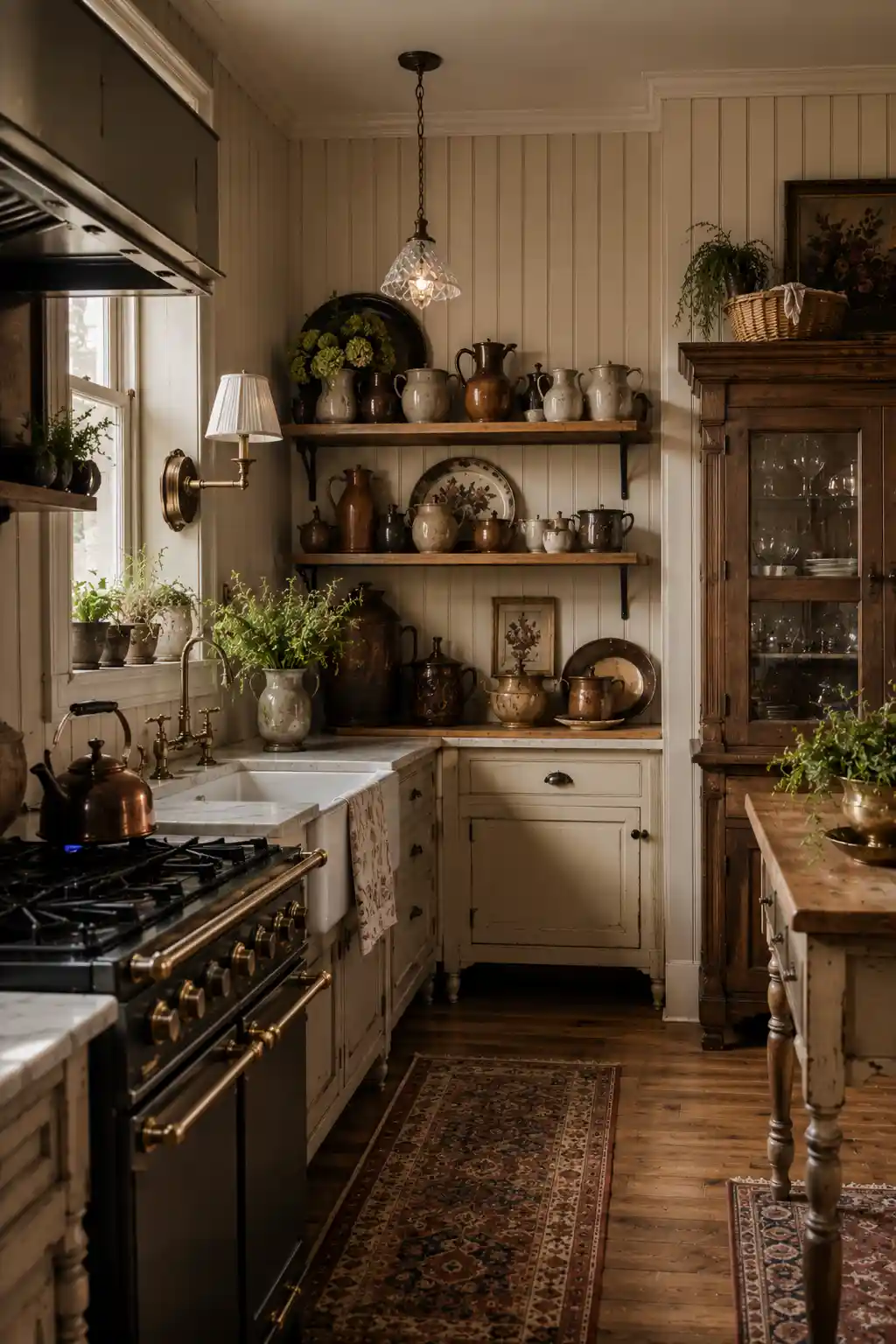
Beadboard paneling is a hallmark of the Victorian utility kitchen, and it brings a wonderful sense of texture and nostalgia to modern spaces. Combining cream-colored paneling with warm oak floors creates a cozy, cocoon-like feeling. Focus on using stoneware and copper accents to enhance the earthy vibe. This style is less about formal grandeur and more about the beauty of the everyday, making it perfect for a smaller kitchen or a breakfast nook that prioritizes comfort over formality.
Sculpted Walnut and Architectural Detail
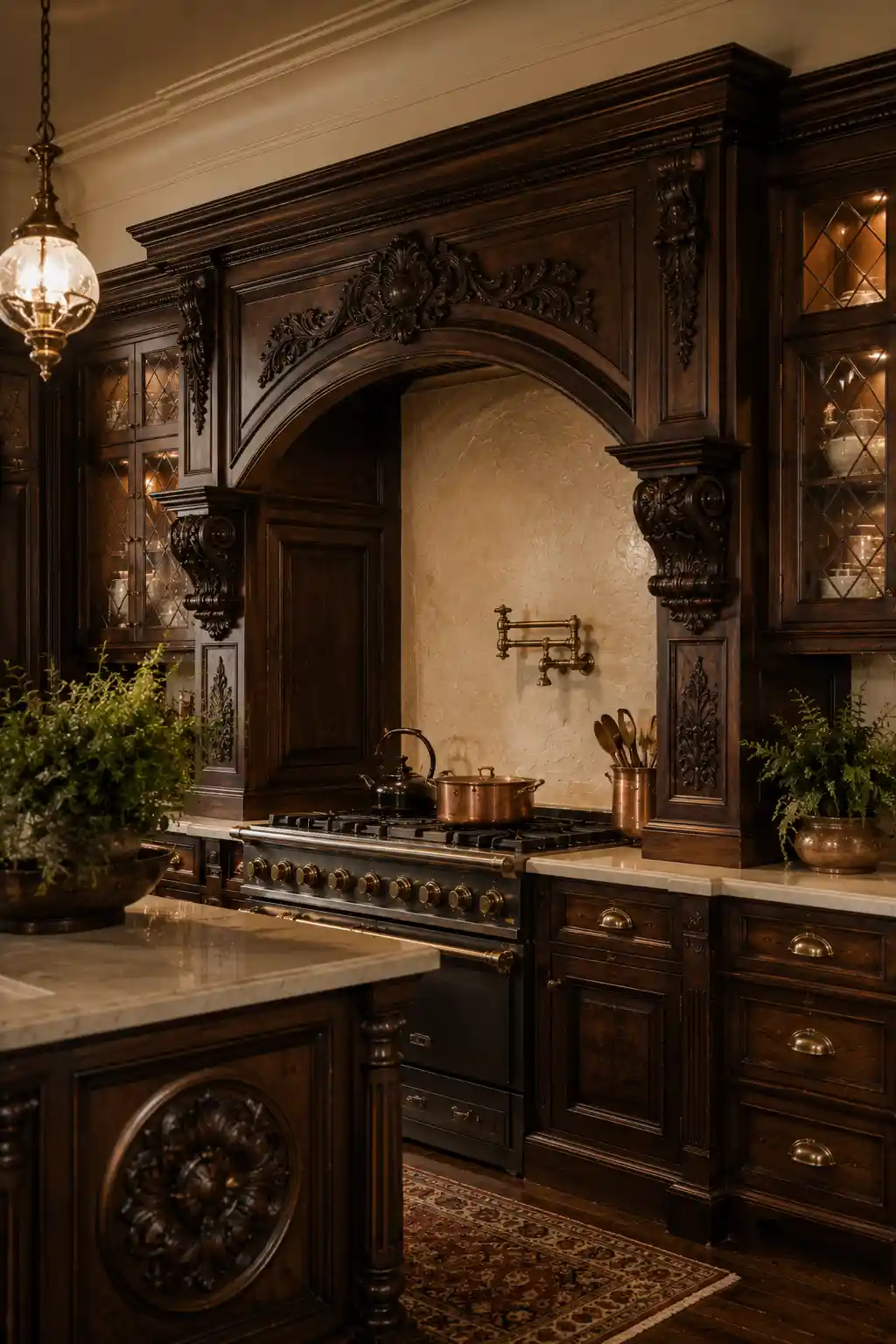
True Victorian style is defined by its commitment to craftsmanship. Investing in sculpted walnut cabinetry with intricate carvings or architectural details like an arched range alcove can transform a kitchen into a work of art. The deep, rich tones of walnut provide a sense of permanence and stability. When paired with warm amber lighting and neutral plaster walls, the woodwork becomes the focal point, celebrating the timeless skill of traditional carpentry in a modern functional setting.
Airy Lavender and Natural Stone Calm
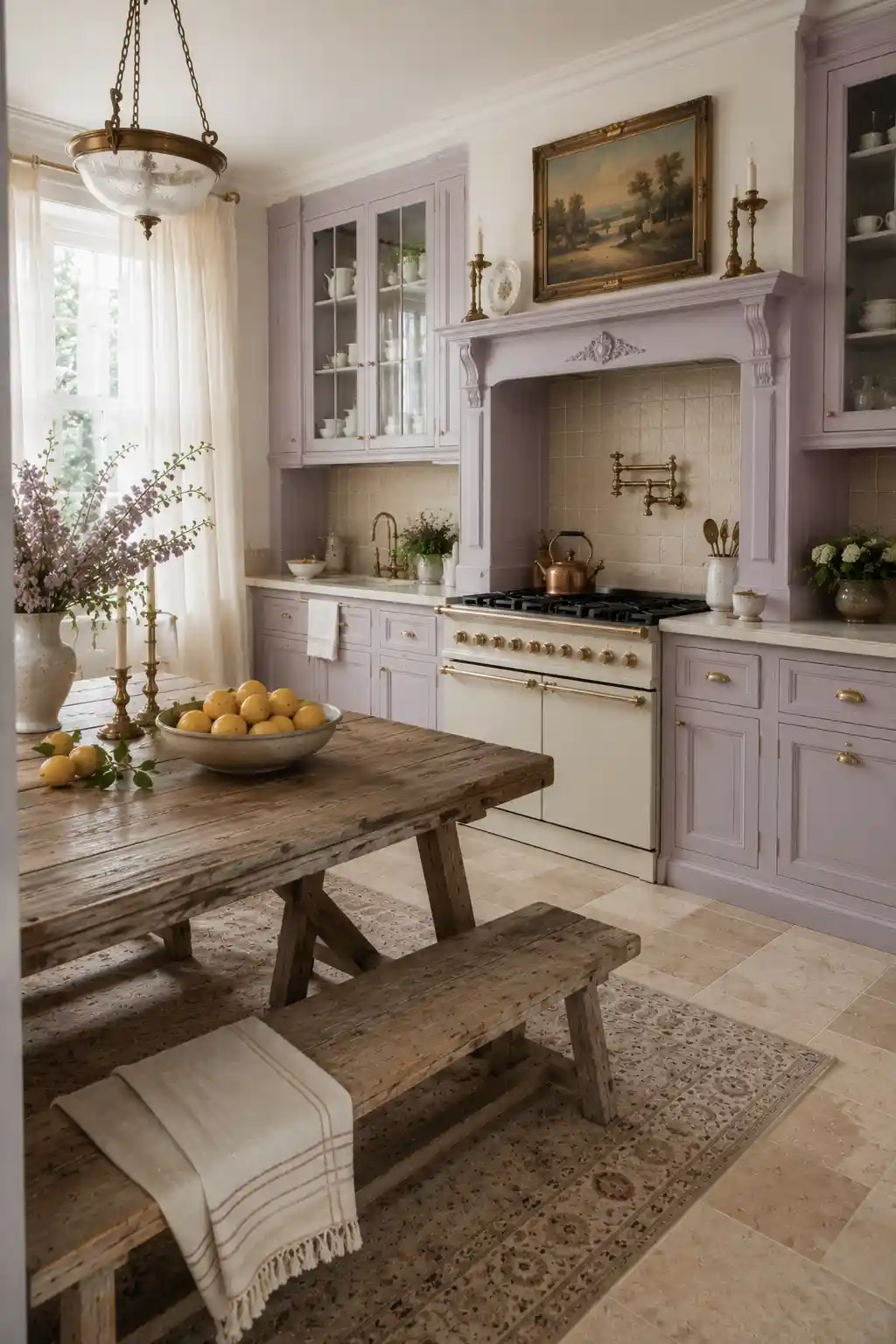
Lavender-grey is an unexpected but stunning choice for a Victorian-inspired kitchen, offering a soft, romantic alternative to the traditional greens and blues. When paired with light limestone flooring and a rustic wooden table, the result is a space that feels exceptionally calm and grounding. This color palette works beautifully with natural light, creating a soft glow that makes the kitchen feel open and inviting. It is a sophisticated take on country living that feels fresh and modern.
Botanical Mint and Copper Whimsy
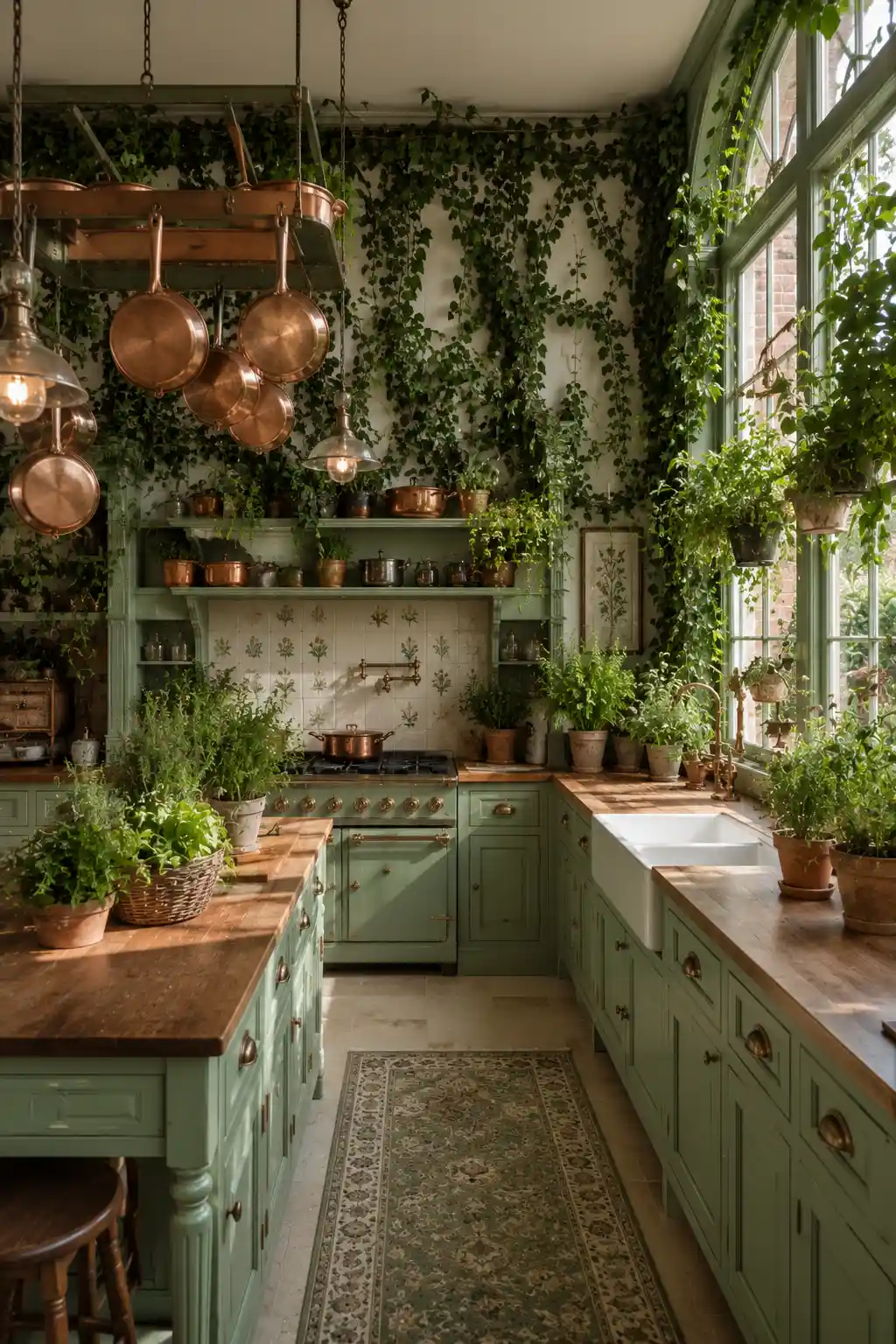
Bringing the outdoors in is a key theme for 2026. A botanical-themed kitchen featuring mint green cabinetry and butcher block counters creates a vibrant, energetic space. To lean into the ‘greenhouse’ feel, incorporate trailing plants and a dedicated herb wall. Copper accents, such as hanging pot racks or a farmhouse sink, add a touch of traditional warmth that balances the coolness of the mint. This design is perfect for the gardener who wants their kitchen to feel like an extension of the yard.
Chinoiserie Blue and White Elegance
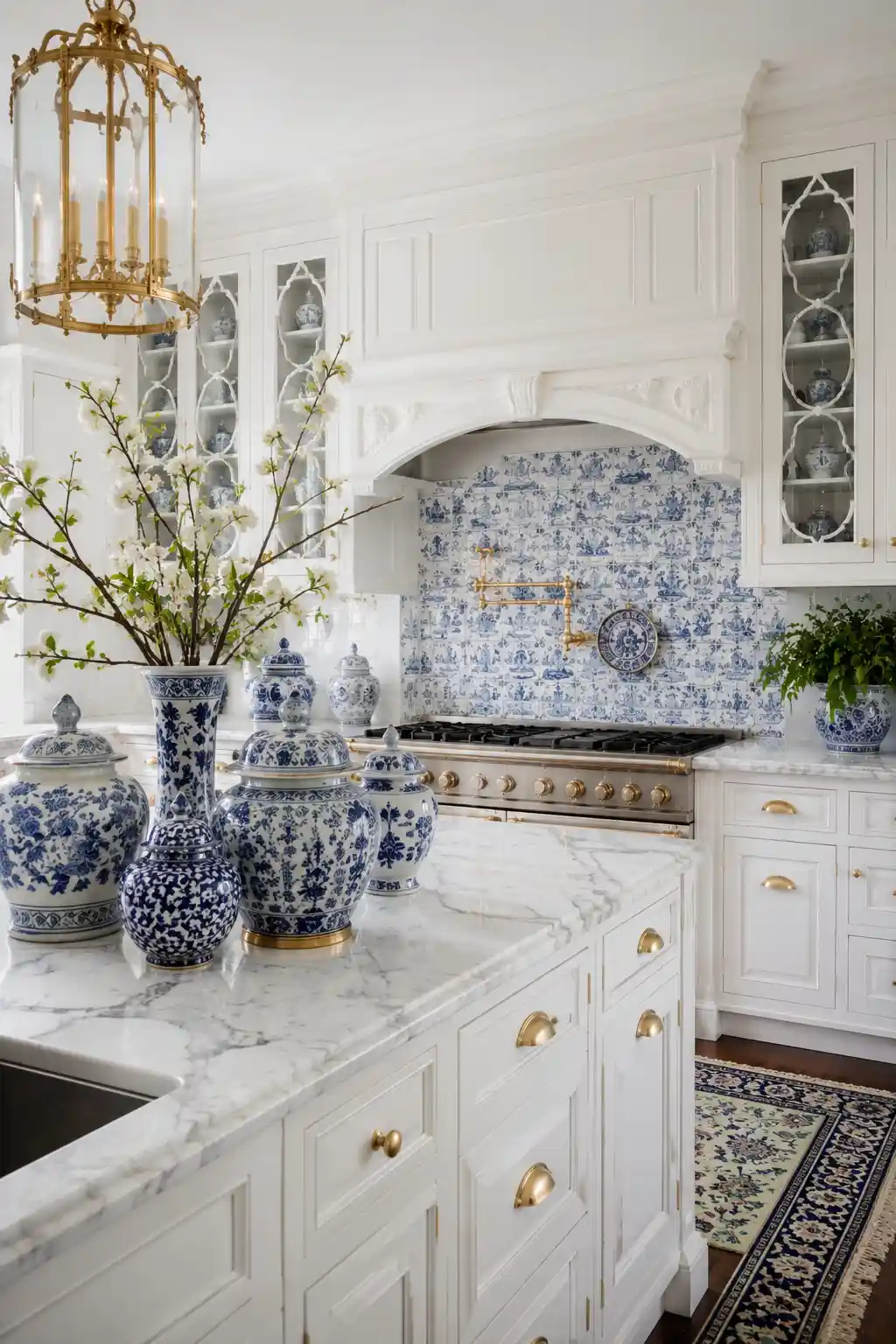
The influence of the Far East was prominent during the Victorian era, and the Chinoiserie style remains a peak of elegance. By using a crisp white base for your cabinetry and walls, you create a gallery-like space that allows blue and white porcelain to stand out. Incorporate patterned tiles and gold hardware to add layers of luxury. This look is polished and symmetrical, offering a sophisticated aesthetic that feels curated and timeless, perfect for those who love a classic, high-contrast interior.
Stately Butler’s Pantry Symmetry
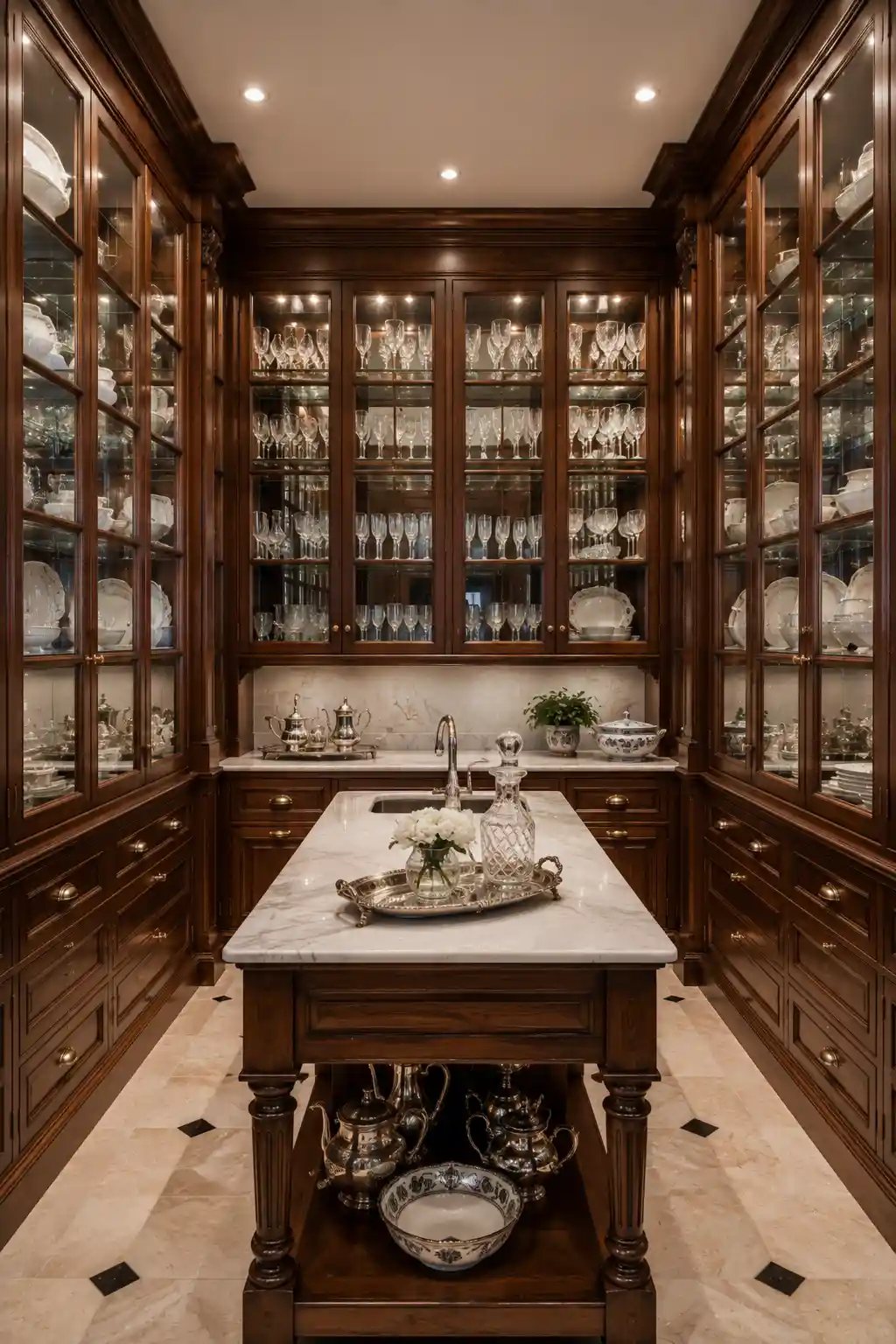
The butler’s pantry is the epitome of Victorian organization and status. To bring this look into 2026, focus on symmetry and transparency. Floor-to-ceiling glass-front cabinetry allows you to display heirloom china and crystal as part of the decor. A central prep table with a marble top provides a functional workspace while maintaining the room’s formal air. This design is about the beauty of order, creating a space that is as visually satisfying as it is practically useful for the modern host.