
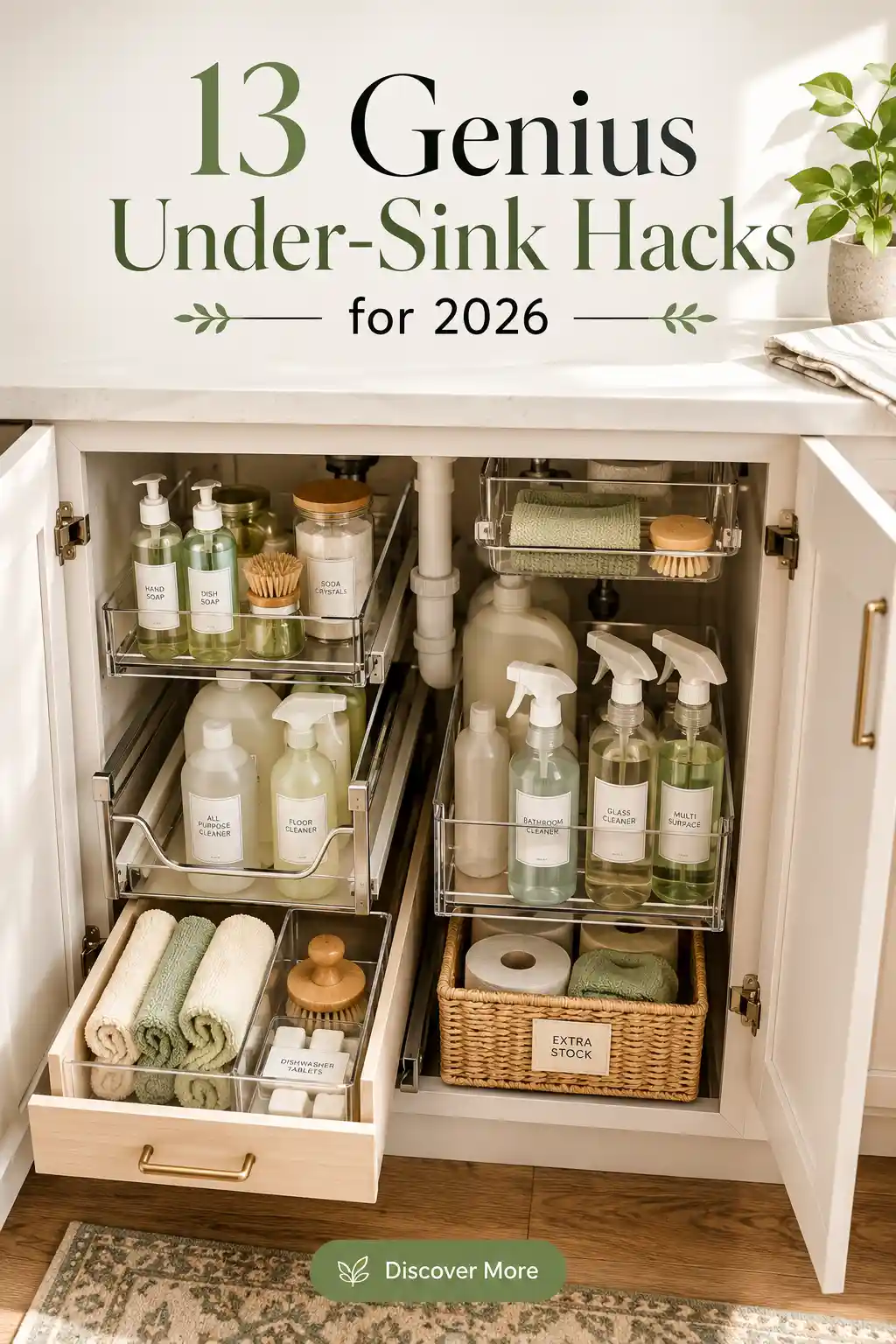
The area beneath the kitchen sink is often the most neglected corner of the home, quickly becoming a chaotic catch-all for sponges, spray bottles, and mystery containers. However, with the right strategy, this awkward space can be transformed into a high-functioning hub of efficiency. In 2026, home organization is shifting toward a blend of minimalist aesthetics and extreme practicality. By implementing smart zoning and utilizing vertical space, you can eliminate the daily frustration of digging through clutter and instead create a serene, streamlined environment that simplifies your cleaning routine.
The Clarity of Transparent Acrylic Bins
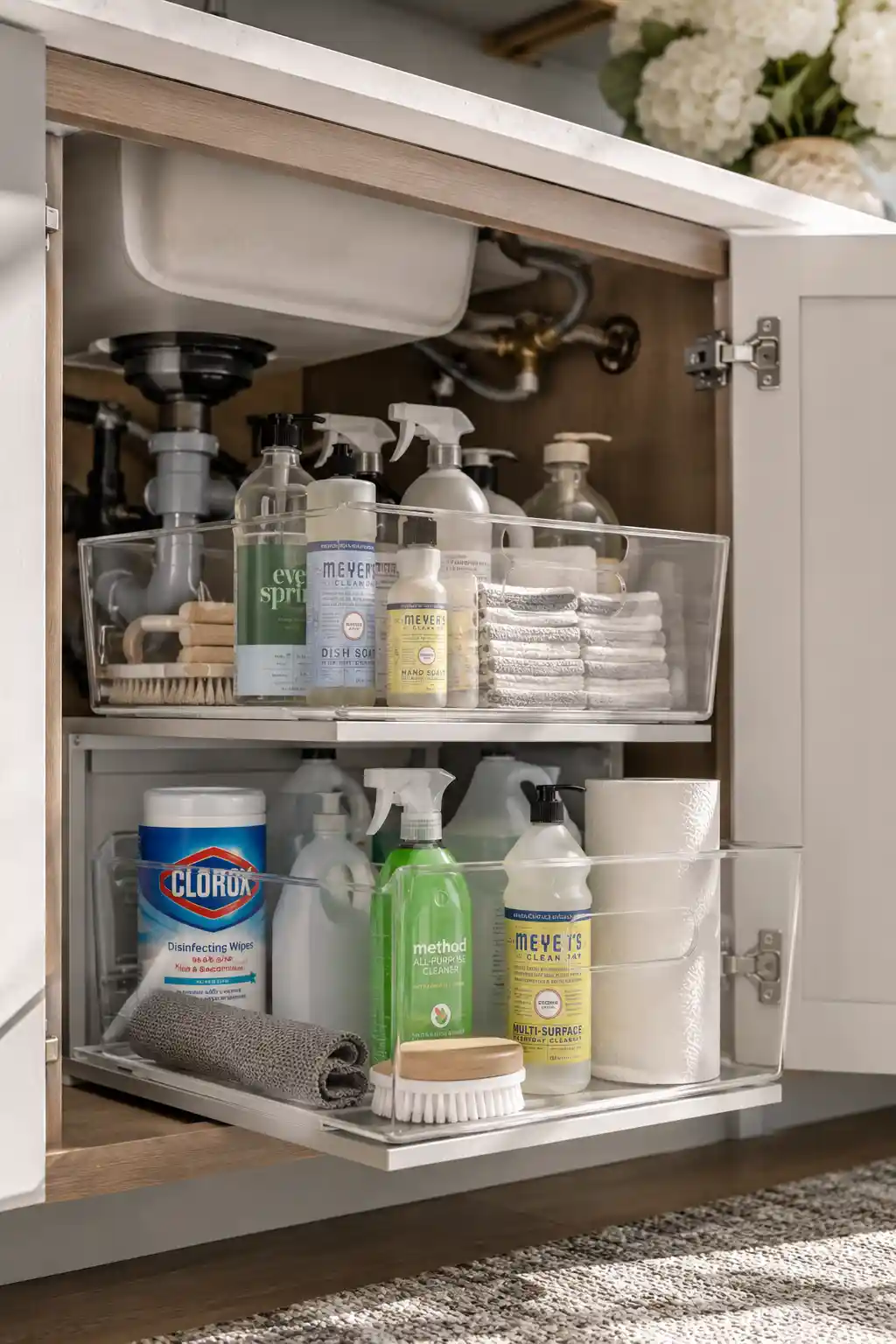
One of the most effective ways to combat the ‘black hole’ effect of under-sink storage is the implementation of transparent acrylic bins. By using clear containers, you eliminate the guesswork involved in finding a specific cleaner or sponge, reducing the time spent digging through the back of the cabinet. This visual clarity not only makes the space feel larger and airier but also encourages you to maintain the order, as any new clutter is immediately visible. For 2026, the trend is toward thicker, high-grade acrylics that feel like glass but offer the durability needed for a utility space.
Ergonomic Pull-Out Sliding Drawers
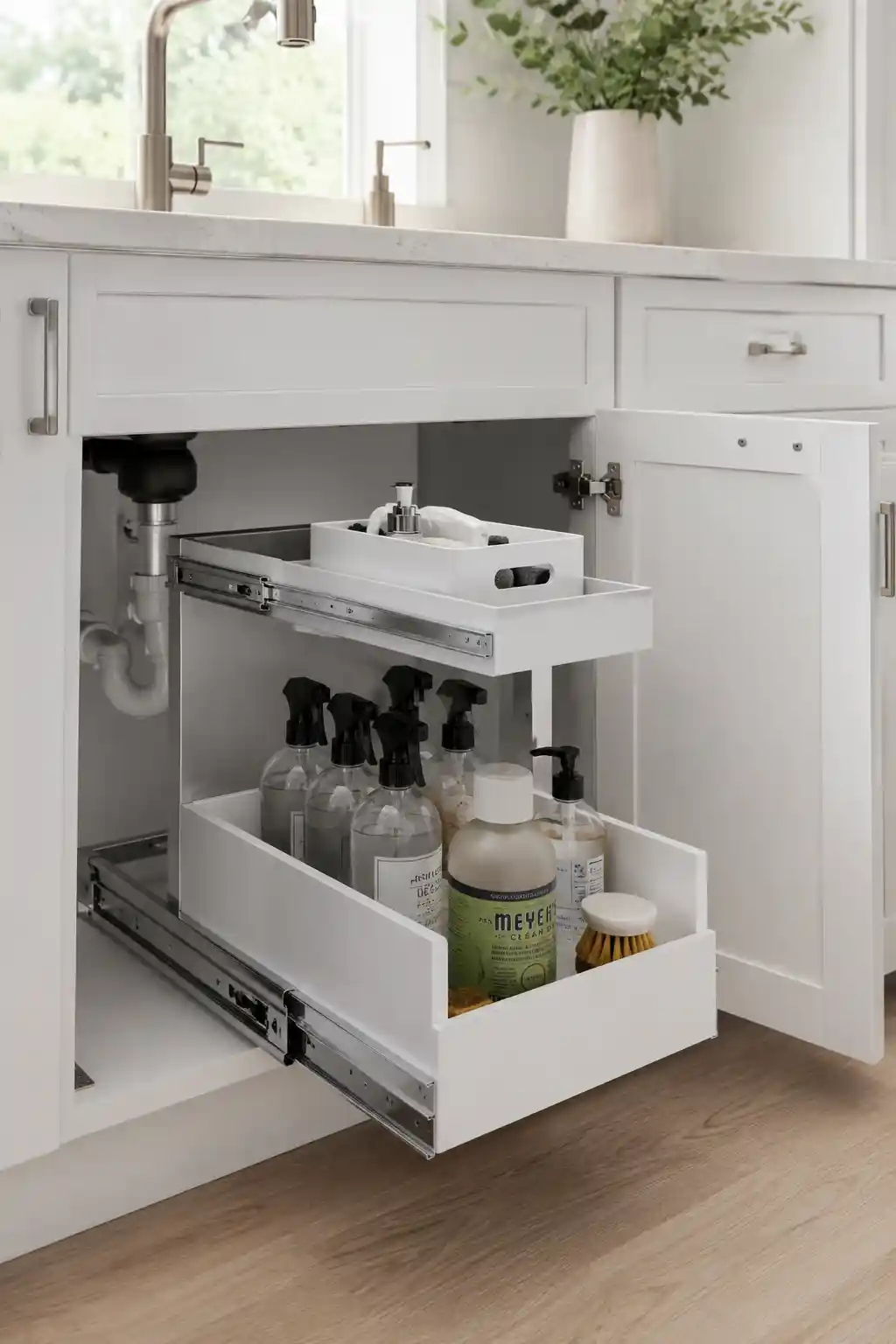
The biggest challenge with under-sink organization is often the awkward plumbing that blocks traditional shelving. High-quality pull-out sliding drawers are the ultimate solution, allowing you to bring the contents of the cabinet directly to you. Instead of kneeling on the floor to reach a bottle at the back, a simple glide reveals everything in a single view. These systems are particularly effective for storing heavier items like gallon-sized detergents or bulk refills, ensuring that weight is distributed evenly and accessibility is maximized without compromising the architectural flow of your kitchen cabinetry.
Verticality with Tiered Sliding Organizers
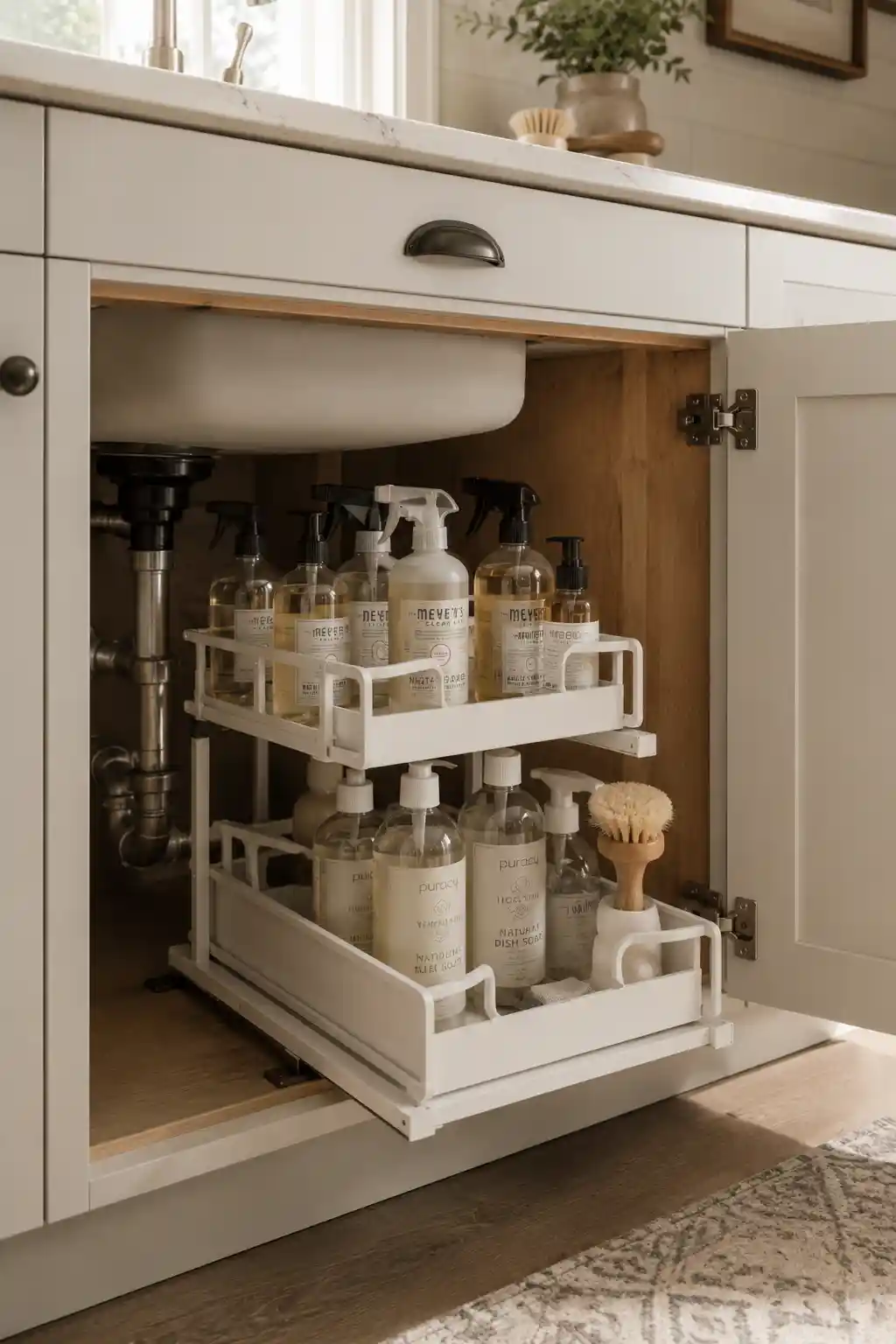
Maximizing the vertical gap between the sink basin and the cabinet floor is key to an efficient layout. Tiered sliding organizers utilize this often-wasted ‘air space’ by creating multiple levels of storage. By stacking your supplies vertically, you prevent the frustrating habit of piling bottles on top of one another, which usually leads to a collapse when you try to retrieve something from the bottom. This structured approach creates a visual hierarchy, where the most frequently used items sit on the top tier for instant access, while seasonal cleaners are tucked away below.
Minimalist Labeling for Decision-Free Storage
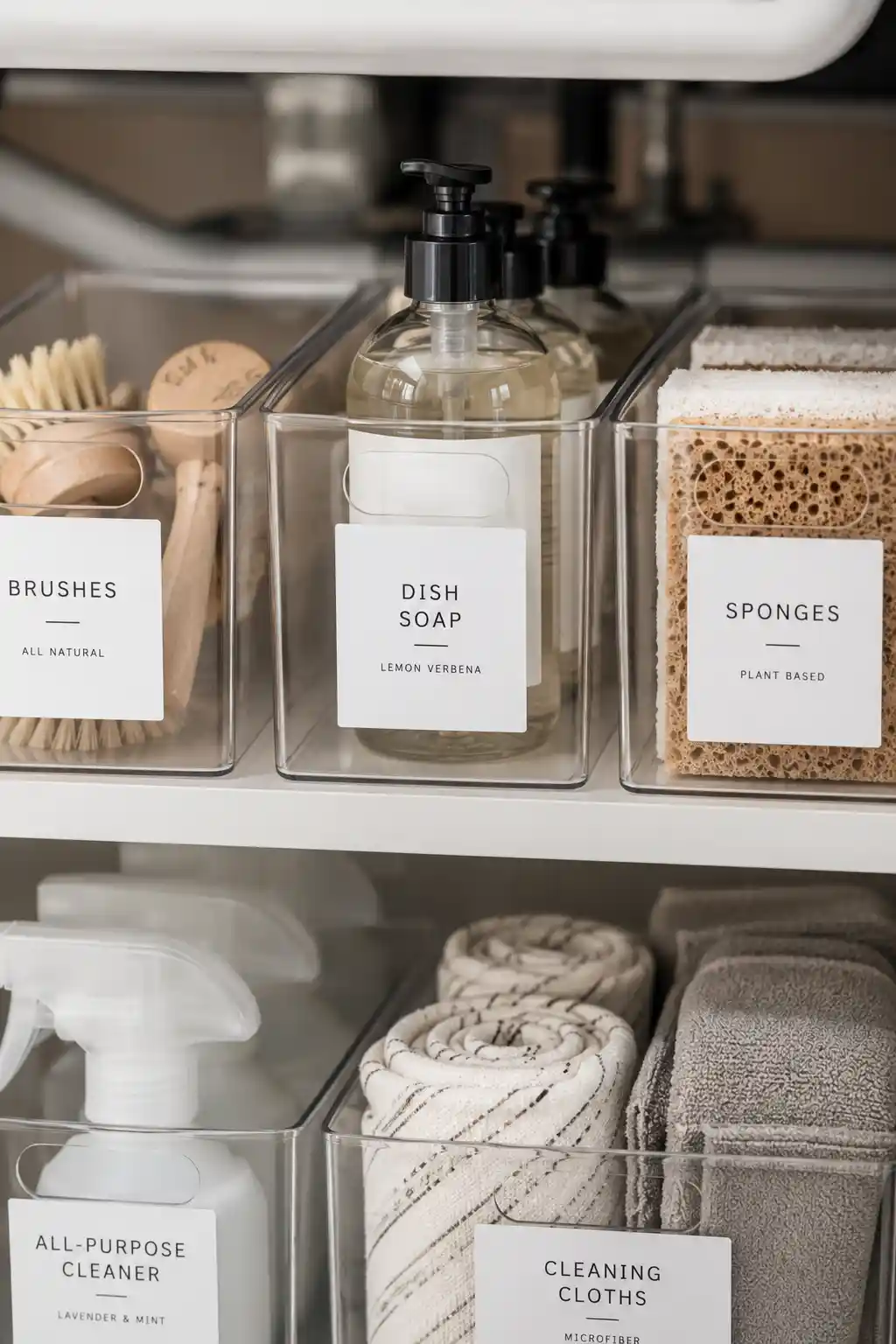
Organization is only as sustainable as the system behind it. Integrating a minimalist labeling system removes the cognitive load of deciding where an item belongs, which is essential for maintaining order in a shared household. In 2026, the aesthetic has shifted away from oversized labels toward subtle, high-contrast typography that blends seamlessly with the decor. Whether you use a professional label maker or hand-lettered tags, clearly marking zones—such as ‘Dishwashing,’ ‘Surface Care,’ and ‘Eco-Friendly’—ensures that every family member knows exactly where to return a bottle after use.
Innovative Tension Rod Hanging Hacks
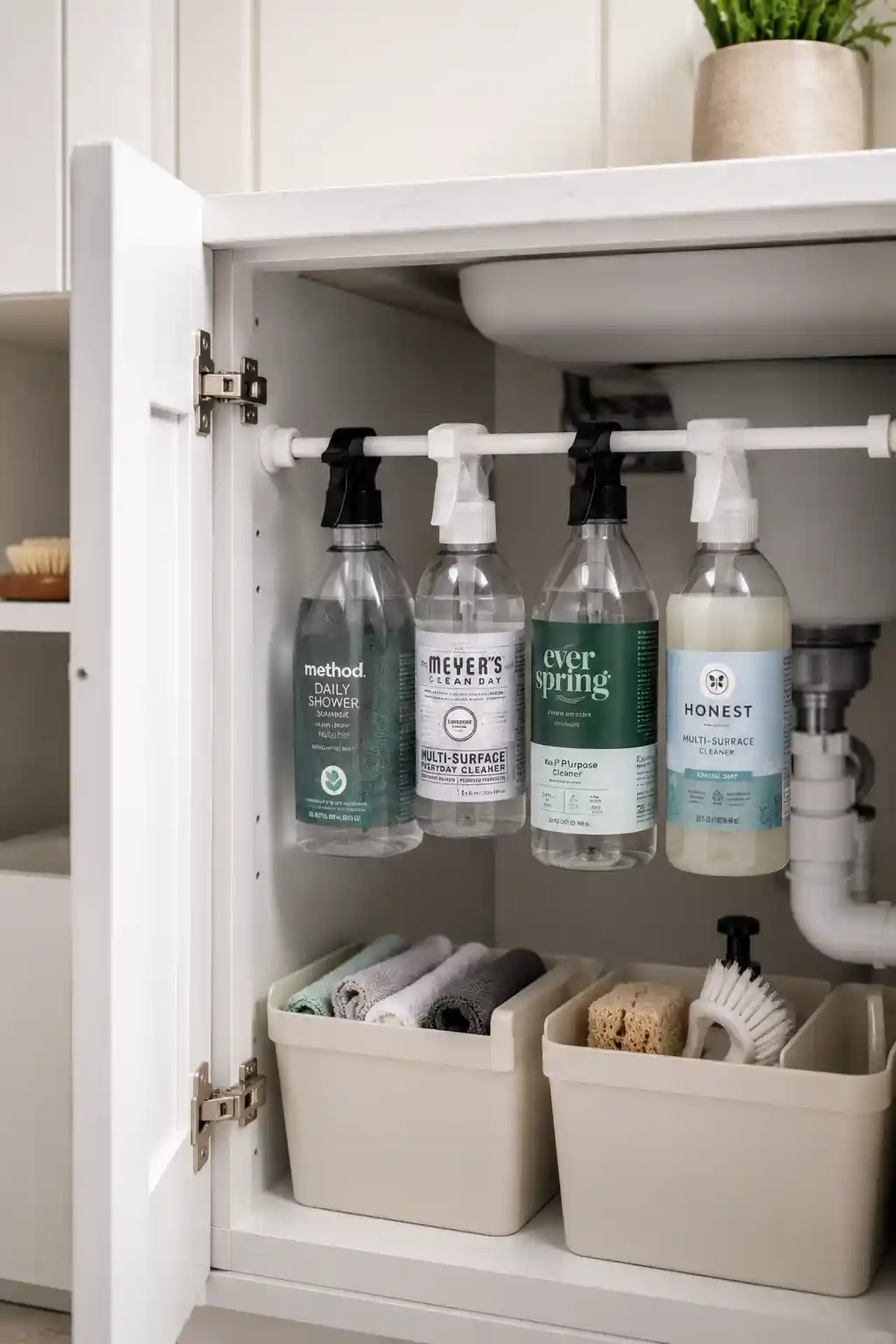
For those who struggle with limited floor space in their cabinets, the tension rod hack is a game-changer. By installing a sturdy rod across the upper portion of the cabinet, you can hang spray bottles by their trigger handles. This simple adjustment frees up the entire base of the cabinet for bins and drawers, effectively doubling your usable square footage. This method is particularly satisfying because it keeps bottles upright and prevents the messy leaks that occur when cleaners are tossed haphazardly into a pile, keeping your cabinetry pristine and dry.
The Rotational Ease of Lazy Susans
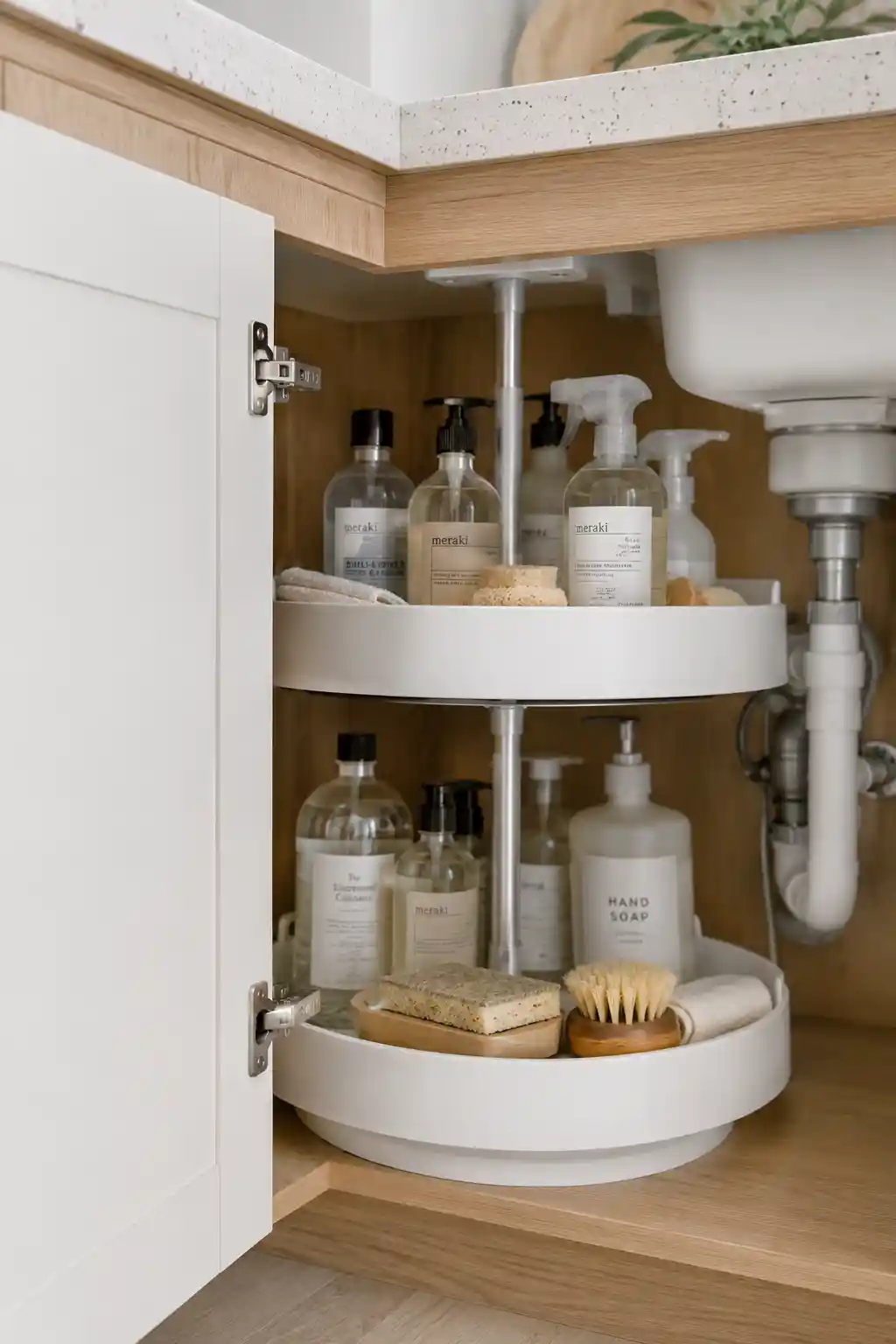
Corners are notorious for becoming ‘dead zones’ where items disappear and are forgotten. Introducing a rotating Lazy Susan or turntable transforms these hard-to-reach areas into accessible storage. With a quick spin, items from the very back are brought to the front, eliminating the need to empty the entire cabinet just to find one specific scrub brush. For a modern 2026 look, opt for turntables with built-in dividers to prevent bottles from sliding or tipping over during rotation, maintaining a curated and tidy appearance at all times.
Organic Modernity with Wicker and Rattan
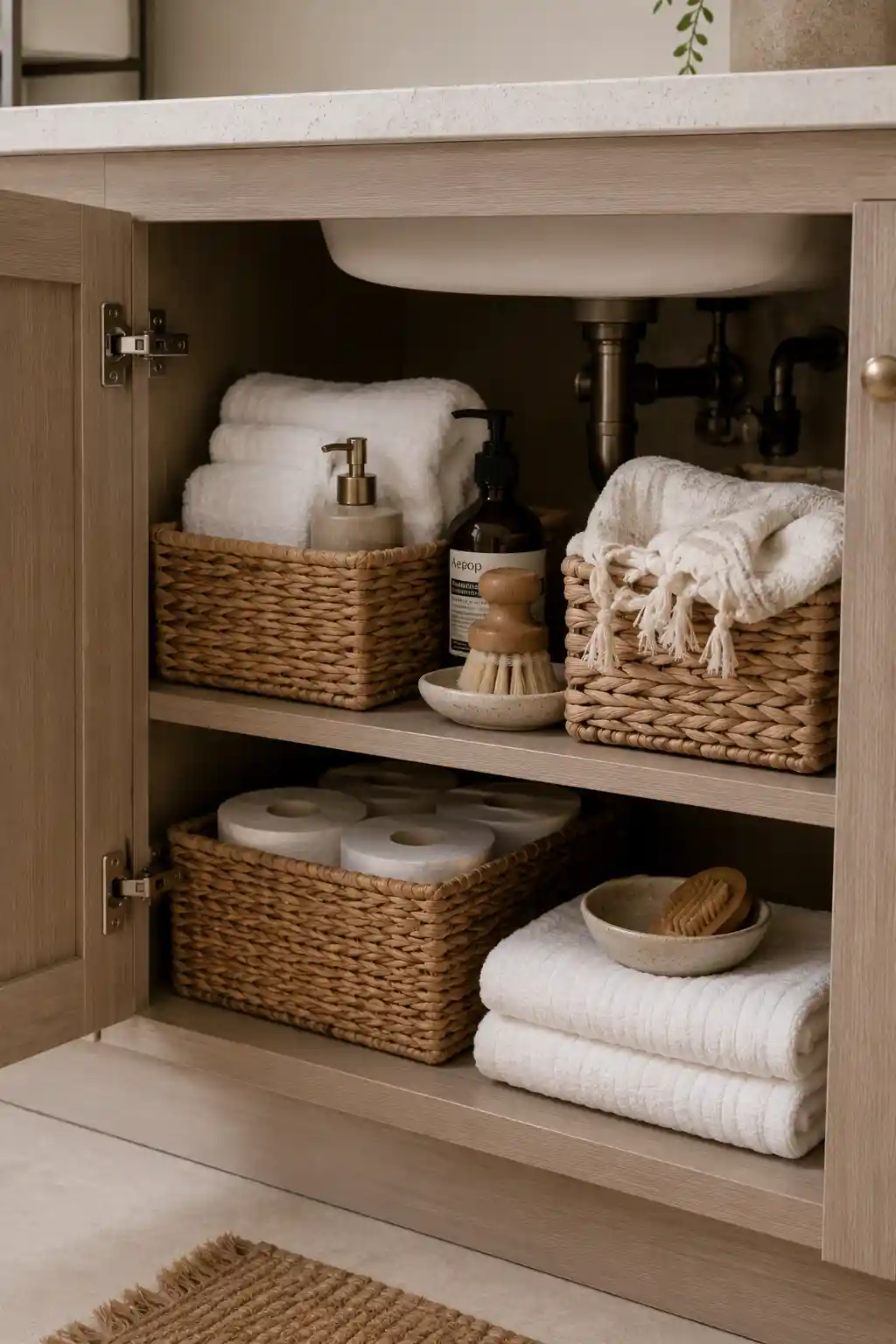
While plastic is practical, incorporating natural textures like wicker and rattan can soften the utilitarian feel of an under-sink space. This ‘organic modern’ approach is perfect for those who want their organization to feel like a part of their home decor rather than a storage locker. Woven baskets are ideal for grouping larger, less aesthetically pleasing items—like bulk sponges or microfiber cloths—while providing a breathable environment that prevents moisture buildup. Mixing these natural elements with clear acrylic creates a sophisticated balance of texture and transparency.
Strategic Zoning for Logical Flow
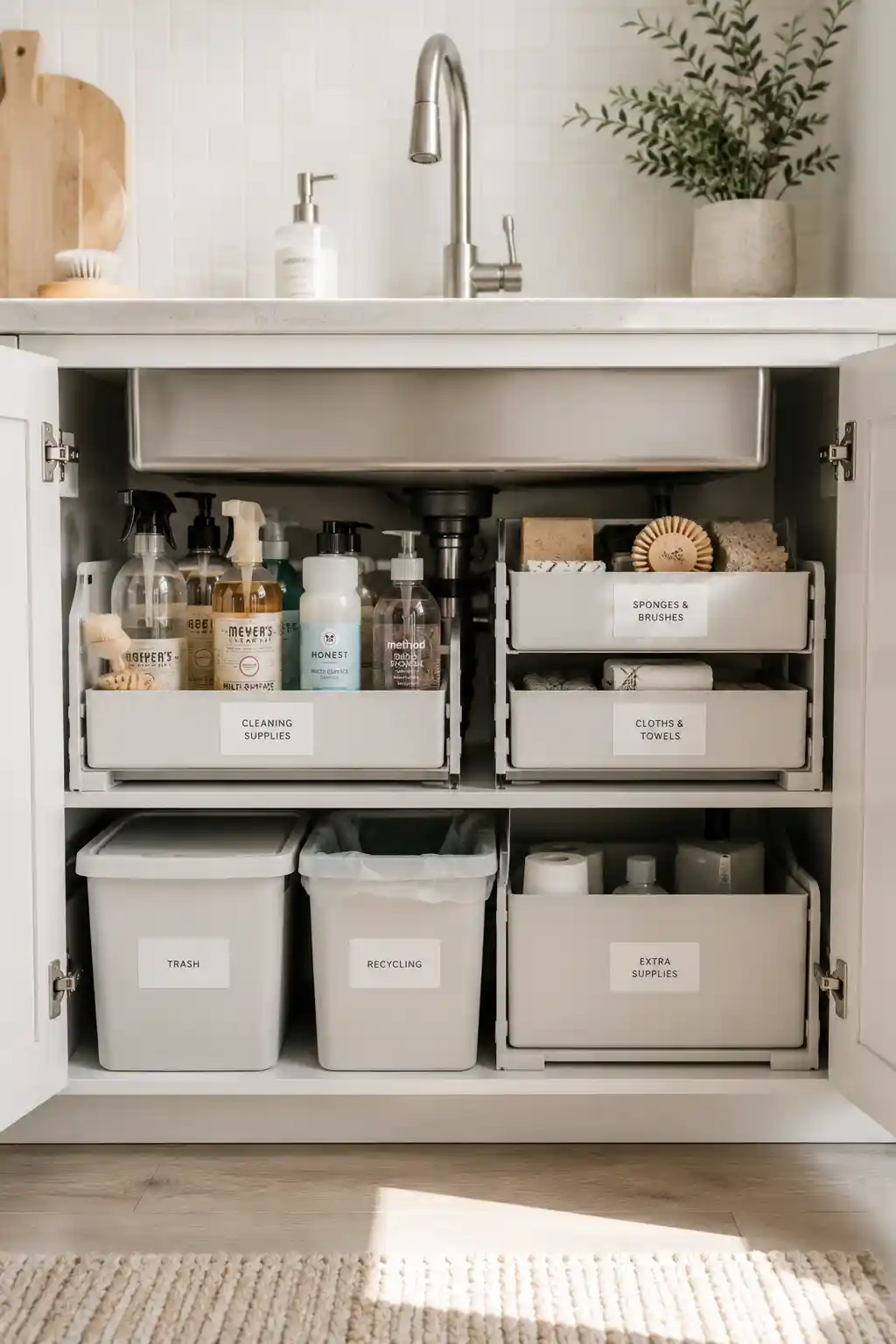
The secret to a system that lasts is logical zoning. Instead of grouping all ‘cleaning’ items together, divide the space into specific activity zones. For example, create a ‘Sink Zone’ for dish soap and sponges, a ‘Floor Zone’ for heavy-duty cleaners, and a ‘Maintenance Zone’ for water filters and plumbing tools. When items are grouped by how they are used, the workflow of your kitchen becomes more intuitive. This methodical arrangement reduces the chaos of daily chores and ensures that you aren’t moving five items just to reach the one you actually need.
Under-Shelf Hanging Baskets for Air Space
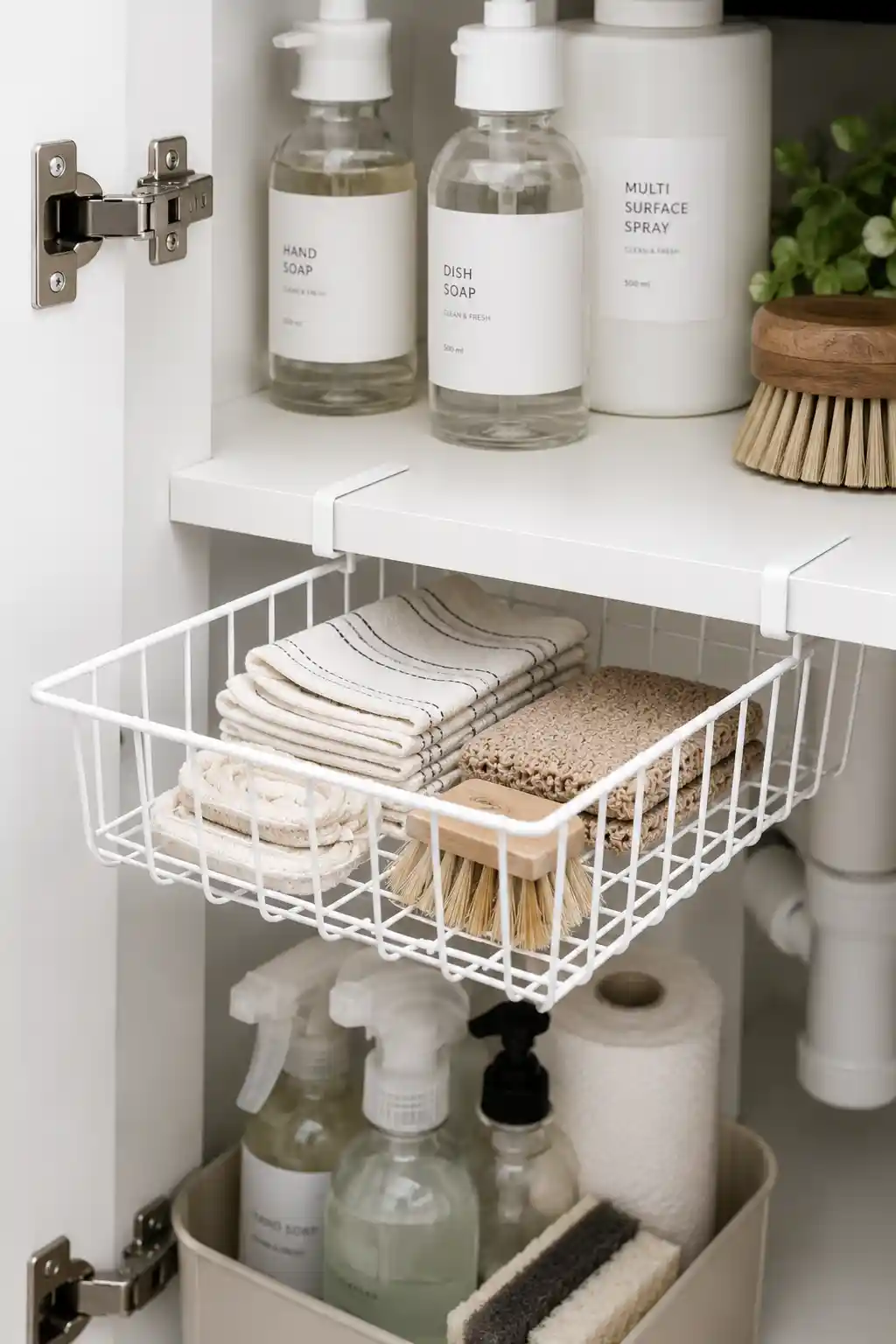
Often, there is a significant amount of unused space between the top of your stored bins and the bottom of the sink basin. Under-shelf hanging baskets capitalize on this gap, providing a dedicated spot for lightweight items such as microfiber cloths, scouring pads, or gloves. These slide-on baskets require no installation and can be moved easily as your storage needs evolve. By utilizing this ‘hidden’ layer of storage, you keep the main floor of the cabinet clear for heavier items, creating a layered and highly optimized storage environment.
Cheerful Utility with Pastel-Coordinated Bins
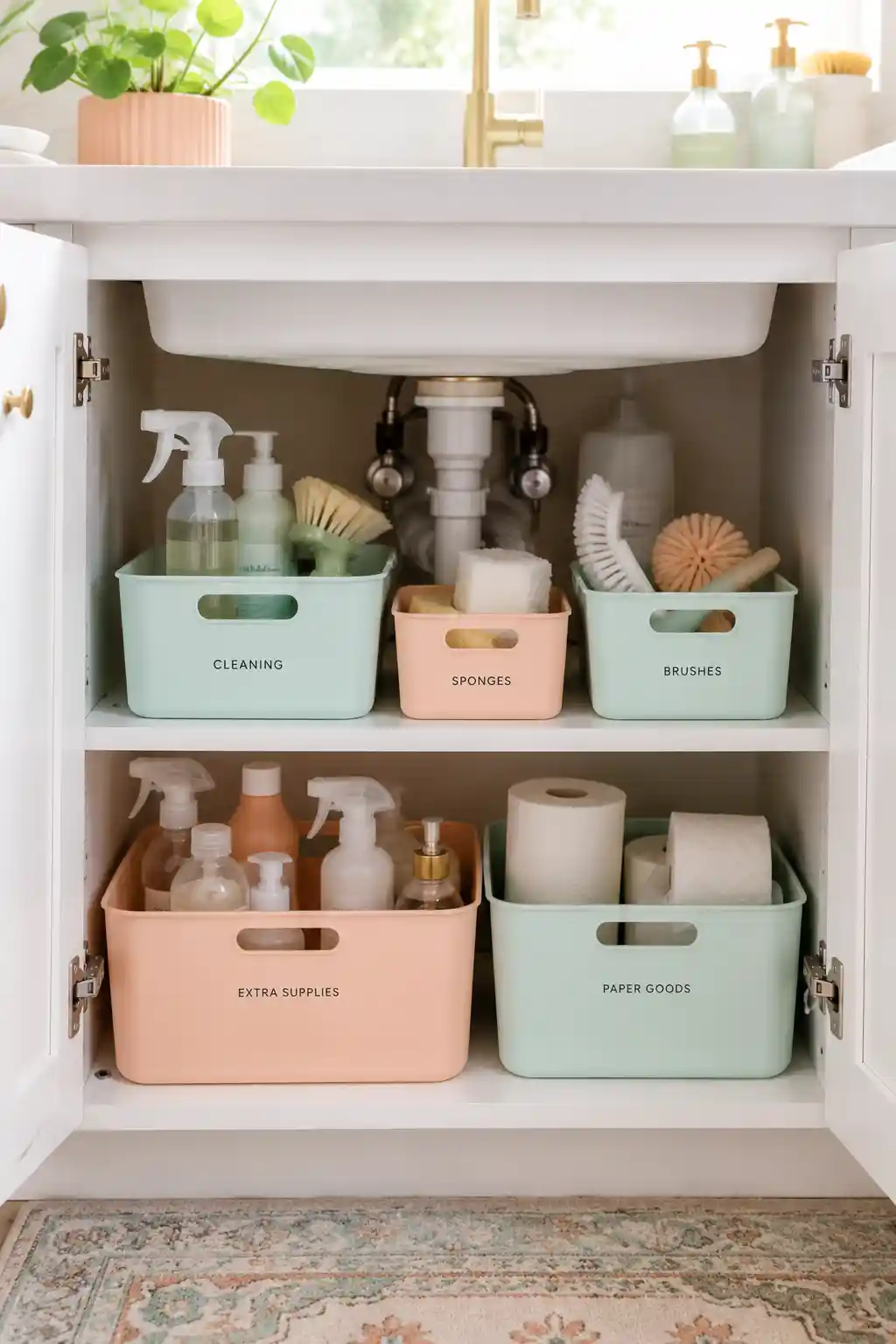
Who says utility spaces have to be boring or monochromatic? A coordinated pastel palette can turn a chore-filled cabinet into a source of joy. Using soft mint, pale lemon, or blush pink bins adds a touch of personality to your kitchen while still maintaining a clean, organized look. The key to making this work without looking cluttered is to stick to a strict color story—limit yourself to two or three complementary shades. This approach transforms the act of cleaning into a more pleasant experience by surrounding yourself with a bright, uplifting aesthetic.
Industrial Strength with Steel Racking
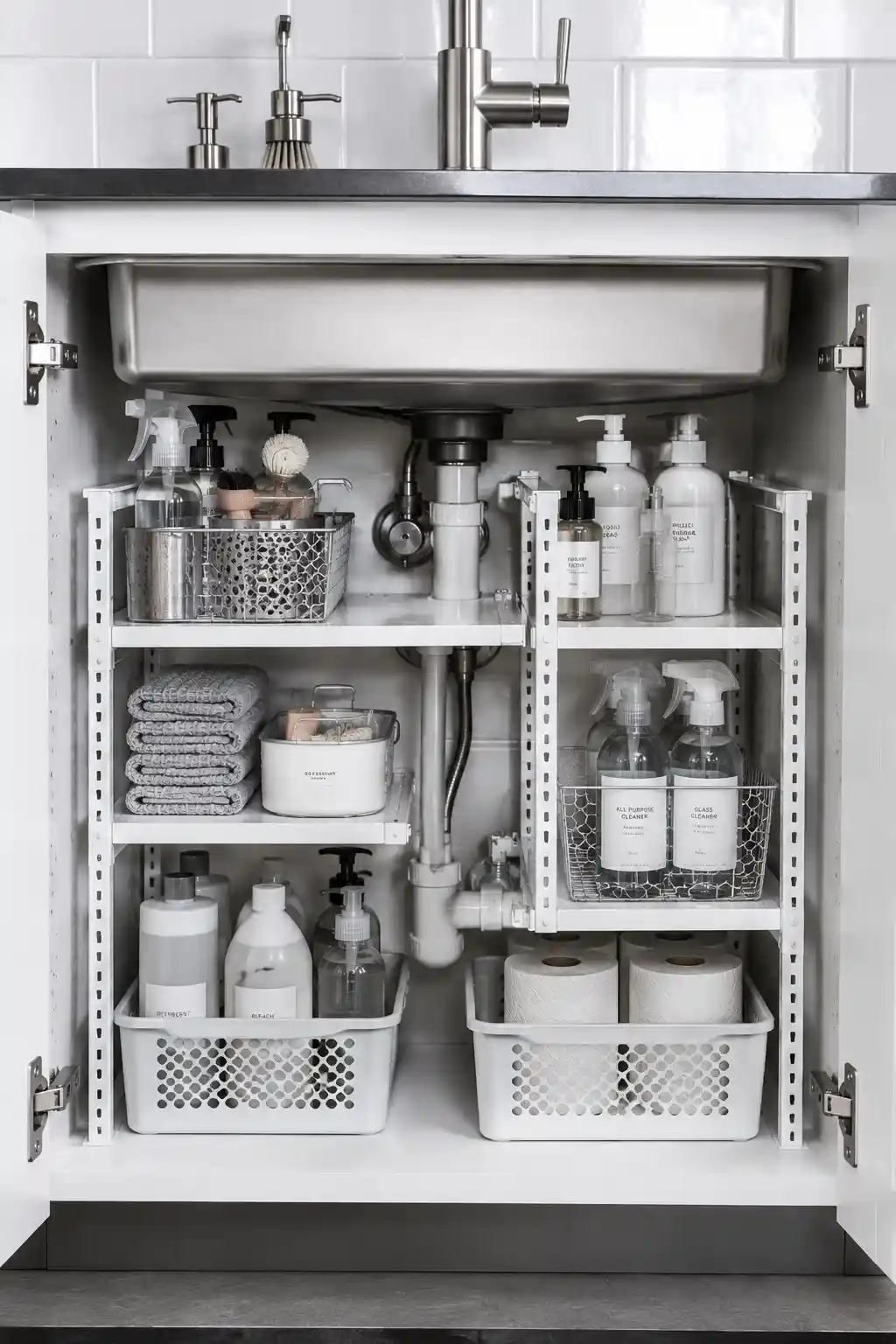
For those with larger families or a higher volume of cleaning supplies, plastic bins may not be enough. Industrial-grade steel racking provides the structural integrity needed to hold heavy jugs of detergent and professional-grade cleaners without bowing or sagging. Powder-coated steel is not only durable but also resistant to the moisture typically found under a sink. By installing a custom-fit steel rack, you create a permanent, architectural foundation for your organization that feels secure and looks polished, bridging the gap between a utility closet and a luxury kitchen.
Integrated Waste and Recycling Systems
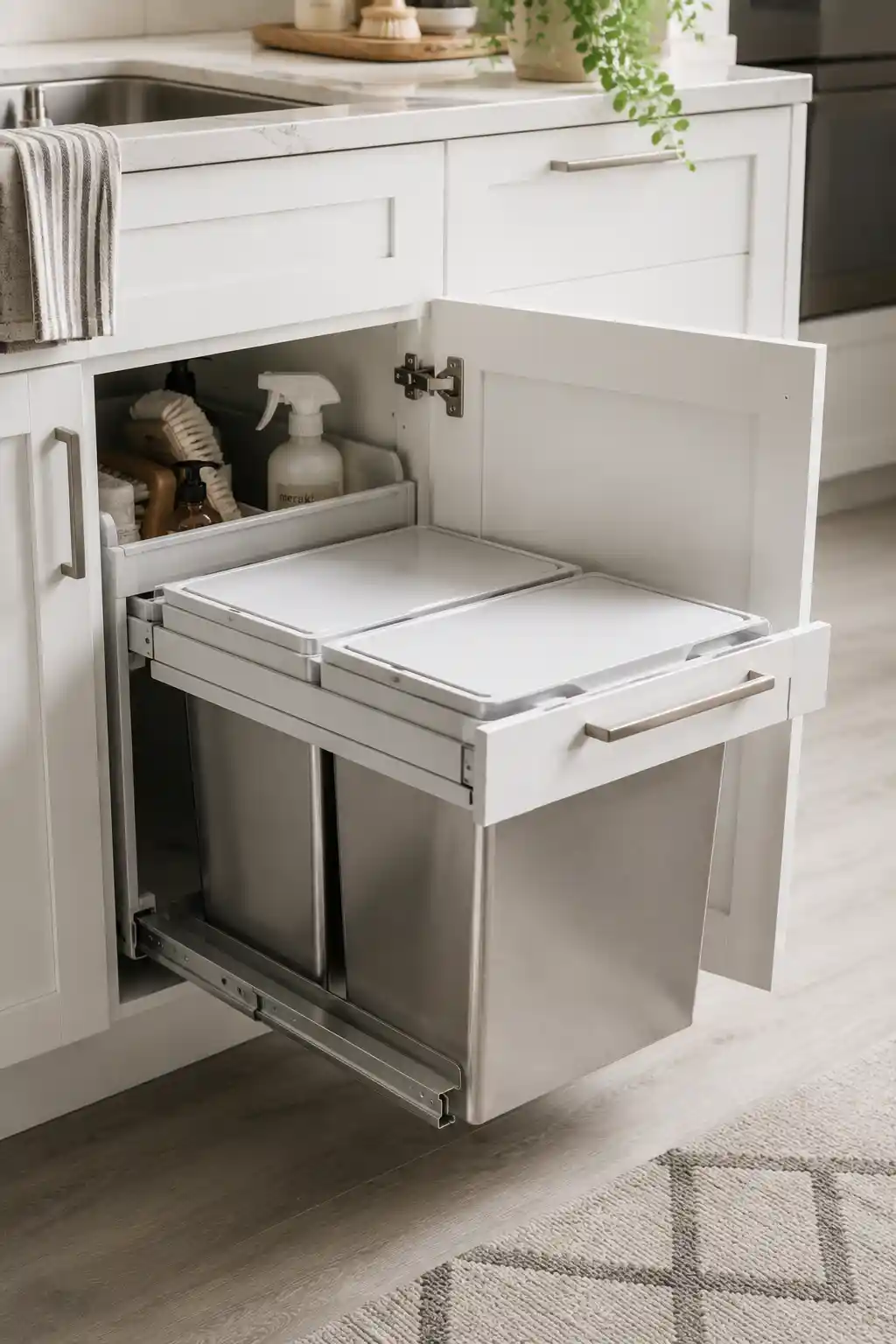
A truly organized under-sink area integrates waste management directly into the cabinetry. Instead of a standalone trash can that disrupts the flow of the kitchen, a built-in pull-out system for trash and recycling keeps odors contained and eyes away from the mess. In 2026, the focus is on dual-bin systems that allow for seamless sorting of recyclables and landfill waste. When paired with a soft-close mechanism, these systems add a layer of luxury and silence to your kitchen, ensuring that the most utilitarian part of the room operates with effortless grace.
Sleek Monochrome for High-Contrast Design
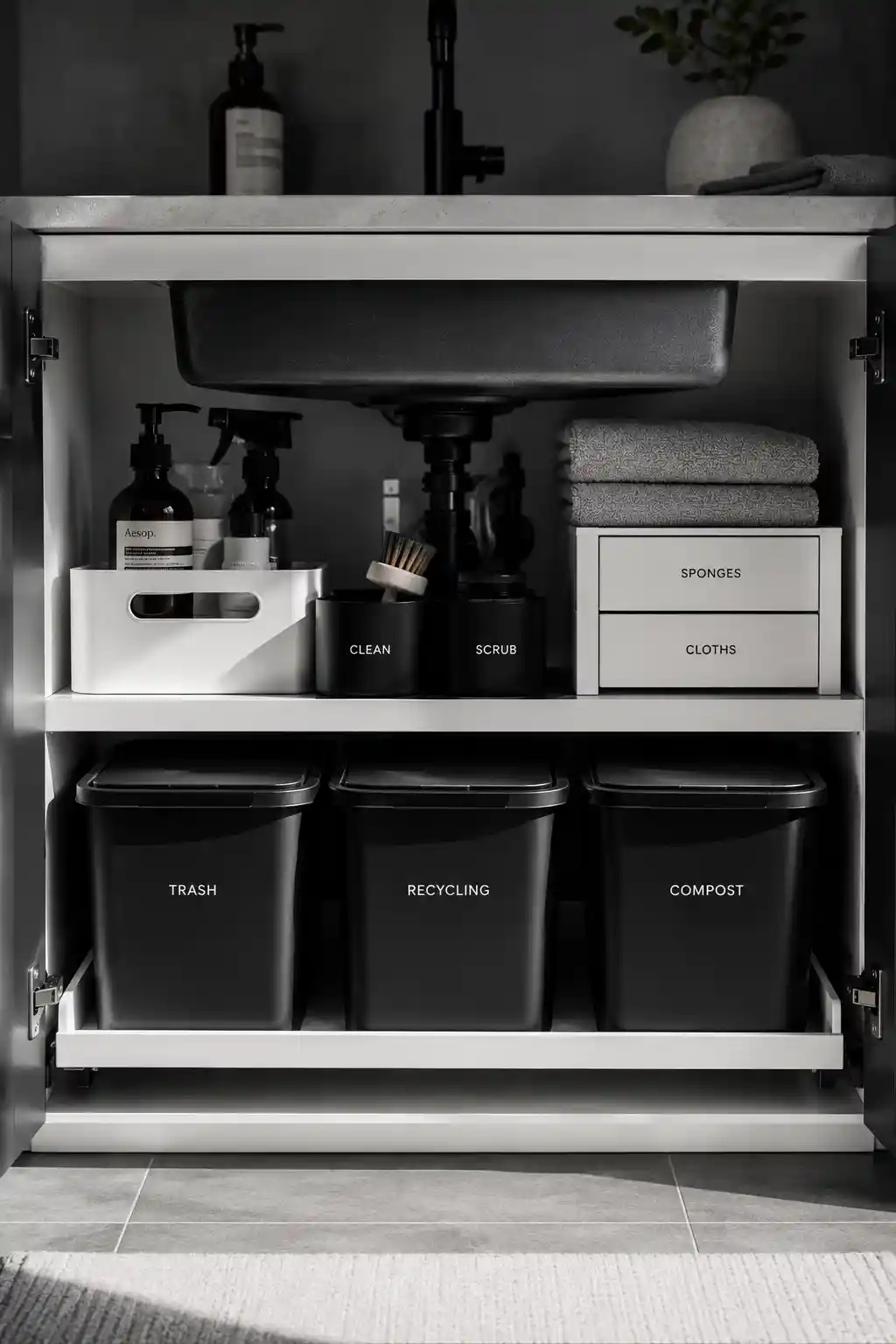
For the ultimate modern statement, a monochrome color scheme creates a sophisticated, high-contrast look that feels curated and intentional. By pairing matte black organizers with a crisp white cabinet interior, you create a visual rhythm that feels more like a design choice than a storage solution. This approach works best when you keep the contents minimal and well-edited. The bold contrast emphasizes the clean lines of the organizers and makes the space feel like a part of a high-end residential gallery, proving that even the space under the sink can be a design focal point.