

Transforming a standard bedroom into a multi-functional sanctuary requires more than just beautiful furniture; it demands a strategic approach to spatial organization. Whether you are dealing with a sprawling master suite that feels too empty or a compact studio that feels cluttered, zoning is the secret to creating a balanced environment. By defining specific areas for rest, productivity, and grooming, you can establish a psychological boundary that helps you unwind at night and stay focused during the day. From visual cues like lighting and rugs to structural additions like glass partitions, these zoning techniques elevate your home’s aesthetic while improving your daily flow.
Sleek Glass Partitions for a Home Office
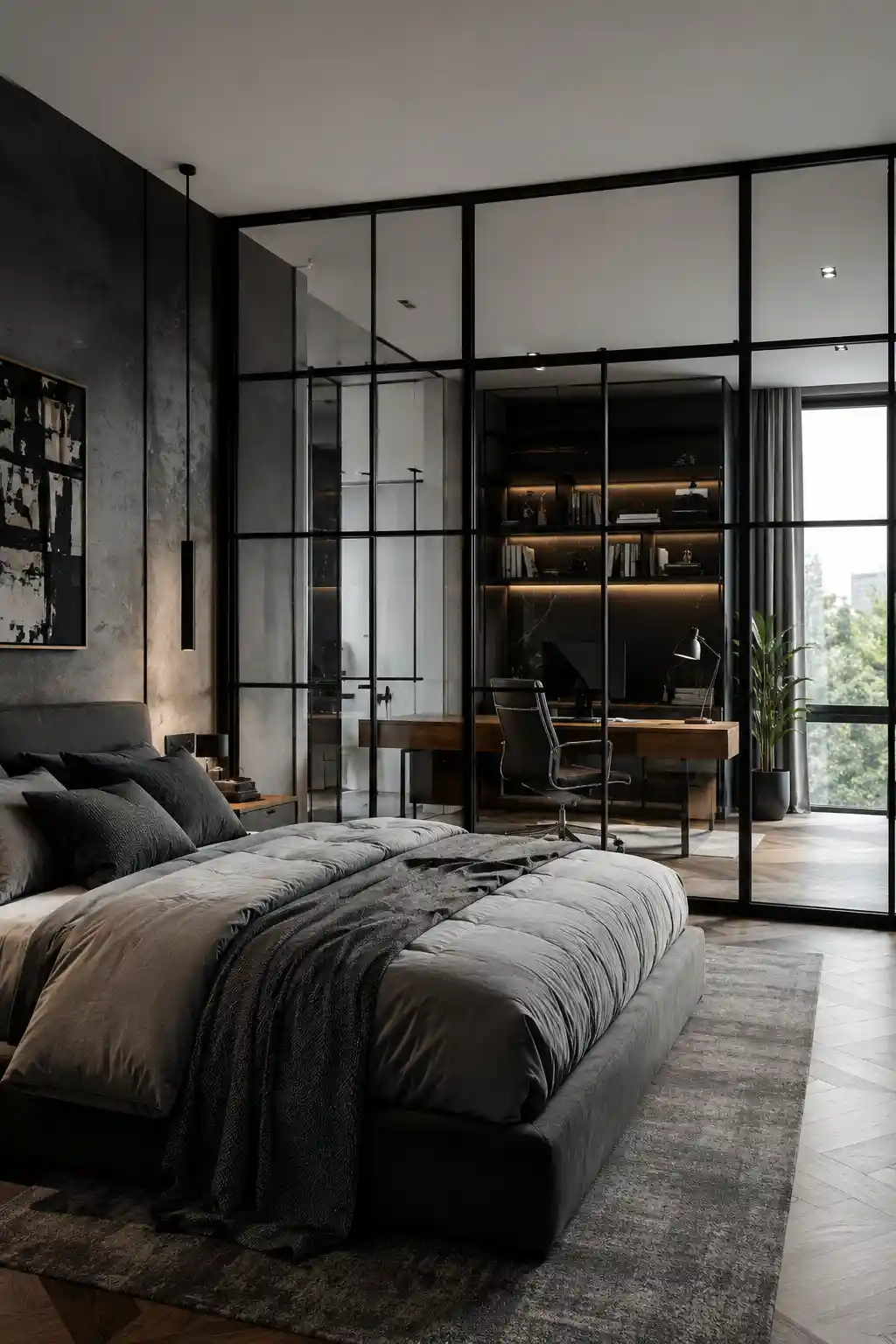
Integrating a home office into your bedroom can often lead to a cluttered mental state, making it difficult to disconnect from work. A glass partition is the ultimate solution for creating a dedicated professional zone without sacrificing the open, airy feel of the room. By using thin metal frames and transparent panes, you establish a physical boundary that blocks noise and distractions while allowing natural light to flood both spaces. For those seeking more privacy, frosted or fluted glass options provide a sophisticated veil that hides the desk area while maintaining architectural grandeur and a high-end, contemporary aesthetic.
Open Shelving as a Functional Divider
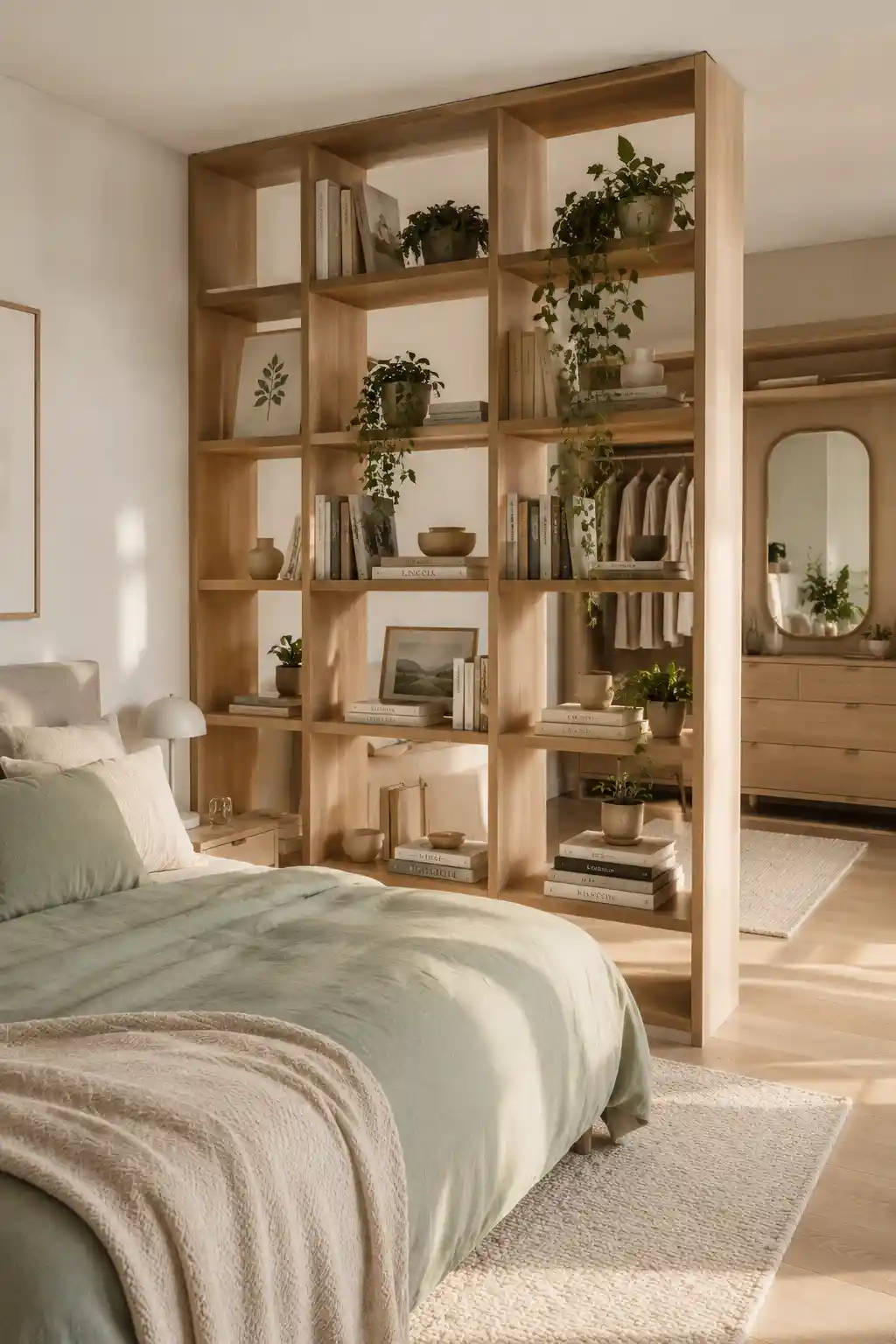
Unlike solid walls, open shelving units offer a versatile way to zone a room while adding essential storage. By positioning a bookshelf perpendicular to the wall, you can create a subtle visual break that separates your sleeping quarters from a dressing area or a vanity station. This approach allows light and air to flow freely, preventing the room from feeling cramped. It is an especially practical choice for renters or those who enjoy rearranging their decor, as it provides a flexible boundary that can be moved or updated without the need for permanent structural changes.
Textured Area Rugs for a Cozy Reading Nook
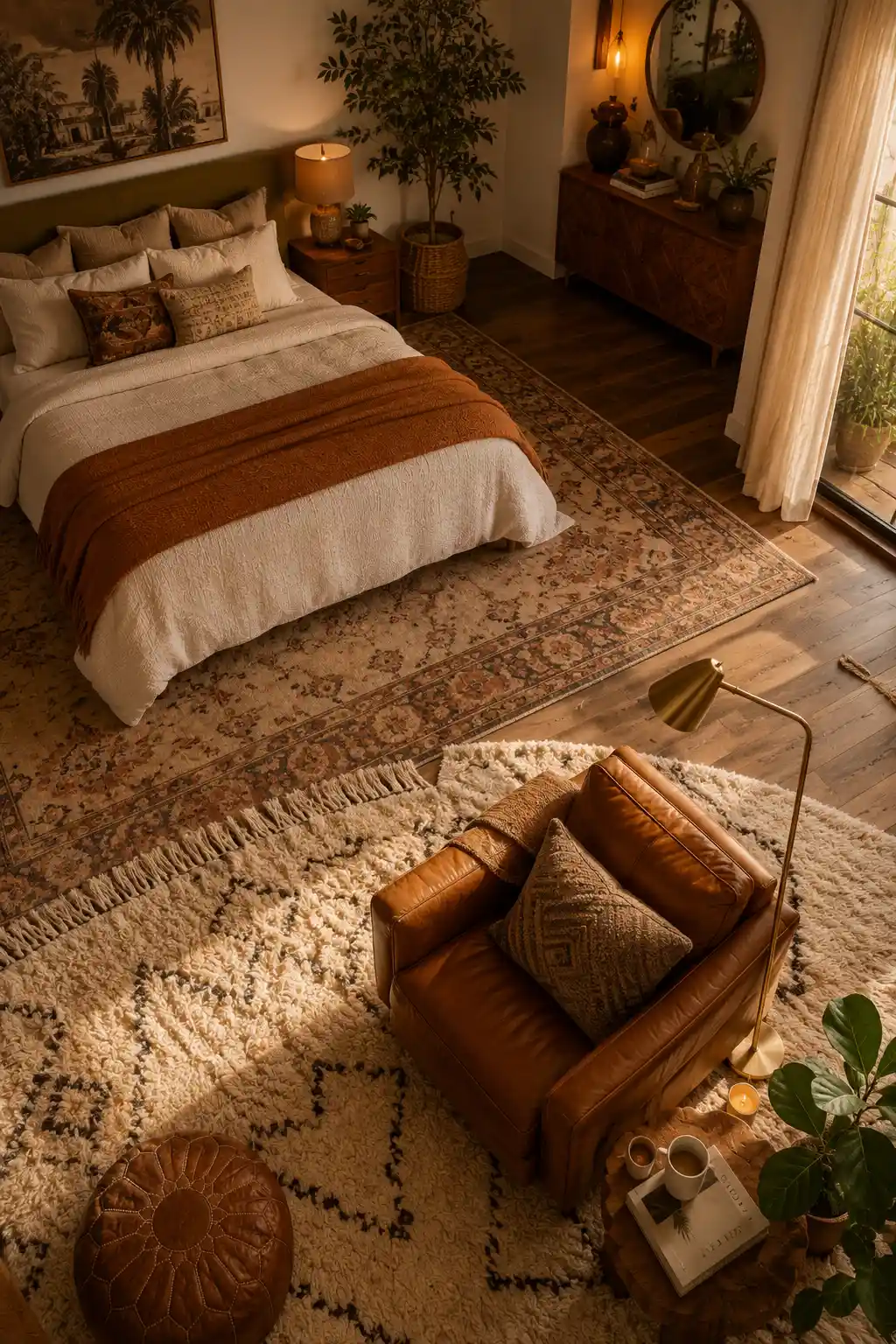
You don’t always need vertical barriers to define a zone; sometimes, a change in flooring is all it takes. A plush area rug acts as a visual anchor, signaling to the brain that a specific area has a purpose different from the rest of the room. By layering a distinct rug in a quiet corner and pairing it with a comfortable armchair and soft lighting, you instantly create a sanctuary for reading and reflection. This technique adds a layer of warmth and tactile comfort to the bedroom, transforming it into a multi-room suite experience.
Dramatic Floor-to-Ceiling Curtains
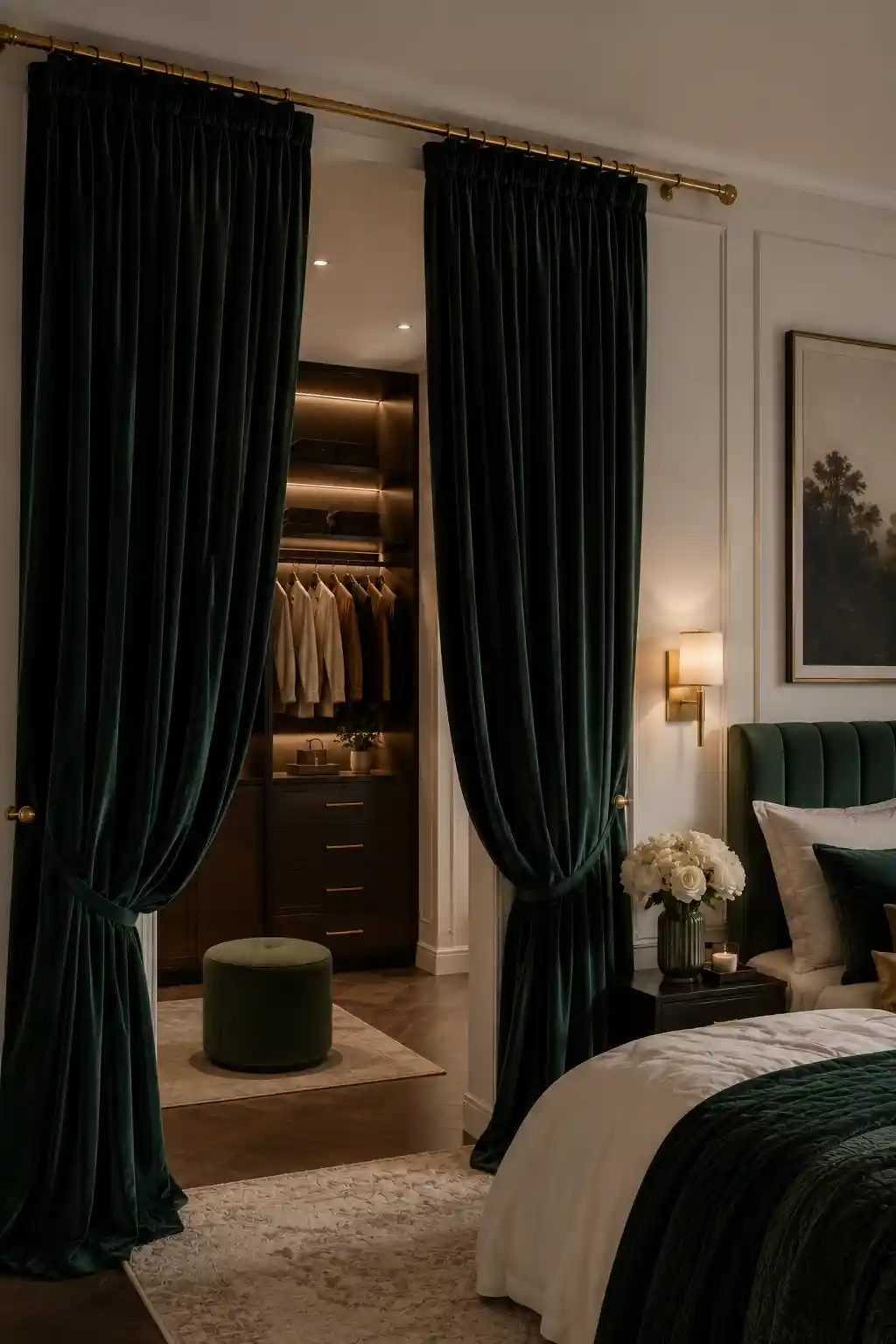
For those who want a softer, more romantic approach to zoning, floor-to-ceiling curtains are an exceptional choice. These fabric dividers allow you to instantly switch between an open-concept layout and a private, enclosed sanctuary. Whether you use heavy velvet to dampen sound and add a sense of opulence or light linen for a breezy, coastal vibe, curtains provide a flexible boundary that can hide a messy wardrobe or frame the bed as a central focal point. This method adds sophisticated texture and movement to the room’s overall interior design.
Architectural Raised Platform Zones
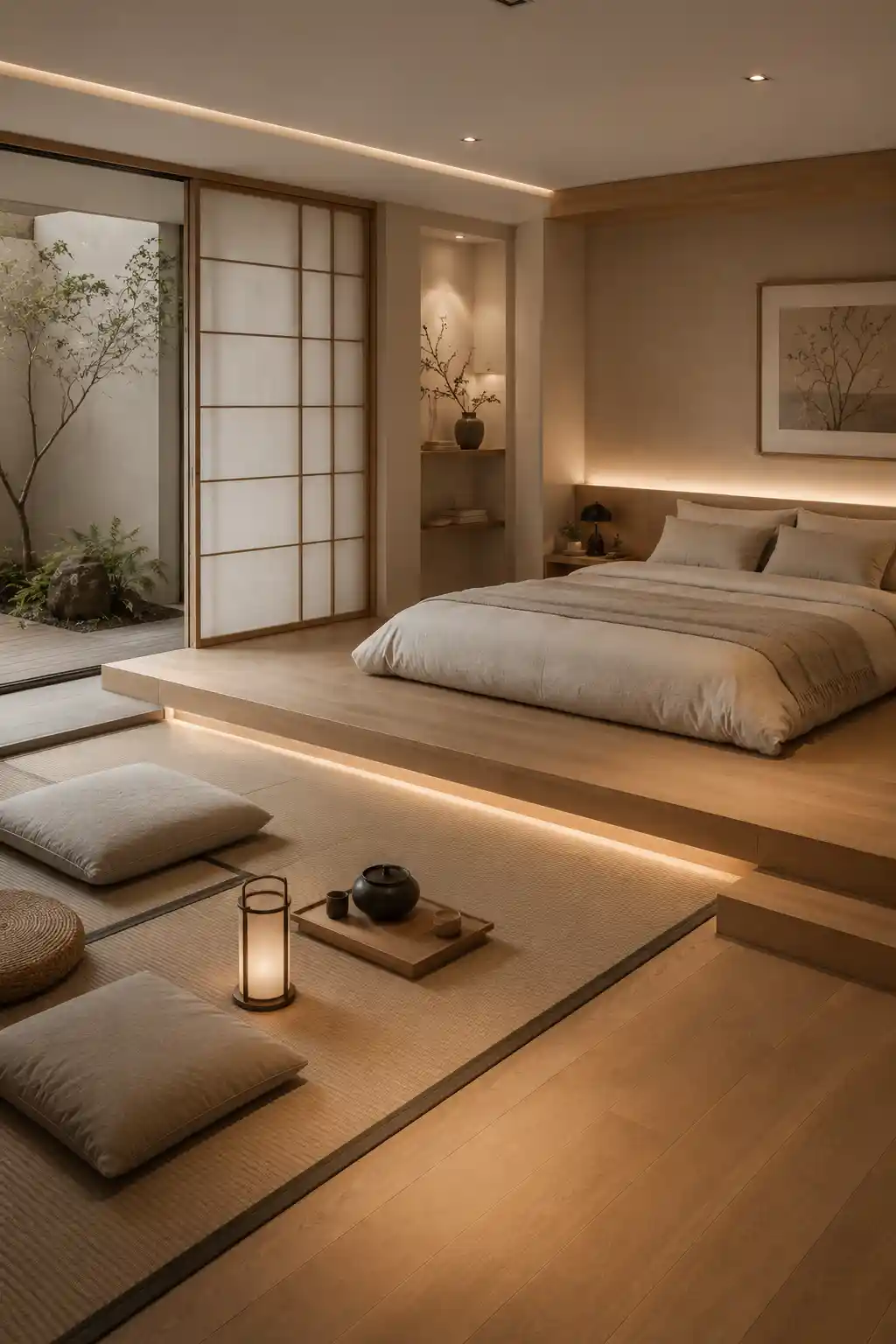
Utilizing vertical space is a sophisticated way to establish a clear psychological distinction between different activities. Building a raised platform for the bed lifts the sleeping area above the rest of the room, effectively creating a ‘room within a room.’ The lower level can then be repurposed as a cozy lounge, a workspace, or a meditation area. Many platform designs also incorporate built-in storage drawers underneath, maximizing every square inch of floor space. This architectural move is particularly effective in studio apartments where efficiency and intentionality are paramount.
Luxury End-of-Bed Lounge Seating
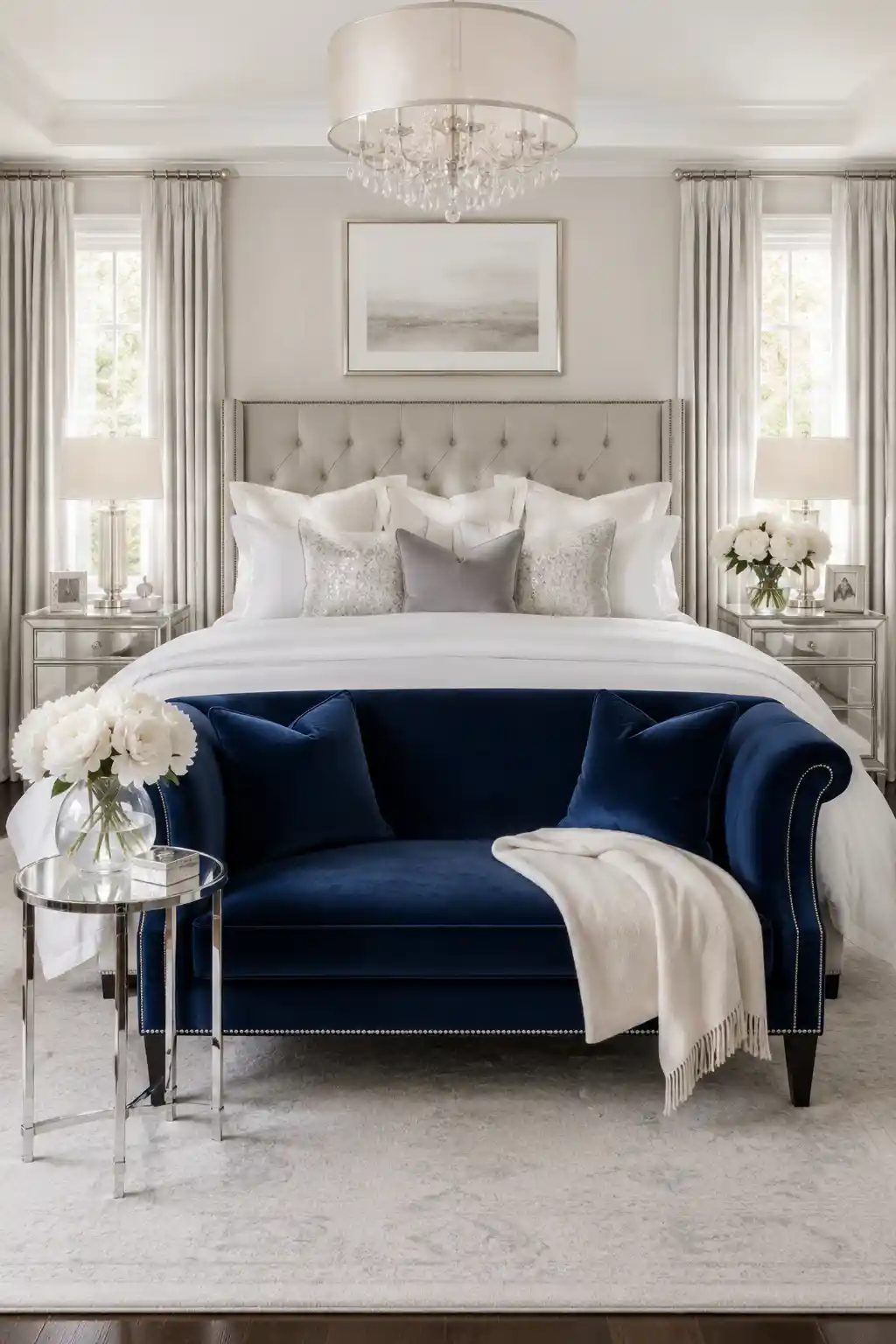
Adding a small sofa or a stylish loveseat at the foot of the bed is a classic design trick used in high-end hotel suites to create a secondary lounge zone. This arrangement bridges the gap between the sleeping area and the rest of the room, providing a dedicated spot for dressing or relaxing without encroaching on the bed itself. To complete the look, pair the seating with a small ottoman or a marble-top side table. This layout works best in larger bedrooms, adding a layer of sophistication and functionality to the room’s flow.
Hidden Vanity Behind the Headboard
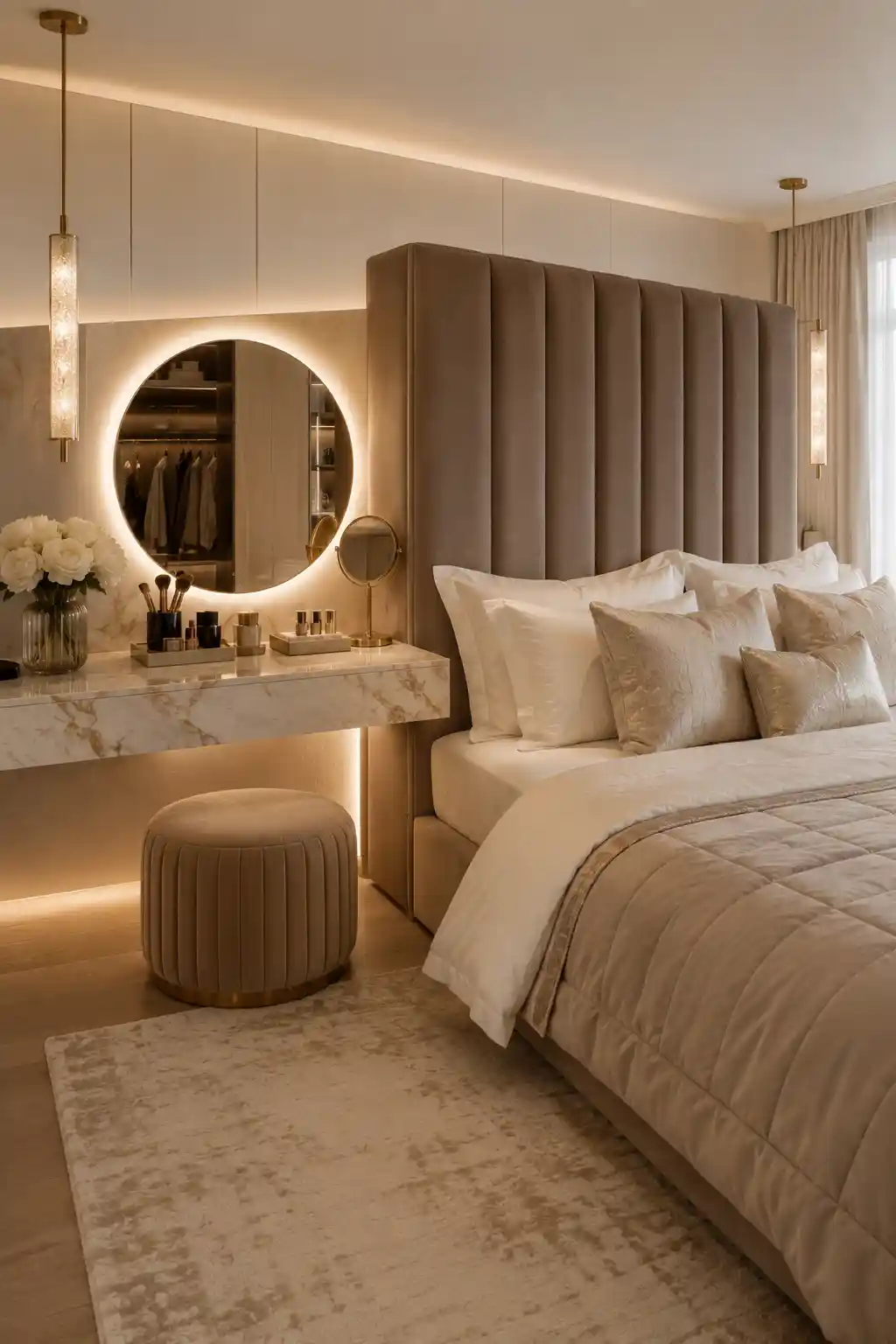
In large, square bedrooms, placing all furniture against the walls can leave an awkward void in the center. A clever solution is to float the bed in the middle of the room and place a vanity or dressing table directly behind the headboard. This configuration uses the bed as a natural divider, keeping the grooming station and makeup products out of your direct line of sight while you are resting. It creates a private ‘getting ready’ zone that feels organized and intentional, enhancing the overall luxury feel of the master suite.
Modern Wood Slat Wall Partitions
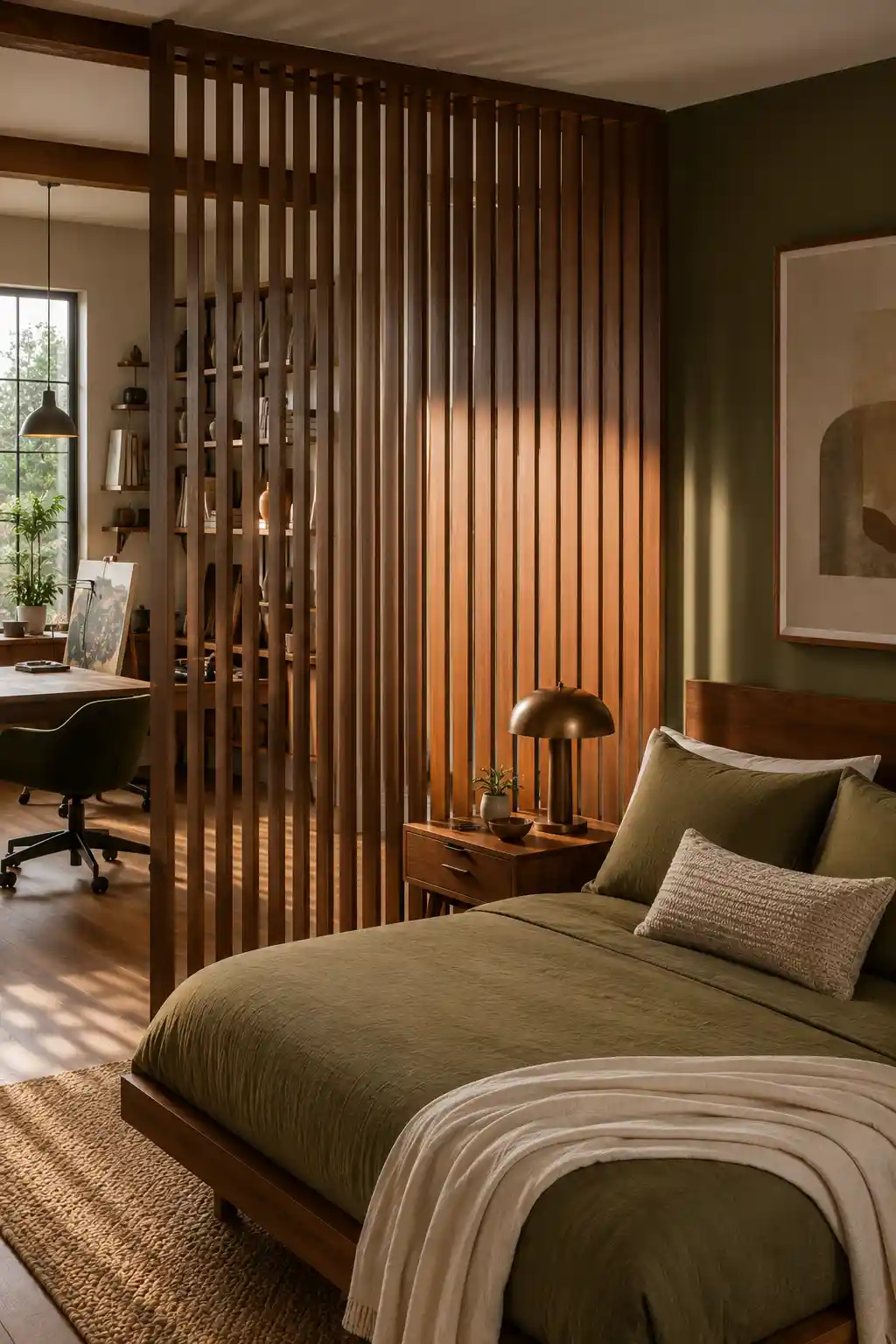
Wood slat walls offer a contemporary and organic way to divide a room without blocking the flow of air or light. These partitions provide enough of a visual screen to separate a bed from a home office or gym area while maintaining a sense of connectivity. The vertical lines of the slats often create an illusion of height, making the ceilings feel loftier and the space more grand. Whether you choose a natural oak for a Scandi look or a dark walnut for a moody vibe, slat walls add beautiful architectural texture.
Visual Zoning via Color Blocking
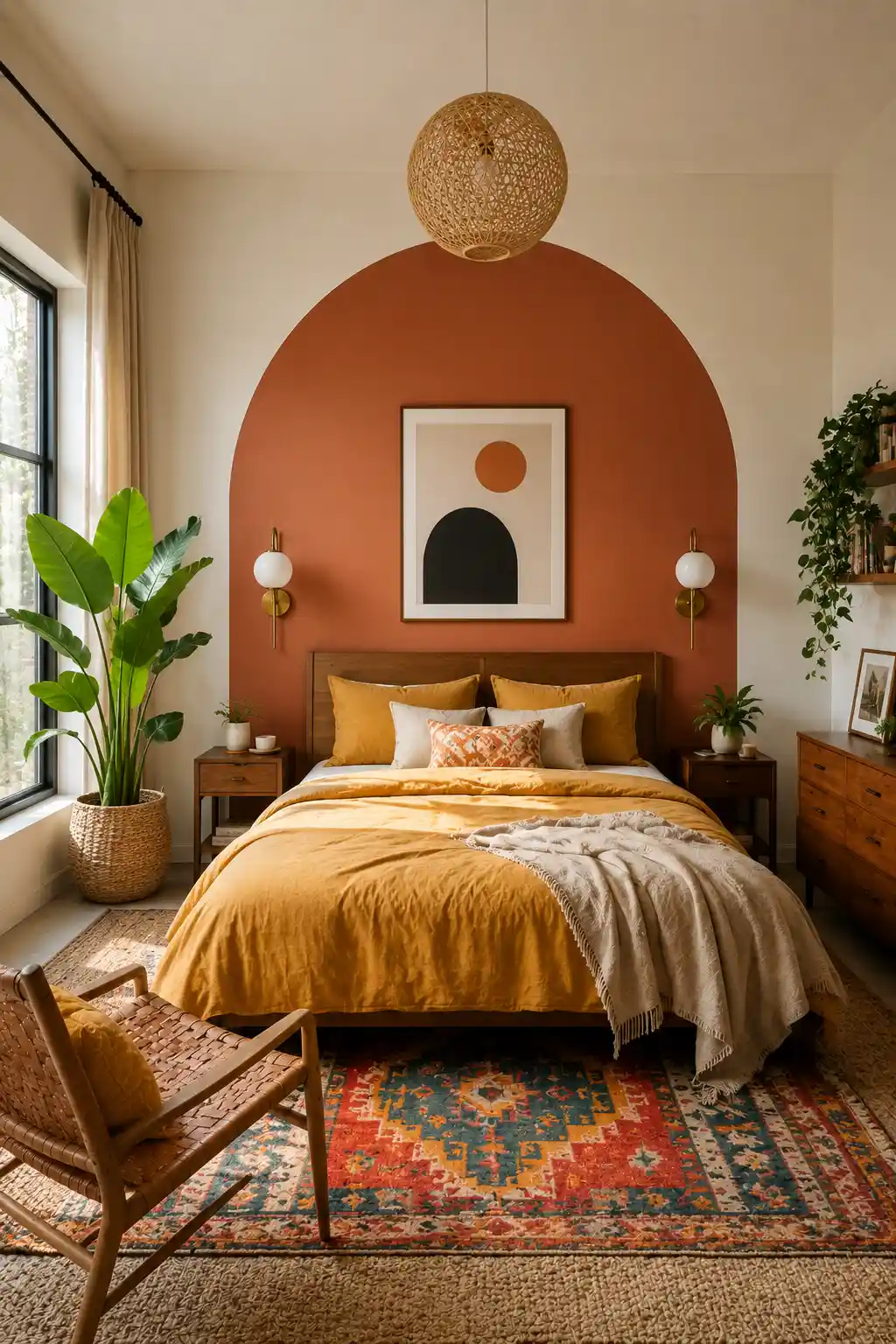
Color blocking is one of the most cost-effective ways to zone a bedroom. By painting a specific section of the wall—such as a bold arch behind the bed or a deep hue in a corner—you create a visual boundary that defines a zone’s purpose without taking up any physical floor space. For instance, a calming blue section can mark the sleep zone, while a warm terracotta tone defines a reading corner. This technique adds depth and personality to the room, making it ideal for small spaces where physical dividers would feel too restrictive.
Walk-Through Wardrobe Splitters
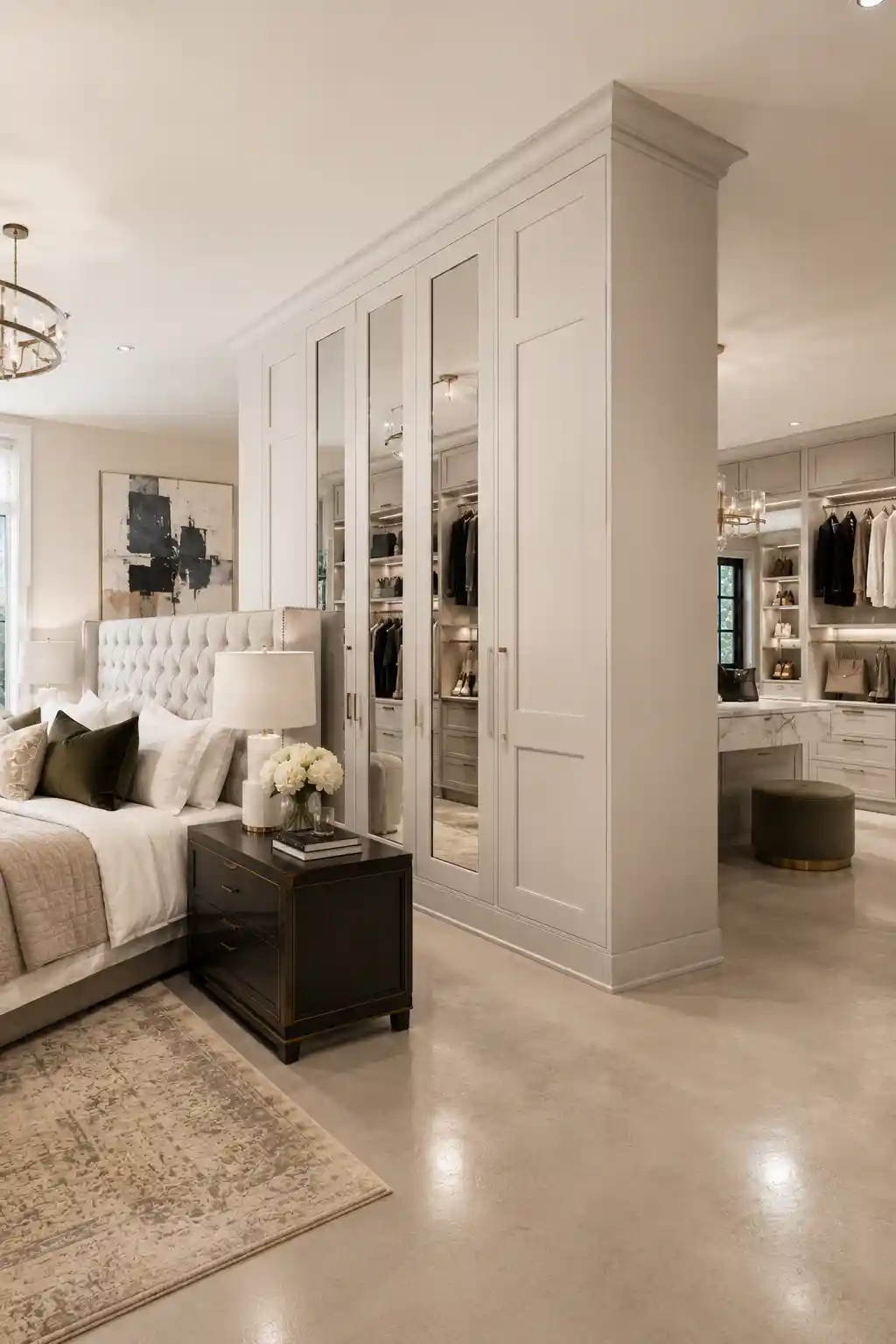
A bank of built-in wardrobes can serve as a functional architectural wall, splitting a large bedroom into a sleeping area and a private dressing room. Instead of lining the cabinets against the wall, installing them in the center of the room creates a boutique-style walk-through closet. This not only provides immense storage capacity but also ensures that the sleeping zone remains a peaceful, clutter-free sanctuary. To maintain the aesthetic, the back of the wardrobes can be finished with mirrors, wallpaper, or elegant wood paneling.
Canopy Bed Frames for Internal Sanctuaries
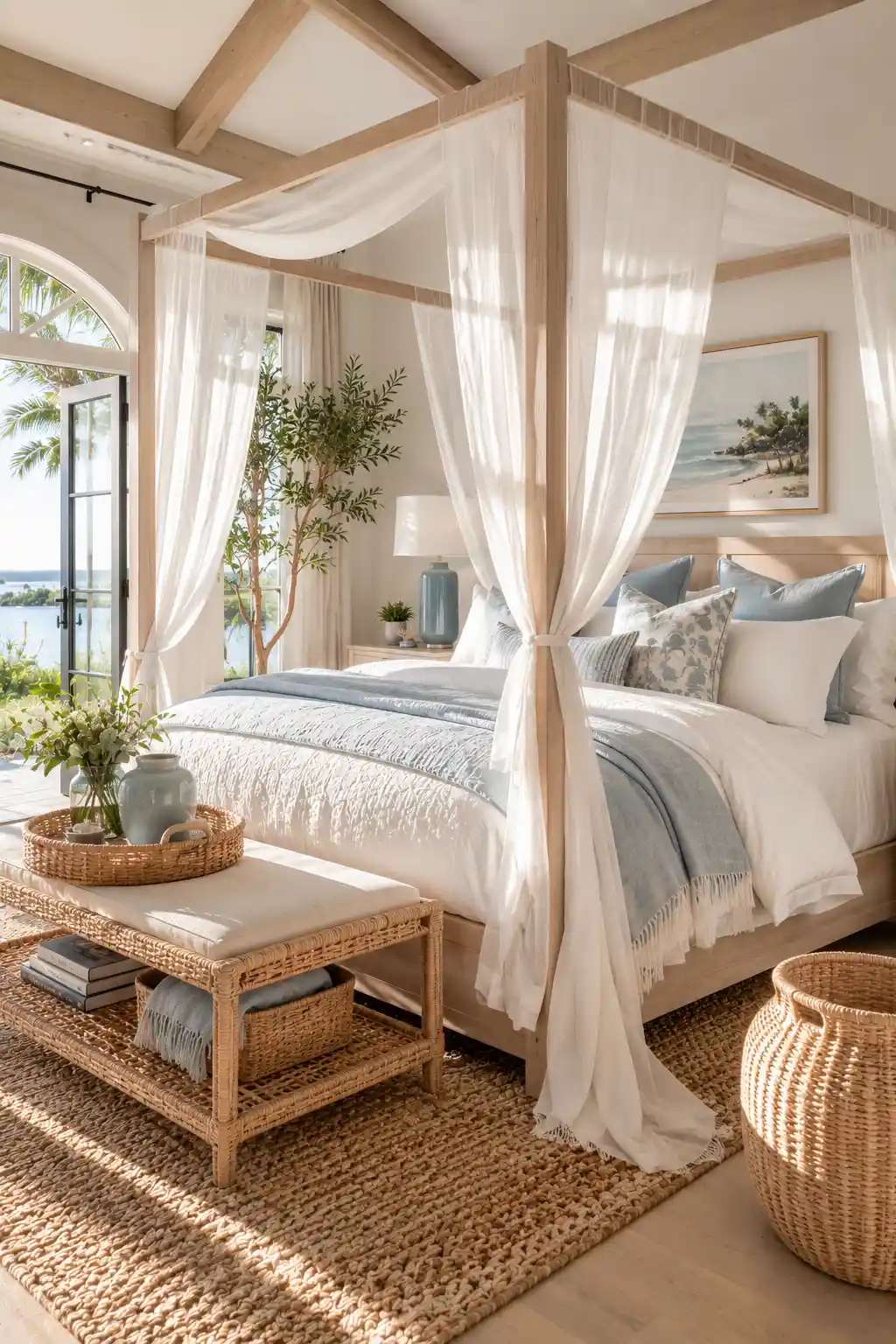
A canopy bed frame is a timeless piece of furniture that naturally creates a ‘room within a room.’ The four-poster structure defines the sleeping zone both vertically and horizontally, making the bed feel secure and intimate. By adding sheer fabric drapes, you can create a soft, dreamy boundary that separates the bed from the rest of the room’s activities. This zoning technique is particularly effective in rooms with high ceilings, as it fills the vertical volume and makes the sleeping area feel like a protected, luxurious cocoon.