
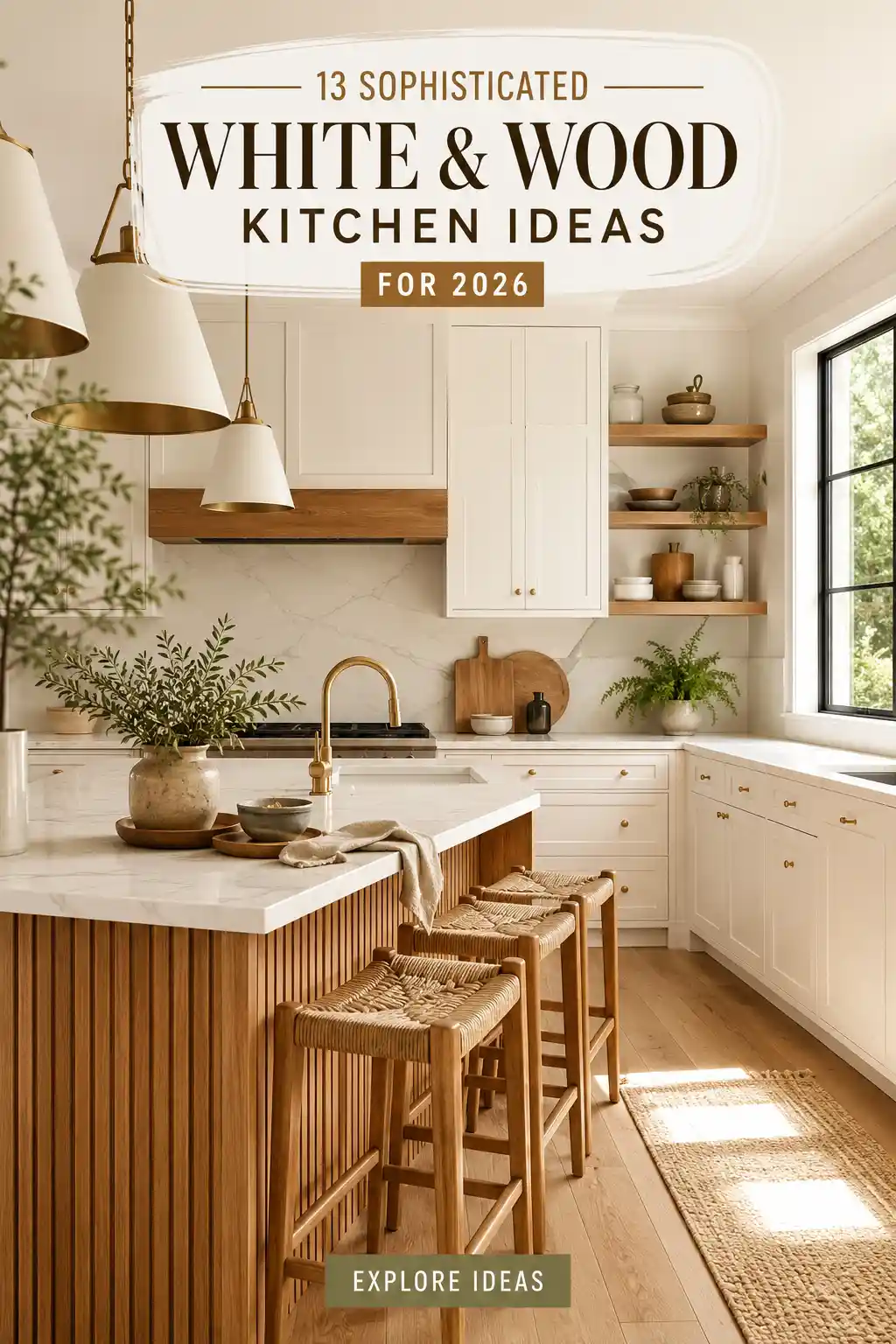
Creating a kitchen that feels both timeless and contemporary requires a delicate balance of color and texture. The combination of crisp white surfaces and warm wood tones is a perennial favorite because it effortlessly blends airy brightness with grounded, organic comfort. As we look toward the design trends of 2026, this pairing is evolving to include more daring textures, sustainable materials, and a focus on wellness-driven environments. Whether you are planning a full renovation or a simple aesthetic refresh, these curated ideas will help you master the art of earthy modernism in the heart of your home.
Scandinavian Serenity with Light Oak
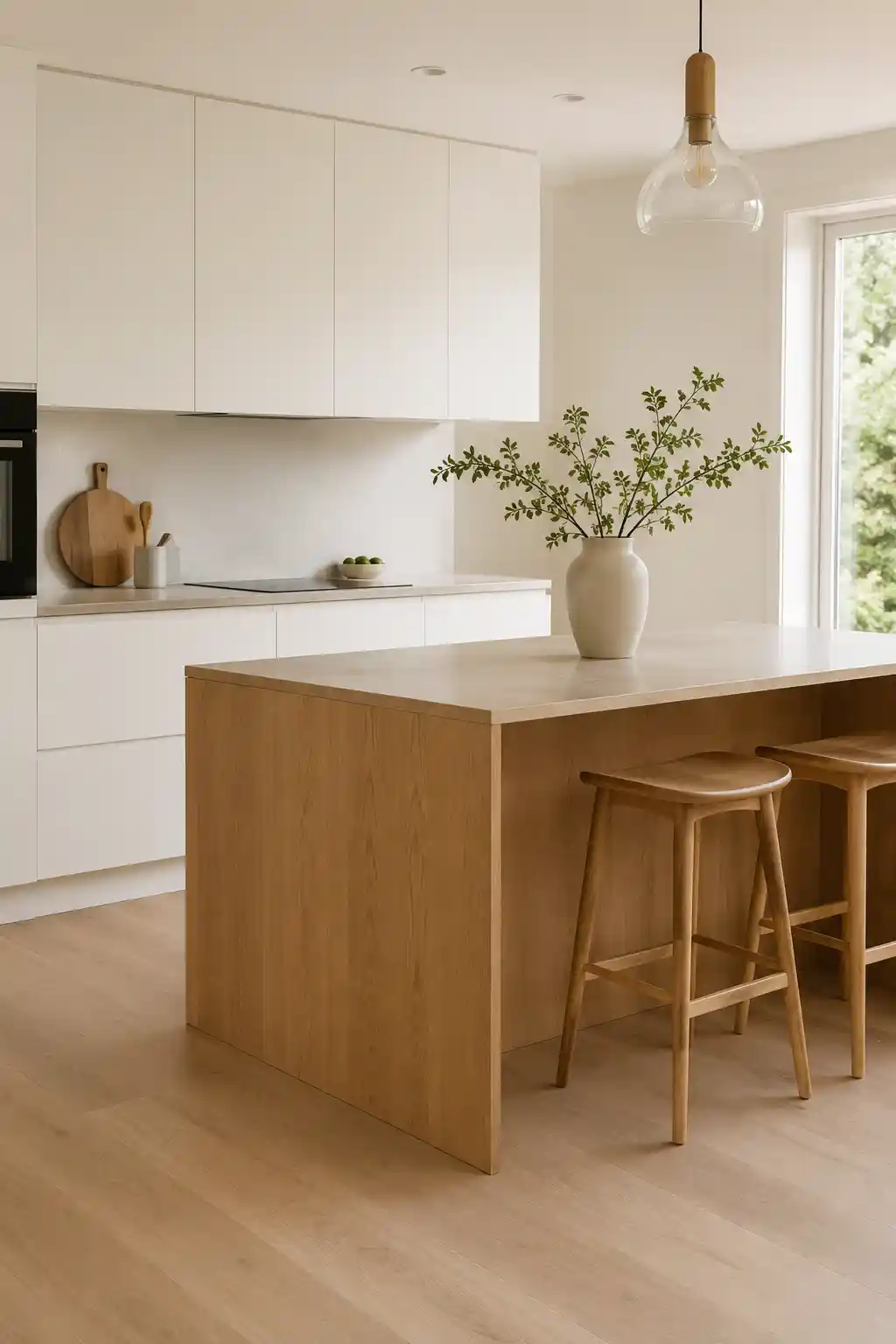
The Scandinavian approach to kitchen design is all about maximizing light and embracing organic simplicity. By pairing matte white cabinetry with light oak elements, you create a space that feels expansive yet cozy. In 2026, the trend shifts toward softer, more muted wood grains that blend seamlessly with the white surfaces rather than contrasting sharply. This aesthetic is perfect for those who want a clutter-free environment that promotes mental clarity. Incorporating a few natural accents, like a single botanical branch or linen textiles, ensures the room feels lived-in and welcoming rather than sterile.
Modern Farmhouse with Exposed Beams
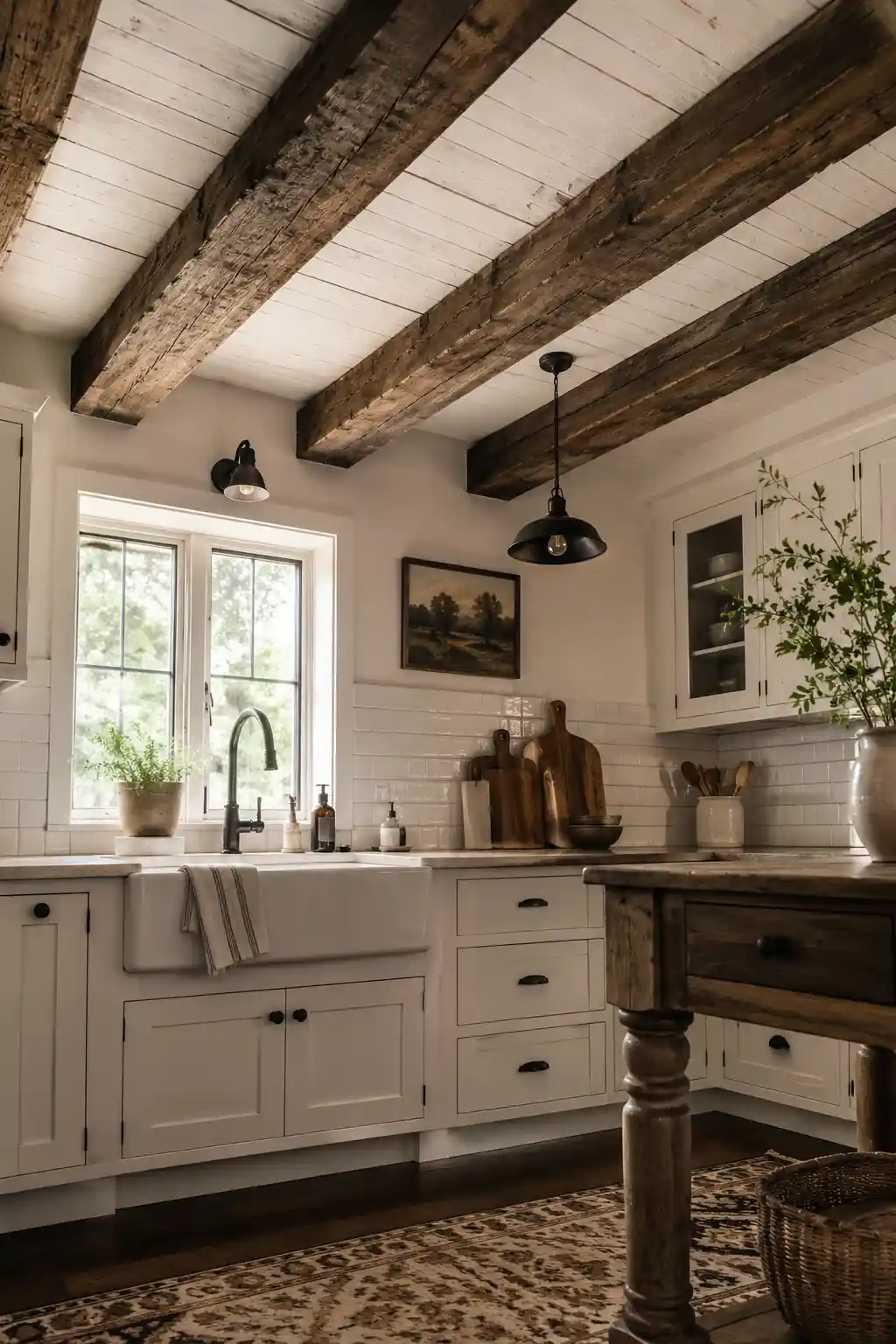
Modern farmhouse style continues to evolve by blending rustic architectural elements with sleek, contemporary finishes. The inclusion of exposed reclaimed wood beams on the ceiling adds an immediate sense of history and grounding to an otherwise bright white kitchen. This design choice creates a vertical balance, drawing the eye upward and adding architectural interest. To keep the look current for 2026, avoid overly distressed finishes and instead opt for raw, natural textures. The contrast between the clean lines of shaker cabinets and the ruggedness of the beams creates a sophisticated, earthy character.
High-Contrast Accents with Matte Black
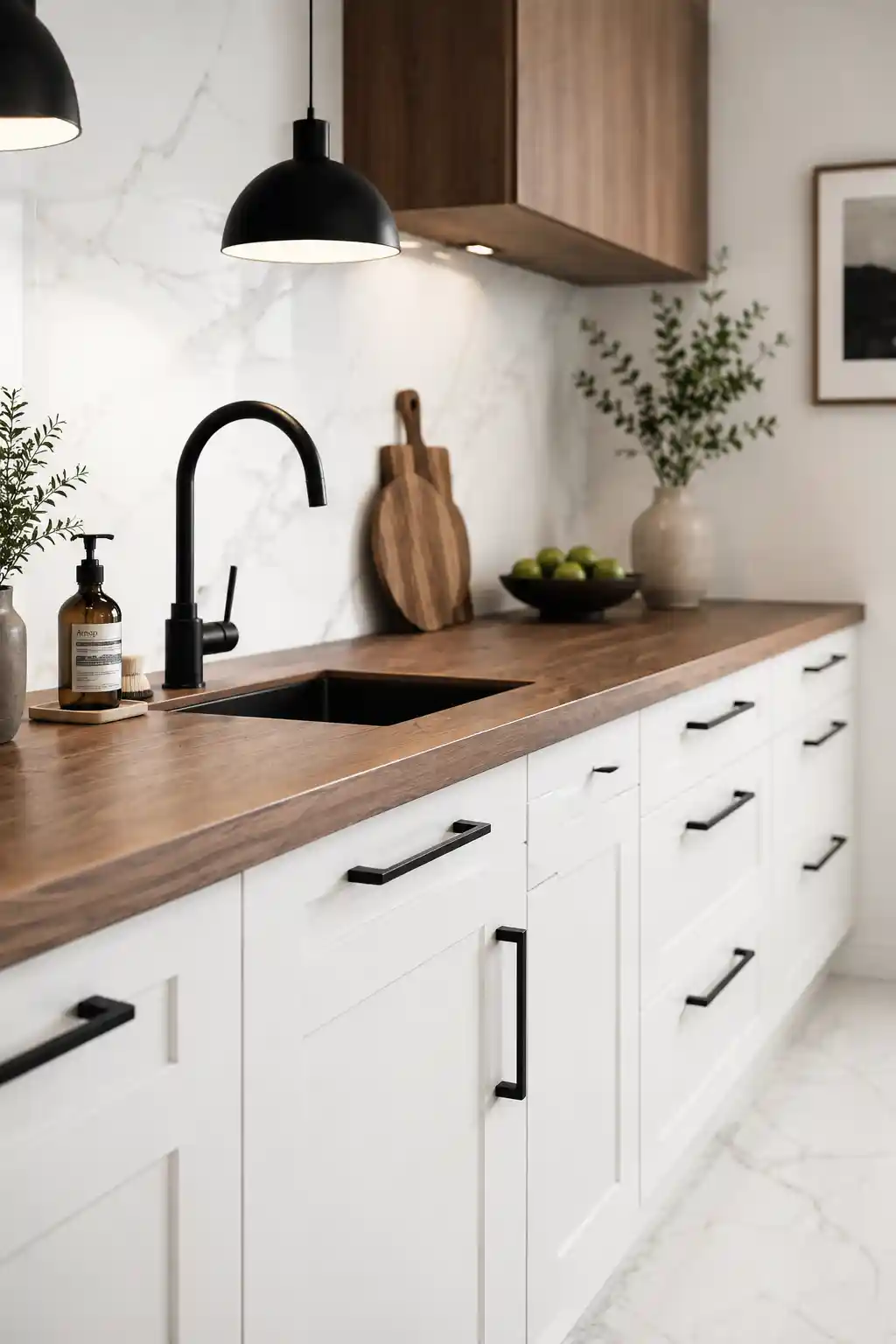
For those who find a purely white and wood palette too soft, introducing matte black accents provides the necessary visual edge. This combination is particularly effective when used in the hardware, such as slim cabinet pulls, faucet fixtures, or industrial-style pendant lights. The black elements act as anchors, defining the space and preventing the light colors from feeling washed out. When paired with a rich walnut countertop, the black accents enhance the depth of the wood grain, resulting in a kitchen that feels curated, modern, and intentionally designed for a high-end residential look.
Organic Textures with Natural Stone
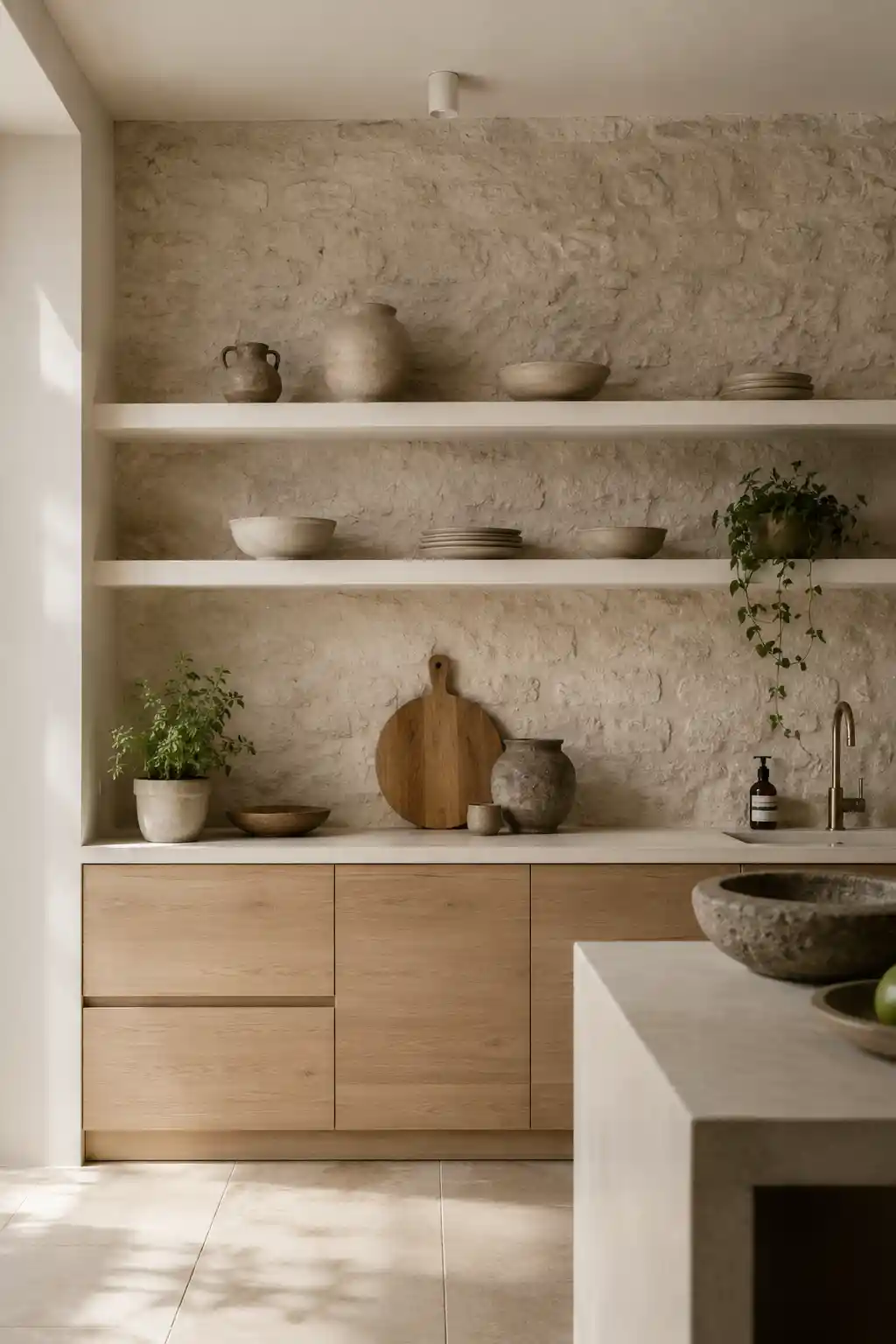
Integrating natural stone alongside white and wood elements brings a tactile, sensory quality to the kitchen. Whether it is a limestone backsplash, a travertine island, or a slate floor, stone introduces a raw element that complements the warmth of wood and the purity of white. In 2026, the trend is moving toward ‘quiet luxury,’ where the quality of the material speaks louder than the color. By layering these three elements, you create a space that feels connected to nature, offering a soothing environment that encourages slow cooking and mindful gathering.
European Bistro Charm
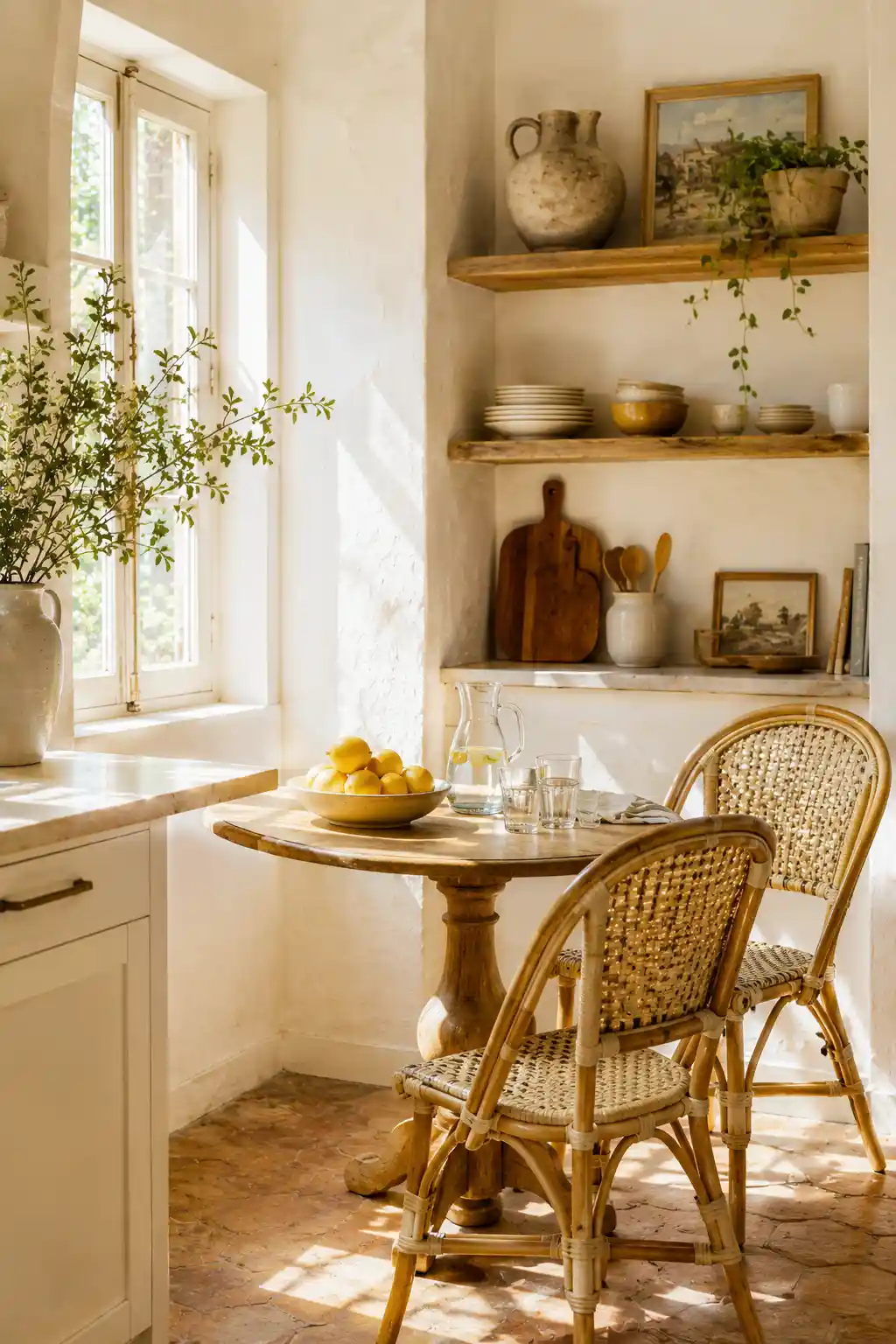
Bringing the feeling of a European café into the home is a wonderful way to utilize the white and wood combination. This style relies on a relaxed approach to organization, featuring open wooden shelving that displays everyday ceramics and glassware. A small, round wooden dining table paired with woven chairs creates a dedicated spot for morning espresso or intimate conversations. The use of white plaster or painted brick walls keeps the area feeling bright and breezy, while the wood elements provide the rustic charm necessary to make the space feel authentic and cozy.
Soft Cream and Natural Oak Harmony
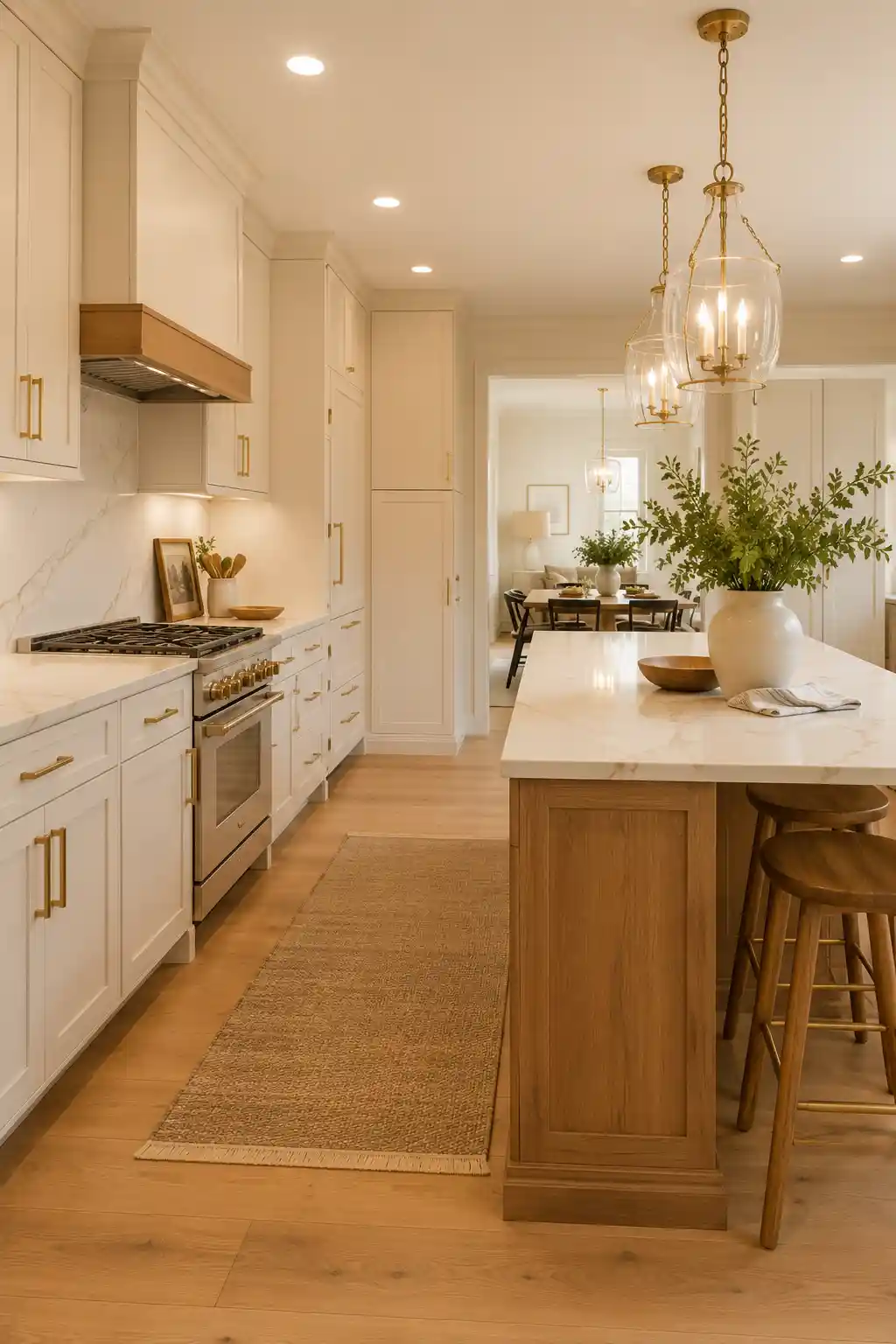
Moving away from stark, clinical whites toward creamy, ivory tones creates a more inviting and harmonious atmosphere. When cream cabinetry is paired with natural oak, the transition between colors is softer and more fluid. This tonal approach is highly effective for creating a sense of warmth without sacrificing the brightness of the room. To elevate this look, incorporate brushed brass or gold hardware, which complements the yellow undertones of the oak and the richness of the cream, resulting in a kitchen that feels timeless, elegant, and exceptionally polished.
Mid-Century Modern Walnut Contrast
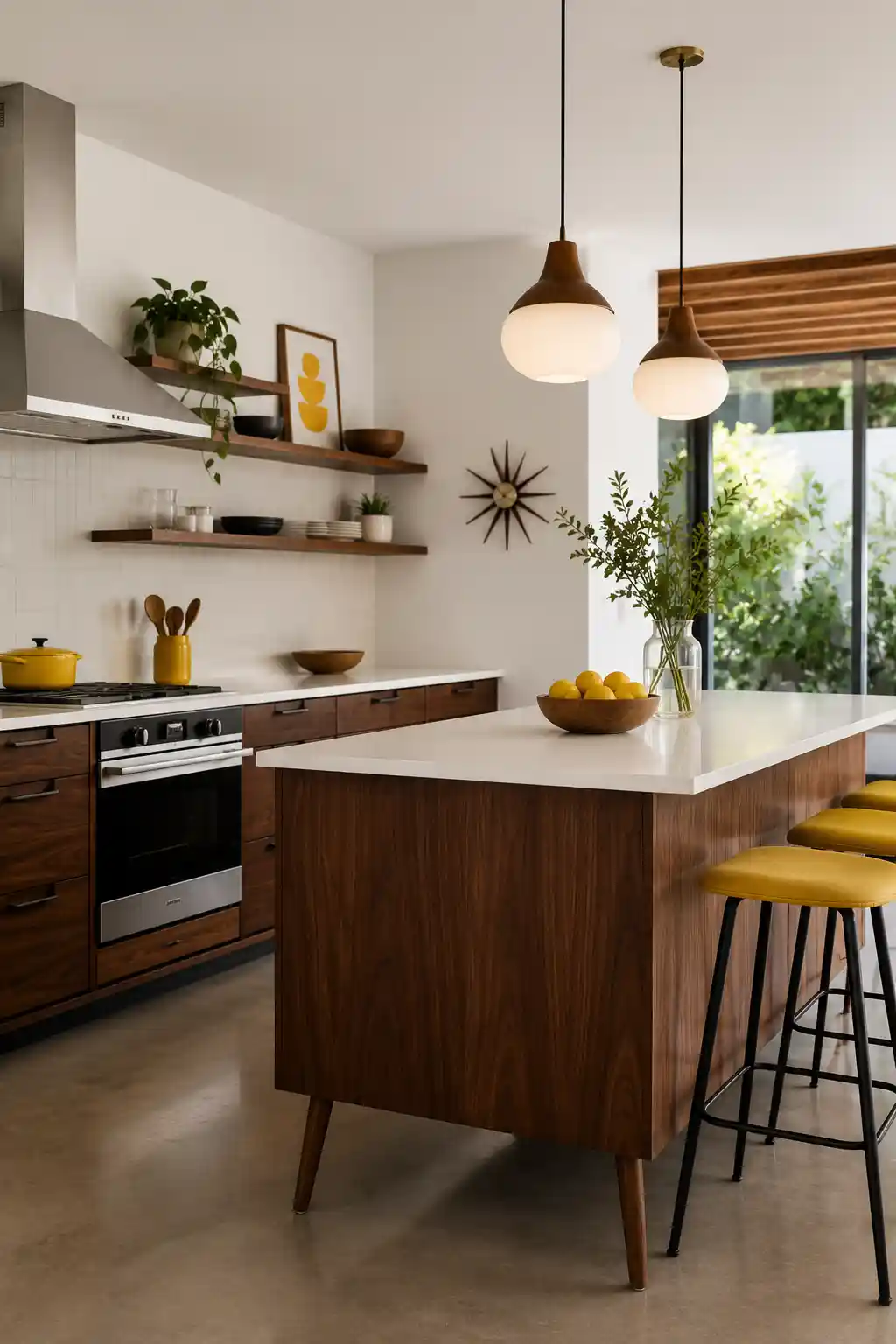
For a more architectural and bold look, the pairing of deep walnut wood and crisp white is an excellent choice. Mid-century modern design emphasizes clean lines and the beauty of the wood grain. By using walnut for the lower cabinetry and keeping the upper half of the room white, you maintain an open, airy feel while grounding the space with a sense of luxury. This contrast is visually striking and works particularly well in open-concept homes where the kitchen needs to function as a piece of furniture and a design statement.
Rustic Open Shelving and White Base
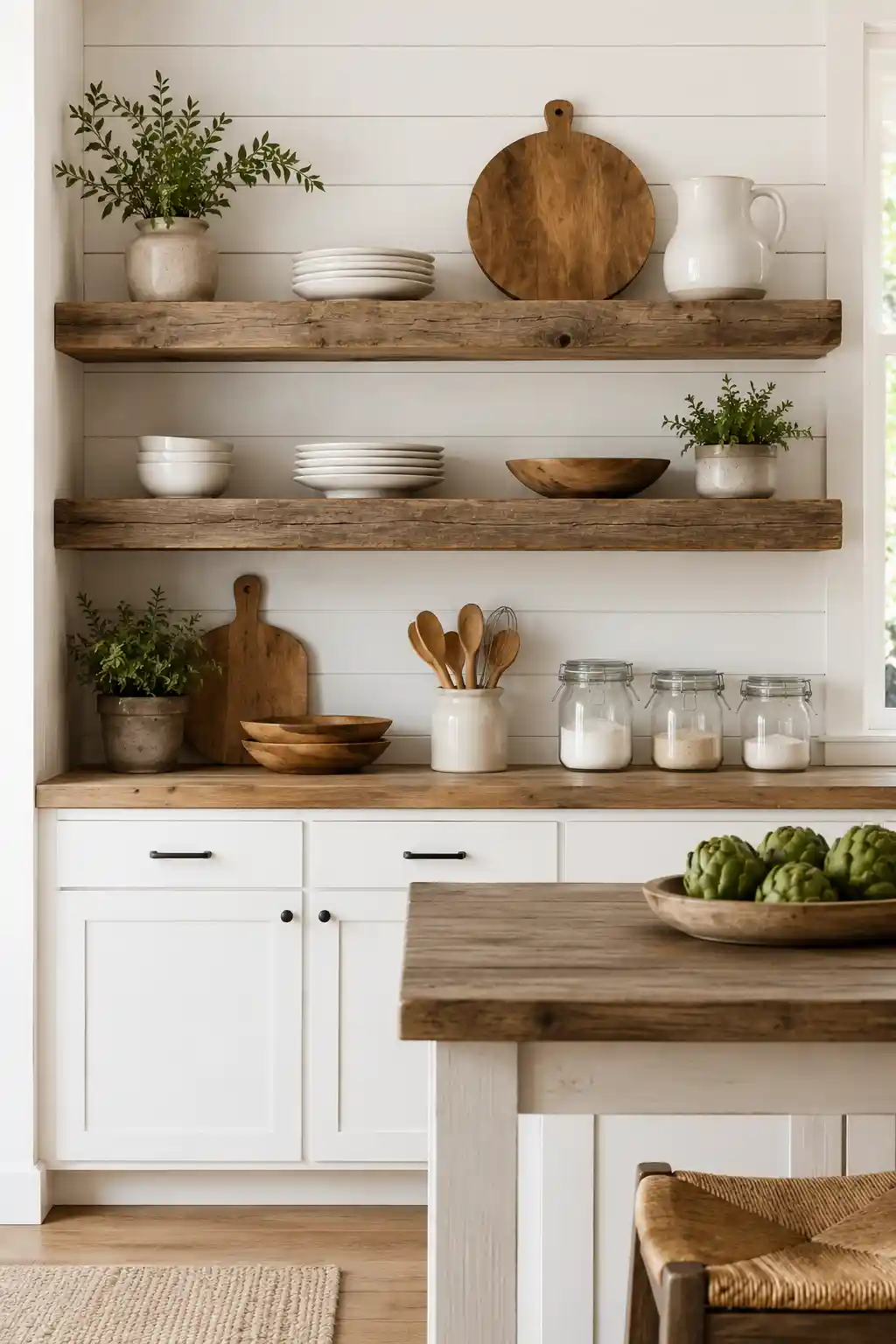
Replacing some of the upper cabinetry with chunky, reclaimed wood floating shelves is a great way to introduce warmth and personality into a white kitchen. This design choice opens up the room, making it feel larger and more breathable. It also allows you to showcase your favorite cookware and heirlooms, adding a personal touch that built-in cabinets often hide. The key to making this look work in 2026 is intentional styling—mixing textures like matte ceramics and polished glass to create a curated, effortless display that feels organic.
Subtle Pastels and Organic Wood
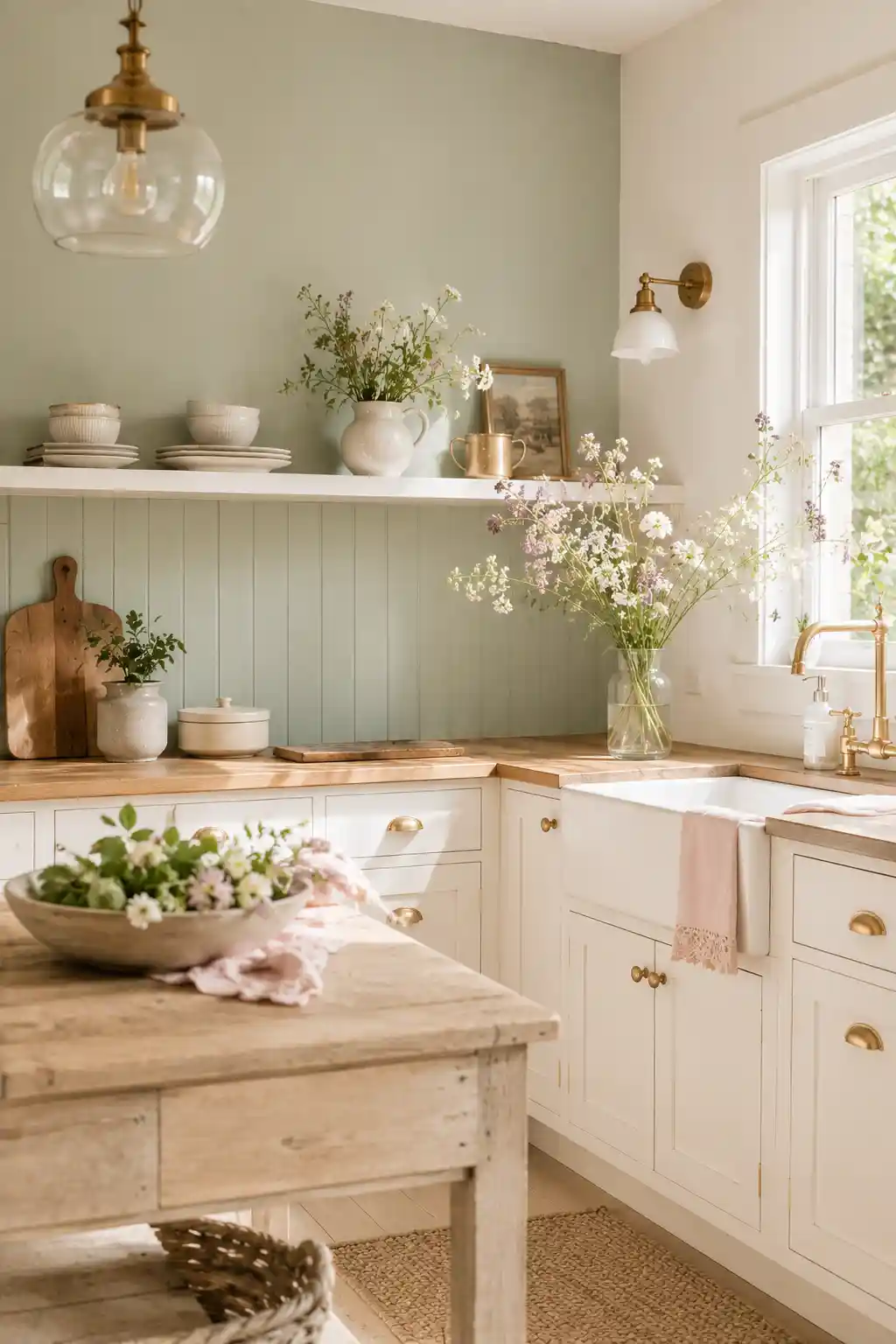
While white and wood provide a neutral base, adding a whisper of pastel can introduce a fresh, modern energy. Soft sage green or a pale blush can be used on a single accent wall or even on the kitchen island to break up the palette. These colors act as a bridge between the sterility of white and the earthiness of wood, creating a space that feels gentle and restorative. This approach is ideal for homeowners who want a touch of color without committing to a bold hue, maintaining a serene environment that feels current and sophisticated.
The Statement Wood-Clad Island
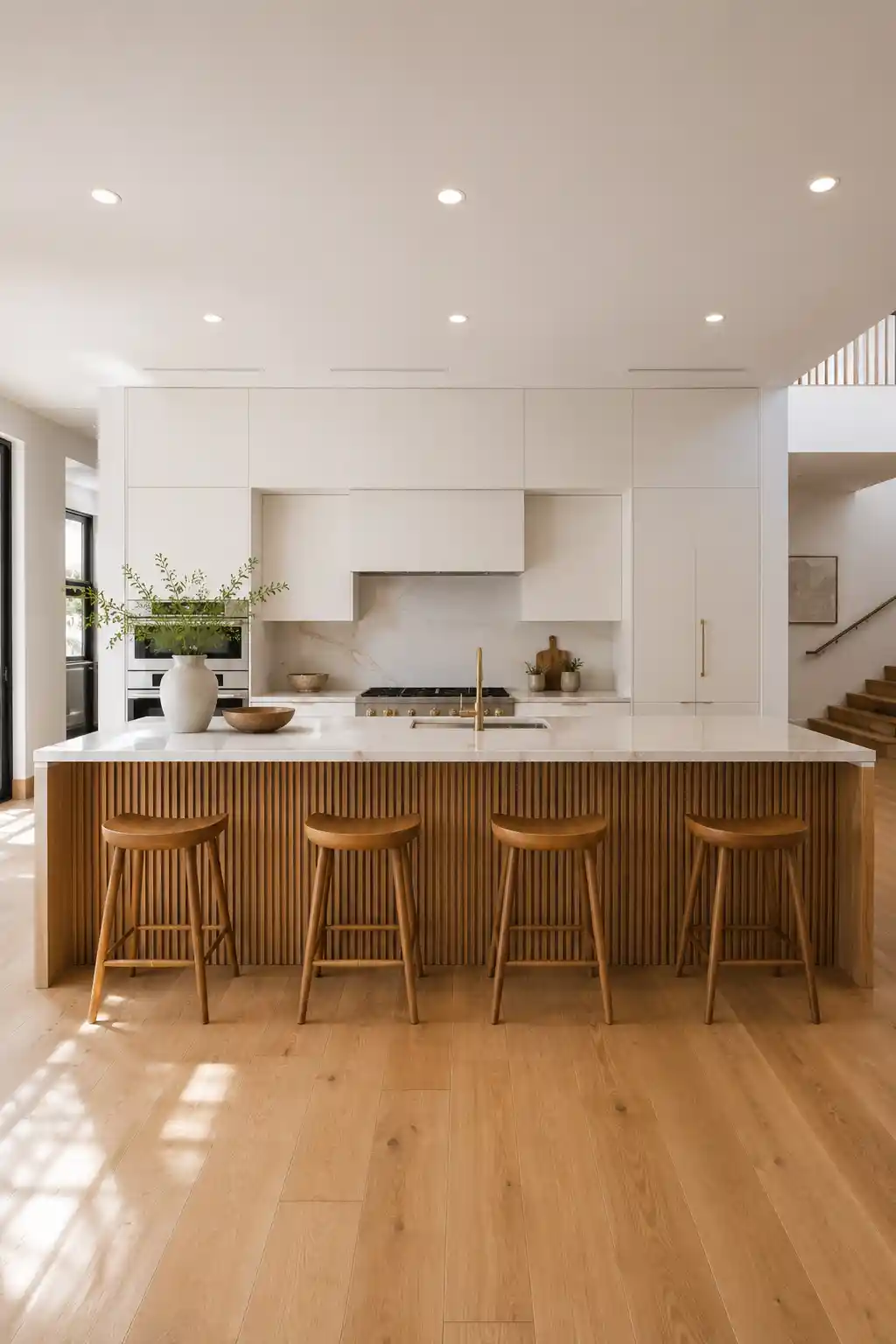
A powerful way to implement this trend is by making the kitchen island the sole wooden element in an otherwise all-white space. Cladding the island in vertical wood slats or a rich veneer creates a stunning focal point that anchors the entire room. This technique separates the functional work zones from the social gathering hub of the kitchen. The contrast is dramatic yet balanced, turning the island into a piece of sculptural art. When paired with a white marble top, the result is a high-end look that feels both minimal and opulent.
Coastal Driftwood and Bright Whites
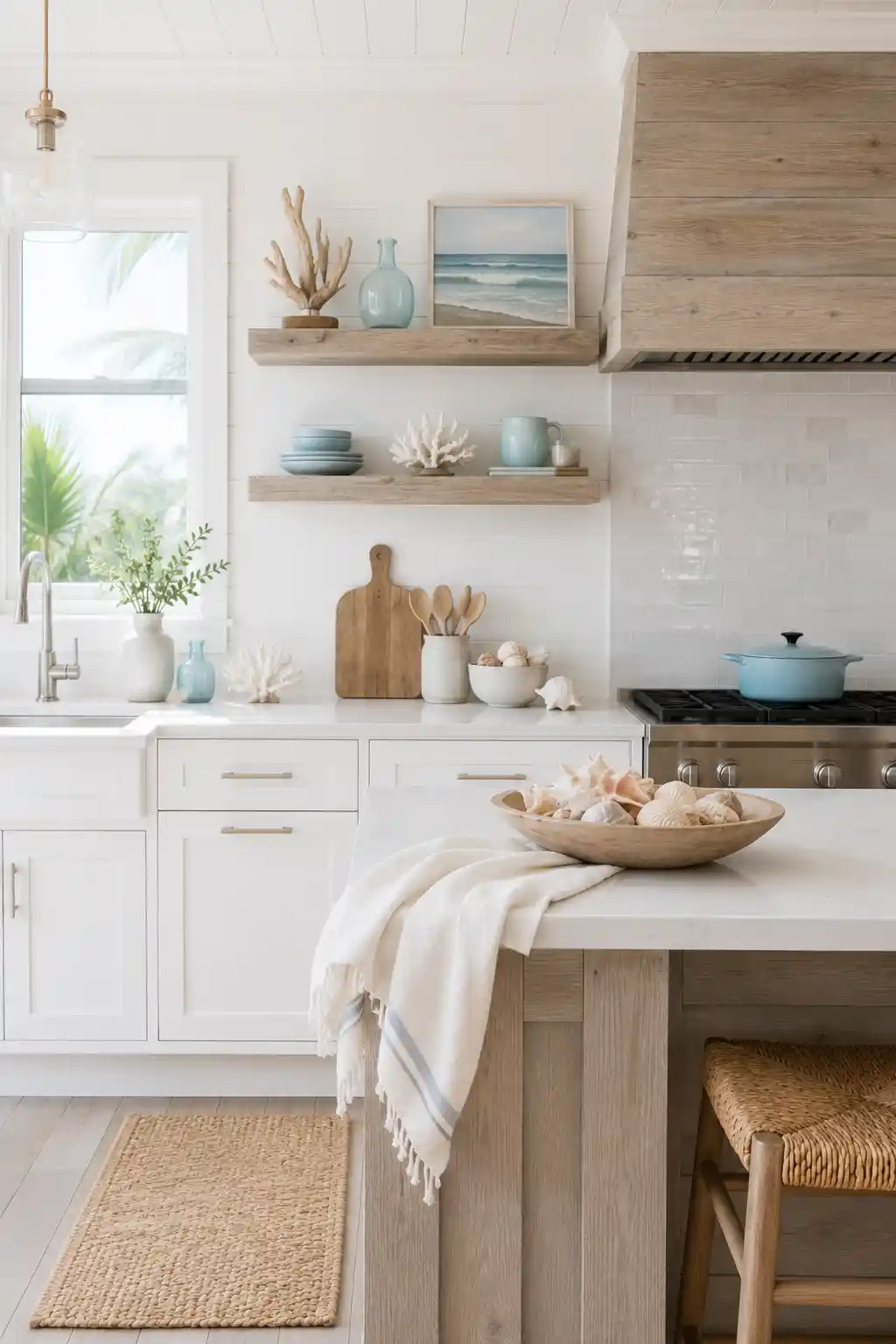
Coastal design is evolving beyond the cliché, moving toward a more refined ‘beach house’ aesthetic. By using weathered, driftwood-toned woods instead of traditional honey oaks, you create a palette that feels cool and refreshing. Paired with bright white cabinetry and sheer window treatments, this look mimics the colors of the shoreline. To keep this style from feeling too themed, focus on high-quality materials and a minimal color palette, allowing the natural texture of the weathered wood to provide the primary visual interest.
Transitional Shaker with Warm Wood Tops
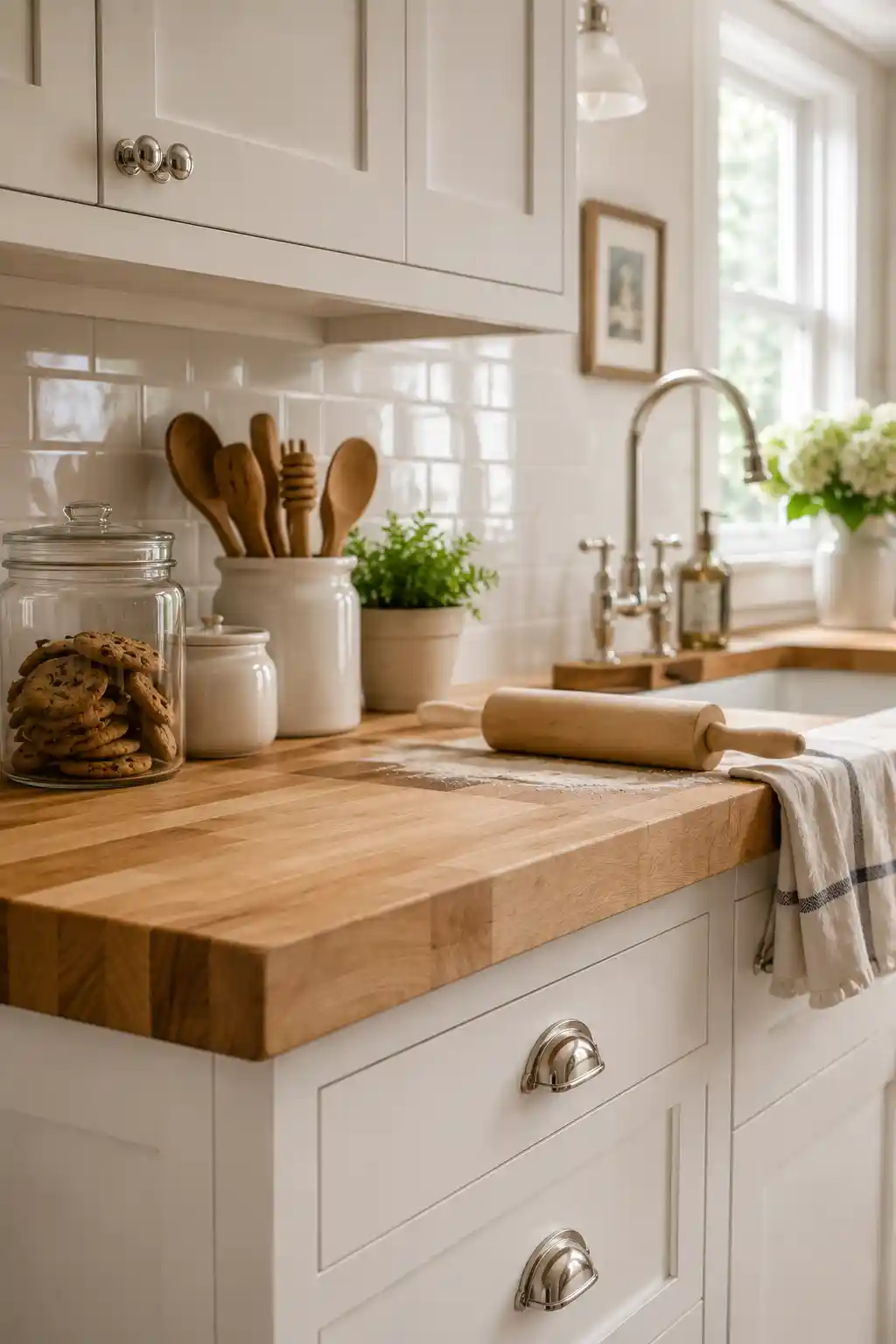
For a look that never goes out of style, the combination of white shaker cabinets and butcher block countertops is a gold standard. Shaker doors provide a clean, structured look, while the wood countertops add a layer of warmth and utility that is perfect for active kitchens. This transitional style bridges the gap between traditional and modern, making it a safe yet sophisticated choice for any home. To modernize this look for 2026, opt for a lighter wood species like maple or ash and pair them with polished nickel or chrome hardware for a crisp finish.
Architectural Wood Framing and White Panels
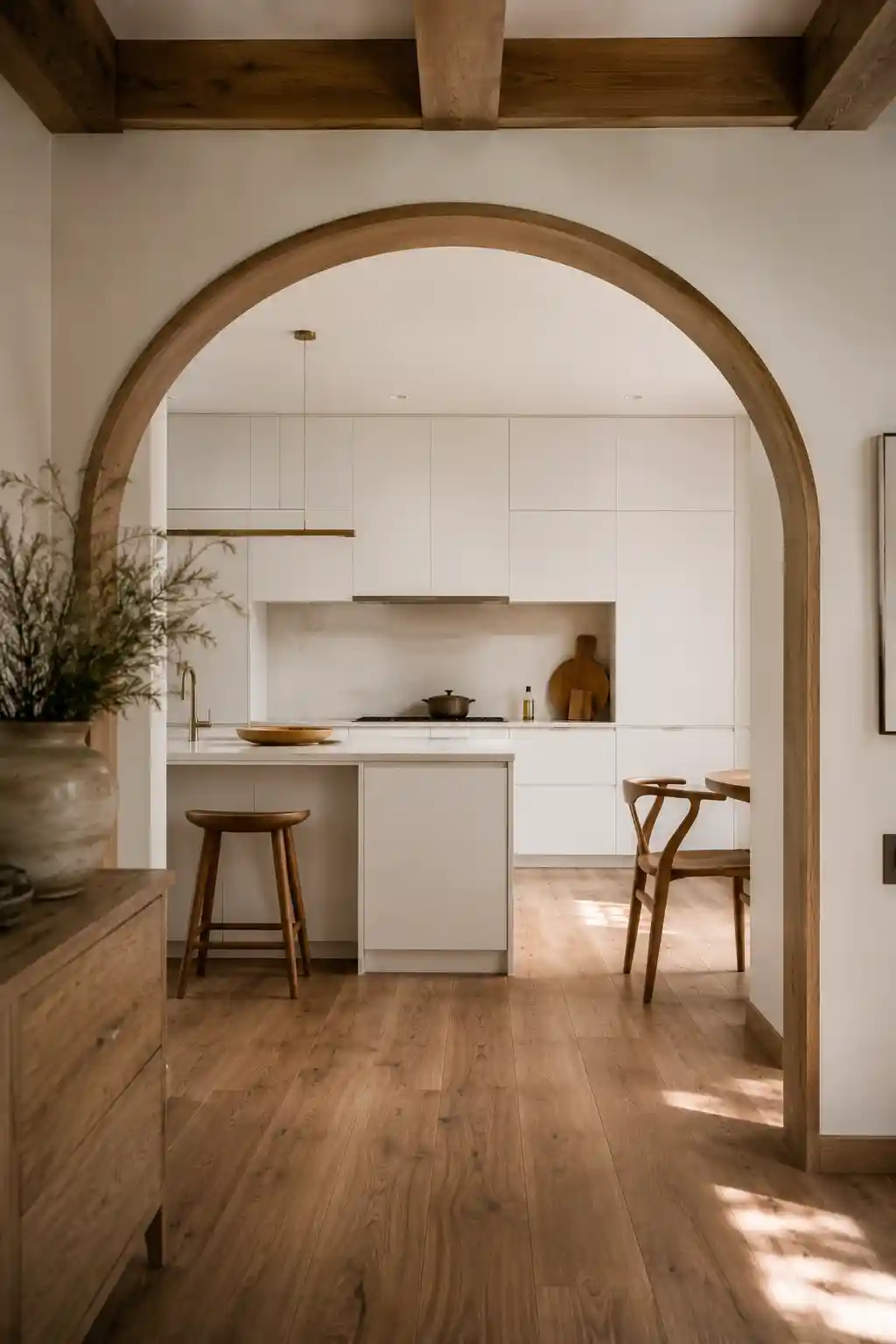
Adding architectural wood elements, such as arched frames or paneled ceilings, can transform a simple white kitchen into a custom-designed masterpiece. Instead of focusing only on the furniture, this approach uses wood to define the structure of the room. When these warm wooden frames surround seamless white panels and hidden-handle cabinetry, the result is a sophisticated play on geometry and color. This design is particularly effective in homes with high ceilings, as it adds a sense of proportion and craftsmanship that makes the kitchen feel rooted and intentional.