
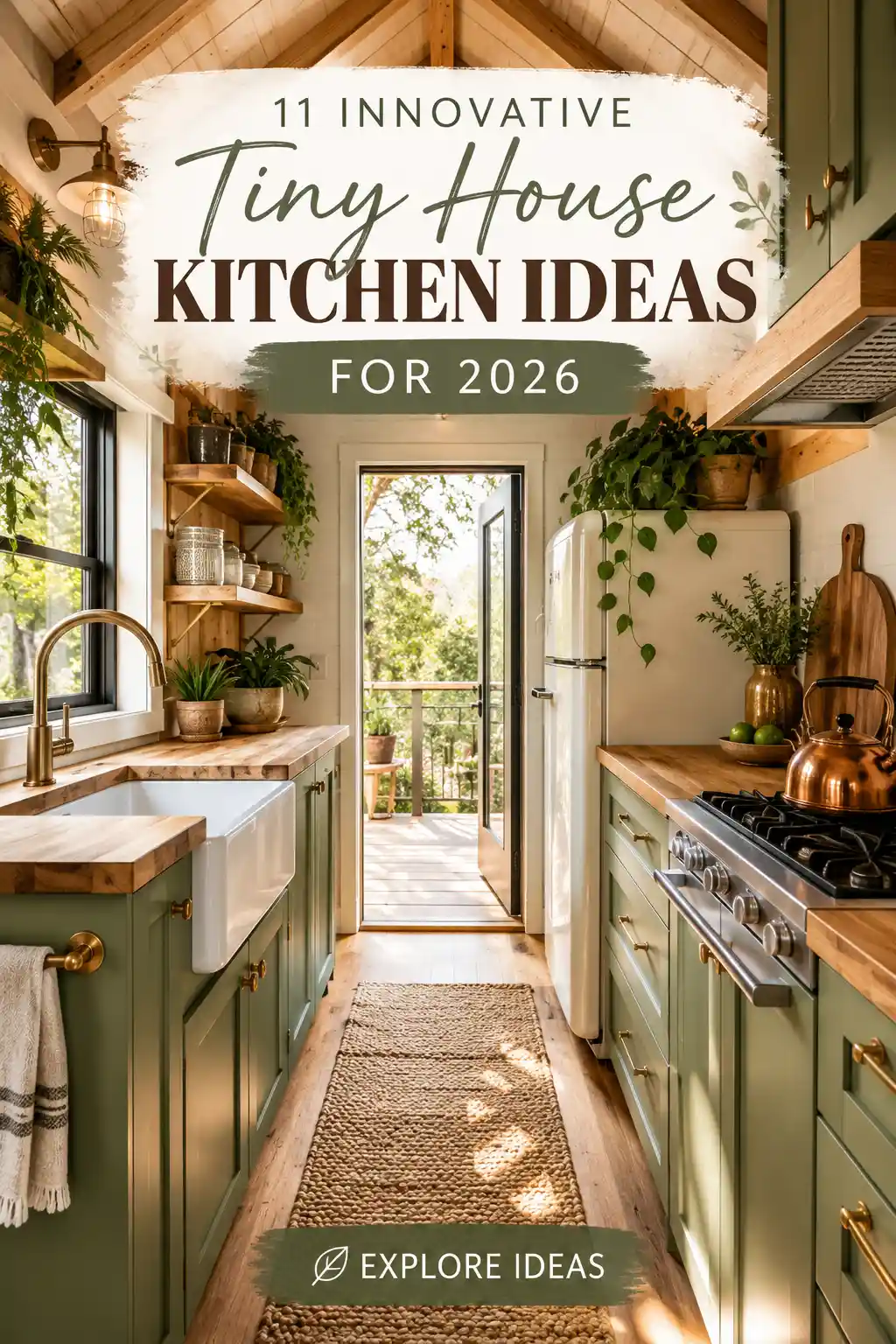
Designing a tiny house kitchen requires a delicate balance between extreme functionality and high-end aesthetics. As we move toward 2026, the trend is shifting away from purely utilitarian spaces and toward intentional, curated environments that make a small footprint feel like a luxury retreat. Whether you are working with a narrow galley or a cozy corner, the secret lies in smart zoning, light-reflective palettes, and multifunctional furniture. From moody industrial contrasts to airy Scandinavian sanctuaries, these design concepts prove that you don’t need massive square footage to achieve a breathtaking culinary space.
Sage Green Cottage Core
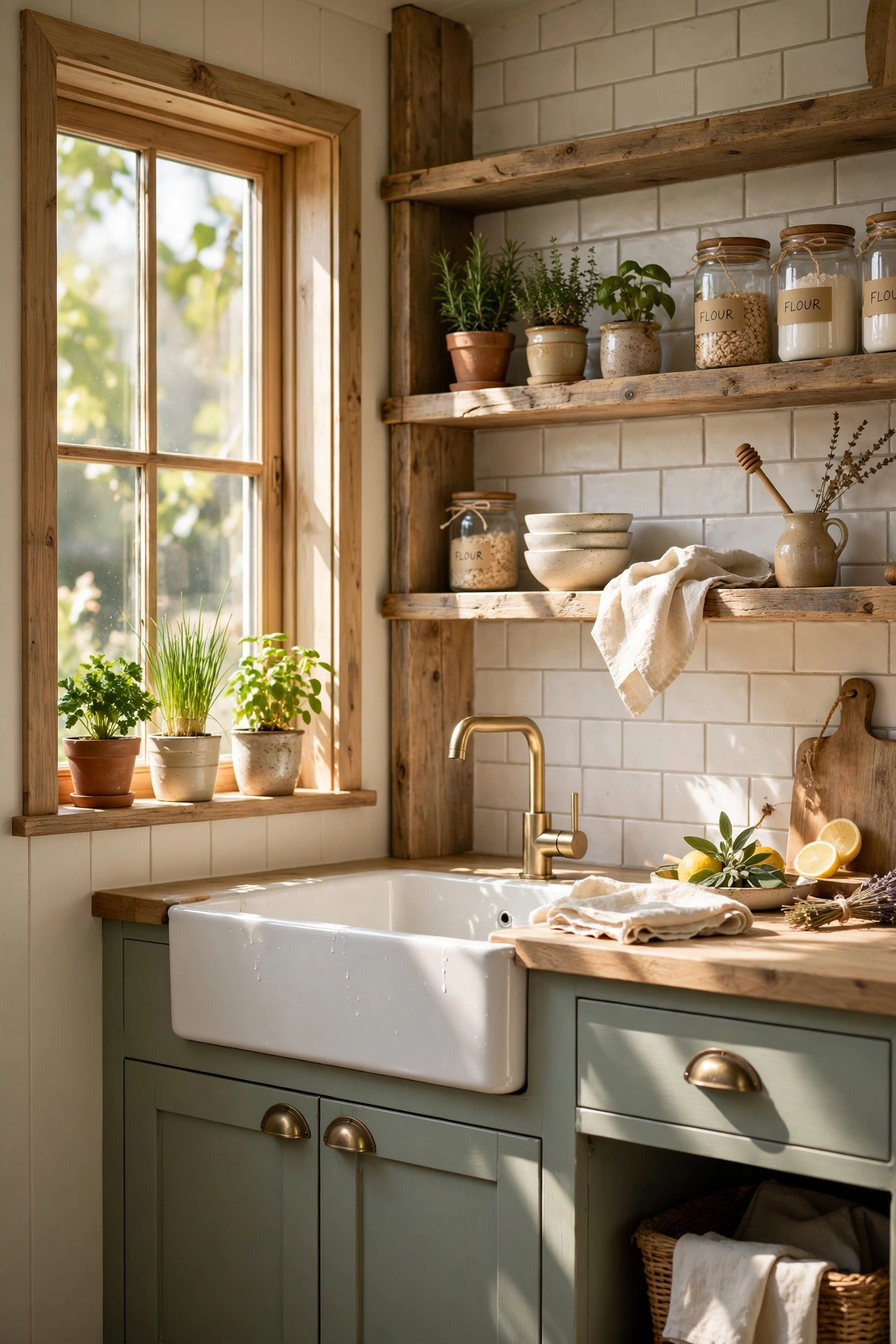
Embracing a sage green palette is a brilliant way to bring the outdoors inside, creating a calming atmosphere that prevents a tiny kitchen from feeling claustrophobic. In 2026, the cottage core aesthetic evolves by pairing these earthy tones with open shelving and natural materials. By removing heavy upper cabinets and replacing them with floating oak planks, the walls feel more expansive and breathable. This design is perfected by adding a classic farmhouse apron sink and a few carefully placed indoor plants, which blend organic beauty with everyday utility.
Scandinavian Minimalist White
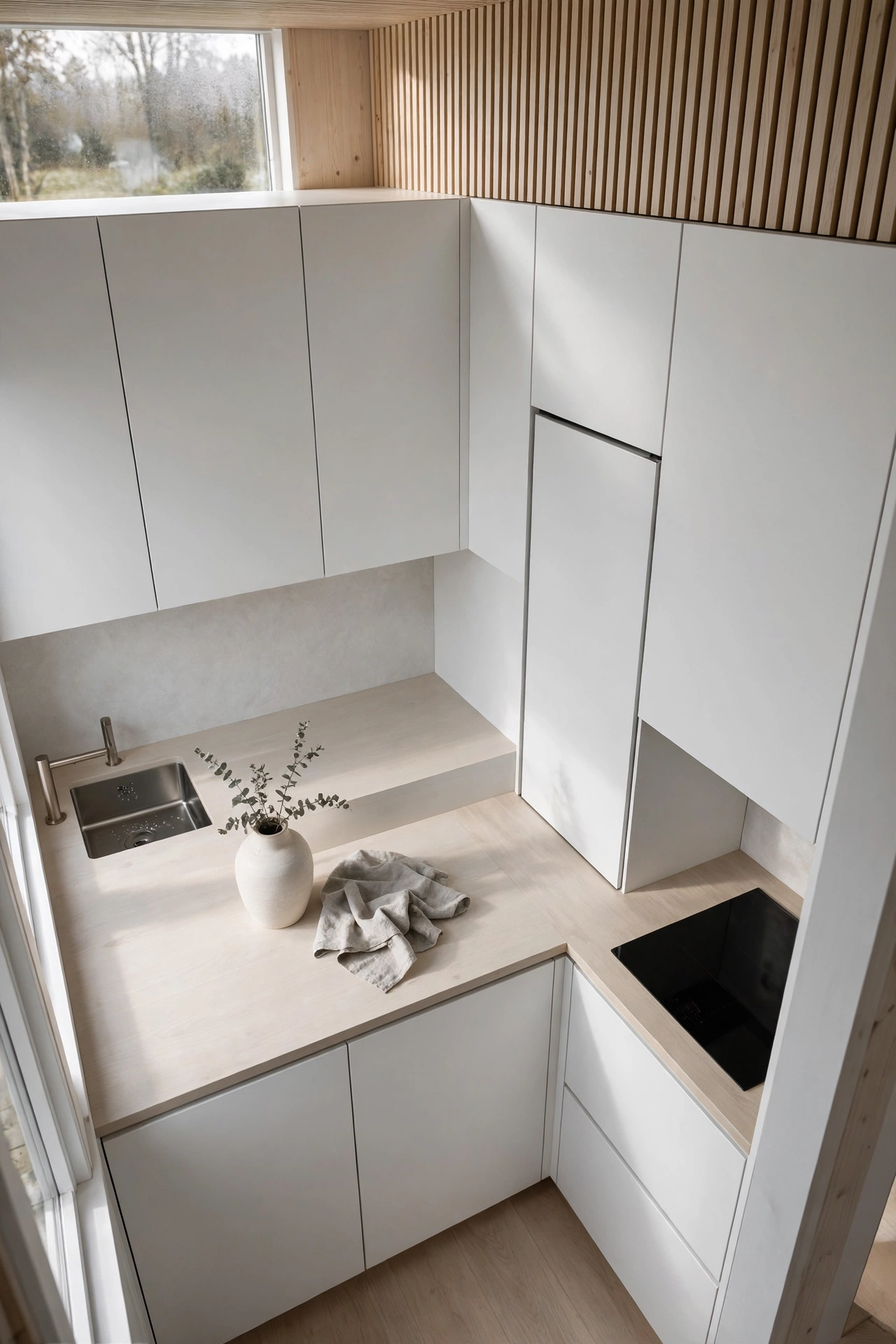
The Scandinavian approach is the gold standard for small space living because it prioritizes light and visual clarity. By utilizing a monochromatic white palette combined with pale ash or birch wood, the kitchen reflects every bit of available light, making the footprint feel significantly larger than it is. The key to this look is ‘invisible’ design—integrated appliances and handleless cabinetry that reduce visual noise. When everything has a designated hidden spot, the kitchen remains a sanctuary of peace rather than a cluttered workspace.
Moody Charcoal and Copper
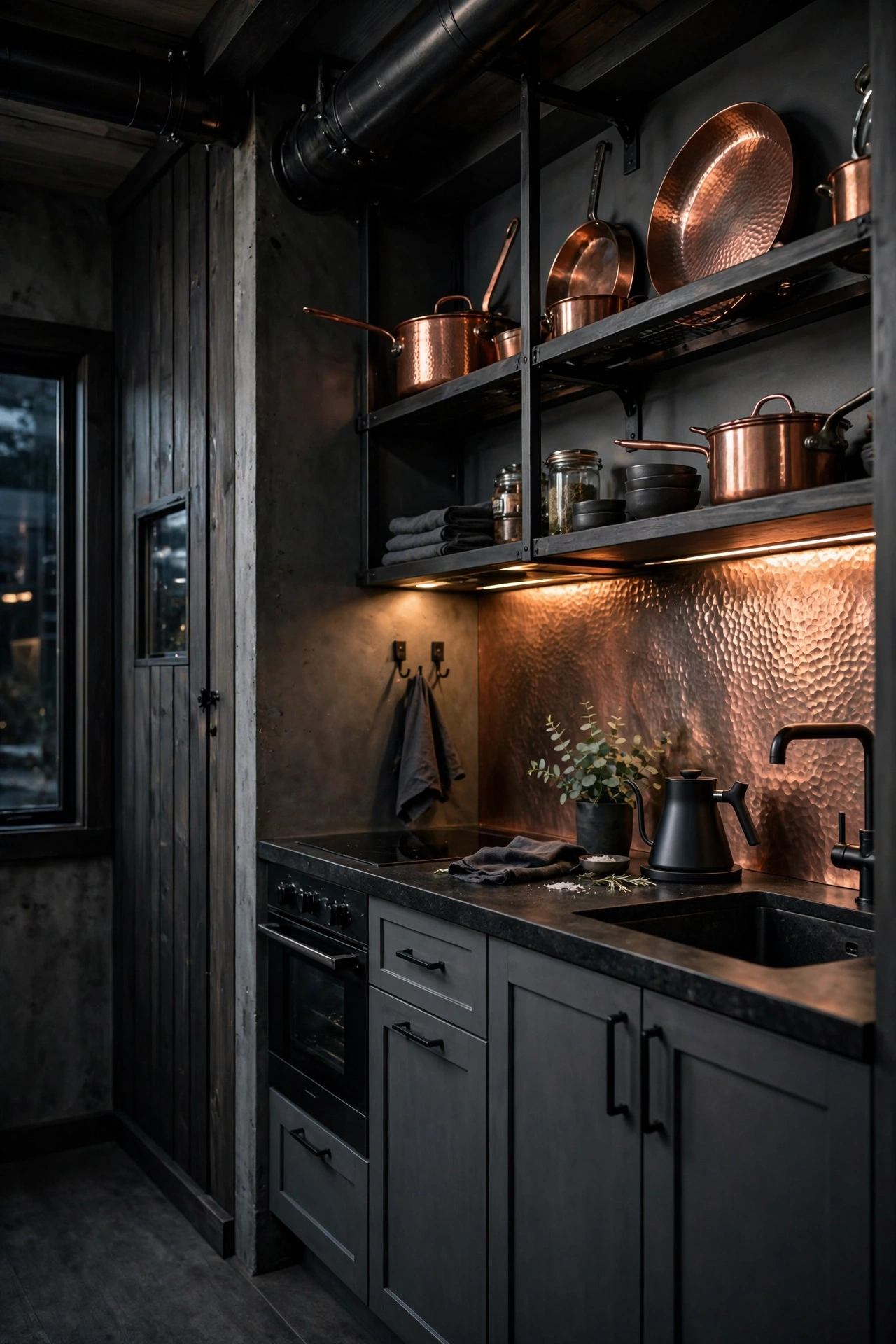
Who says tiny kitchens have to be white? A moody charcoal palette creates an intimate, high-end lounge feel that is incredibly sophisticated. To prevent the dark tones from overwhelming the space, the introduction of hammered copper accents is essential. Copper provides a warm, reflective quality that bounces light around the room while adding a touch of luxury. This combination of matte textures and metallic brilliance turns a small cooking area into a bold design statement, proving that dark colors can actually add depth and dimension.
Rustic Timber Cabin Retreat
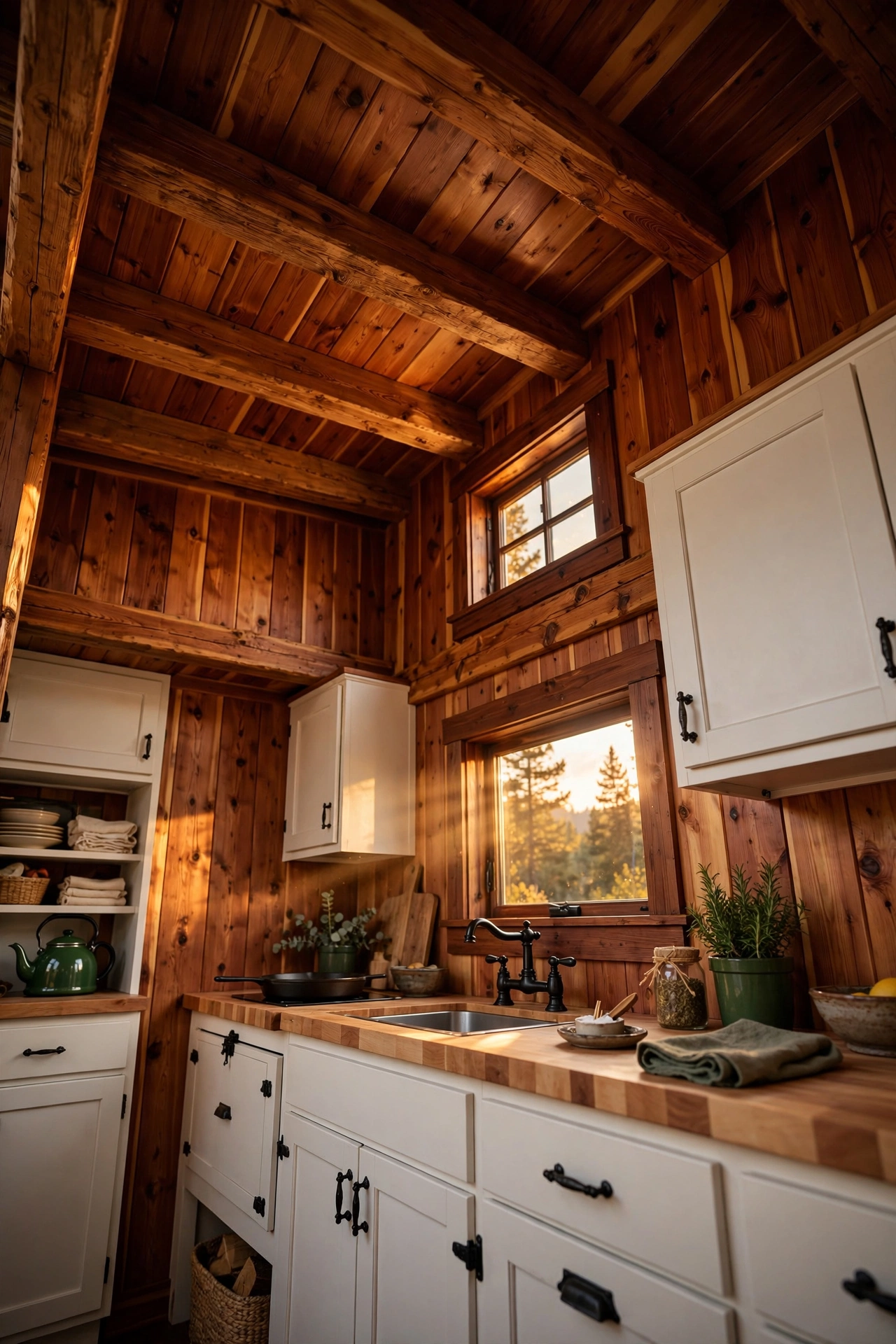
For those craving a connection to nature, a timber-centric design transforms a tiny kitchen into a cozy woodland retreat. The secret here is the contrast between raw, textured wood and polished surfaces. By pairing rich cedar or pine walls with crisp cream cabinetry, you avoid the ‘dark box’ effect while maintaining a rustic charm. Incorporating heavy butcher block countertops and wrought-iron hardware adds a timeless quality, making the space feel rooted and permanent despite its small size, perfect for slow mornings and hearty meals.
Contemporary Walnut and Marble
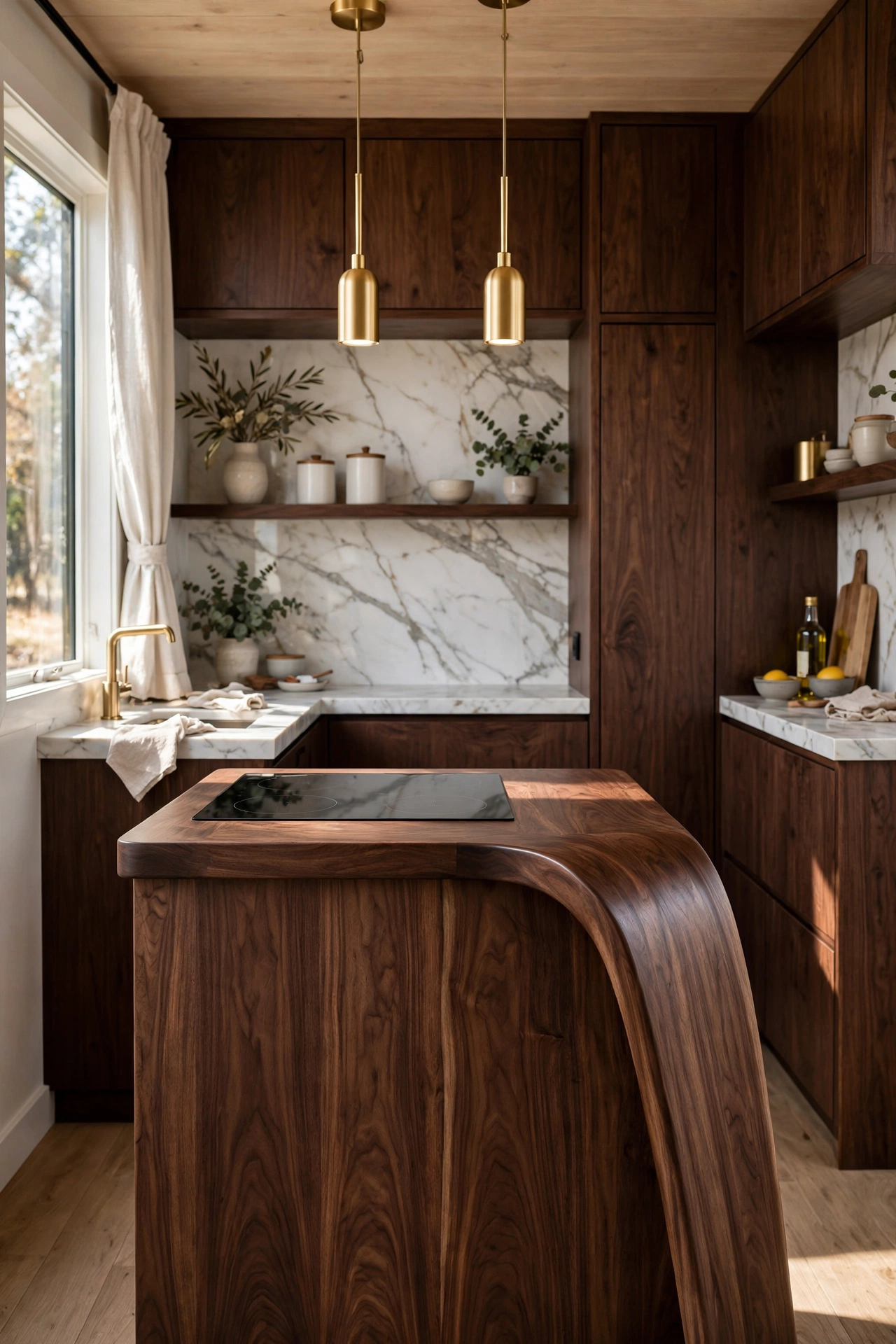
High-end materials can elevate a tiny kitchen from simple to sculptural. A walnut waterfall island serves as both a prep station and a dining table, maximizing the utility of the center floor space. Pairing the warmth of dark walnut with the cool, bright veins of Calacatta marble creates a balanced, luxurious aesthetic. This design focuses on quality over quantity, using a few premium materials to create a sense of opulence. The result is a sleek, modern environment that feels like a piece of architecture rather than just a room.
Classic Cream Farmhouse
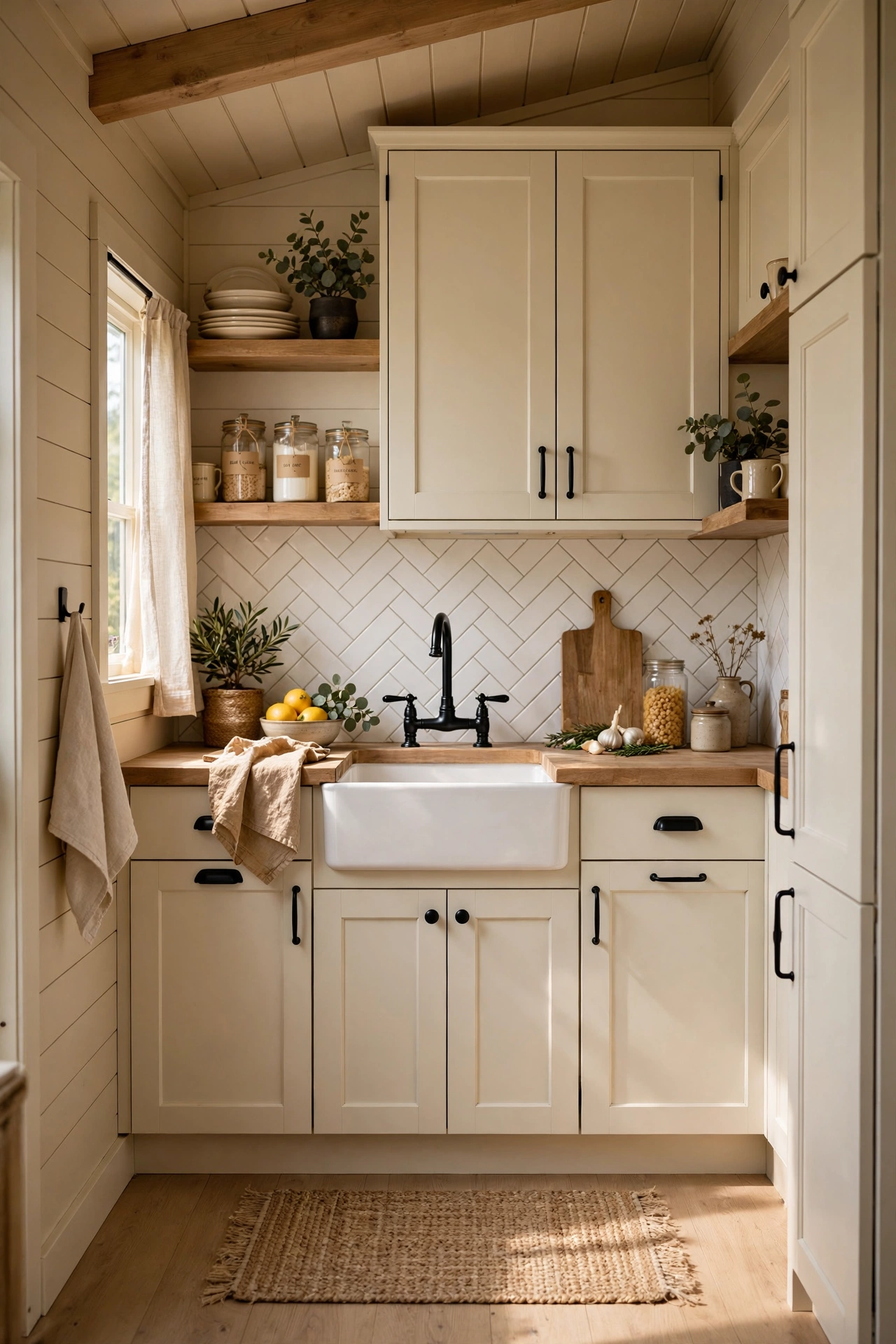
The modern farmhouse look remains a favorite for tiny homes because it evokes a feeling of comfort and nostalgia. Using a creamy vanilla palette instead of stark white adds a layer of softness and warmth. A herringbone tile backsplash introduces subtle movement and architectural interest without cluttering the visual field. By focusing on tactile elements like jute rugs and shaker-style cabinetry, the kitchen becomes the heart of the home, offering a welcoming environment that balances traditional charm with 2026’s streamlined efficiency.
Industrial Black and White Contrast
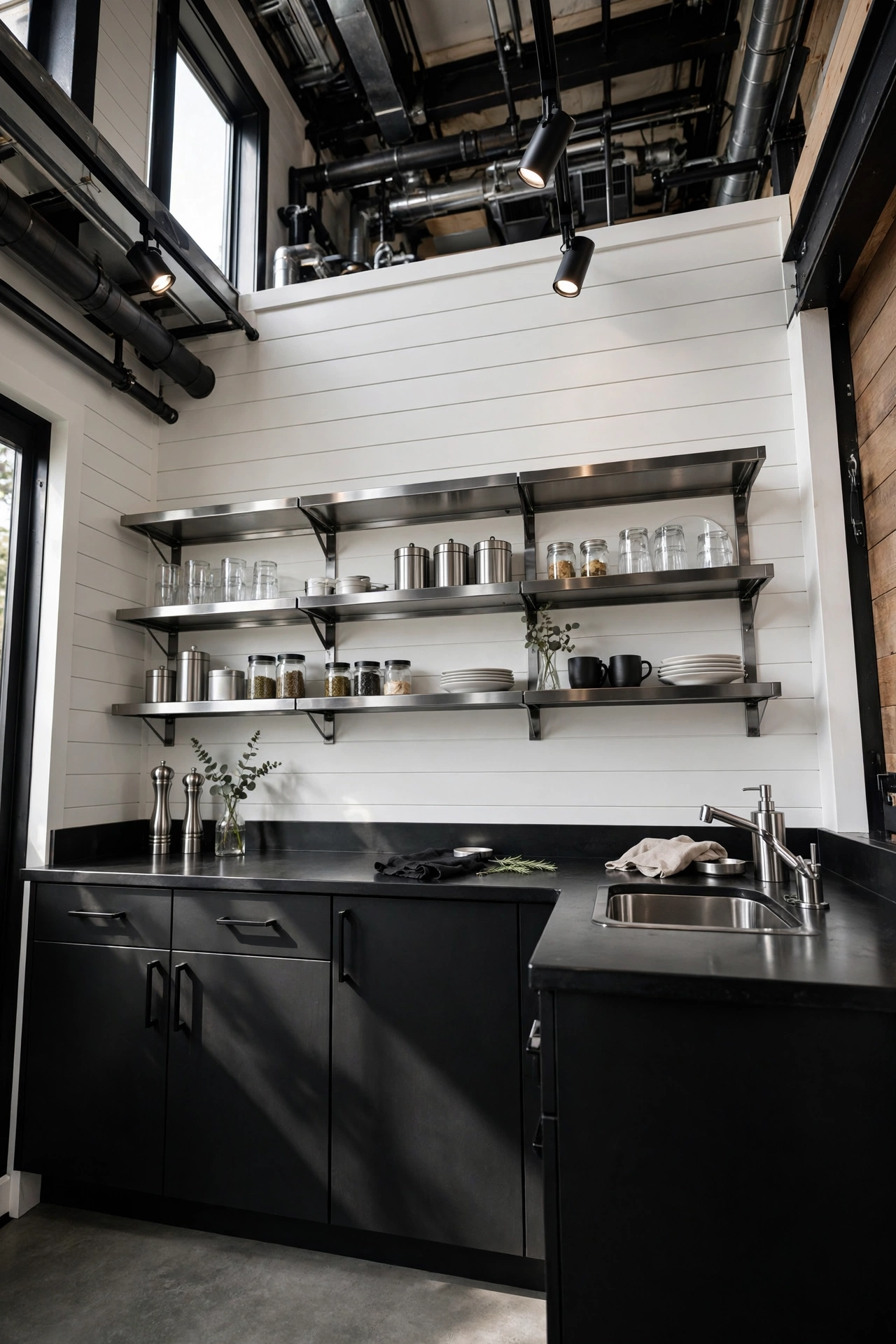
Industrial design is particularly effective in tiny homes that utilize vertical space. A high-contrast black and white scheme creates a graphic, clean look that feels modern and energetic. By using matte black for the lower cabinets and white shiplap for the walls, the eye is drawn upward, emphasizing the height of the ceiling and making the room feel taller. Stainless steel accents and track lighting add a professional, culinary edge, turning a compact kitchen into a high-performance space that looks like a boutique city loft.
Coastal Navy and White
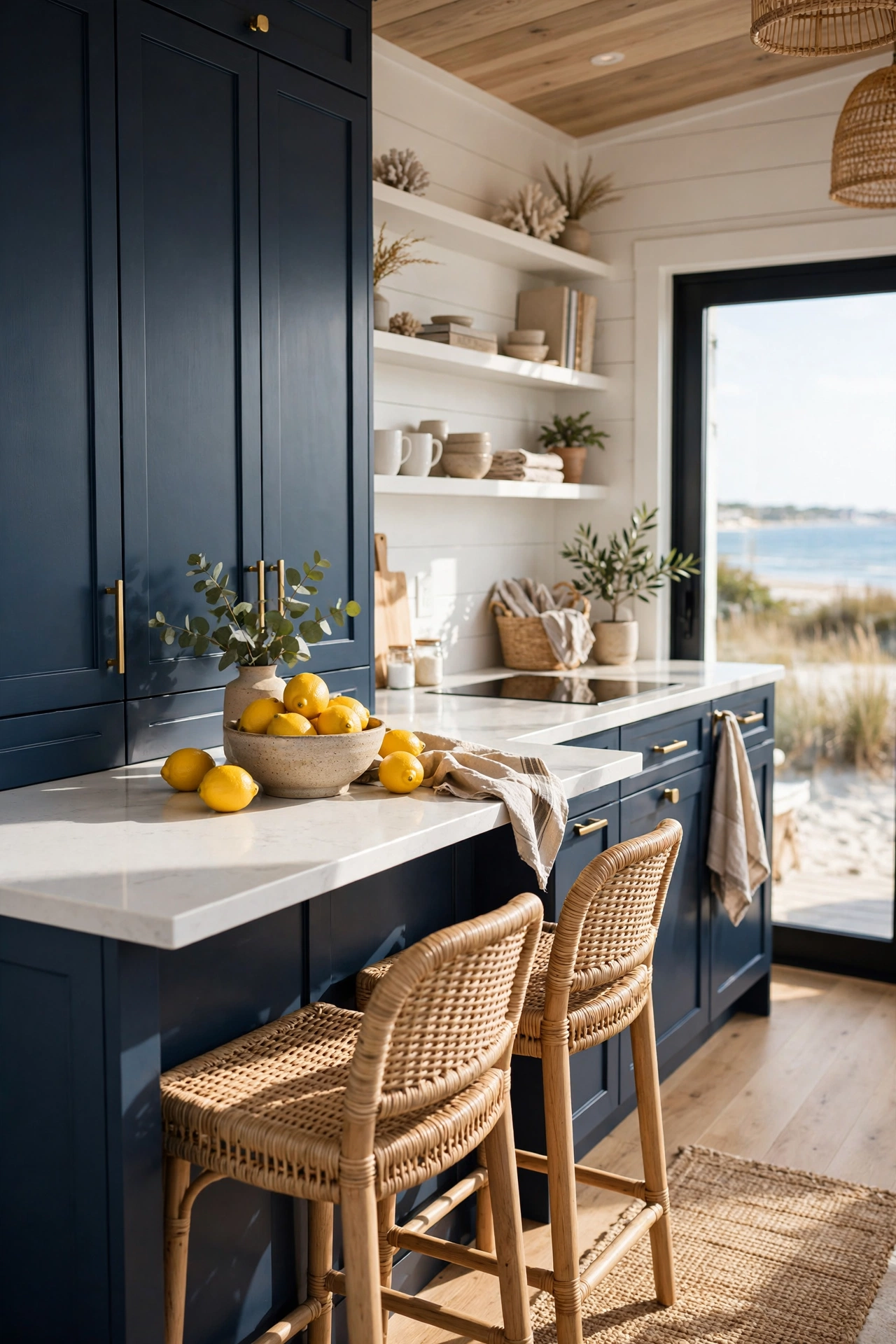
For a breezy, vacation-like feel, a coastal-inspired navy and white palette is an excellent choice. The deep navy cabinetry provides a strong anchor to the room, while white quartz surfaces keep the space feeling light and hygienic. Integrating natural textures, such as rattan bar stools or a seagrass runner, softens the contrast and adds an organic element. This design works best in open-concept tiny homes, where the kitchen flows seamlessly into the living area, creating a bright, expansive environment that feels like a seaside sanctuary.
Earthy Textured Nook
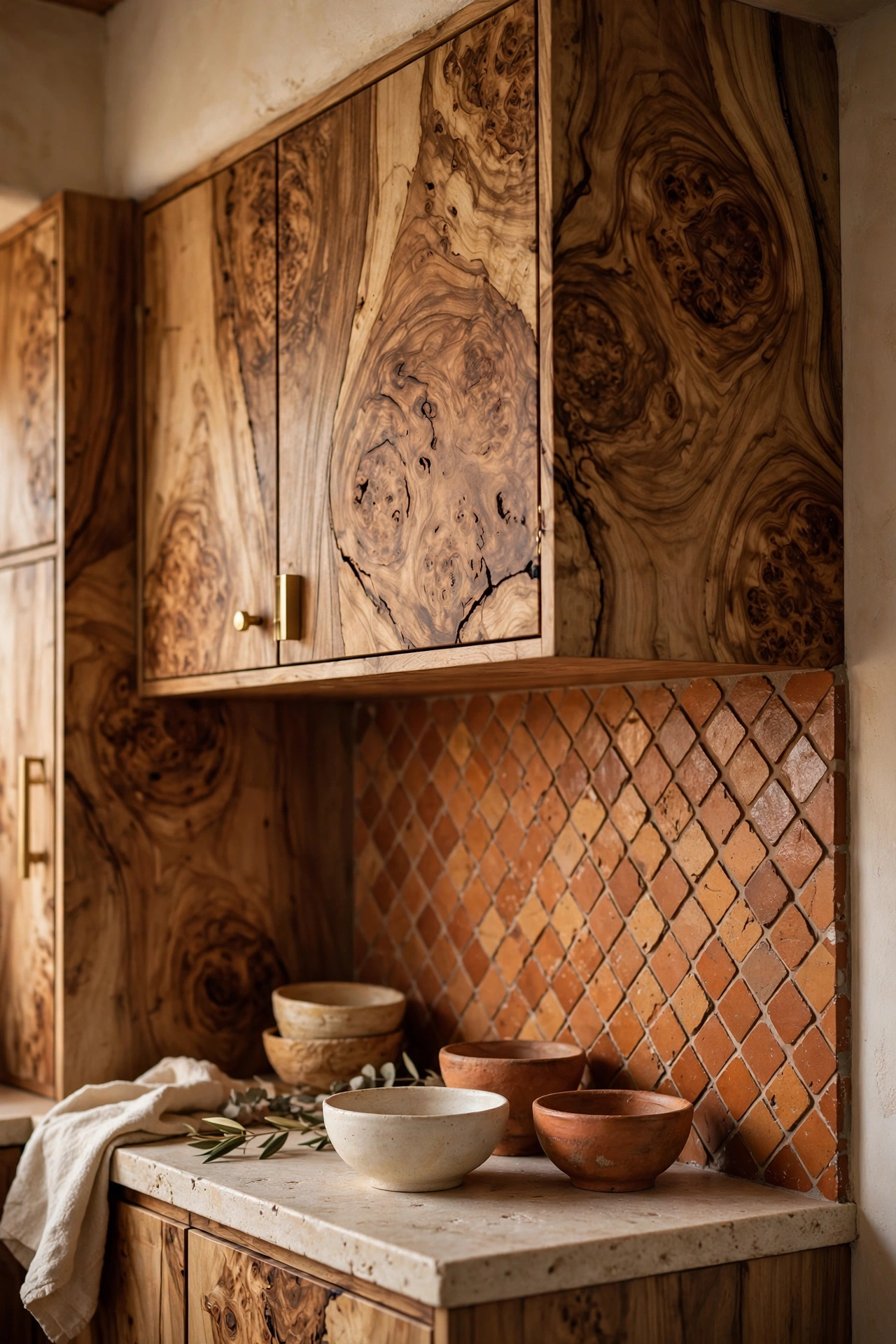
Texture is the secret weapon of the 2026 tiny home trend. An earthy nook focuses on tactile richness rather than bold colors. By using burled wood for cabinetry and handmade zellige tiles for the backsplash, the kitchen gains a three-dimensional quality that feels curated and artistic. These organic materials, combined with stone countertops and terracotta tones, create a grounded space that feels warm and inviting. It is a design approach that celebrates imperfection and craftsmanship, turning a small utility area into a sensory experience.
Soft Neutral Serenity
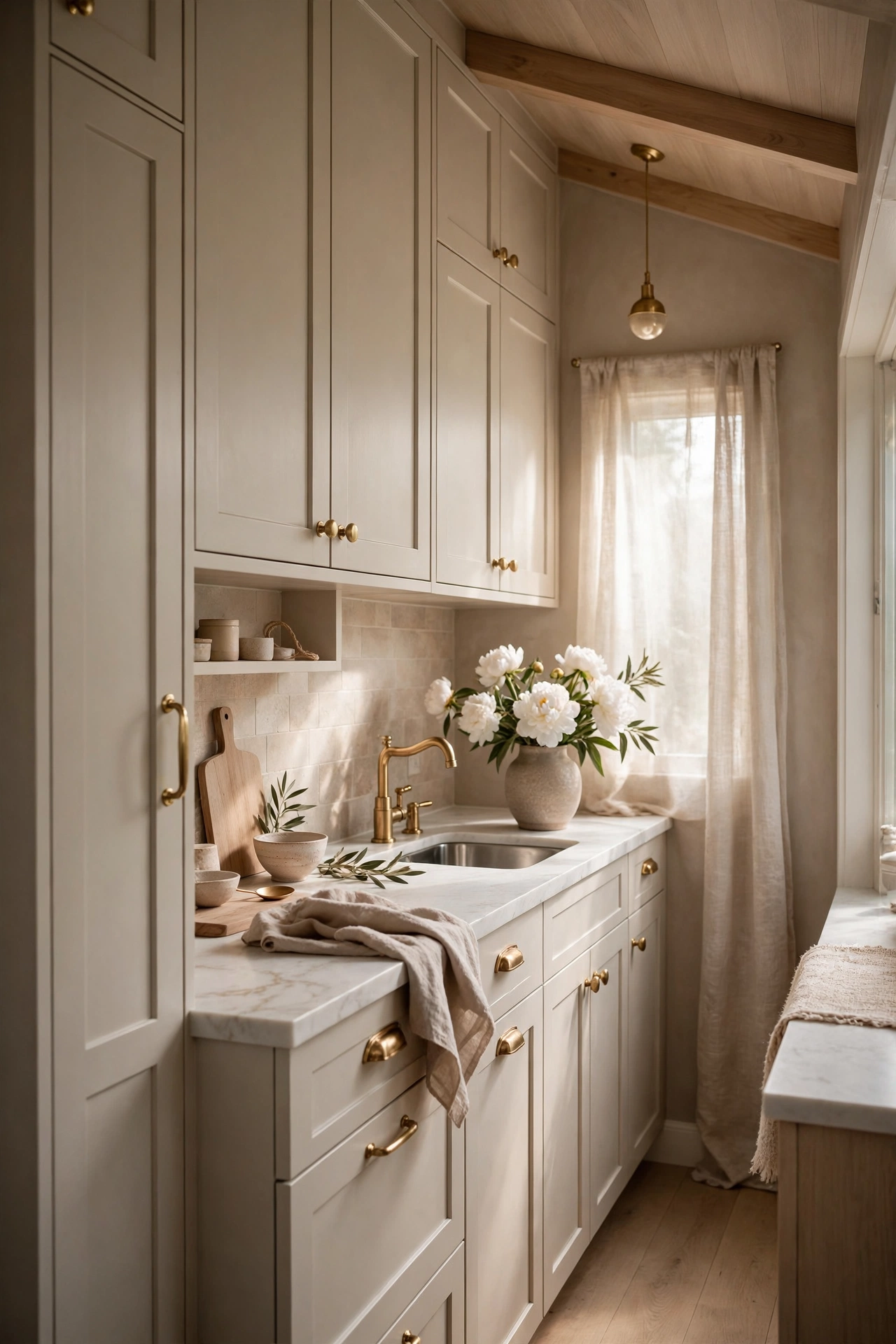
Soft neutrals are the ultimate tool for creating a sense of serenity in a confined space. Moving beyond simple white, a palette of cashmere, taupe, and beige creates a sophisticated, layered look that feels cozy rather than sterile. Brushed brass hardware adds a subtle touch of jewelry to the room, providing a focal point without being distracting. This aesthetic is all about quiet luxury, where the quality of the finish and the softness of the light do the talking, resulting in a kitchen that feels like a peaceful retreat.
Pastel Breakfast Bar
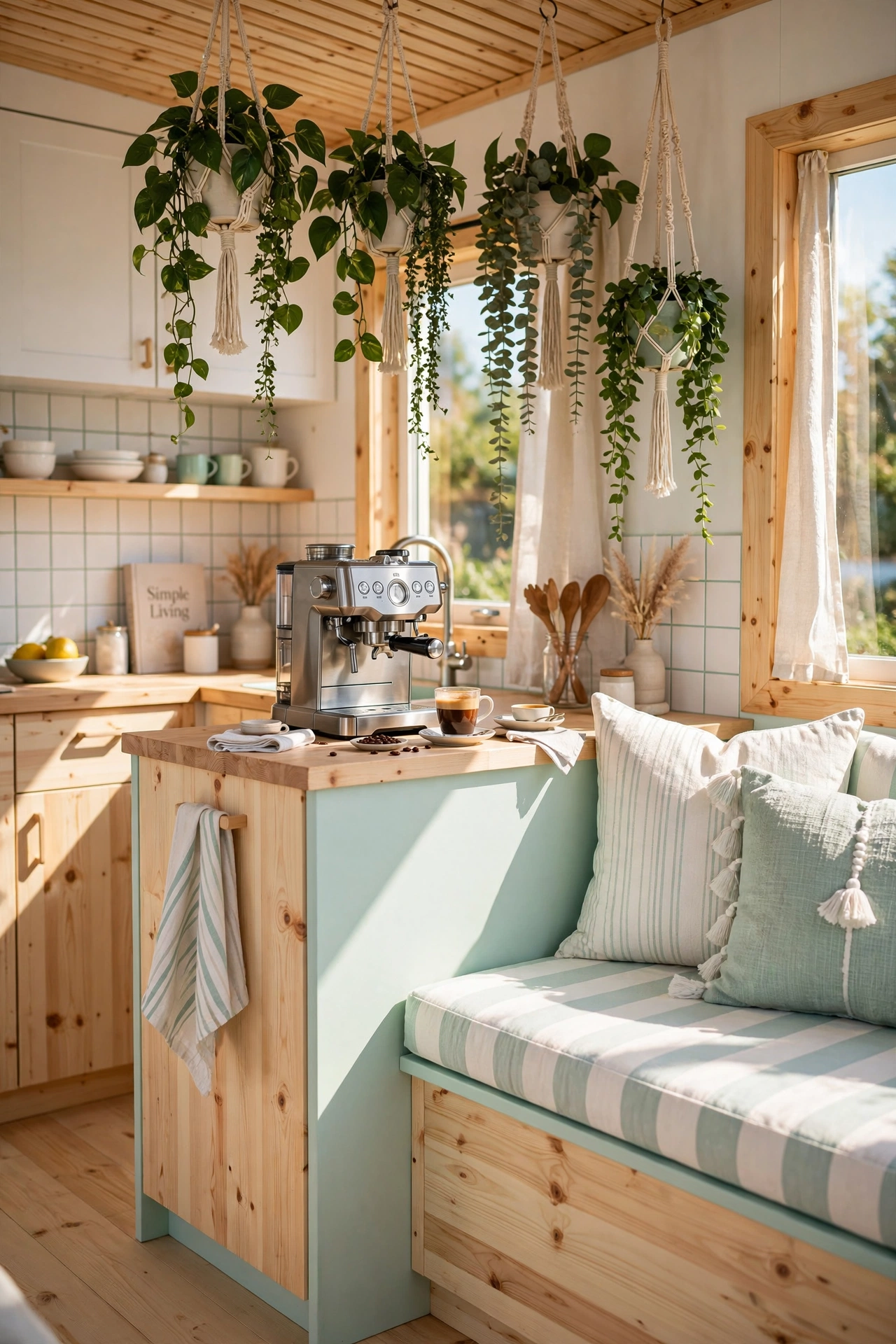
Adding a dedicated breakfast bar is one of the smartest ways to maximize a tiny house layout, combining prep space and dining into one footprint. A soft pastel mint or peach hue brings a cheerful, modern energy to the space, making it feel youthful and fresh. By incorporating built-in stools and overhead greenery, the peninsula becomes a multifunctional hub for morning coffee or casual hosting. This approach prioritizes the social aspect of the kitchen, ensuring that the small space remains a vibrant and inviting center of activity.