
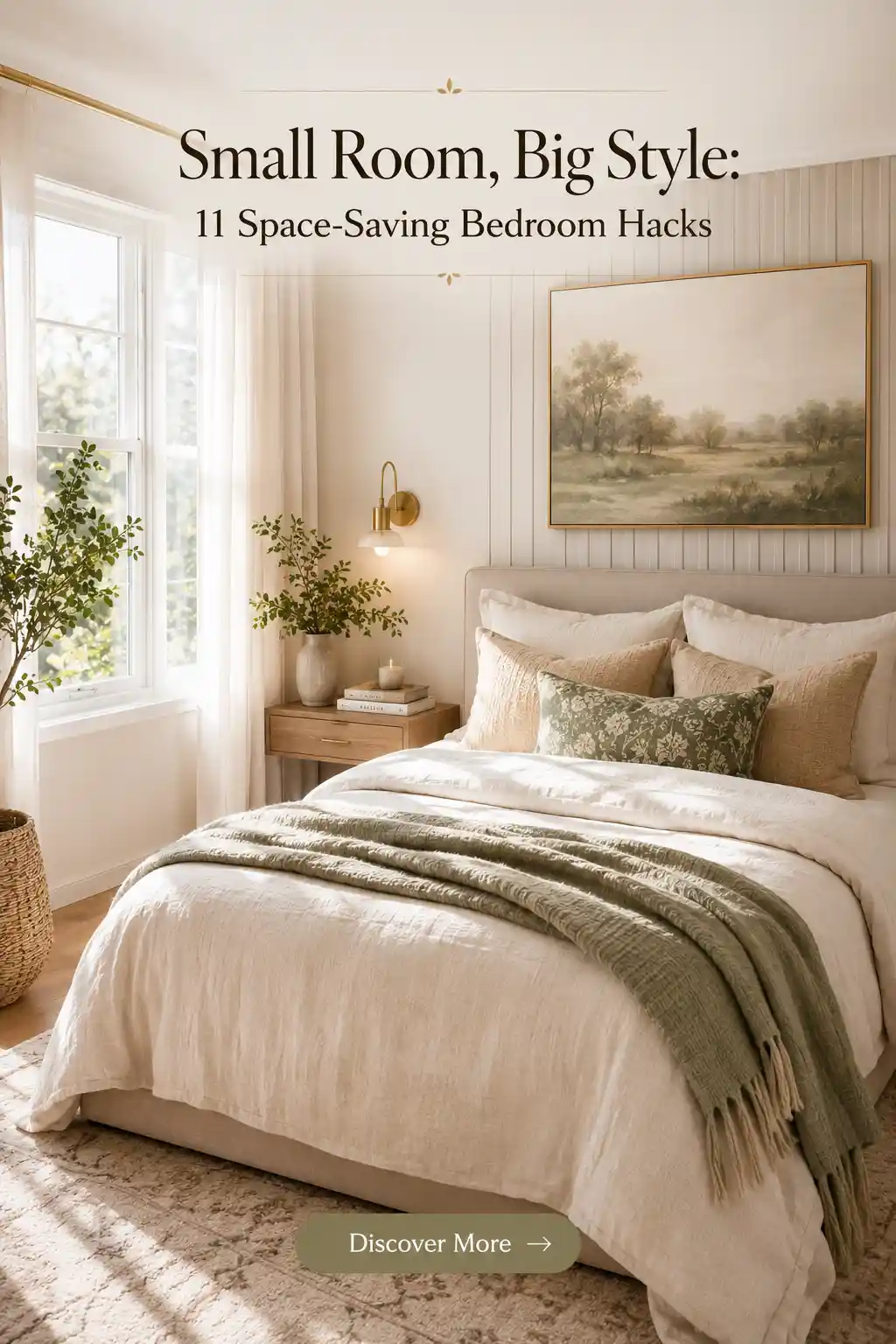
Transforming a compact bedroom into a personal sanctuary doesn’t require a massive floor plan; it simply requires a bit of strategic planning and a few design tricks. Whether you are dealing with a tiny guest room or a cozy primary suite, the goal is to balance daily functionality with a high-end aesthetic. By focusing on vertical space, light-reflective surfaces, and smart furniture choices, you can create a room that feels airy, intentional, and spacious. Here are eleven curated design tips to help you make the most of every square inch of your bedroom.
Swap Table Lamps for Sleek Wall Sconces
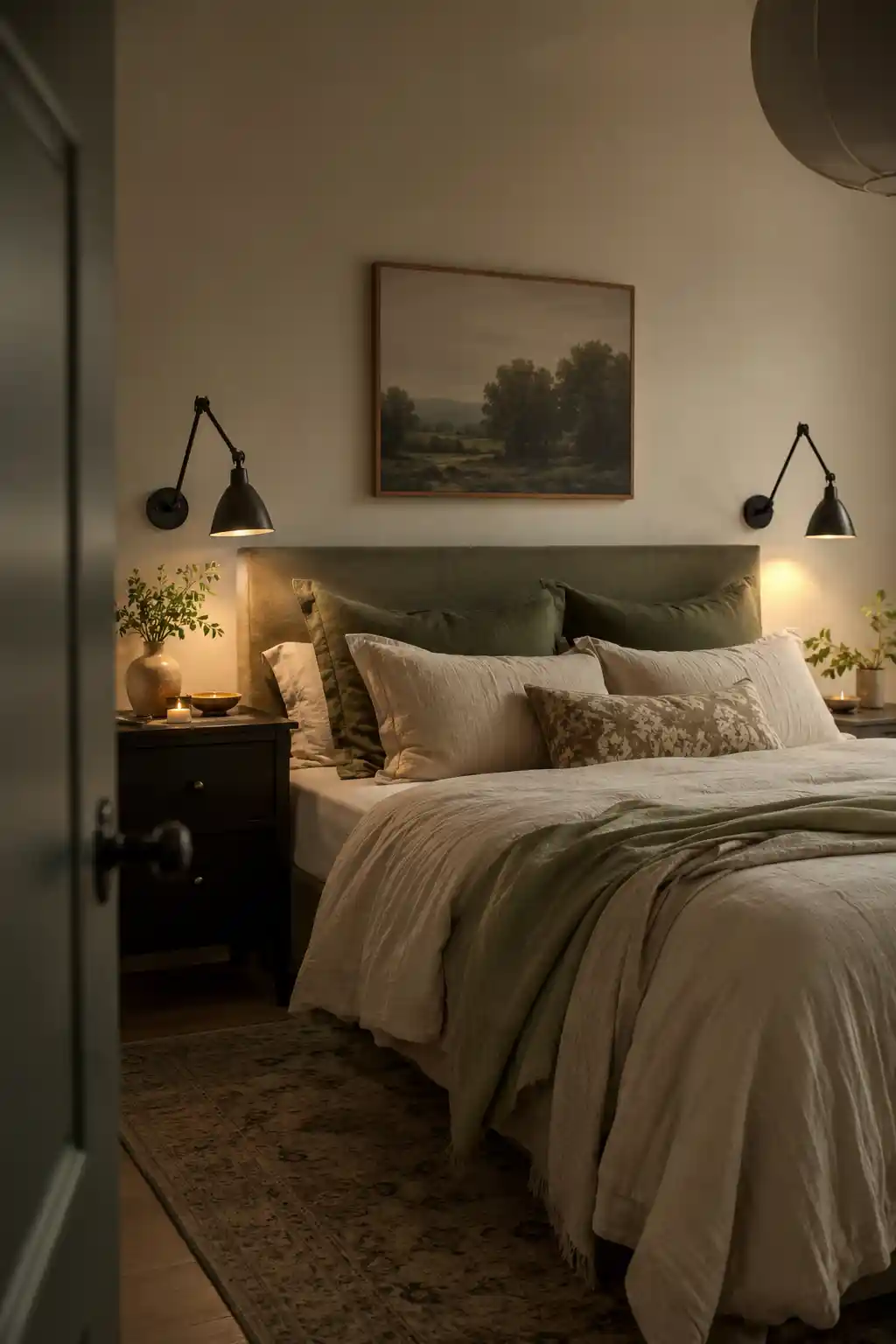
One of the quickest ways to reclaim valuable surface area in a small bedroom is to move your lighting off the nightstands and onto the walls. Traditional table lamps often clutter small bedside tables, leaving little room for a book or a glass of water. By installing elegant wall sconces, you create a streamlined look that opens up the visual landscape of the room. For those who aren’t ready to hardwire electronics, plug-in sconces with decorative cords are a fantastic, renter-friendly alternative that still provides that high-end, hotel-inspired feel while maximizing your usable space.
Add Depth with a Bold Accent Wall
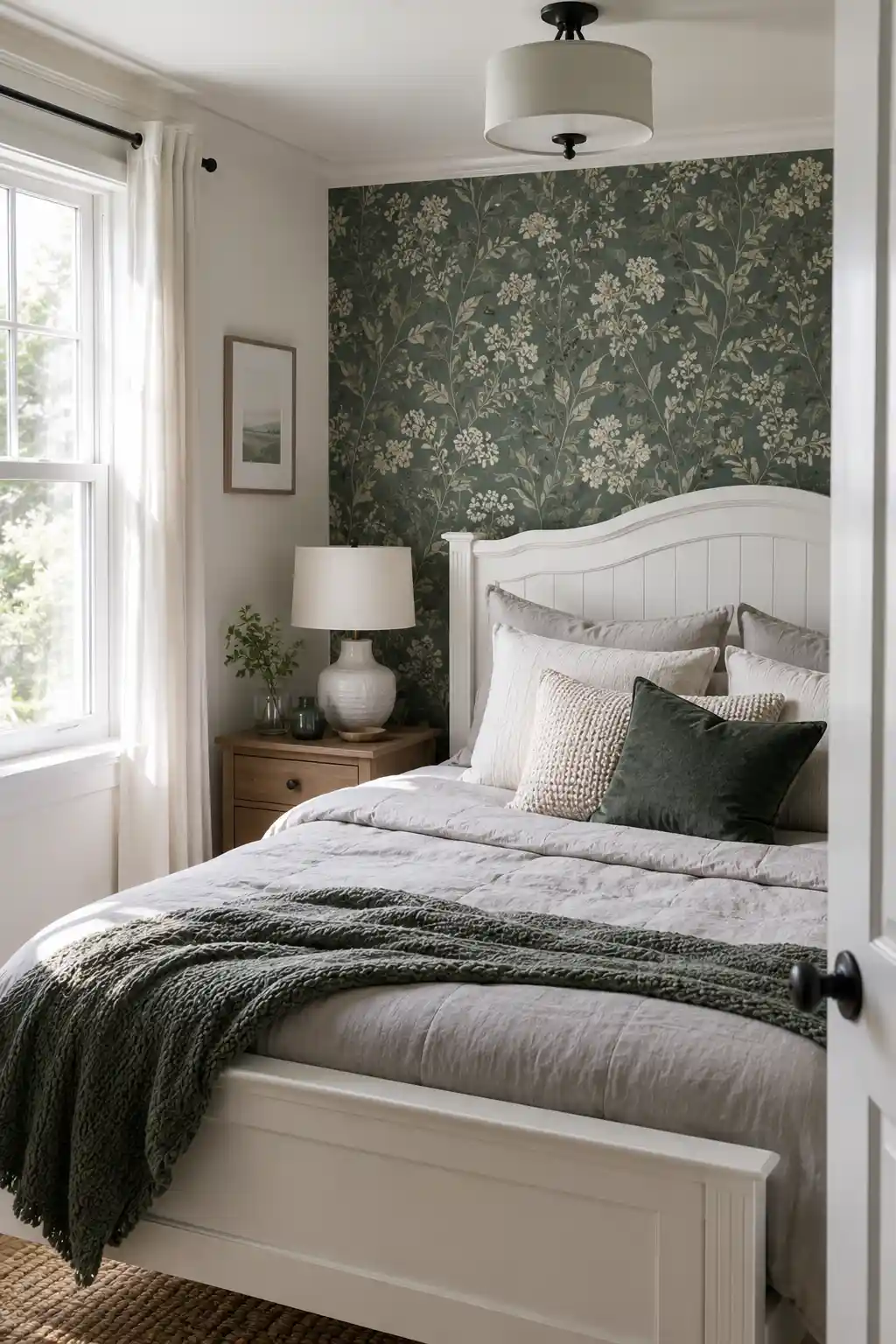
While many people assume that small rooms should only be painted white, adding a bold accent wall can actually create an illusion of depth and sophistication. A rich color or a textured wallpaper on the wall behind the bed draws the eye toward a single focal point, making the rest of the room feel more expansive by comparison. The key is to balance a daring pattern or deep hue with light-colored bedding and furniture. This contrast prevents the room from feeling closed in and instead gives it a curated, designer touch that feels intentional and moody.
Use Clear Acrylic Furniture for an Airy Feel
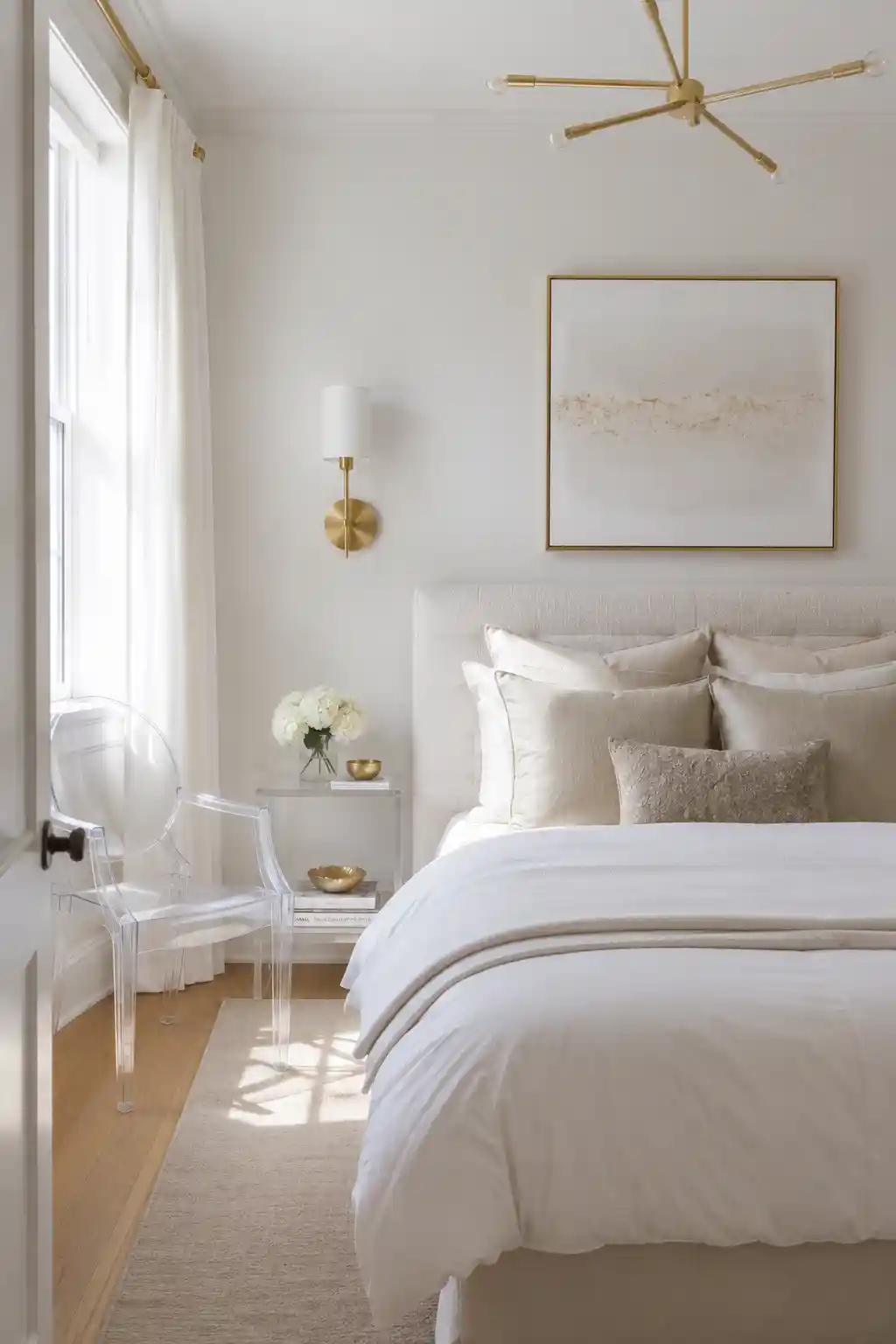
When every inch counts, visual weight becomes a critical factor in your design choices. Heavy, wooden furniture can make a small room feel crowded and claustrophobic. This is where lucite and acrylic furniture become game-changers. Because these materials are transparent, they effectively ‘disappear’ into the room, allowing light to pass through and maintaining a clear line of sight across the floor. Replacing a bulky nightstand or desk with a clear acrylic version provides the utility you need without the visual bulk, making the entire bedroom feel significantly more open and breathable.
Invest in Multipurpose Storage Beds
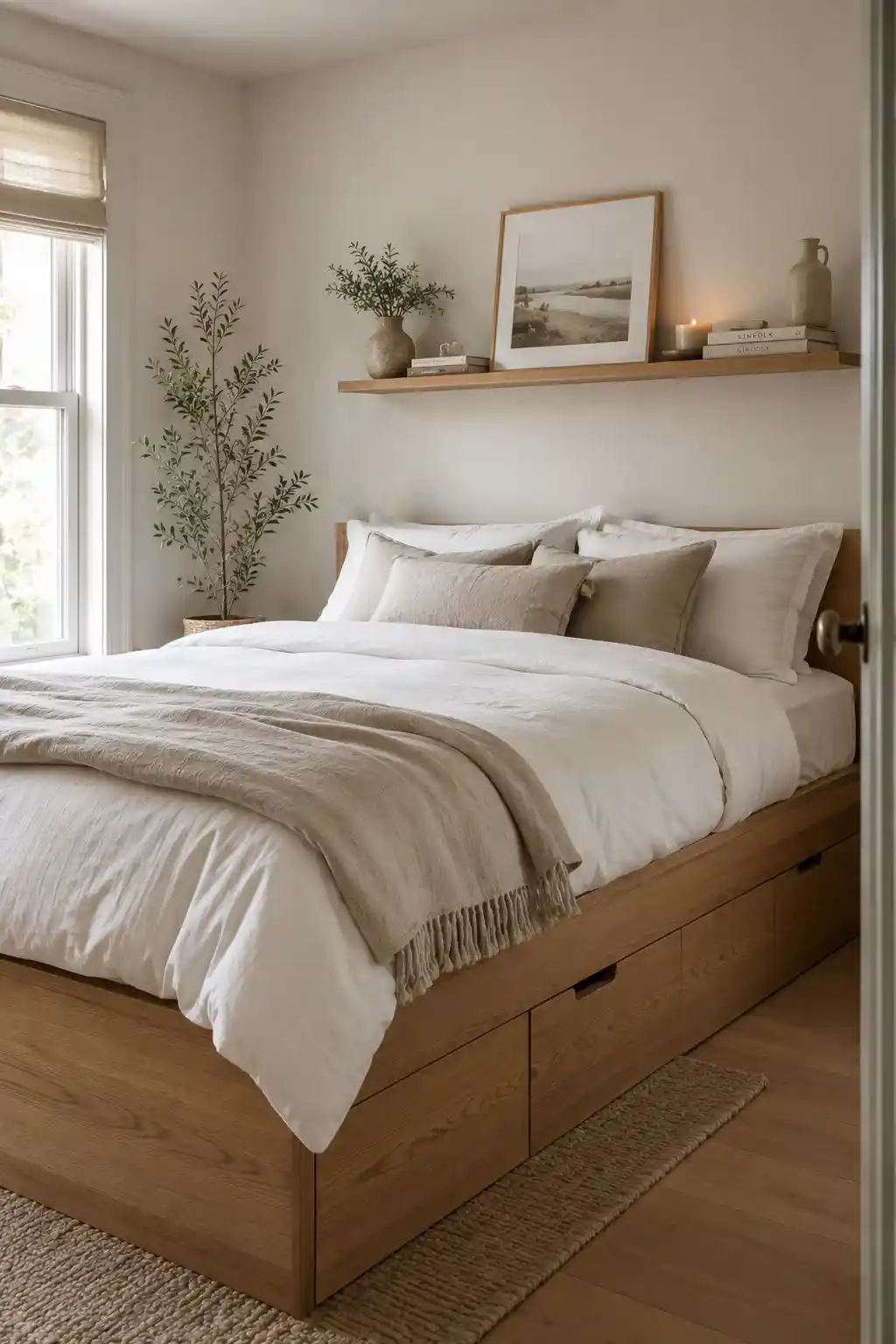
In a small bedroom, your bed is likely the largest piece of furniture, which means it should work twice as hard. Instead of a standard frame, opt for a storage bed featuring built-in drawers or a hydraulic lift system. This allows you to store off-season clothing, extra linens, or bulky blankets directly underneath your mattress, eliminating the need for a large, space-consuming dresser. Choosing a platform style in a light wood tone keeps the room feeling modern and bright, ensuring that your storage solution is as aesthetically pleasing as it is functional.
Draw the Eye Upward with High Art Placement
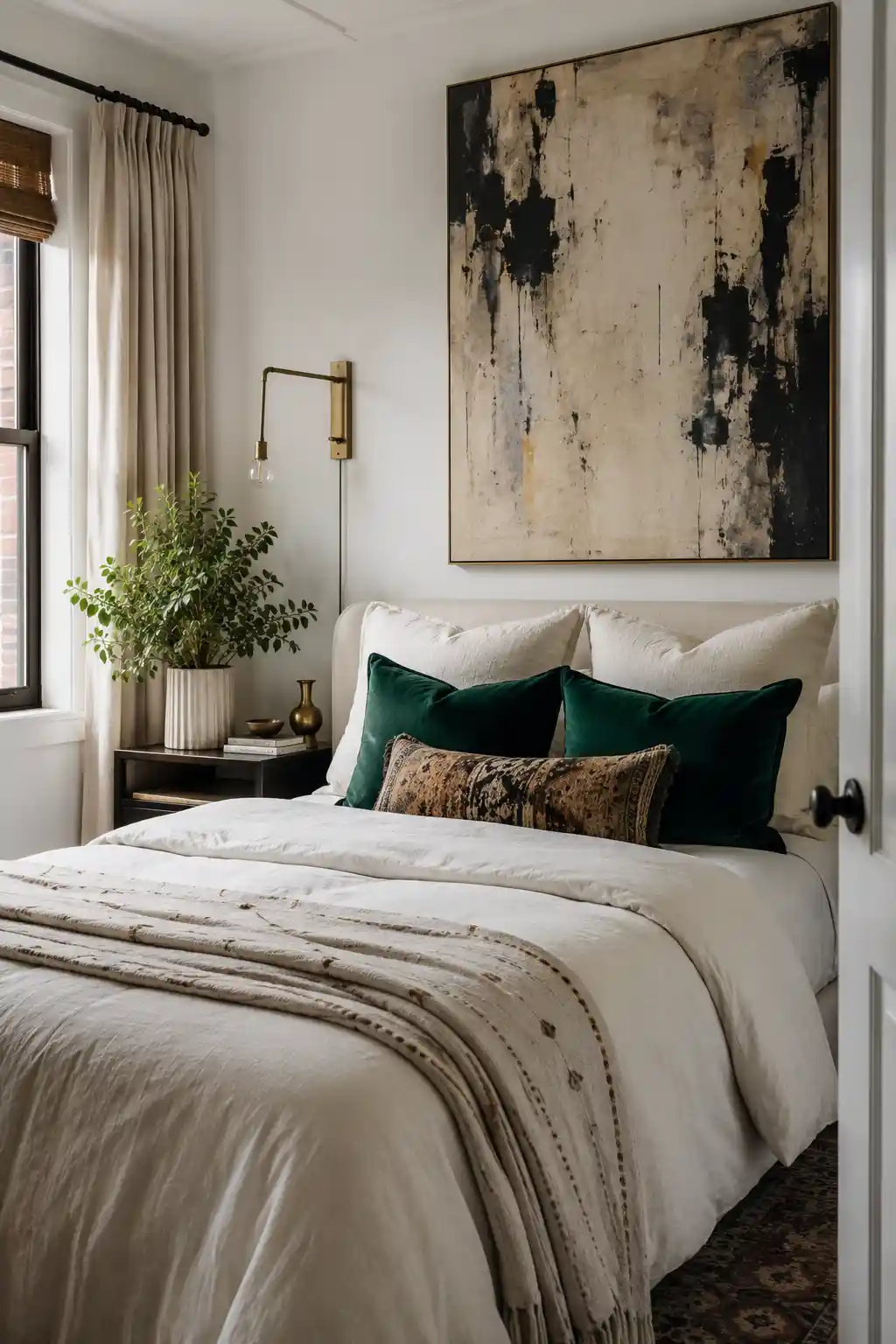
Interior designers often use verticality to trick the eye into perceiving a room as larger than it actually is. By hanging your artwork slightly higher than eye level, you encourage the gaze to move upward, emphasizing the height of the ceiling rather than the limited square footage of the floor. Avoid cluttering the lower half of your walls with too many small items; instead, choose one or two larger, impactful pieces. This strategy creates a sense of grandeur and openness, transforming a cramped space into a room that feels lofty and sophisticated.
Elevate Your View with High-Hung Curtains
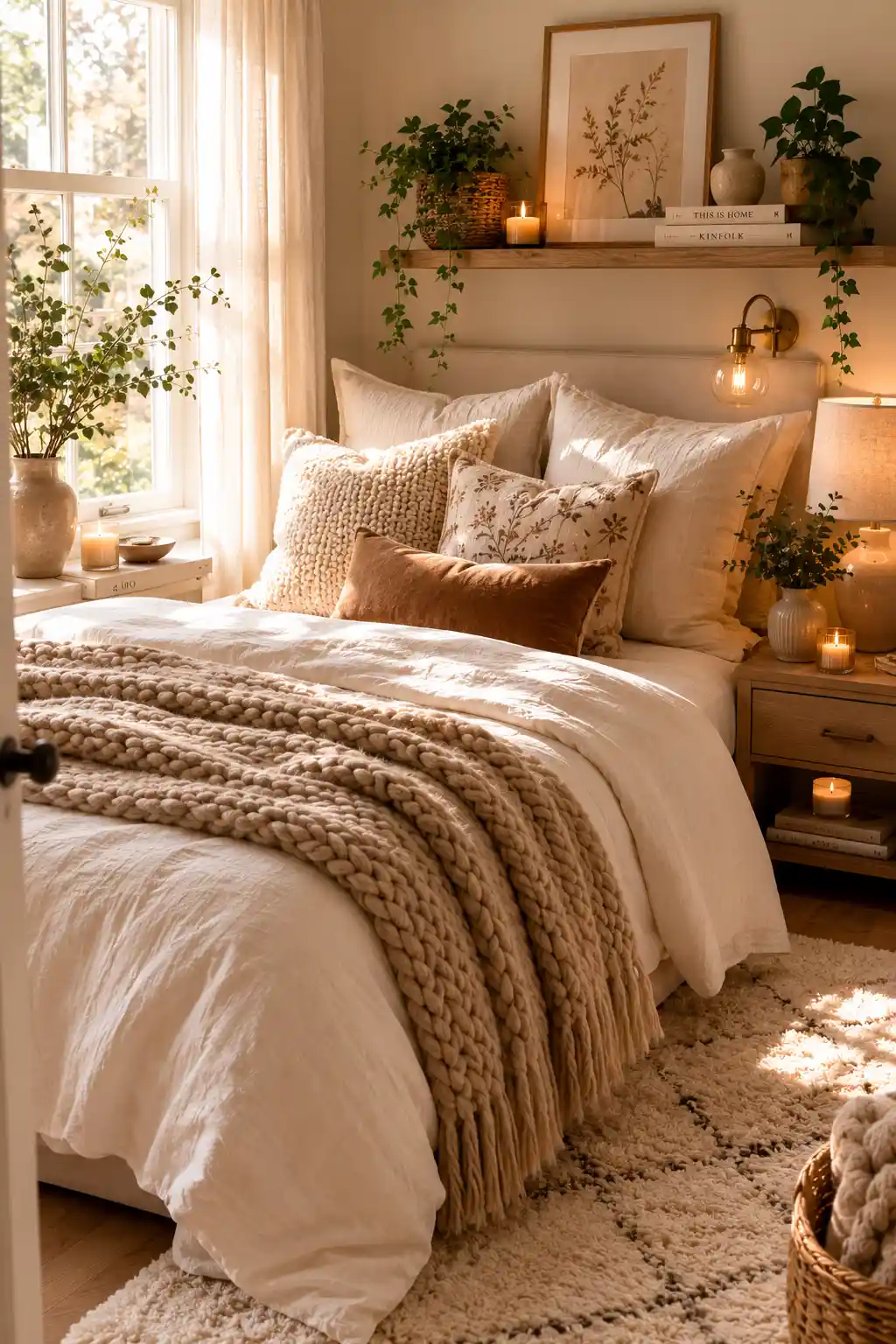
The placement of your window treatments can dramatically alter the perceived proportions of your bedroom. Hanging curtains directly above the window frame often chops the wall in half, which can make the ceiling feel lower. Instead, mount your curtain rod as close to the ceiling as possible and let the fabric graze the floor. This creates long, vertical lines that draw the eye upward and outward, making the windows seem larger and the room feel significantly taller. Opt for sheer or light-colored fabrics to maximize the entry of natural light, further enhancing the airy atmosphere.
Embrace the Versatility of a Daybed
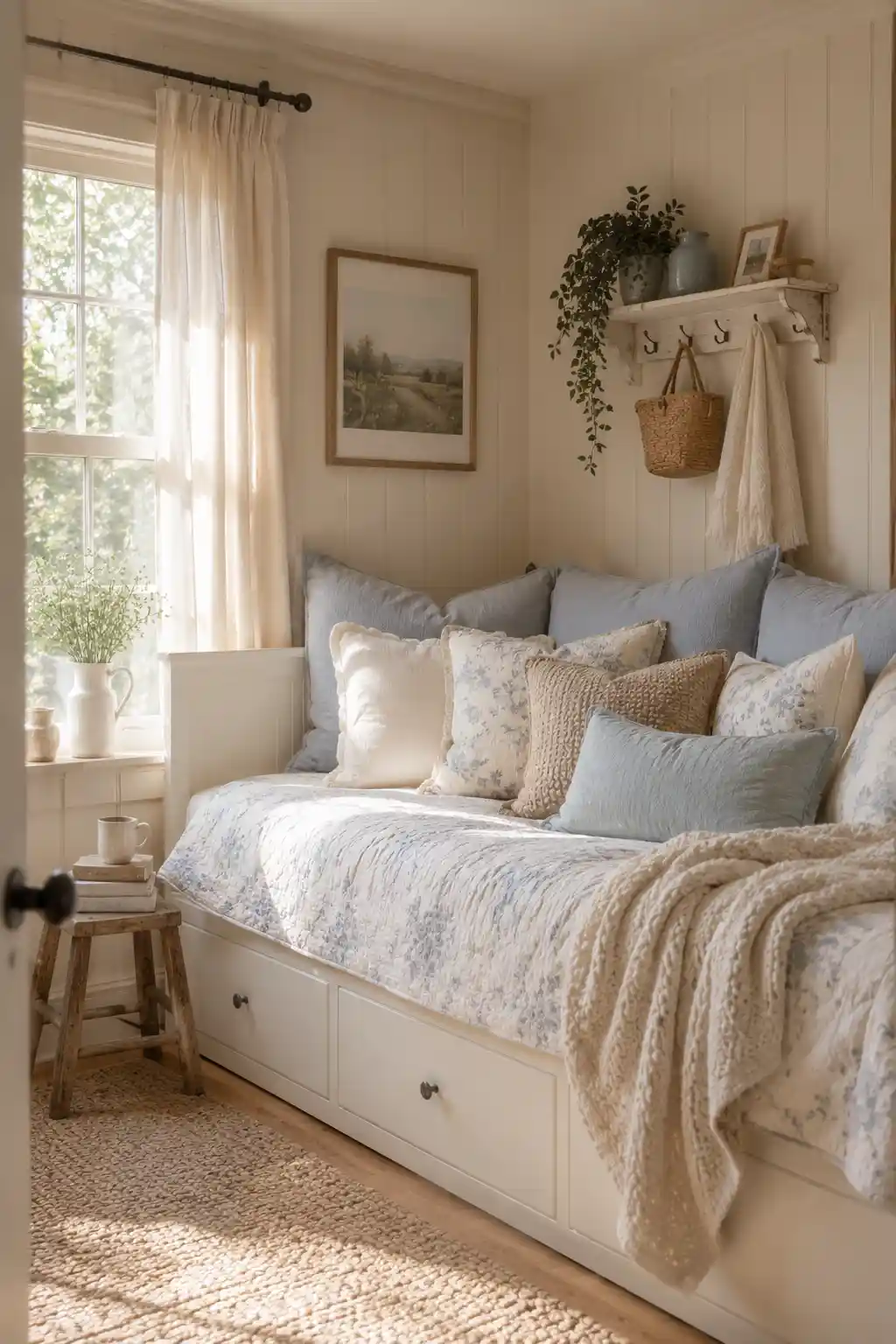
If you are working with an exceptionally narrow room, a traditional bed frame might block the flow of traffic. A daybed is an excellent alternative, as it functions as both a comfortable sleeping space and a chic sofa for lounging during the day. By pushing the daybed against a wall and layering it with plush pillows and a cozy throw, you create a multifunctional zone that feels more like a studio lounge than a cramped bedroom. This layout opens up the center of the room, providing more floor space for movement and making the environment feel less restrictive.
Maximize Floor Space with Floating Shelves
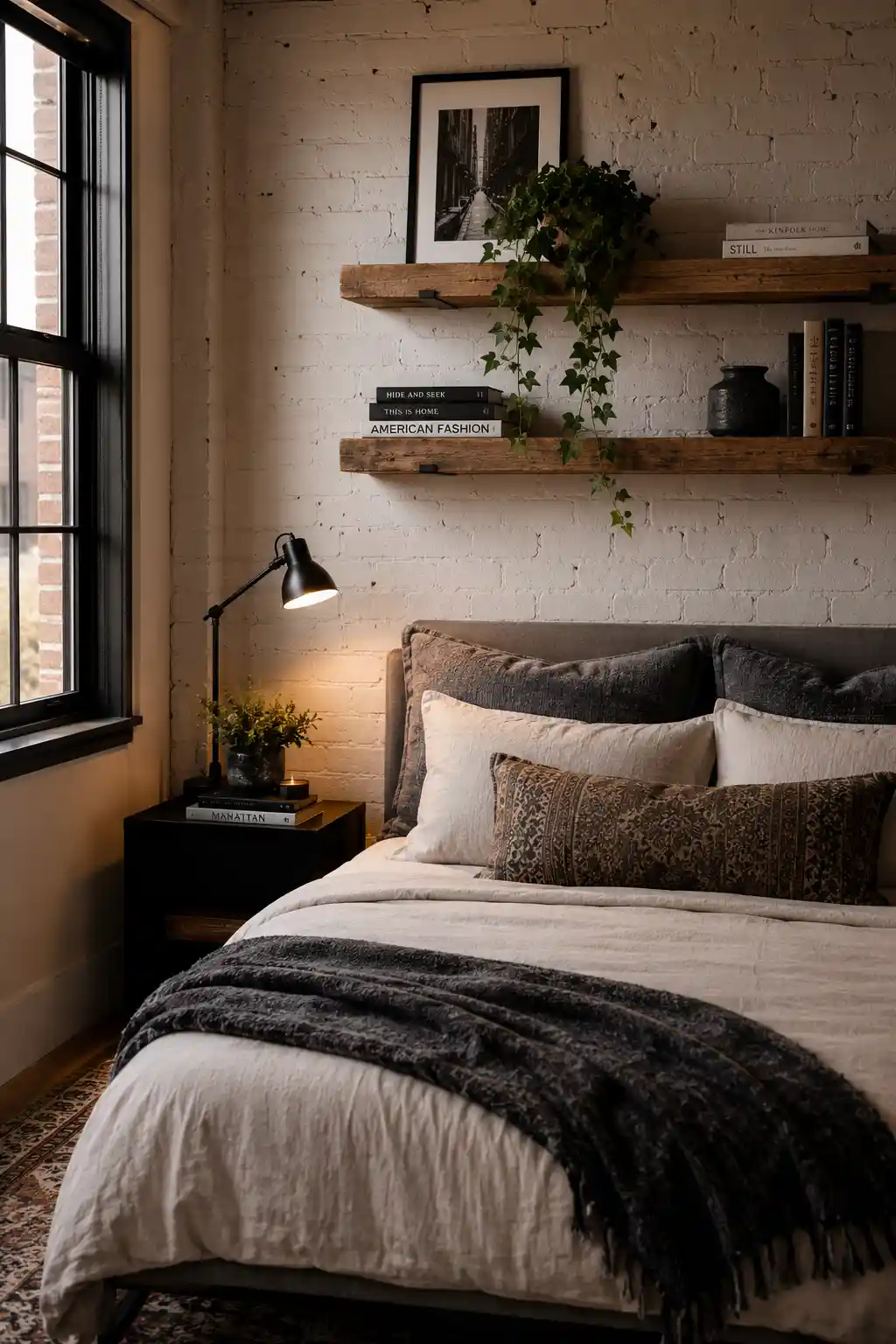
When floor space is at a premium, the best place to look for storage is the wall. Floating shelves are a brilliant way to incorporate shelving without the heavy footprint of a bookcase. Use them to display your favorite novels, a small plant, or a few decorative objects. By keeping the floor clear, you maintain a sense of openness that prevents the room from feeling cluttered. For a cohesive look, match the shelf material to other wooden elements in the room, such as the bed frame or flooring, to create a harmonious and polished interior.
Create an Open-Concept Closet System
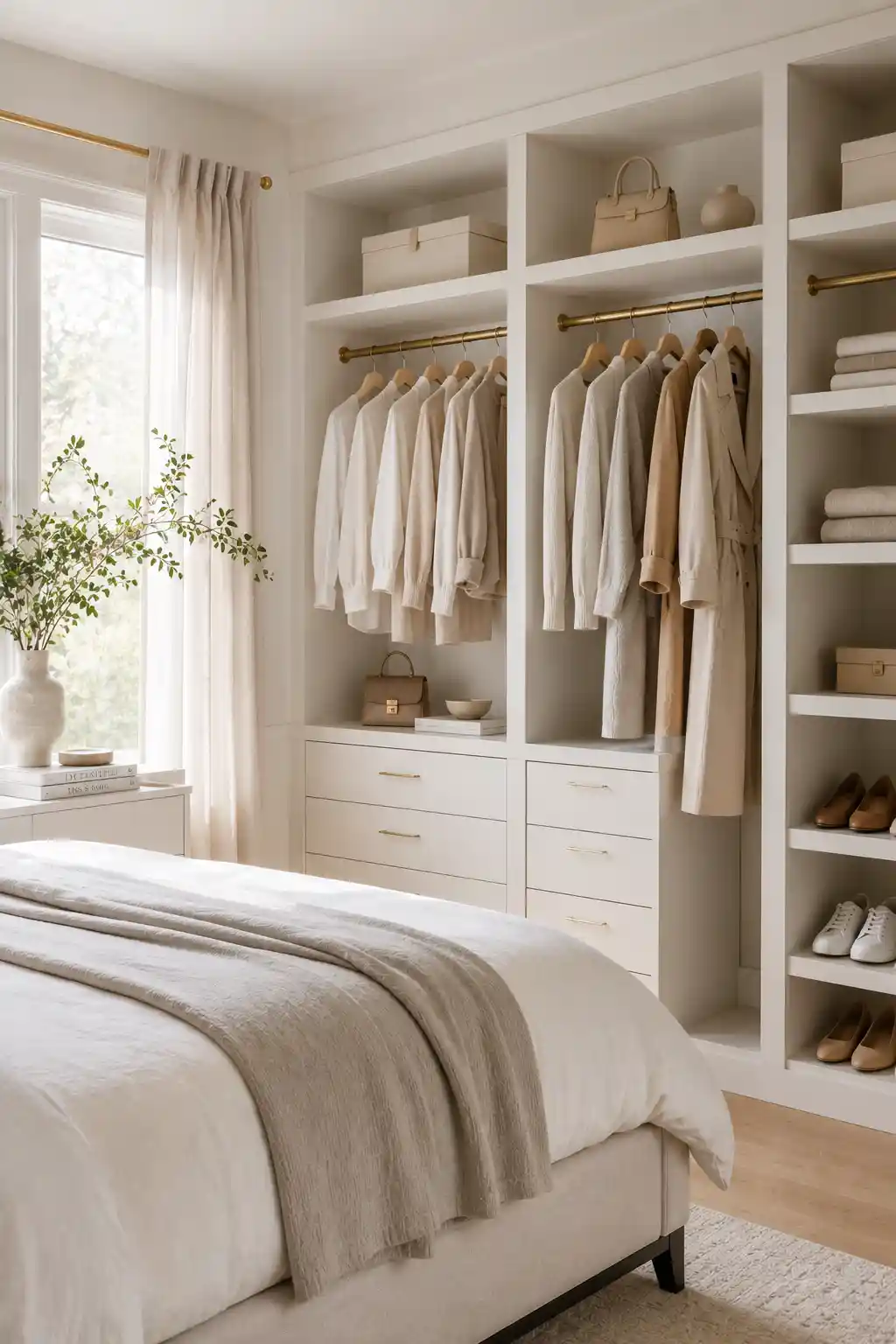
Closet doors can often feel like heavy barriers that eat up visual space in a small room. By removing the doors and installing a high-quality open closet organizer, you can actually add a sense of depth to the bedroom. When your clothes are neatly organized by color and style, the closet becomes a decorative element of the room rather than just a storage area. This approach removes the ‘boxy’ feeling of a small room and allows for a more fluid transition between different areas of the space, provided you keep the interior of the closet tidy.
Layer Textures for a High-End Cozy Feel
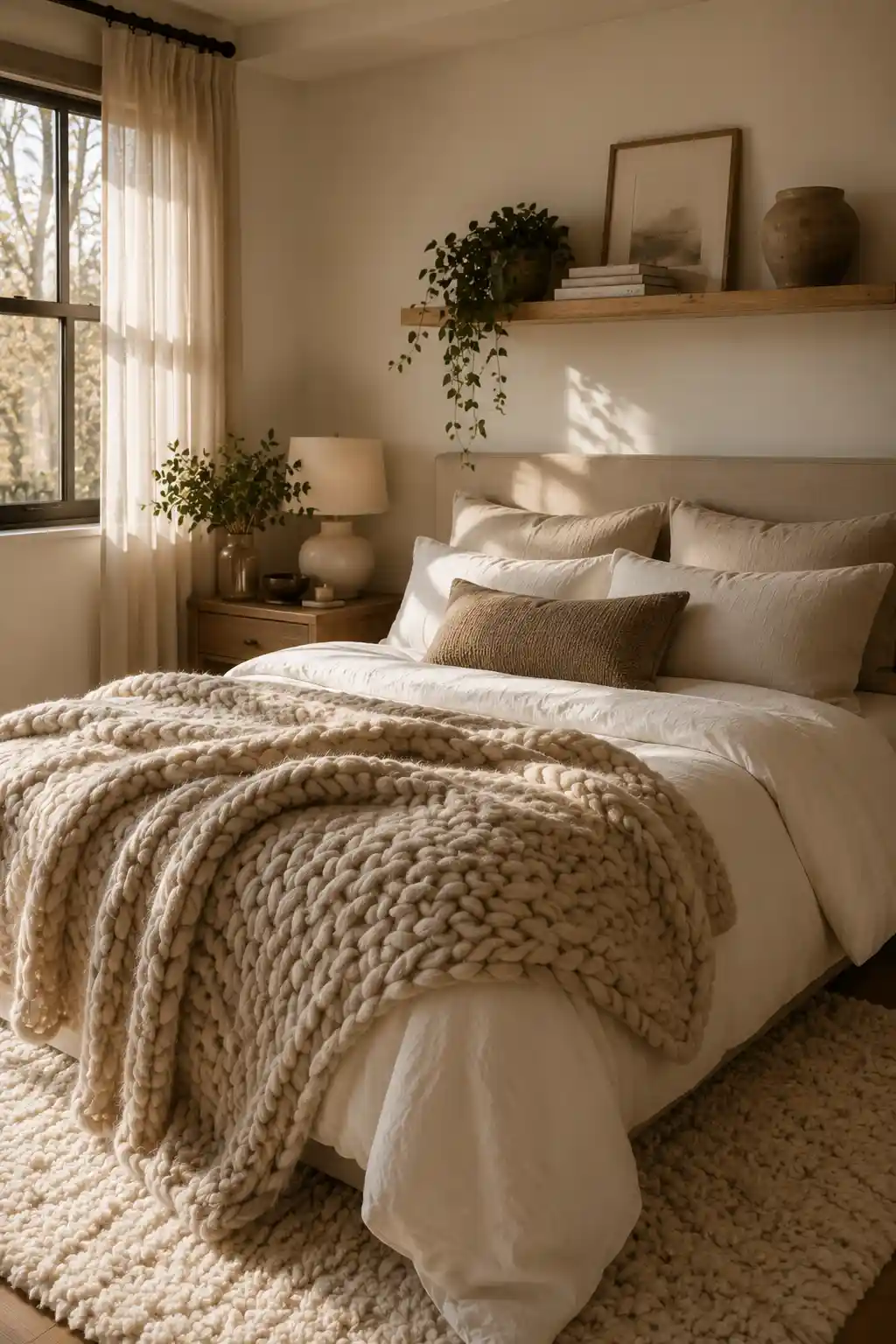
Small bedrooms have a unique advantage: they are naturally easier to make feel cozy and intimate. Instead of fighting the small size, lean into it by layering rich textures. Combine a plush area rug with linen bedding and a heavy knit throw to create a sensory experience that feels luxurious. Layering doesn’t mean adding clutter; it means adding depth. By sticking to a tonal color palette—such as creams, beiges, and soft greys—you can add multiple textures without overwhelming the room, resulting in a sophisticated space that feels like a high-end retreat.
Opt for Asymmetrical Nightstand Arrangements
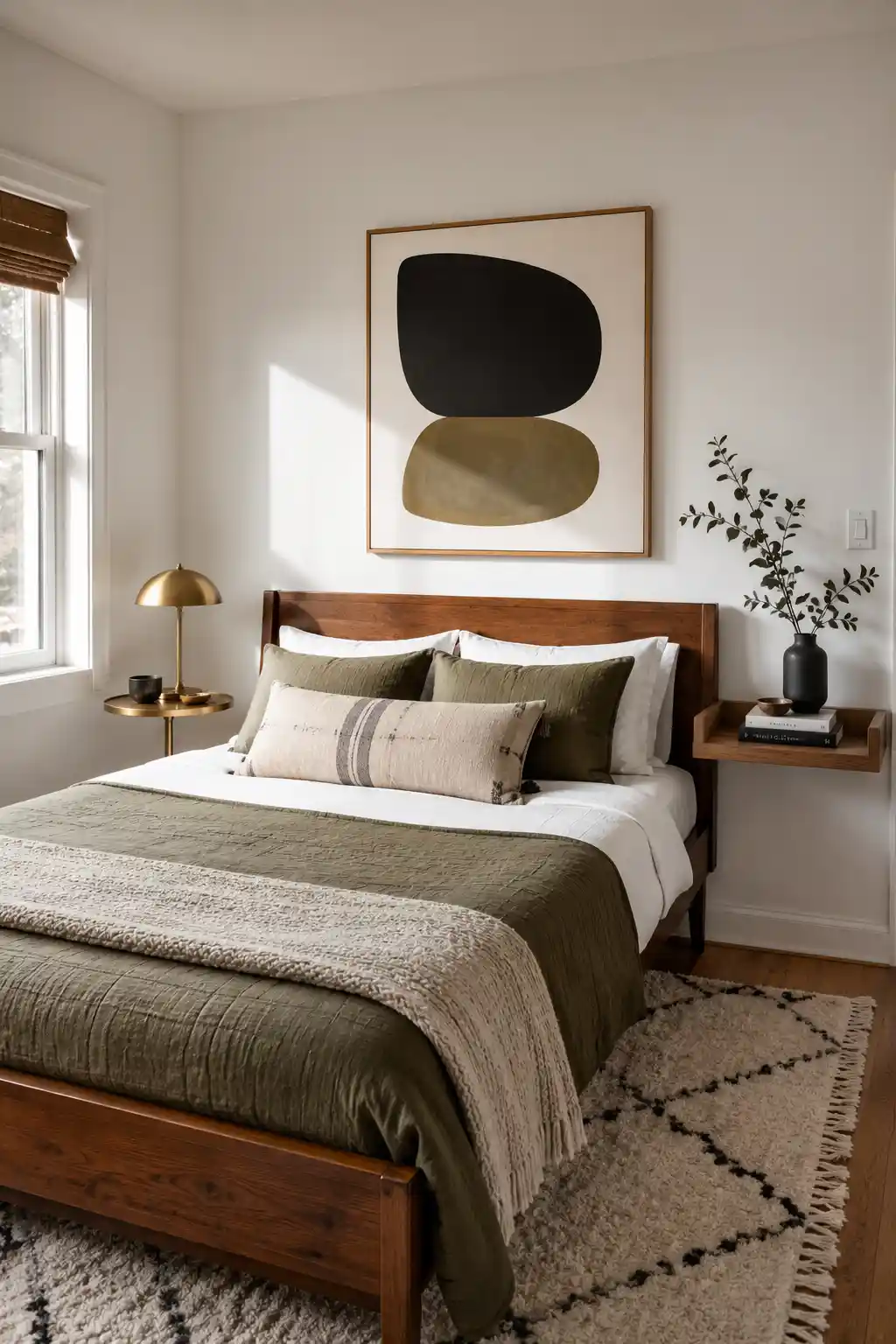
There is a common misconception that bedroom furniture must be perfectly symmetrical to look professional. In a small room, matching oversized nightstands can often feel too bulky and restrictive. Instead, try an asymmetrical approach. Use a tiny, round gold table on one side and a slim floating shelf on the other. This breaks up the visual weight and allows you to customize the storage based on your actual needs. This eclectic styling adds personality to the room and prevents the layout from feeling too rigid, which often helps a small space feel more relaxed and open.