
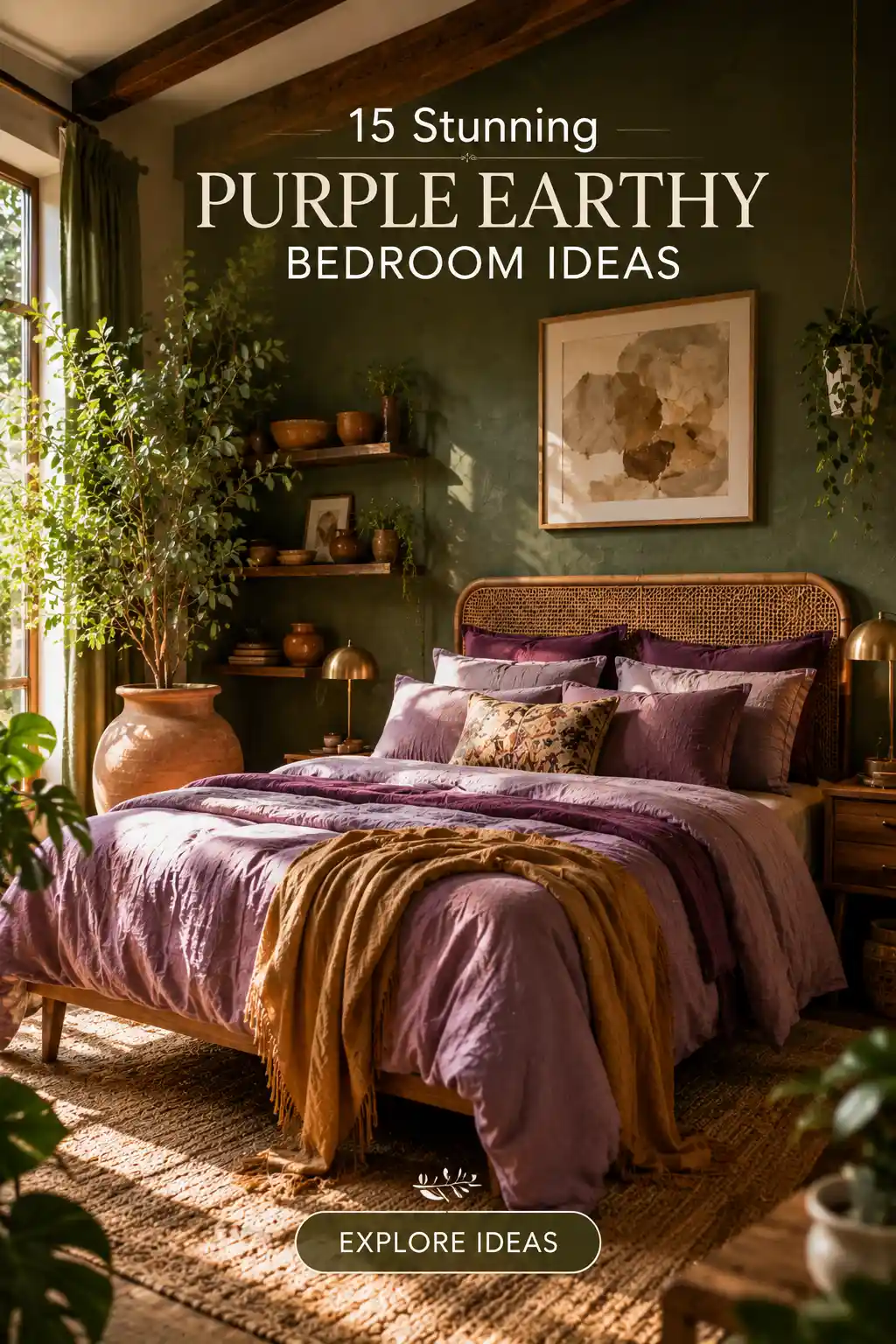
Blending the regal energy of purple with the grounding essence of earthy tones creates a sanctuary that is both sophisticated and serene. While purple is often associated with luxury and creativity, pairing it with organic hues like terracotta, sage, and warm wood transforms it into a cozy, nature-inspired retreat. Whether you prefer a moody, deep plum atmosphere or a light, airy lavender vibe, the key lies in balancing saturated colors with raw, natural textures to achieve a harmonious flow.
Dusty Mauve and Natural Oak Harmony
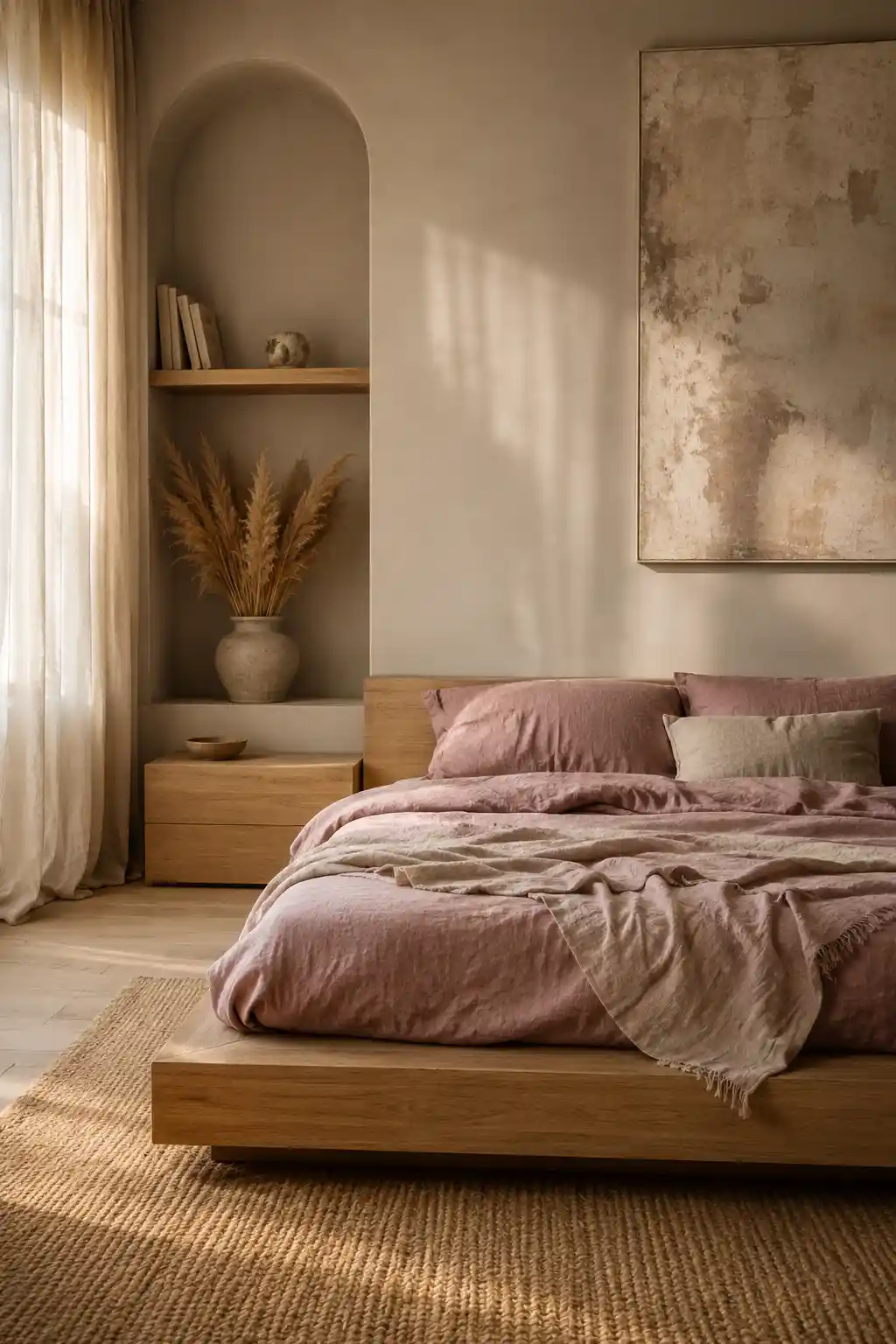
Combining dusty mauve with natural oak creates a soft, romantic foundation that doesn’t feel overly sweet. The muted quality of the mauve acts as a neutral, while the warmth of the oak prevents the room from feeling too cold. To execute this look, start with a light-toned wooden bed frame and layer it with mauve bedding in varying textures, such as a chunky knit throw and smooth cotton sheets. This juxtaposition of raw wood and soft textiles brings an organic, grounded feel to the space, making it an ideal choice for those seeking a calming sanctuary.
Deep Plum and Terracotta Warmth
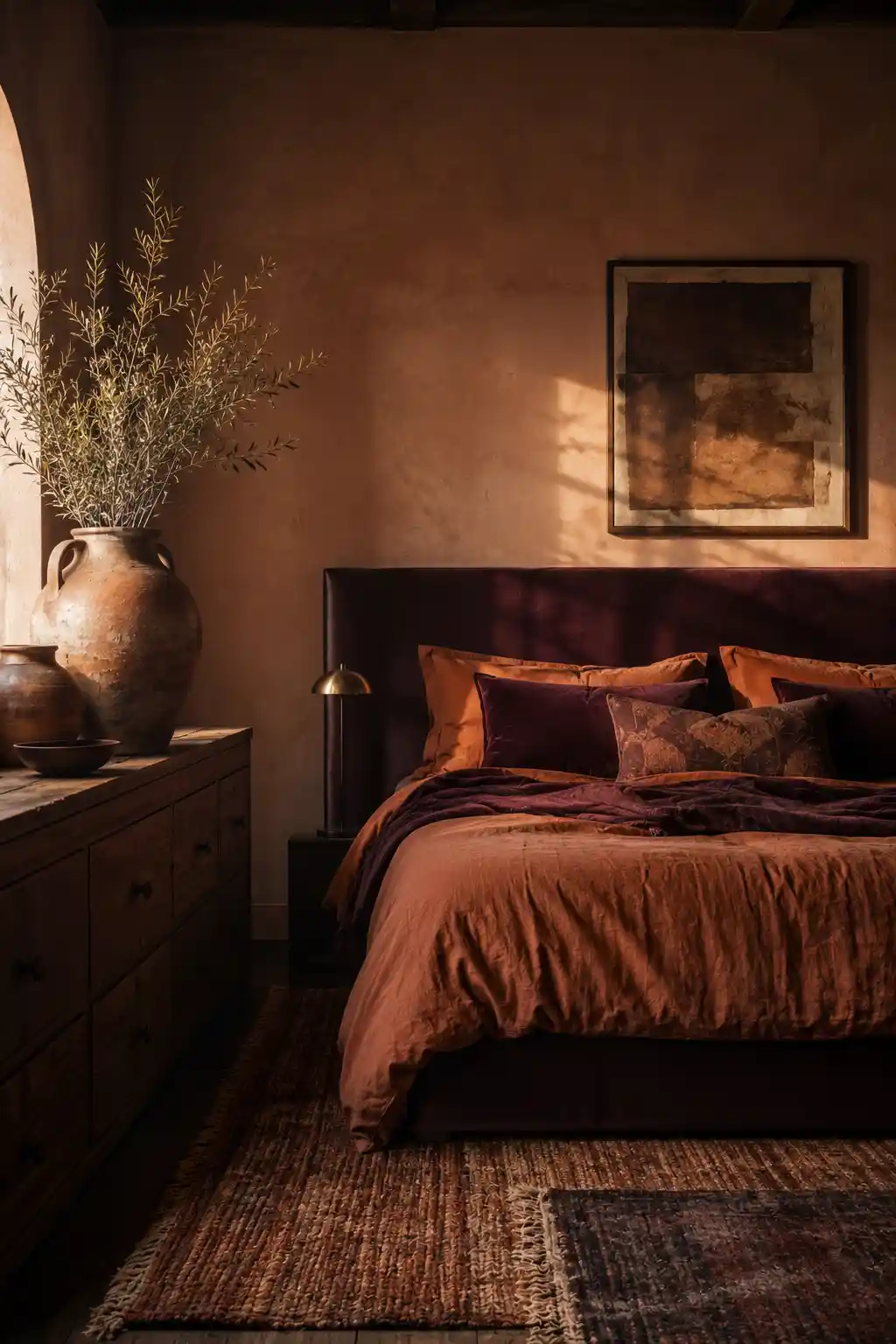
For a bolder approach, pair deep plum with terracotta to create a rich, autumnal energy. This combination is incredibly grounding because the orange undertones of the terracotta balance the cool intensity of the plum. To keep the room from feeling too dark, introduce terracotta through accessory pieces like oversized clay pots, ceramic lamps, or a woven area rug. This creates a visual bridge between the saturated purple and the earthy floor, resulting in a space that feels enveloped in warmth and sophistication, perfect for a cozy winter retreat.
Lavender and Sage Green Botanicals
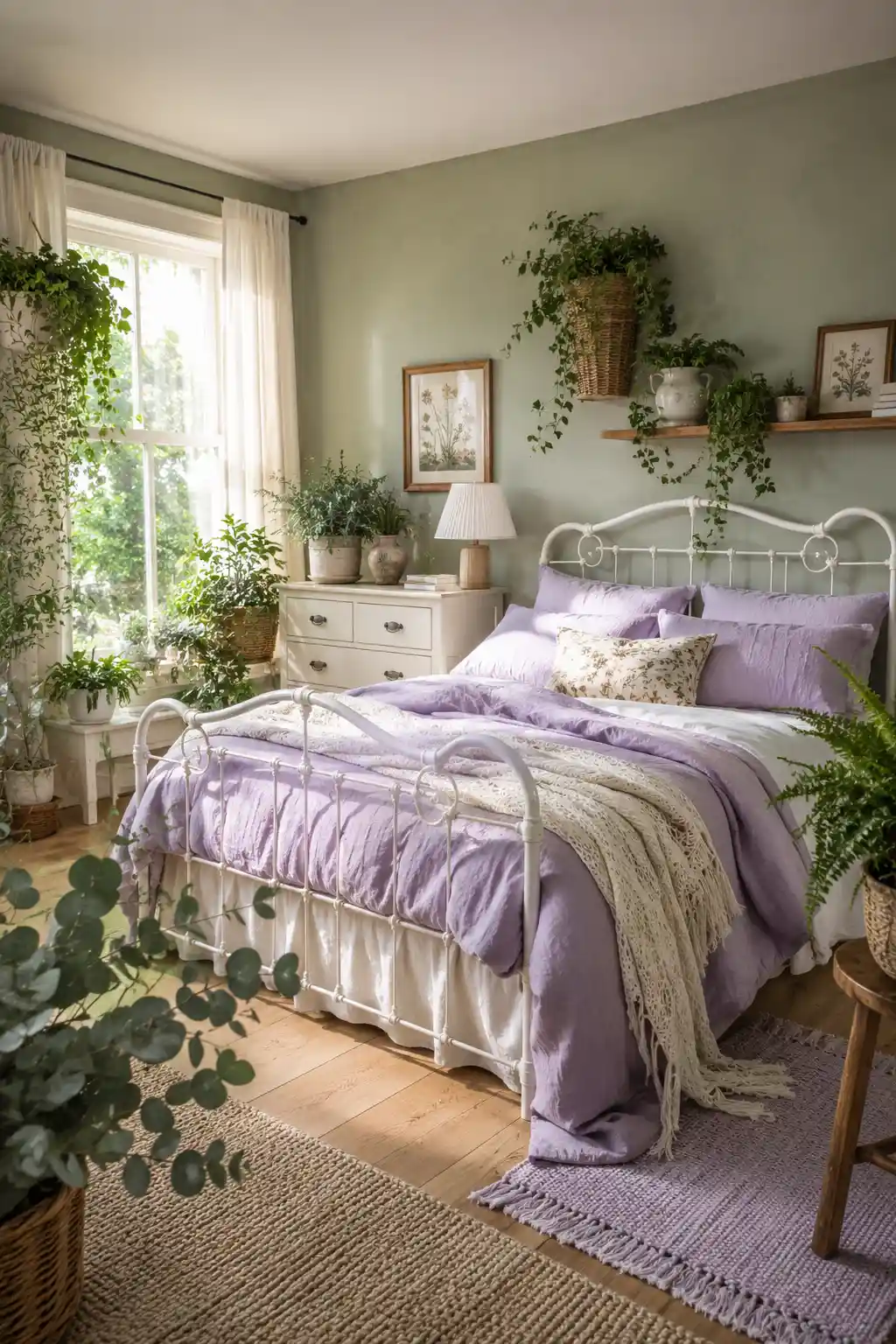
Lavender and sage green are complementary colors that evoke a sense of nature and tranquility. This pairing mimics a garden setting, bringing the outdoors inside for a refreshing bedroom vibe. Focus on using lavender in the bedding and soft furnishings, while sage green can be introduced through accent walls, curtains, or a variety of lush indoor greenery. The coolness of the sage prevents the lavender from feeling too feminine, creating a balanced, gender-neutral space that promotes relaxation and mental clarity after a long day.
Amethyst Tones and Raw Linen Textures
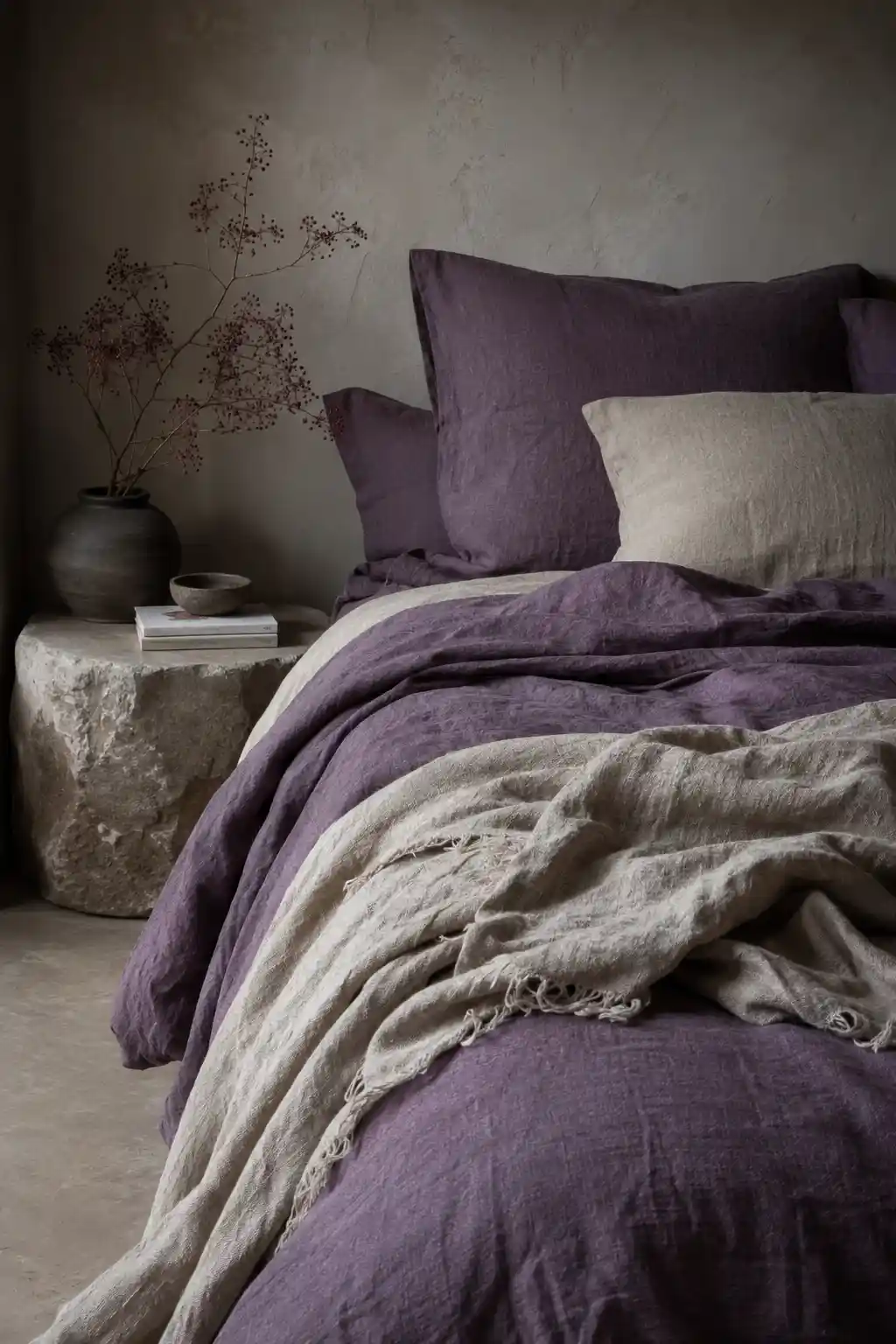
Embrace the beauty of imperfection by pairing amethyst purple with raw linen in oatmeal or stone shades. The coarse texture of raw linen grounds the vibrant, gemstone quality of the amethyst, creating a sophisticated yet effortless look. Instead of perfectly tucked sheets, allow the fabrics to ripple and fold naturally, leaning into the wabi-sabi philosophy of finding beauty in the unfinished. Adding a stone or concrete bedside table further enhances the earthy element, ensuring the purple feels like a natural extension of the earth rather than an artificial pop of color.
Aubergine and Burnt Orange Contrast
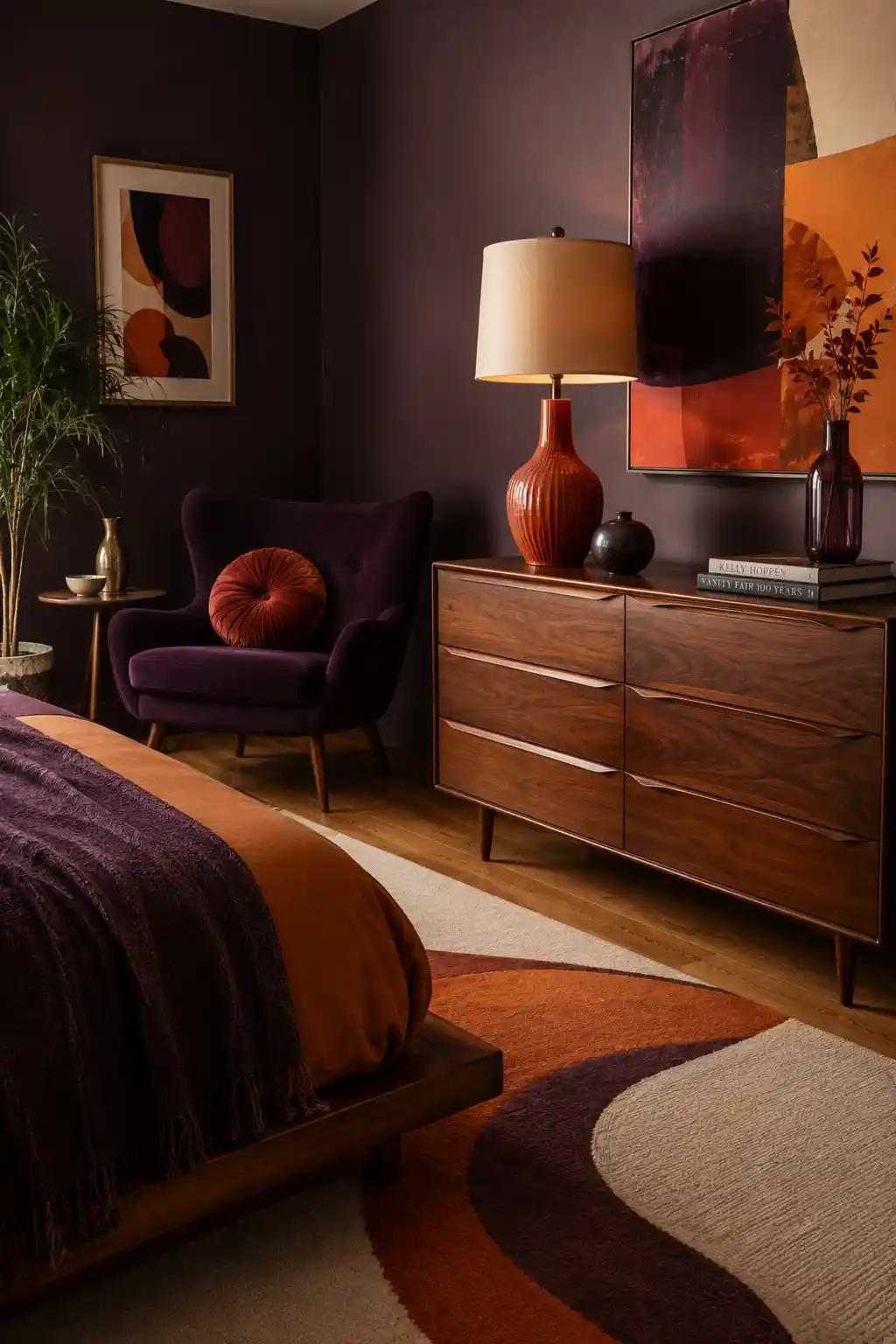
Aubergine is a deep, moody purple that pairs exceptionally well with the vibrancy of burnt orange. This combination creates a high-contrast, energetic environment that still feels grounded due to the earthy nature of the orange. To keep the look balanced, use a dark walnut wood for the furniture, which acts as a neutral anchor. Focus the burnt orange on smaller accents like a throw pillow, a sculptural lamp, or a piece of abstract art. This approach ensures the room feels curated and artistic without overwhelming the senses.
Lilac and Sandy Beige Serenity
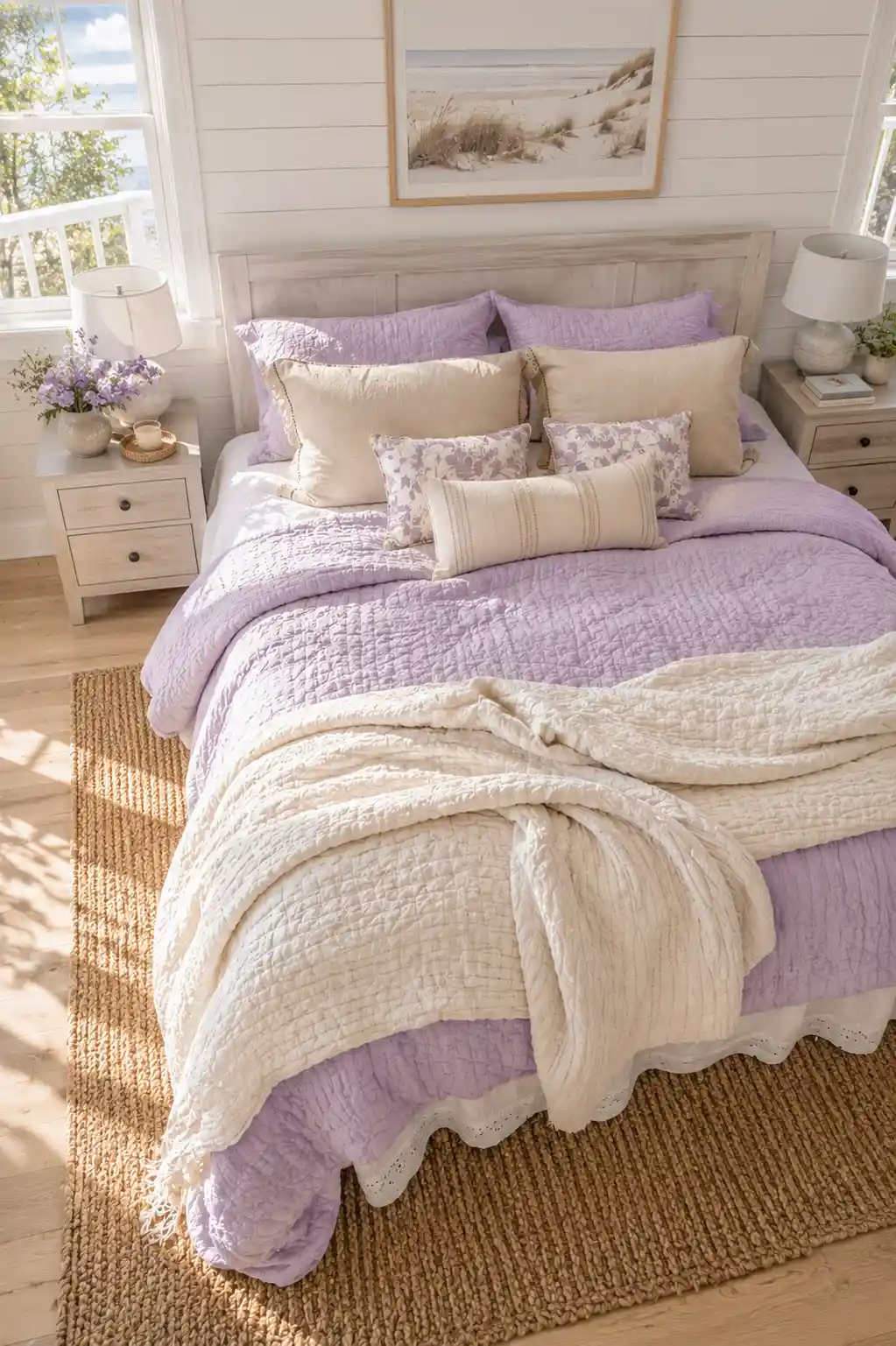
For a lighter, more ethereal feel, blend lilac with sandy beige and cream. This palette is reminiscent of a beach at twilight, offering a serene and airy environment. To enhance the earthy vibe, incorporate natural fibers such as seagrass rugs, jute baskets, or rattan headboards. The sandy beige provides a warm, neutral base that allows the lilac to pop softly without dominating the space. This is an excellent choice for smaller bedrooms, as the light colors help open up the area while maintaining a cozy, lived-in feel.
Muted Violet and Olive Green Sophistication
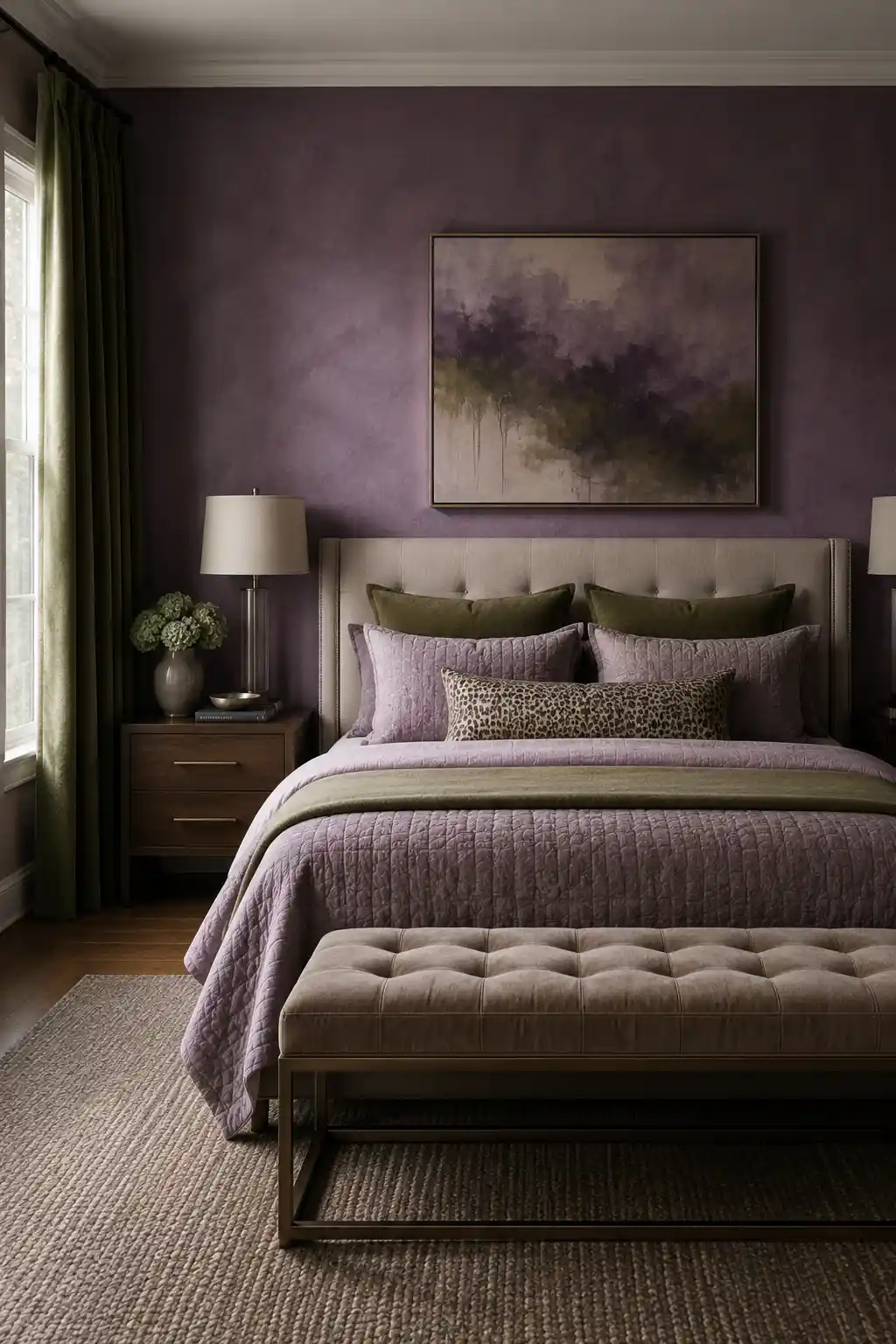
Muted violet and olive green create a sophisticated, adult palette that feels deeply connected to the natural world. This combination works best when used in a transitional style, mixing traditional elements with modern lines. Consider a muted violet accent wall as the focal point, and then layer in olive green through heavy velvet curtains or a plush throw. Adding taupe elements, such as a fabric bench or neutral carpeting, bridges the gap between the two colors, ensuring the room feels cohesive and intentionally designed rather than randomly colorful.
Deep Grape and Charcoal Gray Depth
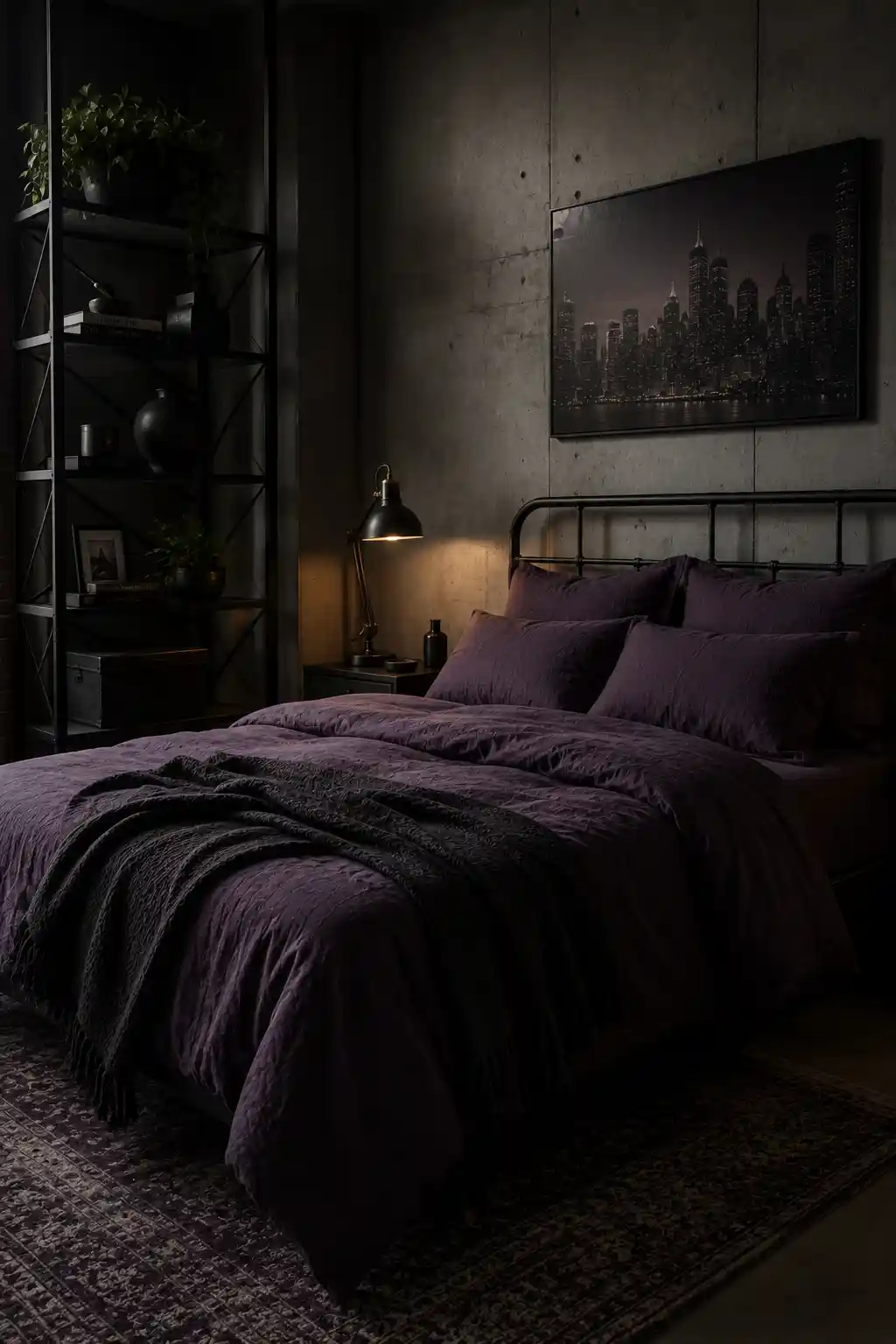
Integrating deep grape purple with charcoal gray produces a moody, urban aesthetic that feels both grounding and luxurious. The darkness of the charcoal provides a stark, modern backdrop that allows the rich purple tones to glow. To prevent the space from feeling too cold, introduce earthy textures like a concrete-effect wall or a gray wool rug. This combination is perfect for those who want a bedroom that feels like a private cocoon, offering a sense of security and depth that is ideal for deep sleep and relaxation.
Heather Purple and Warm Walnut Mid-Century
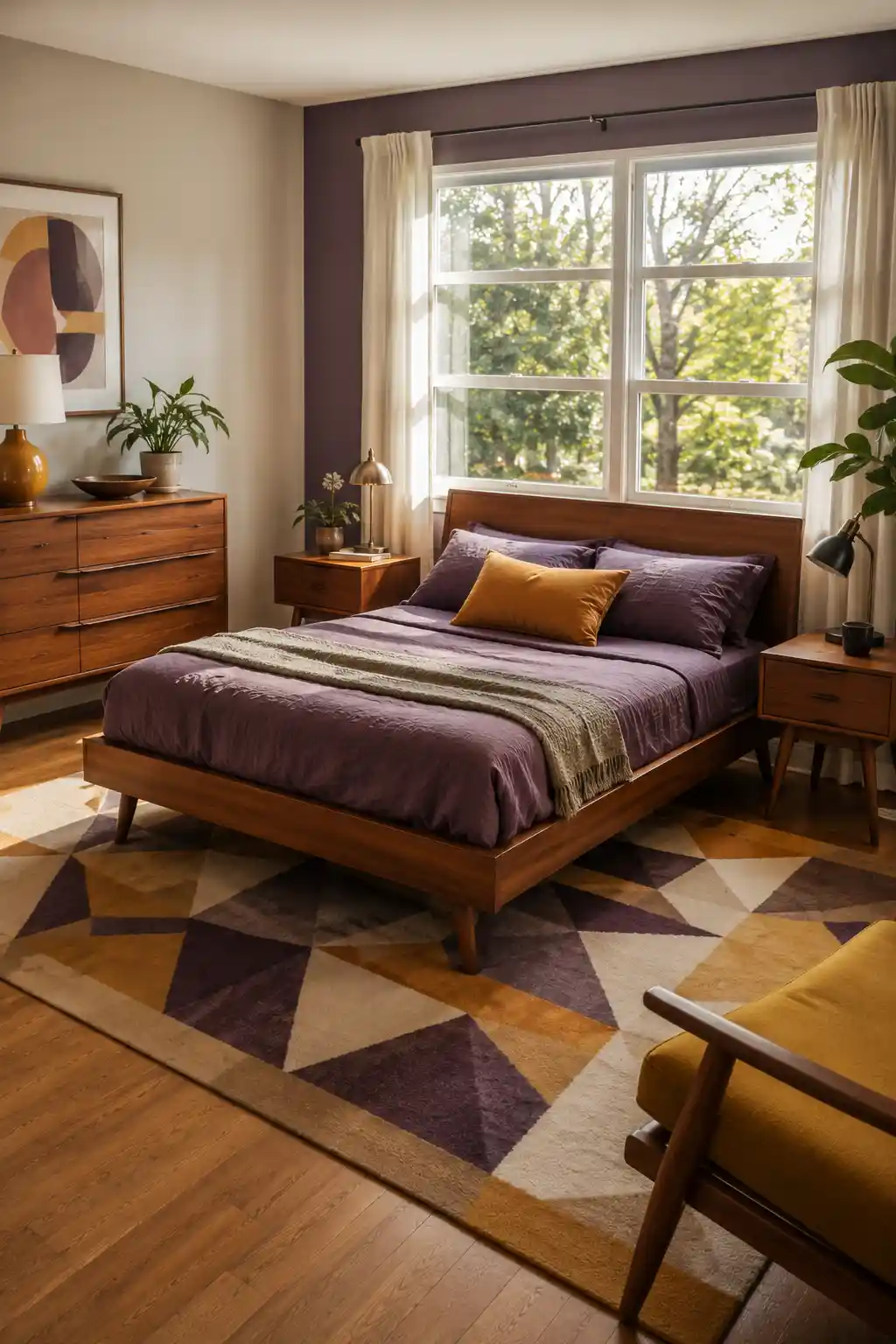
Heather purple—a grayish, muted violet—pairs beautifully with the rich, red-brown tones of warm walnut wood. This combination leans into a mid-century modern aesthetic, emphasizing clean lines and organic materials. To add a touch of earthy contrast, introduce a small amount of mustard yellow through a cushion or a piece of pottery. The warmth of the walnut wood grounds the heather purple, creating a balanced environment that feels timeless and thoughtfully curated, blending retro charm with a nature-inspired color palette.
Soft Periwinkle and Creamy Clay Balance
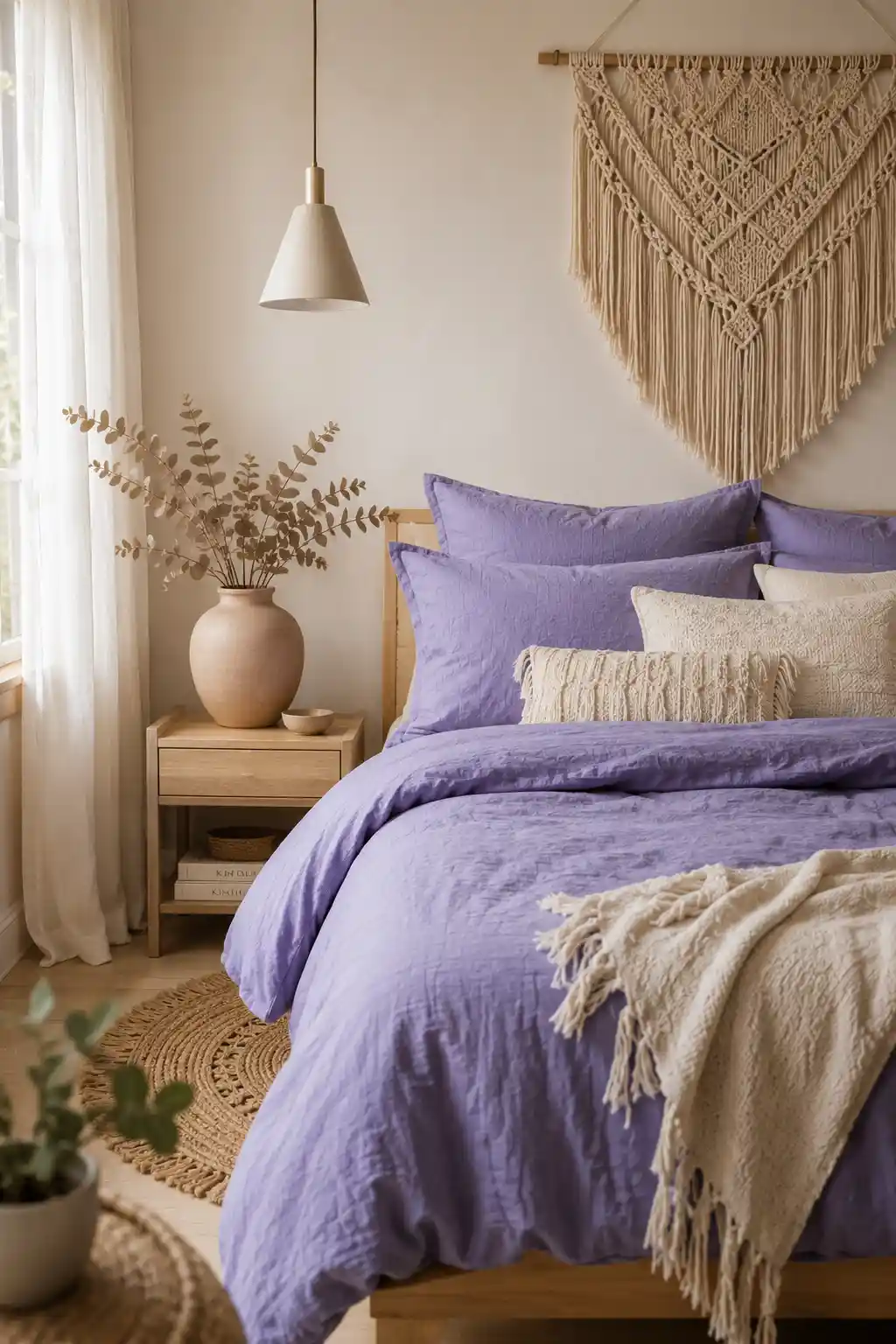
Periwinkle sits on the edge of purple and blue, offering a fresh alternative to traditional violets. When paired with creamy clay and off-white, it creates a gentle, nurturing environment. This palette works exceptionally well in a Scandi-boho style, where minimalism meets organic warmth. Use periwinkle for the primary bedding and introduce the clay tones through accessories like ceramic vases, terracotta pots, or a textured knit blanket. This combination feels light and airy, yet remains grounded by the earthy, clay-inspired neutrals.
Dark Purple and Brushed Brass Luxury
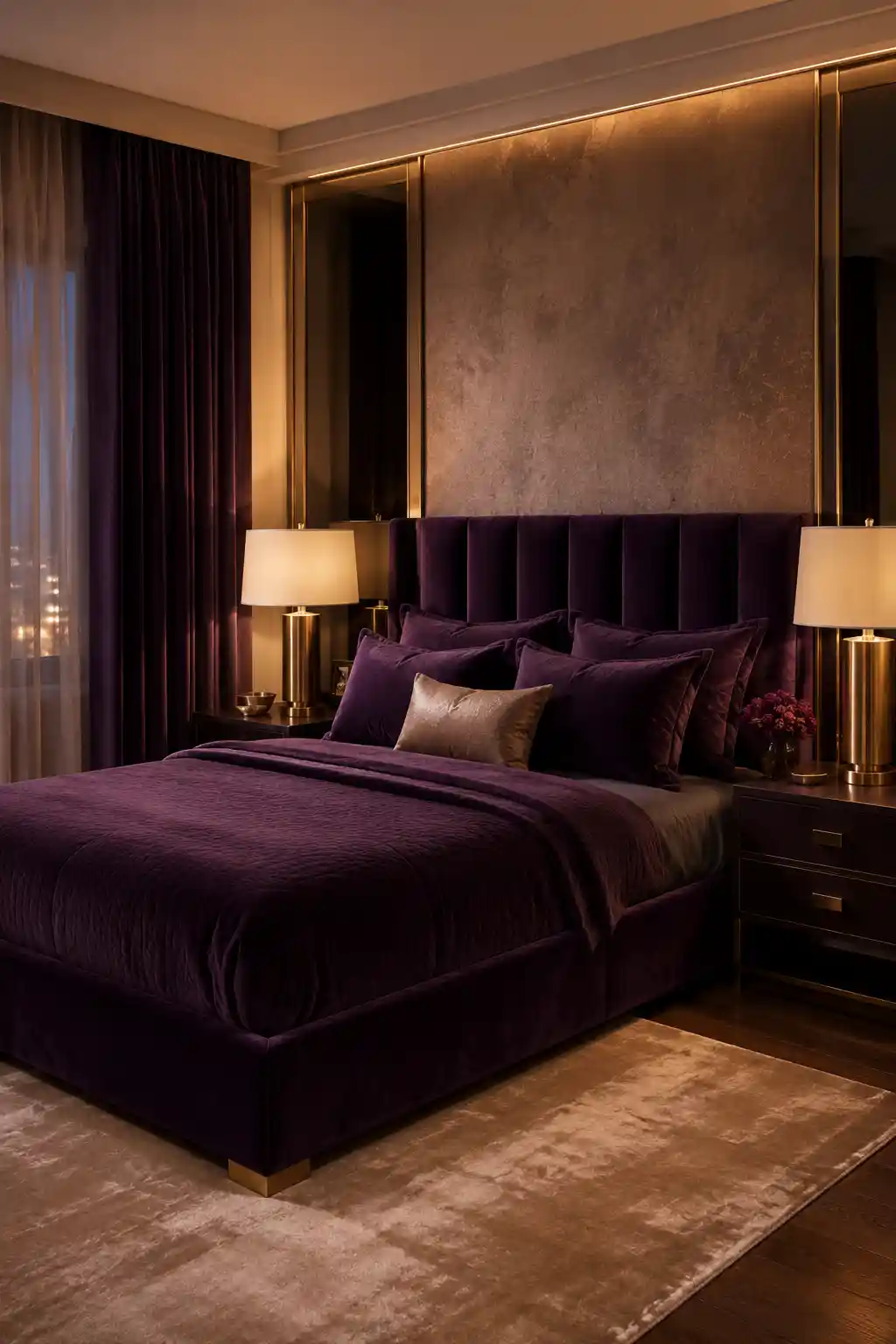
For those who want a touch of opulence, pair dark purple with brushed brass and warm beige. While brass is a metal, its golden hue provides an earthy warmth that complements the depth of purple. To keep the room from feeling too formal, use beige as the primary neutral for the walls and rugs, which softens the overall look. The result is a bedroom that feels like a high-end hotel suite, combining the royalty of purple with the organic warmth of gold-toned metals and soft, earthy creams.
Plum and Woven Rattan Boho Fusion
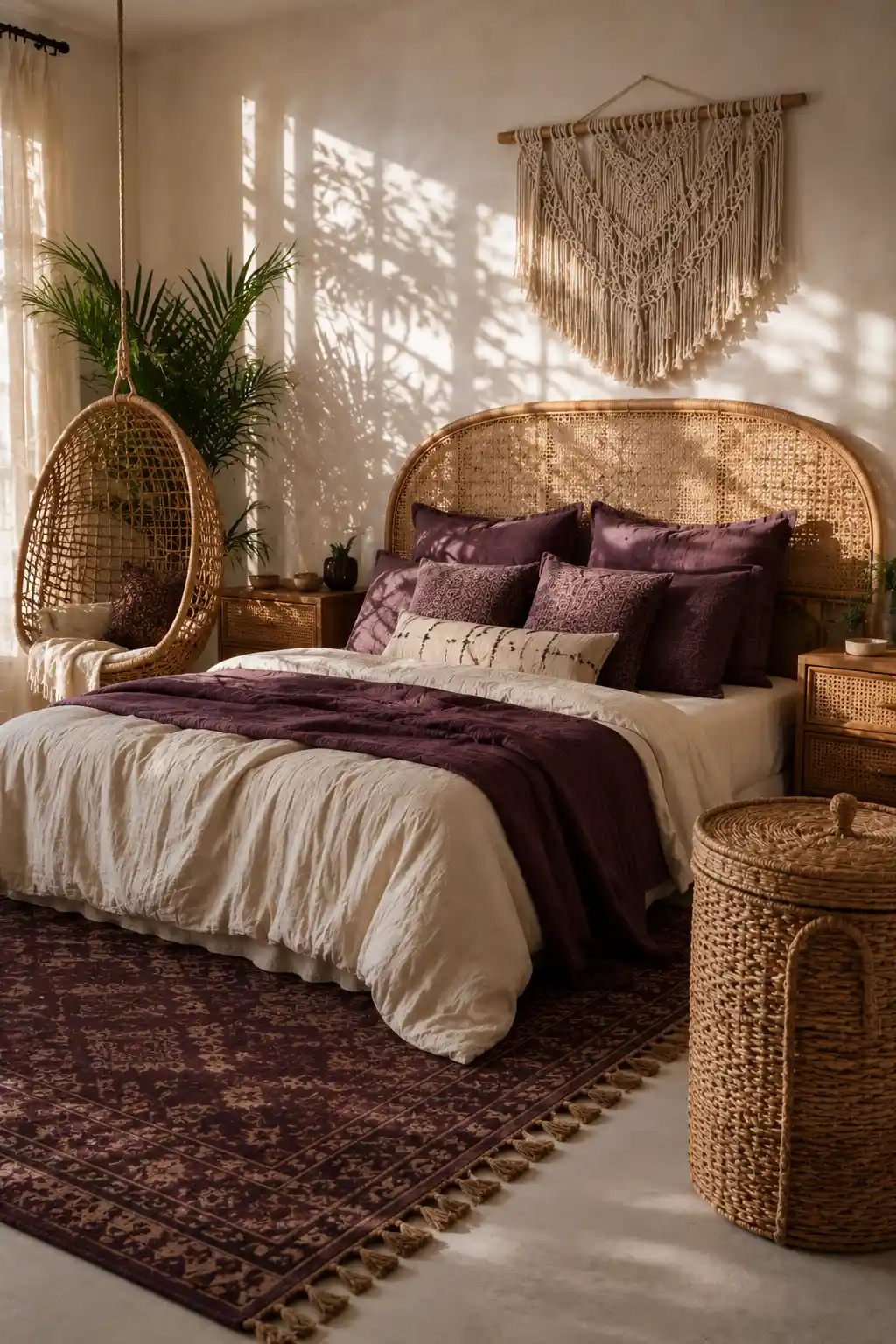
Plum is a heavy, saturated color, but it becomes light and playful when paired with honey-toned woven rattan. This bohemian fusion creates a space that feels global and traveled. Focus on incorporating rattan through a headboard, side tables, or a hanging chair, which introduces a strong earthy texture. Layer plum-colored textiles—like velvet cushions or a heavy duvet—over ivory sheets to maintain a bright base. This contrast between the airiness of the wicker and the richness of the plum creates a visually stimulating yet relaxing environment.
Pale Purple and Slate Stone Minimalism
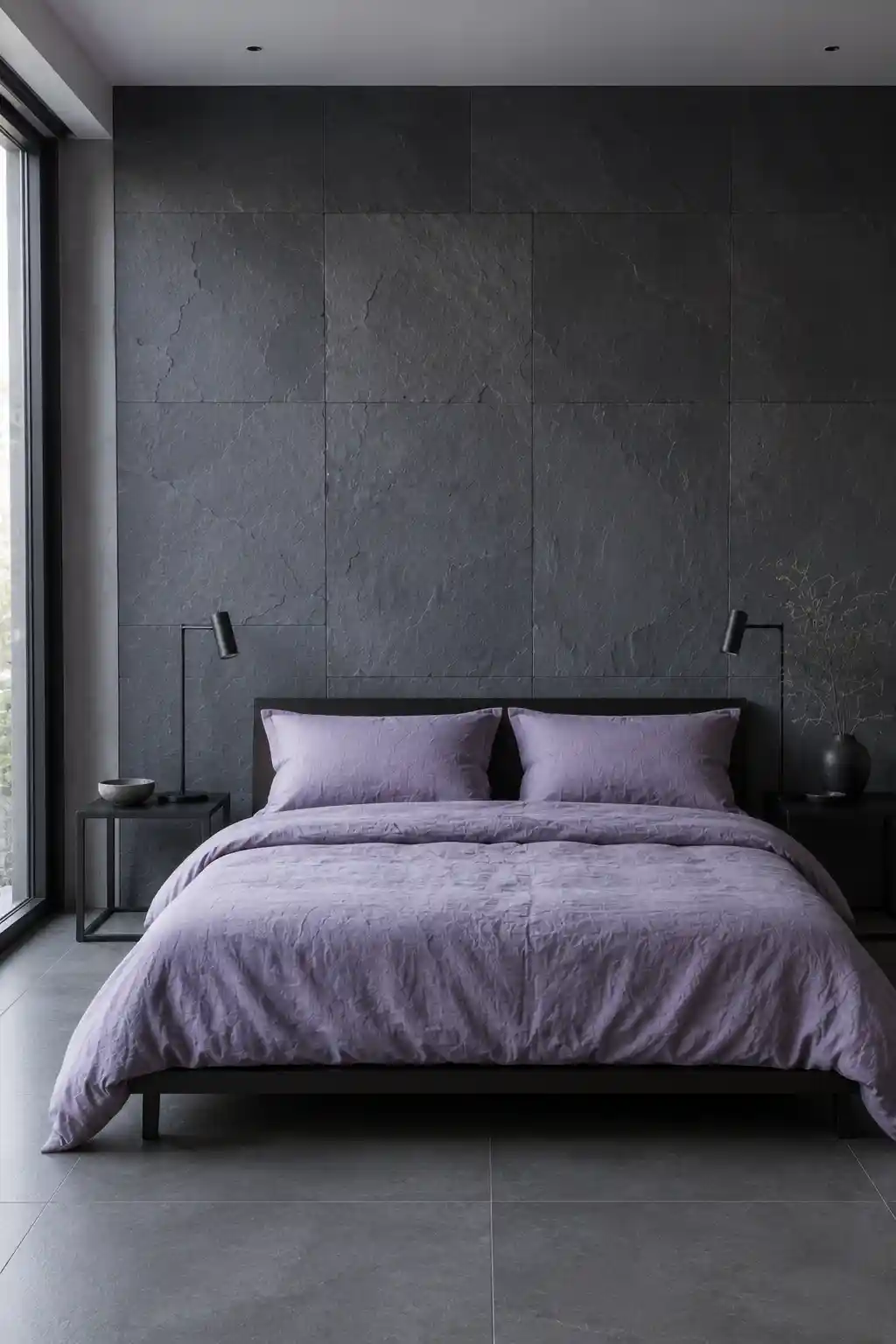
Pale purple, when paired with slate stone and charcoal, creates a cool-toned earthy palette that is perfect for minimalists. The slate gray provides a raw, mineral quality that grounds the softness of the purple. To achieve this look, keep the decor sparse; let the texture of a stone wall or a slate-colored rug be the main feature. Use pale purple strictly for the textiles to add a subtle touch of warmth and color. This approach results in a quiet, meditative space that feels like a modern retreat in a rocky landscape.
Royal Purple and Forest Green Depth
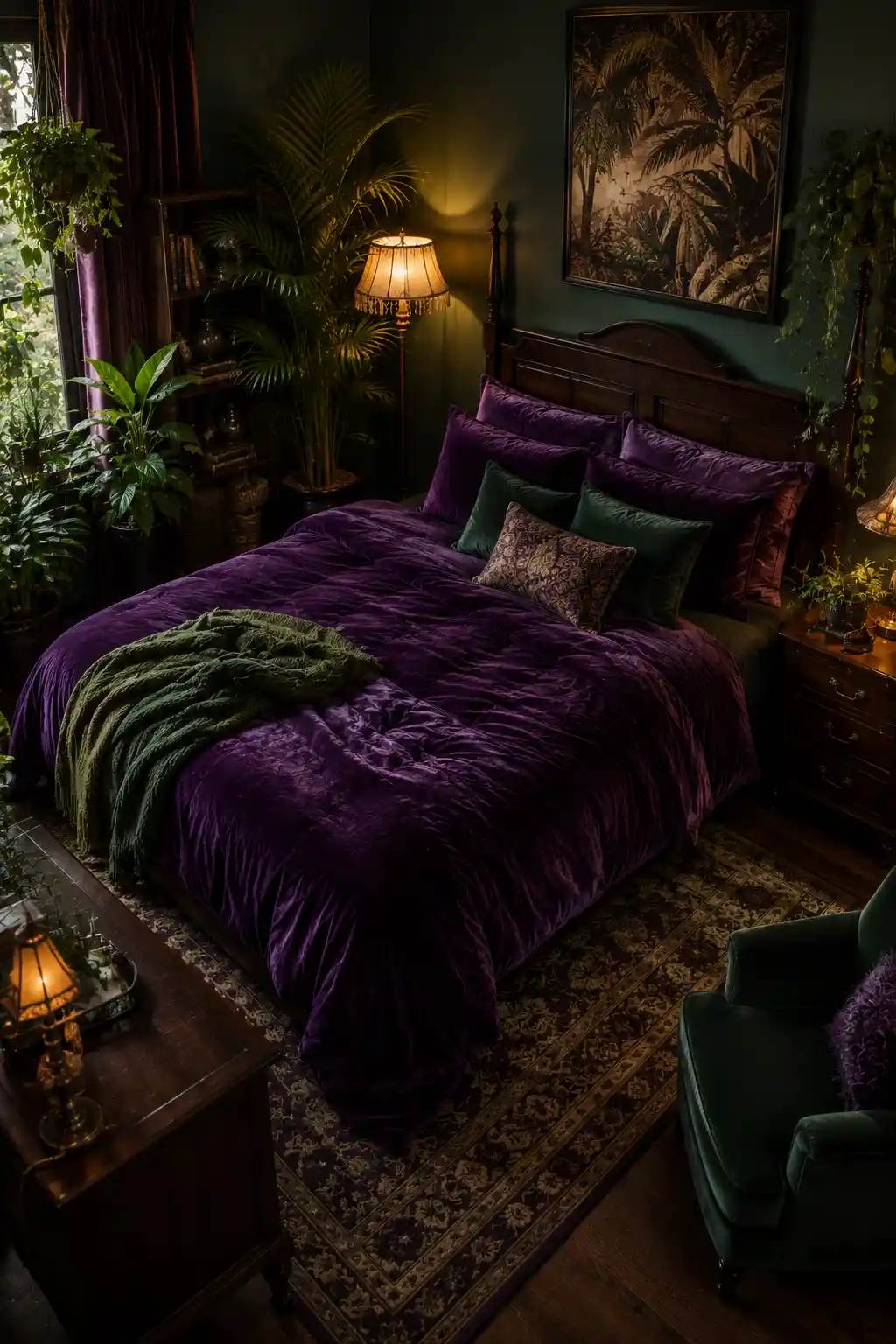
Creating a dramatic, jungle-like sanctuary is easy when you combine royal purple with forest green. These two deep colors create a lush, saturated environment that feels enveloping and private. To keep the room grounded, use dark mahogany or walnut wood for the furniture, which adds a natural, earthy weight to the space. Incorporate actual greenery, such as large Monstera or Fiddle Leaf Fig plants, to bring the forest green color to life. This maximalist approach is bold, but the shared organic roots of the colors keep it feeling harmonious.
Mauve and Ochre Yellow Artistic Balance
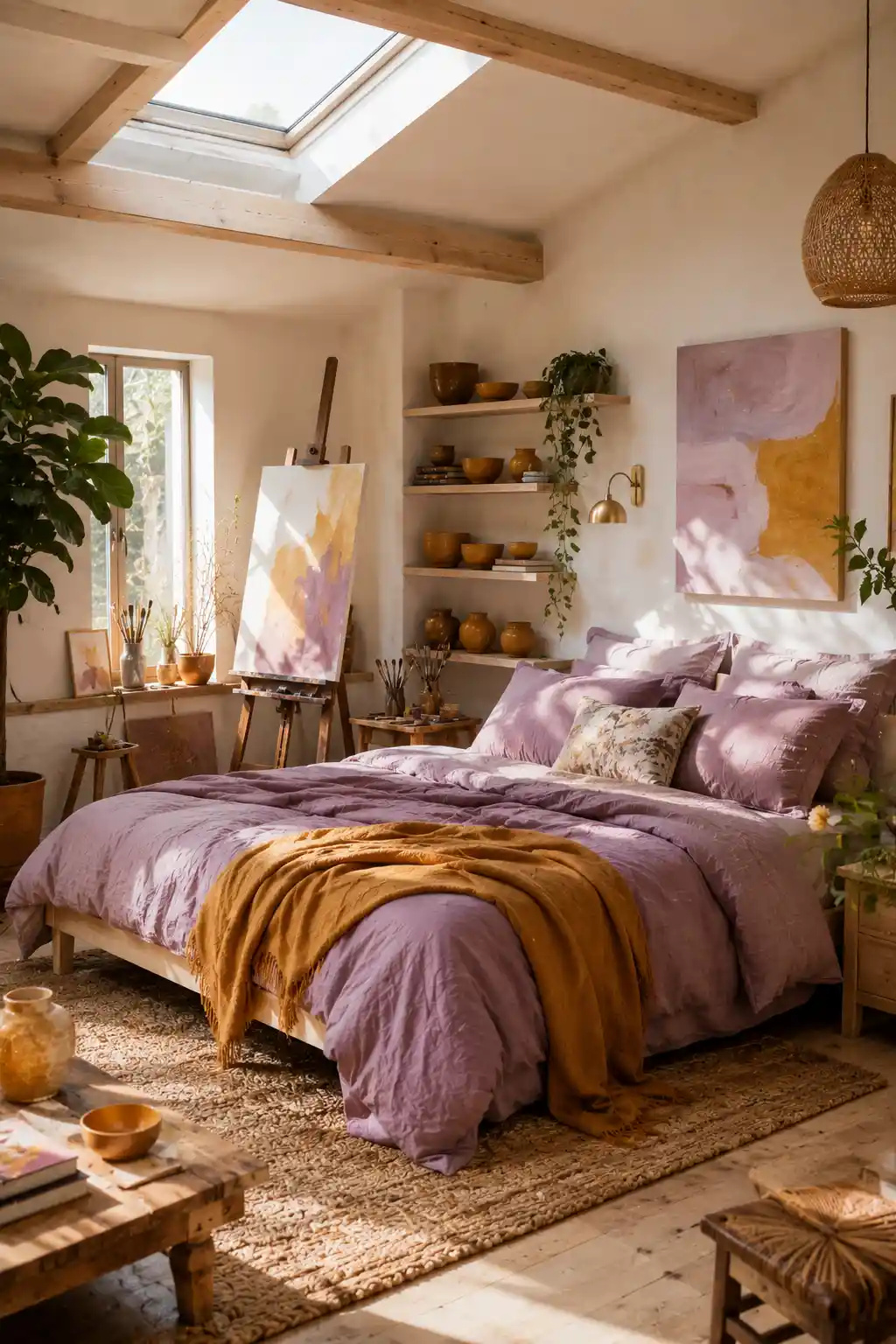
Mauve and ochre yellow are a surprising but beautiful pairing that creates an artistic, balanced energy. The muted, cool quality of the mauve is perfectly offset by the sunny, earthy warmth of ochre. This combination works best in a room with plenty of natural light, where the colors can shift throughout the day. Use ochre sparingly in accents—such as a throw blanket, a piece of pottery, or a velvet pillow—while letting mauve and warm white dominate the larger surfaces. The result is a creative, inspiring space that feels both grounded and uplifting.