
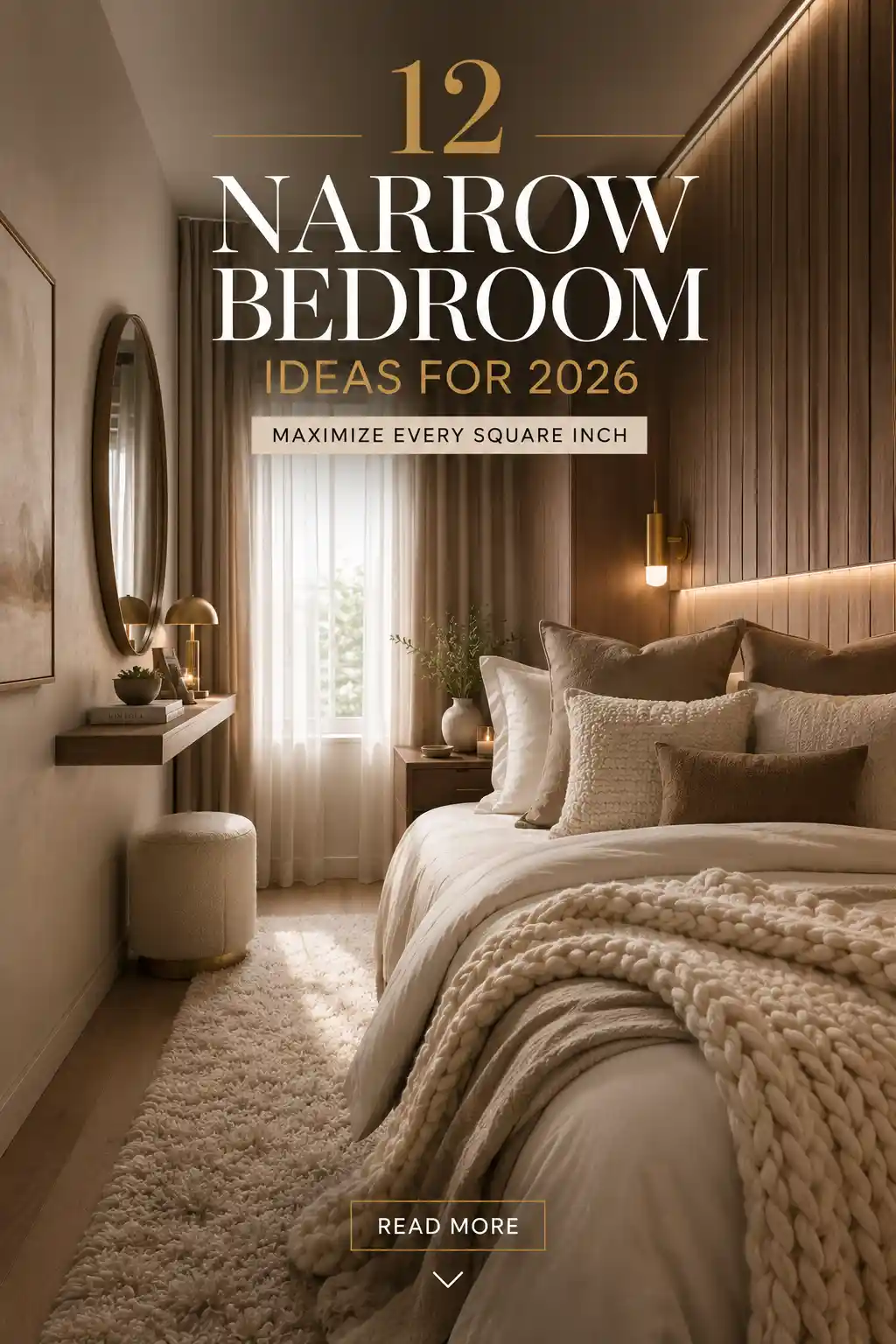
Narrow bedrooms often feel restrictive, but with the right design strategies, these tight footprints can become the most intimate and stylish rooms in the house. From architectural built-ins to clever lighting, the trends for 2026 focus on blending high-functionality with a luxury aesthetic. Let’s explore how to turn a slim layout into a spacious sanctuary.
Embrace Vertical Wood Paneling and Ambient Glow
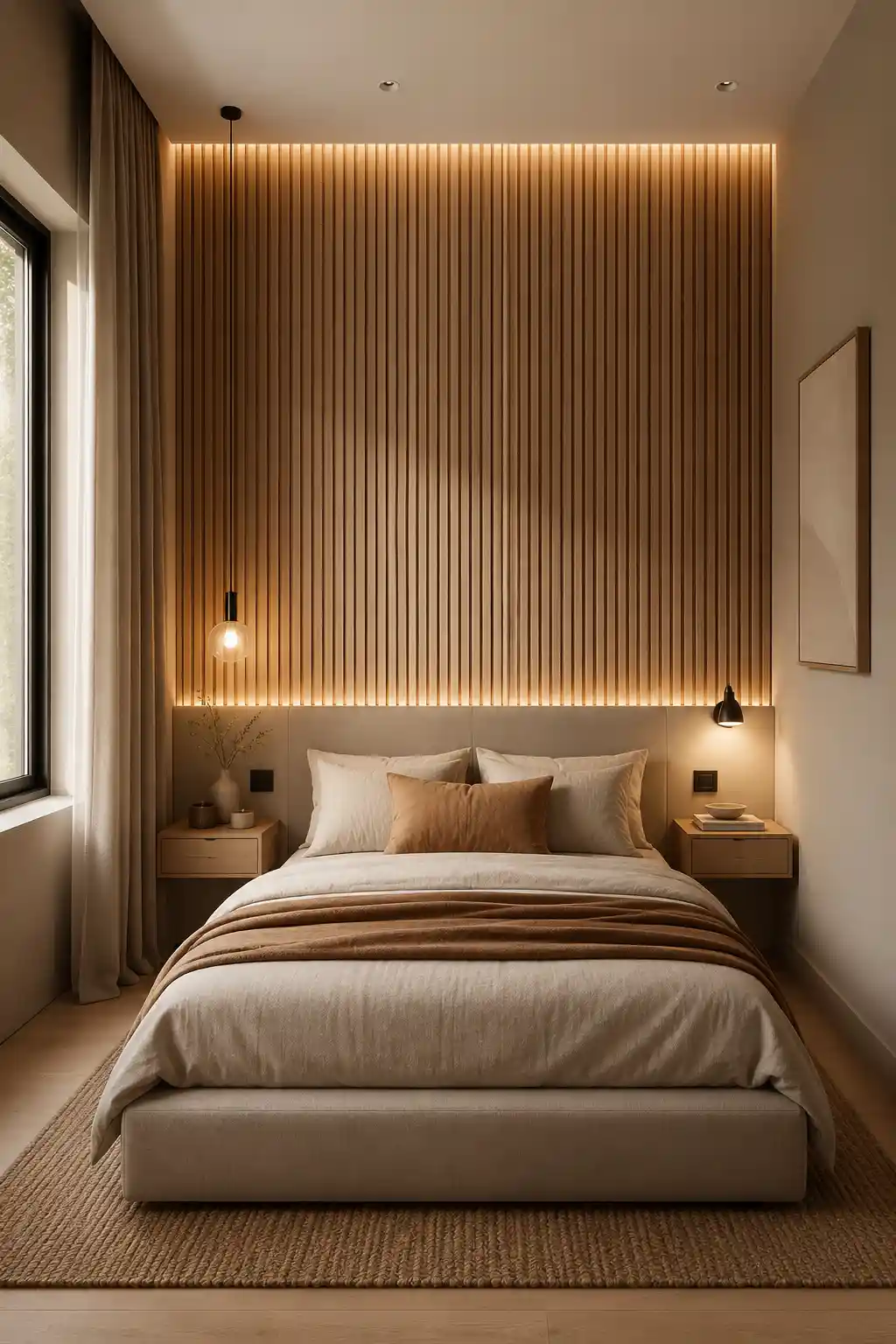
One of the most effective ways to handle a narrow room is by drawing the eye upward. Vertical wood paneling creates an architectural rhythm that visually stretches the height of the ceiling, making the width of the room feel less restrictive. In 2026, the trend is to integrate ambient lighting directly into these panels. By adding soft, hidden LED strips behind the woodwork, you create a warm, floating effect that adds depth to the walls. This combination of natural textures and modern light transforms a tight space into a high-end retreat.
Integrate a Slim Floating Workstation
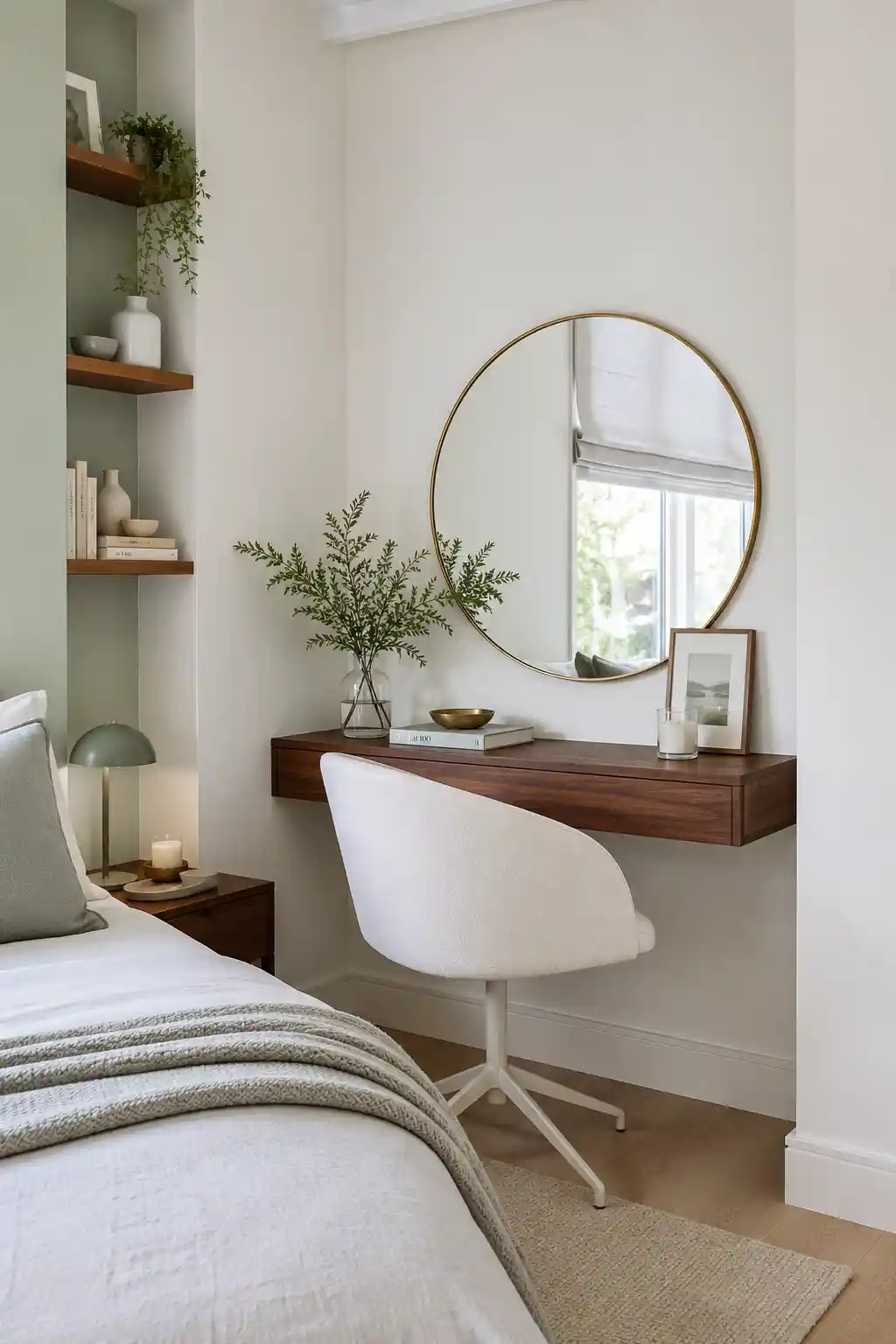
Adding a workspace to a narrow bedroom can often lead to clutter, but a floating desk is the perfect solution for 2026. By eliminating bulky legs, you keep the floor plane clear, which tricks the brain into perceiving more available space. To soften the linear nature of a slim room, pair the desk with a round mirror or curved decor accessories. This creates a balanced flow and ensures that your productive zone feels like an intentional part of the design rather than a crowded afterthought.
Create a Cozy Wall-to-Wall Sleep Nook
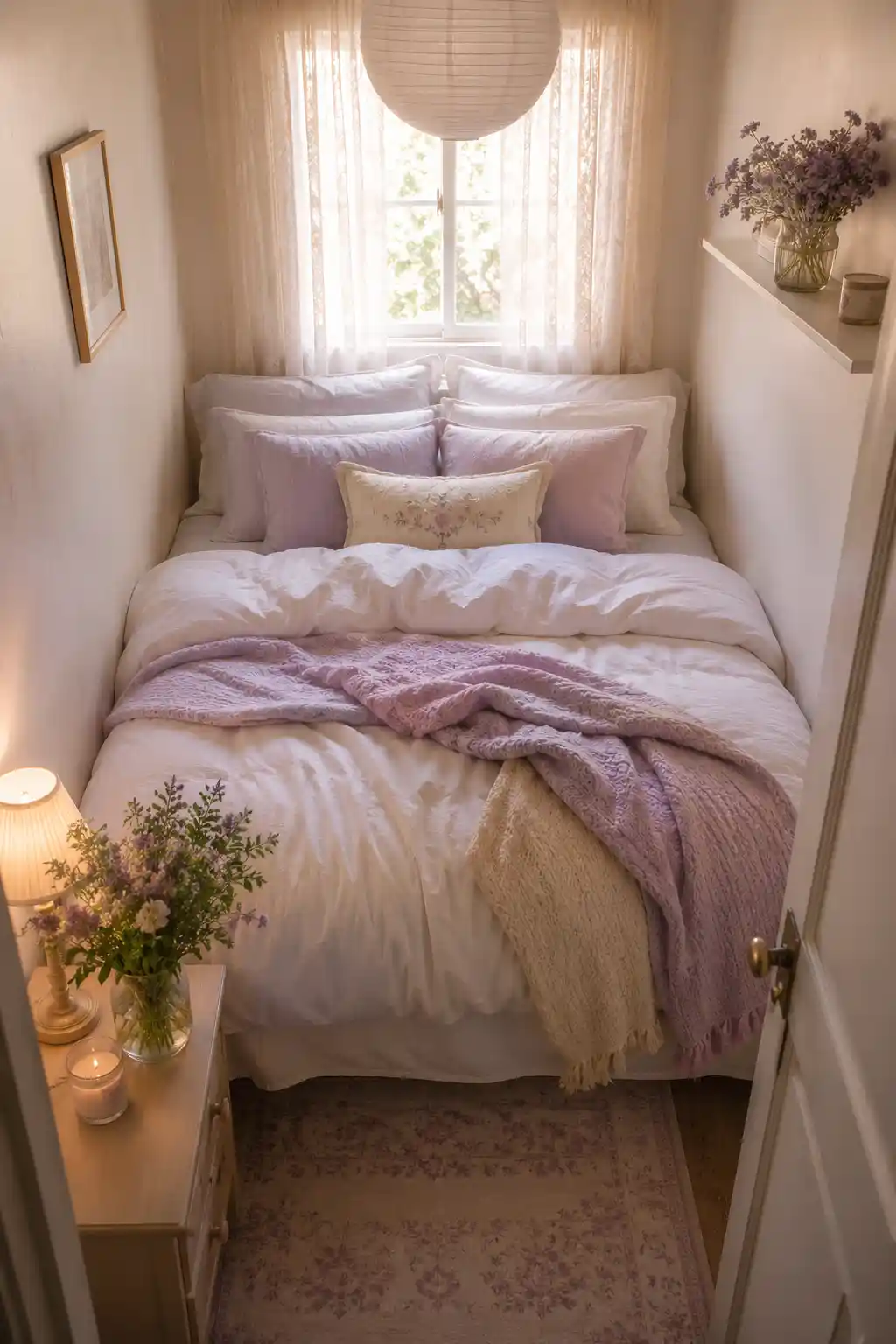
Rather than fighting the narrow dimensions, embrace them by creating a dedicated sleep nook. By positioning the bed so it fits snugly from wall to wall, you transform the layout into a cozy, cocoon-like sanctuary. This approach maximizes the central walkway, leaving the rest of the room open for movement. Enhance the intimacy of this setup with heavy textiles, such as floor-to-ceiling linen curtains and layered knit blankets, which make the tight fit feel like a luxurious design choice rather than a spatial limitation.
Use Strategic Mirror Placement for Optical Depth
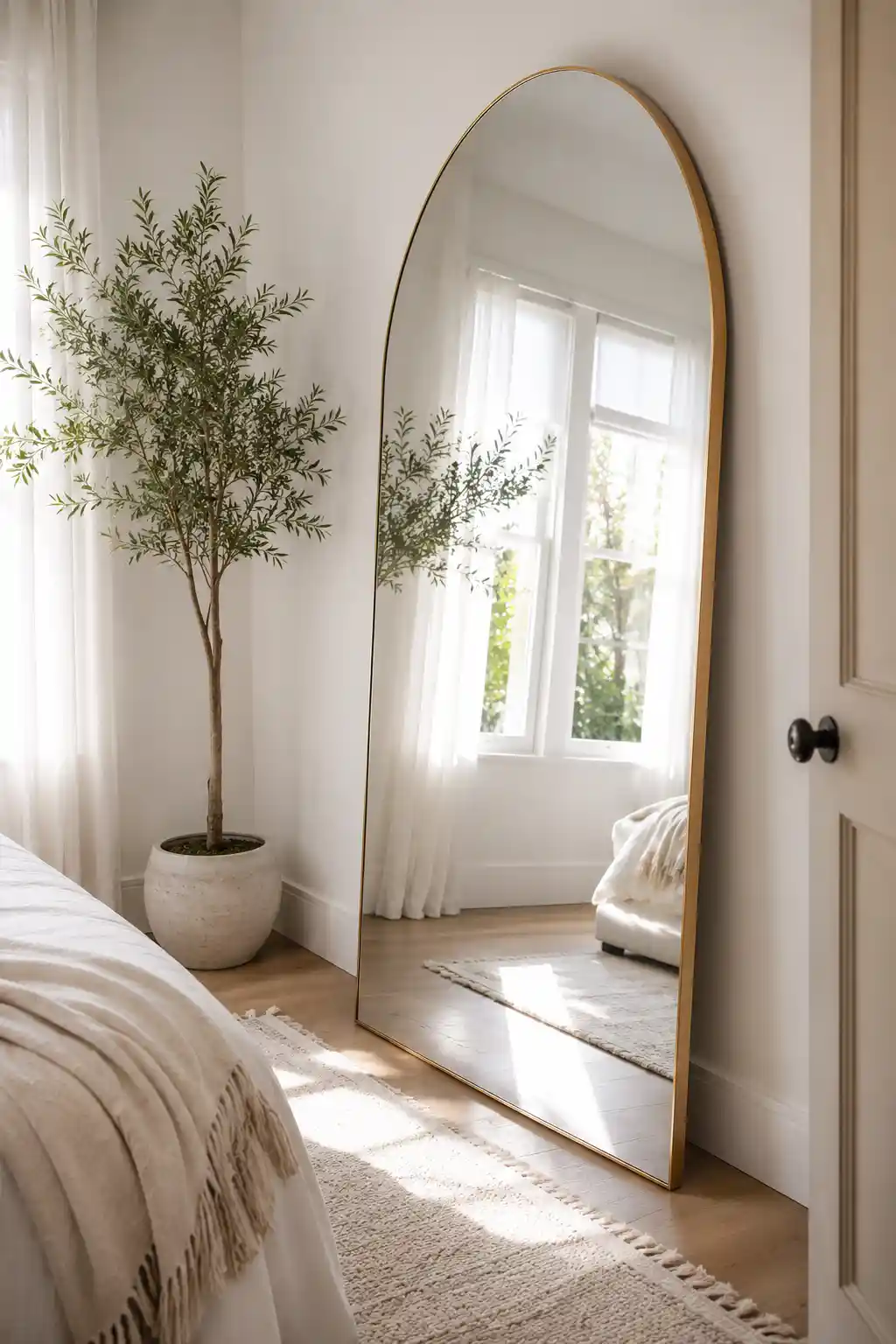
Mirrors are a classic designer trick for a reason, and in 2026, the focus is on oversized, arched silhouettes. Placing a large mirror opposite a window allows natural light to bounce deep into the narrowest parts of the room, instantly doubling the perceived width. To keep the space feeling modern, choose a frame that blends with your wall color or a thin metallic finish. This creates a seamless transition that opens up the room while adding a touch of sophisticated glamour to your decor.
Install an Impactful Vertical Headboard
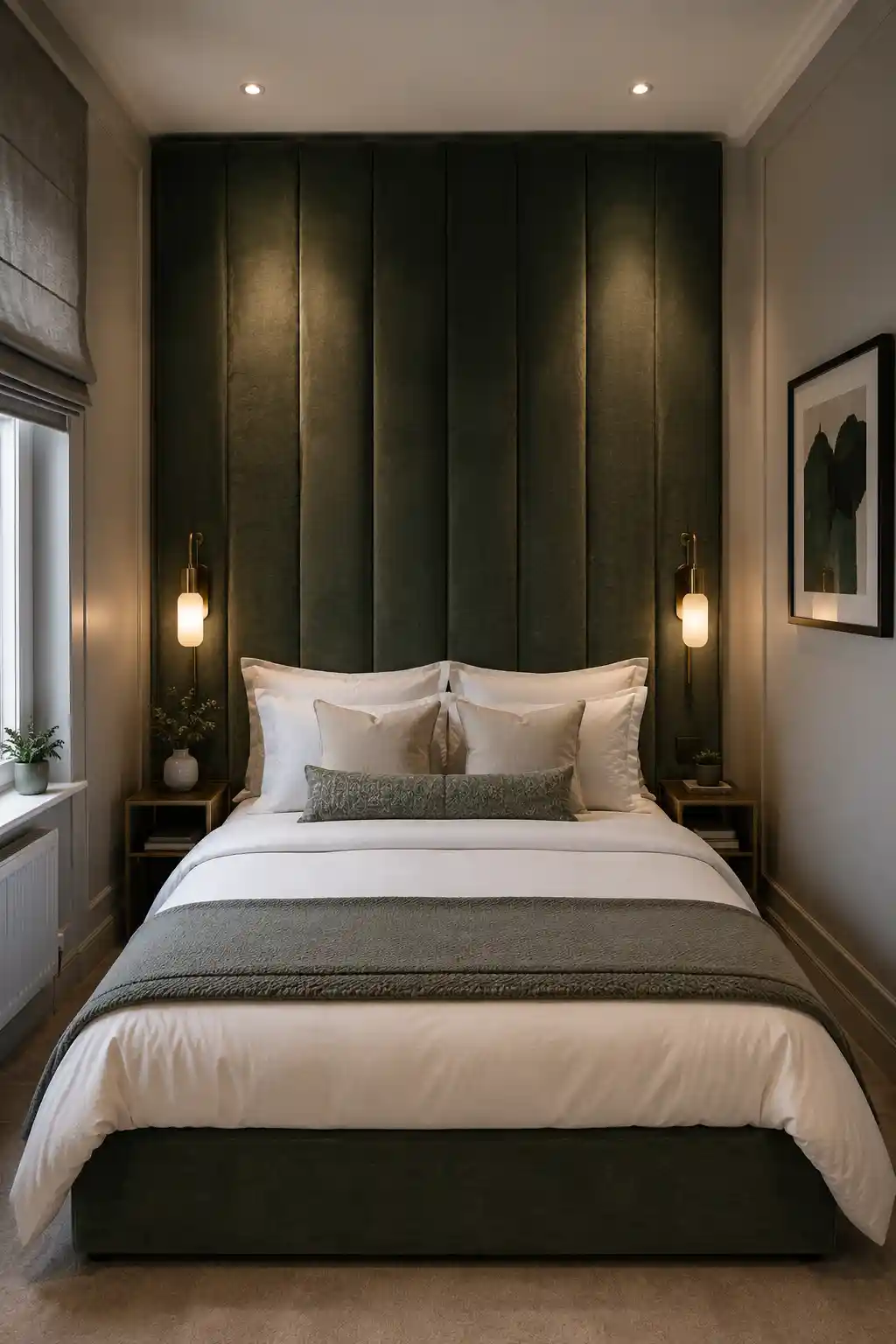
A tall, vertical headboard acts as a powerful focal point that anchors the room. By extending the headboard from the bed frame all the way to the ceiling, you emphasize the vertical axis, which distracts from the narrowness of the floor plan. For a luxury feel, opt for rich textures like velvet or bouclé in muted tones. This design choice not only adds a layer of sophistication but also provides a sense of structure and order that makes a small room feel intentionally curated and expensive.
Implement Seamless Floor-to-Ceiling Storage
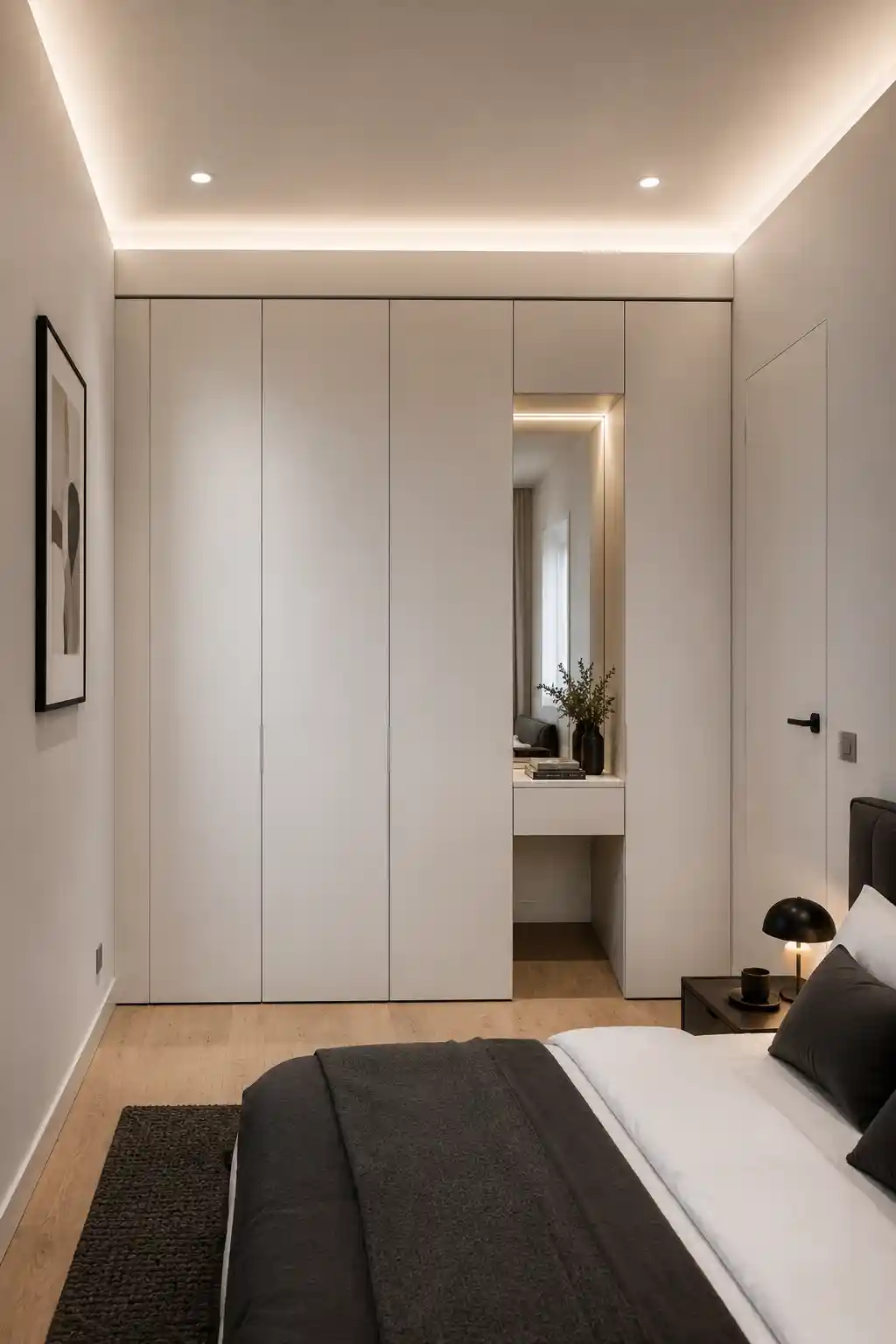
Clutter is the enemy of a narrow space. The most effective way to maintain a clean aesthetic is through seamless, built-in storage that blends directly into the architecture. By utilizing the entire height of one wall for cabinetry, you eliminate the need for multiple small dressers that break up the visual flow. Choosing a matte finish that matches the wall color allows the storage to disappear, leaving the room feeling open and airy while providing ample space for all your belongings.
Add Over-Bed Library Shelving
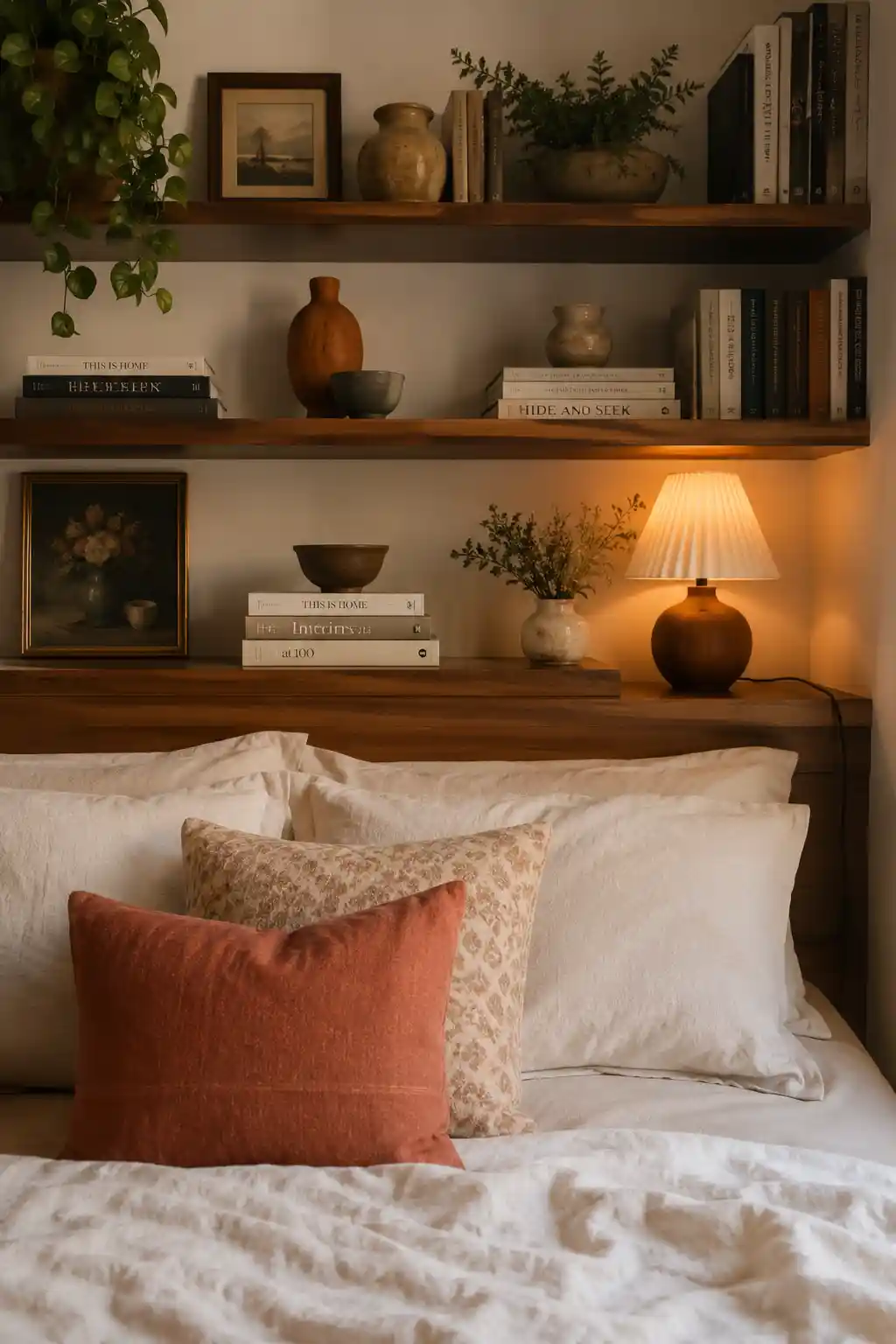
When floor space is limited, look to the walls. Installing open shelving above the bed turns an unused vertical area into a functional library and a personal gallery. This not only saves space but also adds an intimate, lived-in feel to the room. To prevent the shelving from feeling heavy, use light-toned woods and leave some open gaps for decorative objects. This layered approach adds personality and depth, making the narrow bedroom feel like a cozy retreat for reading and relaxation.
Opt for Low-Profile Platform Furniture
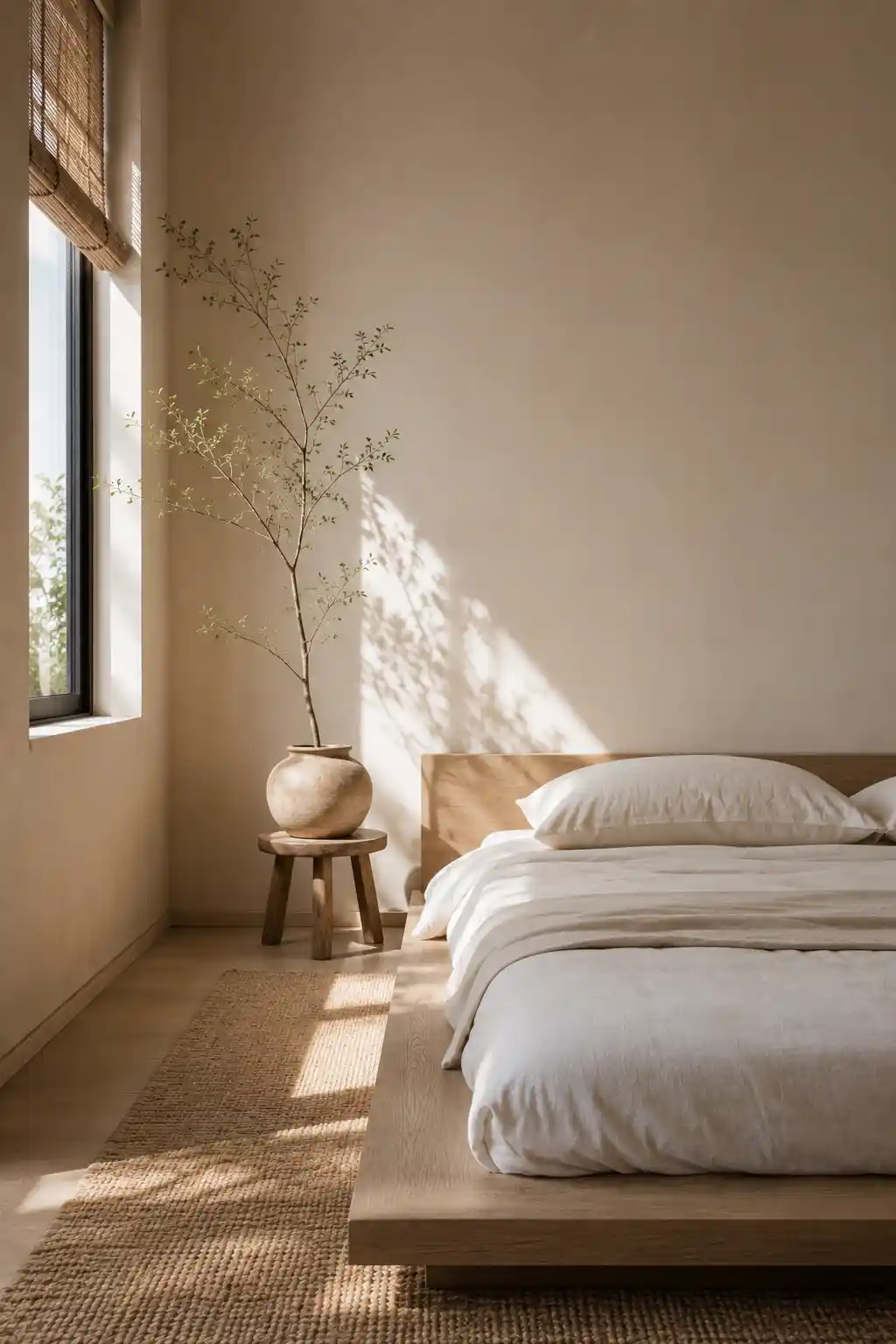
Furniture height plays a huge role in how a narrow room is perceived. Low-profile platform beds increase the amount of visible wall space and ceiling gap, which prevents the room from feeling boxed in. This Japandi-inspired approach creates a sense of groundedness and serenity. By keeping the furniture low to the ground, you create a more open sightline across the room, allowing the space to breathe and making the overall atmosphere feel more expansive and tranquil.
Balance the Room with Symmetrical Twin Layouts
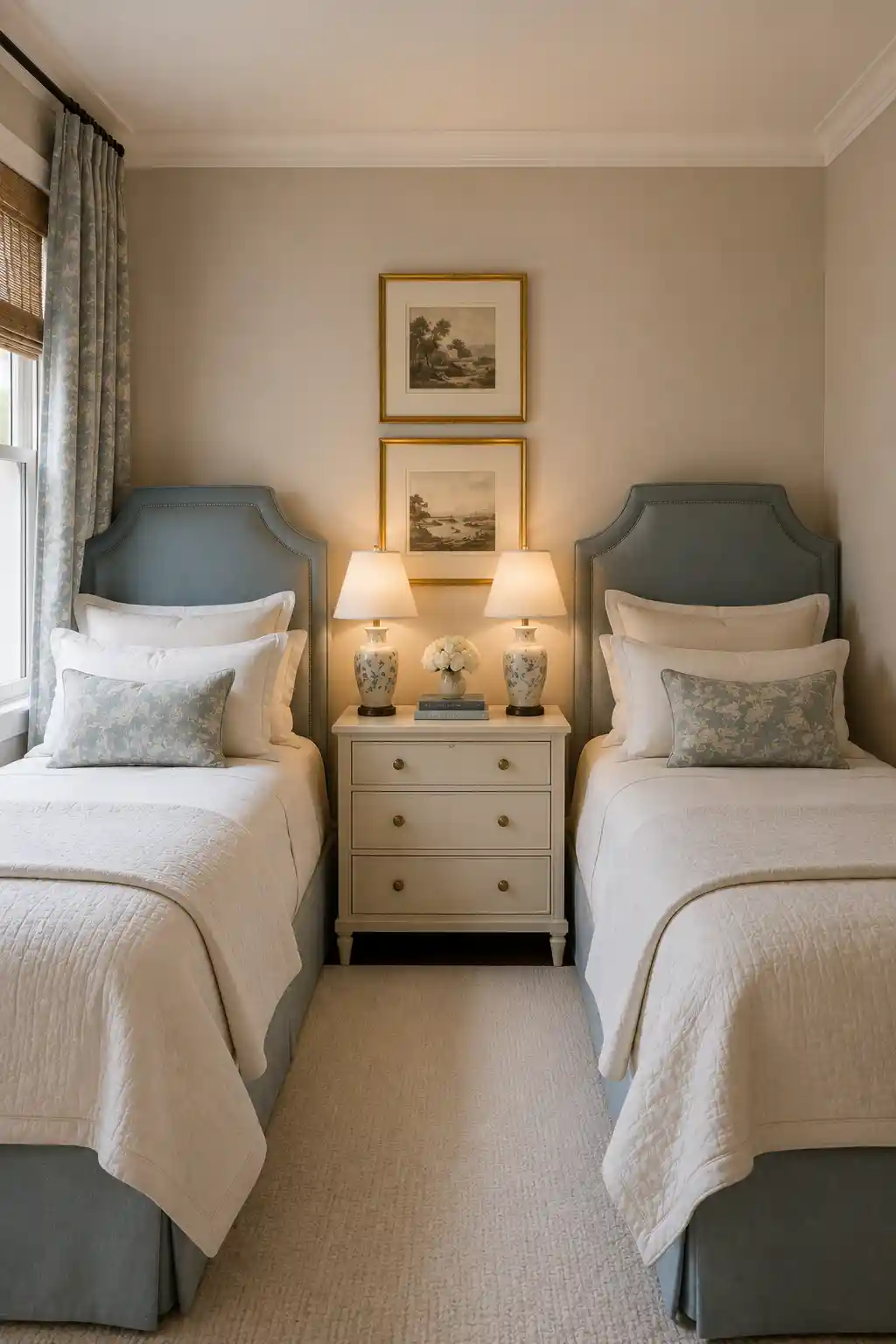
Symmetry is a powerful tool for creating a sense of order in awkward layouts. In a narrow room, placing two twin beds symmetrically with a shared central table creates a balanced visual weight that feels intentional and organized. This is particularly effective for guest rooms or children’s rooms. The repetition of shapes and colors calms the eye and prevents the space from feeling chaotic, proving that you can achieve a high-end, boutique-hotel look even in a constrained footprint.
Utilize Architectural Lofting and Zoning
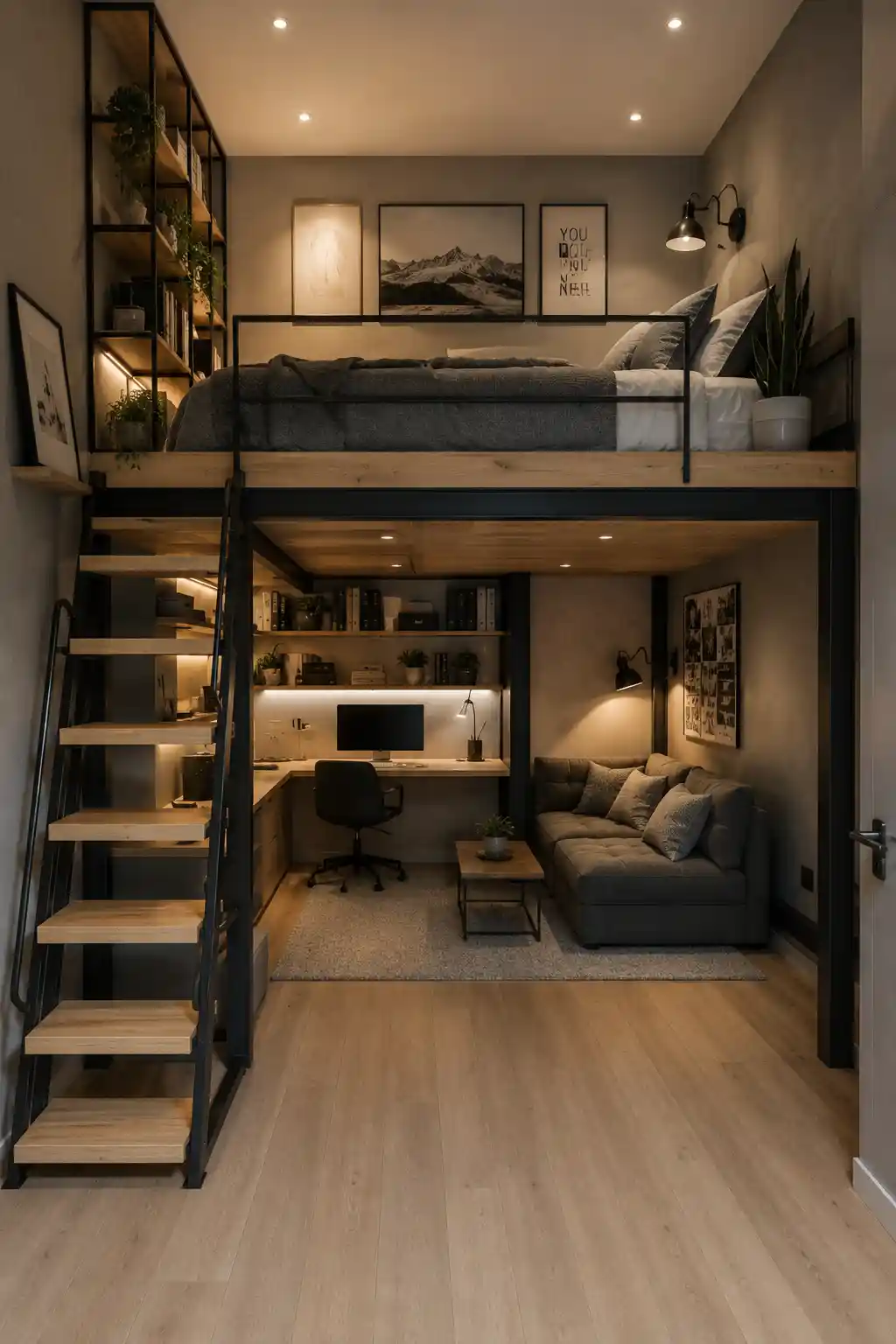
If you have the ceiling height, lofting is the ultimate space-saver for 2026. By raising the bed, you effectively double your usable square footage, allowing you to create a distinct zoning system within a narrow room. The area beneath the loft can be converted into a walk-in closet, a home office, or a cozy reading lounge. This architectural approach transforms the limitation of a narrow room into a creative opportunity, providing a sophisticated and highly functional living environment.
Create Intimacy with Moody Accent Walls
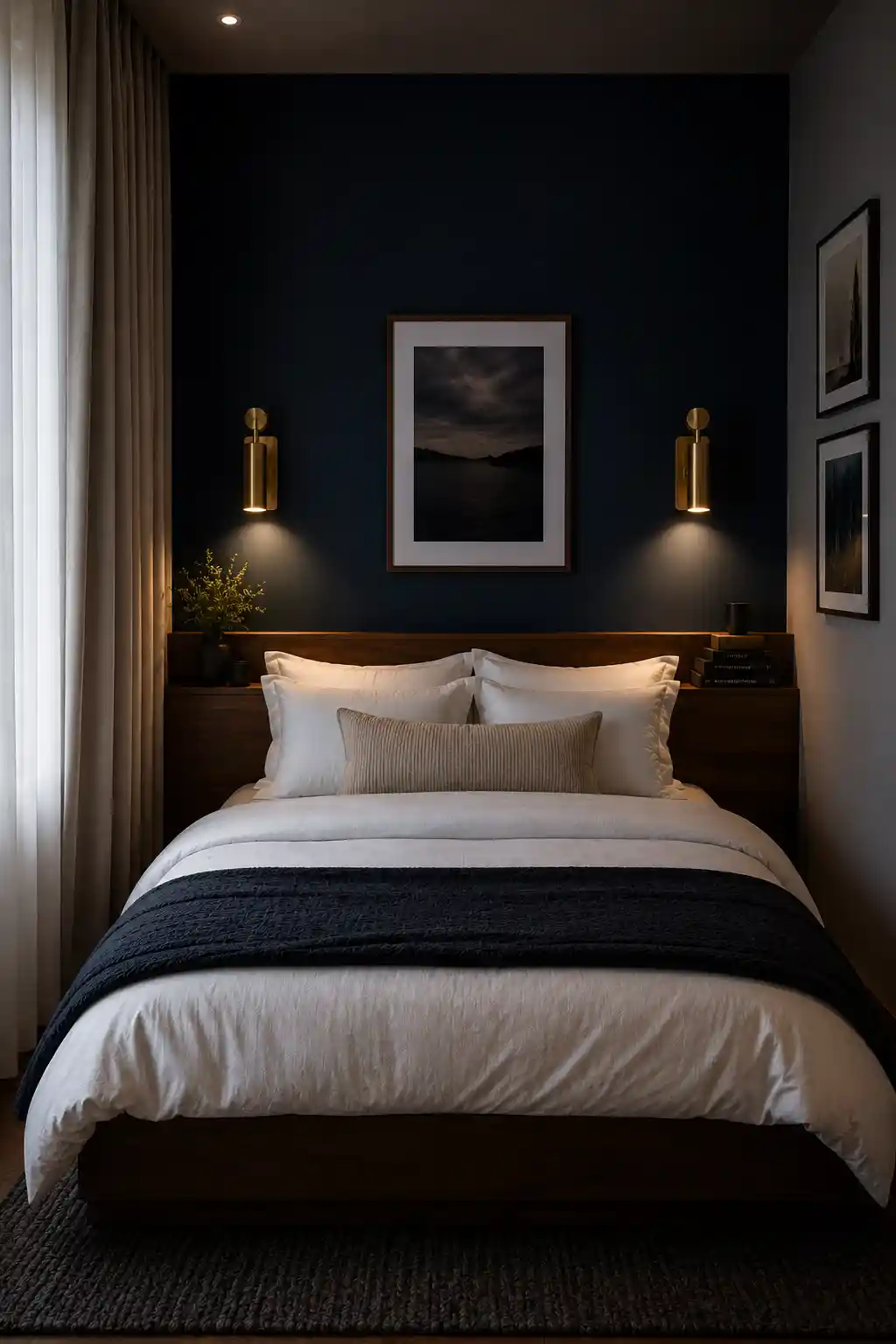
While light colors are often recommended for small spaces, a moody accent wall can actually add incredible depth to a narrow room. By painting the far end wall in a deep hue like navy, charcoal, or forest green, you create a focal point that draws the eye inward and adds a sense of luxury. This contrast makes the side walls feel more distant and the room feel more like a curated cocoon. When paired with bright linens and warm metallic accents, the result is a sophisticated, intimate sanctuary.
Layer Textures for Visual Dimension
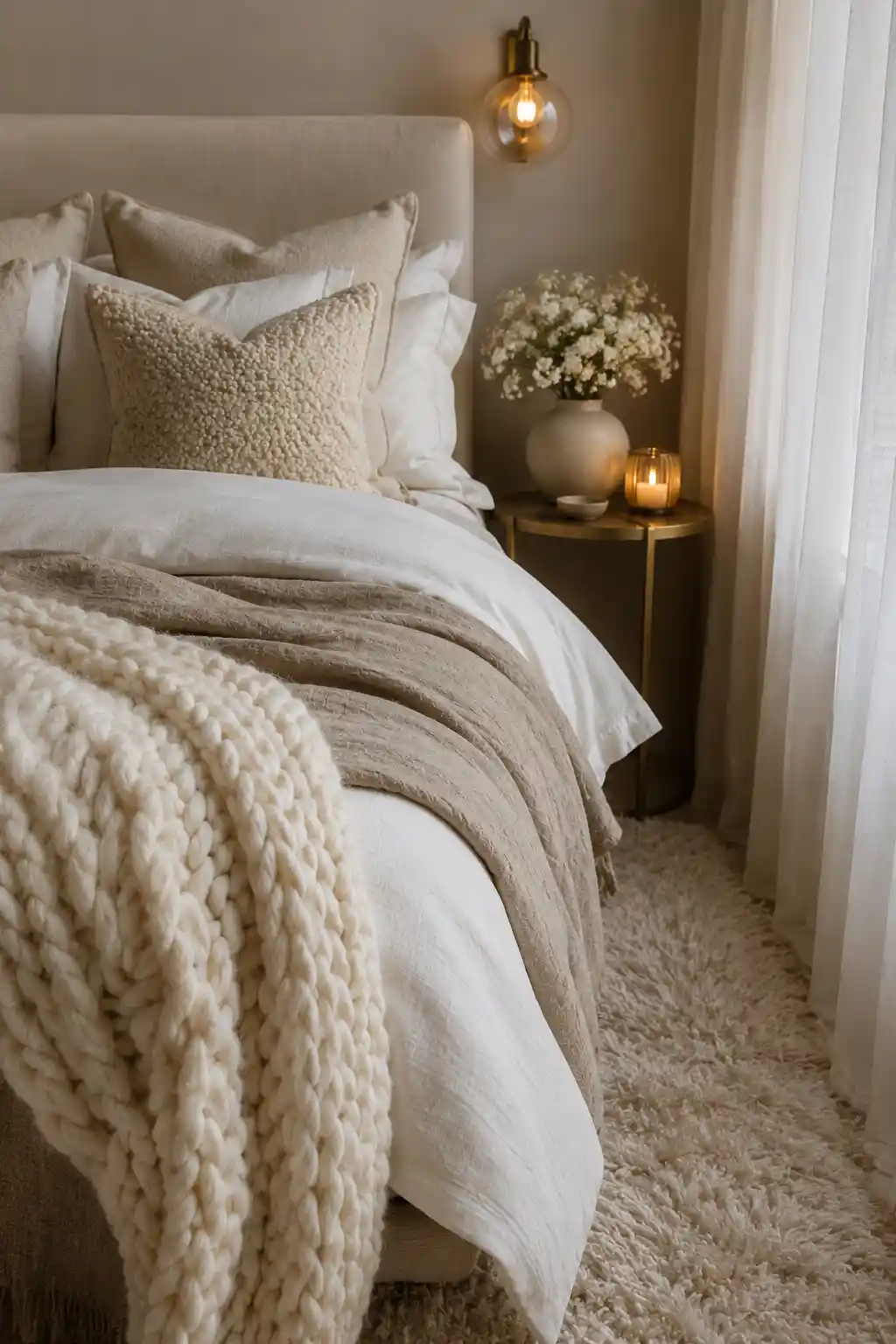
In a narrow room, the lack of floor space can be compensated for by adding richness through textures. Layering different fabrics—such as a chunky knit throw over a smooth cotton duvet or a boucle pillow against a linen headboard—adds visual dimension and prevents the room from feeling flat. A high-pile rug can also anchor the space and add warmth. This focus on tactile luxury makes the room feel curated and cozy, ensuring that the small width becomes a feature of comfort rather than a drawback.