
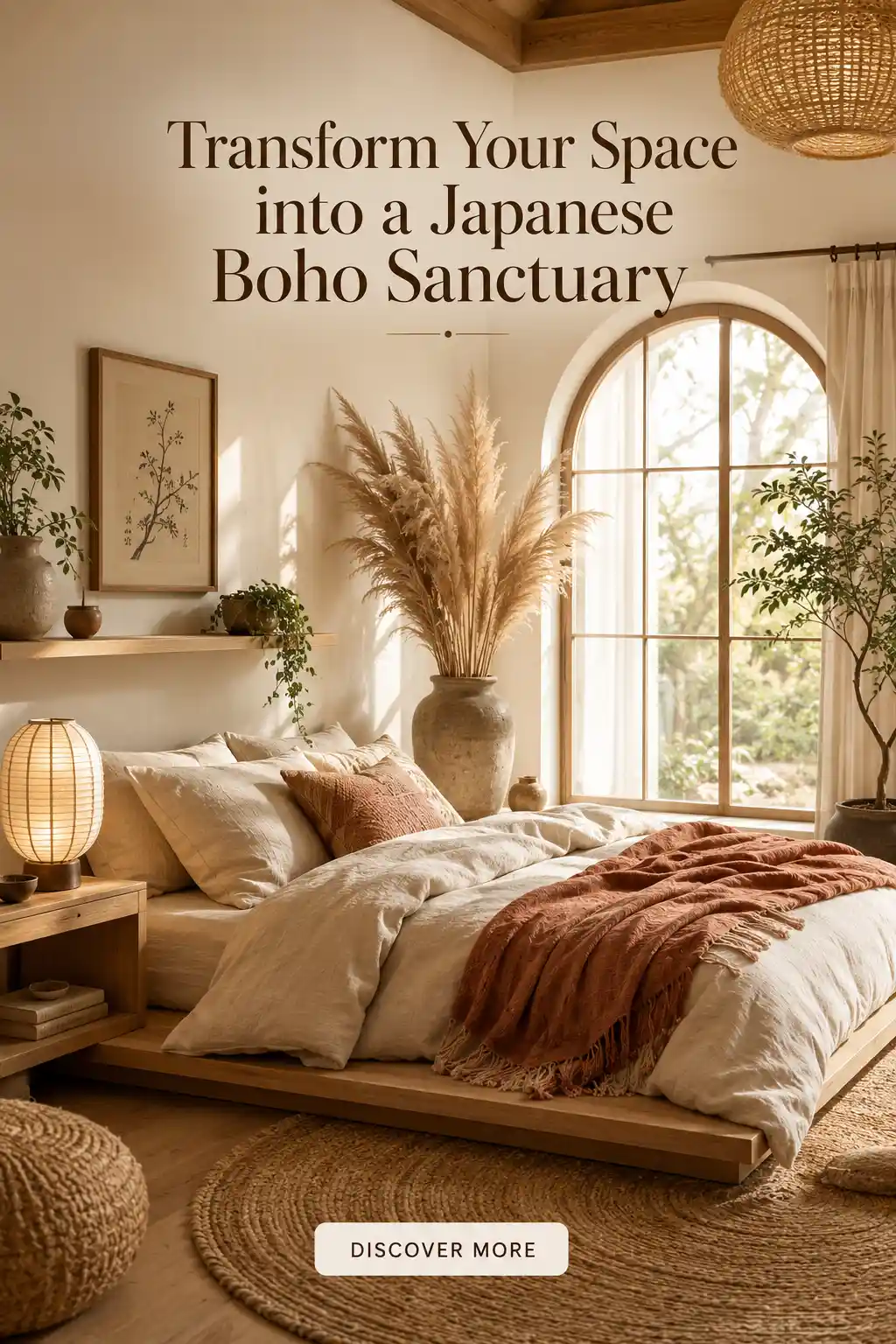
Creating a sanctuary that balances the disciplined minimalism of Japanese design with the free-spirited warmth of Bohemian style results in a stunning aesthetic known as Japanese Boho. This fusion emphasizes natural materials, a neutral color palette, and a deep connection to nature, turning your bedroom into a tranquil haven. Whether you are looking to declutter your space or add tactile warmth to a modern room, these ideas will help you achieve a harmonious balance of Zen and cozy comfort.
Embrace the Low-Profile Platform Bed
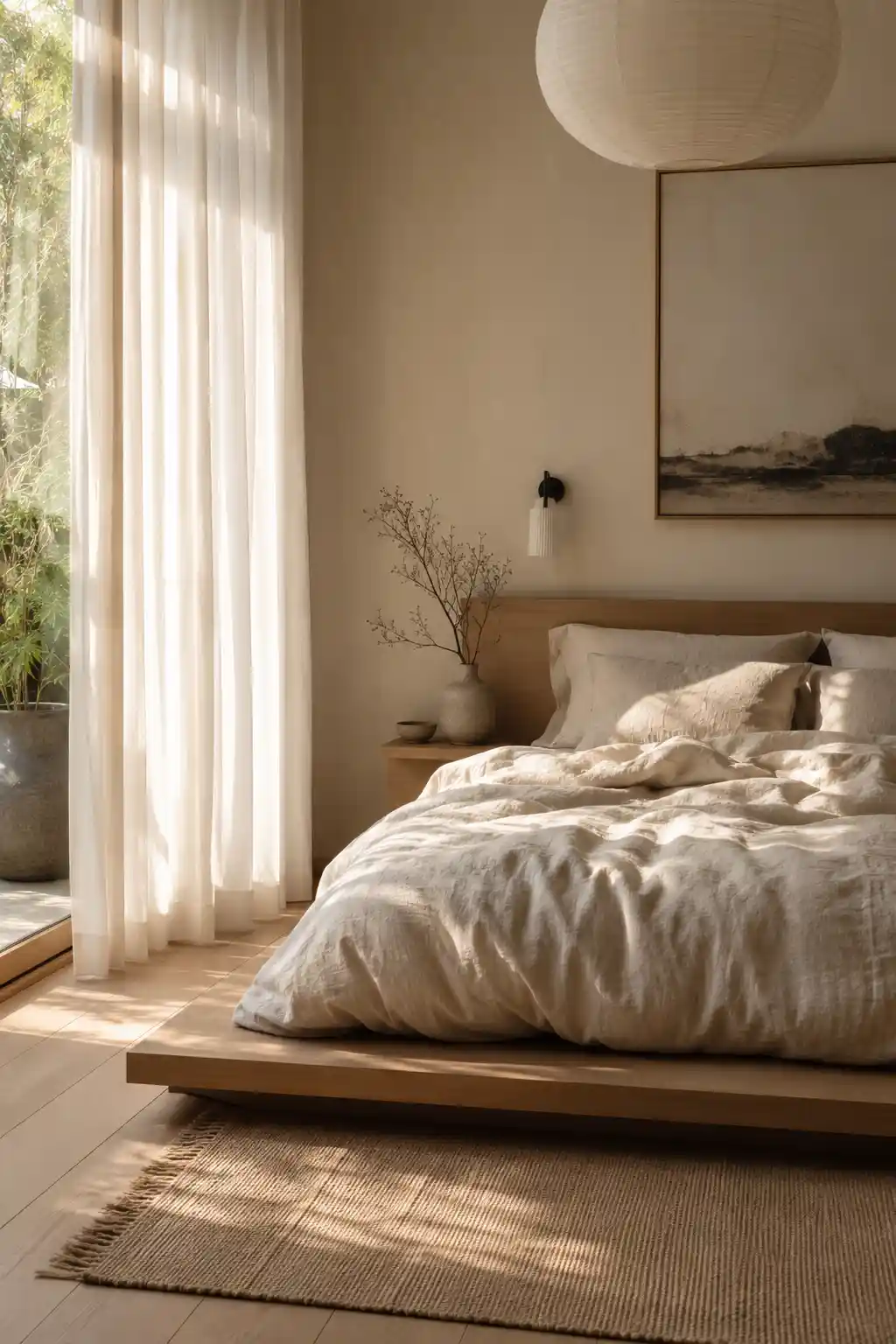
One of the most defining characteristics of a Japanese-inspired bedroom is the emphasis on being grounded. By incorporating a low-profile platform bed, you instantly lower the visual center of gravity in the room, creating an immediate sense of calm and openness. To lean into the boho side of this aesthetic, layer the bed with oversized linen duvets in oatmeal or sand tones and add a chunky knit throw for tactile contrast. This setup not only honors the Zen philosophy of simplicity but also provides the cozy, lived-in feel that makes Bohemian design so inviting.
Integrate Natural Rattan and Bamboo Accents
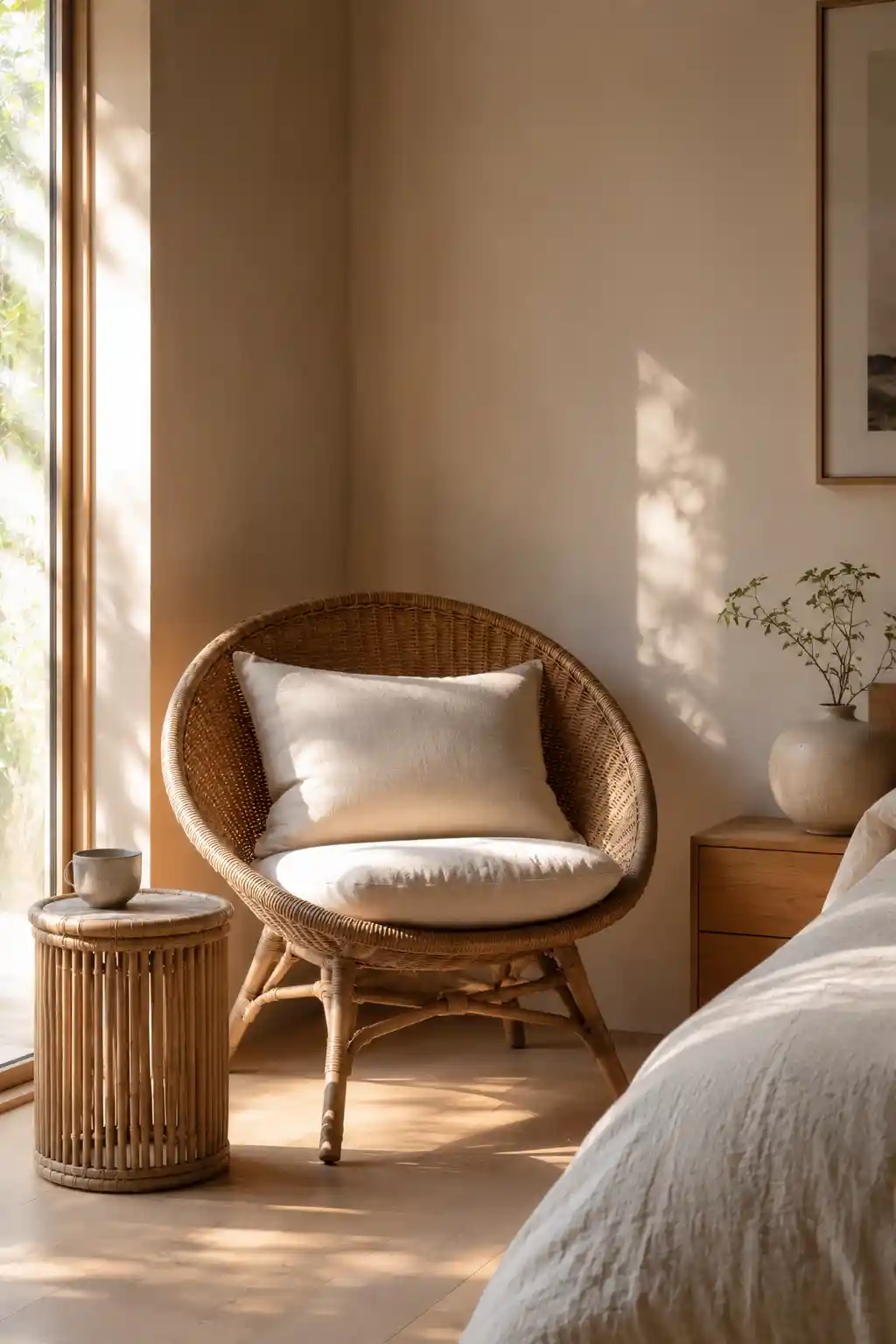
To bridge the gap between minimalist Japanese lines and eclectic boho vibes, look toward natural fibers like rattan and bamboo. These materials introduce an organic, handcrafted quality that prevents a minimalist room from feeling too sterile. Consider adding a woven rattan headboard or a set of bamboo shelving to house your favorite books and trinkets. The warm, golden hues of these materials complement a neutral color palette perfectly, adding a layer of warmth and artisanal charm that encourages relaxation and mindfulness in your private sanctuary.
Curate a Muted Earth-Toned Color Palette
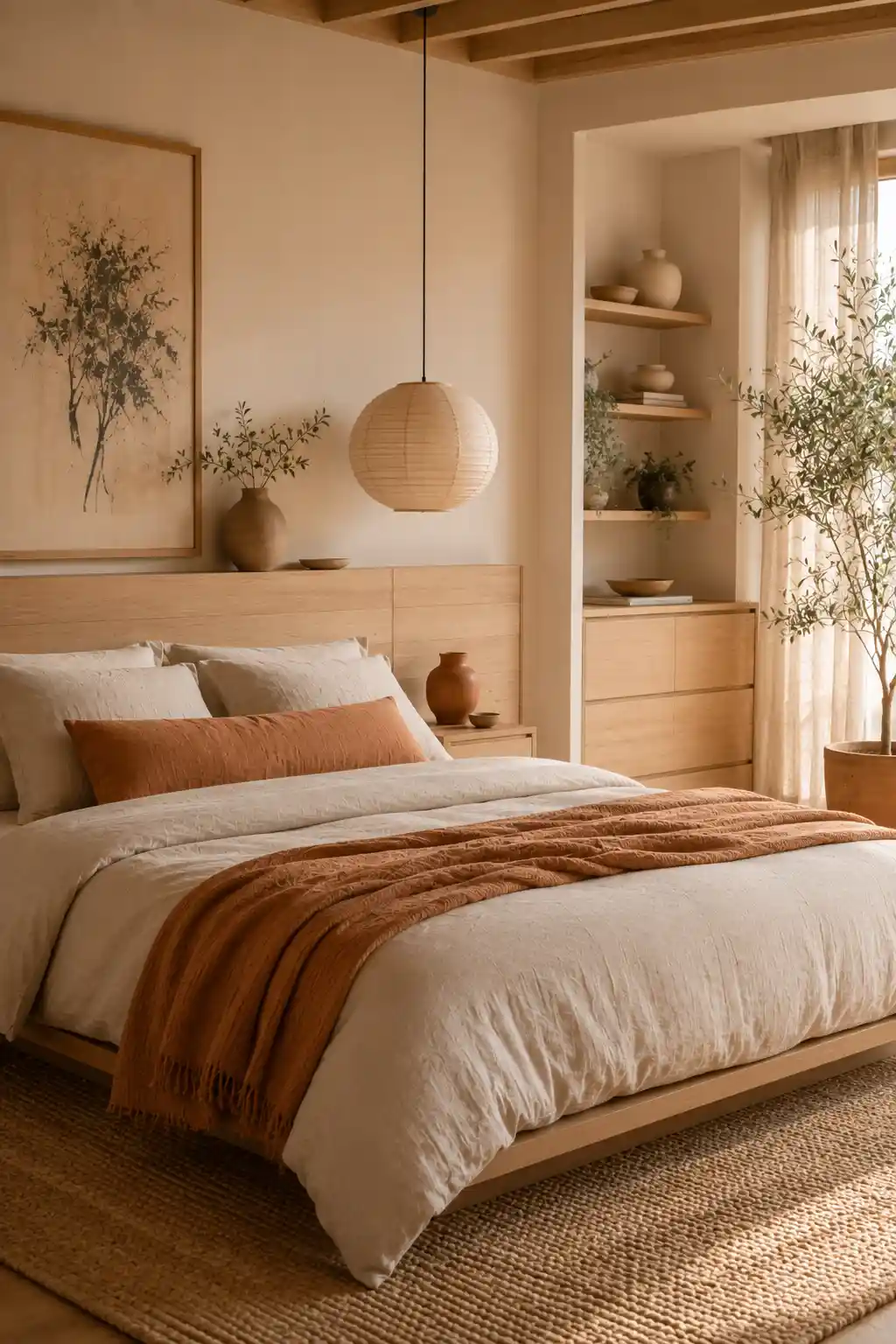
Color is the invisible thread that ties the Japanese Boho look together. Move away from stark whites and embrace a palette of warm neutrals, such as cream, beige, and taupe, accented by earthy tones like muted terracotta, sage green, or soft ochre. This combination reflects the natural world and promotes a feeling of serenity. By keeping the primary colors light and airy, you maximize the perceived space of the room, while the deeper earth tones provide the grounding energy necessary for a restful night’s sleep.
Soften the Mood with Washi Paper Lighting
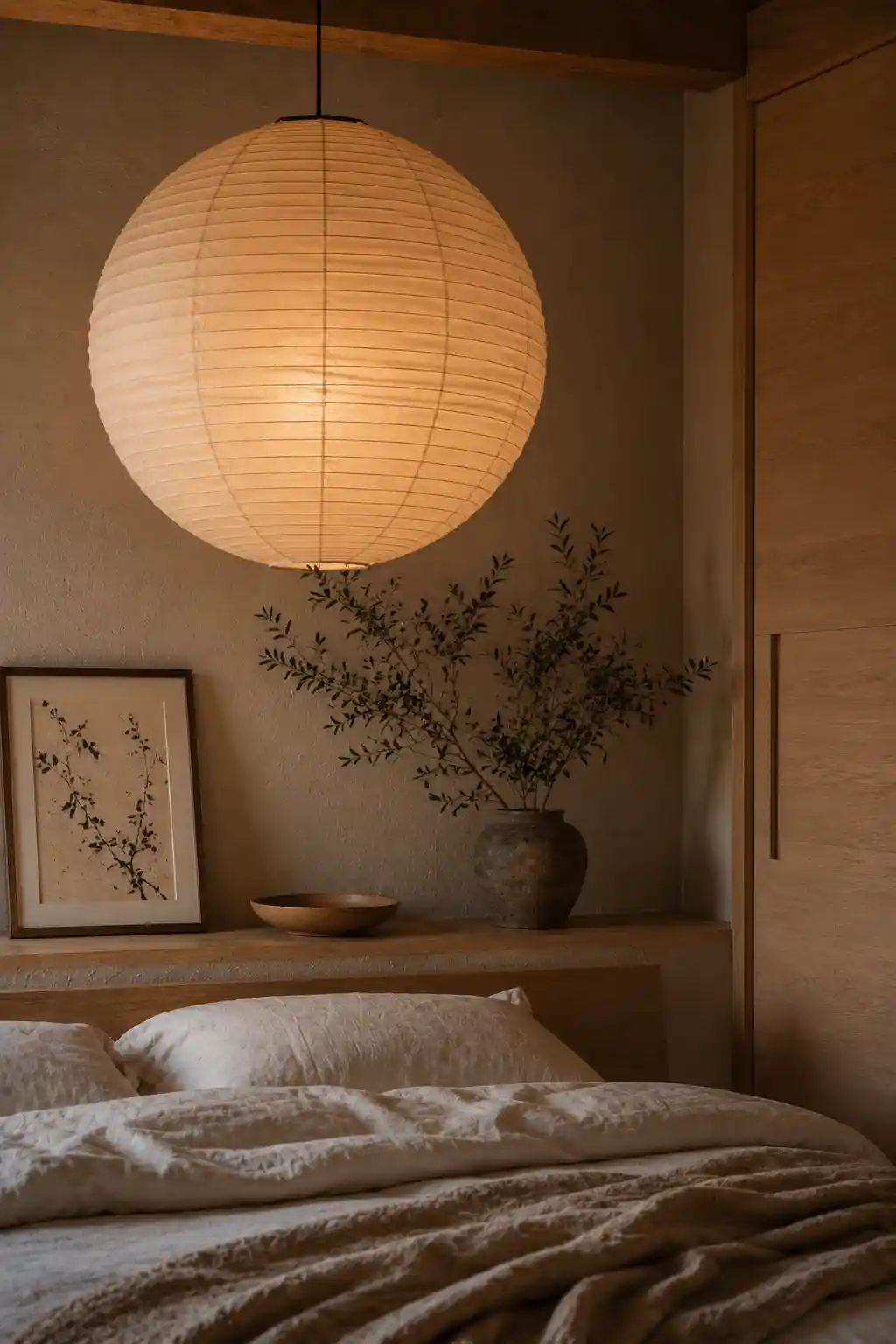
Lighting plays a pivotal role in establishing the mood of a Zen space. Traditional Japanese washi paper lamps provide a soft, diffused glow that eliminates harsh shadows and creates an ethereal atmosphere. For a boho twist, choose oversized pendant lights or a collection of varied-sized floor lamps to create a layered lighting scheme. This gentle illumination mimics the softness of moonlight, making the bedroom feel intimate and cozy, which is essential for winding down after a long day in a fast-paced world.
Bring Nature Indoors with Mindful Greenery
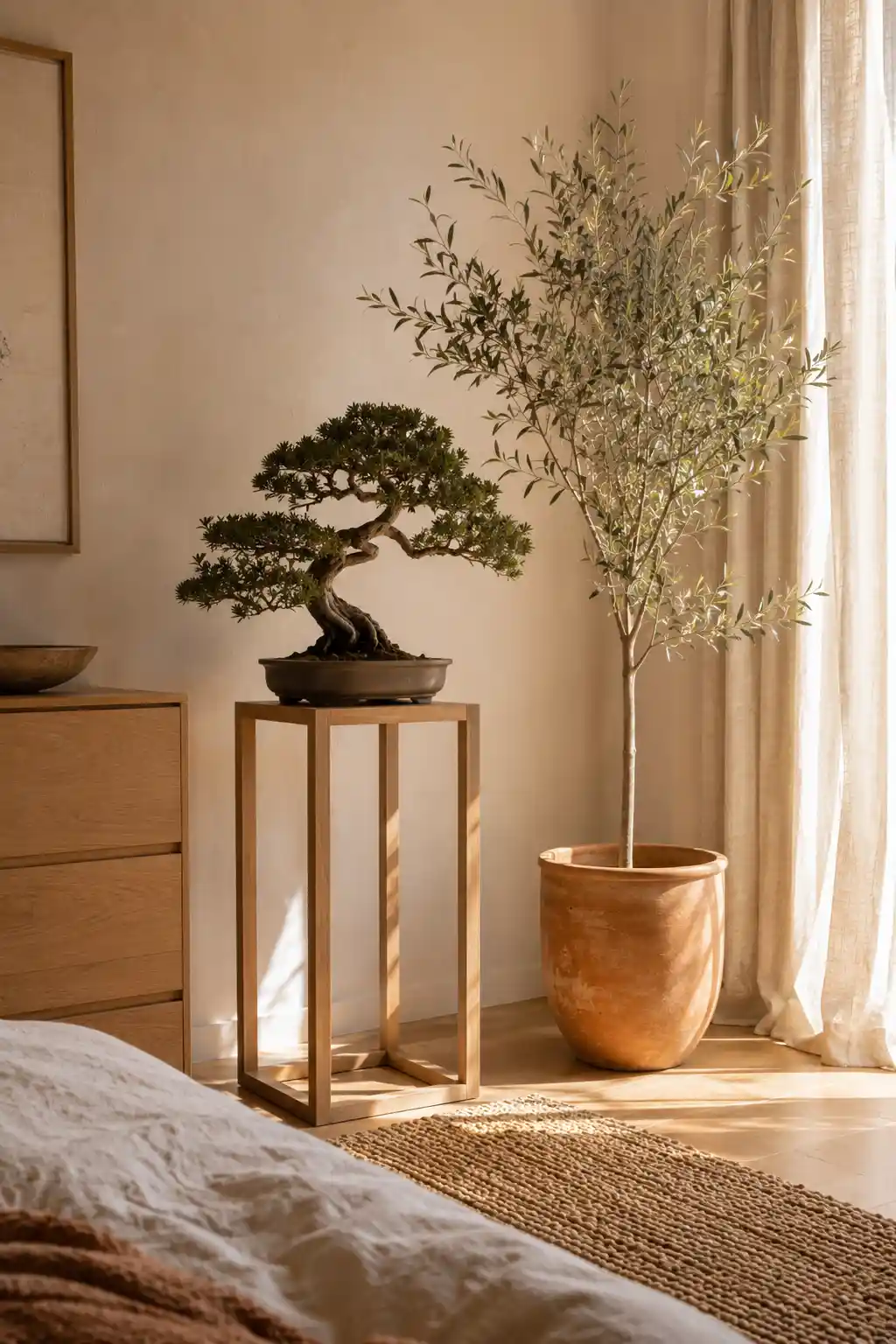
Bringing elements of the outdoors inside is a core tenet of both Japanese and Bohemian design. In a Japanese Boho bedroom, this is achieved through mindful greenery. A single, well-placed bonsai tree brings a sense of discipline and art, while a larger, leafier plant like a fiddle leaf fig or an olive tree adds the wild, lush energy of boho style. Not only do plants purify the air, but their organic shapes break up the straight lines of minimalist furniture, adding life and vitality to the space.
Layer Organic Textiles for Tactile Comfort

Texture is where the Bohemian influence truly shines in a Japanese-style room. To avoid the space feeling flat, layer different organic textiles. Start with a base of crisp organic cotton sheets, add a breathable linen duvet, and finish with a hand-woven cotton throw or a faux-fur rug for added warmth. Mixing these materials creates a sensory experience that feels luxurious yet humble. The contrast between the smooth linens and the rougher weaves provides a visual and physical richness that makes the bed the ultimate destination for comfort.
Define Spaces with Shoji-Inspired Dividers
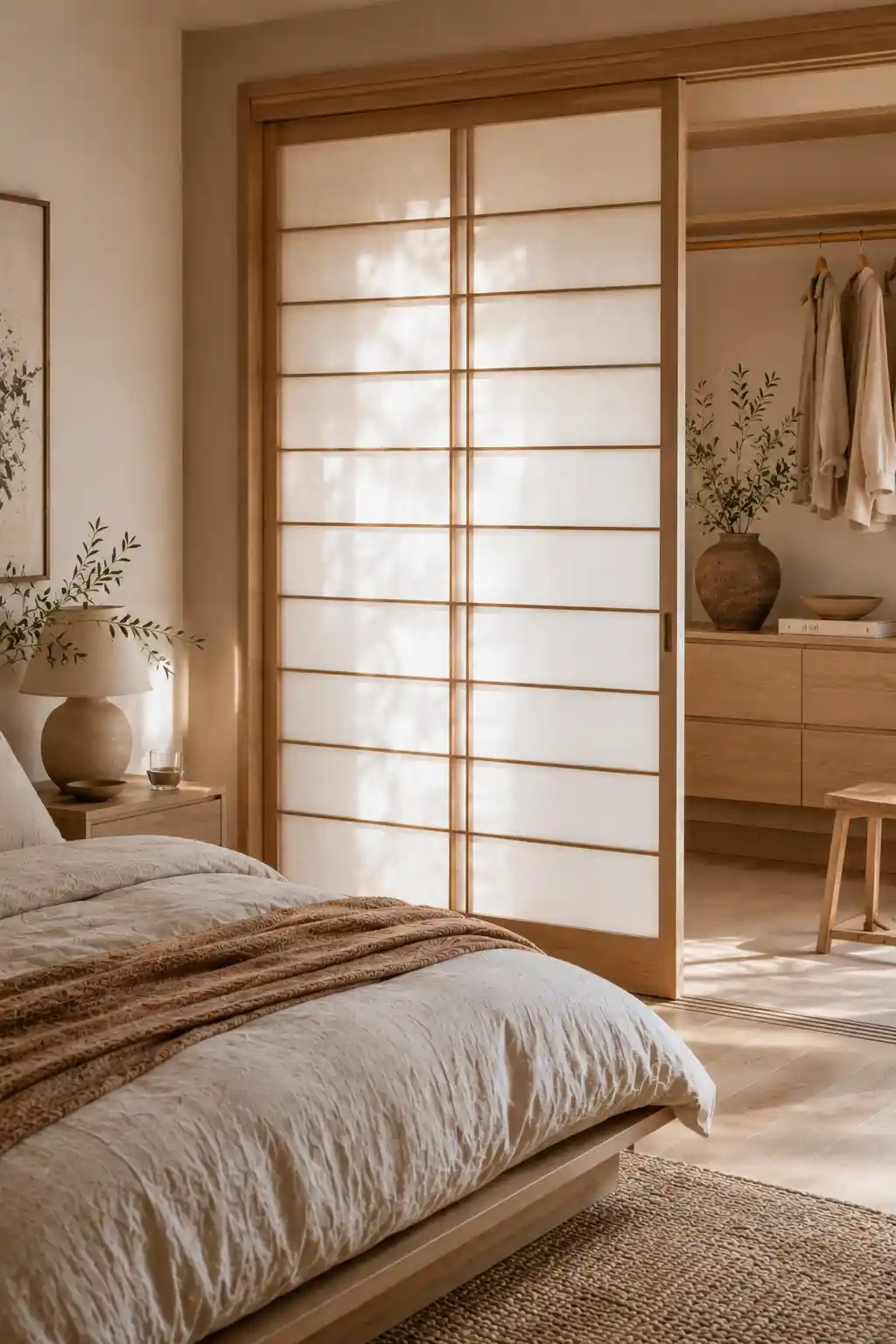
If you have a larger bedroom, using Shoji-inspired room dividers is an excellent way to create functional zones without blocking light. These sliding screens, characterized by wooden grids and translucent paper, provide a sense of privacy and architectural interest. To give them a boho edge, you can hang a few delicate macramé accents or a small trailing plant from the top rail. This design choice maintains the airy feel of the room while introducing a structured element that feels both traditional and contemporary.
Ground the Room with Woven Jute Rugs
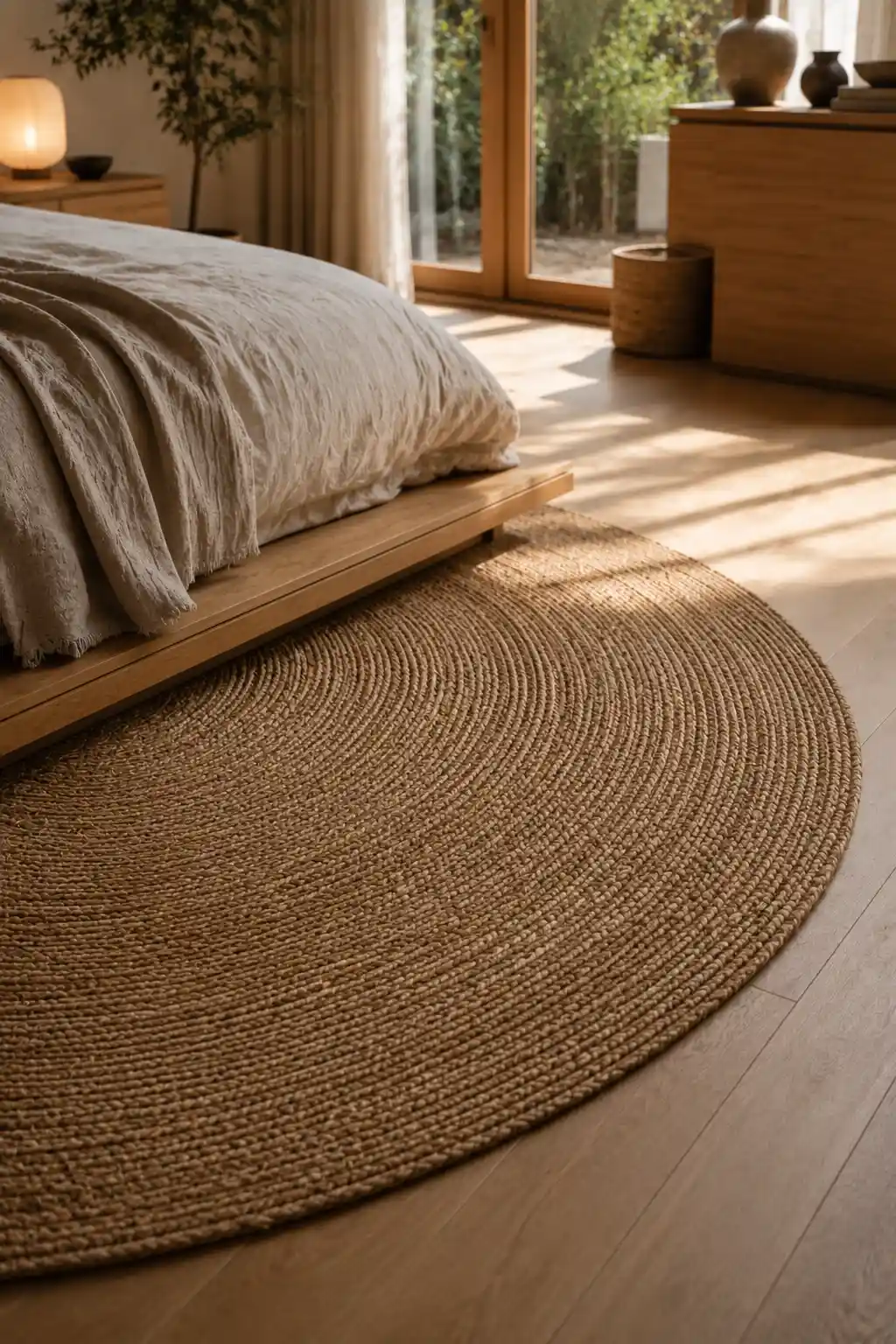
A large, woven jute or sisal rug is the perfect foundation for a Japanese Boho bedroom. These rugs provide a coarse, natural texture that contrasts beautifully with soft bedding and smooth wooden floors. Choosing a circular rug can help soften the linear geometry of the room, adding a more fluid, bohemian energy. Jute is not only durable and sustainable but also brings a sandy, beachy vibe that enhances the earthy color palette, making the entire room feel more connected to the natural environment.
Incorporate Wabi-Sabi Ceramic Decor

Embrace the beauty of imperfection through the philosophy of Wabi-Sabi. Instead of seeking flawless, mass-produced items, curate a few pieces of asymmetrical, handcrafted ceramic decor. A slightly irregular vase, a hand-molded incense holder, or a stone tray adds a layer of authenticity and soul to the bedroom. These pieces serve as focal points that celebrate the natural aging process and the human touch, preventing the minimalist Japanese influence from feeling too rigid or clinical.
Utilize Open Wooden Storage Systems
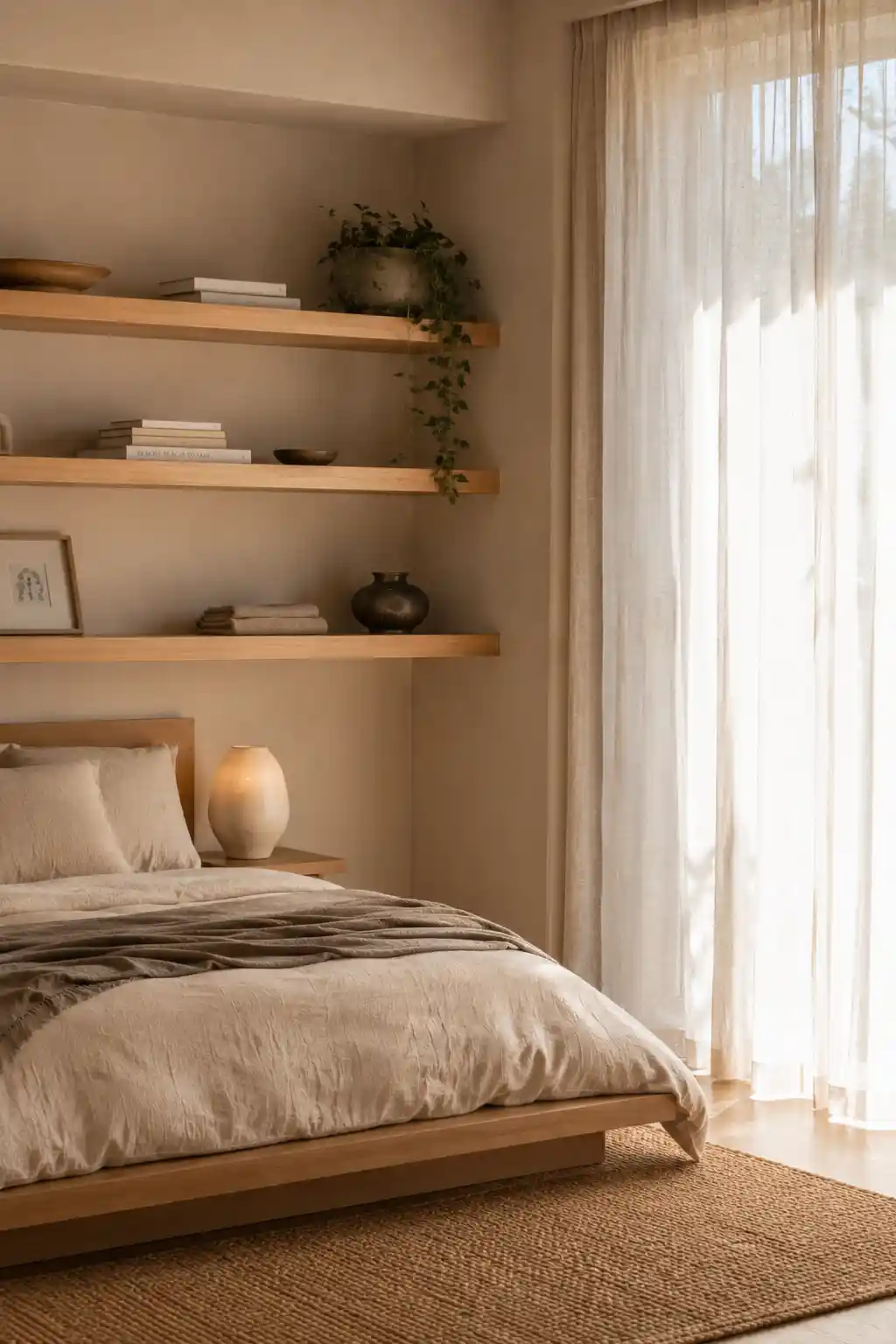
Clutter is the enemy of Zen, but total emptiness can feel cold. The solution is open wooden storage that allows you to display a few meaningful items while keeping the space tidy. Floating shelves in light ash or oak wood provide a clean, architectural look. By limiting the number of items on display—following the ‘less is more’ approach—you create a gallery-like feel. Combine this with woven baskets for hidden storage to maintain the boho charm while adhering to the Japanese principle of functional minimalism.