
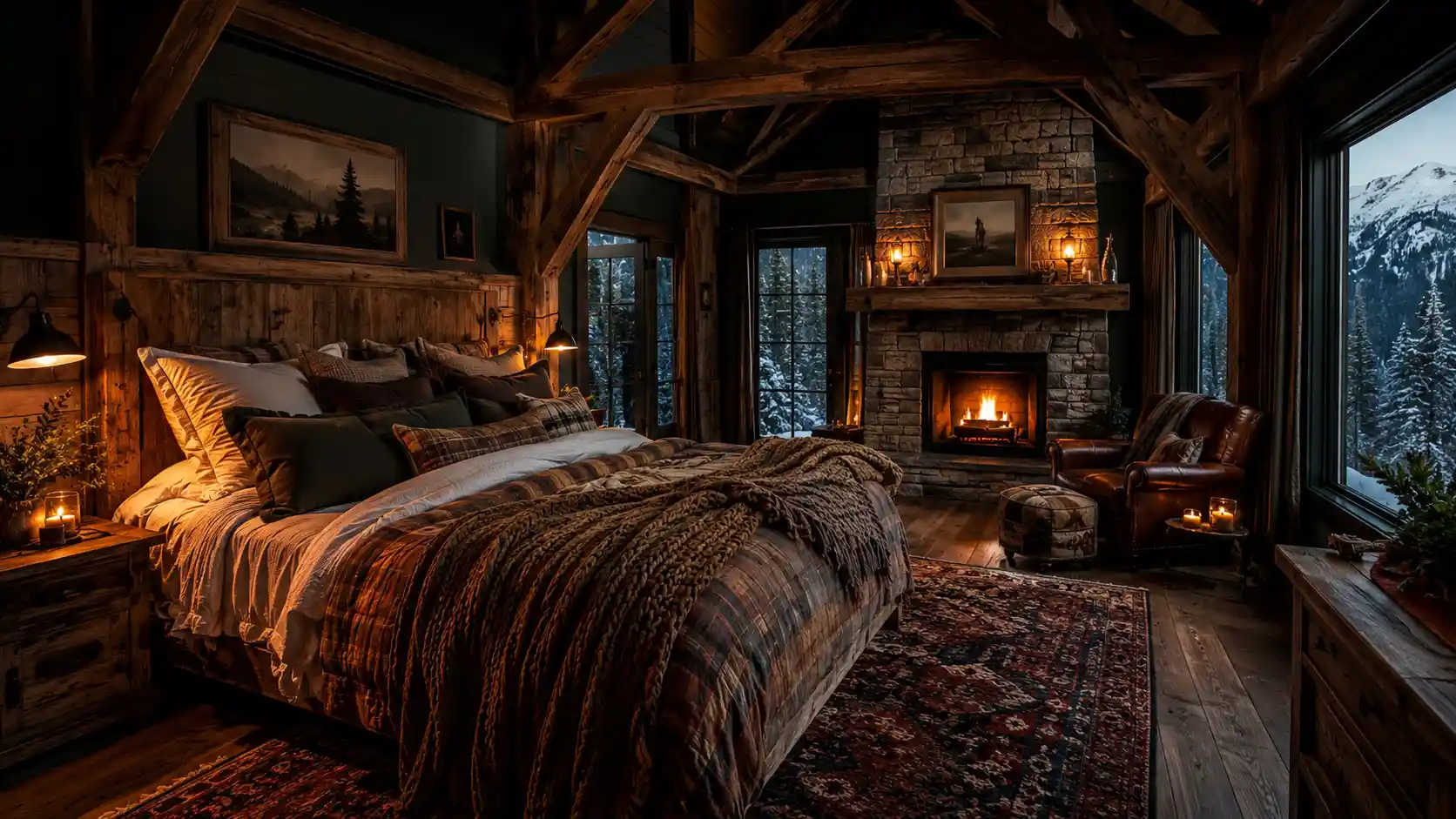
10 Cozy Cabin Bedroom Ideas (That Actually Feel Authentic)
There is a very specific, heavy kind of quiet you only find in a cabin. The kind where the temperature drops outside, the wood stove pops, and suddenly, the rest of the world just stops mattering.
You can’t easily bottle that feeling. But you can absolutely build it.
If you are hunting for cozy cabin bedroom ideas, you probably already know what you want. You want an escape. A sanctuary. A room that forces you to slow down the second you walk through the door.
But here’s where most people get it wrong: they think throwing a red flannel blanket over a mattress and hanging a plastic deer head on the wall gets the job done. It doesn’t. True rustic charm isn’t a theme park aesthetic. It’s about texture, warmth, and a deep connection to nature.
Before we look at the specific elements that actually work, let’s break down the foundation.
The Anatomy of a Woodsy Escape
Almost nobody talks about the underlying rules of rustic design. They jump straight to the decor. But if your foundation is off, nothing you put in the room will feel right.
- Kill the bright whites. Stark white walls feel clinical. Instead, push your palette into earthy territory. We’re talking muddy greens, deep charcoals, rich espresso browns, and warm, toasted neutrals.
- Contrast is everything. A cozy space needs friction. Pair rough, raw wood with ridiculously soft wool. That contrast is what makes the soft things feel even softer.
- Hide the modern world. A cabin retreat shouldn’t feature a tangle of glowing phone chargers and harsh plastics. Use woven baskets, old leather trunks, or heavy wooden nightstands to hide the clutter of daily life.
Now, let’s look at the exact details that will completely change the atmosphere of your room.
1. Build “Heavy” Layers of Bedding
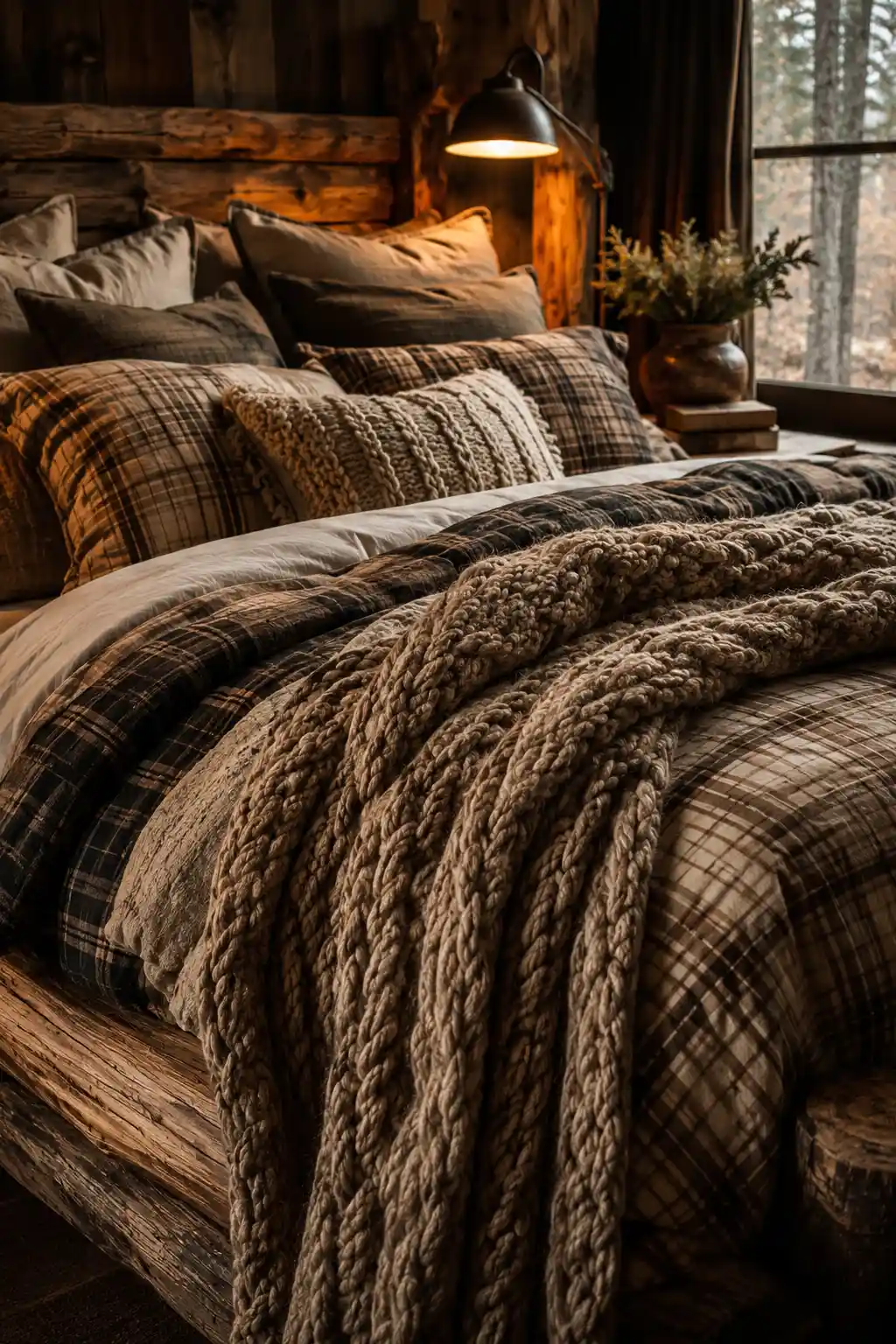
Here’s a secret about hotel beds versus cabin beds. Hotels focus on crisp, tight sheets. Cabins need weight.
There is something psychologically comforting about heavy blankets. Start with brushed cotton or flannel sheets. Then, add a thick, down-filled duvet. Finish it off by tossing a chunky, oversized knit throw across the foot of the bed. Don’t fold it perfectly. Let it look a little lived-in. The goal is a bed that practically begs you to fall into it.
2. Introduce Raw, Imperfect Wood
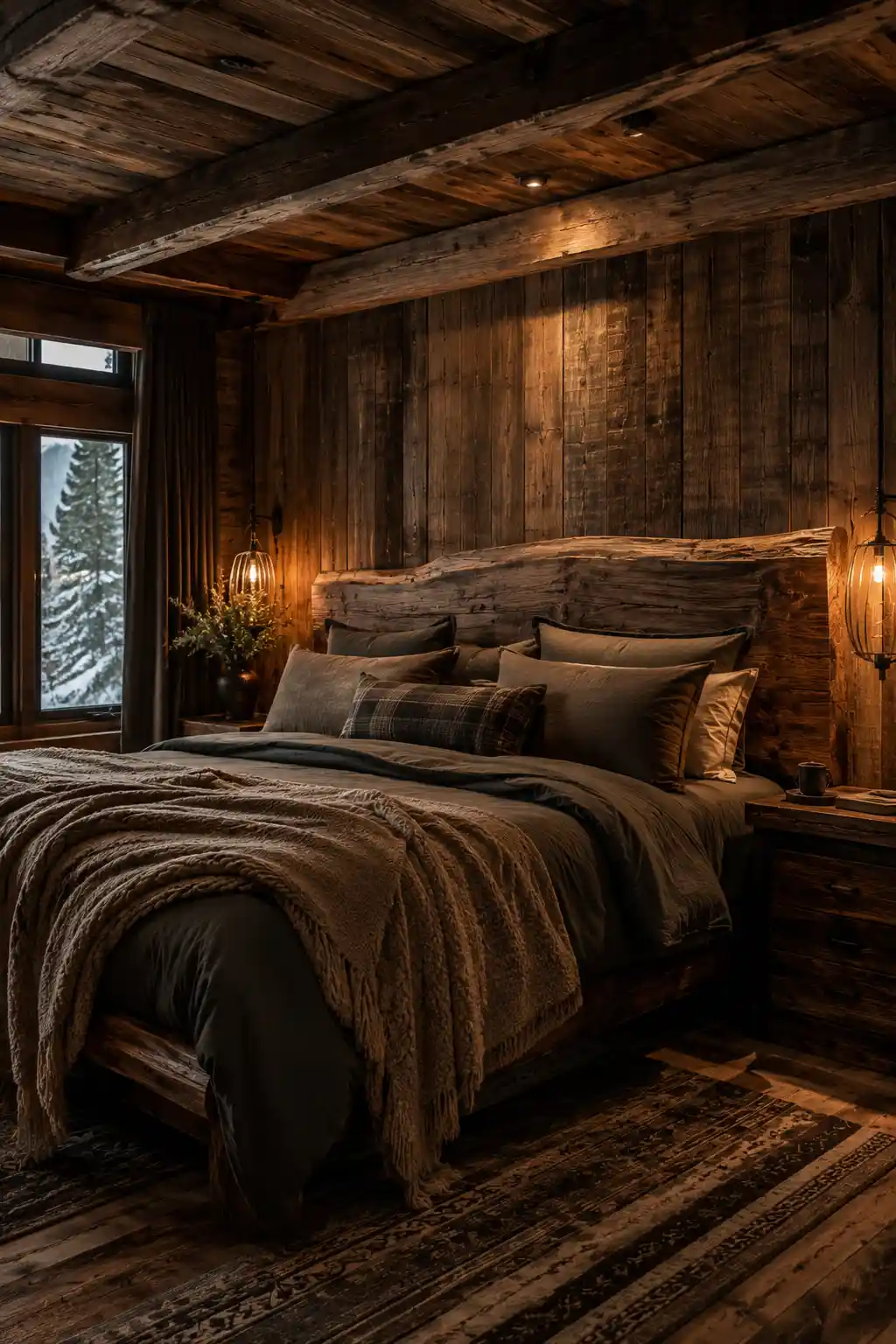
This changes the entire picture. If your room is currently drywall and carpet, adding real wood is non-negotiable.
But skip the cheap, glossy laminate. You want wood with history. Think rough-hewn ceiling beams, a reclaimed wood headboard, or a strategically placed accent wall of dark shiplap. The knots, scratches, and grain variations aren’t flaws—they are the whole point. Wood absorbs sound and warms up the visual temperature of a room instantly.
3. Ban Overhead Lighting
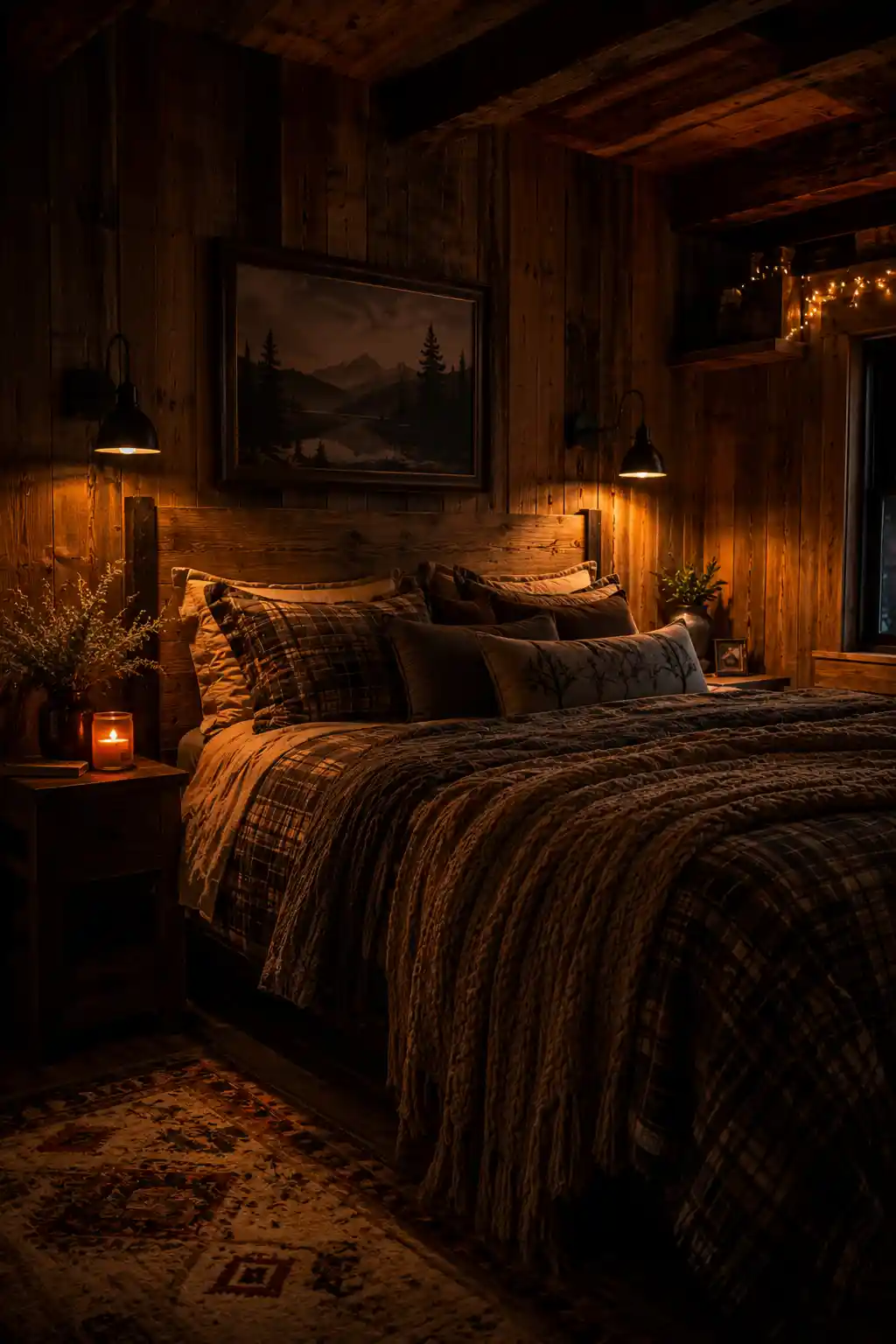
I’ll say it: overhead lighting is the enemy of a cozy atmosphere. It flattens the room and kills the mood.
To get that authentic cabin glow, you have to keep your light sources low to the ground. Use heavy, textured bedside lamps with amber bulbs. Mount a pair of matte black or brass sconces near the bed. Even a string of warm fairy lights draped casually over a mirror works wonders. You want pools of soft, dimmable light, not a spotlight.
4. Fake (or Fix) a Fireplace
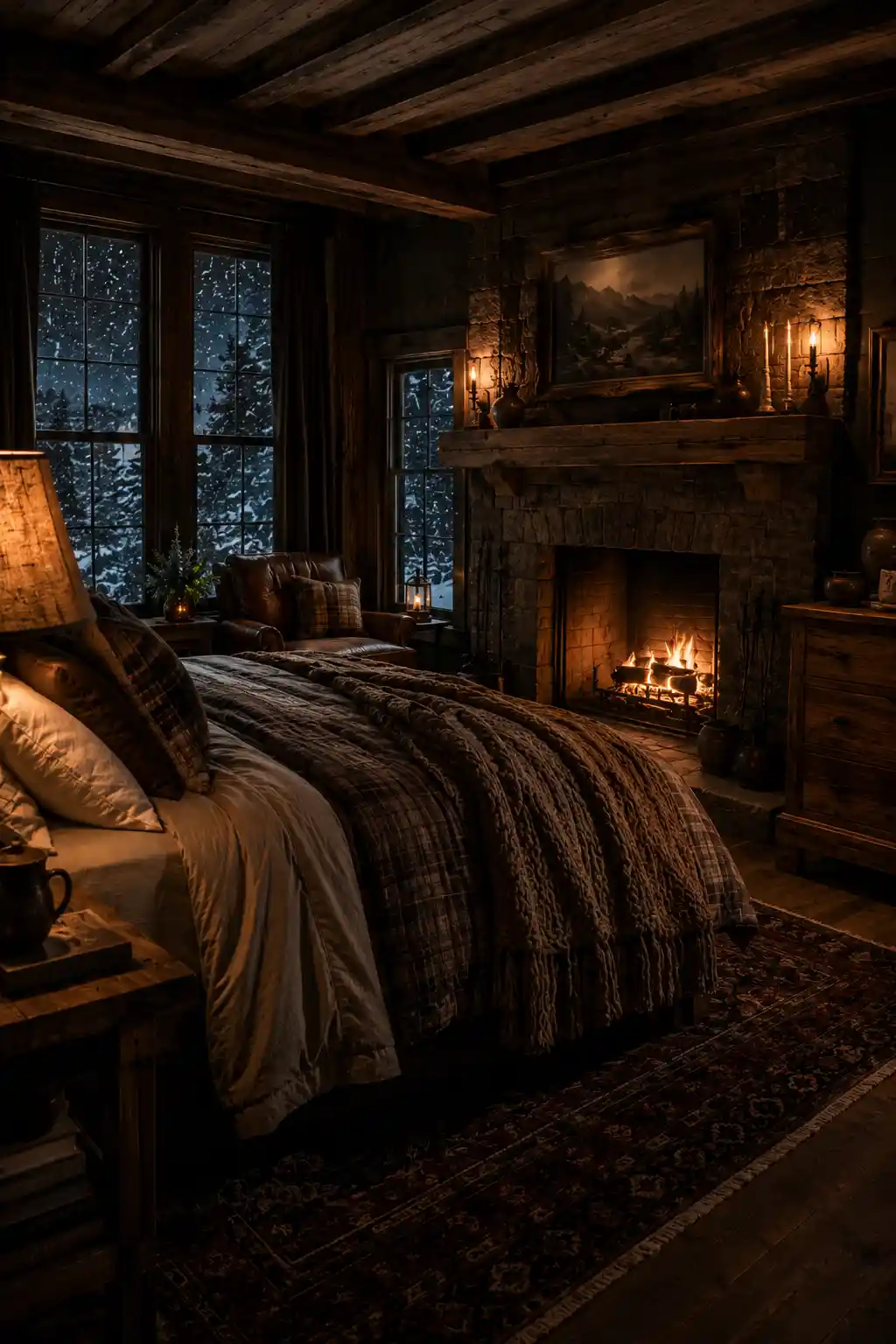
At first glance, it sounds impossible to just “add” a fireplace to a bedroom. It isn’t.
If you have the budget for a real stone hearth, do it. But if you don’t? A high-quality electric fireplace stove tucked into a corner changes the room’s entire dynamic. Even a heavy, antique wooden mantel mounted to the wall with a cluster of thick, varying-height pillar candles inside the faux hearth creates that mesmerizing, flickering focal point every cabin needs.
5. Fix the Cold Floor Problem
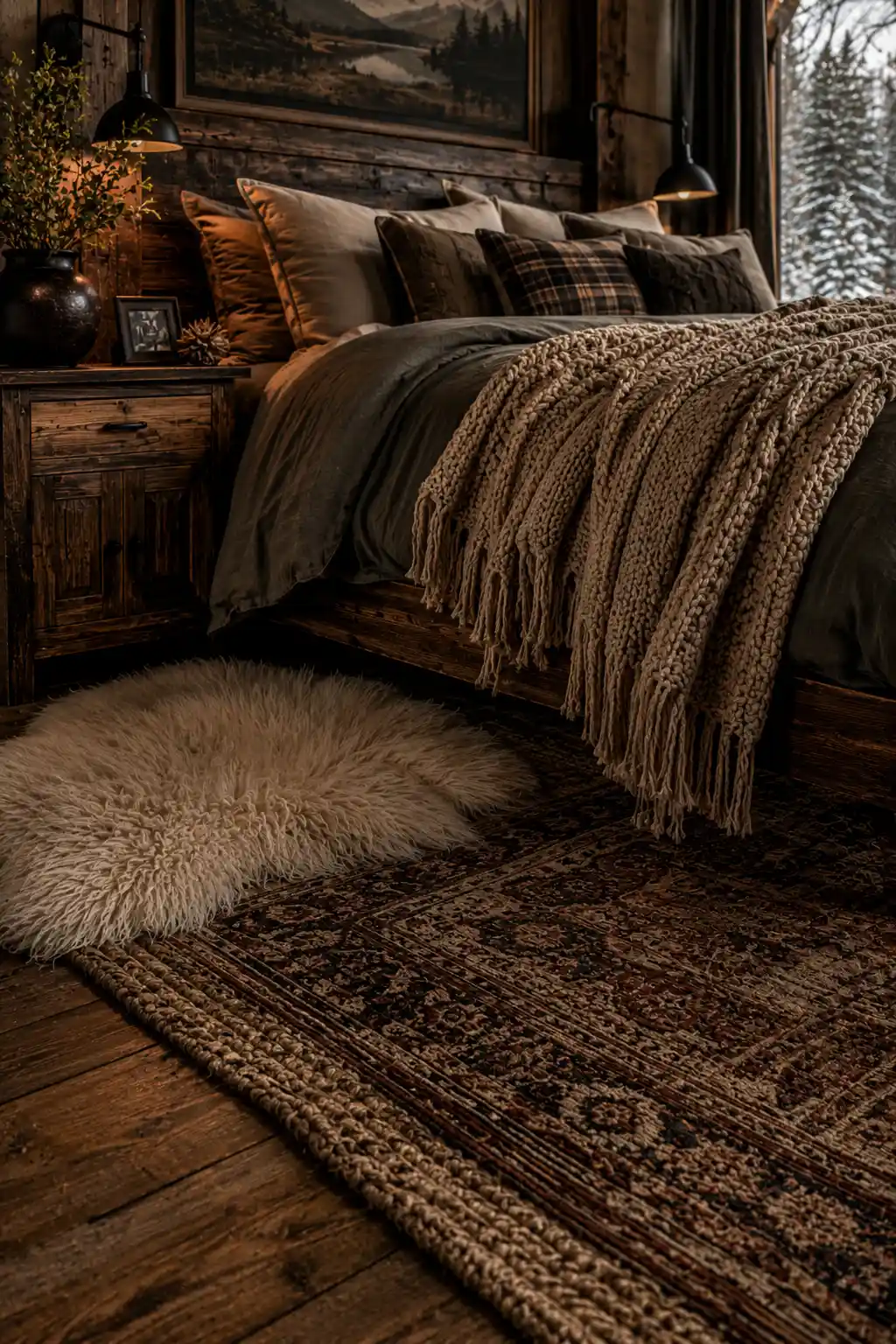
Nothing ruins a relaxing morning faster than stepping out of a warm bed onto freezing hardwood or thin, uninspired carpet.
Layering rugs is a game-changer here. Start with a massive, heavy jute or thick wool rug to anchor the bed. Then, layer a smaller, ridiculously soft faux sheepskin right where your feet hit the floor in the morning. It’s a tiny detail that makes a massive difference in how the room feels to actually live in.
6. Subtly Nod to the Outdoors
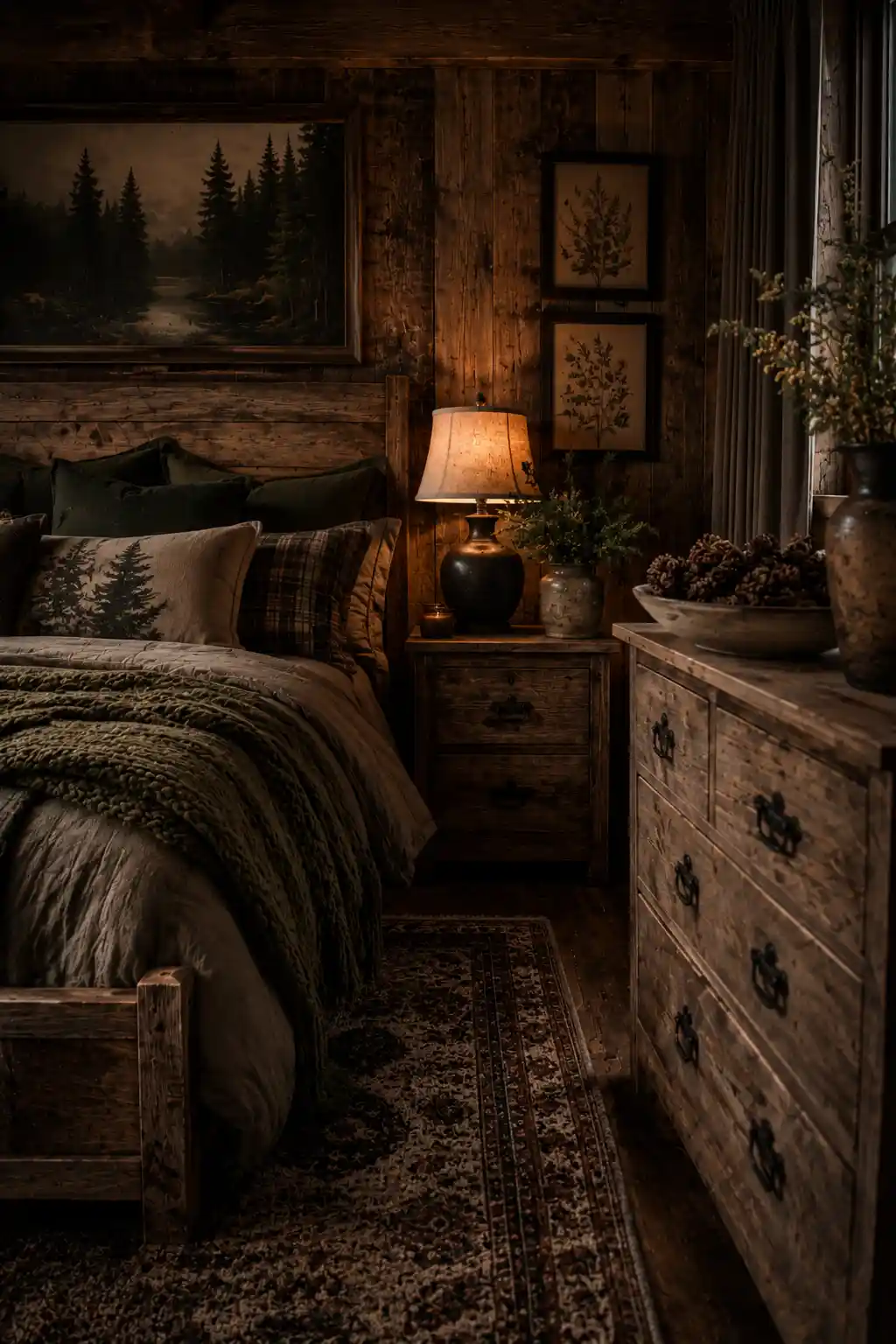
Notice the word subtly. You don’t need a life-sized bear statue.
Instead, bring in quiet, natural elements. Framed vintage botanical prints. A ceramic bowl filled with genuine pinecones. Heavy cast-iron drawer pulls. A moody, dark oil painting of a forest landscape leaning against the dresser. These quiet touches anchor the room in nature without feeling kitschy.
7. Scavenge for Vintage Anchors
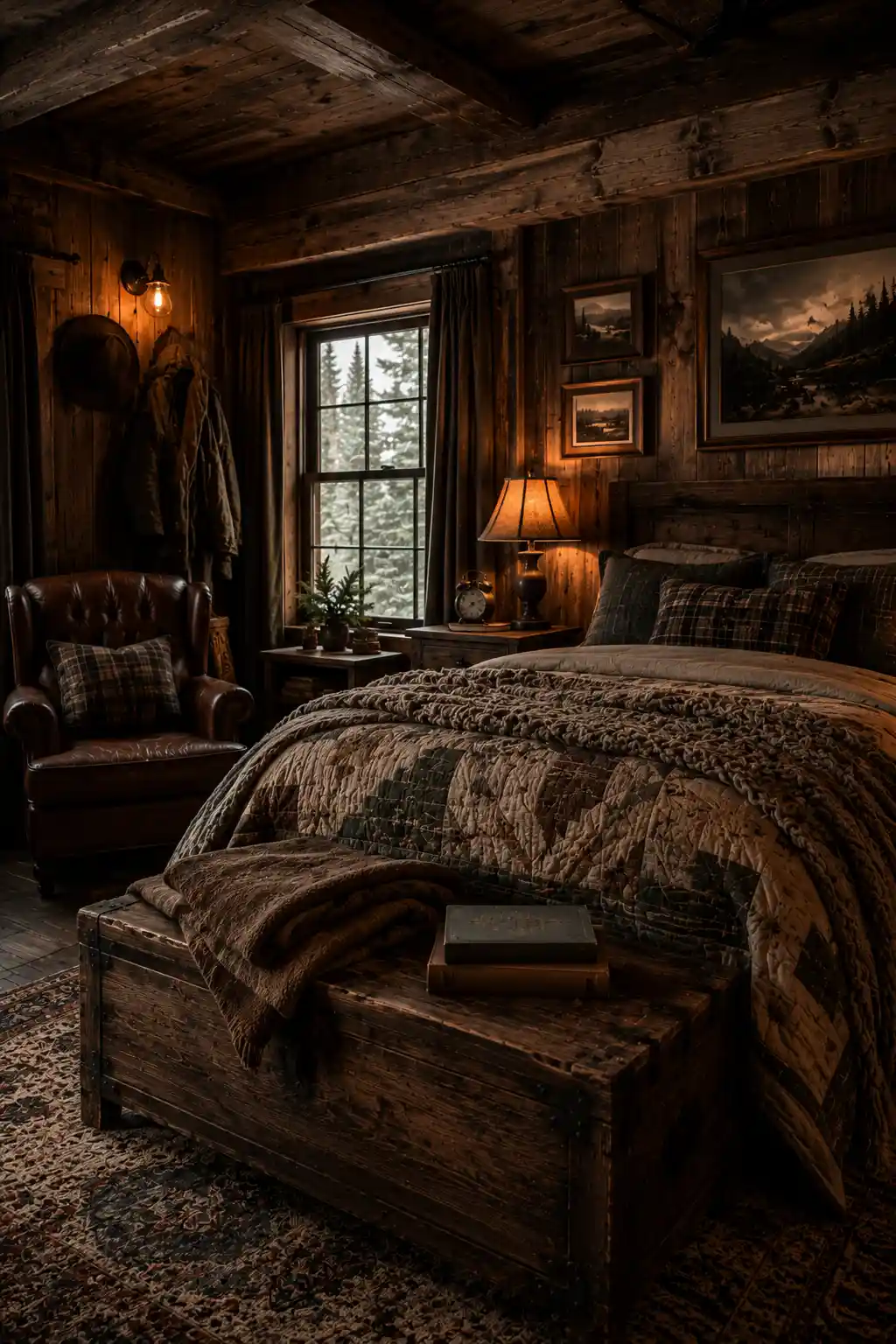
New furniture rarely feels cozy. It lacks soul.
To make your bedroom feel like a cabin that’s been in the family for generations, you need a few pieces that show their age. Scour flea markets for an antique, battered leather armchair. Find a genuinely old, slightly scuffed wooden bench for the end of the bed. An old brass alarm clock or a handcrafted quilt handed down through the family provides a sense of history that money simply can’t buy at a big-box store.
8. Trap the Heat with Heavy Drapes
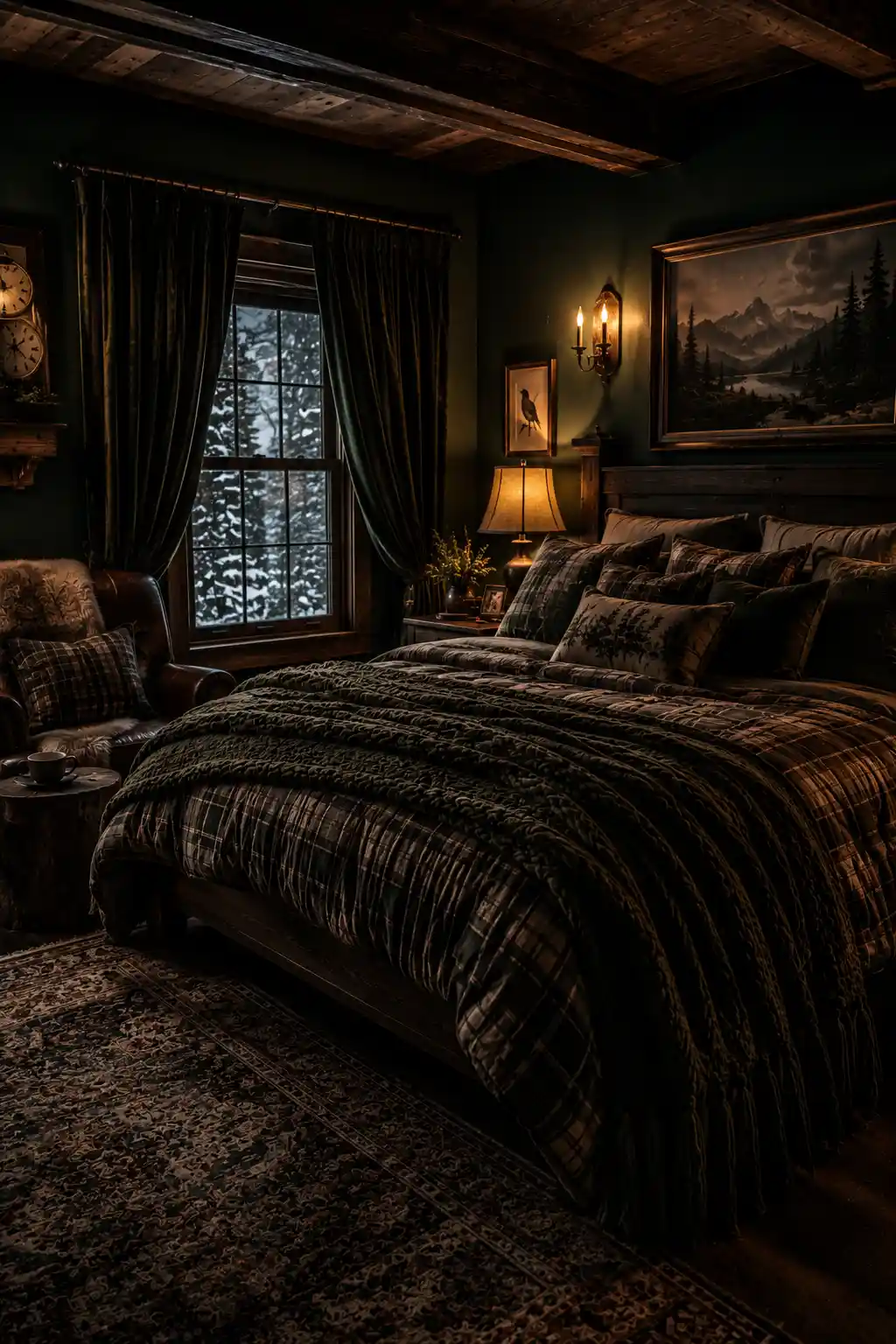
Most people miss this part entirely. Thin, breezy curtains belong in a beach house.
For a cabin aesthetic, you need weight. Hang thick, textured curtains—think heavy velvet, thick wool blends, or lined linen—in deep, moody colors. Not only do these block out early morning light for sleeping in, but they also physically trap heat and muffle outside noise, creating a cocoon-like environment.
9. Claim a Corner for Doing Nothing
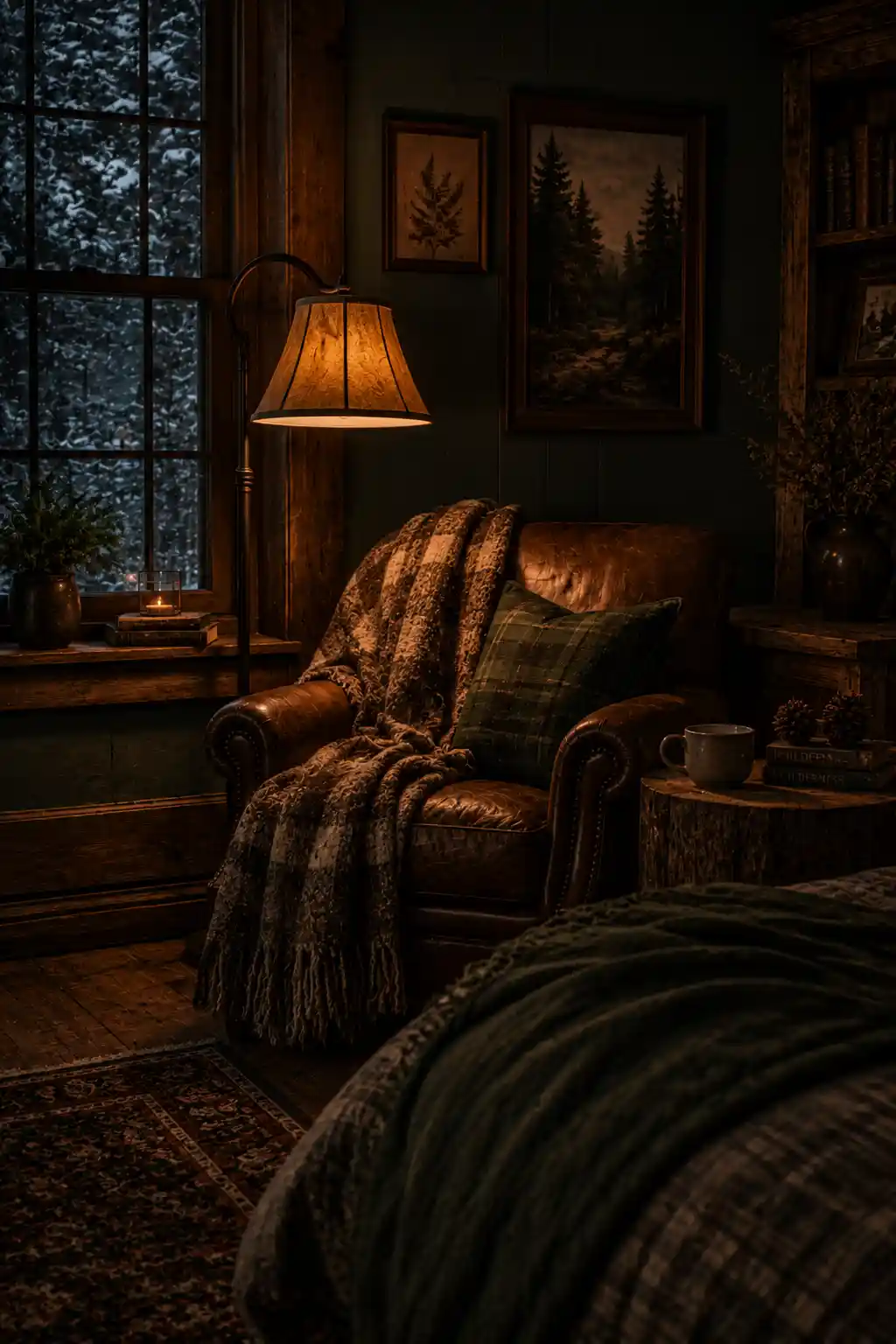
A true retreat isn’t just about sleeping. It’s about having a place to just sit.
If you have three square feet of extra space, build a reading nook. A worn leather or heavy tweed chair. A floor lamp casting a warm glow. A tiny wooden side table for a mug of black coffee or a glass of bourbon. It gives the room a secondary purpose and makes it feel like a private sanctuary.
10. Hijack the Brain with Scent
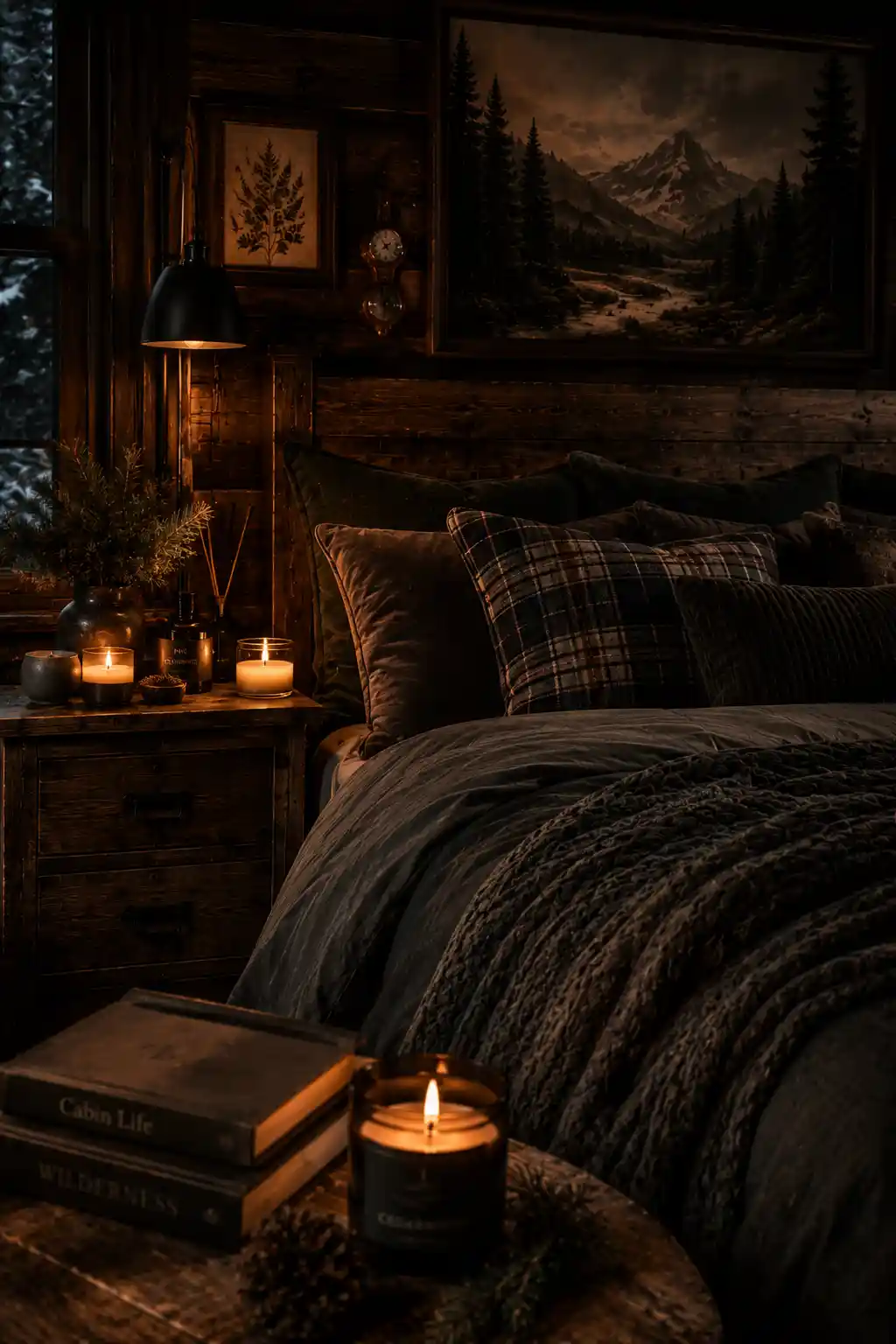
Here is where things get interesting. You can have all the flannel and wood in the world, but if the room smells like laundry detergent, the illusion shatters.
Scent memory is powerful. Use it. But skip the sickly-sweet artificial candles. Look for essential oil diffusers or high-quality soy candles with notes of smoked cedar, crushed pine needles, damp earth, and woodsmoke. When the room smells like a forest after a rainstorm, your brain instantly relaxes.
Frequently Asked Questions
How do I make a standard room look like a cabin?
Stop focusing on the architecture and start focusing on the materials. You don’t need log walls. Swap out your light and bright bedding for heavy, dark textiles. Bring in at least two pieces of raw, unpolished wood, and switch all your lighting to warm, low-wattage lamps.
What colors work best for a rustic aesthetic?
Look out a window in autumn. That’s your palette. Deep forest greens, burnt oranges, charcoal grays, rich mustard yellows, and heavy browns. Avoid anything pastel or overly vibrant.
Can a small bedroom pull off the cabin look?
Absolutely. In fact, small rooms often do it better because they naturally feel more enclosed. In a small space, lean heavily into dark, moody paint colors. It sounds counterintuitive, but painting a small room a dark, earthy green makes the walls recede and creates an incredibly snug, cave-like atmosphere.
How do you make a room feel warm without a fireplace?
It all comes down to visual temperature. Use thick, tactile fabrics like wool and faux fur. Rely on amber-toned lighting to cast a warm glow, and use rich, deep colors on the walls. The illusion of warmth is almost as effective as the real thing.
Creating a cozy cabin bedroom isn’t about buying a specific set of matching furniture. It’s an exercise in layering.
It’s about how the heavy wool blanket feels against your skin, the way the amber light hits the wood grain on your nightstand, and the quiet scent of pine hanging in the air. Build it slowly. Add pieces that have meaning. Get the lighting right. Once you nail those details, you won’t just have a place to sleep—you’ll have a reason to look forward to the end of every day.