
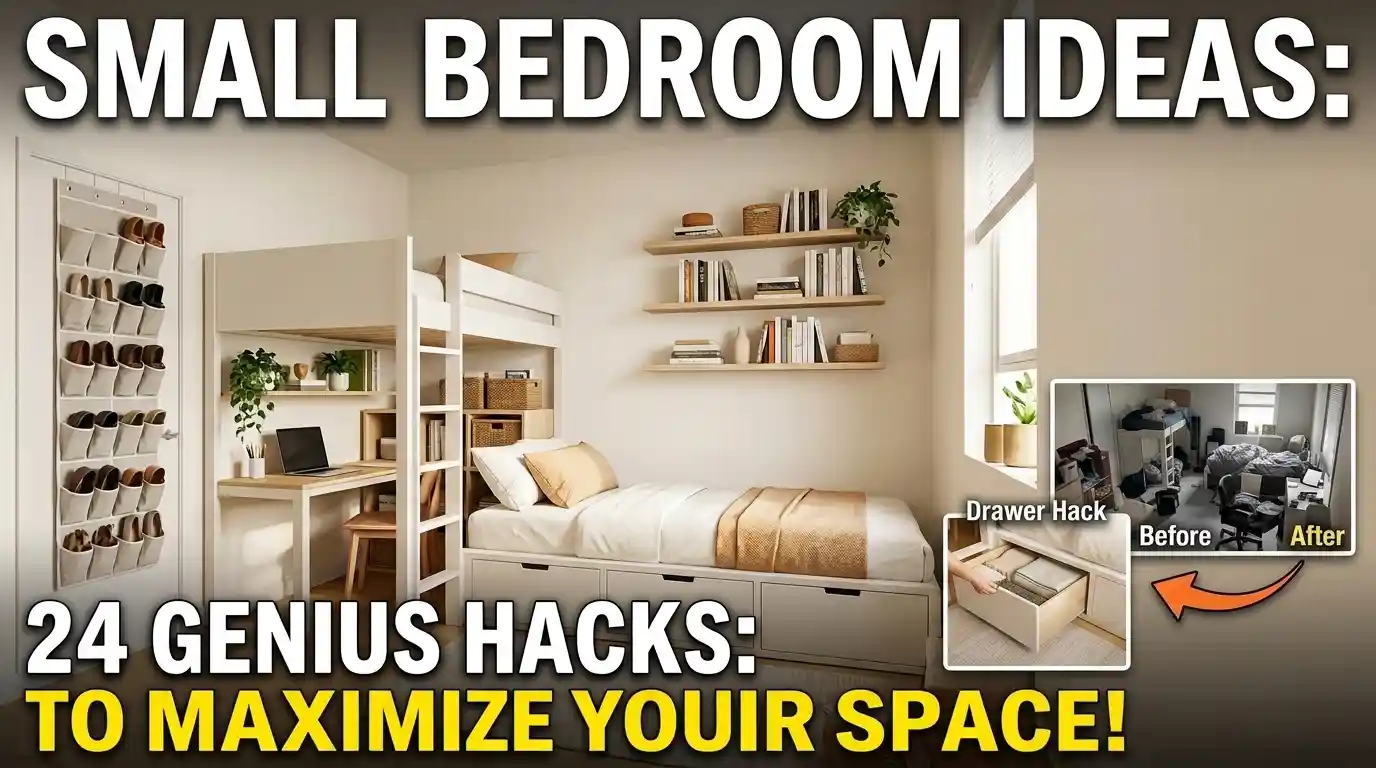
Let’s face it: a cramped bedroom can feel less like a personal sanctuary and more like a beautifully decorated walk-in closet. But here’s the secret most interior designers keep to themselves—square footage is just a number. It’s how your eye moves through the room that actually dictates how large it feels.
With some intentional space planning, multifunctional furniture, and a few clever visual tricks, you can turn even the tightest room into an airy, serene retreat. Whether you’re dealing with a quirky studio apartment, a micro-condo, or just a small bedroom ideas search that brought you here out of sheer desperation, these real-world ideas will help you maximize every square foot without sacrificing an ounce of style.
1. The Dual-Purpose Workspace Setup
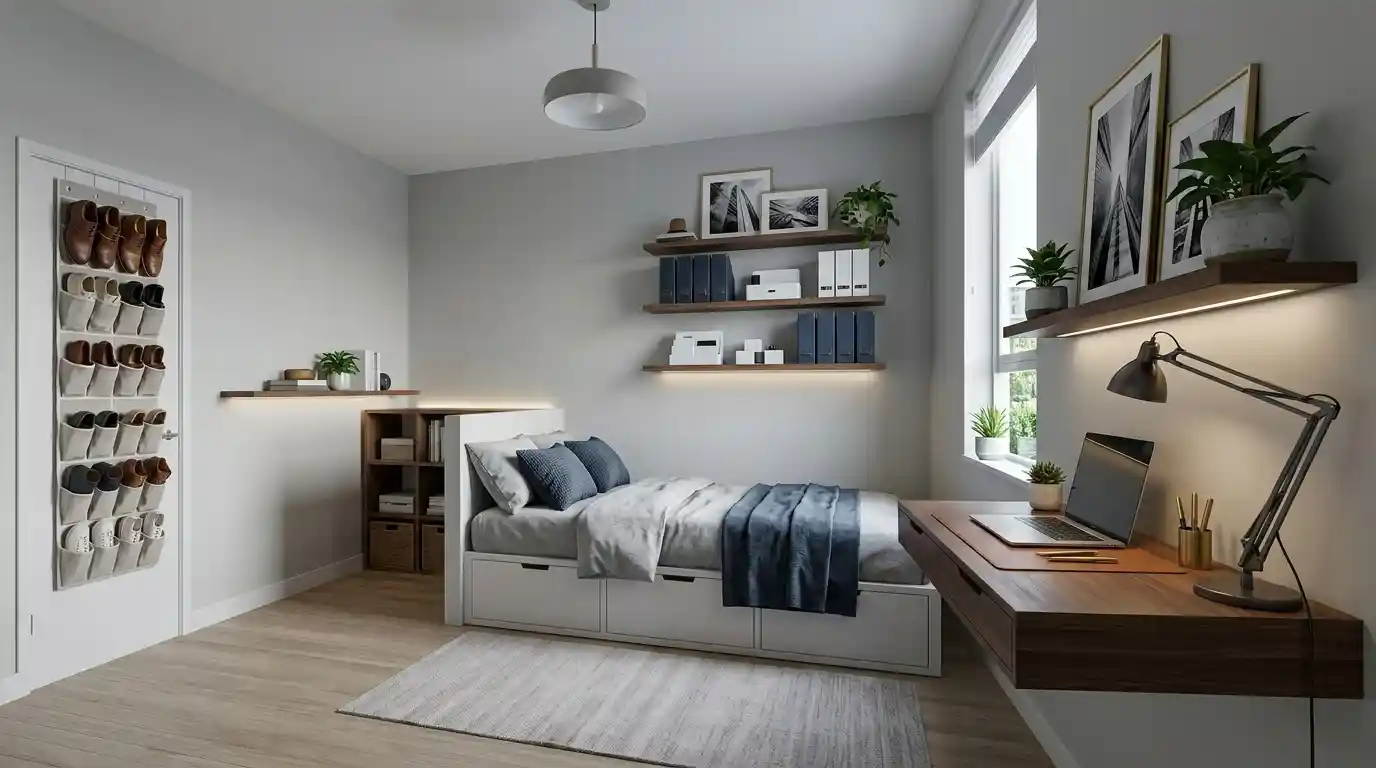
When your sleeping space has to pull double duty as a home office, traditional desks just won’t cut it. Instead, opt for a wall-mounted desk positioned right alongside the bed. By eliminating bulky desk legs, you preserve precious floor area.
[ Bed ] ---> [ Wall-Mounted Desk ] ---> [ Floating Shelves Above ]
Install floating shelves directly above the workstation to keep your folders, notebooks, and tech accessories organized but out of sight when it’s time to wind down. Pair this setup with light, neutral wall tones and layered lighting—like a flexible task lamp combined with soft overhead fixtures—to easily transition the room’s vibe from high-productivity daytime to relaxed evening mode.
2. Go Vertical with an Elevated Bed Frame
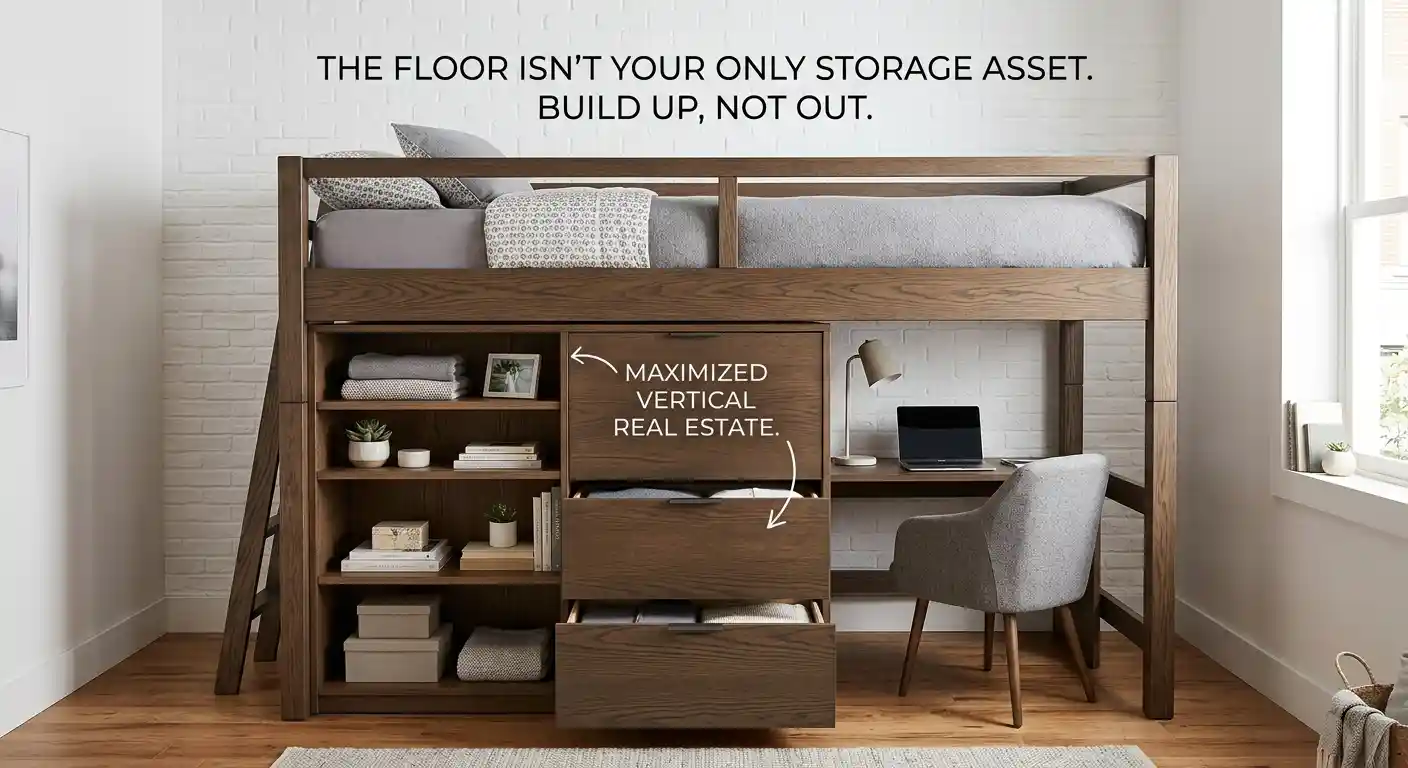
Most people miss this part entirely: the floor isn’t your only storage asset. If you can’t build out, you have to build up. Lifting your bed off the ground changes the entire picture for a tiny layout.
+---------------------------+
|        Lofted Bed         |
+---------------------------+
|  Drawers / Shelves / Desk |  <-- Maximized vertical space
+---------------------------+
Lofted frames featuring integrated drawers or open shelving underneath put that awkward vertical real estate to work. Suddenly, you have a massive, built-in home for off-season clothes, extra bedding, or shoes. Some custom designs even leave enough clearance for a compact reading chair or a minimalist desk setup right under the mattress.
3. The Window-Side Bunk Arrangement
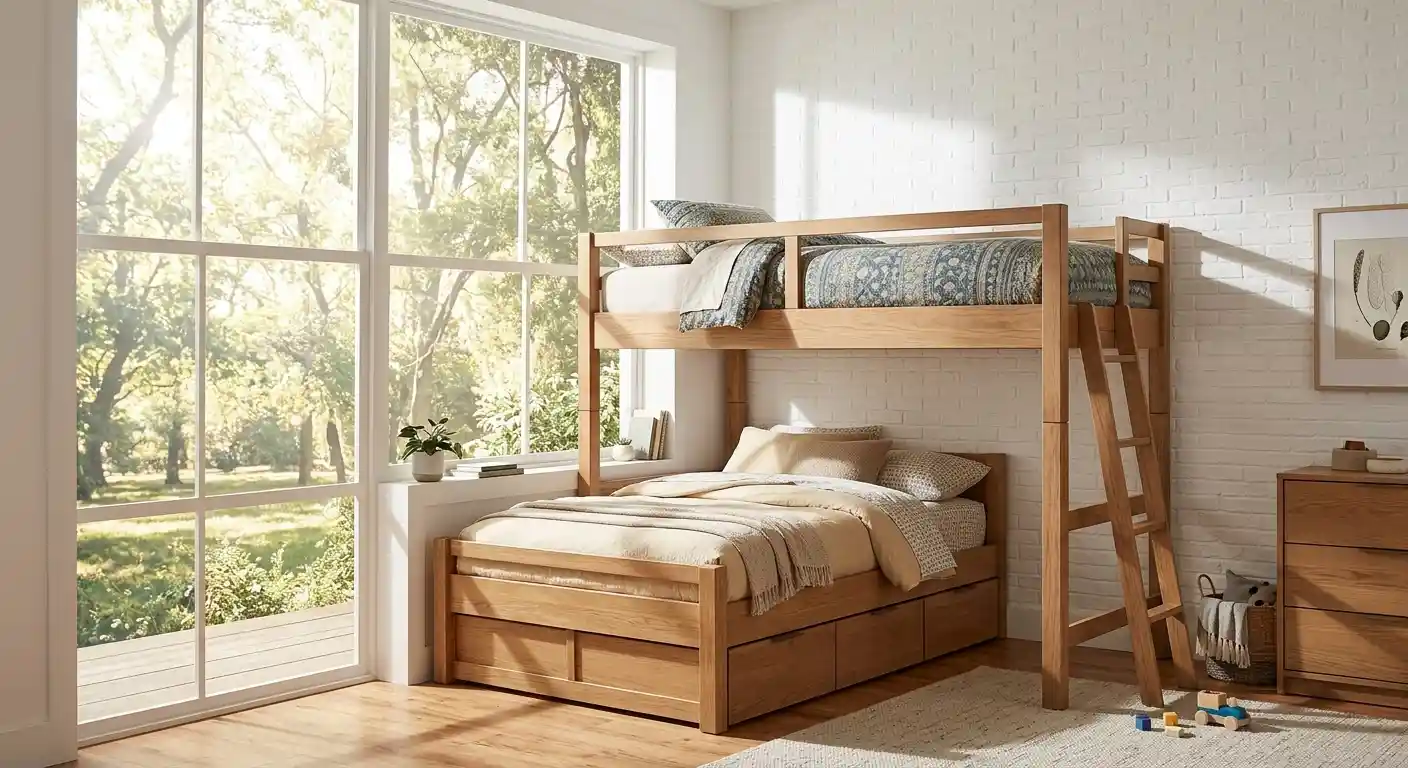
Placing a stacked sleeping arrangement right next to a large window turns what could feel like a tight, institutional setup into an open, light-filled feature. The view outside essentially becomes a living piece of wall art.
+-------------------+
|    Upper Bunk     | ====> [ Large Window ]
+-------------------+
|    Lower Bunk     | ====> (Floods space with natural light)
+-------------------+
| Under-Bed Storage |
+-------------------+
To make this work beautifully, use natural wood frames that glow in the daylight. By stacking the beds, you free up the rest of the floor for a play area or a narrow dresser. It’s an ideal setup for shared kids’ rooms or flexible guest spaces where every inch counts.
4. An Alcove Sleep Nook with Hidden Compartments
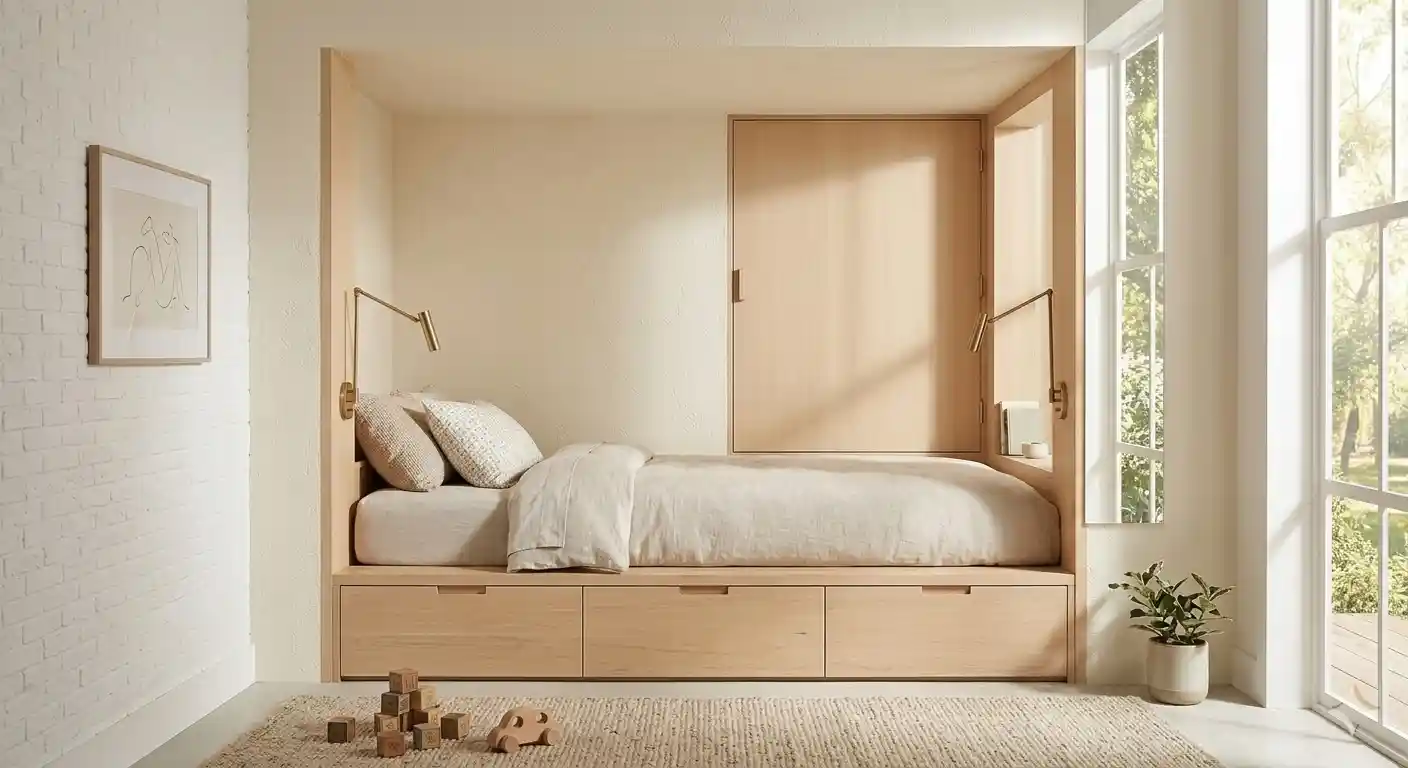
There is a fine line between a room feeling cramped and feeling intentionally cozy. Designing a bed into a recessed alcove or nook hits that sweet spot perfectly, giving the room an intimate, nest-like quality.
Pro Tip: Skip the bulky bedside tables entirely. Mount slim reading sconces directly to the inside walls of the alcove to keep surfaces completely clear.
To keep clutter from ruining the clean lines, integrate hidden push-latch drawers into the base of the platform and conceal vertical storage behind flush wall panels.
5. The Fold-Down Wall Bed
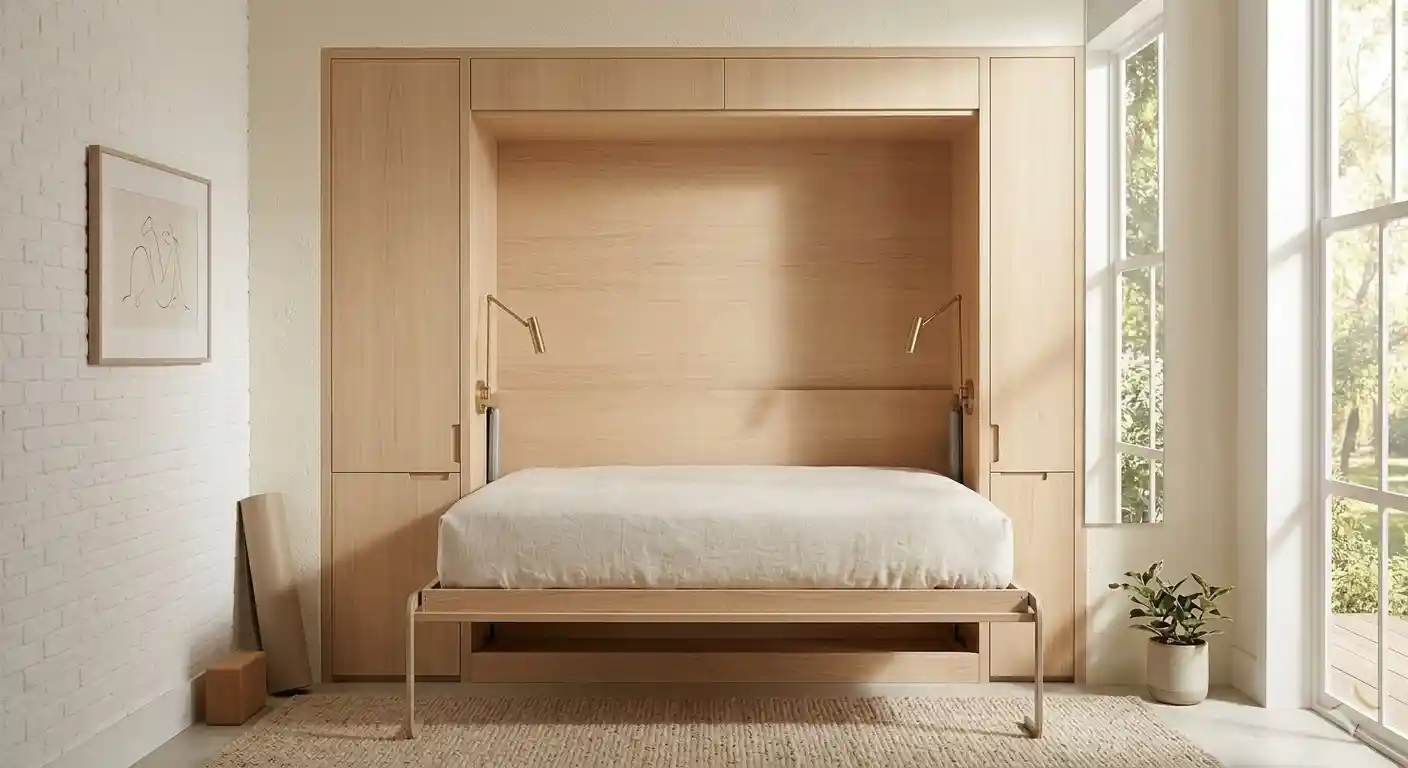
Murphy beds used to feel like a clunky novelty, but modern engineering has turned them into an absolute necessity for micro-living. A sleek, fold-down bed gives a small room total daytime flexibility.
When the bed is flipped up into the wall cabinet, you instantly reclaim a massive patch of open floor space for yoga, workouts, or just moving around without bumping your shins. Flank the wall unit with matching, floor-to-ceiling storage cabinets to hold clothing and essentials so the installation looks like premium architectural molding rather than a temporary fix.
6. The Hidden Under-Platform Roll-Out
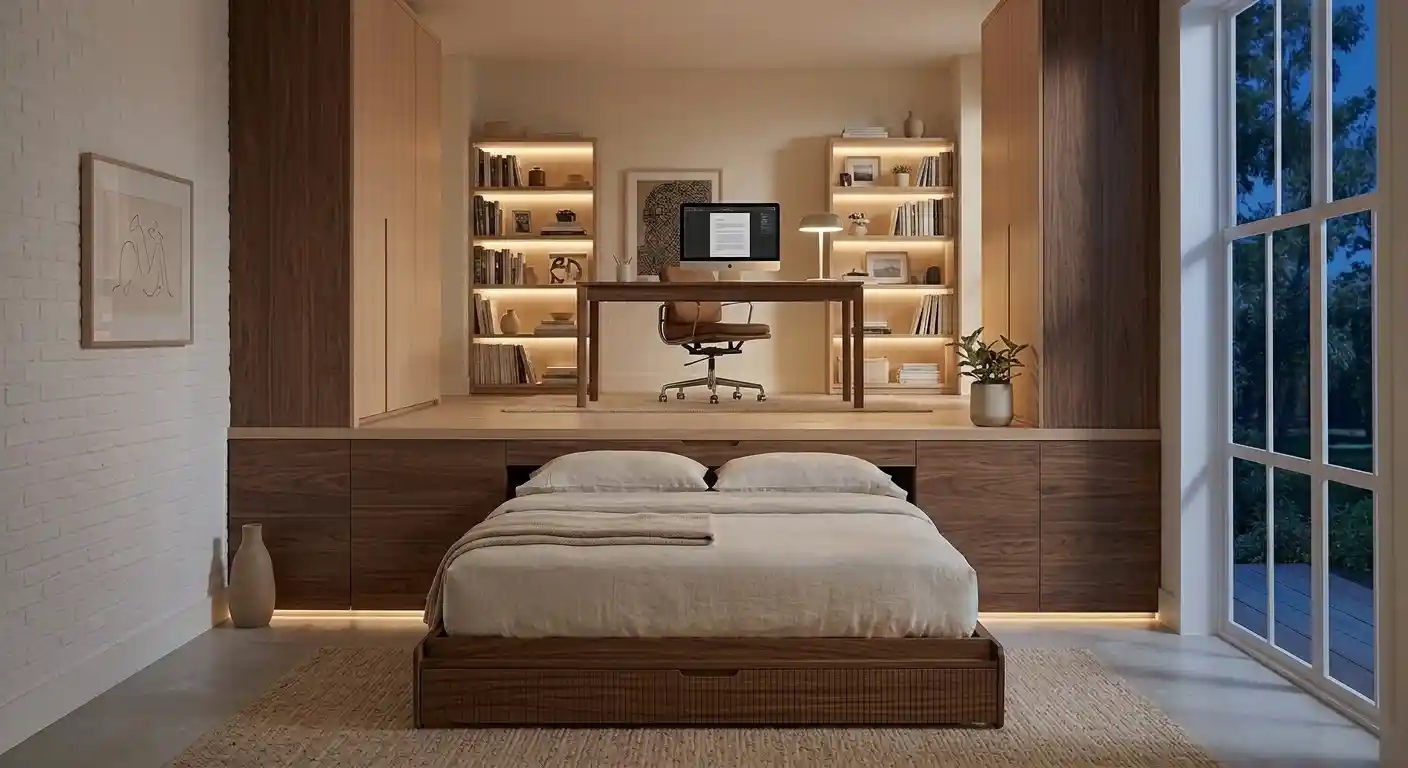
Here’s where things get interesting. Instead of putting your bed on top of a platform and climbing up to it, what if you built a raised platform for your home office or lounge area, and hid the bed inside it?
+---------------------------------------+
|  Raised Platform (Desk & Workspace)   |
+-----------+---------------------------+
            |   [ Roll-Out Bed ]  ===> (Slides out only at night)
            +---------------------------+
During the day, the bed is completely invisible, leaving your room looking like a clean, professional studio or study space. At night, you simply slide the full sleeping surface out on smooth, heavy-duty casters. It’s a brilliant solution for teenagers’ rooms or high-density apartments where you need distinct daytime and nighttime zones.
7. Elevated Platform with a Built-In Side Desk
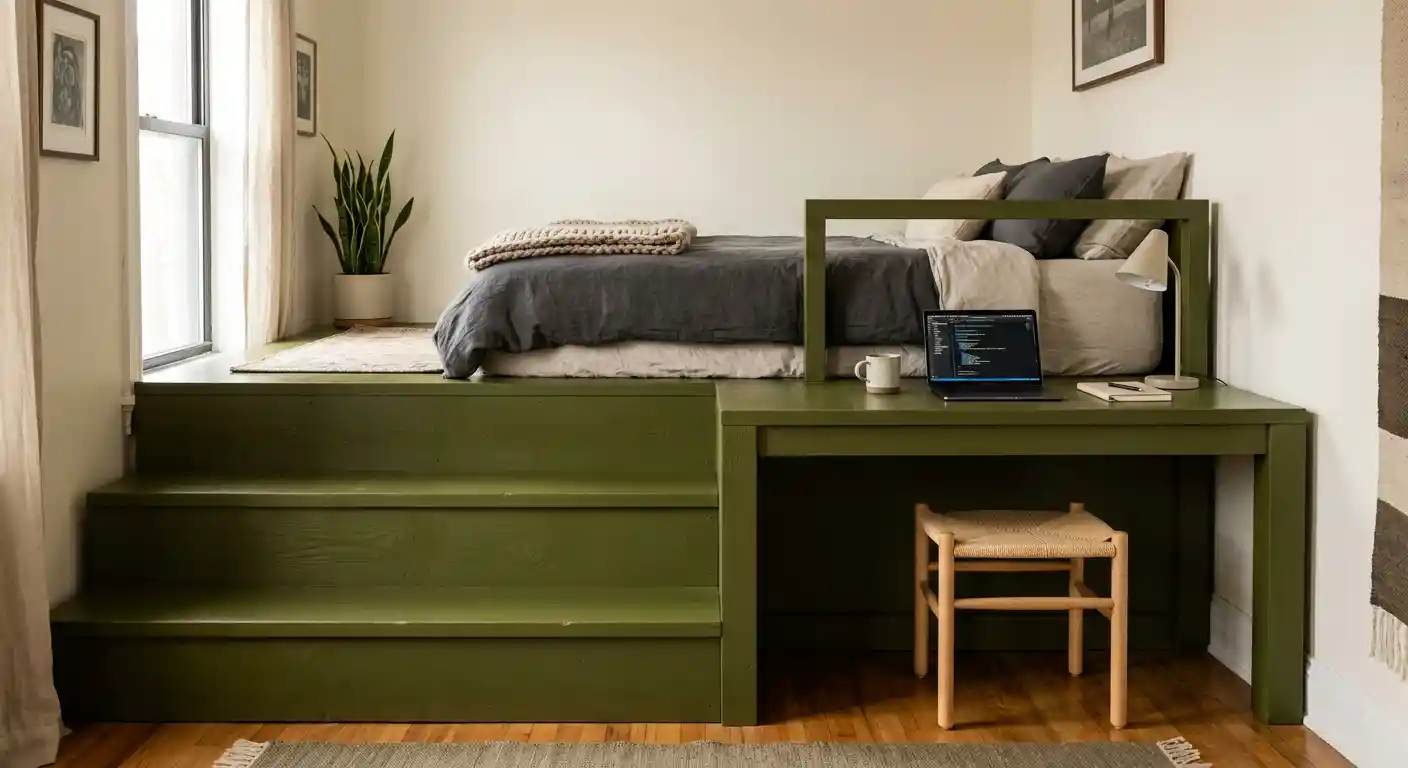
If you like the platform idea but want your bed to stay accessible during the day, try a mid-height platform that features a built-in, low-profile desk attached directly to the frame.
By painting the entire unit a single, striking color—like a muted teal or deep olive—you turn the furniture structure into the room’s main architectural feature. A small stool or minimalist chair can slide entirely underneath the desk surface when you aren’t working, keeping your walking pathways perfectly clear.
8. Energize the Space with Bright Accents
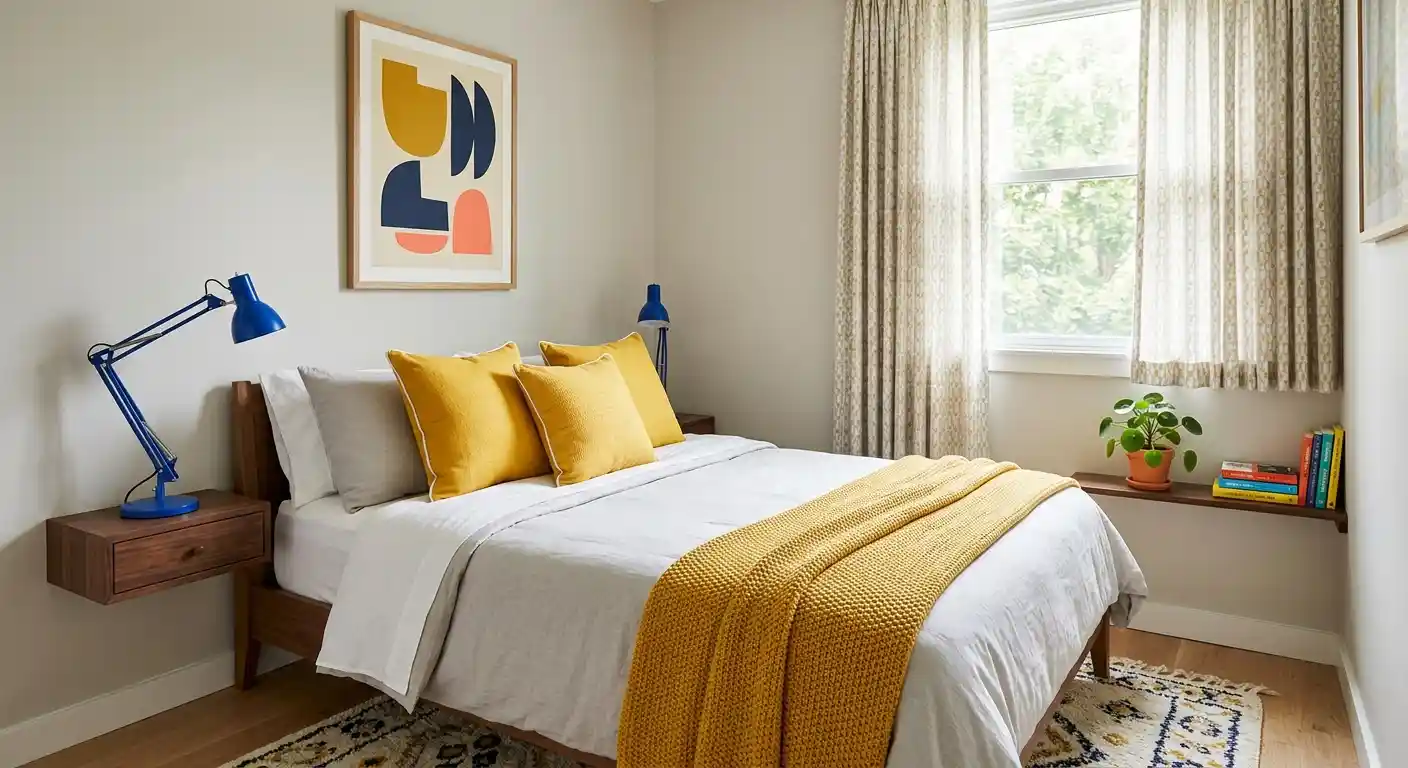
You don’t have to resign yourself to an entirely white, sterile room just because it’s small. While neutral walls keep things feeling light, introducing deliberate pops of high-contrast color—like a cheerful mustard yellow or a vibrant terracotta—keeps the mood upbeat and sophisticated.
Neutral Backdrop (Beige/Gray)
  + Yellow Throw Pillows
  + Patterned Curtains
  + Colorful Reading Lamp
=================================
= Vibrant, high-energy aesthetic without visual clutter
The trick is restraint. Use the color on easily swappable items: a throw pillow, a piece of graphic art, or a small bedside lamp. The accent color gives the eye a specific place to land, drawing attention away from the tight dimensions of the room.
9. Ditch the Closet for an Open Wardrobe
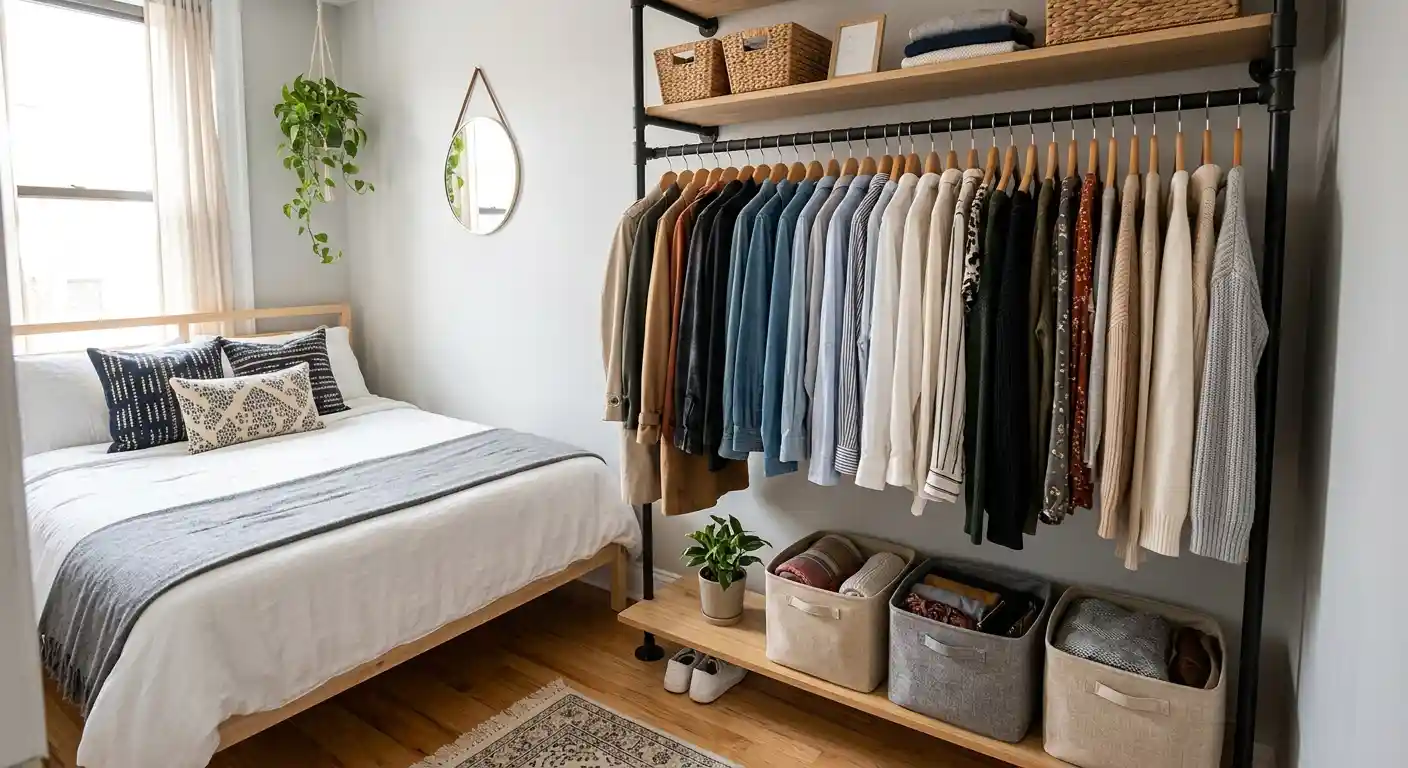
Traditional, bulky wooden dressers can choke a small bedroom layout faster than almost anything else. If your room lacks a built-in closet, consider an open-concept industrial clothing rail or a modular wall-mounted shelving system.
[ Slim Bed Frame ] <---- Clear Path ----> [ Open Wardrobe Rail ]
                                          [ Fabric Storage Bins]
Positioned flush against one wall, an open wardrobe system uses depth much more efficiently than a heavy armoire. Pair it with matching hangers and a few woven baskets at the bottom for smaller items. Bonus: it naturally forces you to edit down your wardrobe to your actual favorites, keeping clutter at bay.
10. The Smart Desk-and-Shelf Integration
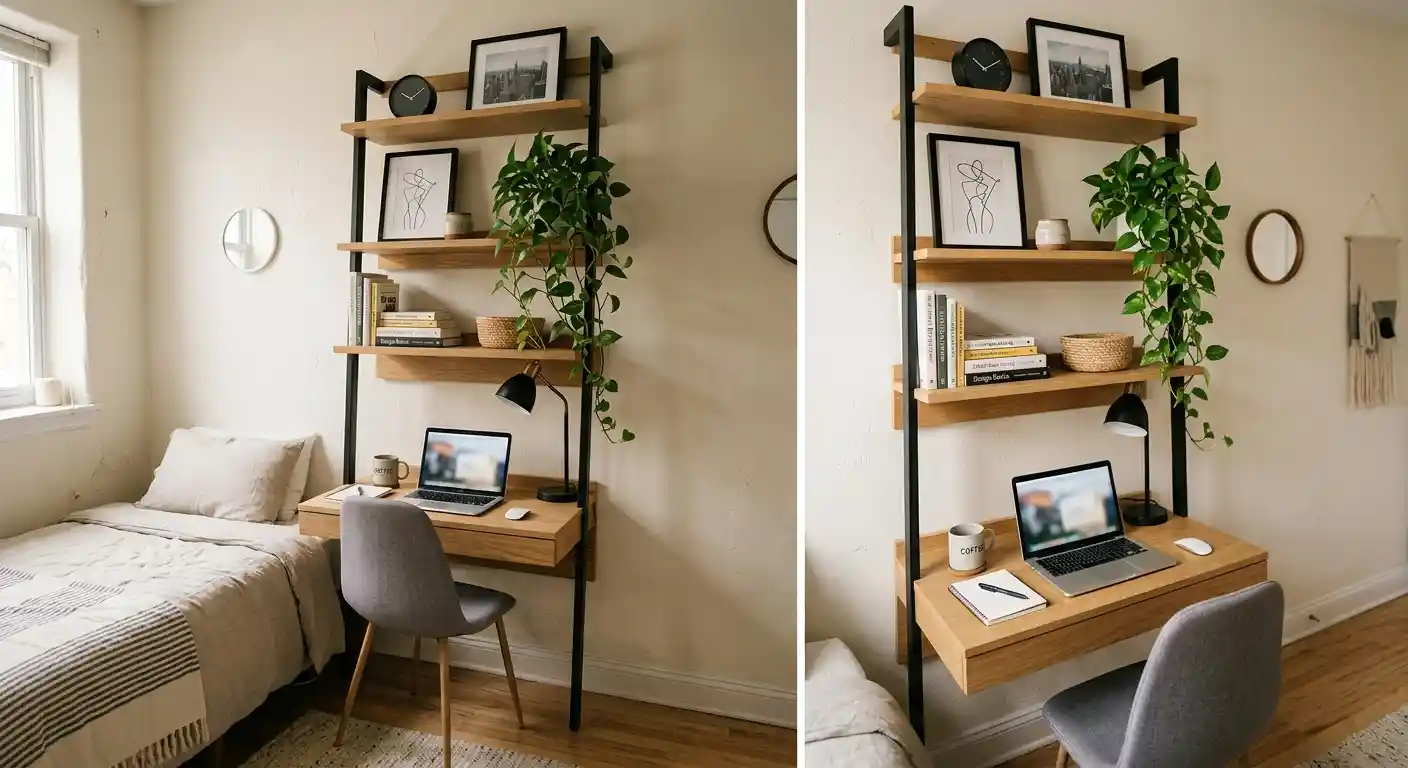
In tight quarters, every piece of furniture needs to perform multiple jobs. A compact desk that extends upward into a towering set of shelves handles your workspace needs while serving beautifully as a nightstand.
Keep the styling simple: use the lower shelves for daily work items or a book, and the upper tiers for a small cascading plant or framed art. By concentrating your furniture along a single wall, you prevent the room from feeling like an obstacle course.
11. Lengthen a Narrow Layout with Soft Pink Tones
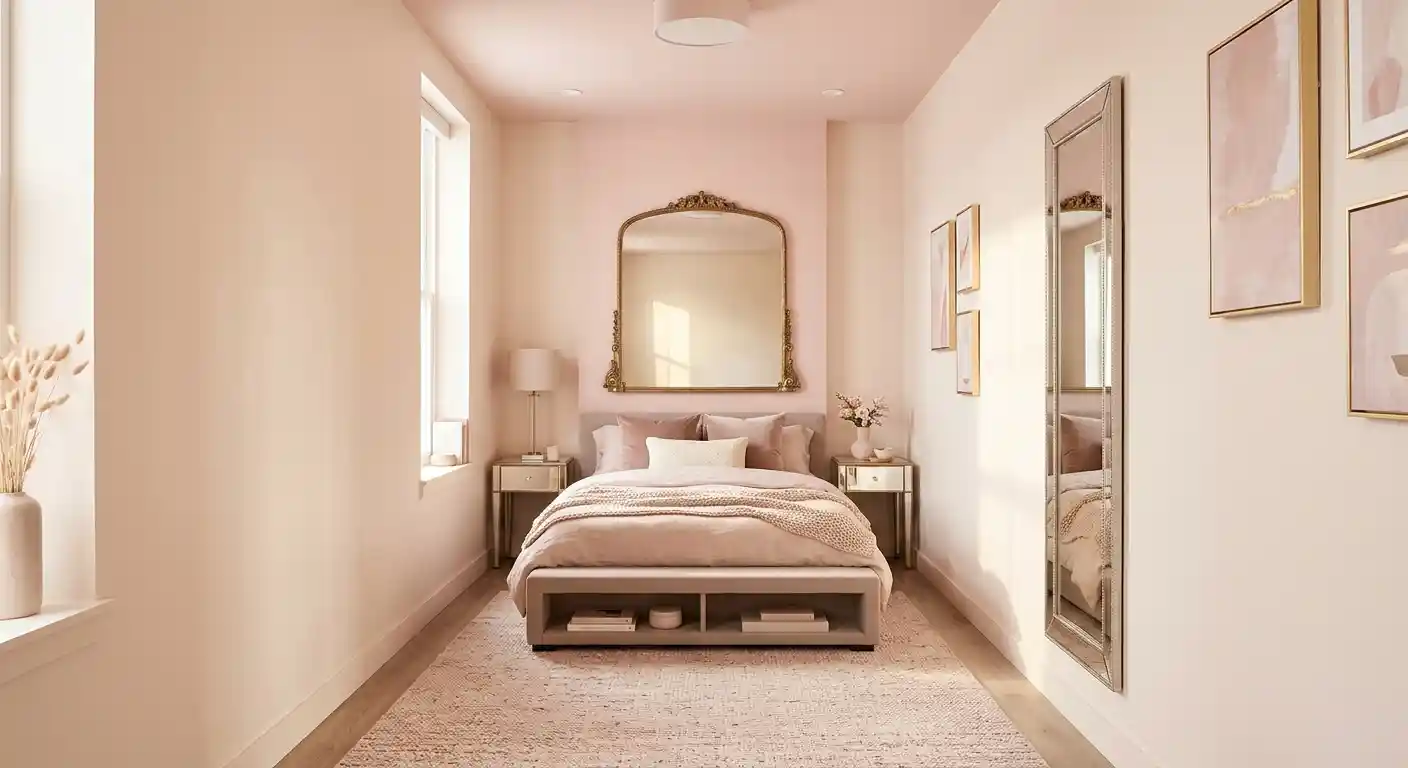
Long, narrow bedrooms are notoriously tricky to design because they can easily mimic the feel of a hallway. To combat this, lean into a soft, monochromatic palette featuring blush pinks, warm taupes, or delicate champagnes.
+------------------------------------------+
|                 Narrow Wall              |
|   [Low-Profile Bed]    [Mirror Furniture]|
|  <-- Warm tones pull the walls wide -->  |
+------------------------------------------+
These tones wrap the room in a gentle, cozy warmth without adding visual weight. Pair the soft color palette with a slim, low-profile bed frame and a few mirrored surfaces to bounce natural light around, making the narrow boundary walls feel further away than they actually are.
12. Create Clear Boundaries with Zone Splitting
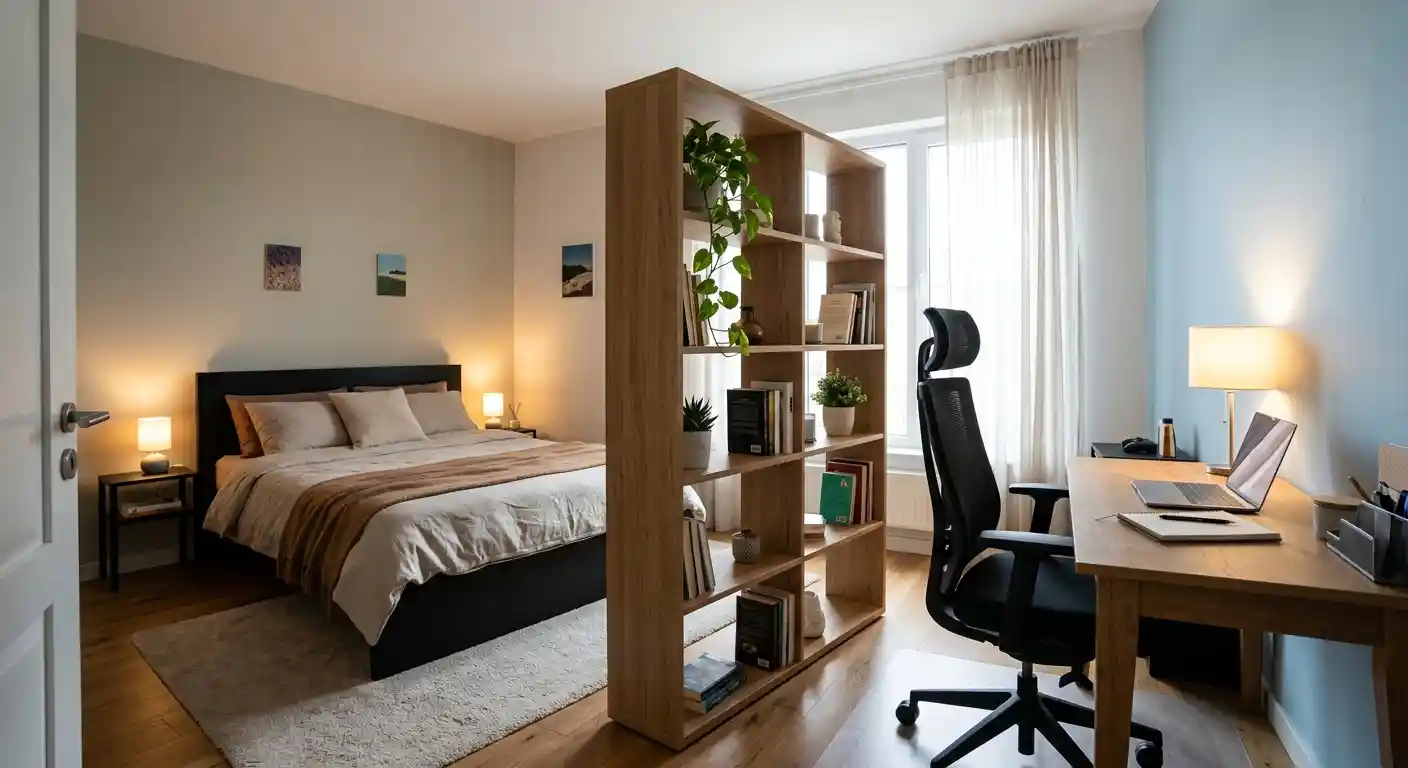
Psychologically, it’s hard to relax in a bedroom when your work desk is staring you right in the face. Creating distinct zones within a compact room is a massive win for both functionality and your mental health.
| Sleeping Zone | Room Divider / Open Bookcase | Productivity Zone |
| Low lighting, cozy textures, bed | Translucent screen or open shelves | Desk, task lighting, structured chair |
You don’t need a solid wall to achieve this. A lightweight, open-backed bookshelf or a sheer, ceiling-hung track curtain can separate your bed from your study corner perfectly. Because light can still pass through, you get all the benefits of a multi-room layout without making the space feel chopped up.
13. Play with High-Contrast Patterns
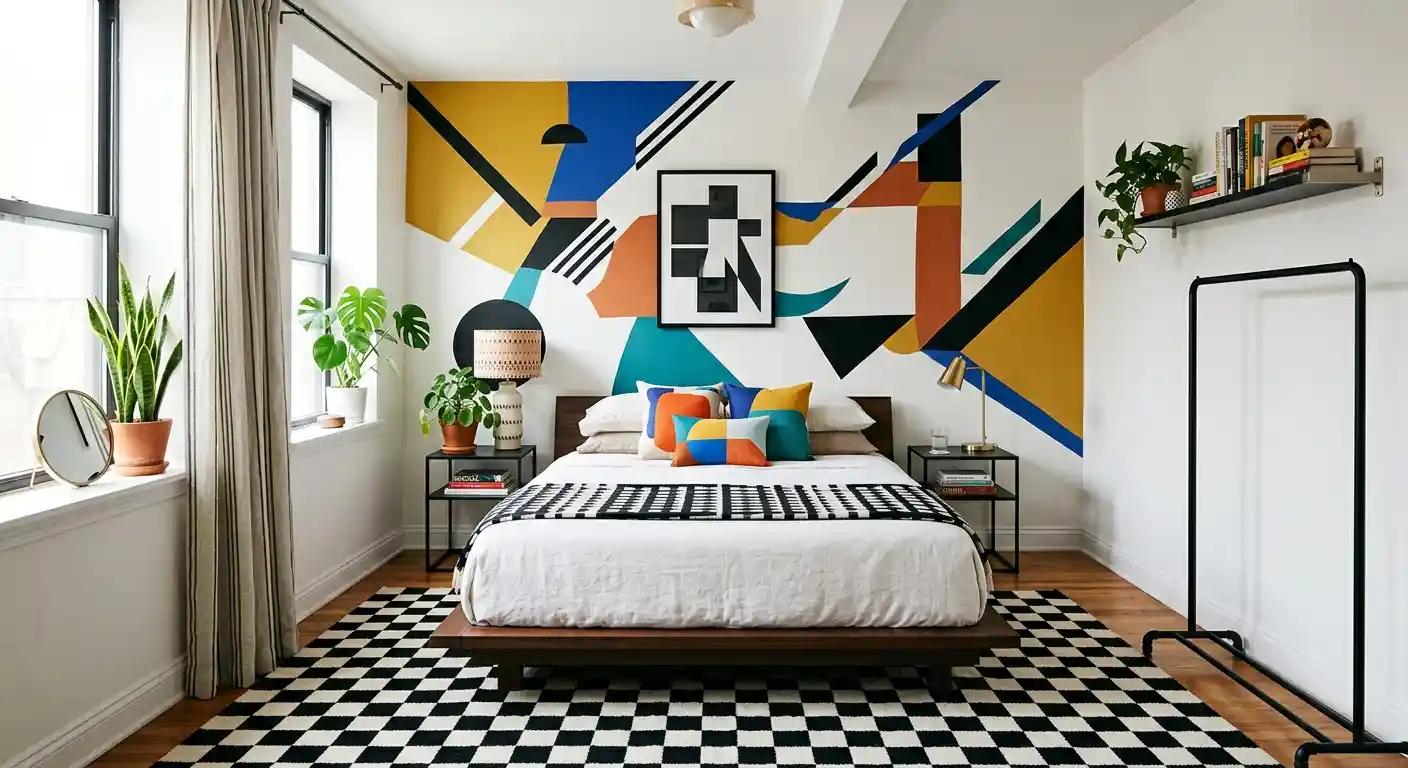
If a room is small, why not make it unforgettable? Instead of trying to hide the room’s size, turn it into a high-style design box by pairing vibrant color choices with bold geometric patterns—like a checkerboard rug or an abstract accent wall.
Keep the main furniture pieces incredibly simple and low to the ground so they don’t fight with the patterns. The dynamic visual energy of the textiles creates an illusion of movement, making the room feel alive and highly styled rather than restricted.
14. Embrace the Monochrome Illusion
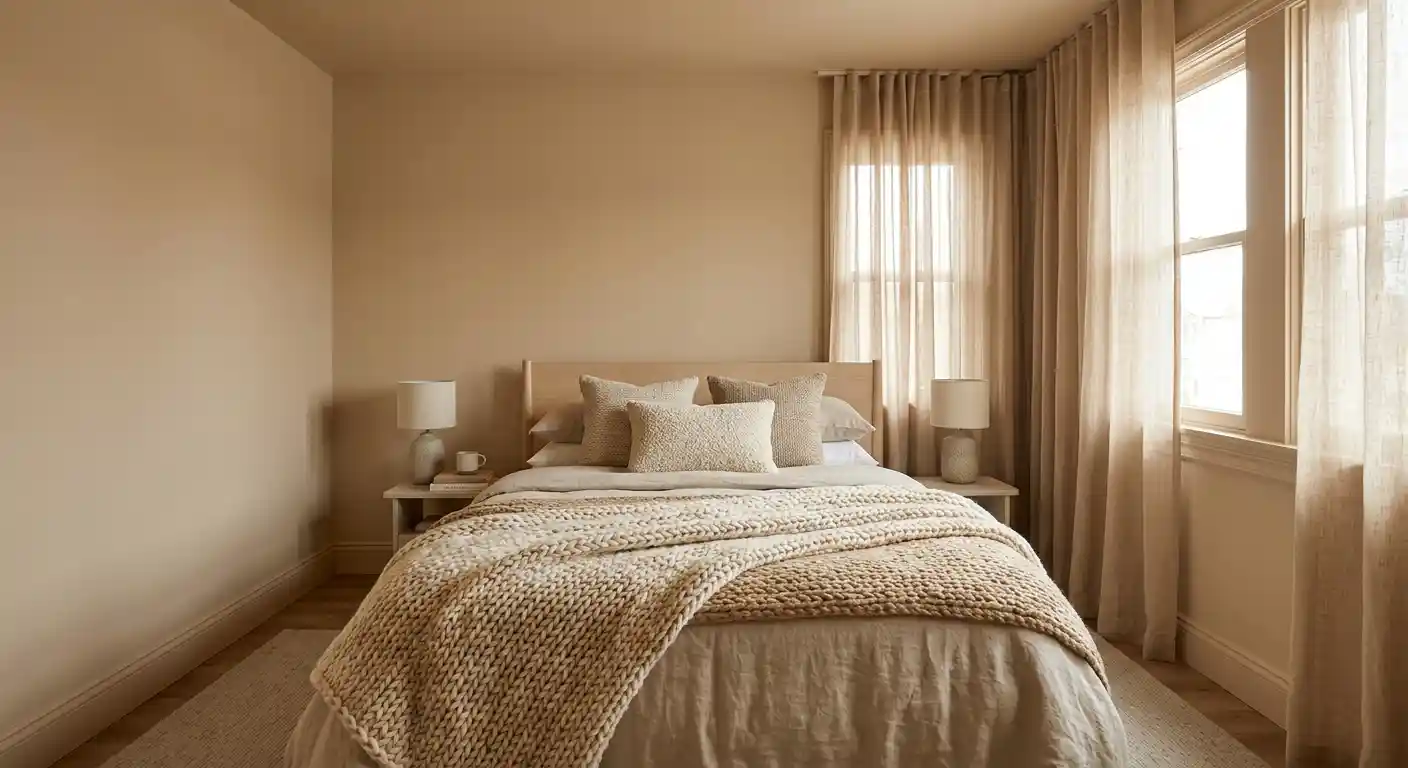
If you want a small space to feel instantly larger, paint your walls, baseboards, and even your ceiling the exact same color.
[ Ceiling: Warm Beige ]
[ Walls:   Warm Beige ] ===> Erases hard corners & boundaries
[ Trim:    Warm Beige ]
When there is no high-contrast line separating the walls from the ceiling, your brain has a hard time identifying where the room’s boundaries actually end. Warm ivory, soft sage, or muted grays work flawlessly for this technique. To prevent the space from looking flat, layer in rich, varied textures: a chunky knit blanket, linen drapes, and a textured boucle accent pillow.
15. Think Big with Scale and Artwork Placement
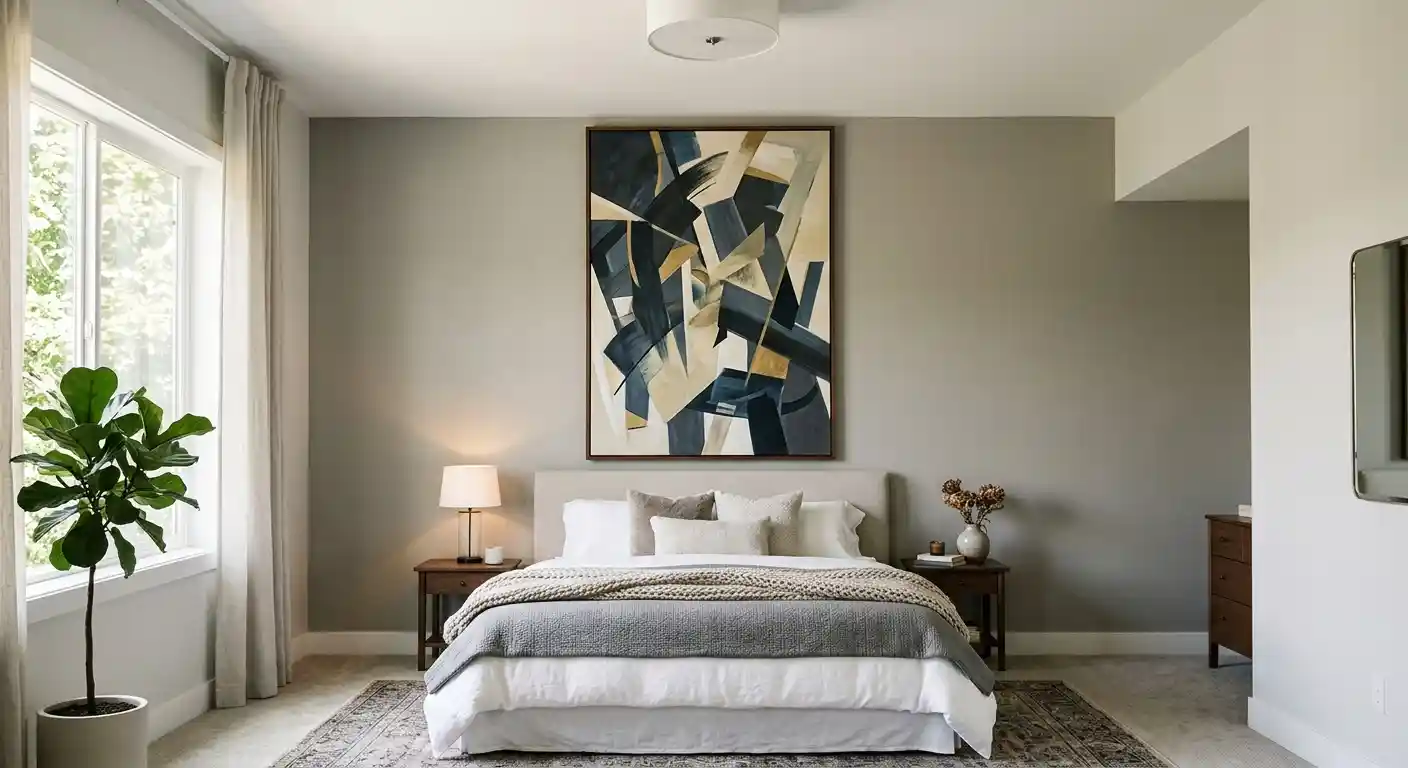
At first glance, it sounds simple: small room, small art, right? It isn’t. Hanging a scattering of tiny frames all over a small room actually fragments the walls and makes the space look cluttered.
Instead, choose one or two oversized, impactful art pieces. Hanging a large, vertical abstract print draws the eye up toward the ceiling, creating an illusion of height and giving the room a sophisticated, intentional focal point that distracts from a limited footprint.
16. Harness the Power of the Corner Vanity
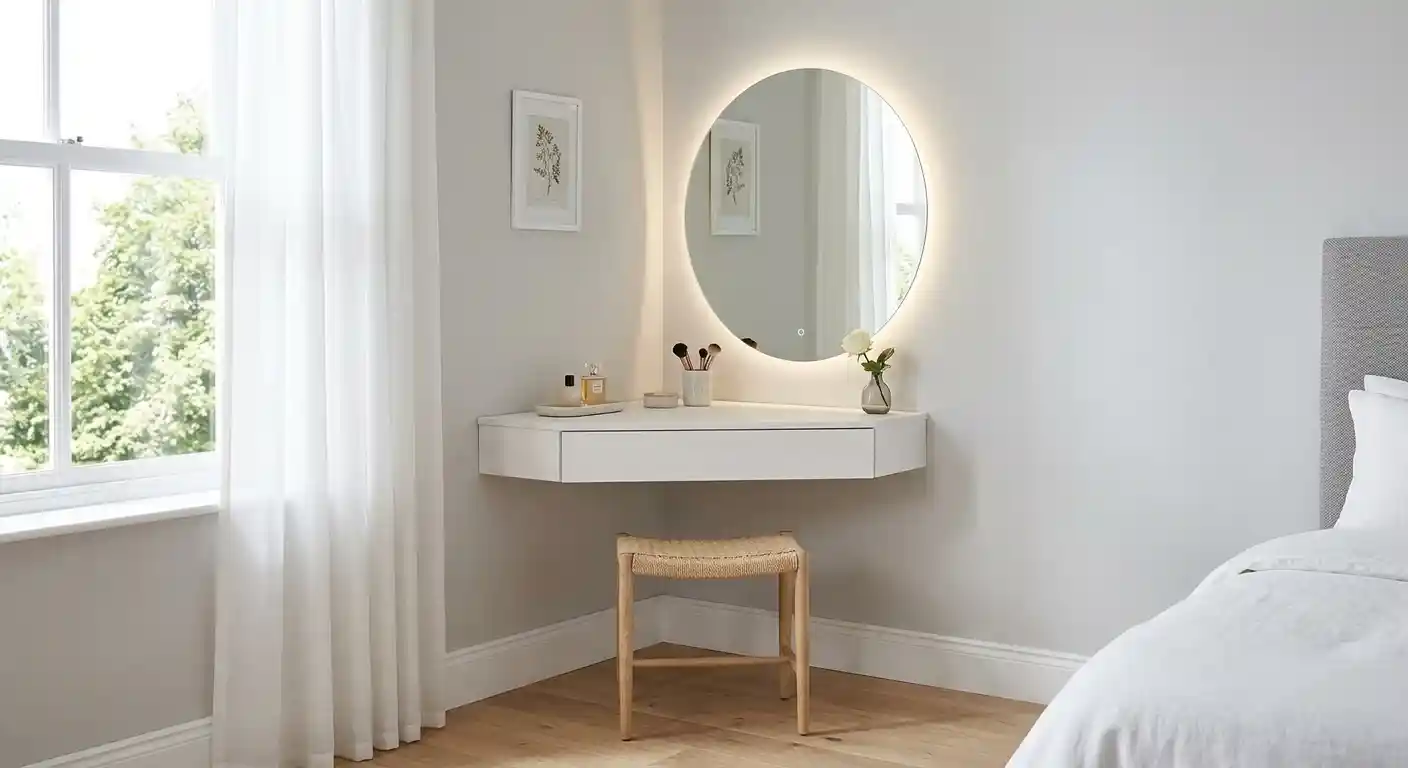
Corners are almost always wasted real estate in standard bedroom layouts. You can reclaim this dead space by installing a sleek, floating corner vanity station.
    \  Wall  /
     \      /
      [Vanity] <-- Floating design keeps floor clear
     /      \
    /  Wall  \
A corner unit with a frameless, backlit mirror offers a dedicated morning routine spot without cutting into the room’s main walkways. Choose a narrow, backless stool that can slide completely out of sight underneath the unit when you’re done getting ready.
17. The Integrated Platform Step System
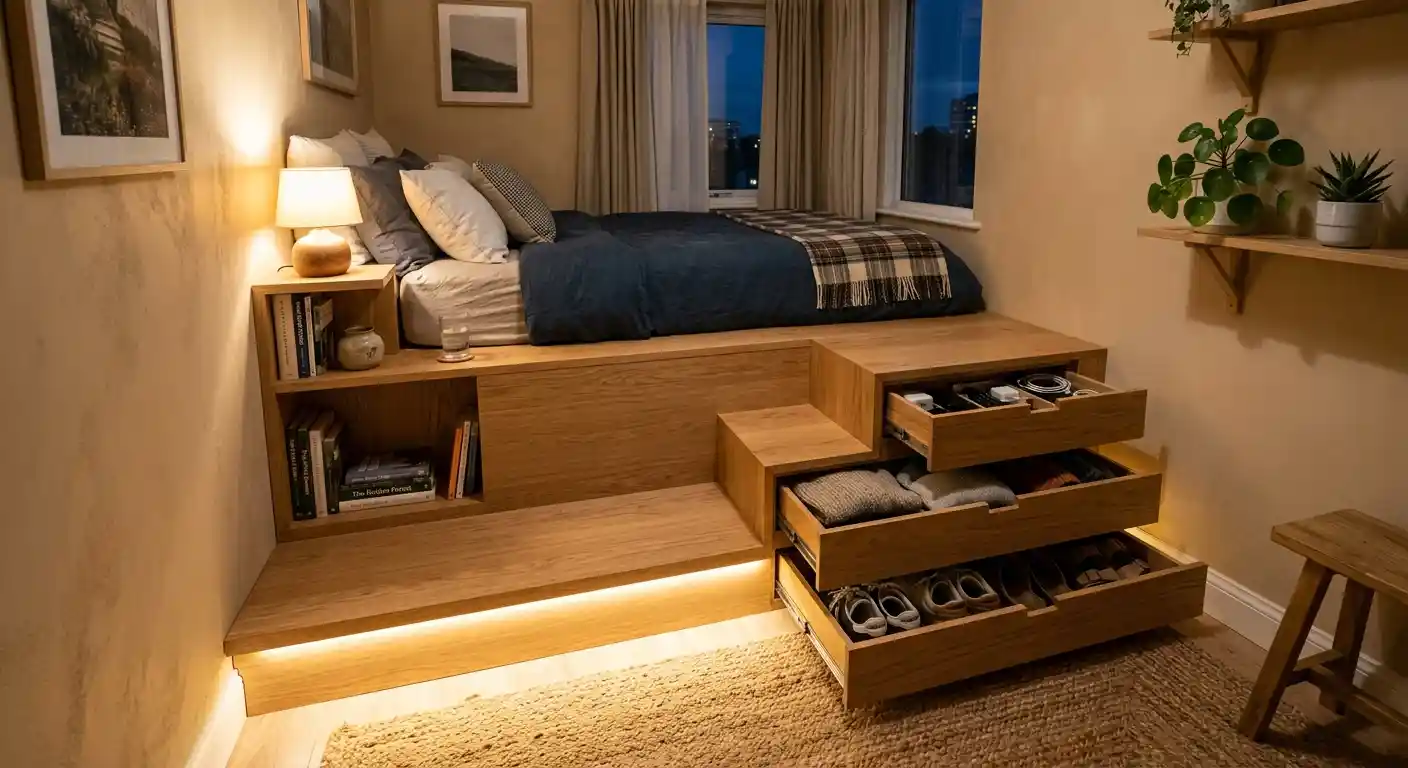
If you are designing a custom platform bed to maximize small bedroom space, consider turning the access steps into functional storage drawers.
Every single riser can house shoes, out-of-season accessories, or tech cords. Running a strip of recessed LED lighting along the base of the platform step adds a beautiful, floating architectural glow that creates depth, making the entire structure feel incredibly premium.
18. Master the 80/20 Color Accent Strategy
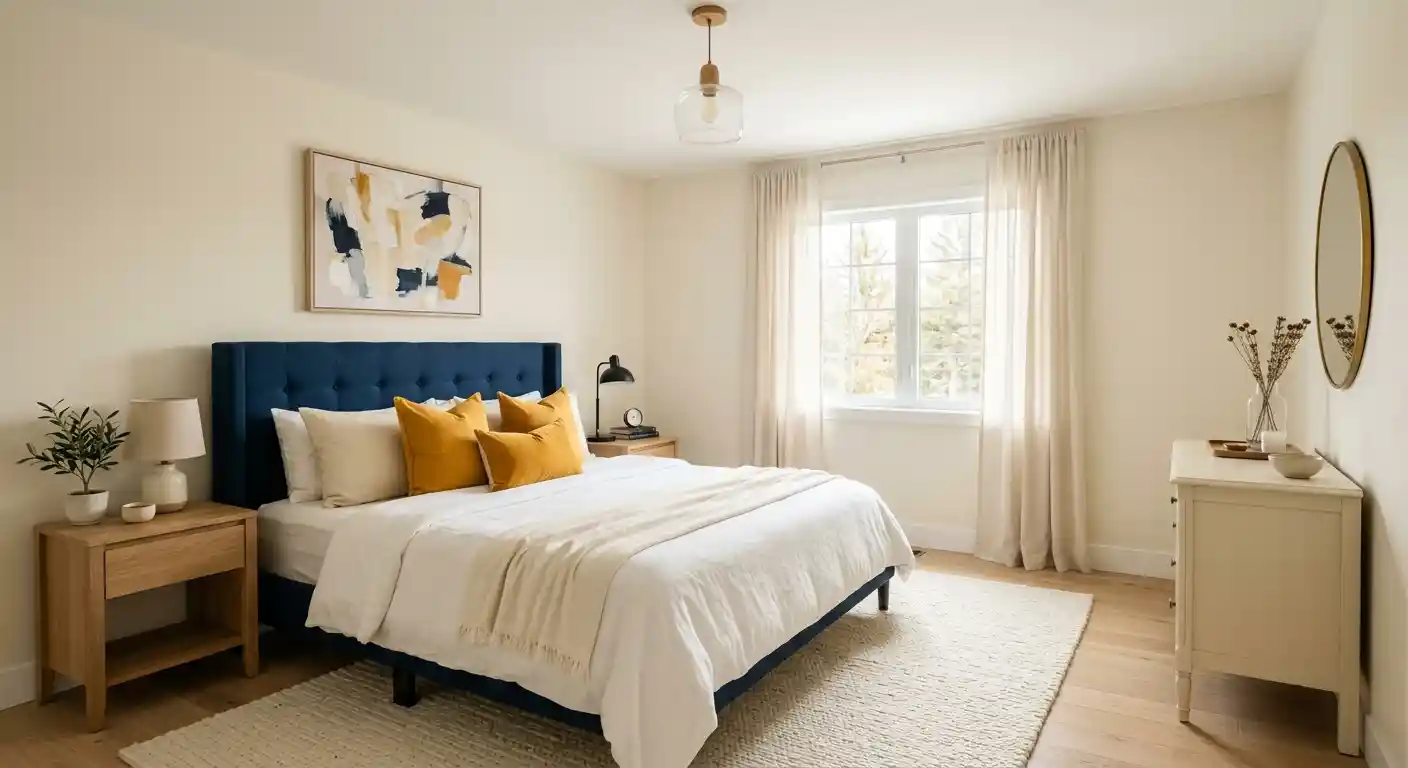
When managing a tight room, stick to an 80/20 color split. Keep eighty percent of the room anchored in a soothing, neutral base palette (like creams, soft wood tones, or light grays) to maintain a feeling of open airiness.
Use the remaining twenty percent for high-energy accent colors. A rich navy headboard or a couple of vibrant ochre throw blankets add character and rhythm to the room without overwhelming your sensory space.
19. Dive Deep with a Moody Feature Wall
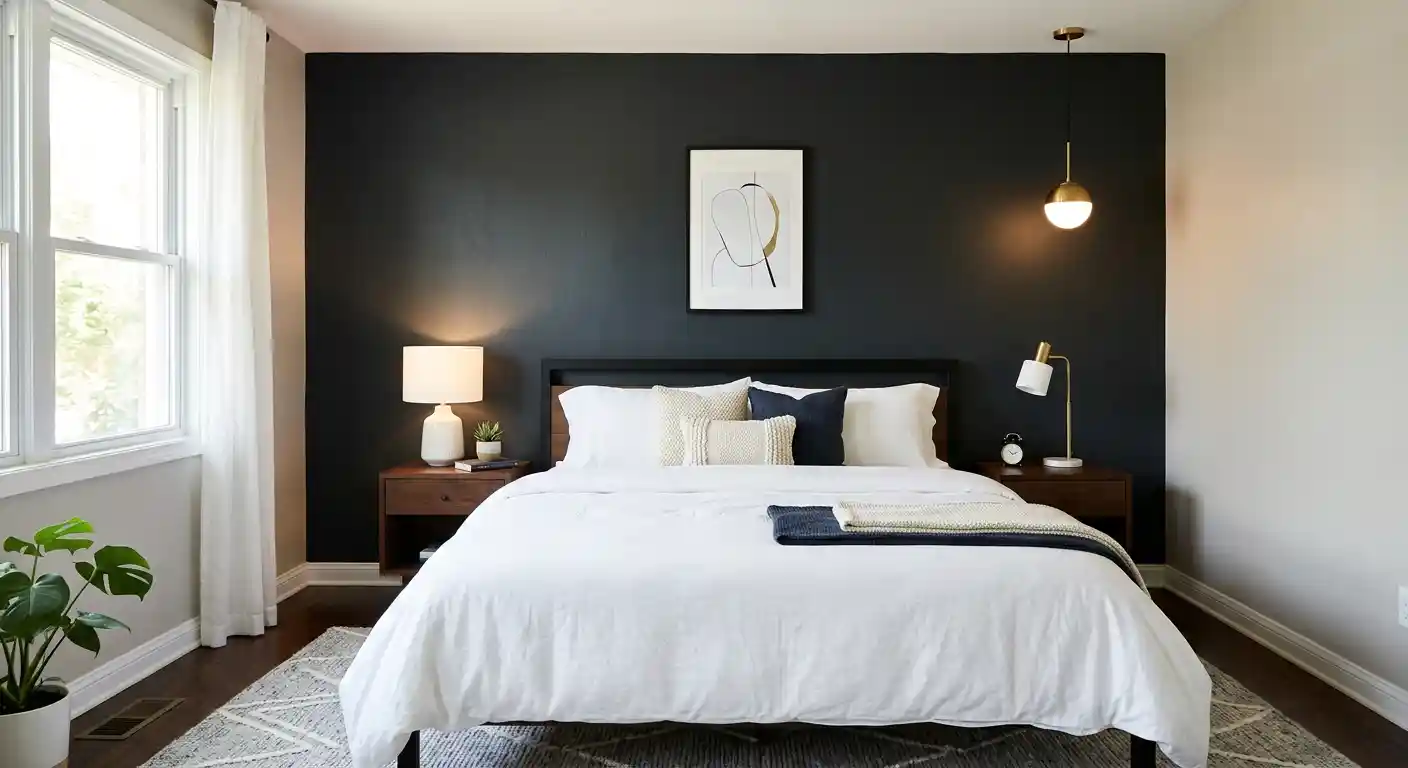
It sounds completely counterintuitive, but a deep, dark accent wall can actually make a small room feel significantly larger.
Light Side Wall ---> [ Deep Charcoal / Navy Accent Wall ] <--- Light Side Wall
                      (Creates an illusion of endless depth)
When you paint the wall behind your bed a rich charcoal, deep forest green, or midnight navy, it creates an optical illusion of endless depth—almost like looking into the night sky. Balance the dark wall by keeping your bedding crisp white and your side walls light, ensuring the room stays sophisticated rather than cave-like.
20. Invest in Multi-Functional Marvels
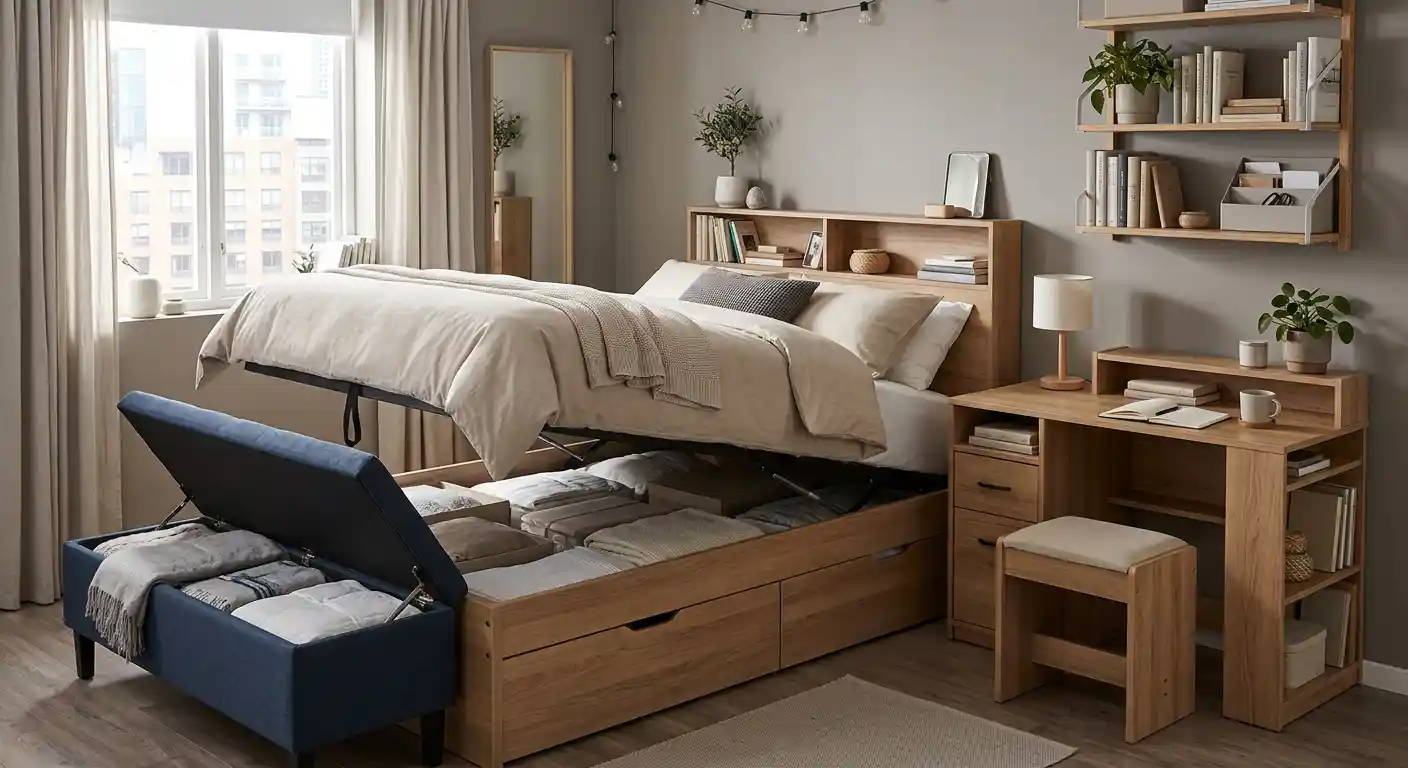
Every single piece of furniture in a micro-bedroom needs to earn its keep by doing at least two jobs.
The Bed: Should feature hydraulic lifts or deep built-in drawers.
The Nightstand: Should double as a desk or feature multiple storage tiers.
The Seating: An ottoman or bench that opens up to store winter blankets.
If a piece of furniture only serves one purpose, skip it and look for a modular alternative that can adapt as your day unfolds.
21. The Low-Profile Daybed Flex
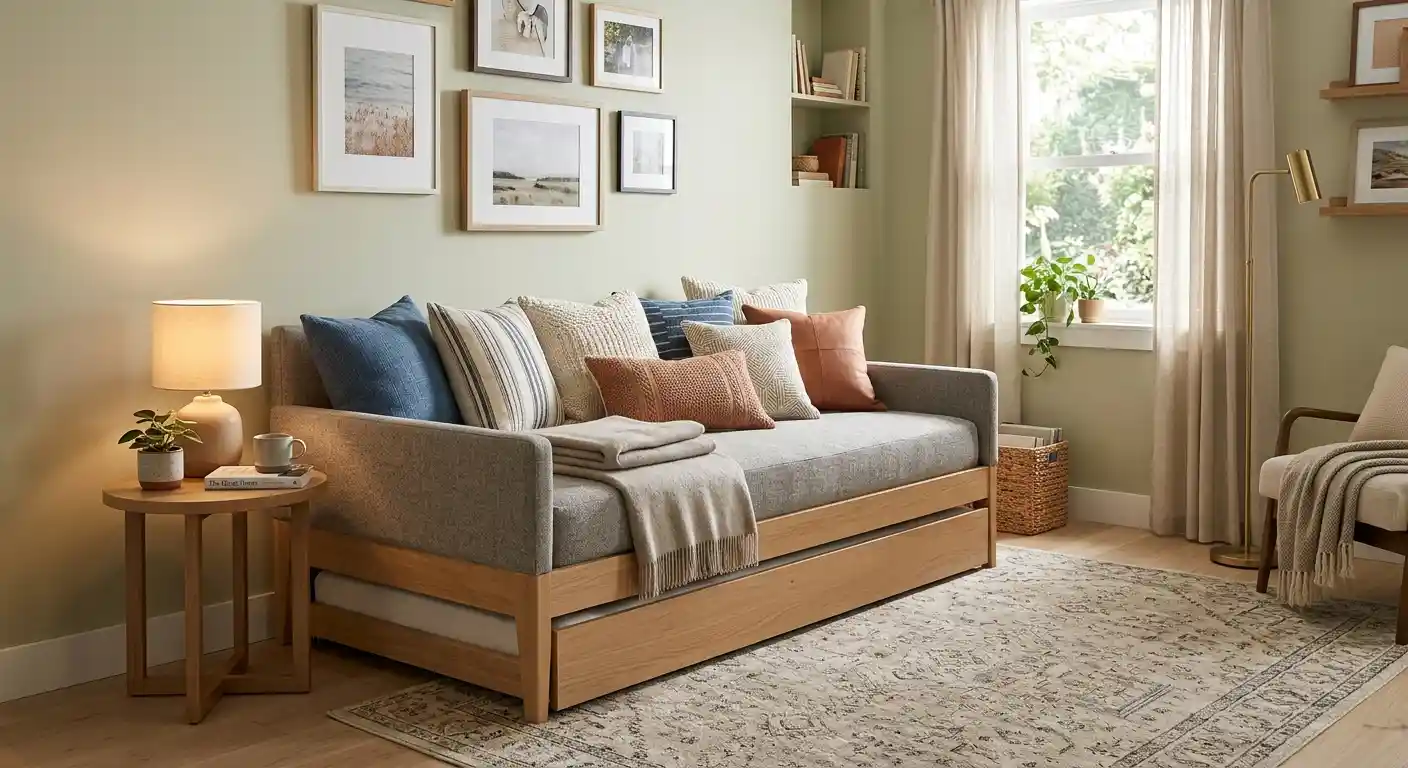
Daybeds are the ultimate chameleons of the design world. By placing a daybed flush against a long wall, you turn the room into a comfortable, stylish sitting lounge or reading room by day.
At night, simply rearrange the throw pillows to transform it back into a standard bed. Opt for a version with a pull-out trundle mattress underneath, and you instantly double your sleeping capacity for guests without permanently losing an inch of floor space.
22. Use Vertical Stripes to Fake Ceiling Height
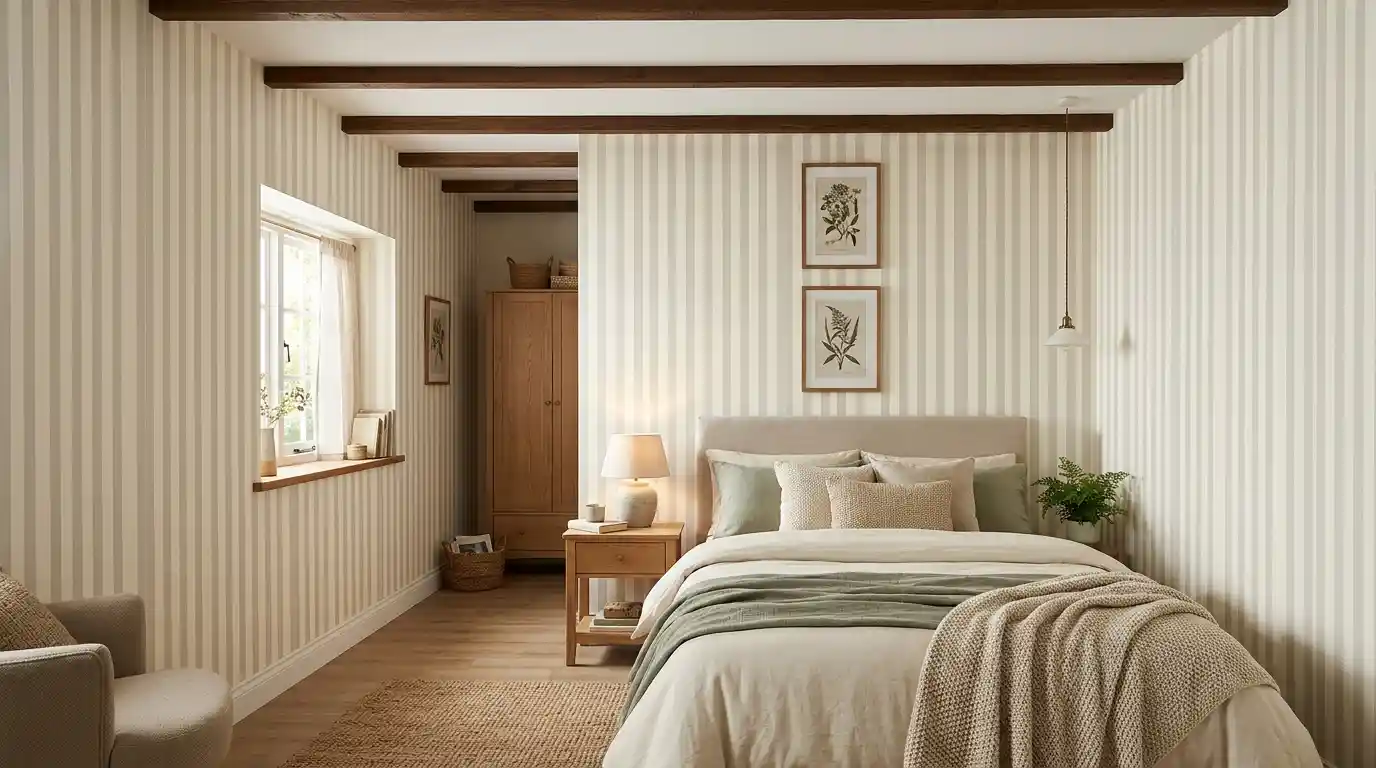
If your bedroom has low ceilings, it can feel oppressive even if the floor plan is decent. You can fix this instantly by using wallpaper with clean, vertical stripes or subtle floor-to-ceiling botanical patterns.
The vertical lines force the human eye to track upward, tricking the brain into believing the ceilings are much higher than they actually are. Stick to soft, low-contrast patterns so the walls don’t feel too busy.
23. Elevate Your Library with Floating Book Walls
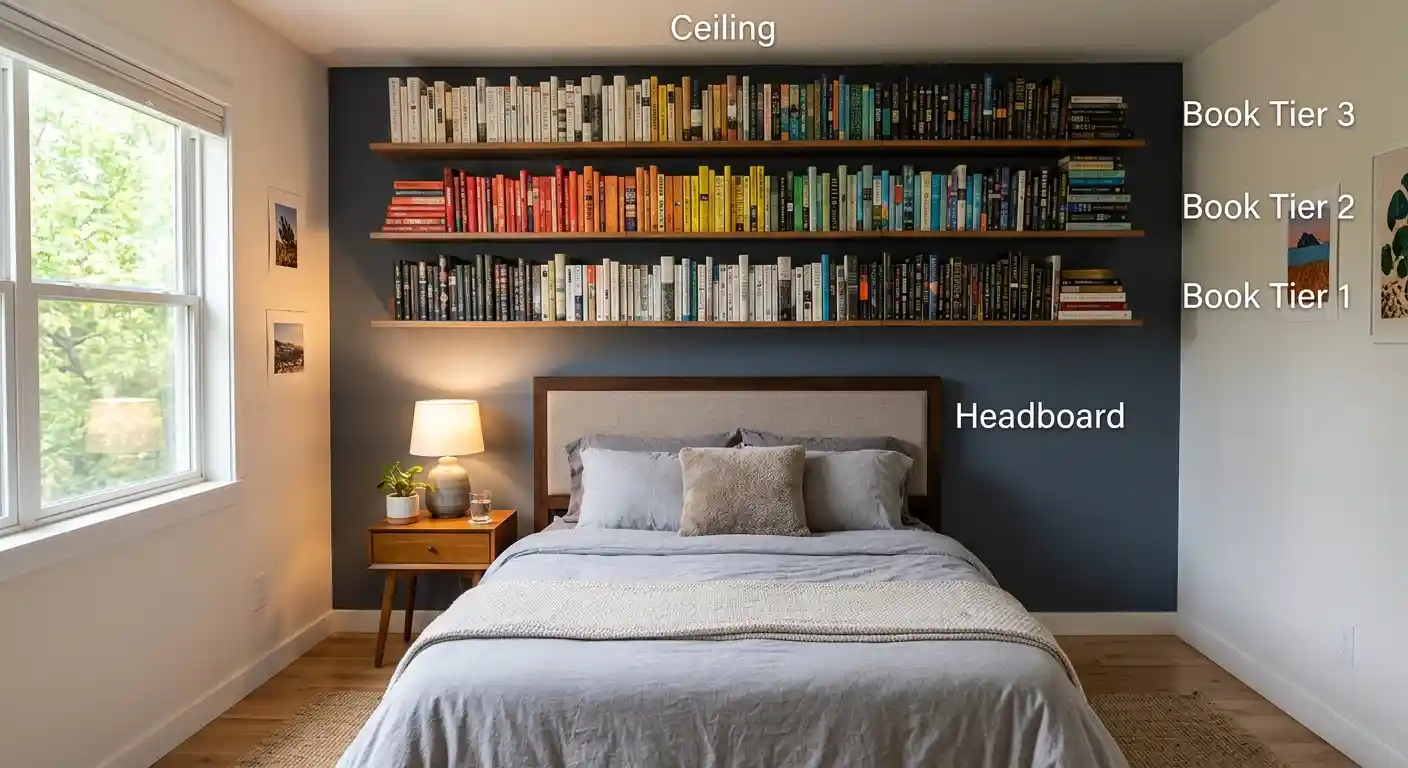
Almost nobody talks about this: bookshelf footprints can absolutely destroy a tight layout. Instead of a traditional freestanding bookcase, mount minimalist floating shelves all the way up to the ceiling in an unused corner or directly above your headboard.
[ Ceiling ]
  |===|  <- Book Tier 3
  |===|  <- Book Tier 2
  |===|  <- Book Tier 1
[ Headboard ]
Arranging your books vertically keeps your favorite reads within arm’s reach while turning your collection into a beautiful, colorful architectural feature that leaves your floor space completely untouched.
24. Repurpose a Vintage Storage Trunk
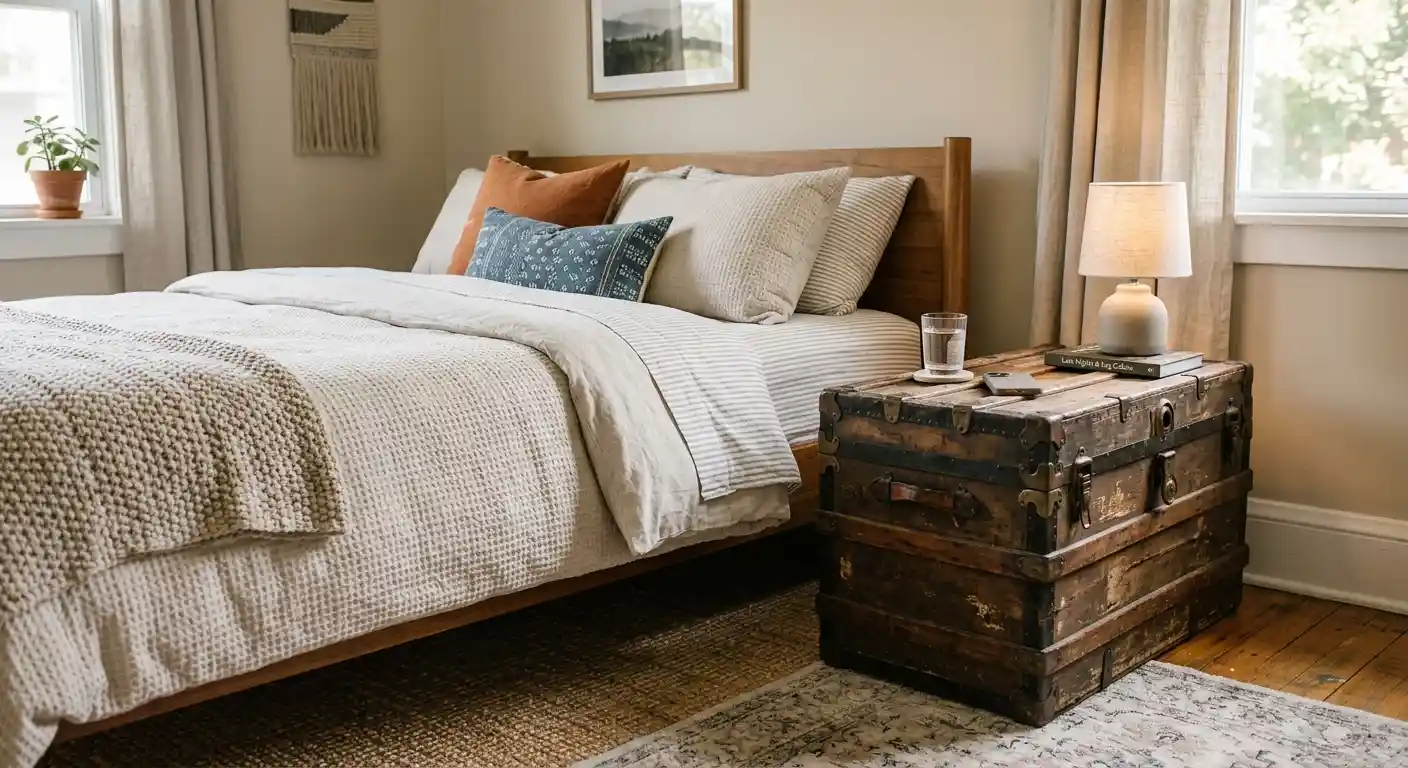
Instead of a standard, open-legged nightstand that offers very little functional value, place a beautiful vintage or modern storage trunk right beside your bed.
The top surface holds your evening glass of water and phone perfectly, while the cavernous interior serves as a hidden vault for heavy winter sweaters, spare pillows, or bulky items that don’t fit anywhere else. It’s an easy way to inject authentic personality into your space while tackling your toughest storage issues.
Frequently Asked Questions
How can I make a small bedroom feel larger without buying new furniture?
The fastest way to open up a room for free is to declutter the floors and clear off surface areas. Hang a large mirror directly across from your main window to bounce natural daylight around the room, and use the monochrome paint trick to blur the hard lines between your walls and ceiling.
Where should you place a bed in a small bedroom?
While design purists love a centered bed, in a truly small room, pushing the bed into a corner or flat against a long window wall is often the best layout. This opens up a single, large patch of usable floor space rather than leaving you with two useless, narrow walkways on either side of the bed.