
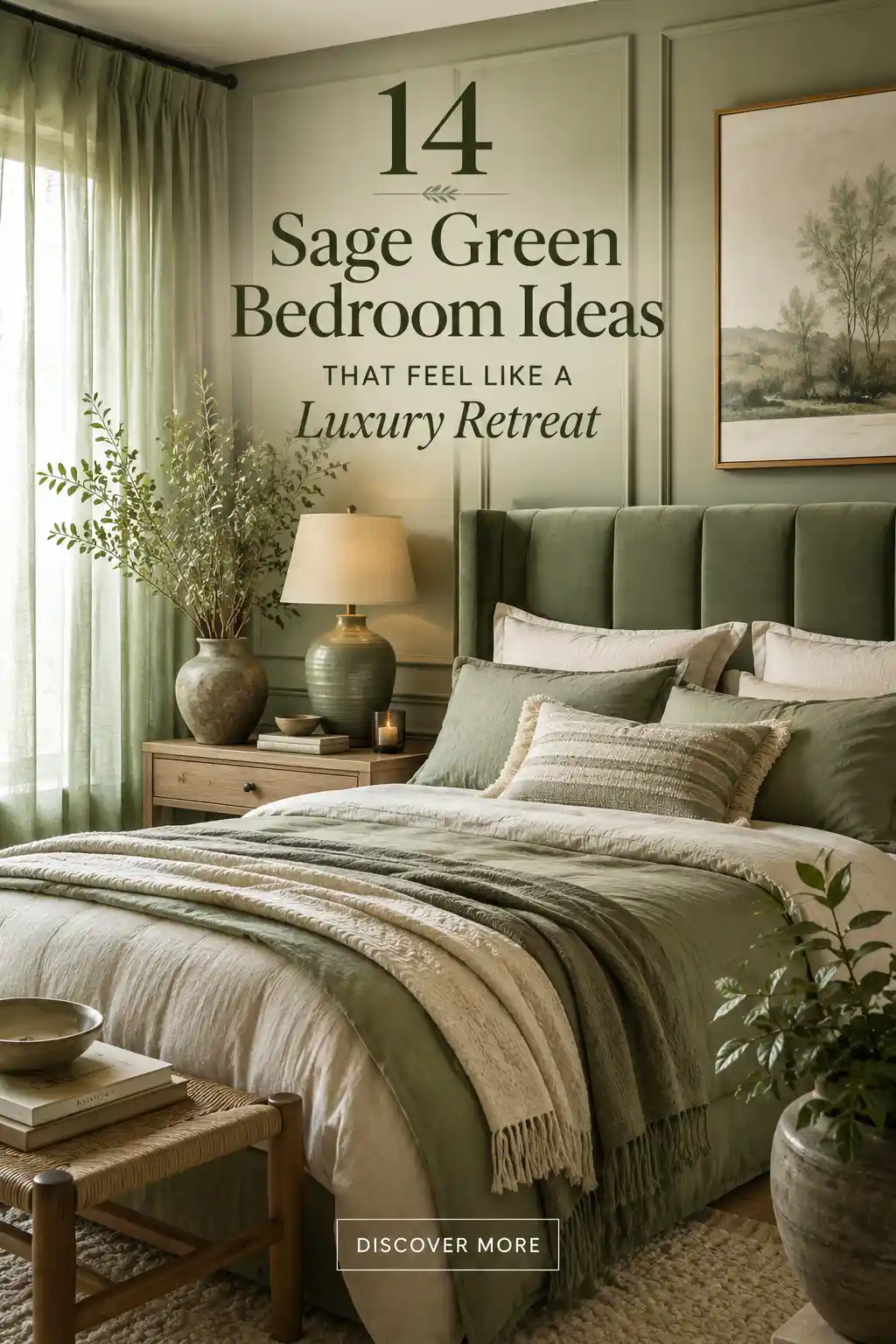
Transforming your bedroom into a true sanctuary starts with a color palette that promotes peace and restoration. Sage green, with its unique balance of organic warmth and cool, muted undertones, has become a favorite for designers looking to bridge the gap between nature and modern luxury. Whether you are aiming for a moody, editorial vibe or a light, airy coastal feel, this versatile hue provides the perfect foundation. In this guide, we explore how to integrate sage green through textiles, architecture, and accent pieces to create a space that feels both sophisticated and deeply relaxing.
Mastering the Art of Tonal Sage Layering
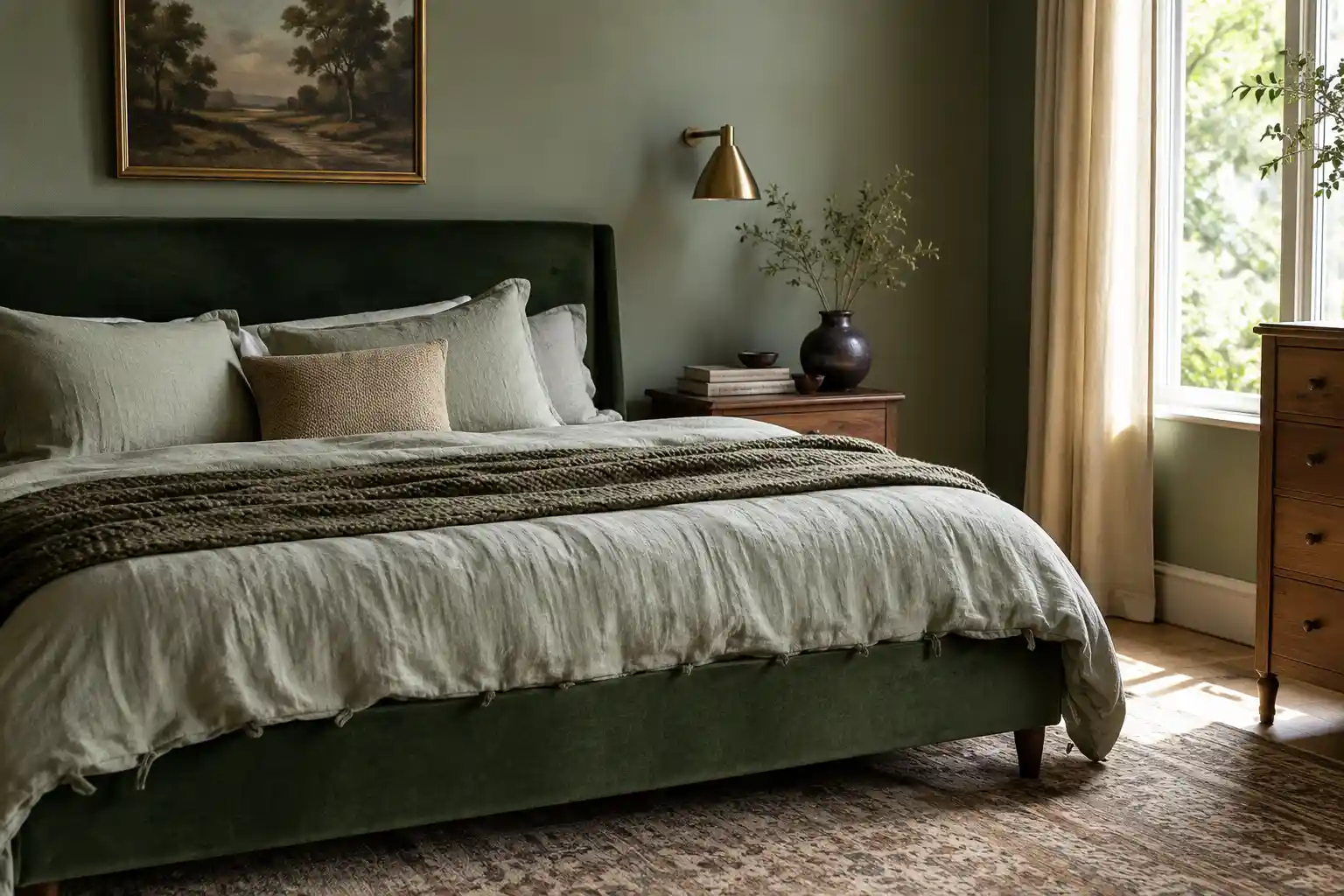
The most common mistake when designing a monochromatic room is using a single shade of color, which often results in a flat, uninspired look. To create a professional, designer-level space, you must embrace tonal layering. This involves mixing various depths of sage, from a dark, moody forest green for larger anchor pieces like the bed frame to a soft, muted mist for your linens and throws. By varying the saturation and value of the green, you create visual movement and a sense of luxury that feels curated rather than accidental.
Adding Dimension with Architectural Wall Paneling
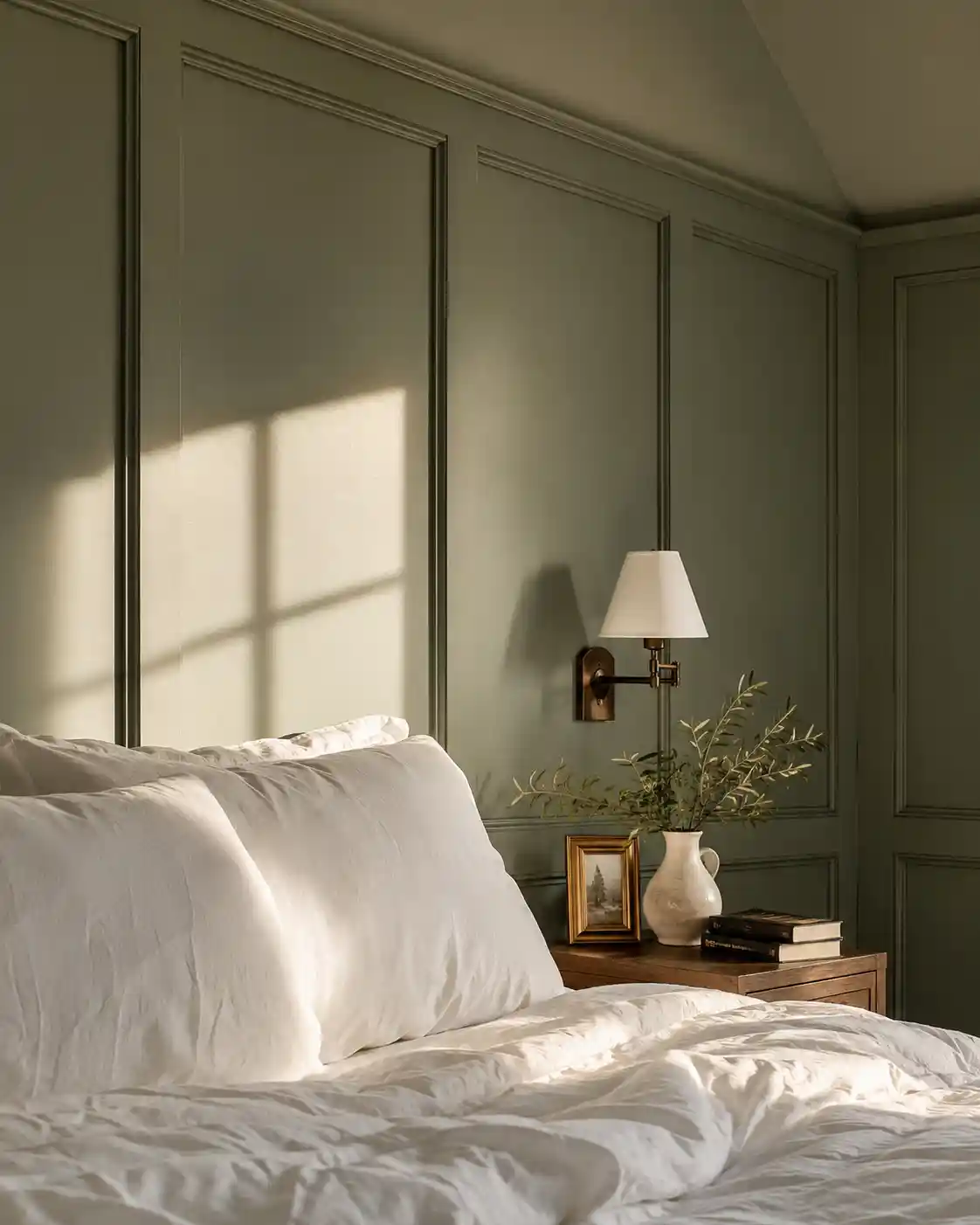
If you feel that flat paint is too simplistic, introducing architectural elements can completely transform the mood of your bedroom. Wall paneling, such as board and batten, skinny vertical slats, or classic shiplap, adds a tactile quality that interacts beautifully with light. As the sun moves across the room, the recessed areas of the paneling create a natural gradient of shadows, giving the sage green a dynamic, multi-dimensional appearance. This technique adds a touch of timeless craftsmanship while keeping the room feeling modern and fresh.
Creating a Visual Escape with Botanical Murals
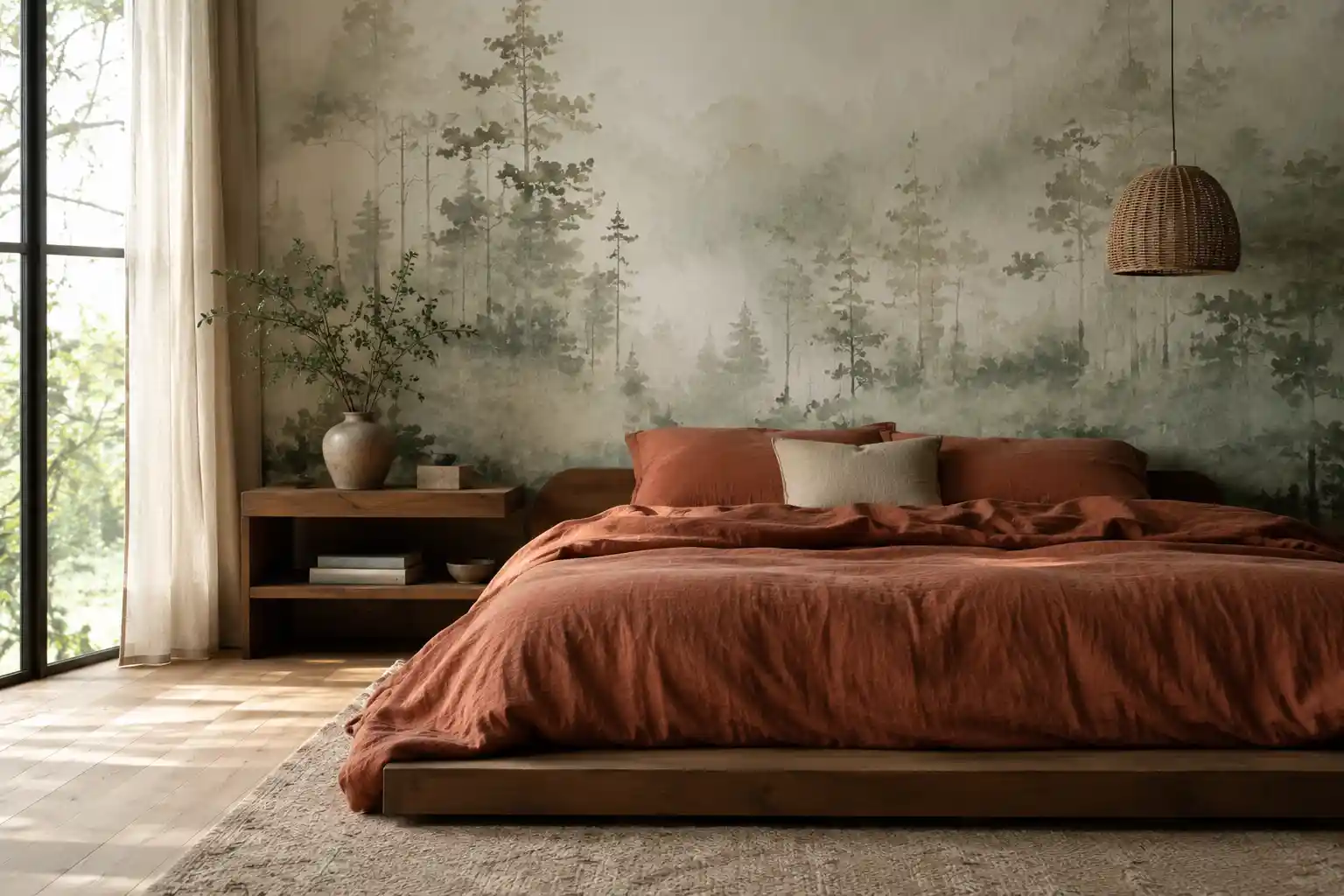
Bringing the outdoors inside is the essence of the sage green aesthetic. While paint is a great start, a large-scale botanical mural can act as a visual escape, instantly lowering stress levels. Opt for desaturated, watercolor-style imagery—such as a misty eucalyptus grove or a soft forest scene—to avoid the room looking like a nursery. To balance the cool tones of a mural, introduce warm accents like terracotta or burnt orange linens, which create a sophisticated, earthy friction that feels high-end and intentionally designed.
Defining the Space with a Sage Velvet Headboard
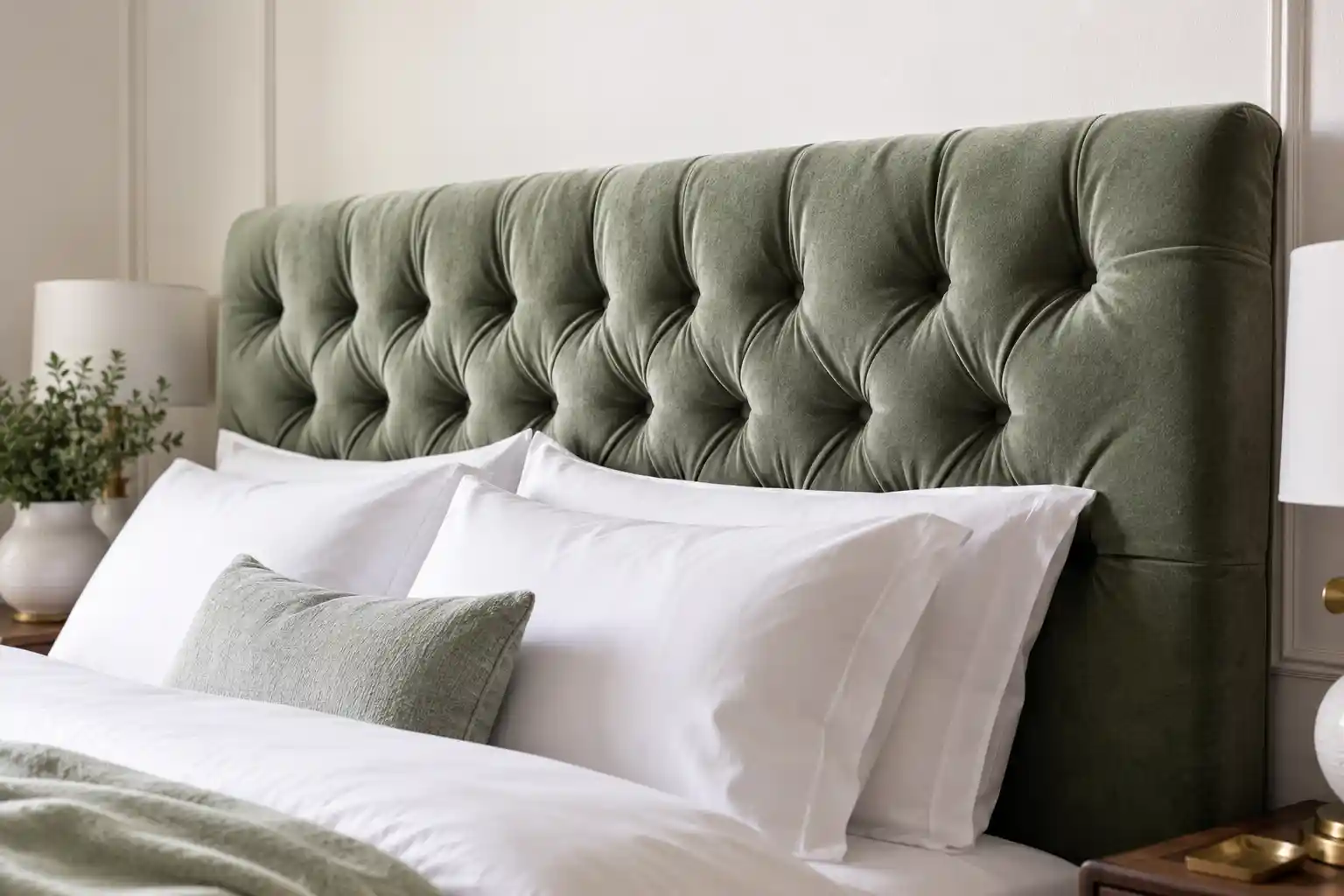
You don’t have to commit your entire wall surface to color to make a statement. A plush, upholstered headboard in sage green velvet serves as a stunning focal point that anchors the rest of the room. This approach allows you to keep your walls a bright, clean white or a soft cream, ensuring the space remains airy while still feeling colorful. The tactile nature of velvet adds an immediate layer of luxury and comfort, transforming a standard bed into a piece of architectural furniture.
Minimalist Nooks with Floating Oak Shelves
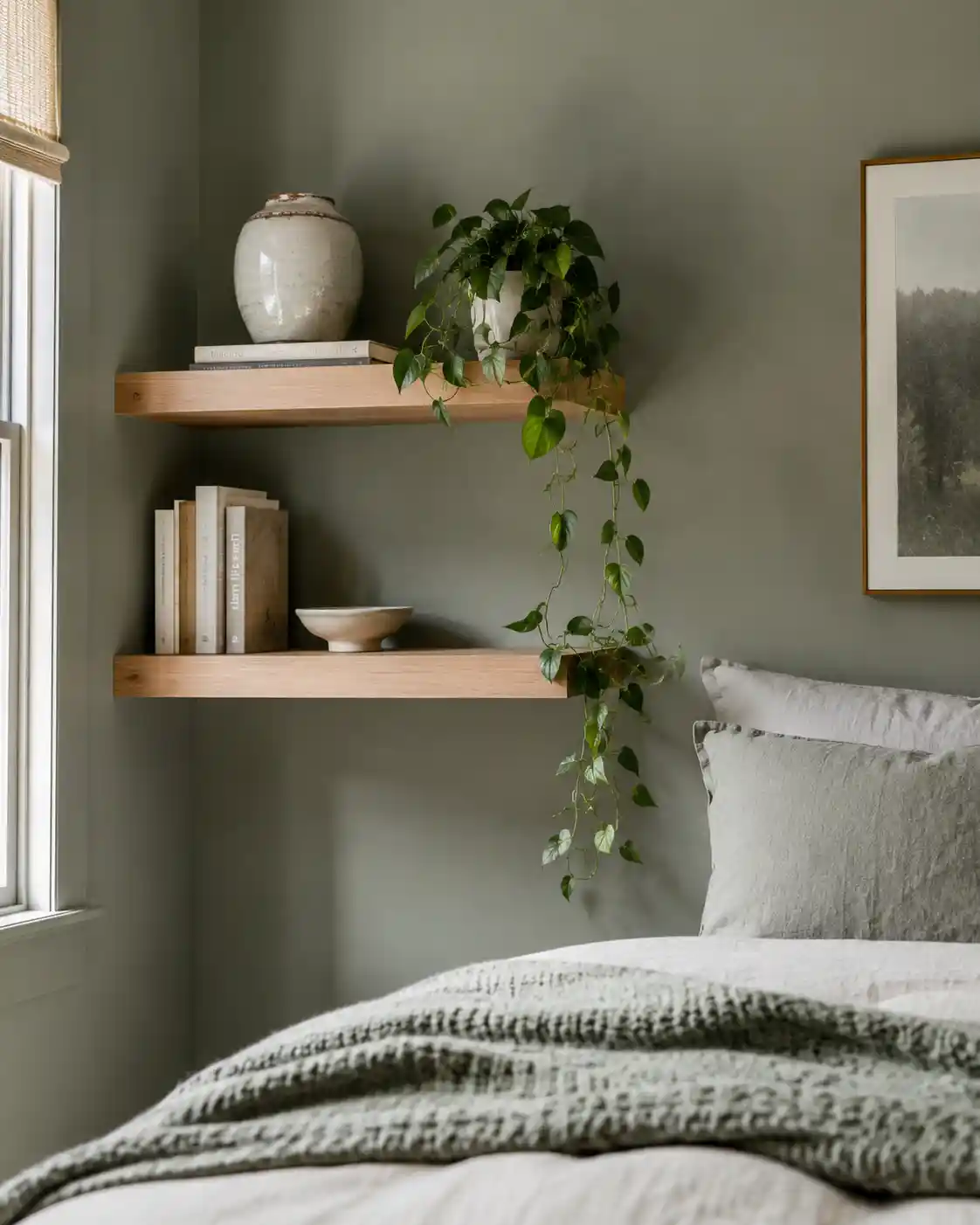
In smaller bedrooms, the goal is to create impact without adding bulk. A minimalist approach using floating oak shelves against a desaturated sage backdrop achieves this perfectly. The key is to avoid clutter; instead, curate a few meaningful objects, such as an unglazed ceramic pot or a single trailing plant. The contrast between the organic greenery of the plant and the muted green of the wall creates a subtle, sophisticated depth that makes the room feel larger and more breathable.
Introducing Edge with Matte Black Hardware
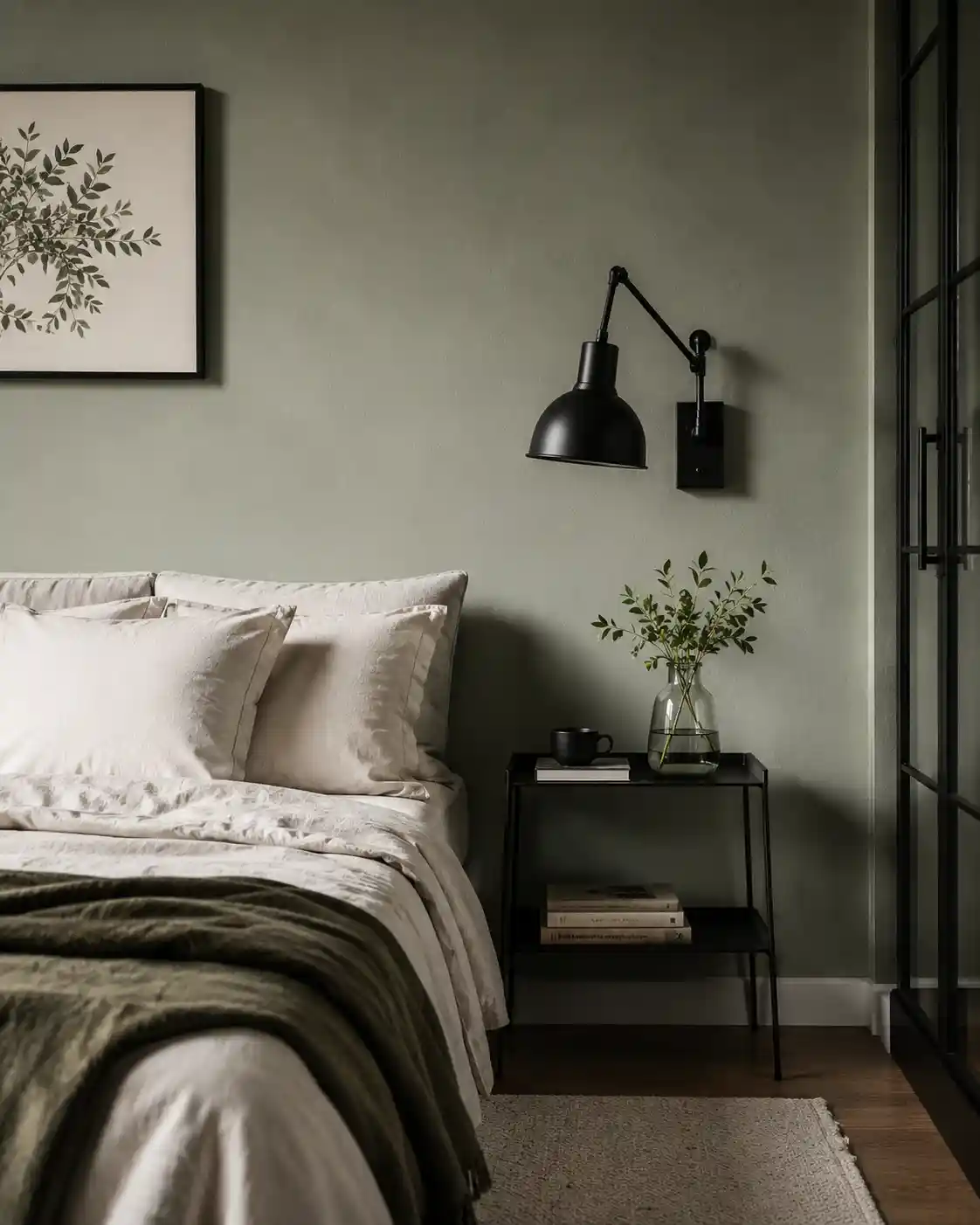
Sage green is inherently soft and calming, but it can sometimes lean too far into the ‘sweet’ or ‘delicate’ category. To give the room a more contemporary, editorial edge, introduce matte black accents. Think slim metal picture frames, industrial wall sconces, or a sleek black accent chair. Following an 80/20 rule—80% soft tones and 20% sharp, structural elements—prevents the room from feeling overly precious and gives it a grounded, masculine balance that feels balanced and modern.
Unifying the Palette with Abstract Gallery Art
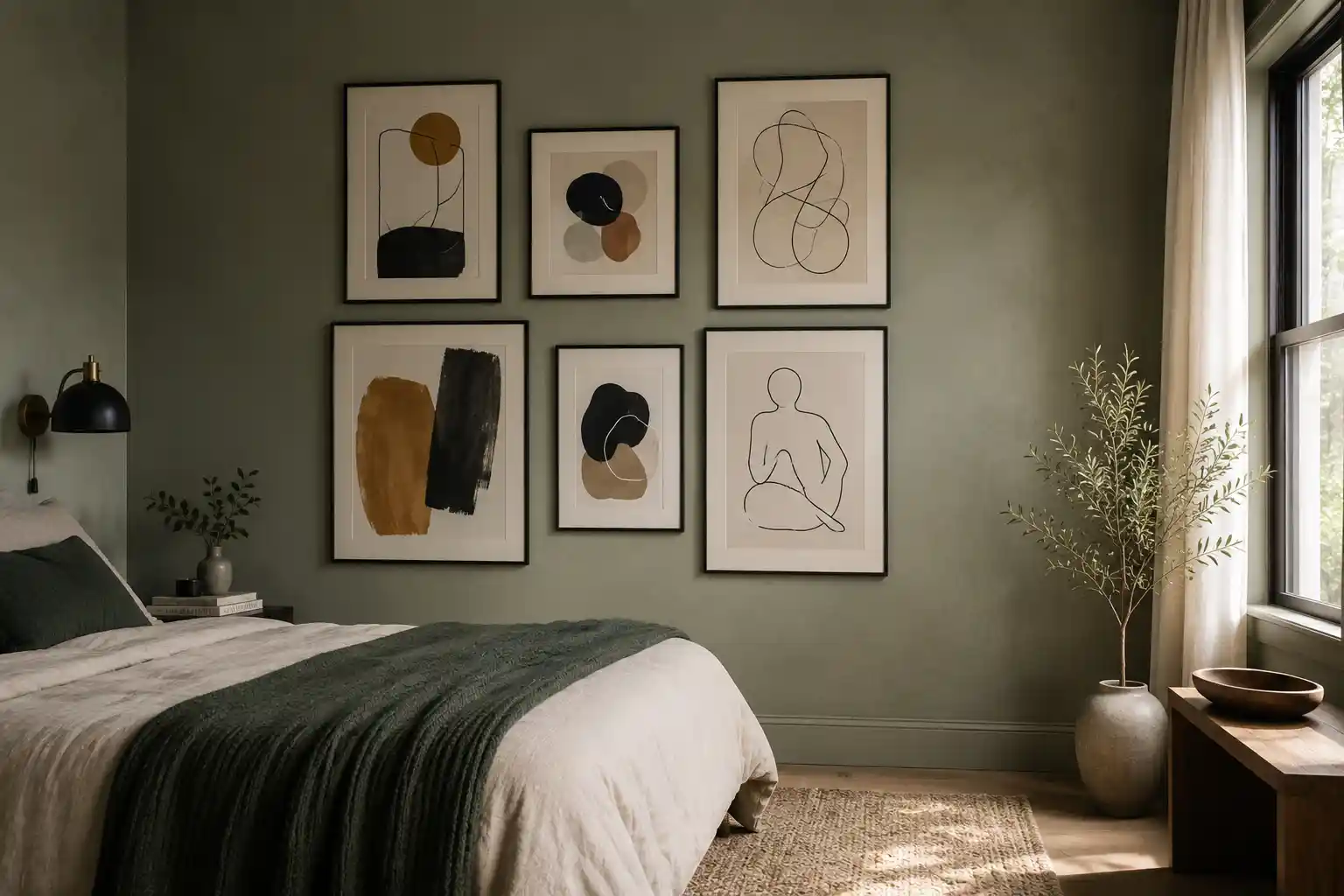
Art is the secret weapon for unifying a room’s color scheme. When working with sage walls, choose abstract pieces or triptychs that incorporate bridging colors. Look for art that features warm ochre, soft charcoal, or clay tones; these colors act as a visual link between your wall paint and your bedding. This intentional coordination makes the entire design feel like a conscious decision, elevating the room from a simple bedroom to a curated gallery space that feels sophisticated.
Setting the Mood with Sculptural Ceramic Lighting
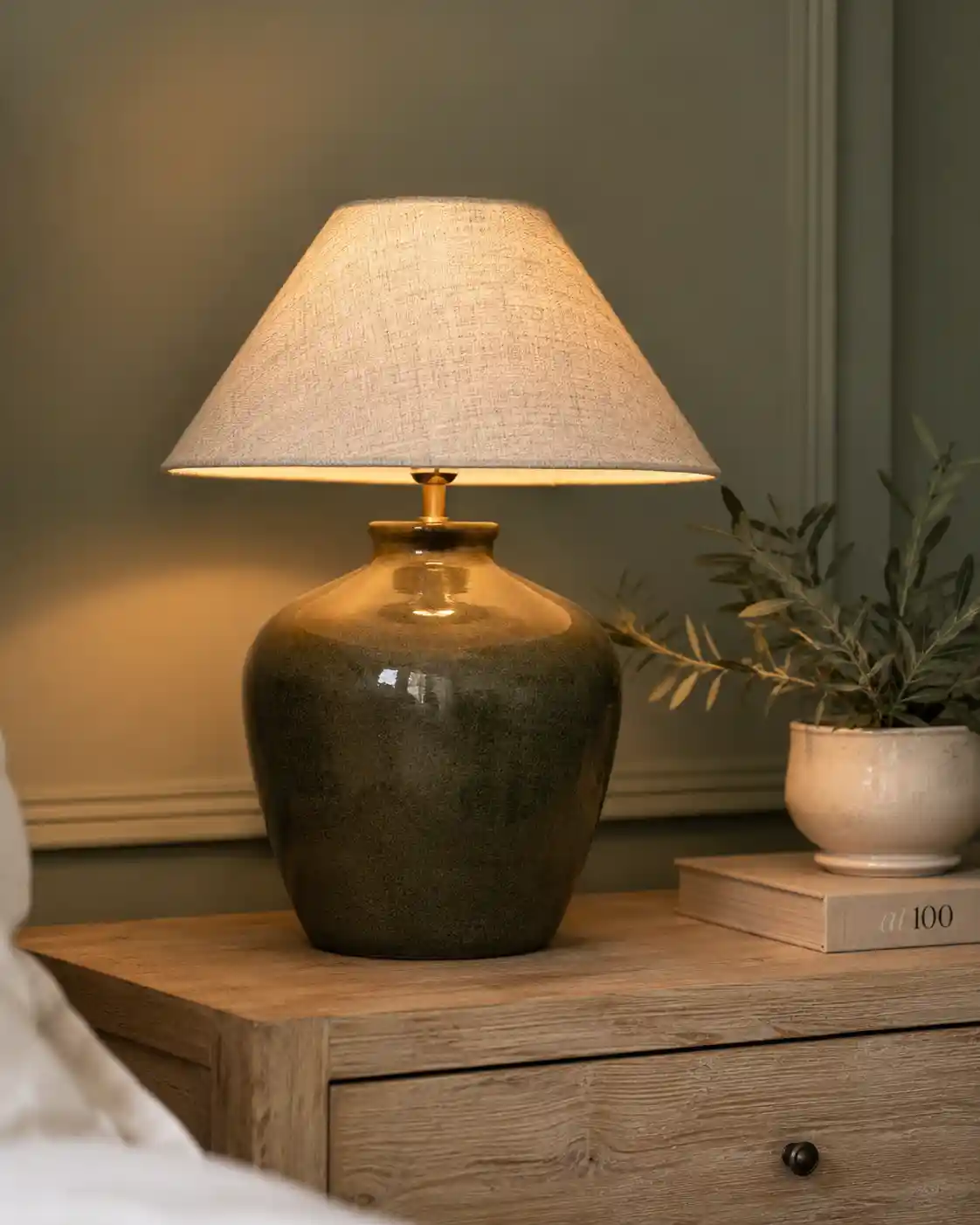
Lighting is the most critical element for establishing a cozy, restorative atmosphere. Instead of basic lamps, opt for sculptural ceramic pieces in deep moss or sage glazes. These act as functional art pieces on your nightstand. Pairing these with warm-toned bulbs (around 2700K) creates a golden, diffused glow that bounces off the green surfaces, enhancing the room’s sense of warmth. The combination of organic ceramic textures and soft light ensures the space feels inviting as the day ends.
Elevating Height with Floor-to-Ceiling Linen Drapery
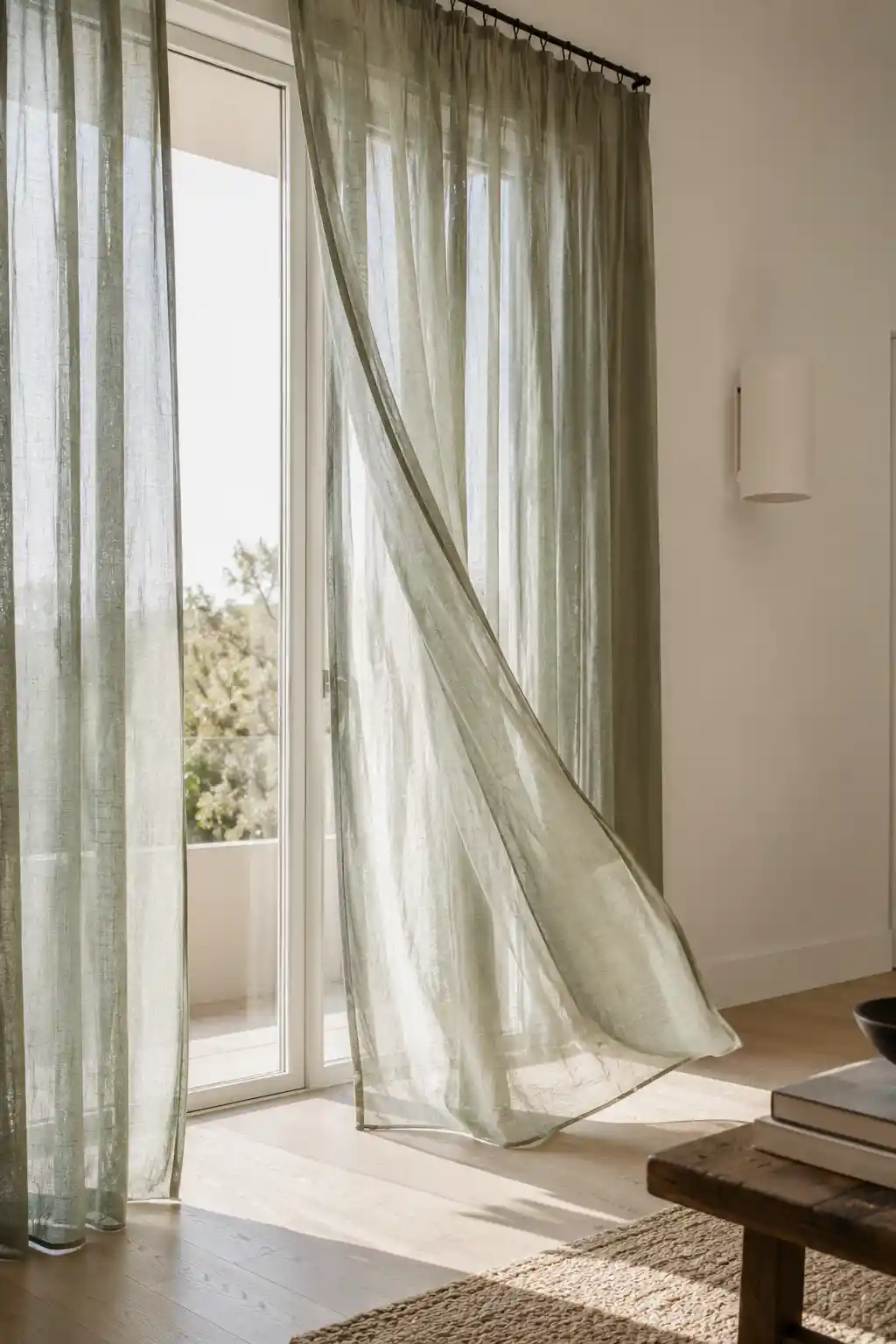
To give your bedroom the feeling of a high-end boutique hotel, focus on your window treatments. Hanging linen curtains in a muted sage shade from the ceiling down to the floor creates a vertical line that draws the eye upward, instantly making the ceilings feel higher. Choosing a lightweight fabric allows for a gentle, kinetic movement when the window is open, adding to the airy, retreat-like quality of the room. This adds a layer of softness that balances the harder lines of the furniture.
The Warmth of Earthy Clay and Taupe Pairings
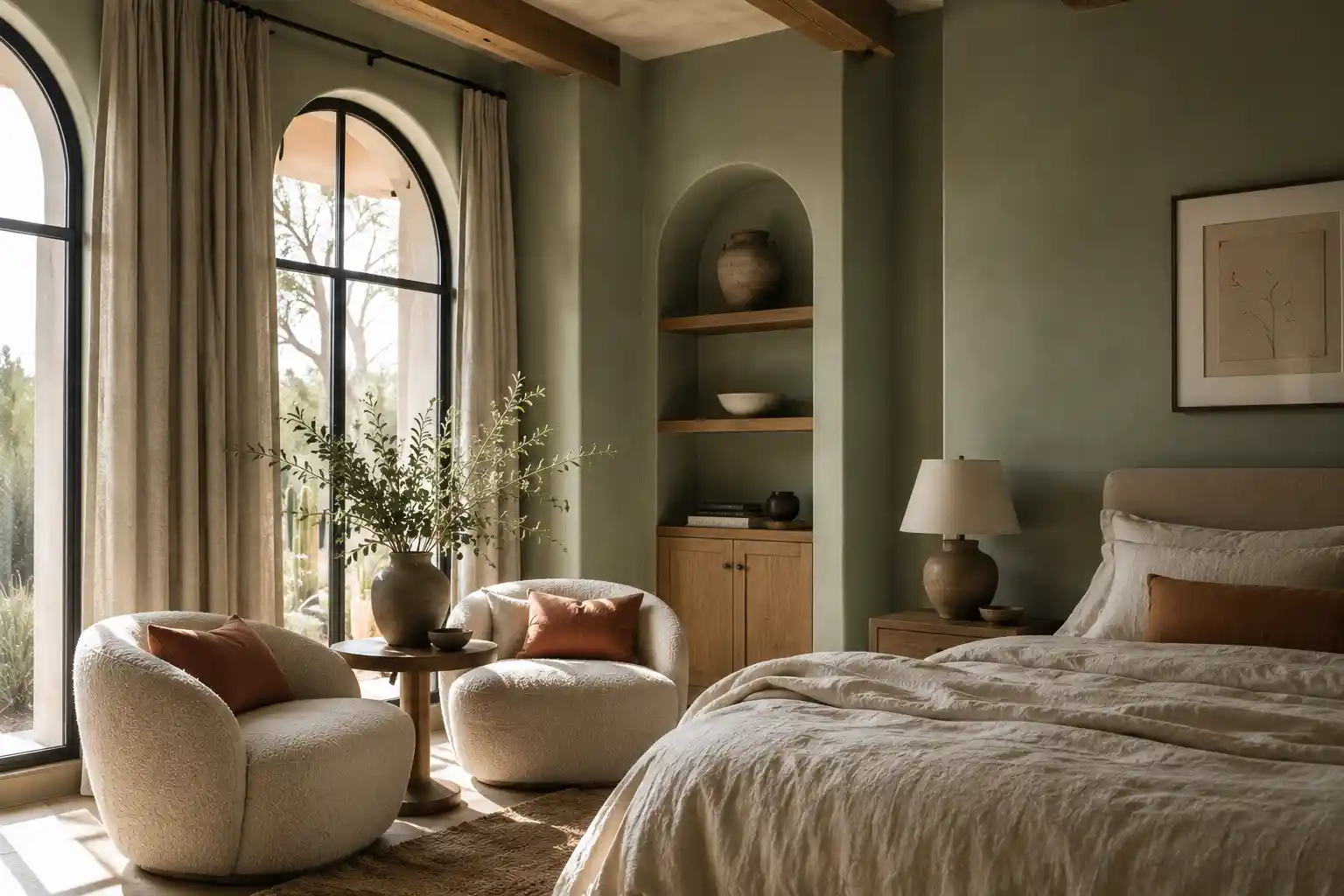
For those who prefer a warmer, more grounded aesthetic, pairing sage green with earthy tones like taupe, sandy cream, and raw clay is the perfect strategy. The cool undertones of sage provide a refreshing contrast to the fiery warmth of terracotta or the neutrality of taupe. This ‘earthy chemistry’ creates a sun-washed, organic atmosphere that feels cozy in the winter and fresh in the summer. Utilizing materials like bouclé and raw linen further enhances this tactile, natural feeling.
Bringing a Bohemian Touch with Rattan and Palms
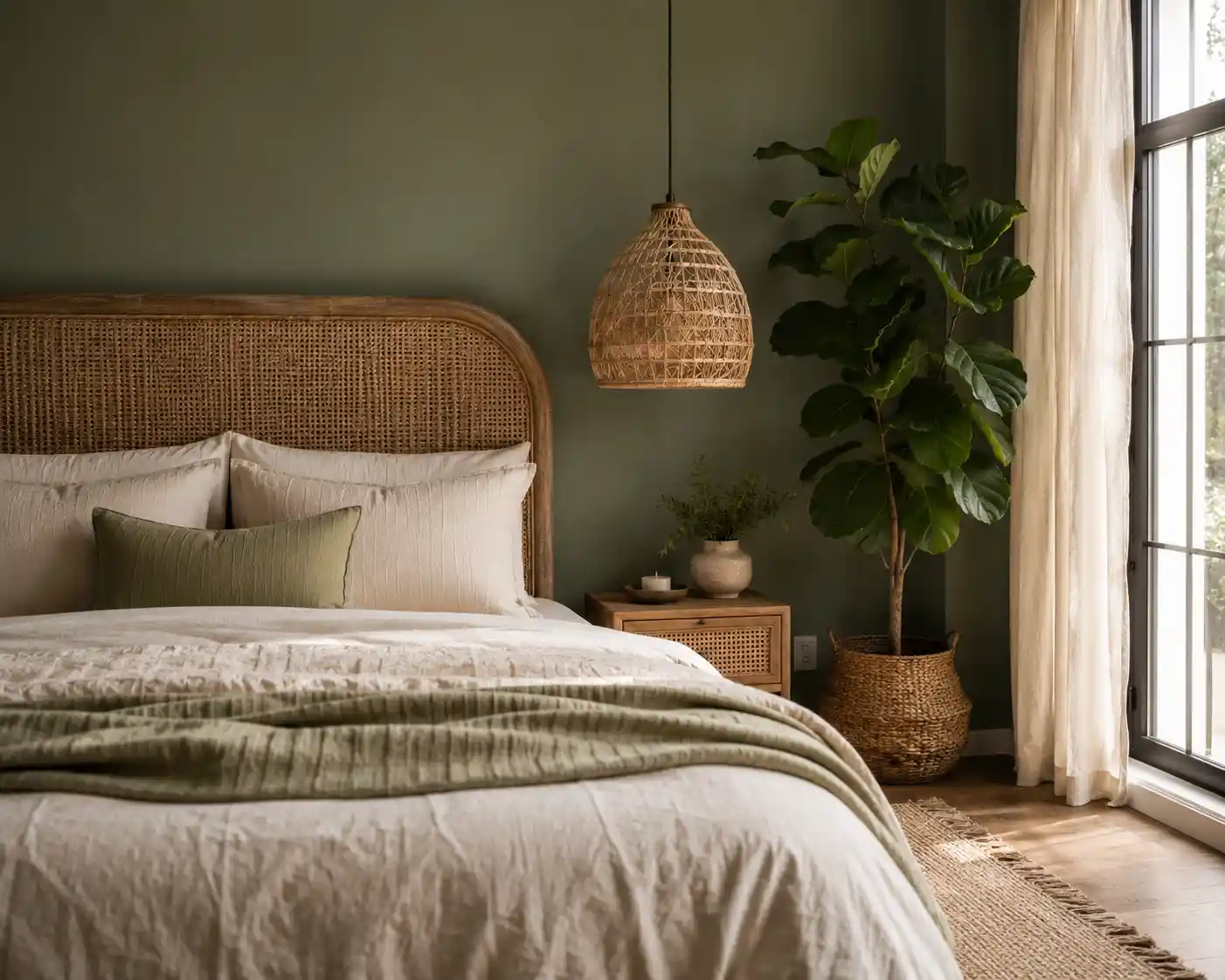
To create a layout that feels alive and vibrant, integrate natural rattan furniture and lush indoor greenery. A woven rattan headboard or a pendant light adds a bohemian, textural element that complements the organic nature of sage green. Placing a large fiddle-leaf fig or a monstera plant against a sage wall creates an intelligent play of greens—the vivid, saturated color of the real leaves pops beautifully against the muted, smoky quality of the paint, making the room feel like a tropical escape.
Creating a Cocoon with a Sage Green Ceiling
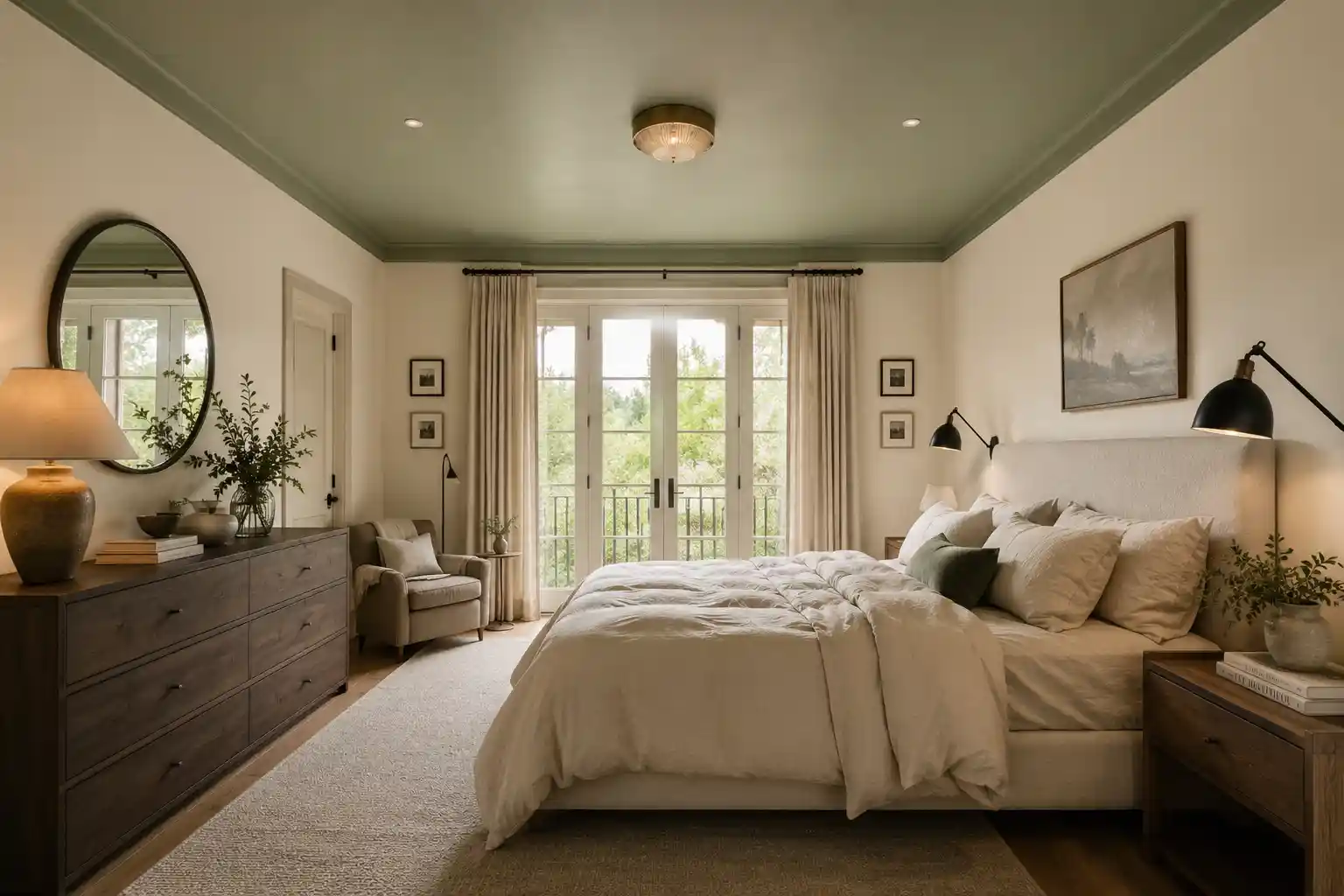
While most people focus on the walls, the ceiling—often called the ‘fifth wall’—is an untapped opportunity for design. Painting the ceiling in a soft sage green creates a ‘cocoon’ effect, making the room feel more intimate and enclosed in a comforting way. This works especially well in rooms with high ceilings where you want to bring the visual scale down to create a sense of security and warmth. Pair this with light-colored walls to ensure the room doesn’t feel too dark.
Brightening the Space with Cream and Ivory Accents
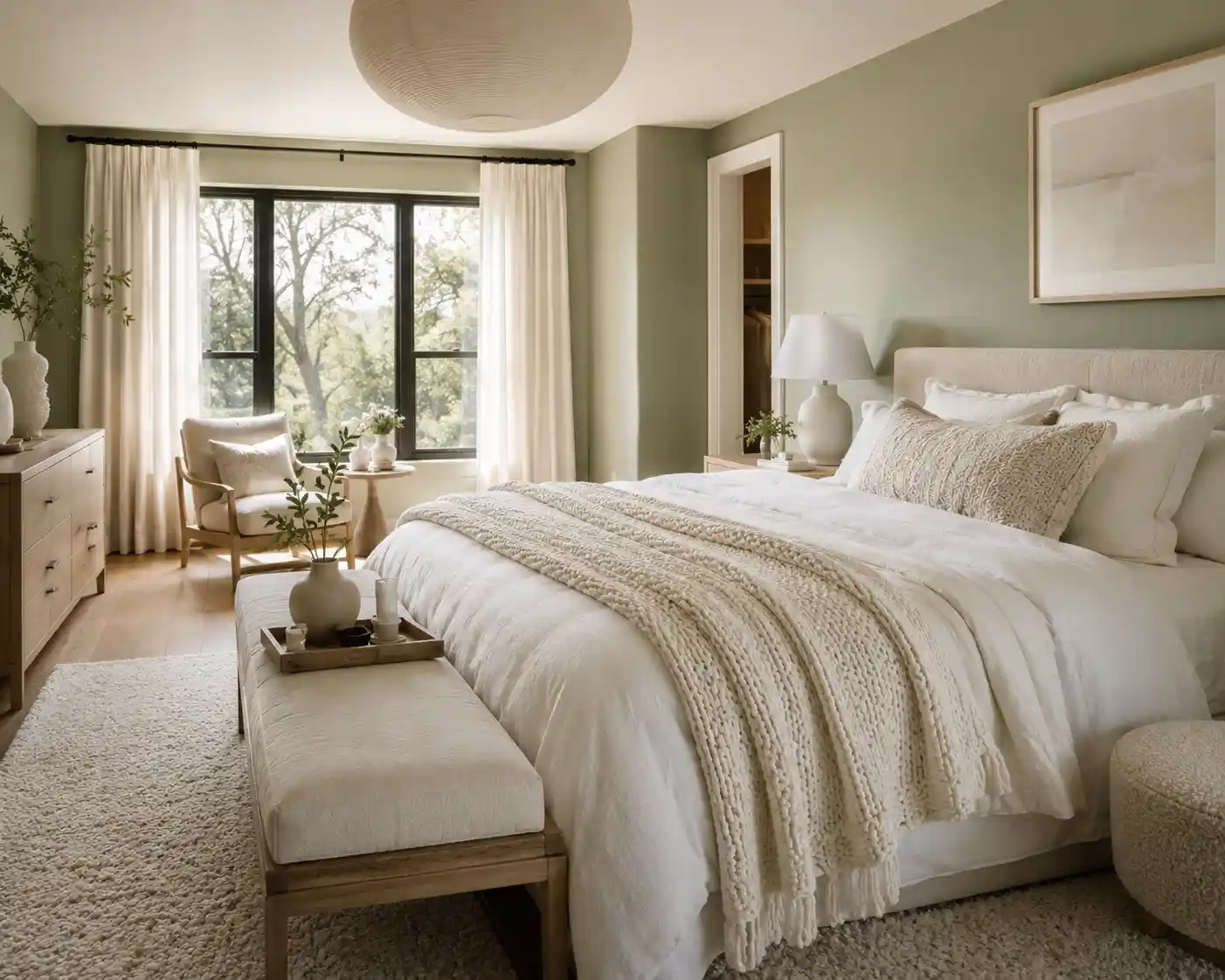
If your goal is to maximize brightness and purity, pair your sage green elements with a palette of cream, ivory, and bright white. This combination creates a high-contrast yet soft look that feels incredibly clean and serene. Use a thick ivory wool rug to anchor the room and layer cream knit blankets over the bed. This strategy allows the sage green to act as a refreshing accent rather than a dominant force, resulting in a space that feels open, airy, and timelessly elegant.
Designing a Cozy Sage Reading Nook
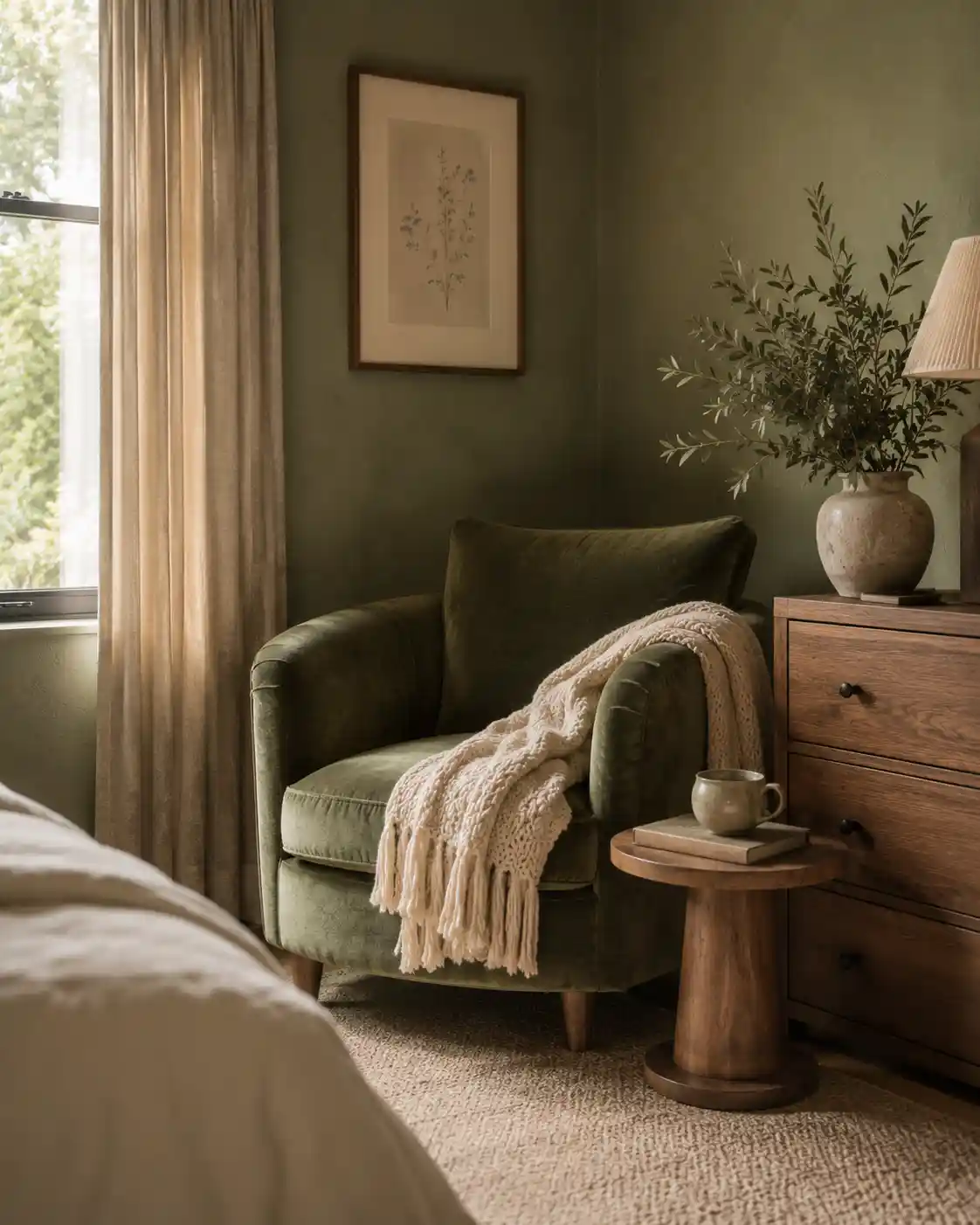
Every sanctuary needs a dedicated space for relaxation. Create a cozy reading nook by placing a plush sage green velvet armchair in a quiet corner of the room. Complement the chair with a small, open-grain wood side table and a layered arrangement of neutral throws. By concentrating the color in this specific zone, you create a visual destination within the bedroom that encourages mindfulness and slowing down, completing the transformation of your space into a restorative oasis.