
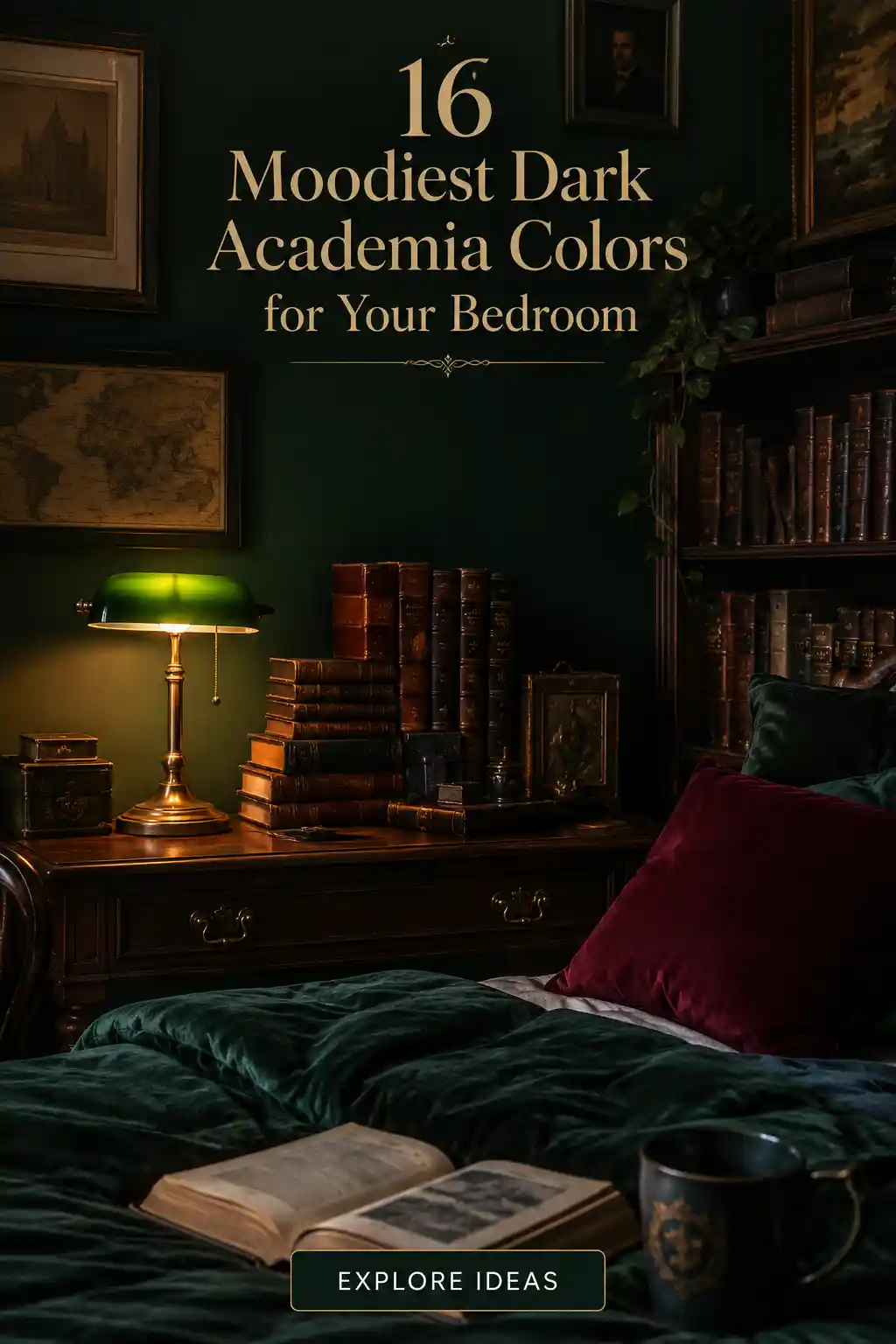
Stepping into a dark academia bedroom is like entering a timeless sanctuary dedicated to the pursuit of knowledge and the beauty of the past. This aesthetic blends the intellectual rigor of prestigious universities with the moody, mysterious allure of gothic architecture and classic literature. The secret to mastering this look lies in a sophisticated color palette that evokes a sense of history and quiet contemplation. By blending deep jewel tones, earthy neutrals, and rich wood finishes, you can transform your sleeping space into a cozy, private library where you can lose yourself in a novel for hours.
Deep Forest Green
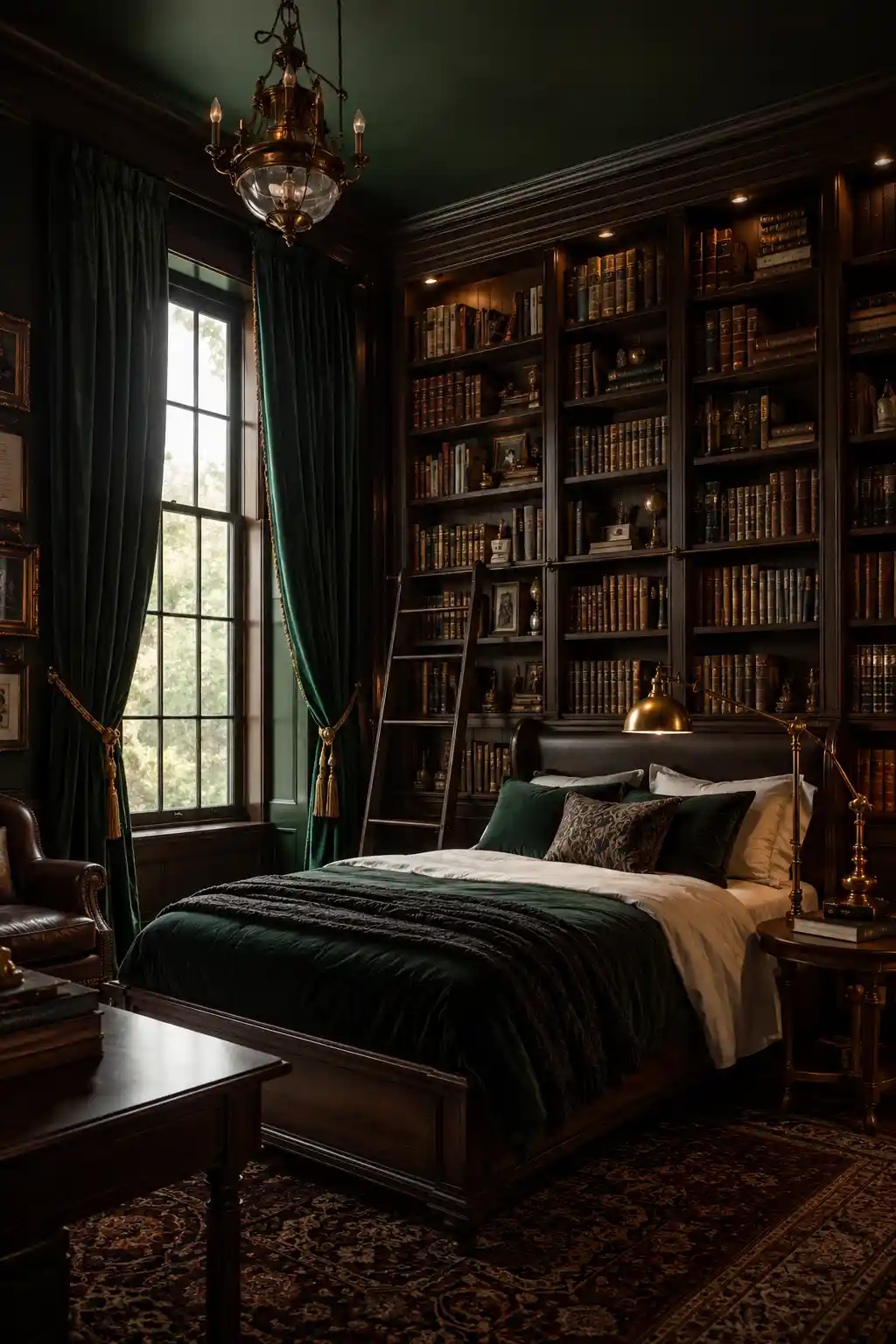
Deep forest green is the quintessential choice for anyone wanting to emulate the feel of a secluded university library. This rich, grounding hue creates an immediate sense of mystery and intellectual depth. To prevent the room from feeling too dark, pair these walls with warm metallic accents, such as brass picture frames or a gold-leafed mirror. Incorporating heavy textures like velvet upholstery and wool throws adds a layer of tactile luxury that complements the scholarly vibe. When paired with dark wooden furniture, forest green transforms the bedroom into a sophisticated sanctuary perfect for late-night reading sessions.
Sophisticated Charcoal Gray
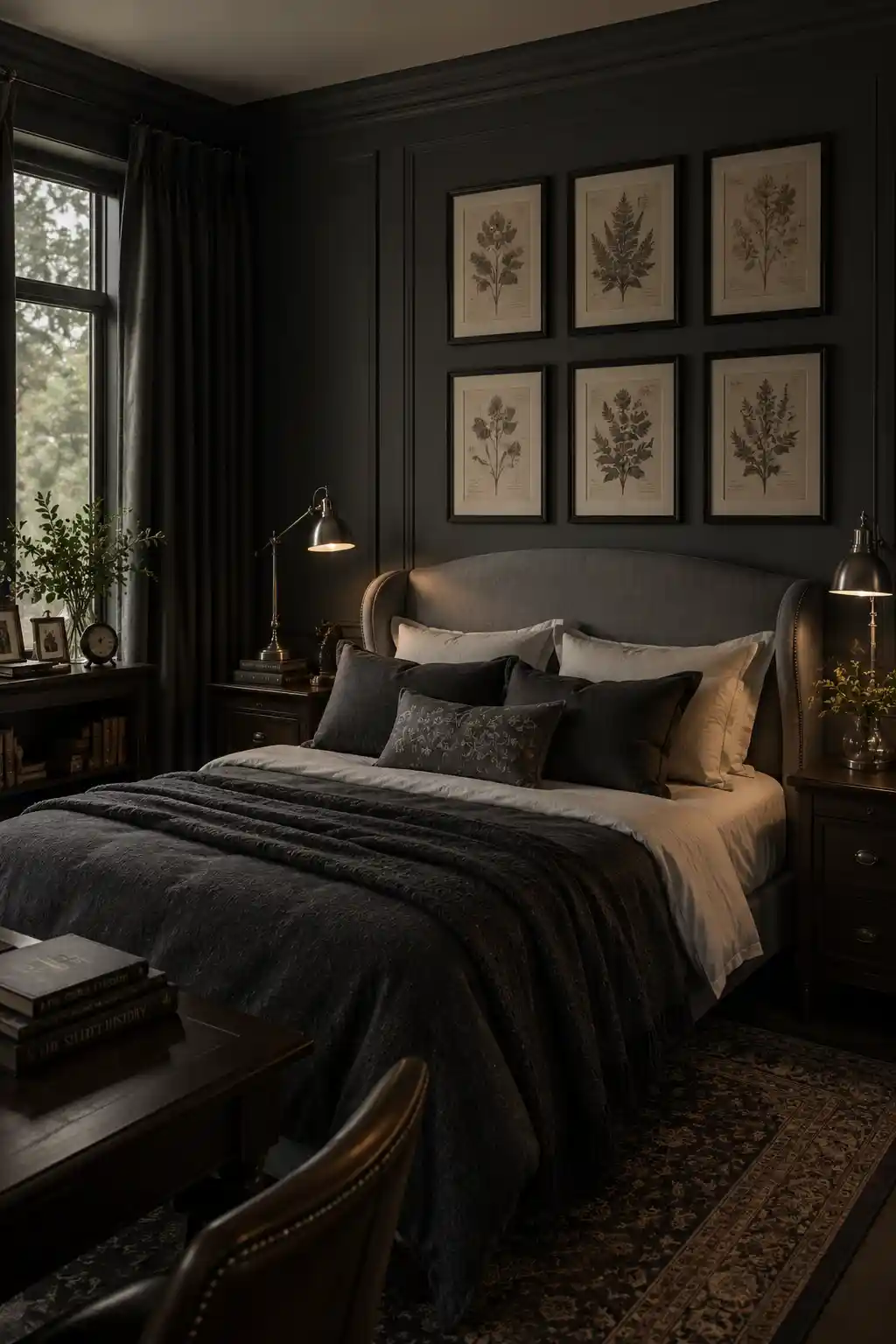
Charcoal gray offers a more muted, sober approach to the dark academia aesthetic, mimicking the weathered stone of ancient campus buildings. This neutral yet moody shade provides a stunning backdrop for art collections and scientific prints. To keep the space inviting, layer in a variety of textures, such as a chunky knit rug or linen bedding in softer shades of gray and white. This color palette emphasizes a quiet, focused environment, making it ideal for those who use their bedroom as a space for both deep sleep and scholarly contemplation.
Regal Burgundy Red
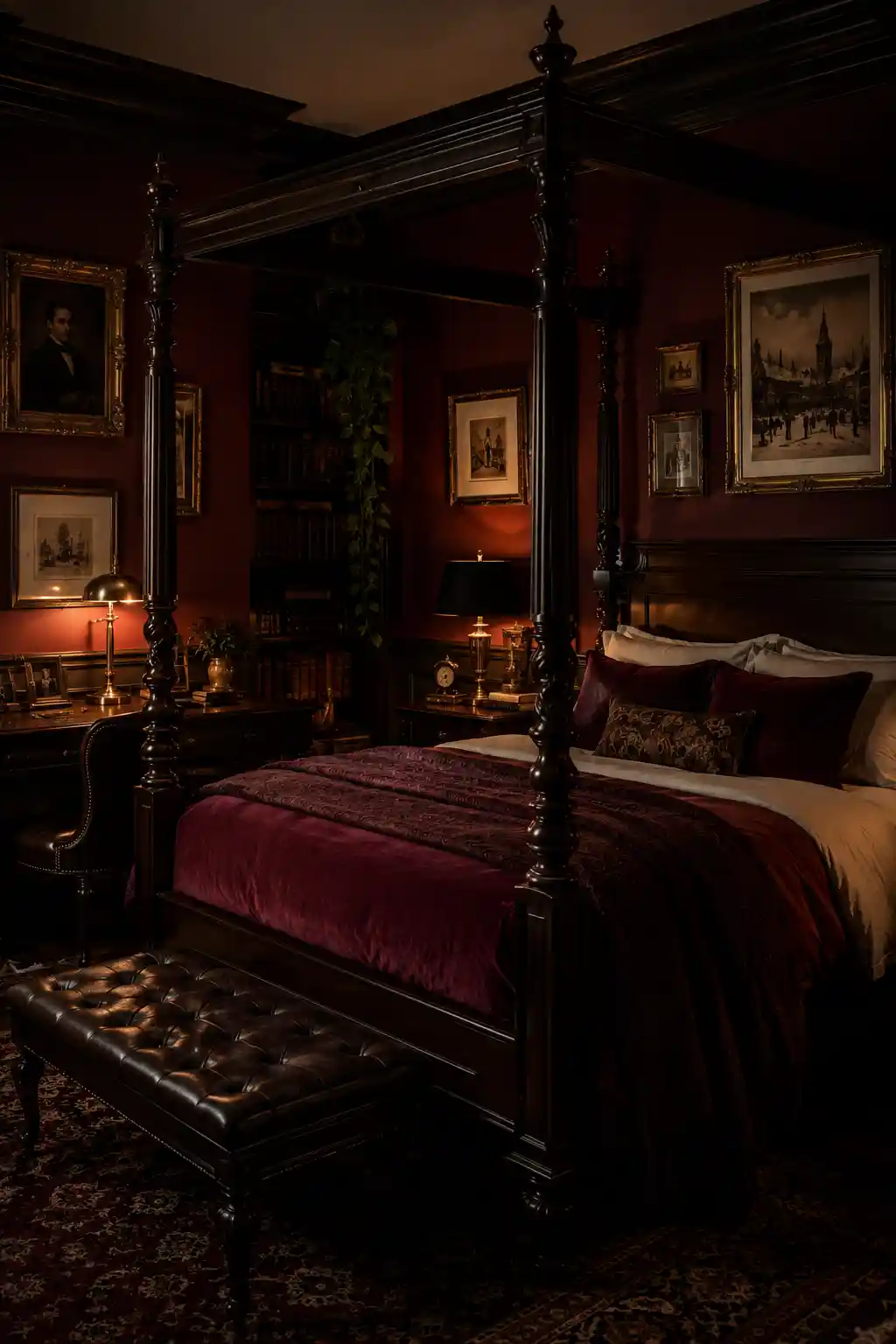
Burgundy red brings a touch of Victorian opulence and passion into the bedroom. This deep, wine-inspired hue is perfect for creating a dramatic focal point, especially when used on a headboard wall or through heavy drapery. To balance the intensity of the red, integrate dark walnut furniture and cream-colored accents to maintain a high-end, scholarly look. Burgundy evokes the feeling of an old-world study filled with leather chairs and parchment, making it an excellent choice for those who want their bedroom to feel like a regal private archive.
Classic Navy Blue
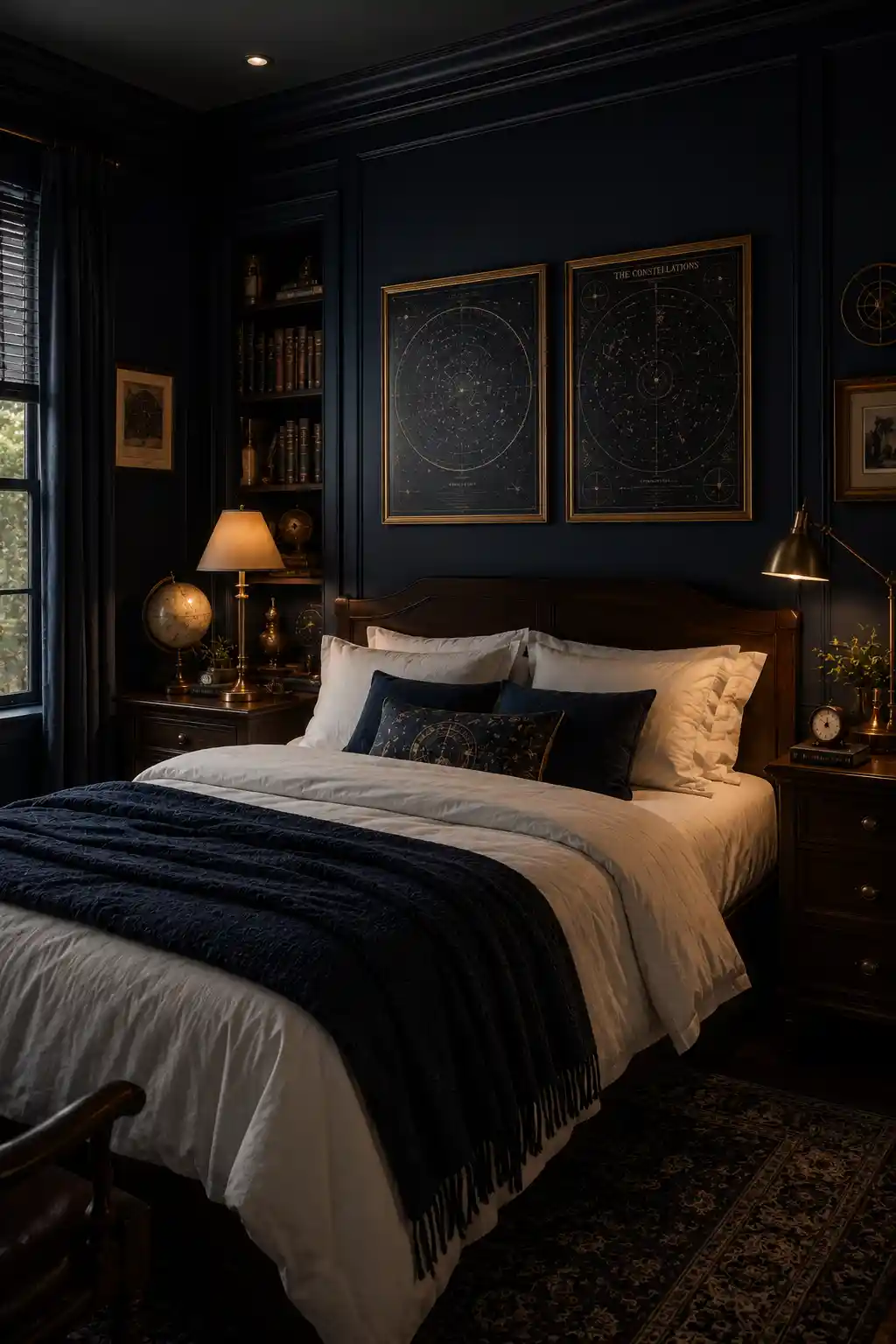
Navy blue provides a sophisticated alternative to black or green, offering a sense of expansiveness while remaining intimate. It recalls the prestige of university blazers and the silence of a midnight sky. This color pairs exceptionally well with bright white linens and dark, polished woods, creating a striking visual contrast that feels clean yet scholarly. To lean further into the academic theme, add celestial globes or vintage nautical maps, which introduce a scientific element to the design and keep the room feeling intellectually curious.
Rich Chocolate Brown
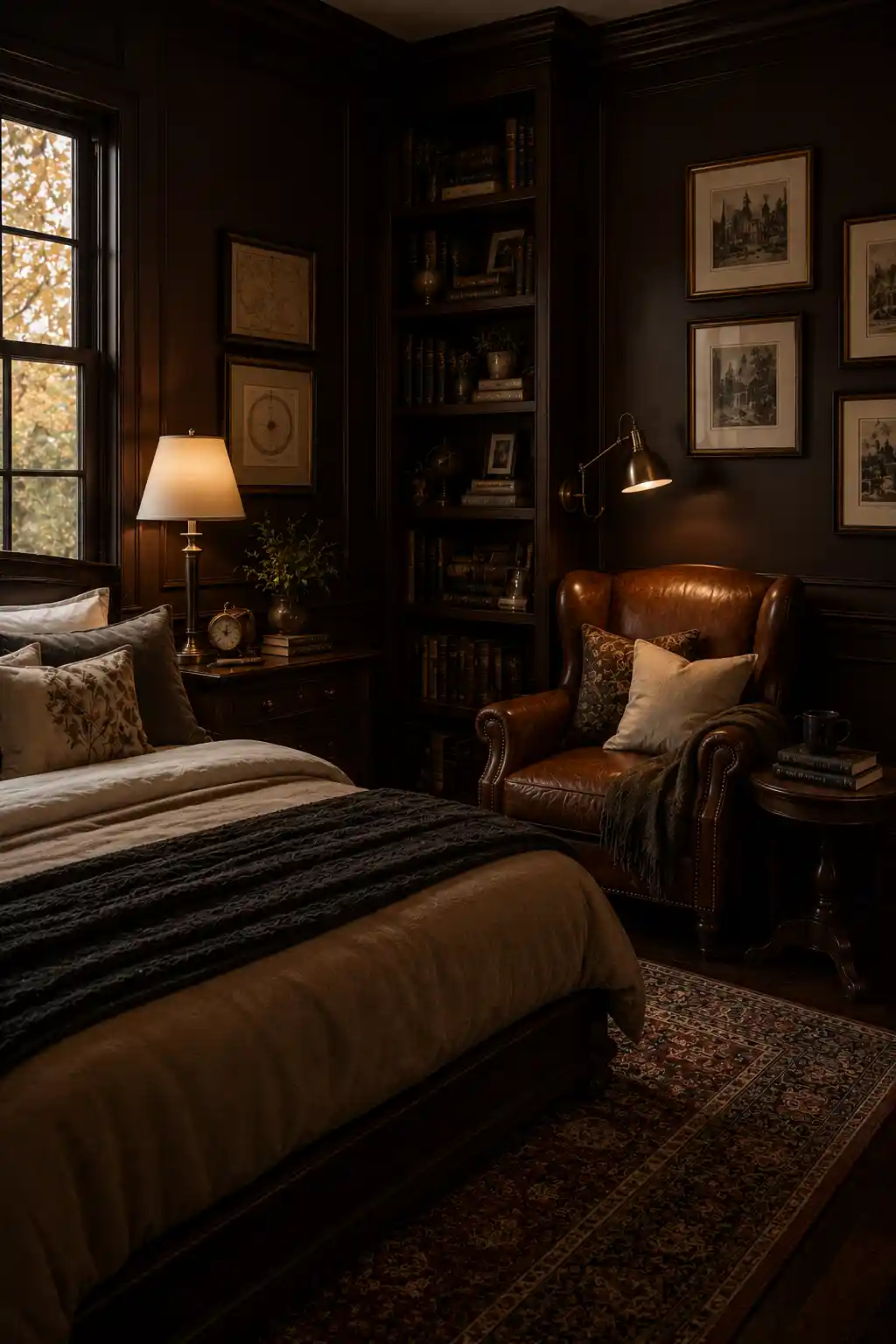
Chocolate brown is the ultimate earthy tone for achieving an authentic, lived-in vintage look. It reflects the natural materials found in historic libraries, from mahogany desks to leather-bound journals. To avoid the room feeling too heavy, blend different shades of brown through layering—think a tan leather chair, a dark espresso dresser, and a camel-colored throw. Adding cream or beige textiles prevents the space from feeling claustrophobic, allowing the rich colors of your book collection to stand out as the primary decorative elements.
Vintage Ochre Yellow
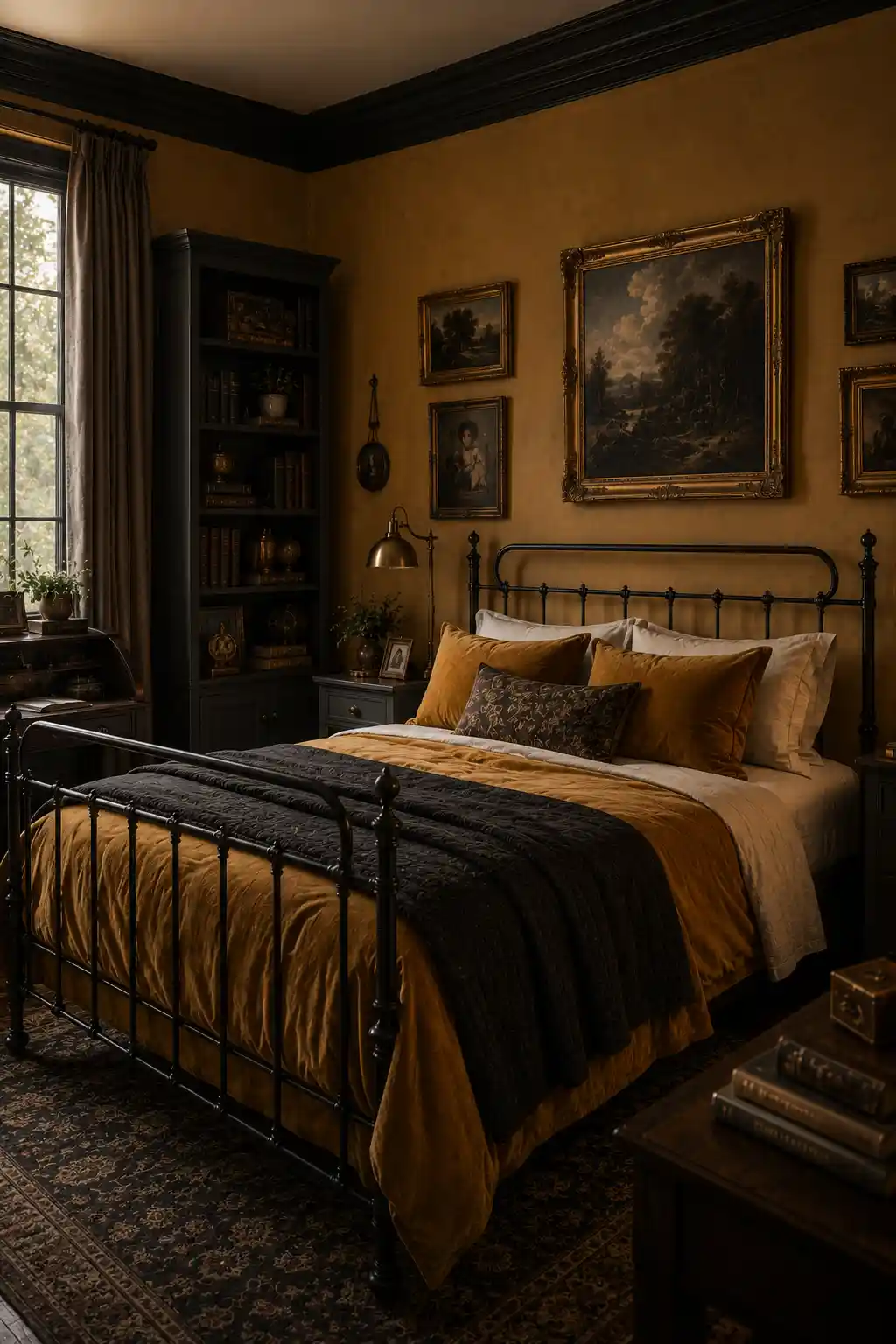
Ochre yellow adds a surprising amount of warmth and energy to a moody bedroom without sacrificing the academic vibe. This muted, golden shade is reminiscent of aged parchment and autumn leaves on a university quad. It works beautifully when paired with contrasting dark tones like charcoal gray or black, which ground the brightness of the yellow. Using ochre in textiles, such as a velvet headboard or floor-to-ceiling curtains, creates a stimulating environment that encourages creativity and imaginative thinking while remaining cozy.
Muted Slate Blue
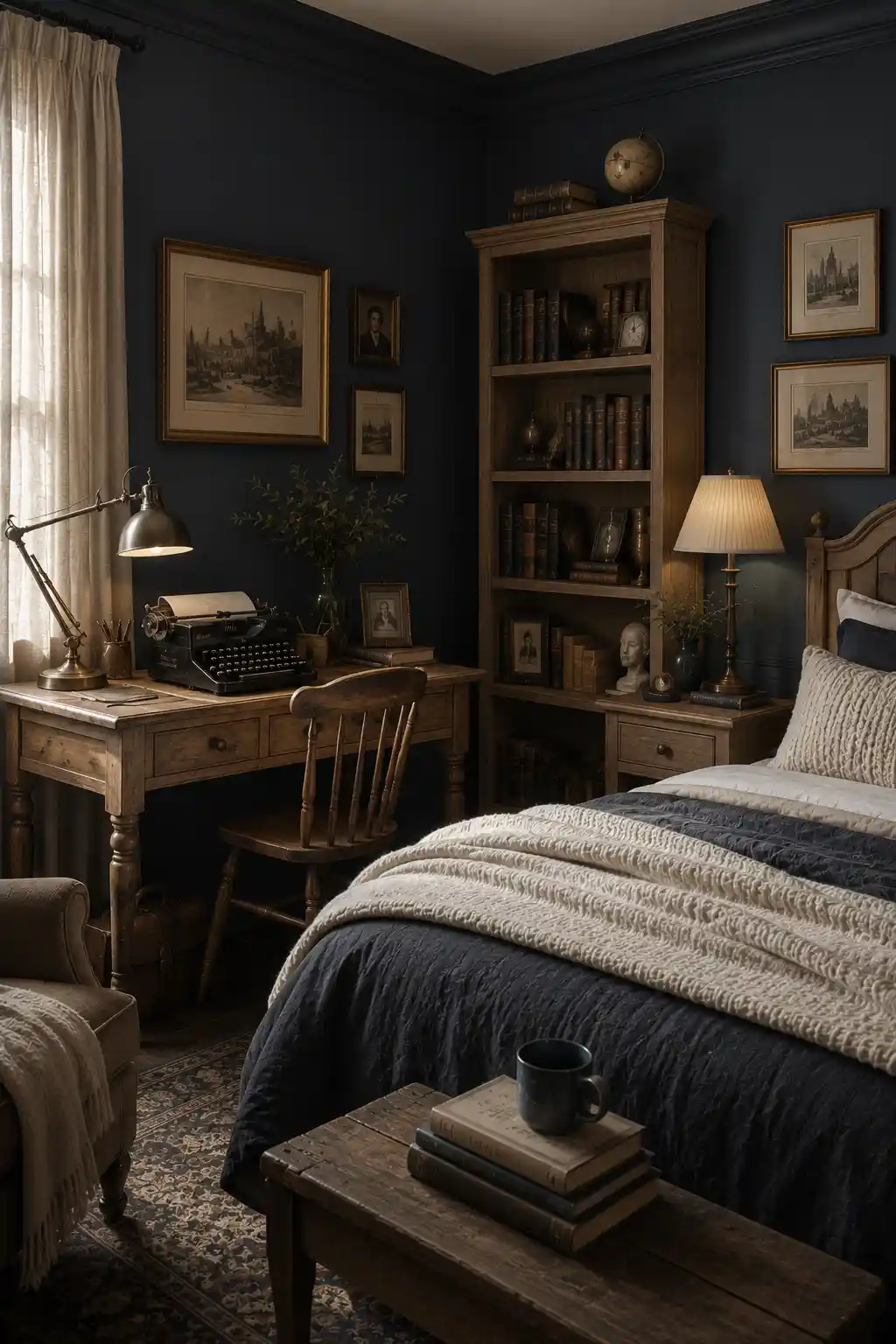
Slate blue is a sophisticated bridge between gray and blue, evoking the atmosphere of a stormy day at a coastal university. It is a calming color that brings a sense of tranquility and maturity to the bedroom. To enhance the scholarly feel, style this color with light oak or weathered pine furniture, which softens the overall look. Adding vintage maps, a brass globe, and plenty of textured pillows ensures the room feels like a comfortable retreat for a writer or a historian.
Romantic Dusty Rose
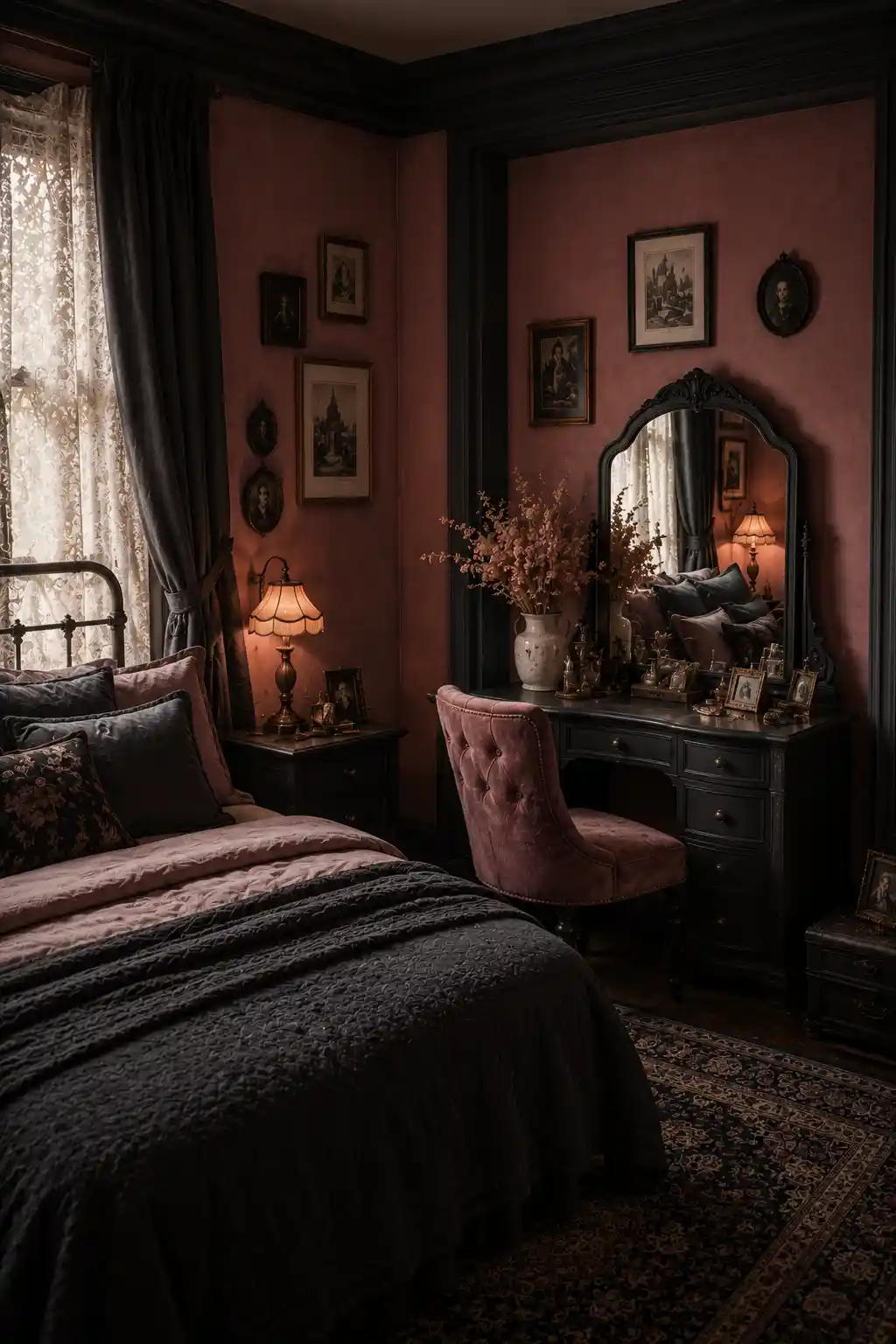
Dusty rose introduces a romantic, feminine touch to the dark academia aesthetic without feeling too bright or youthful. This muted pink shade works best when anchored by darker elements, such as charcoal gray furniture or deep brown wood accents. To lean into the historical romance aspect, incorporate lace details, velvet fabrics, and framed poetry. This combination creates the feeling of a hidden attic room in a Victorian manor, making it a perfect space for reflection, journaling, and quiet relaxation.
Intellectual Plum Purple
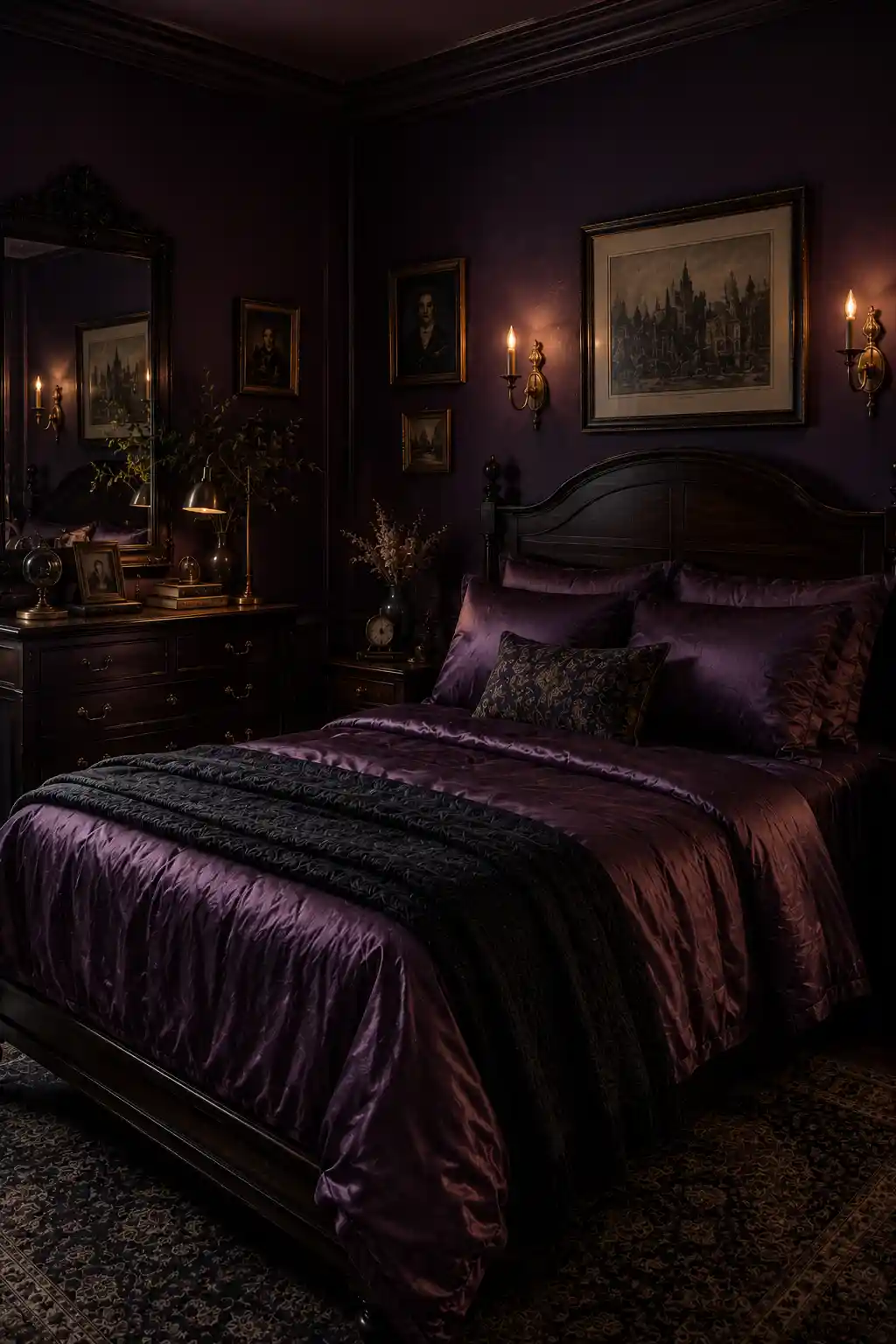
Plum purple is a bold, regal choice that adds a layer of mystery and sophistication to any bedroom. This deep jewel tone encourages a sense of deep thought and philosophical reflection, making it a favorite for those who love the darker side of academia. To make the purple tones pop, use brass or gold hardware on furniture and lighting fixtures. Pairing this color with dark mahogany or black furniture creates a luxurious, immersive experience that feels like a private sanctuary for the mind.
Dramatic Espresso Black
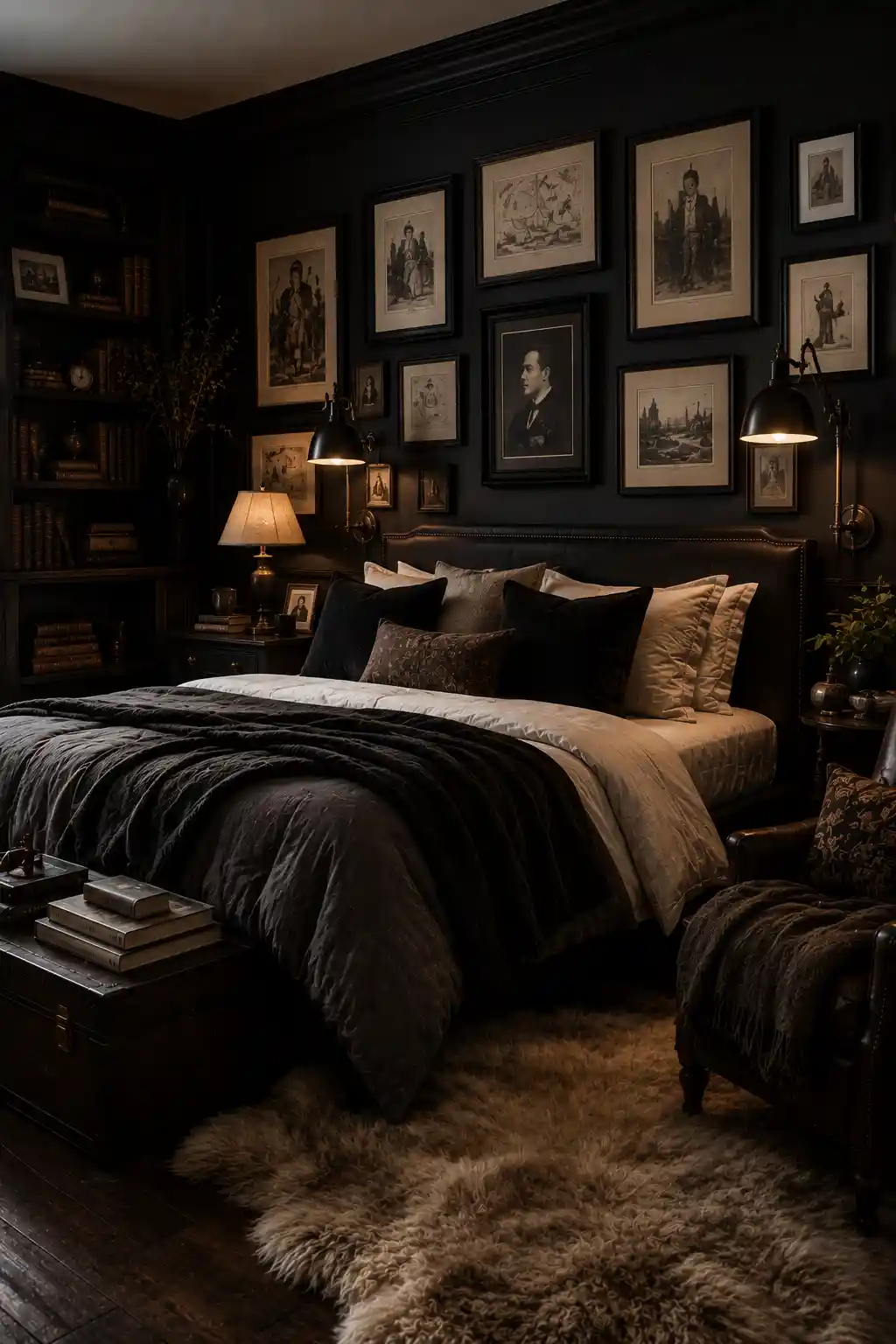
Espresso black is the ultimate expression of the dark academia style, turning a bedroom into a protective, moody cocoon. Rather than feeling like a cave, a warm black can act as a blank canvas that allows art and books to take center stage. The key to this look is lighting; use multiple warm light sources, such as desk lamps and fairy lights, to create a soft glow. Layering rich textures like faux fur, heavy cotton, and velvet prevents the space from feeling flat and adds essential warmth.
Lush Emerald Green
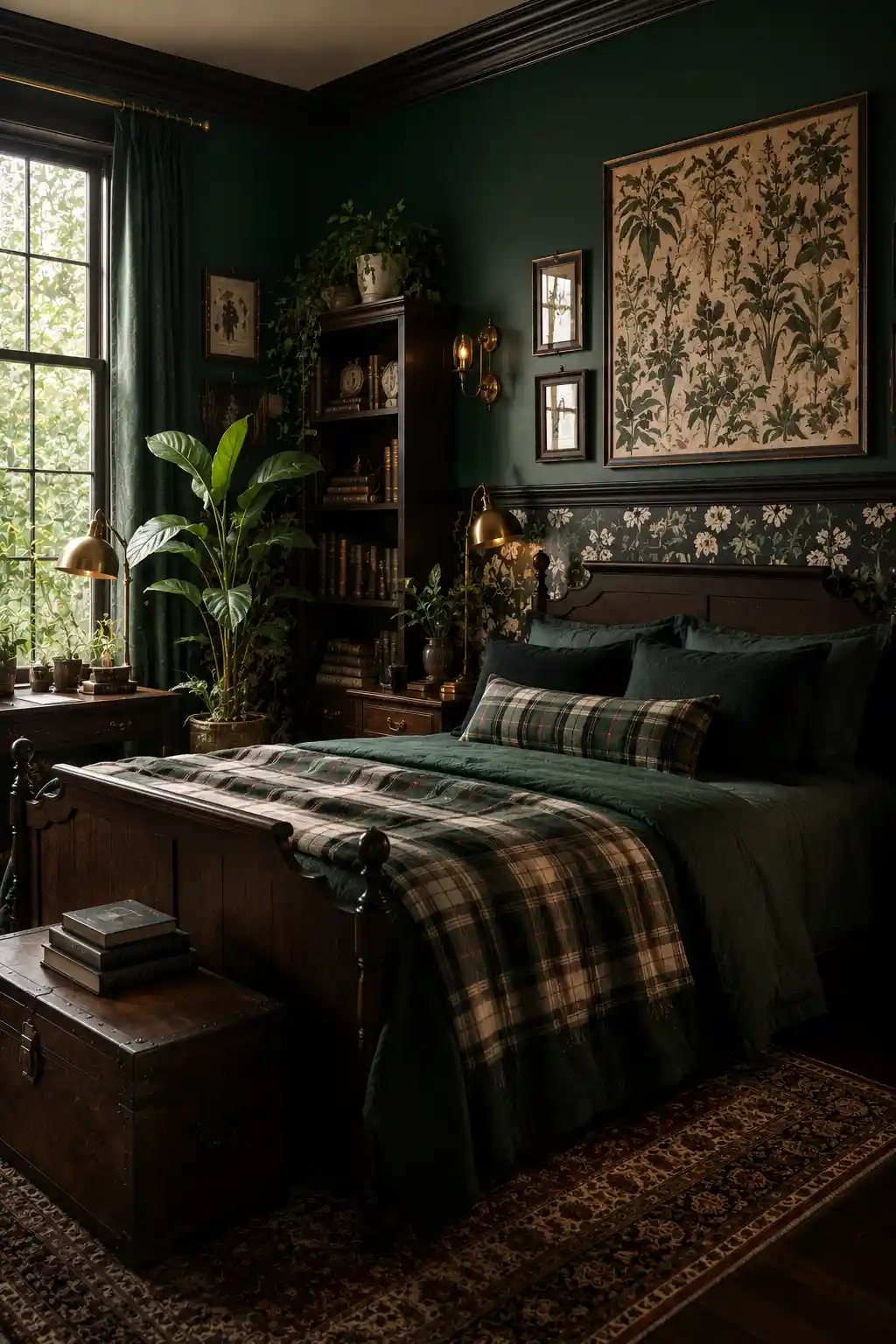
Emerald green is a vibrant yet dark hue that brings the feeling of a hidden forest or a botanical garden into the bedroom. This jewel tone is timeless and works exceptionally well with plaid patterns and heavy wool fabrics. To emphasize the connection to nature, incorporate large indoor plants and botanical sketches. When paired with dark wood and brass accents, emerald green creates a stimulating yet restful environment that feels both traditional and luxurious, perfect for a nature-loving scholar.
Mysterious Midnight Blue
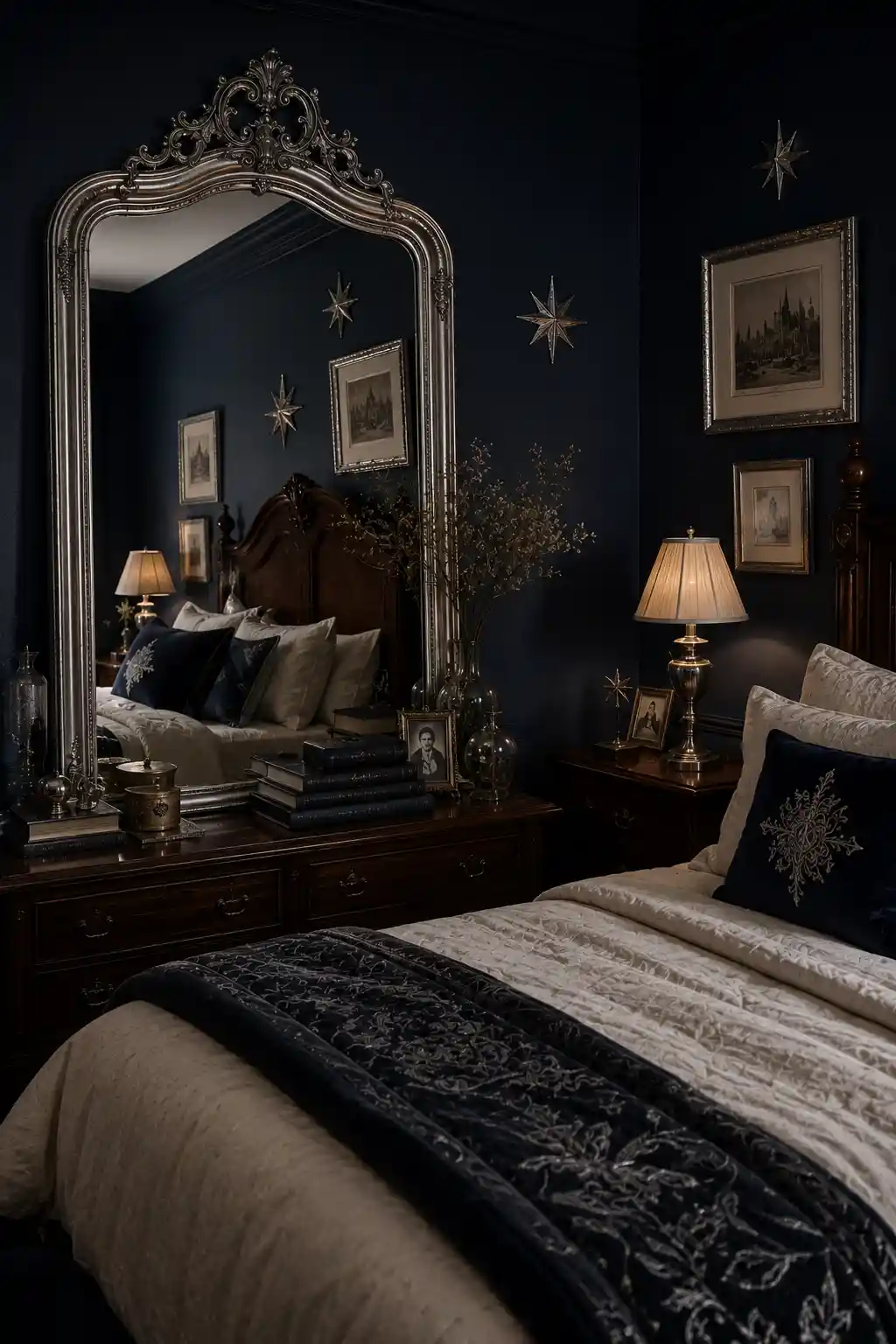
Midnight blue is deeper and more immersive than standard navy, capturing the essence of a quiet night spent studying under the stars. This color creates a sense of wonder and silence, making the bedroom feel like a secluded escape from the world. To prevent the room from feeling too closed in, add a large ornate mirror to reflect light and open up the space. Pairing this deep blue with silver accents and light-colored bedding creates a striking contrast that is both modern and historic.
Timeless Mahogany Wood
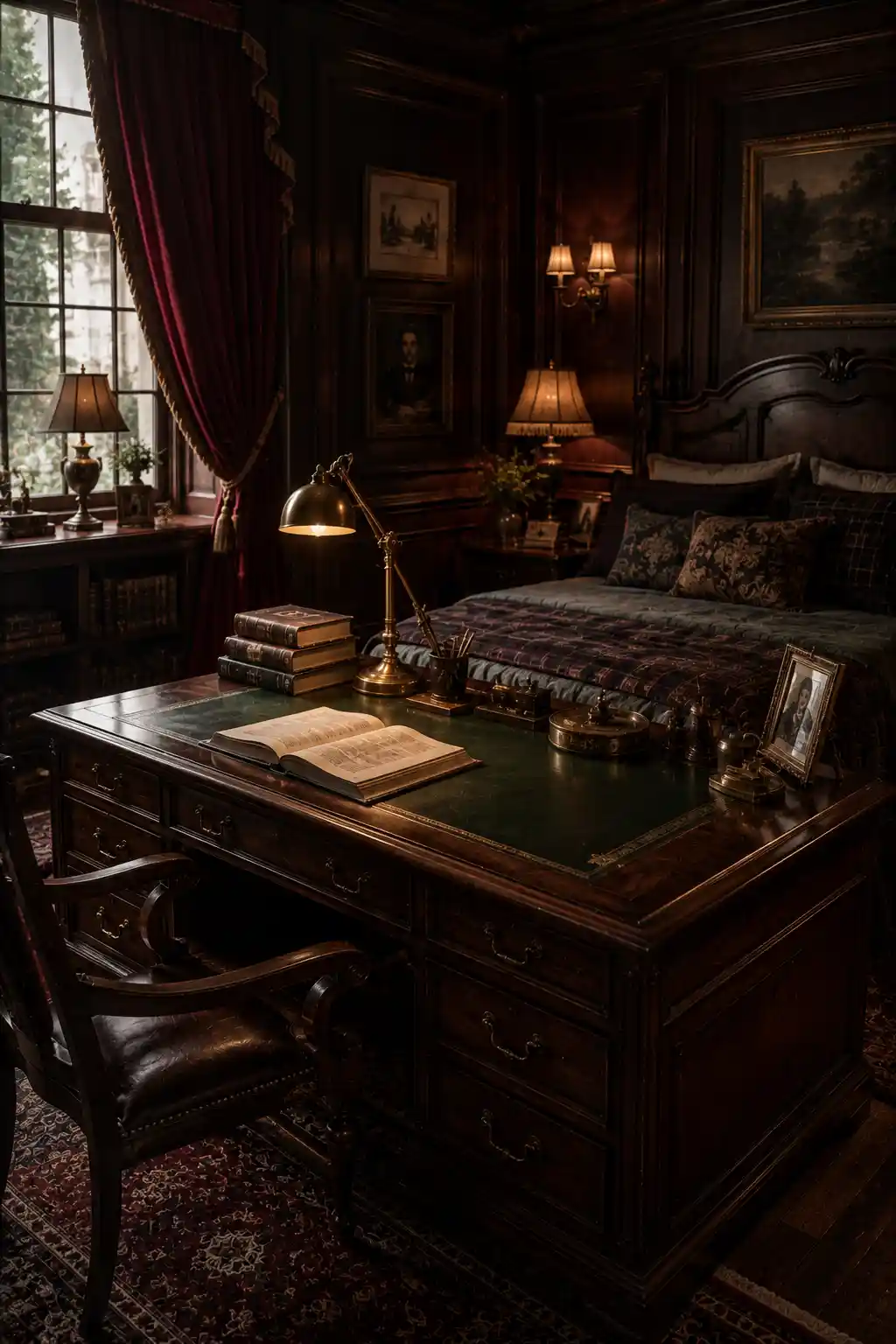
Sometimes the most effective color palette comes from natural materials rather than paint. Mahogany wood tones provide a rich, reddish-brown base that defines the classic dark academia look. Whether achieved through wall paneling or a collection of antique furniture, mahogany evokes the atmosphere of old university offices and private gentlemen’s clubs. Pair these warm wood tones with leather accents and deep green or red textiles to create a sturdy, permanent feeling of craftsmanship and historical prestige.
Earthy Olive Green
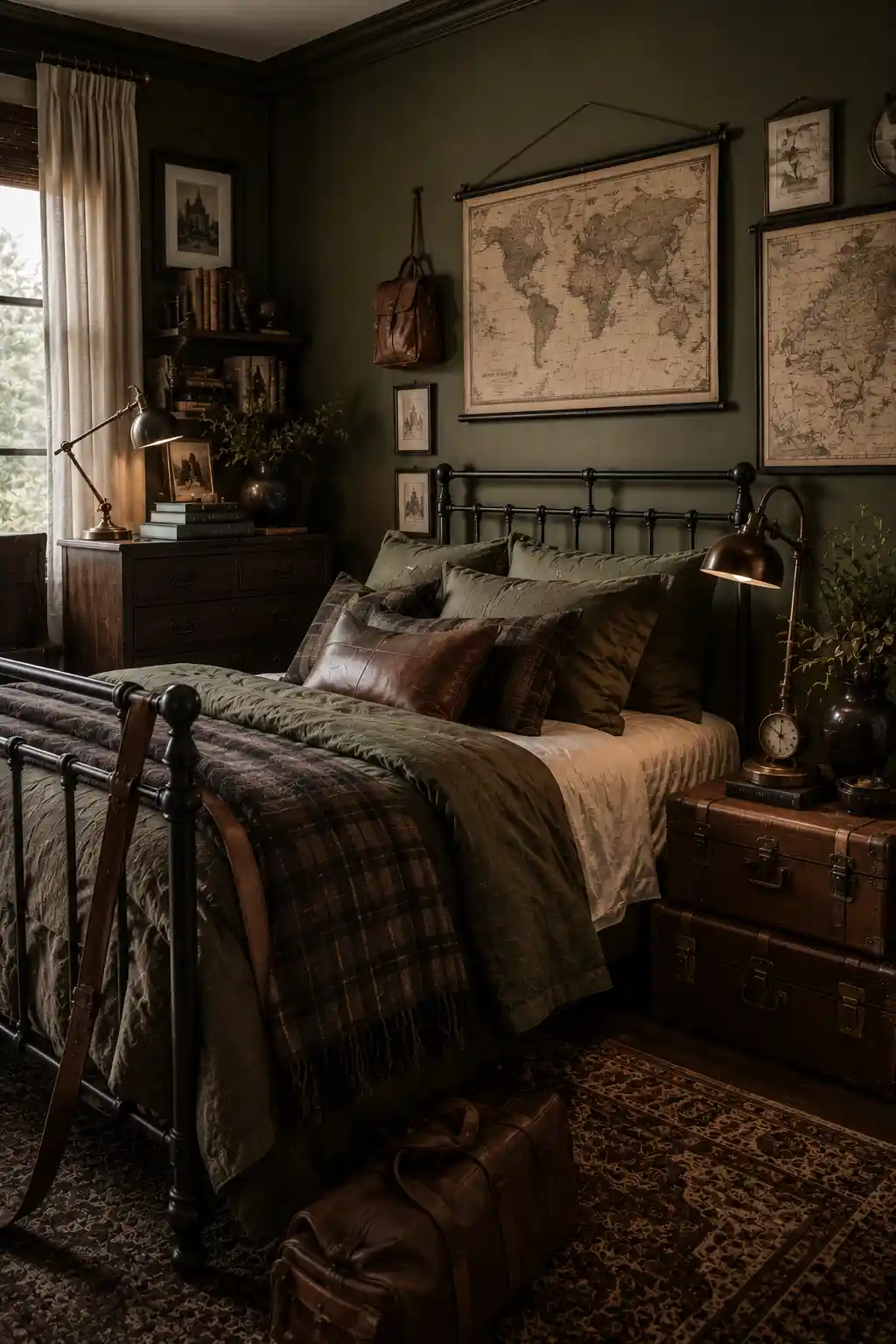
Olive green offers a rustic, explorer-inspired take on the academic aesthetic. This earthy shade is easy on the eyes and provides a relaxing backdrop for a restful night’s sleep. It pairs beautifully with rugged materials like tan leather and black iron, evoking the feeling of a quiet study in a countryside manor. To complete the look, add vintage luggage, old compasses, and canvas maps, which ground the room in a love for biology, geography, and natural history.
Warm Terracotta Orange
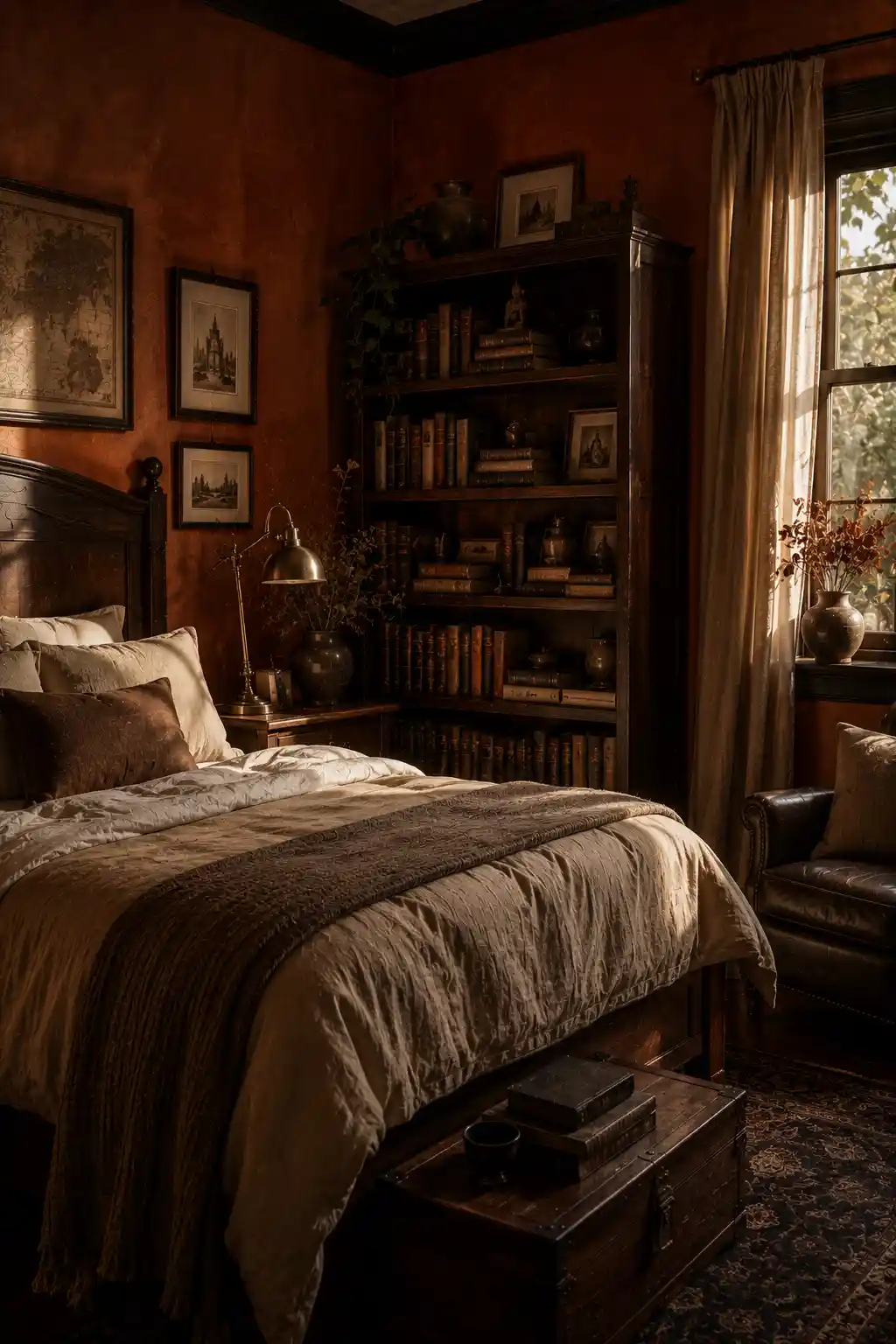
Terracotta orange brings the warmth of ancient pottery and sun-drenched Mediterranean libraries into the bedroom. This muted red-orange hue adds significant character and a sense of antiquity to the space. It works best when used with matte paints or textured plaster to enhance the aged, historical feel of the walls. Combining terracotta with dark brown wood and cream accents creates an inviting, cozy atmosphere that feels both intellectual and earthy, perfect for those who want a warmer academic vibe.
Serene Sage Green
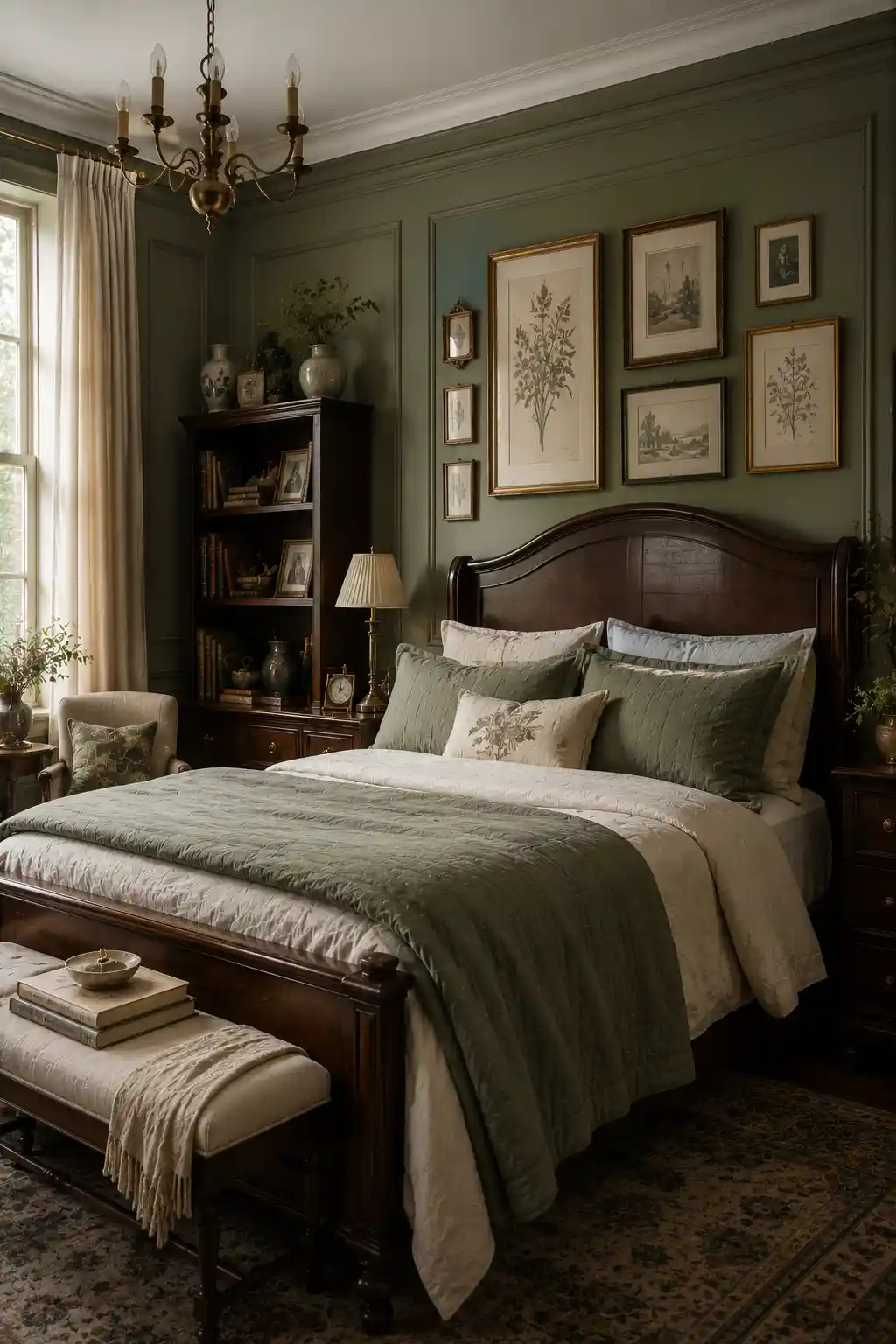
Sage green is a softer, more muted alternative for those who want the dark academia charm without the overwhelming darkness. This color is particularly effective in smaller bedrooms, as it maintains a scholarly feel while keeping the space feeling airy and open. Pair sage green with dark walnut furniture and antique gold frames to keep the academic connection strong. Adding botanical sketches and soft linen textiles enhances the vintage charm, resulting in a peaceful environment perfect for writing and contemplation.