
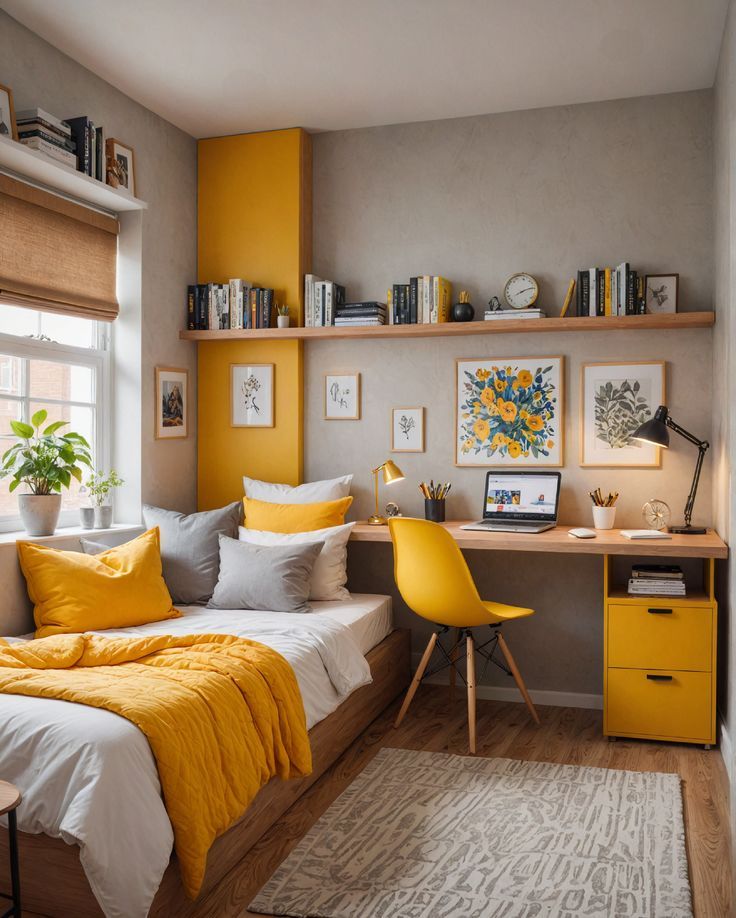
20 Small Bedroom Ideas to Make Tiny Rooms Feel Bigger
A small bedroom can feel just as inviting and stylish as a larger one when designed with intention. The key lies in smart space planning, multifunctional furniture, and thoughtful details that make every inch count.
With the right color palette, lighting, and textures, even the tiniest rooms can appear open and serene instead of cluttered.
Whether you’re dealing with a tiny apartment bedroom or helping a child make the most of limited space, these ideas will show you how to boost both comfort and visual appeal while keeping everything you need within reach.
1.Dual-Purpose Workspace Bedroom Setup
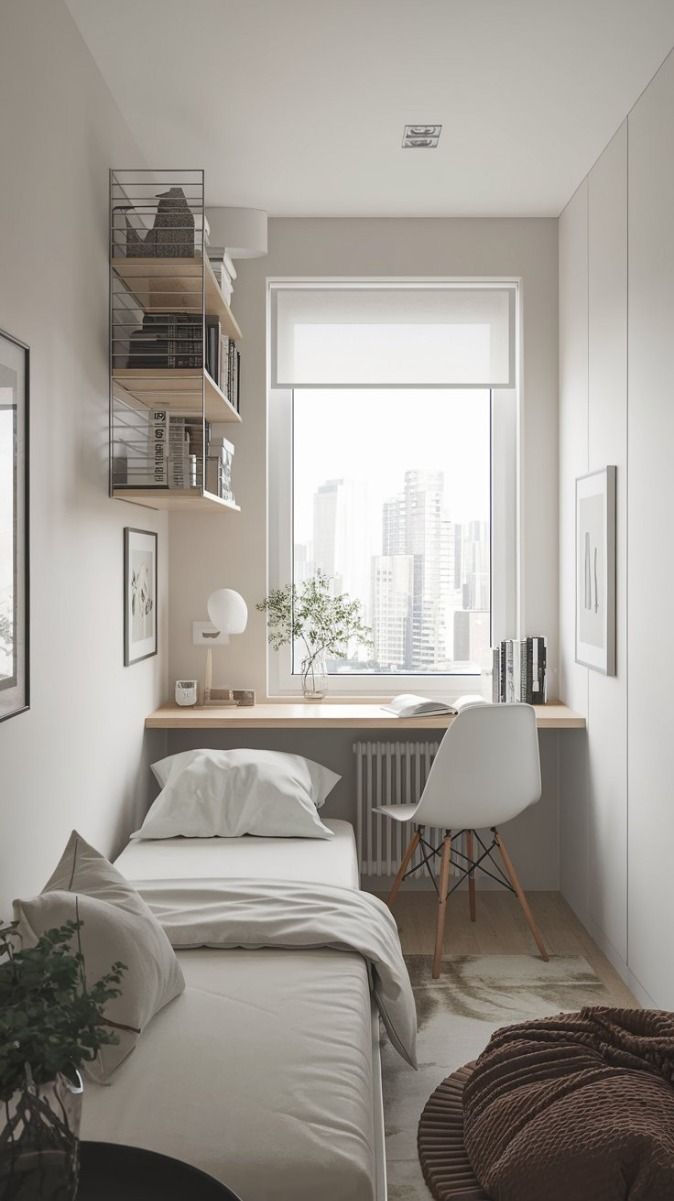
When your bedroom needs to double as an office, smart planning makes all the difference. A wall-mounted desk positioned alongside your bed gives you a dedicated work zone without eating up precious floor area.
Installing shelves above your desk keeps supplies organized and within arm’s reach while maintaining an open feel below.
Light, neutral colors help the room feel bigger, while layered lighting, think desk lamps plus overhead fixtures, ensures you have the right brightness for both working and winding down.
Slim furniture profiles, like narrow side tables that slide under desks, prevent that boxed-in feeling. This balanced approach lets you tackle your workday productively, then shift seamlessly into relaxation mode each evening.
2.Elevated Bed Frame with Underneath Storage
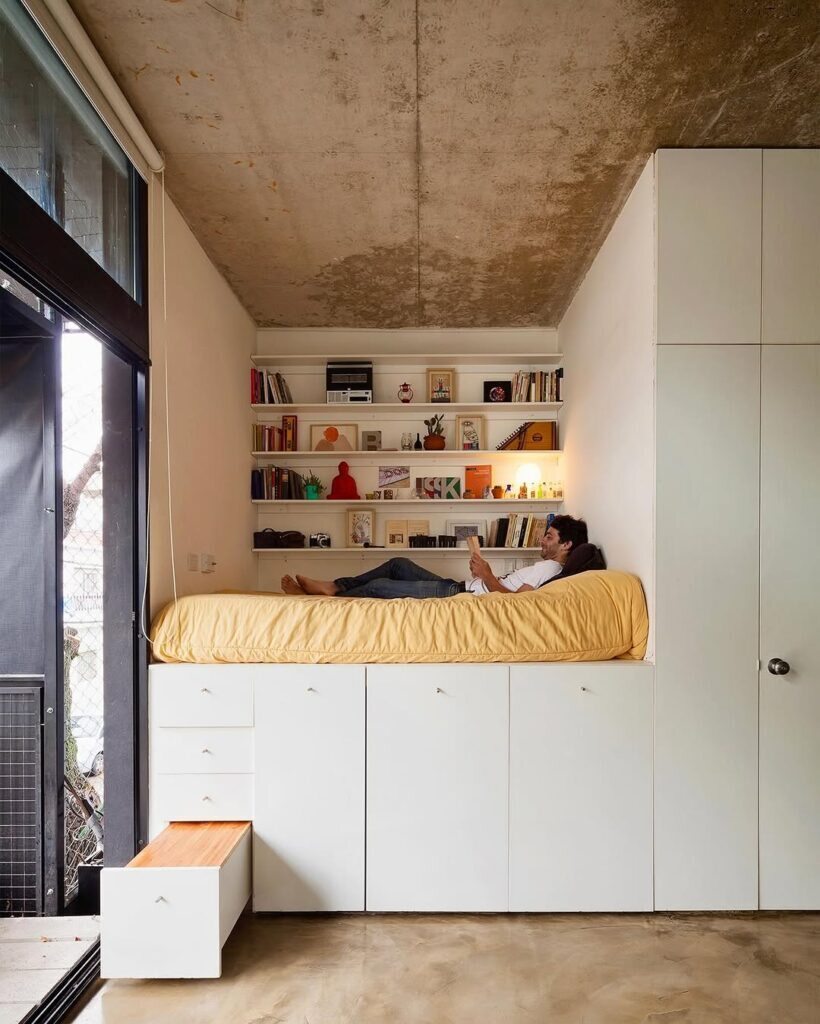
Lifting your bed off the ground opens up a world of storage possibilities in small bedrooms. Lofted bed frames with integrated drawers or shelving beneath them put vertical space to work, giving you room to tuck away clothes, shoes, or extra bedding.
The area under your elevated sleeping platform can hold more than you’d expect, some designs even fit small desks or reading chairs underneath.
A secure ladder provides easy access while keeping wall space free for additional storage or artwork. Stick with light wood tones and simple lines to maintain an airy atmosphere.
This vertical solution works equally well for kids’ rooms and adult spaces, proving that going up instead of out can double your usable square footage.
3.Stacked Sleeping Area Near Windows
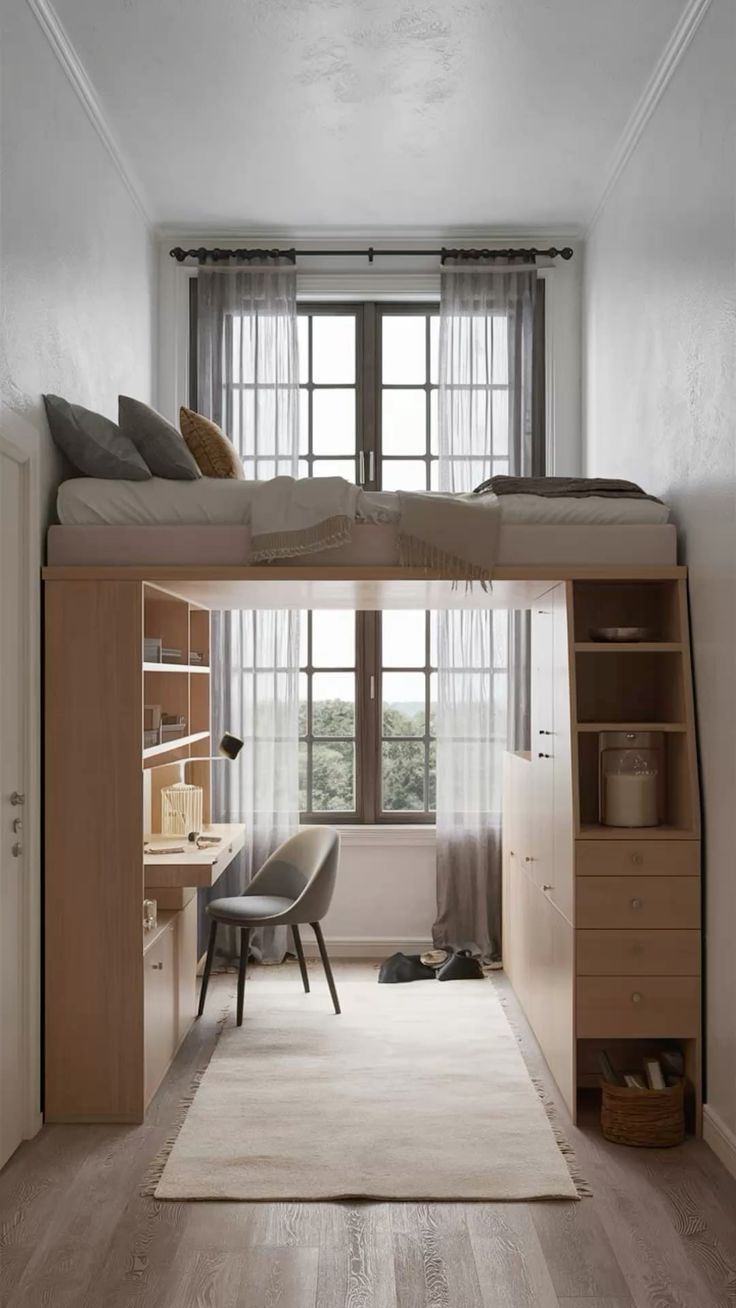
Placing bunk beds beside a large window turns a practical sleeping arrangement into something special. The view becomes part of the bedroom experience, while natural light floods the space throughout the day.
Built-in storage under the lower bunk keeps the floor clear, and the vertical sleeping arrangement frees up room for a small desk or play area.
Natural wood frames look beautiful against abundant daylight and help maintain that bright, open feeling. The upper bunk offers a private retreat with a view, while the lower level stays grounded and accessible.
Perfect for siblings sharing a room or guest spaces that need flexibility, this setup balances smart space usage with an appealing connection to the outdoors.
4.Alcove Sleeping Space with Concealed Compartments
Building your bed into a recessed alcove gives small bedrooms an intimate, nest-like quality that feels intentionally cozy rather than cramped.
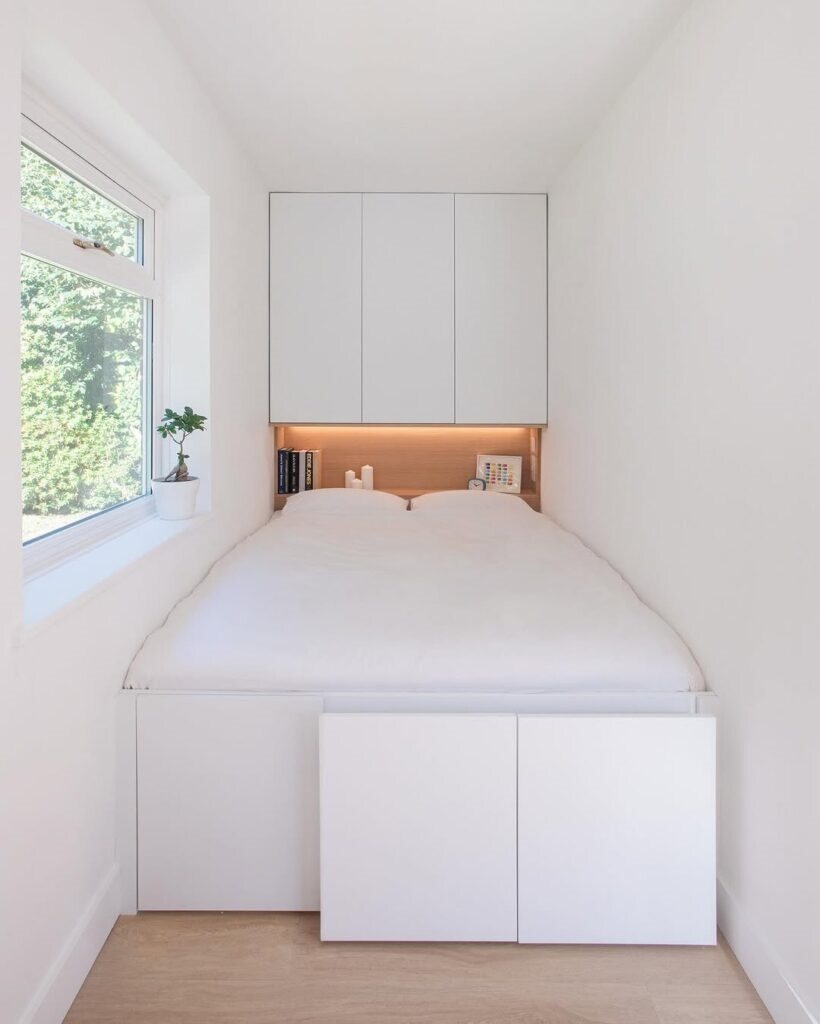
Drawers built into the base and hidden storage behind wall panels keep belongings tucked away without disrupting clean sight lines.
Soft, neutral bedding with subtle textures emphasizes the calm simplicity of this design, while small reading lights mounted directly to the walls eliminate the need for bulky lamps on nightstands.
Keeping furniture minimal and low-profile helps the nook feel spacious despite its snug footprint.
This arrangement shines in studio apartments where every design choice needs to serve multiple purposes, creating clear zones while maintaining visual flow throughout the space.
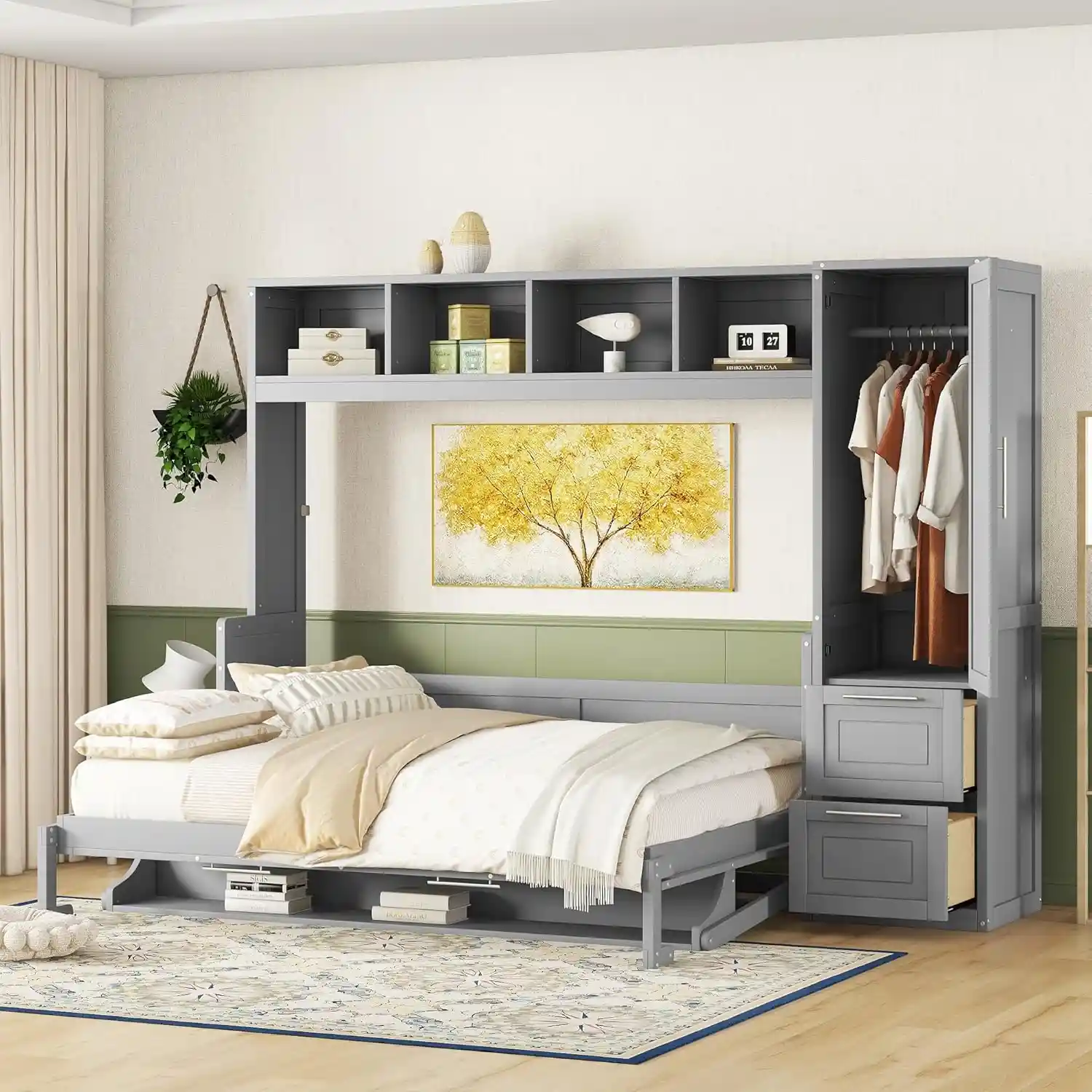
5.Fold-Down Bed with Adjacent Shelving
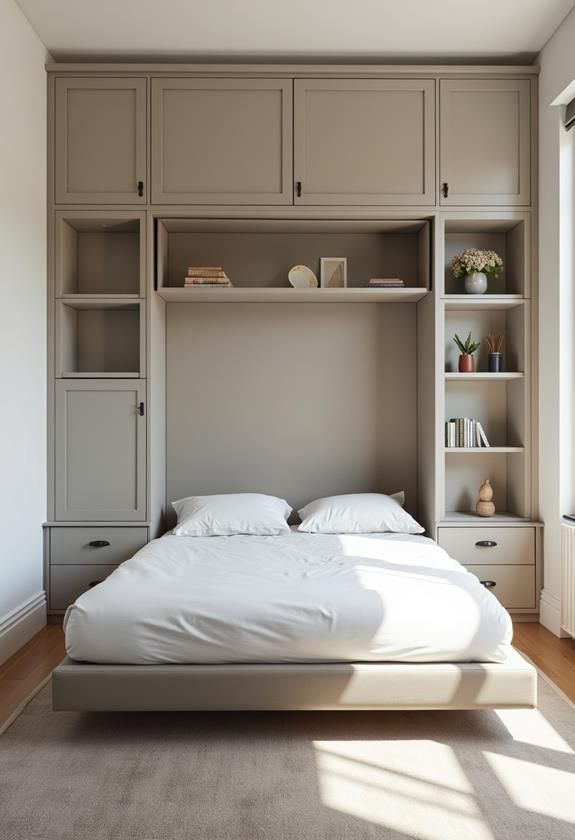
Wall beds that fold up during the day give small bedrooms remarkable flexibility. With the sleeping surface tucked away, you gain open floor space for yoga, work, or just moving around comfortably.
Vertical storage cabinets flanking the bed keep essentials organized and easy to grab, while integrated lighting makes the whole unit functional for reading or getting ready.
Clean, simple finishes in neutral tones help the installation blend seamlessly with your walls, so it doesn’t dominate the room visually even when it’s quite substantial in terms of storage capacity.
This setup excels in studio apartments and multi-use rooms where you need the space to shift purposes throughout the day, proving that small bedrooms can be both comfortable at night and open during waking hours.
Continuing our deep dive into the “Cockpit” bedroom philosophy, here is how to master the next five layout strategies. This is about making your furniture work overtime so the room doesn’t have to.
6. The “Subterranean” Sleep Strategy
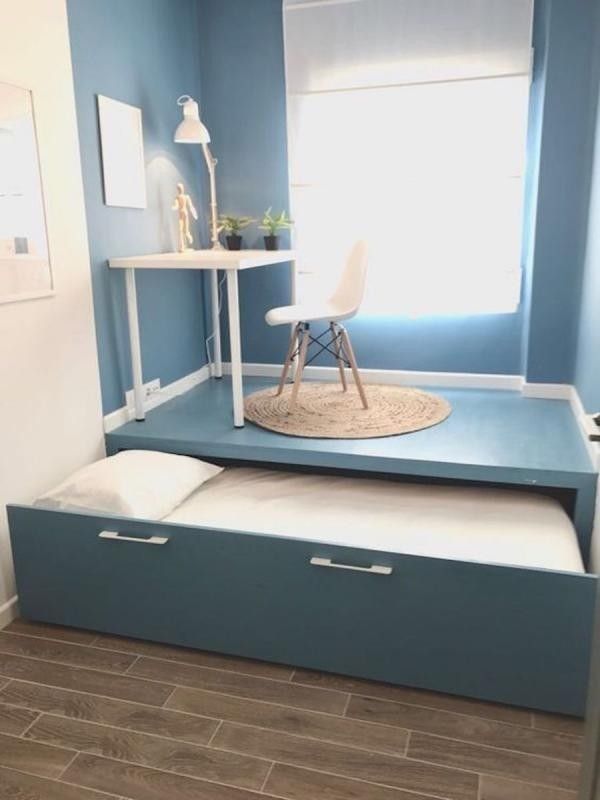
The hidden pull-out bed is the ultimate ninja move for studio apartments. By raising your workspace onto a sturdy platform, you create a “garage” for your bed.
The Daytime Gain: Your bed completely disappears during work hours, giving you a full-sized office with zero “bedroom” vibes.
The Storage Hack: Use the side of the platform for integrated drawers. It’s a specialized setup that turns the most space-consuming piece of furniture into a ghost when you don’t need it.
7. The Integrated Teal Command Center
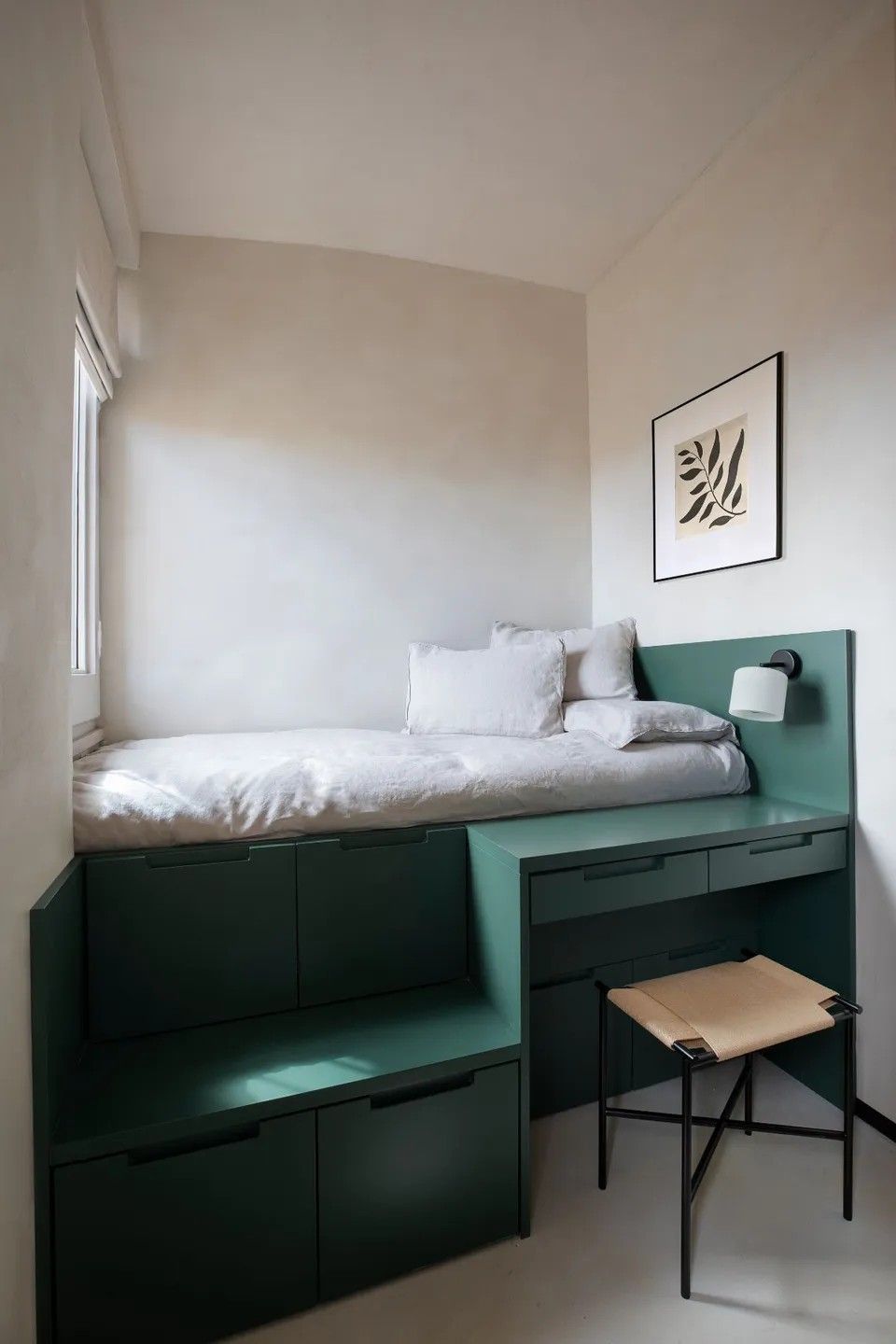
If you don’t want your bed to vanish, make it the architectural anchor. An elevated platform bed with a side-desk creates a split-level habitat in a single footprint.
Zonal Logic: By painting the structure a bold color—like a deep teal or forest green—you define the “work-sleep” zone as one solid unit. This keeps the rest of the room feeling airy and neutral.
The Stool Trick: Use a backless stool that slides entirely under the desk. It’s about keeping the “lanes” of your room clear so you never feel trapped.
8. Chromatic Energy: The Yellow Boost
If you’re working from home in a small space, the atmosphere matters as much as the furniture. Adding vibrant yellow accents is a psychological tactic to fight the “bedroom gloom.”
The Balance: Keep the furniture streamlined and neutral, then inject energy through throw pillows or a single yellow desk chair.
Verticality: Pair this with wall-mounted shelves to keep the desk surface clear. The goal is a workspace that feels energized at 10:00 AM but fades into a cozy corner at 10:00 PM.
9. The Open Wardrobe “Edit”
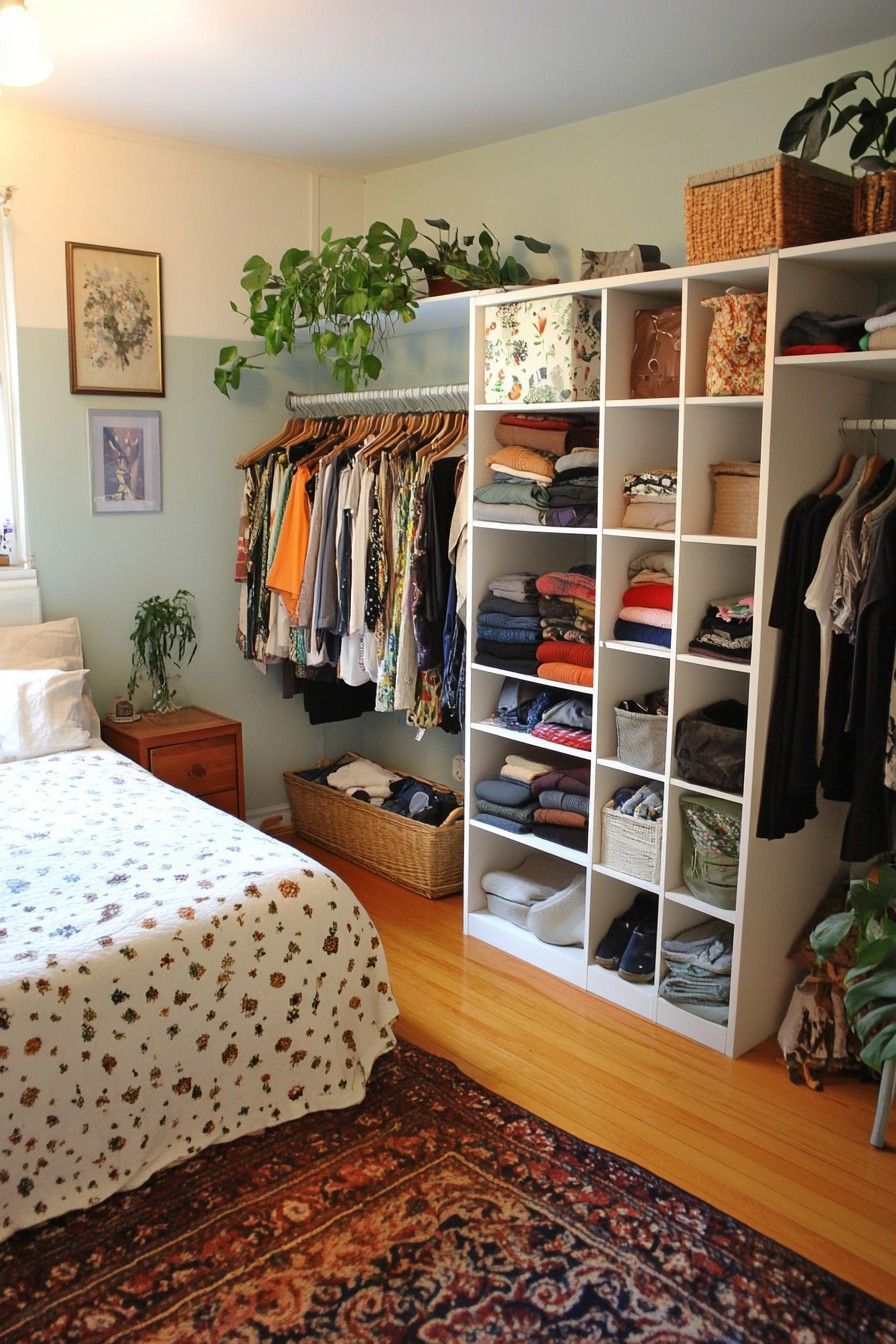
Bulky, dark wooden dressers are the #1 space-killers. Swapping them for an open clothing rail next to the bed is a masterclass in visual lightness.
The “Curated” Effect: An open system forces you to keep only what you actually wear, naturally preventing the “clutter creep” that kills small rooms.
Softening the Look: Use woven baskets for smaller items to add warmth and texture. This turns your wardrobe into a design feature rather than a closet you’re trying to hide.
10. The Wall-Hugger: Desk-Shelf Hybrid
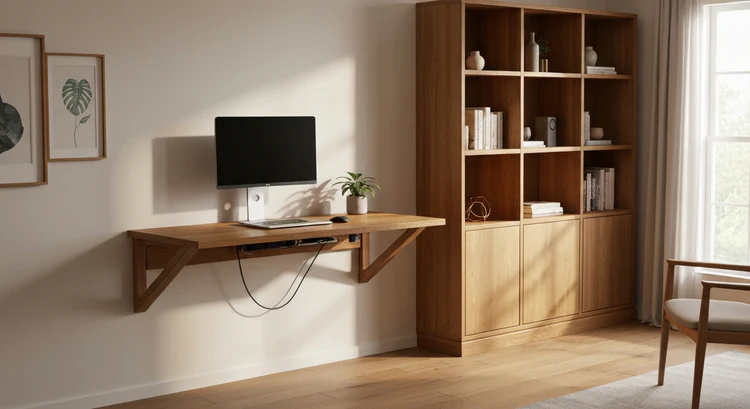
In a small room, every piece of furniture should do at least two things. A desk-shelf combination is the veteran move for students and professionals alike.
Double Duty: The desk surface functions as your nightstand, while the vertical shelving above handles your library and work supplies.
Spatial Preservation: By hugging one single wall, you preserve a “runway” of open floor space. This is the difference between a room that feels like a maze and one that feels like a sanctuary.
When you’re dealing with limited square footage, the goal is to stop the walls from “closing in.” This next set of strategies moves away from furniture mechanics and into the psychology of aesthetics—how color, pattern, and placement can trick your brain into seeing a much larger room.
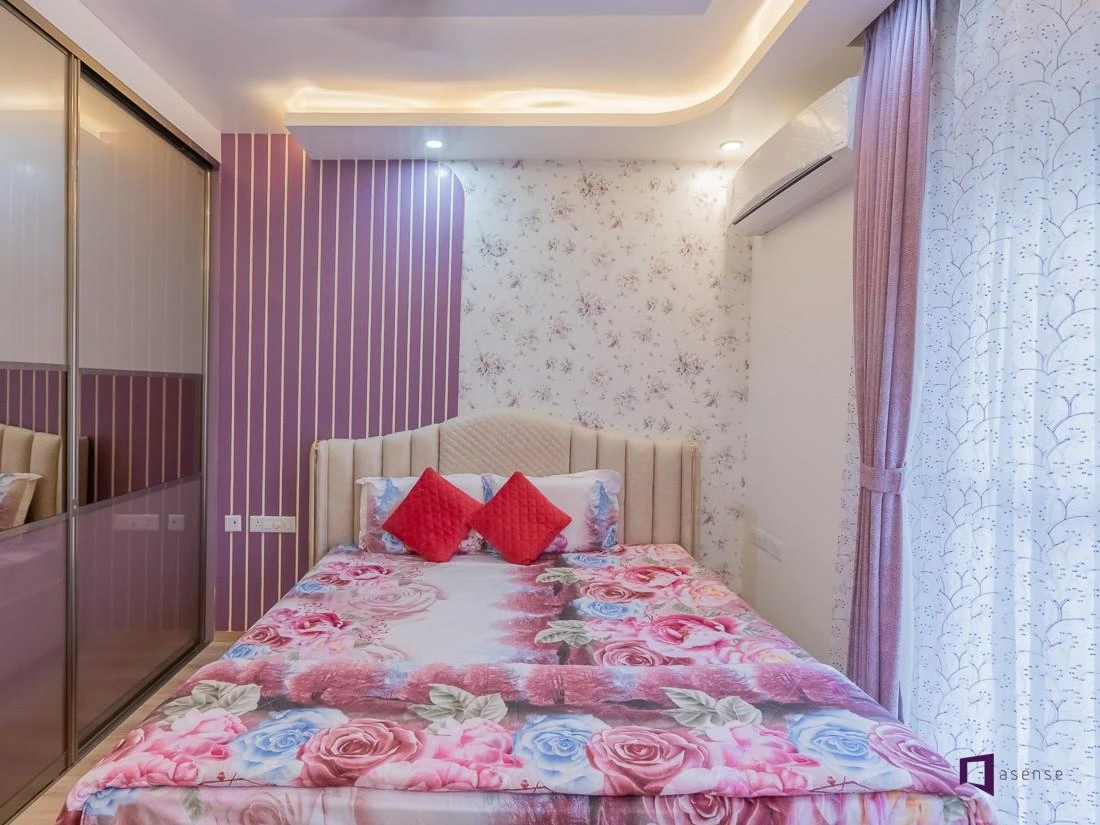
11. The Soft Pink “Embrace”
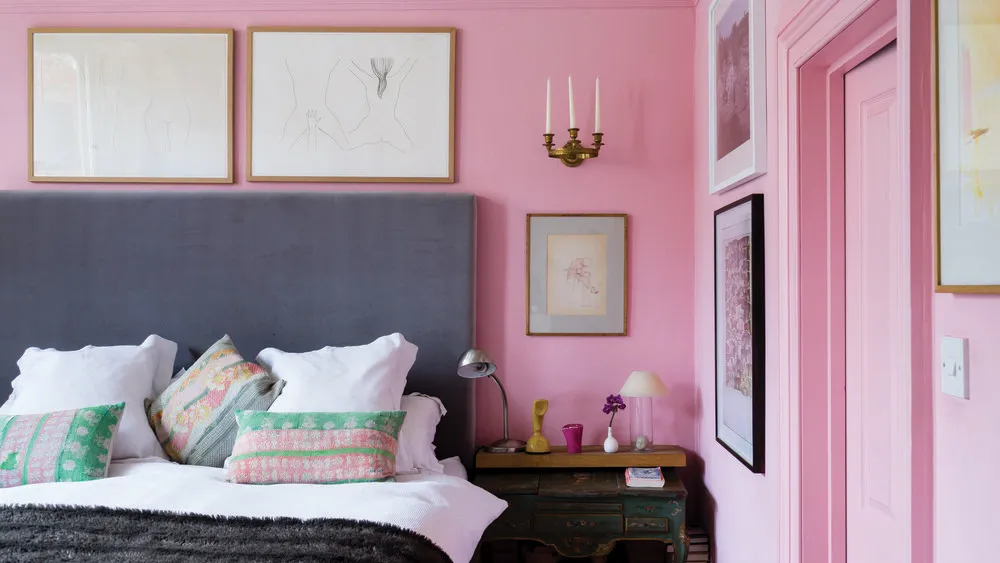
In a long, narrow room, a dark or high-contrast palette can make the space feel like a hallway. The fix is a monochromatic blush palette.
Visual Warmth: Soft pink tones provide warmth without the “heaviness” of darker colors, turning a tight squeeze into a cozy, sophisticated embrace.
The Reflection Trick: Pair these soft tones with mirrored furniture and metallic hardware. They act as “light-bouncers,” breaking up the walls and making the narrowest part of the room feel wider.
12. The “Invisible” Room Divider
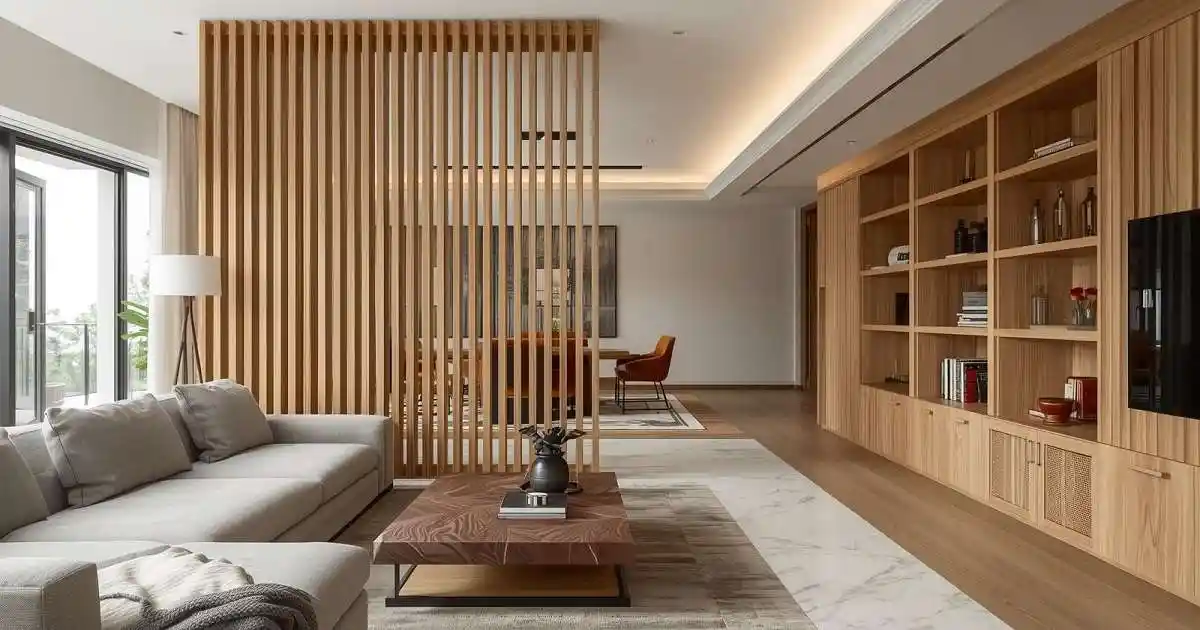
You don’t need a renovation to create a two-room suite. A lightweight divider—like an open-backed bookshelf or a sheer sliding panel—is a strategic boundary.
Mental Separation: By physically separating the study desk from the bed, you create a “productivity zone” and a “rest zone.” This is vital for sleep hygiene; when you’re in bed, you shouldn’t be staring at your keyboard.
Light Flow: Use an open shelf so light can still travel through the entire space. It provides storage and a border without making the room feel “chopped up.”
13. High-Energy Maximalism: Checkerboards & Pink
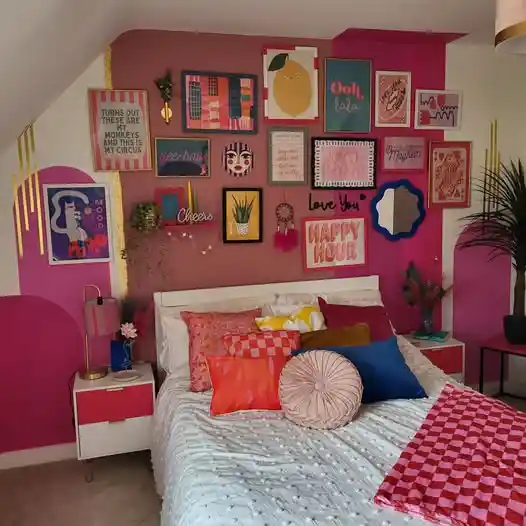
Small rooms don’t have to be “safe.” A vibrant pink and checkerboard scheme is for the homeowner who wants personality over “purity.”
Scale Control: The secret to bold patterns in small rooms is keeping the furniture low and slim. Let the rug or the accent wall provide the drama, while the bed and desk stay low-profile to keep the “air” in the room open.
Vertical Relief: Use vertical wall storage to keep the patterned floor clear. This creates a “calm” runway that balances the energetic walls.
14. The “Infinite” Monochrome Strategy
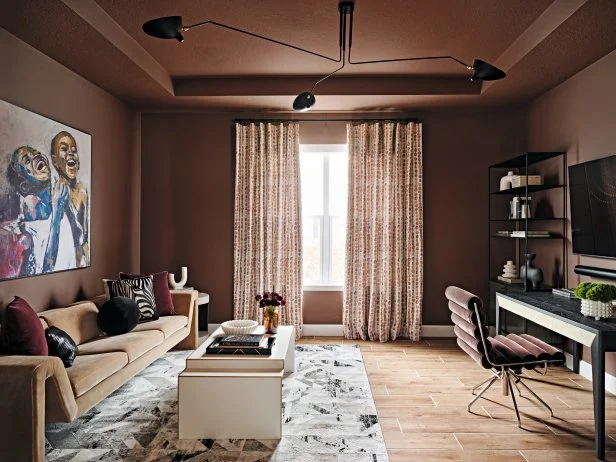
If you want the most “expansive” feel possible, use the one-color design approach.
Boundary Blurring: When your walls, bedding, and curtains are all shades of beige, ivory, or soft gray, the eye doesn’t “catch” on the corners. The boundaries of the room literally disappear.
Texture Friction: To prevent a one-color room from feeling like a hospital wing, you must mix textures. Think chunky knit throws against smooth linen and velvet cushions. The variety in “hand-feel” replaces the need for variety in color.
15. Tactical Verticality: Large-Scale Art
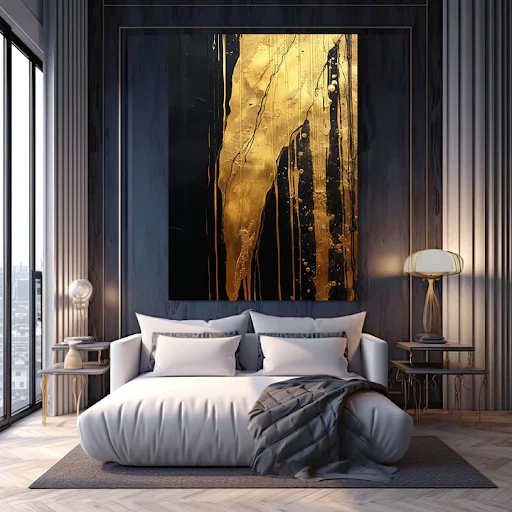
Most people try to decorate small rooms with dozens of tiny photos. This is a mistake—it creates “visual noise” that makes a room feel cluttered.
The Focal Point: Hang one or two large, vertical artworks. A tall, narrow frame draws the eye toward the ceiling, emphasizing the height of the room rather than the narrowness of the floor.
Minimalist Framing: Use slim frames or frameless canvases. In a tight space, heavy, ornate frames act like “weights” that pull the walls inward. Large, airy art makes the room feel like it has “room to breathe.”
The Verdict: Whether you’re blurring the edges with monochrome or defining them with a divider, the key is intentionality. Every color and frame should serve the goal of making the room feel like a destination, not a storage unit.
We’re entering the final phase of small-space mastery. This is where we stop looking for more room and start engineering it out of thin air. These four strategies focus on the “dead zones” and the visual physics that turn a cramped room into a tailored suite.
16. The Corner-Mounted Vanity Station
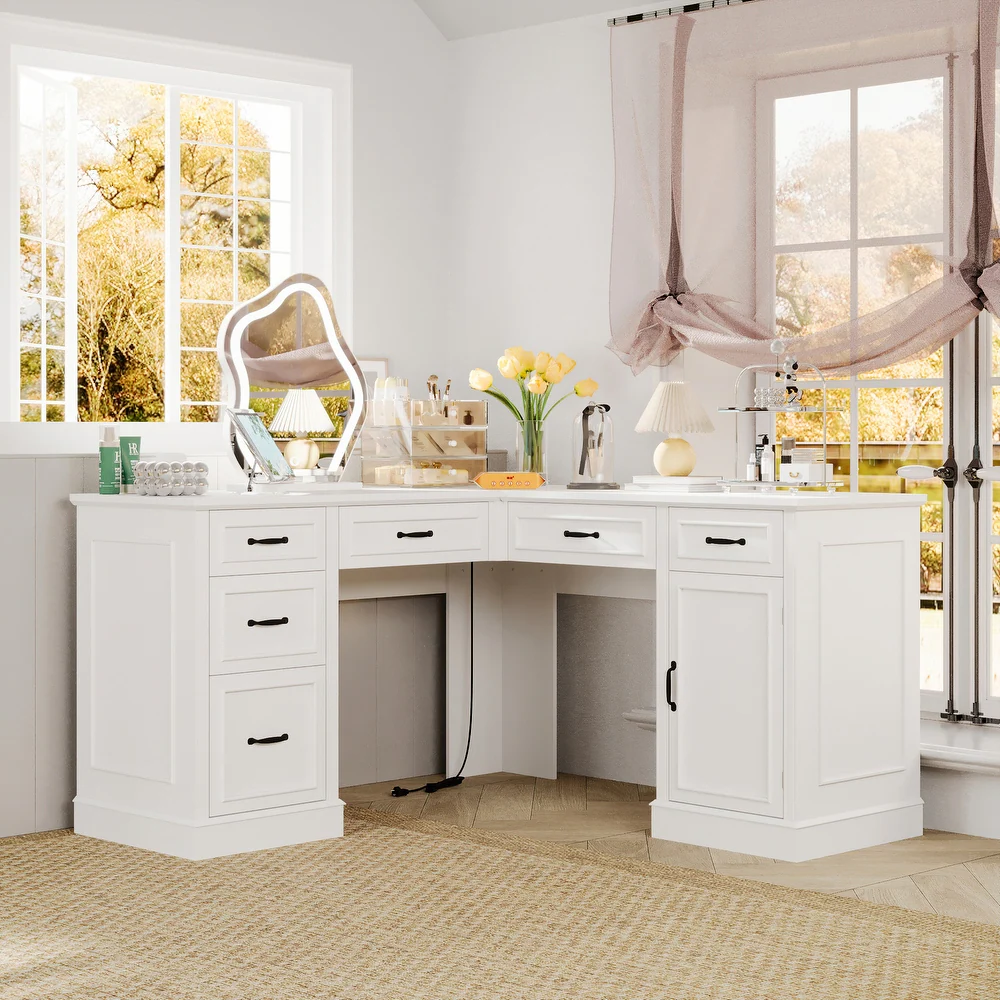
Corners are usually where design goes to die. In a small bedroom, a floating corner vanity reclaims that lost territory without eating into your “runway” (the main walking paths).
Visual Lightness: By choosing a wall-mounted design with open space underneath, the floor remains visible, which prevents the room from feeling “stuffed.”
The Reflection Loop: Pair it with a frameless mirror and integrated LED lighting. This doesn’t just help with your morning routine—it turns a dark corner into a light-source that bounces brightness back into the rest of the room.
The Tuck: Use a narrow stool that slides 100% under the unit. If it’s not in use, it shouldn’t exist in your walking space.
17. The Storage Platform: A Horizontal Closet
If you can’t go out, go up. A platform bed is the undisputed heavyweight champion of small-room organization.
The Dresser Killer: By utilizing the massive volume of space beneath your mattress, you can often eliminate a standalone dresser entirely. This reclaims a huge chunk of floor space for movement.
Architectural Glow: Add recessed lighting beneath the platform edge. It creates a “floating” effect that makes the bed feel lighter and adds a sophisticated depth to the room at night.
Multi-Purpose Steps: If your platform is high, use built-in steps that double as cubbies. It’s about making every cubic inch earn its keep.
18. The “Pop” Strategy: Controlled Color
You don’t need to paint the whole room to give it life. A colorful accent strategy uses a neutral base (beige, gray, or ivory) to act as a canvas for high-energy details.
The Guide Wire: Use two or three consistent accent colors—like a mustard yellow lamp or a forest green throw. This guides the eye through the room dynamically rather than letting it settle on the walls.
Reflective Accents: Pair your colors with metallic or glossy finishes. They catch the light and intensify the color, making the room feel vibrant and “expensive” without needing more square footage.
19. The Deep Anchor: The Dark Feature Wall
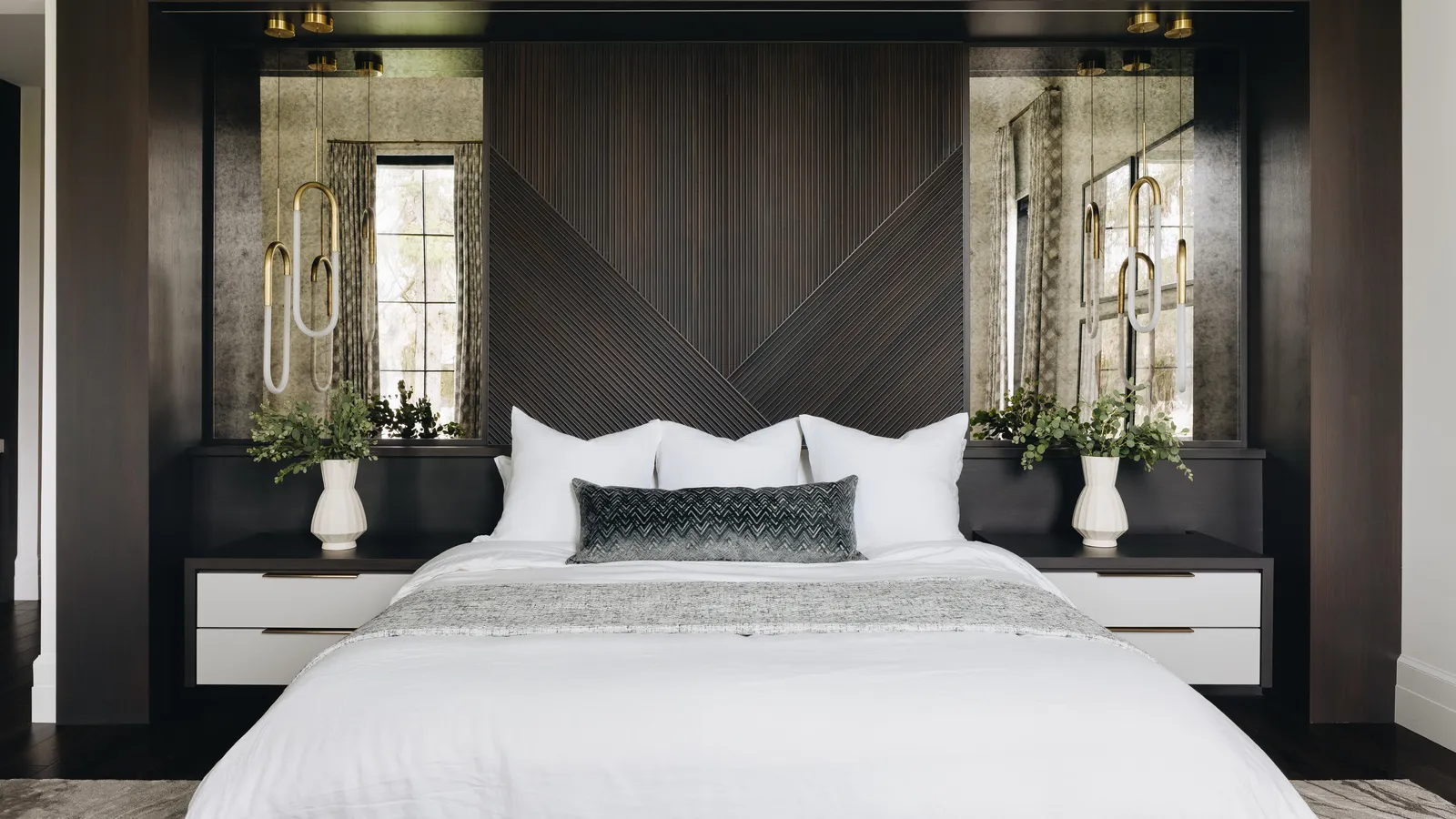
It sounds like a trap, but a dark accent wall (think navy, charcoal, or forest green) can actually make a small room feel deeper.
The Infinite Horizon: Deep colors recede visually. When you paint the wall behind your headboard a dark matte shade, it creates a sense of “boundless” depth, making the wall feel further away than it actually is.
The Contrast Balance: The key is the “pop.” Contrast the dark wall with crisp white bedding and warm wall sconces. This prevents the “cave” effect and turns the wall into a sophisticated focal point that anchors the entire design.
20. The “Swiss Army” Furniture Philosophy
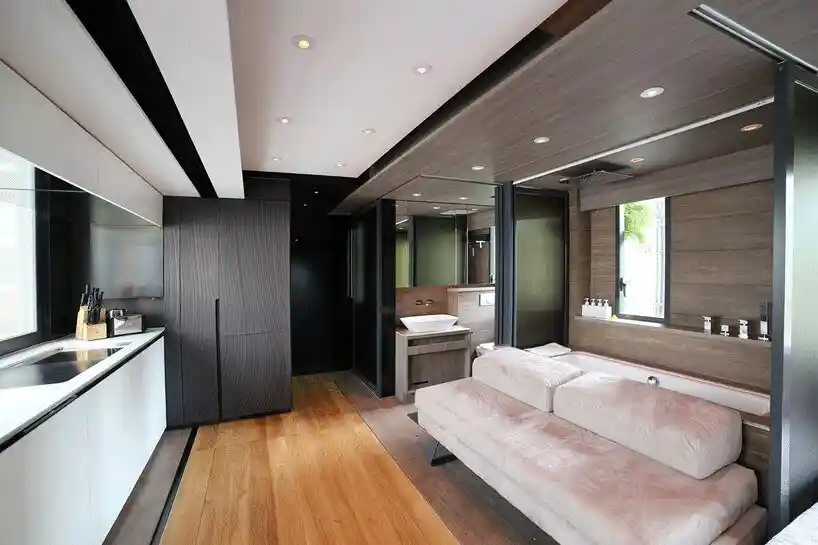
In a small bedroom, “single-use” furniture is a luxury you can’t afford. You need a multi-functional ecosystem.
The Hydraulic Lift: If you hate drawers, a hydraulic lift bed allows you to flip the entire mattress up to reveal a massive, hidden storage bunker.
The Visual Ghost: Use furniture made of clear acrylic or slim metal frames. These pieces provide the same utility as wooden ones but are “invisible” to the eye, reducing the mental clutter of the room.
Vertical Customization: Tall, narrow wardrobes and custom built-ins that hug the ceiling use “dead air” for storage, leaving the floor open for the things that matter—like your comfort.
The Verdict: Efficiency isn’t just about where you put your socks; it’s about how the room feels when you walk in. By using corners, platforms, and visual depth, you aren’t just living in a small room—you’re living in a highly-calibrated environment.