
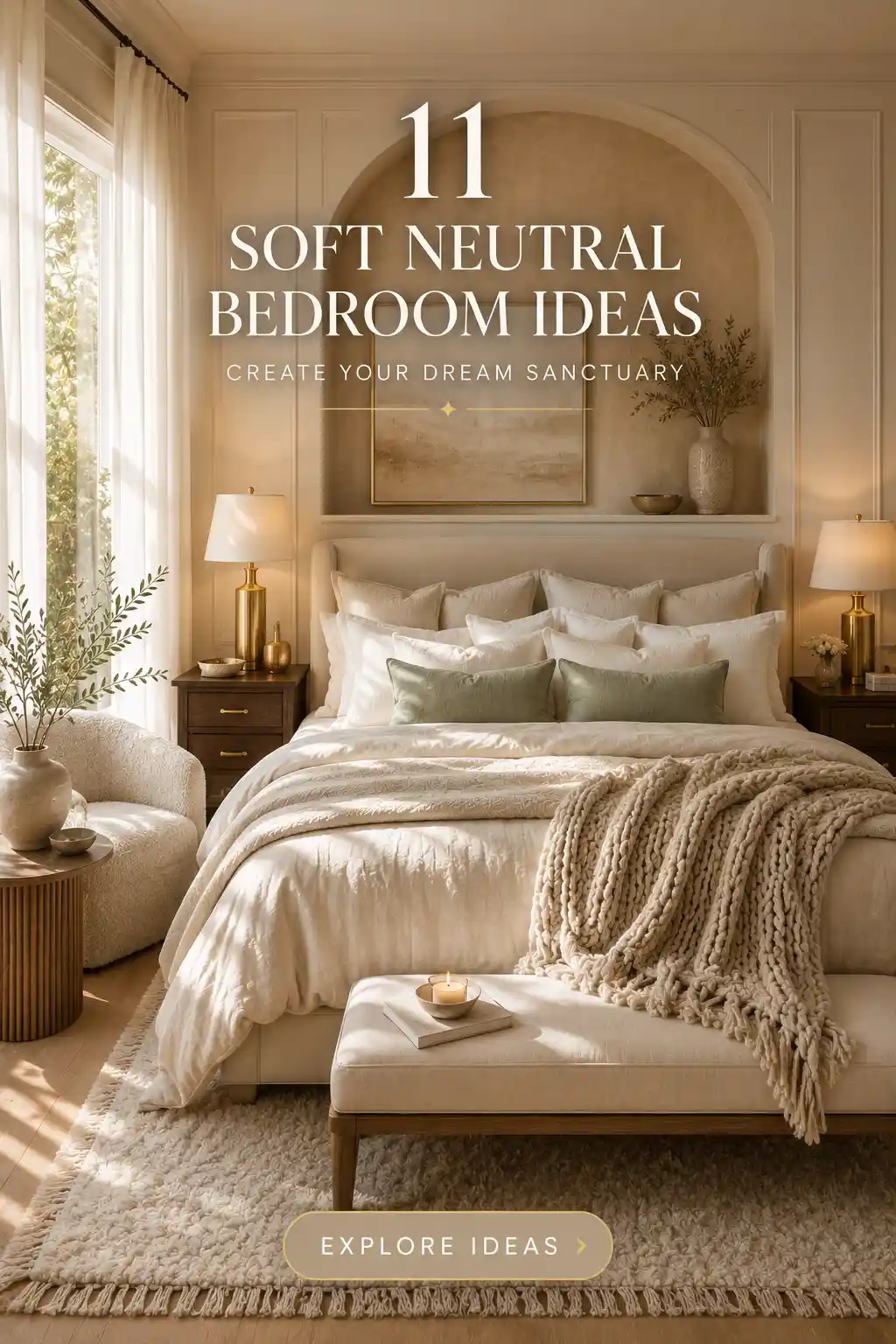
Creating a bedroom that serves as a true sanctuary requires a delicate balance of color, light, and texture. As we look toward 2026, the trend moves away from stark minimalism and toward a warmer, more tactile approach to neutral design. By layering creamy whites, earthy taupes, and soft beiges, you can transform your sleeping space into a serene retreat that feels both timeless and modern. Here are 11 inspired ways to implement soft neutrals in your bedroom for a look that exudes quiet luxury and effortless calm.
Tactile Layering with Bouclé and Chunky Knits
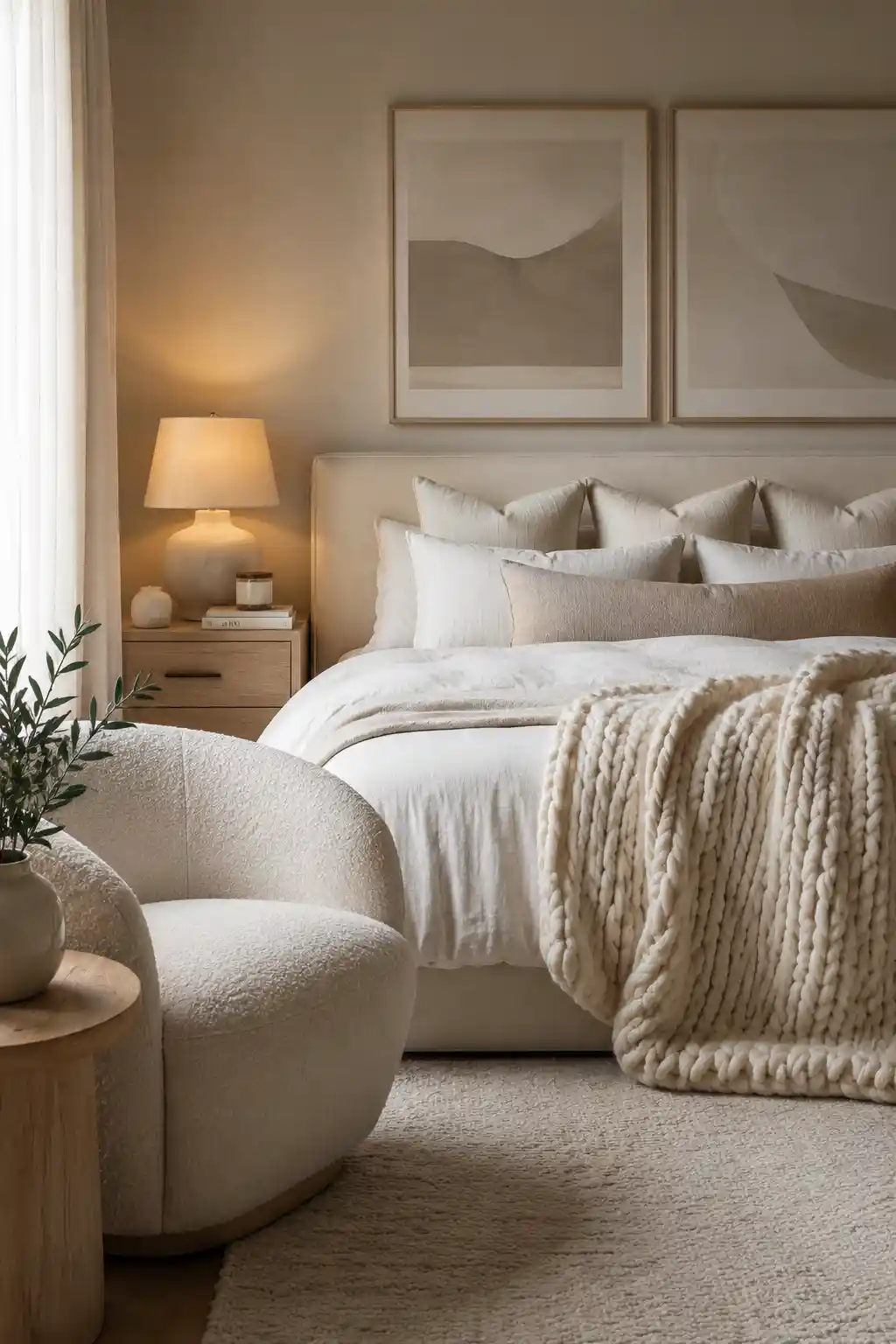
When working with a neutral palette, the biggest challenge is preventing the room from feeling flat or sterile. The secret for 2026 is tactile layering. By mixing materials with different weights and weaves—such as a bumpy bouclé chair paired with a smooth linen duvet and a heavy, oversized knit throw—you create visual depth through touch rather than color. This approach adds a sense of warmth and coziness that makes the bedroom feel lived-in and inviting, transforming a simple white room into a sophisticated, multidimensional sanctuary.
Architectural Wall Sculpting in Warm Plaster
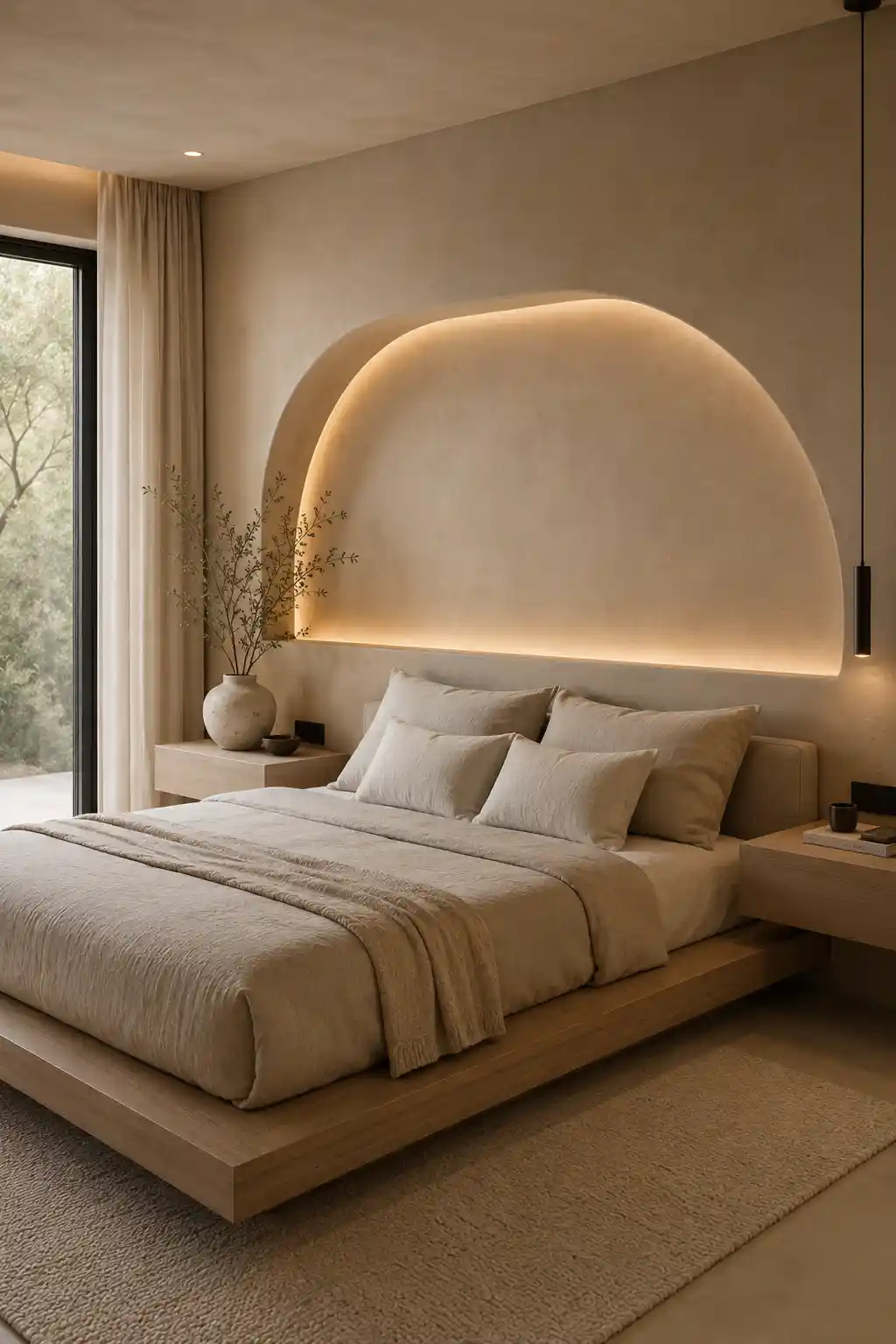
For those who want a high-end, curated look without introducing bold colors, architectural elements are the way to go. Instead of paint, consider using textured plaster or sculpted wall panels to add interest. A curved wall or a recessed niche behind the bed creates a soft, organic flow that feels modern yet grounding. This design strategy relies on the interplay of light and shadow to define the space, allowing the neutral tones to shift throughout the day as the sun moves, giving the room a dynamic and artistic quality.
Sun-Drenched Linen and Airy Sheers
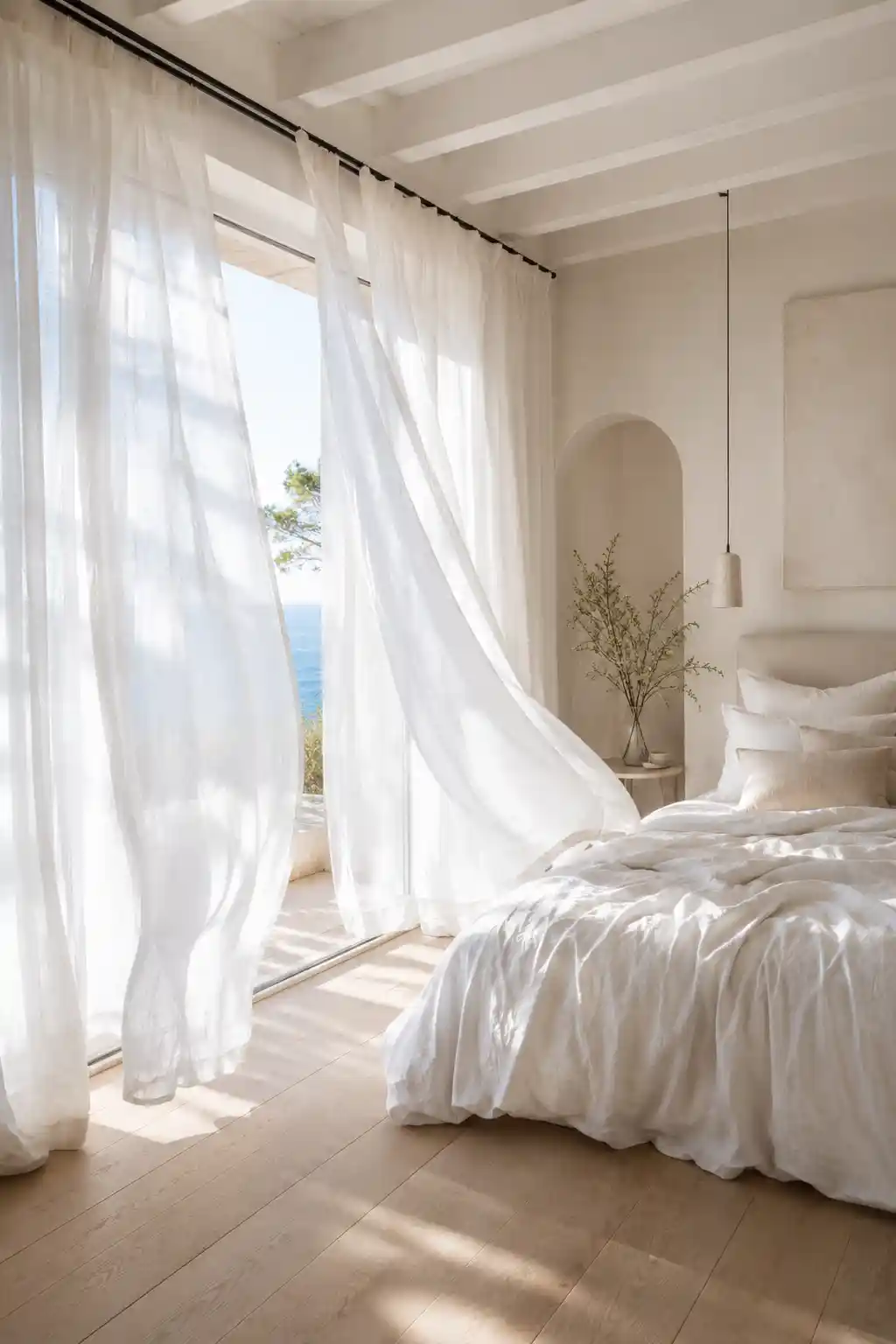
Light is the most important ‘material’ in a neutral bedroom. To achieve a dreamlike, airy atmosphere, focus on fabrics that filter light rather than block it. Layering sheer linen curtains over windows allows natural sunlight to flood the room while maintaining privacy, creating a soft-focus effect that enhances the calmness of the space. Pairing these with breathable linen bedding in off-white or pale cream encourages a relaxed, slow-living vibe that is perfect for improving sleep quality and starting the morning with a sense of peace.
Rich Walnut Contrasts with Soft Taupe
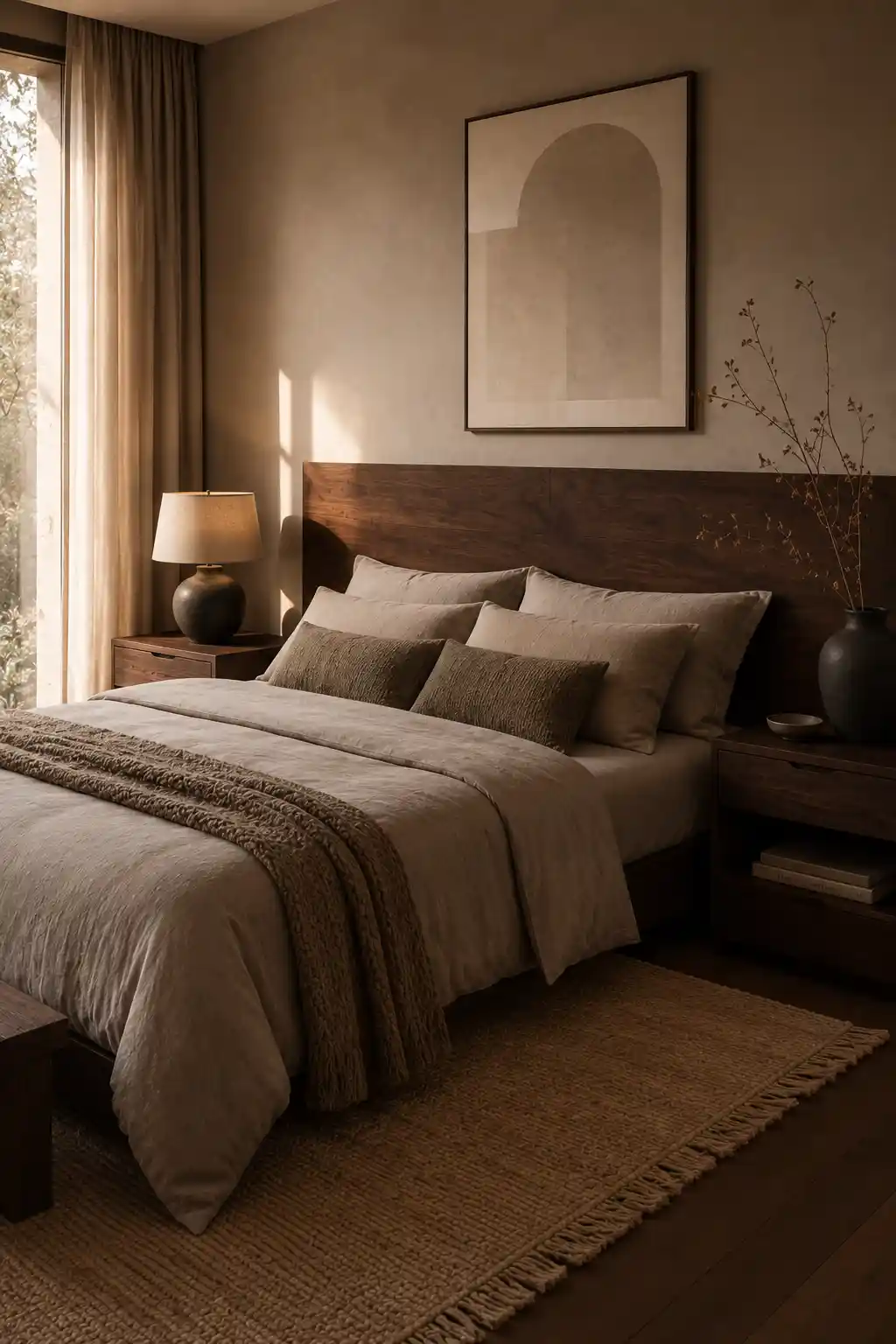
While light neutrals are stunning, adding a grounded element prevents the room from feeling too floaty. Incorporating rich, dark woods like walnut provides a sophisticated contrast that anchors the space. When you pair the deep, chocolatey tones of walnut furniture with soft taupe or mushroom-colored textiles, you create a balanced environment that feels both luxurious and cozy. This combination mimics the colors found in nature, bringing an organic stability to the bedroom that feels timeless and refined, ideal for those who prefer a slightly moodier neutral aesthetic.
Modern Nordic Minimalism and Pale Oak
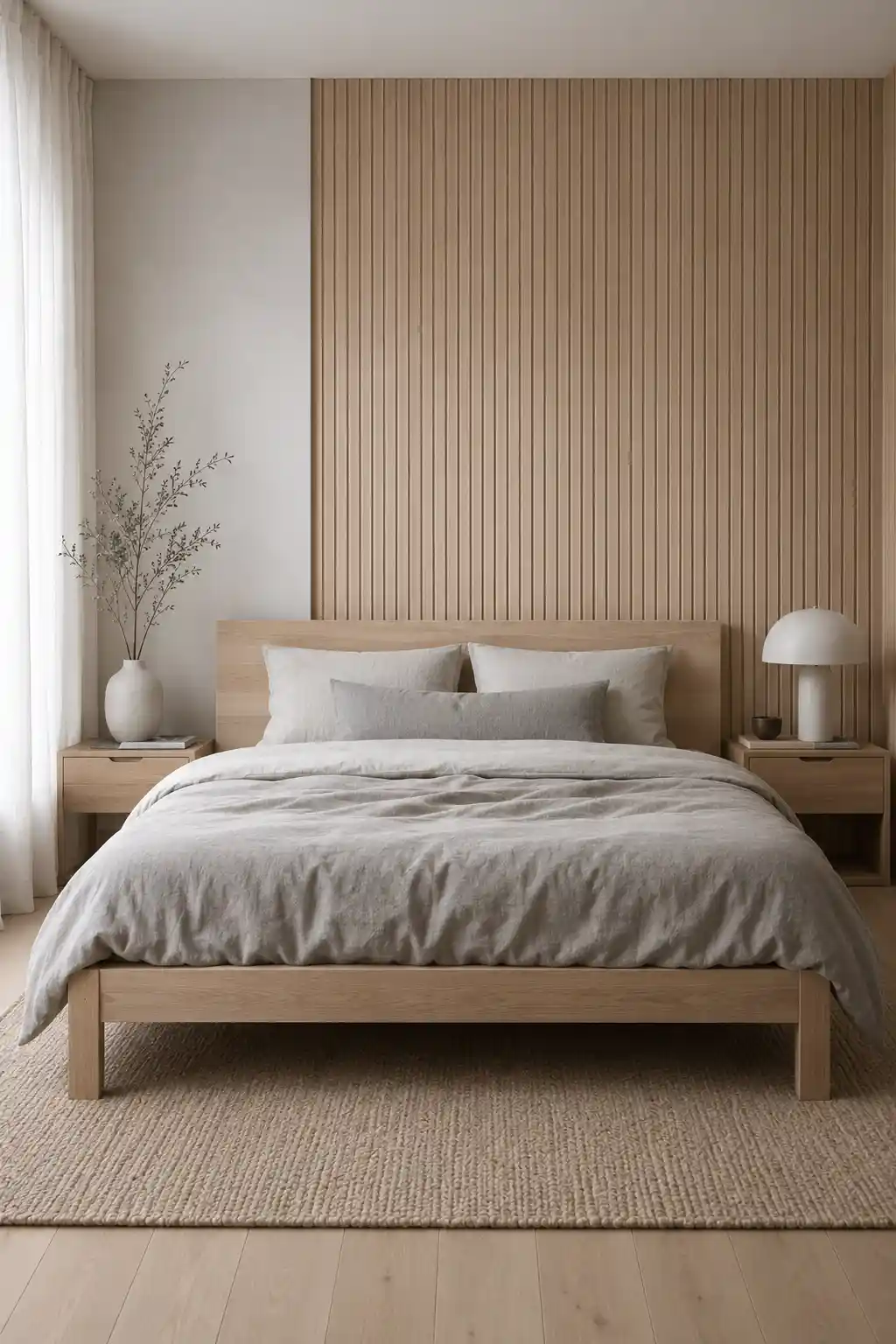
The Nordic approach to neutrals is all about functionality and brightness. For 2026, this means leaning into very pale woods, such as ash or light oak, and keeping the lines clean and uncomplicated. The goal is to create a space that feels uncluttered and mentally refreshing. By using a palette of oat, ash, and soft grey, you can achieve a look that is minimalist but not cold. Adding a few carefully chosen organic pieces, like a handcrafted ceramic vase or a wool rug, ensures the room remains warm and welcoming while maintaining its sleek edge.
Quiet Luxury with Traditional Wall Paneling
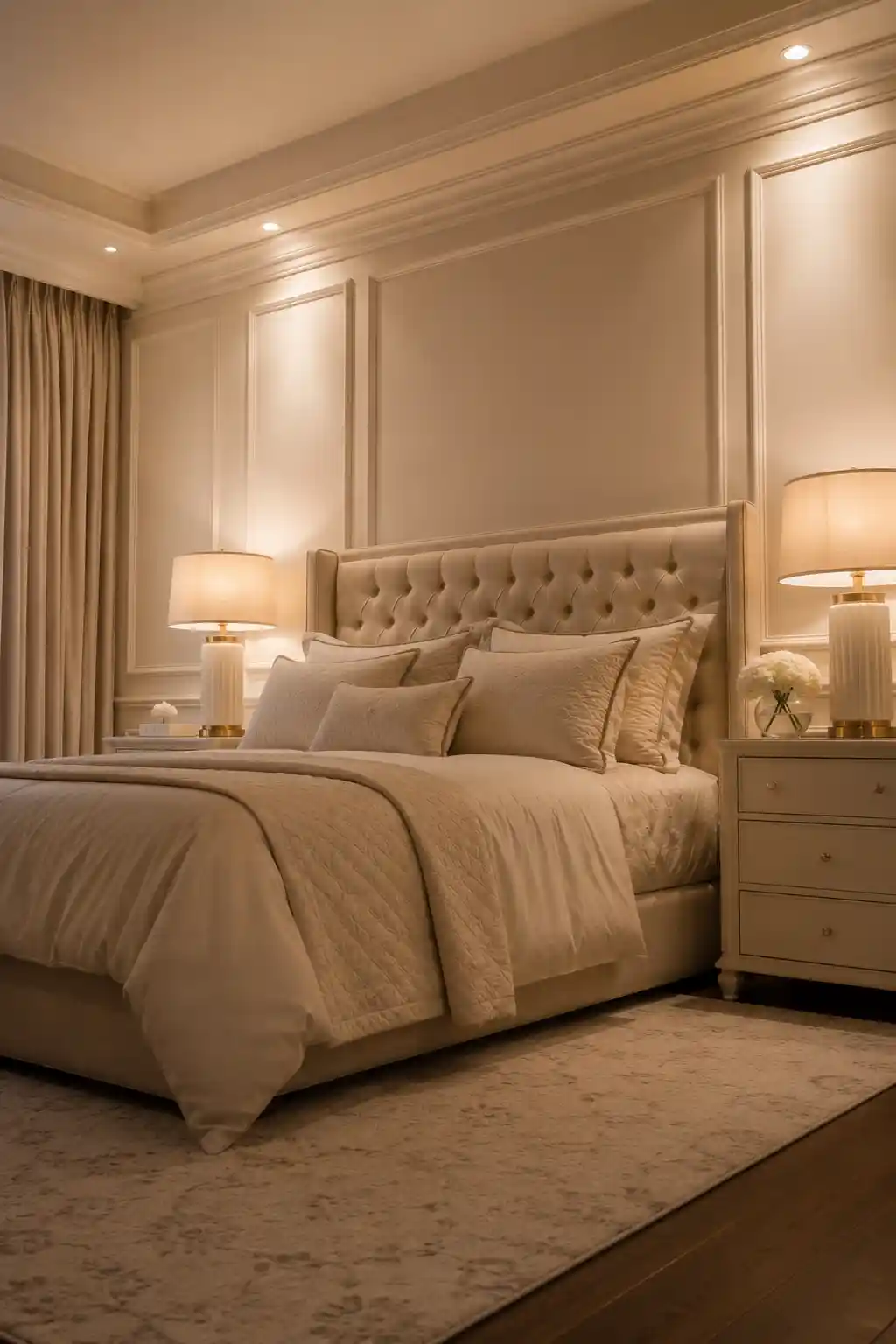
Quiet luxury is defined by quality and detail rather than flashiness. One of the most effective ways to bring this into a neutral bedroom is through traditional wall paneling or wainscoting. When the panels are painted in the exact same shade as the walls—such as a warm cream or champagne—it creates a sophisticated architectural detail that adds depth without adding visual noise. This monochromatic approach makes the room feel larger and more cohesive, providing a structured backdrop that allows your plush bedding and soft accessories to take center stage.
Coastal Sage and Sandy Beige Tones
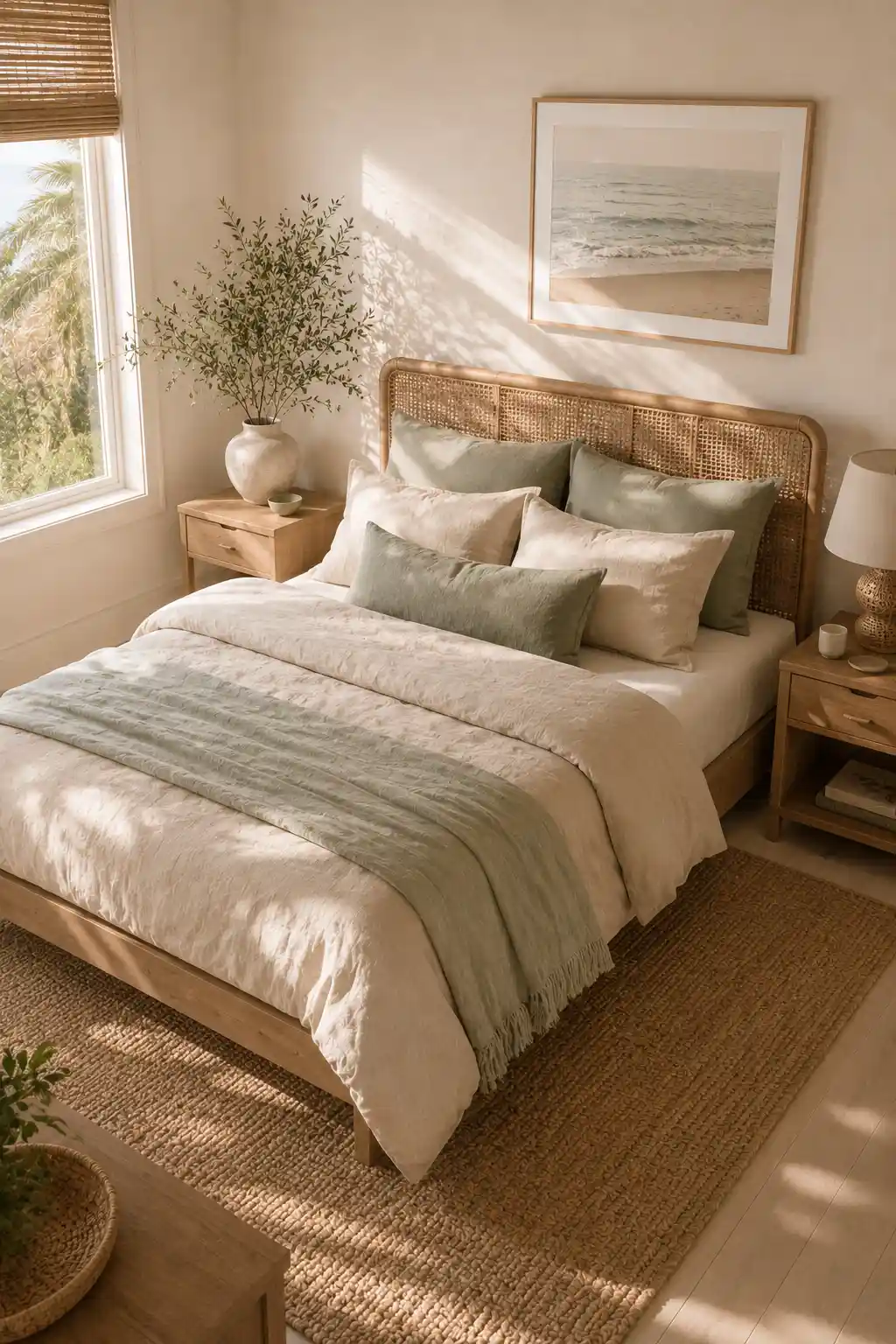
If you find a purely neutral palette too limiting, introducing a ‘near-neutral’ like sage green can breathe life into the space. A muted, desaturated green acts as a bridge between neutral and color, evoking the feeling of a coastal retreat. Pairing sage accents with sandy beiges and ivory whites creates a calming, nature-inspired environment that is incredibly soothing for the mind. To complete the look, integrate natural fibers like rattan, jute, and raw cotton, which enhance the organic, outdoorsy feel while keeping the overall vibe sophisticated and serene.
Cloud-Like Monochromatic White Layering
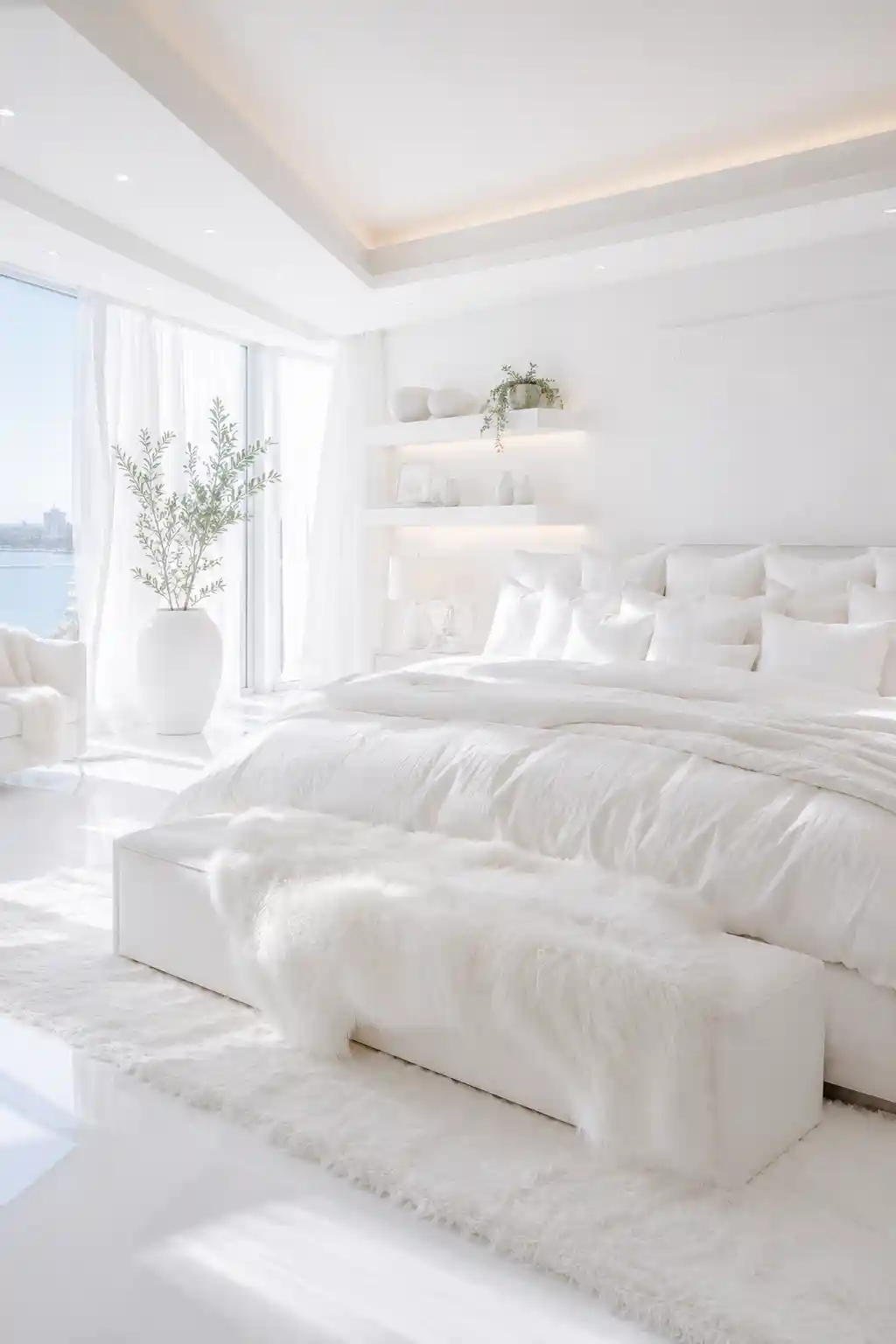
An all-white bedroom can feel like sleeping on a cloud, but the trick to making it work is avoiding a single shade of white. To prevent the room from looking like a gallery or a hospital, layer various tones such as pearl, alabaster, and ivory. Use different fabrics—like a crisp cotton sheet, a fluffy faux-fur throw, and a matte velvet pillow—to create separation between the layers. This monochromatic approach maximizes the available light and creates a feeling of purity and openness that helps the mind reset and relax at the end of a long day.
Grounded Earthy Browns and Mushroom Tones
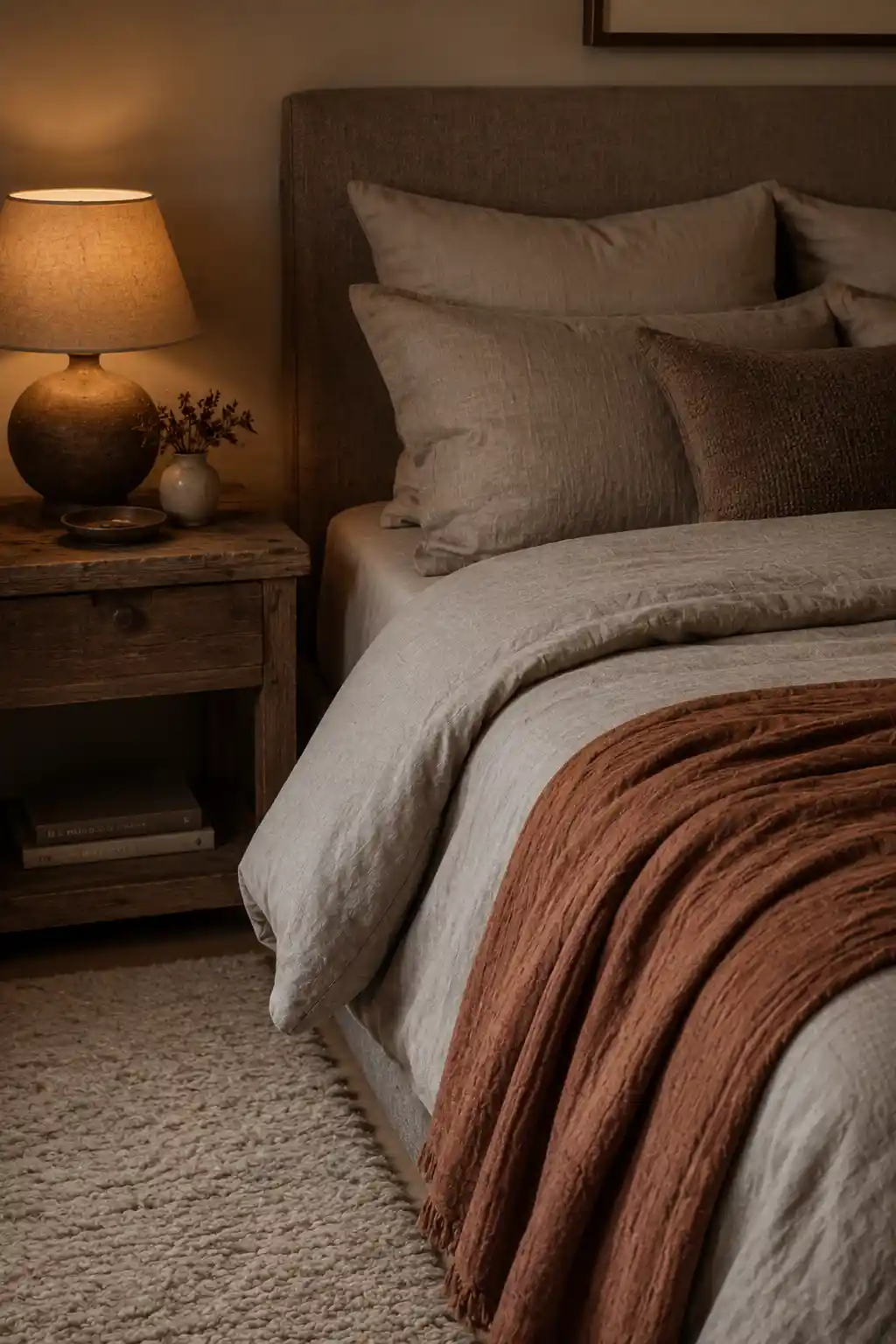
For a more intimate and sheltering feel, move away from the lighter creams and embrace deeper earthy neutrals. Mushroom, taupe, and warm clay tones provide a sense of security and warmth that lighter colors sometimes lack. These hues are particularly effective in larger rooms that might otherwise feel empty. By combining these grounded colors with soft cream accents and warm, low-intensity lighting, you create a cocoon-like environment that is perfect for winding down. This palette feels organic and honest, reflecting a desire for a more connected and nature-centric living space.
Symmetrical Balance for Mental Clarity
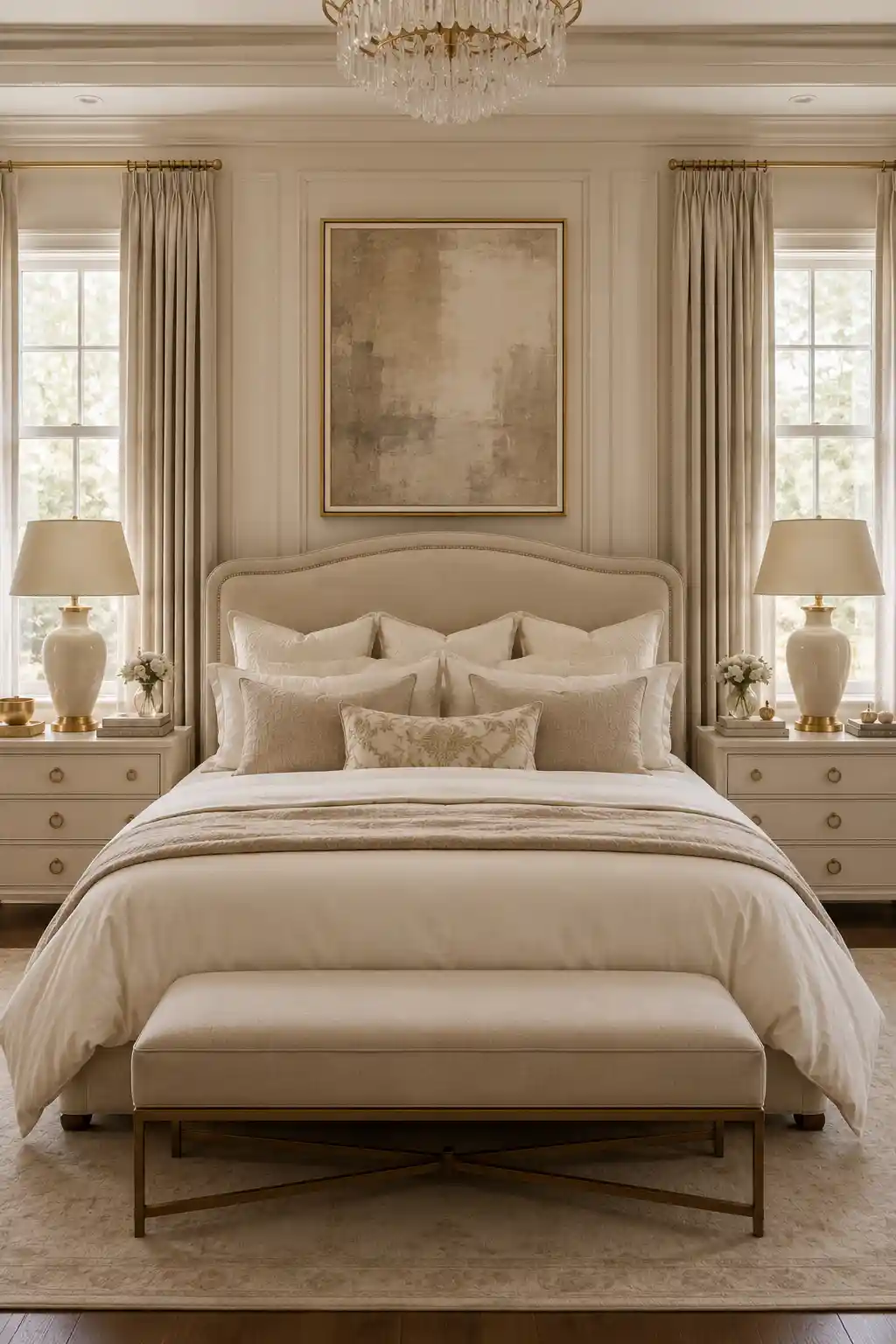
Interior design isn’t just about color; it’s also about the psychology of layout. Symmetrical design is inherently calming to the human brain because it suggests order and balance. In a neutral bedroom, achieving symmetry—with matching nightstands, identical lamps, and a centered bed—creates a hotel-like sense of luxury and stability. When the visual weight of the room is evenly distributed, it reduces mental clutter and promotes a deeper sense of relaxation. This structured approach works beautifully with soft neutrals, as the simplicity of the colors complements the precision of the layout.
Soft Glam with Polished Neutral Accents
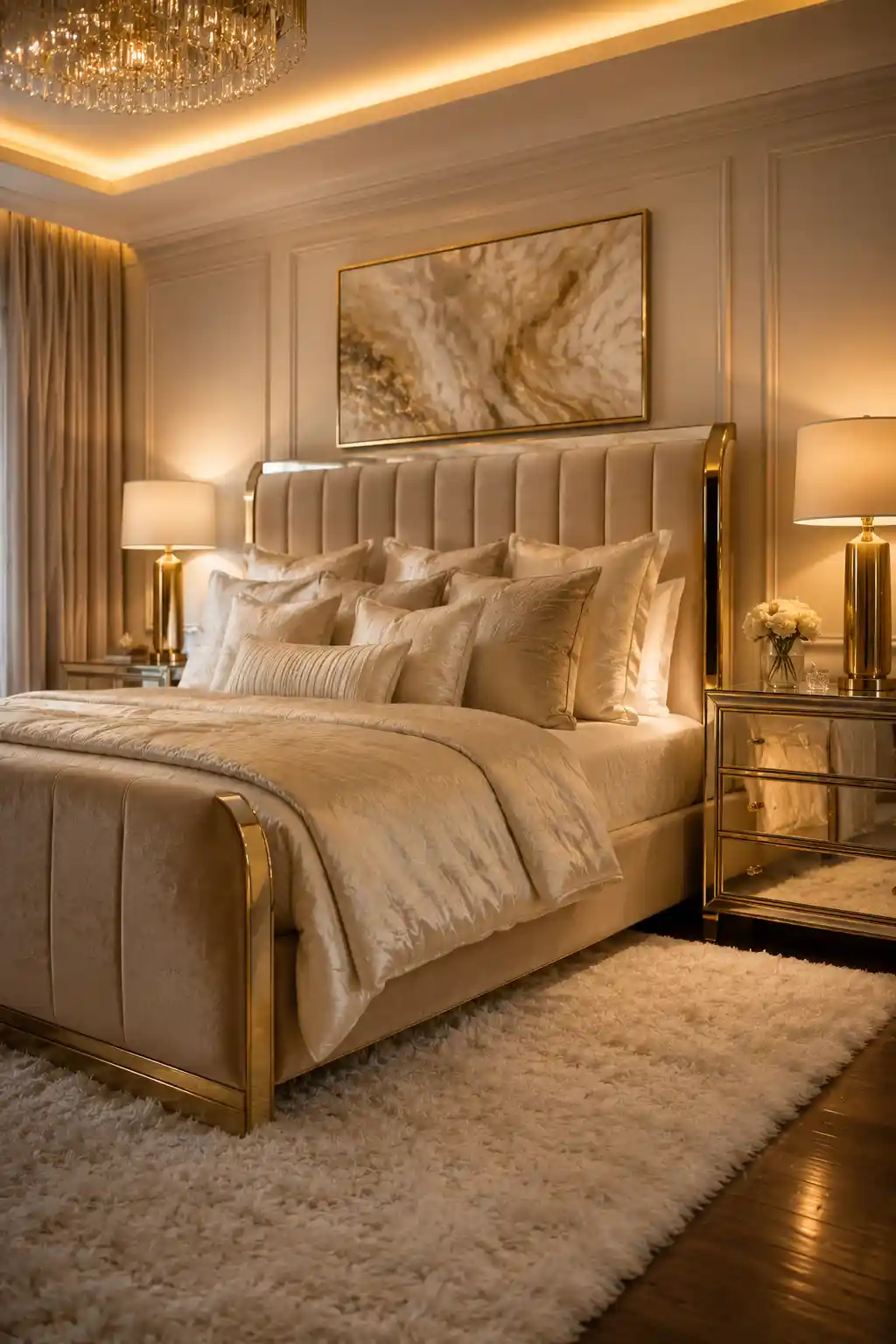
You can achieve a glamorous look without relying on loud colors by focusing on polished finishes and luxurious fabrics. Integrating brushed gold or brass accents into a neutral room adds a touch of shimmer and sophistication. Pairing these metallic elements with high-sheen materials, such as champagne-colored velvet or silk pillows, elevates the space from simple to opulent. The key is to keep the base palette soft and muted so that the gold accents act as jewelry for the room, providing a focal point of elegance while maintaining the overall peaceful atmosphere of the sanctuary.