
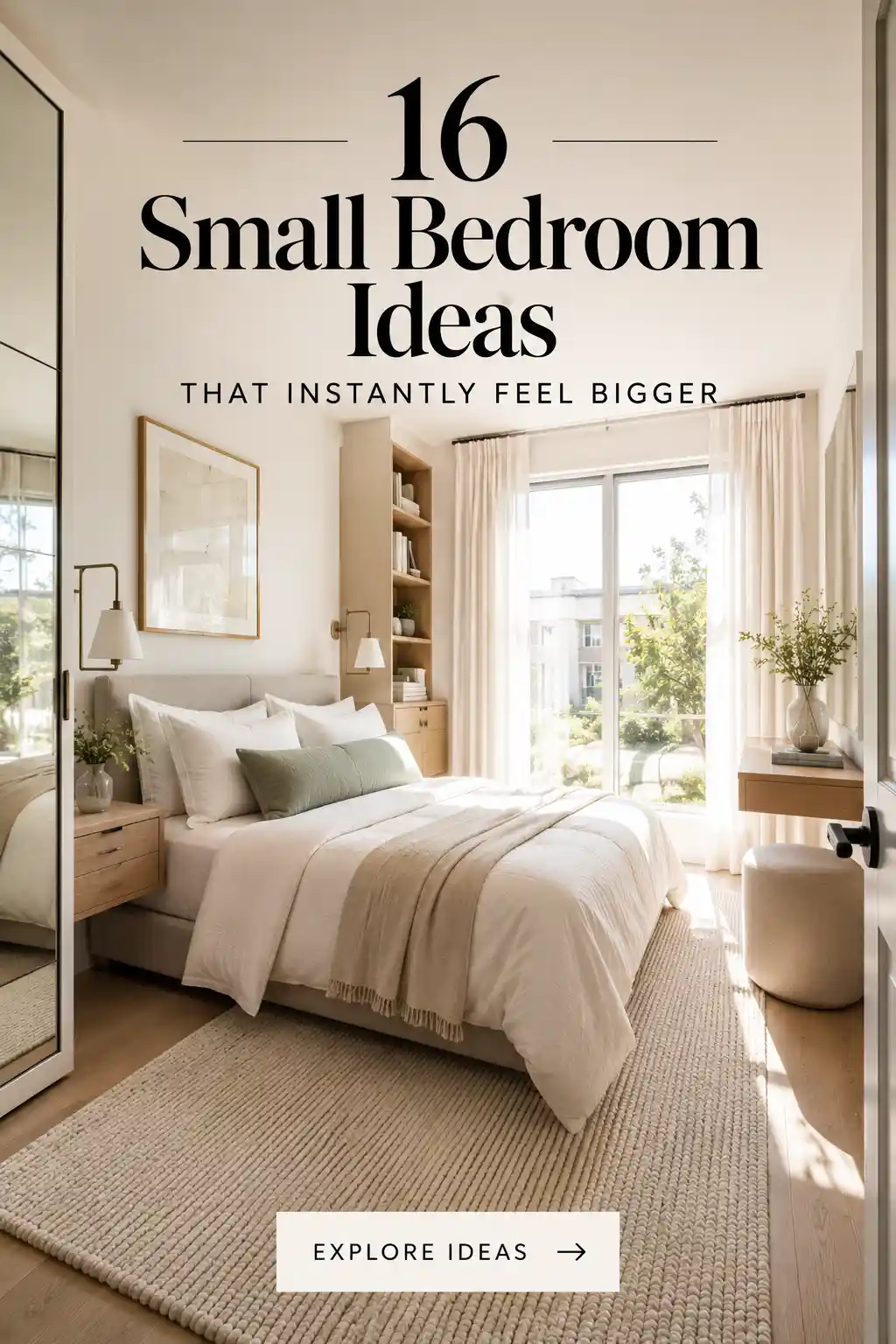
Transforming a compact sleeping area into a sanctuary requires a blend of strategic planning and stylish accents. When square footage is limited, every design choice must serve a dual purpose: enhancing the aesthetic appeal while optimizing functionality. From clever storage hacks to visual tricks that create the illusion of openness, these curated ideas will help you turn a tight space into a luxurious, breathable retreat that feels larger than it actually is.
Install Floating Nightstands
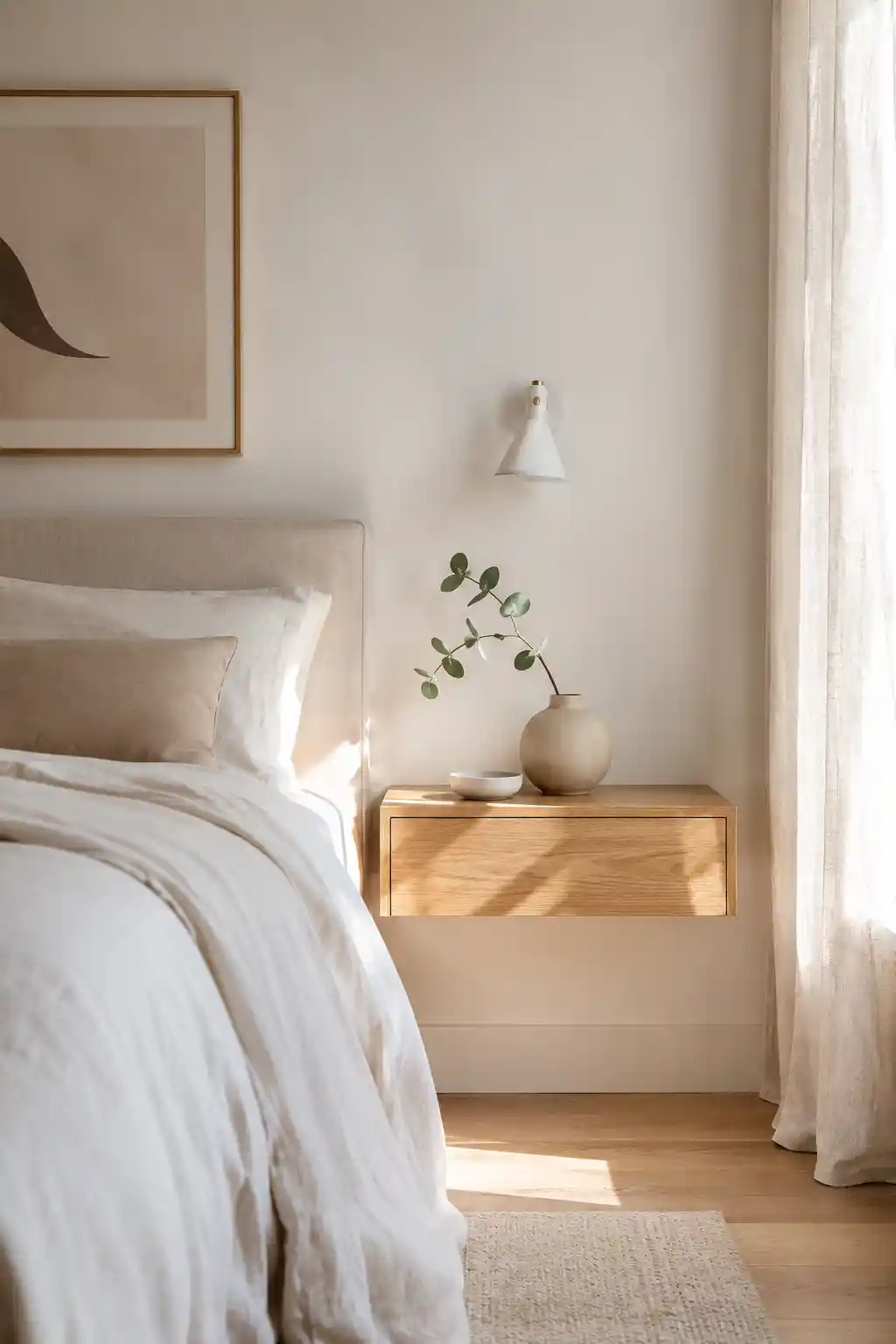
One of the most effective ways to make a small bedroom feel more expansive is to keep as much of the floor visible as possible. Traditional bedside tables with bulky legs can clutter the visual landscape and make a room feel cramped. By installing floating nightstands, you create an airy, modern look that opens up the floor space. These wall-mounted shelves provide the necessary surface area for a lamp or a book without the heavy footprint. Opt for light-toned woods or a color that matches your walls to blend the furniture seamlessly into the architecture, enhancing the overall sense of openness.
Hang Floor-to-Ceiling Curtains
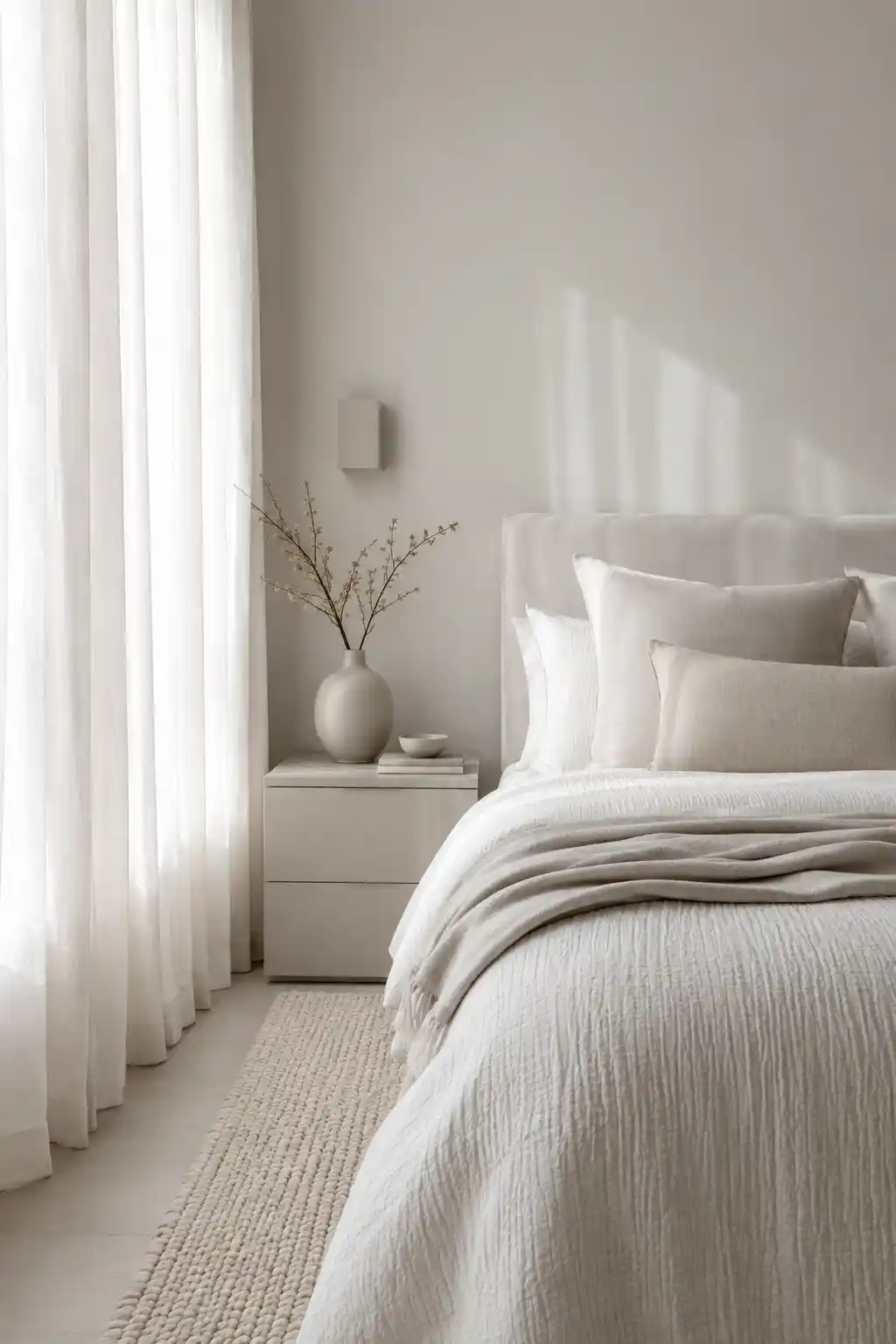
To create the illusion of height in a room with low ceilings, hang your curtains from the very top of the wall rather than just above the window frame. This simple design trick draws the eye upward, making the ceilings feel significantly taller and the room feel more grand. Choose lightweight, breathable fabrics like linen or sheer voile in a light color palette to allow natural light to permeate the space. When the fabric cascades from the ceiling to the floor in uninterrupted vertical lines, it elongates the room’s proportions and adds a touch of hotel-inspired luxury to your small space.
Utilize Mirrored Wardrobes
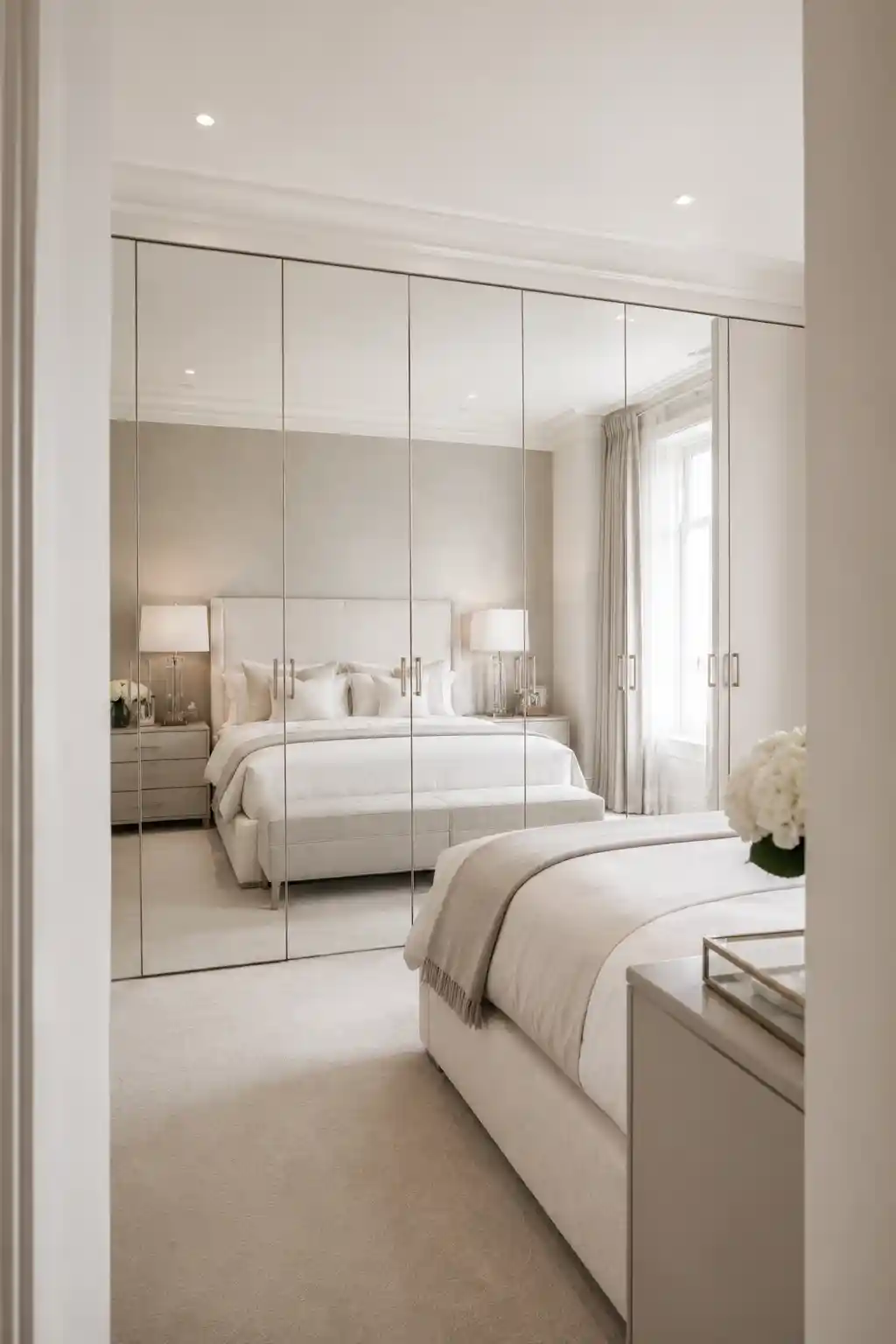
Mirrors are a classic interior design tool for a reason: they reflect both light and space. In a small bedroom, replacing standard closet doors with mirrored panels can instantly double the perceived size of the room. The reflection creates a sense of depth, making the walls feel as though they are receding. To maximize this effect, position the mirrored wardrobe opposite a window so that the natural light is bounced throughout the entire room, brightening dark corners and eliminating the claustrophobic feeling often associated with compact bedrooms. This addition is both a practical dressing tool and a strategic spatial enhancer.
Adopt a Light Color Palette
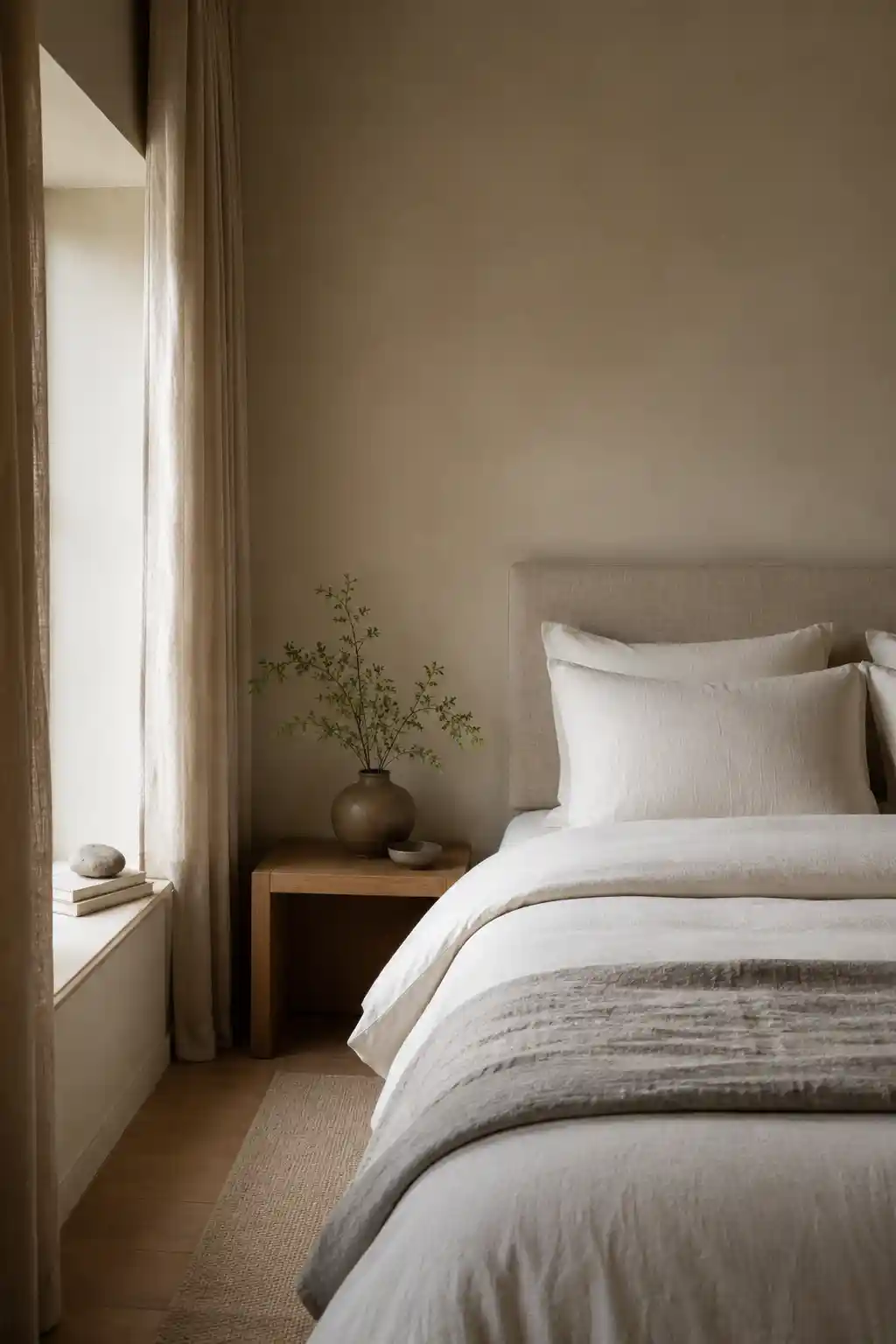
Color has a profound impact on how we perceive the size of a space. Dark colors tend to absorb light and make walls feel like they are closing in, whereas light colors reflect light and push the boundaries outward. A palette consisting of soft whites, creams, pale greys, or muted pastels can make a small bedroom feel airy and luminous. To prevent a light room from looking sterile or flat, incorporate various textures—such as a chunky knit throw, a linen duvet, or a wool rug. This layering adds visual interest and warmth while maintaining the bright, open atmosphere essential for small spaces.
Implement Under-Bed Storage
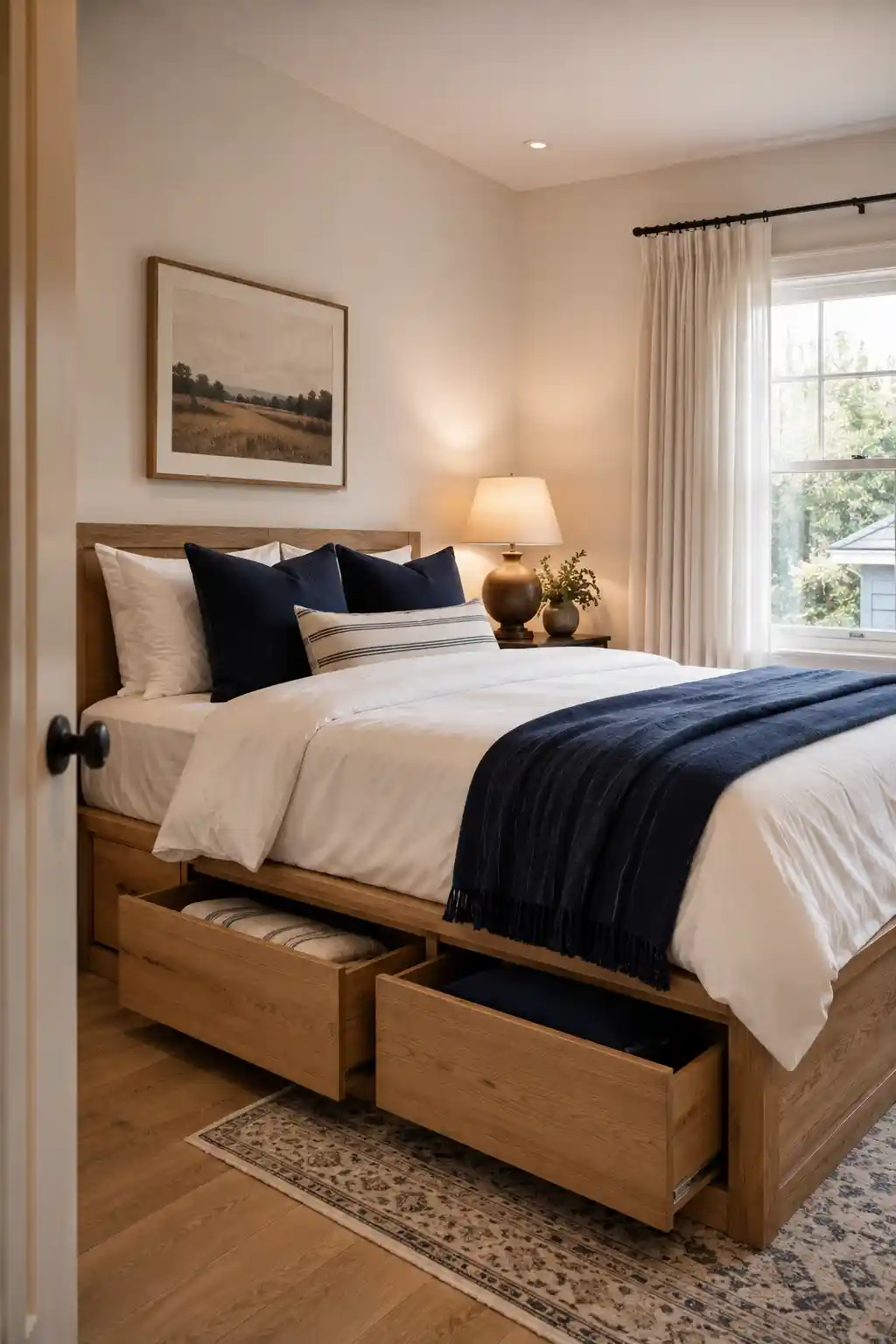
When you lack closet space, the area beneath your bed becomes prime real estate for storage. Instead of letting this space gather dust, utilize a bed frame with integrated drawers or use stylish under-bed bins. This allows you to store off-season clothing, extra linens, or shoes out of sight, reducing the need for additional dressers or bulky cabinets that would otherwise eat up valuable floor space. For a seamless look, choose a bed frame where the drawers blend in with the overall design, ensuring that your organization system remains hidden while keeping the room clutter-free and serene.
Install Vertical Wall Shelving
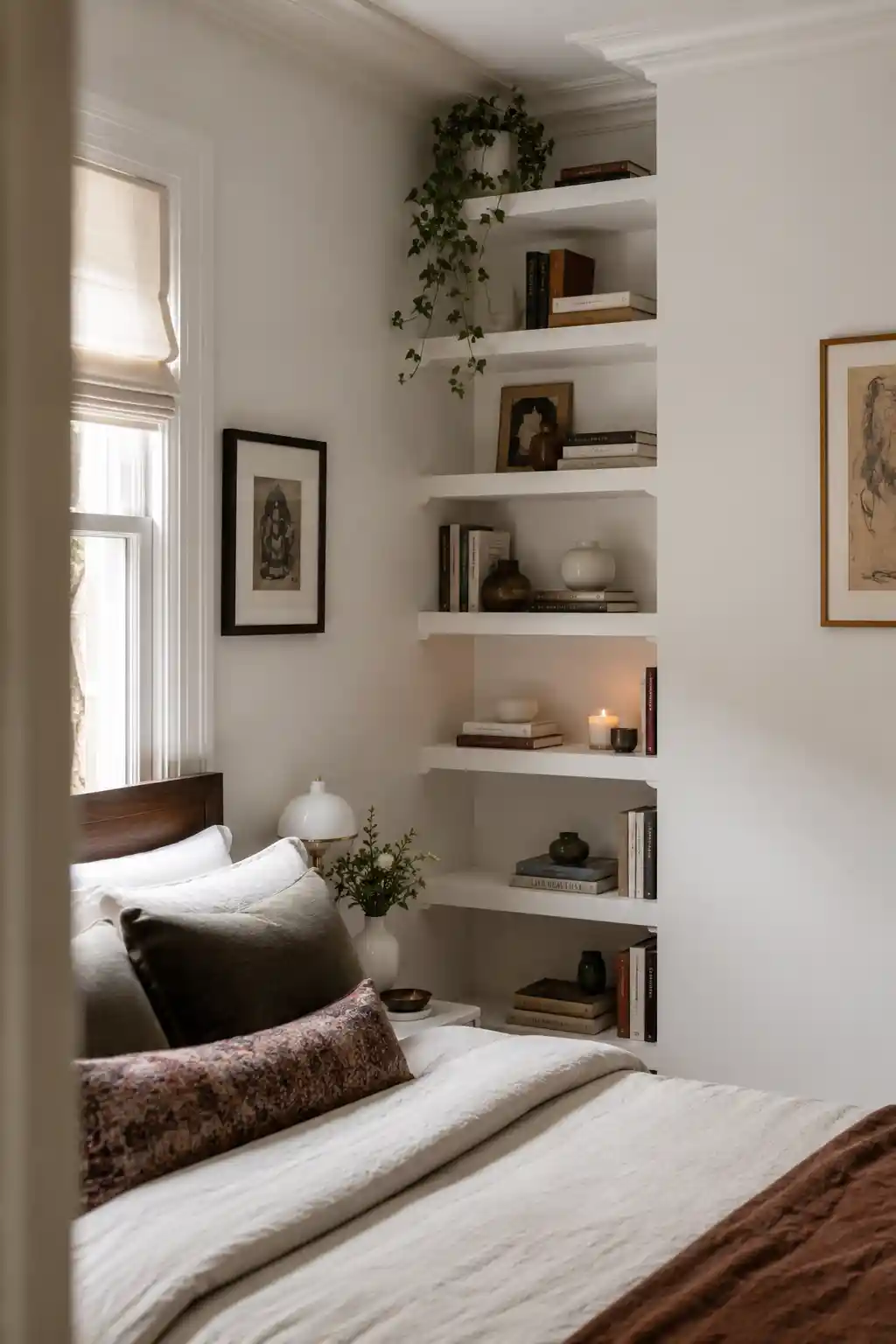
When you run out of horizontal space, it is time to look up. Vertical wall shelving is an excellent way to store books, decor, and essentials without occupying any floor area. By installing shelves that extend toward the ceiling, you draw the eye upward and utilize the full volume of the room. Consider using staggered floating shelves for a more dynamic, modern look, or built-in shelving around the door frame for a custom architectural feel. This approach keeps your surfaces clear and organized, which is critical in a small bedroom to avoid a feeling of chaos and congestion.
Choose Multifunctional Furniture
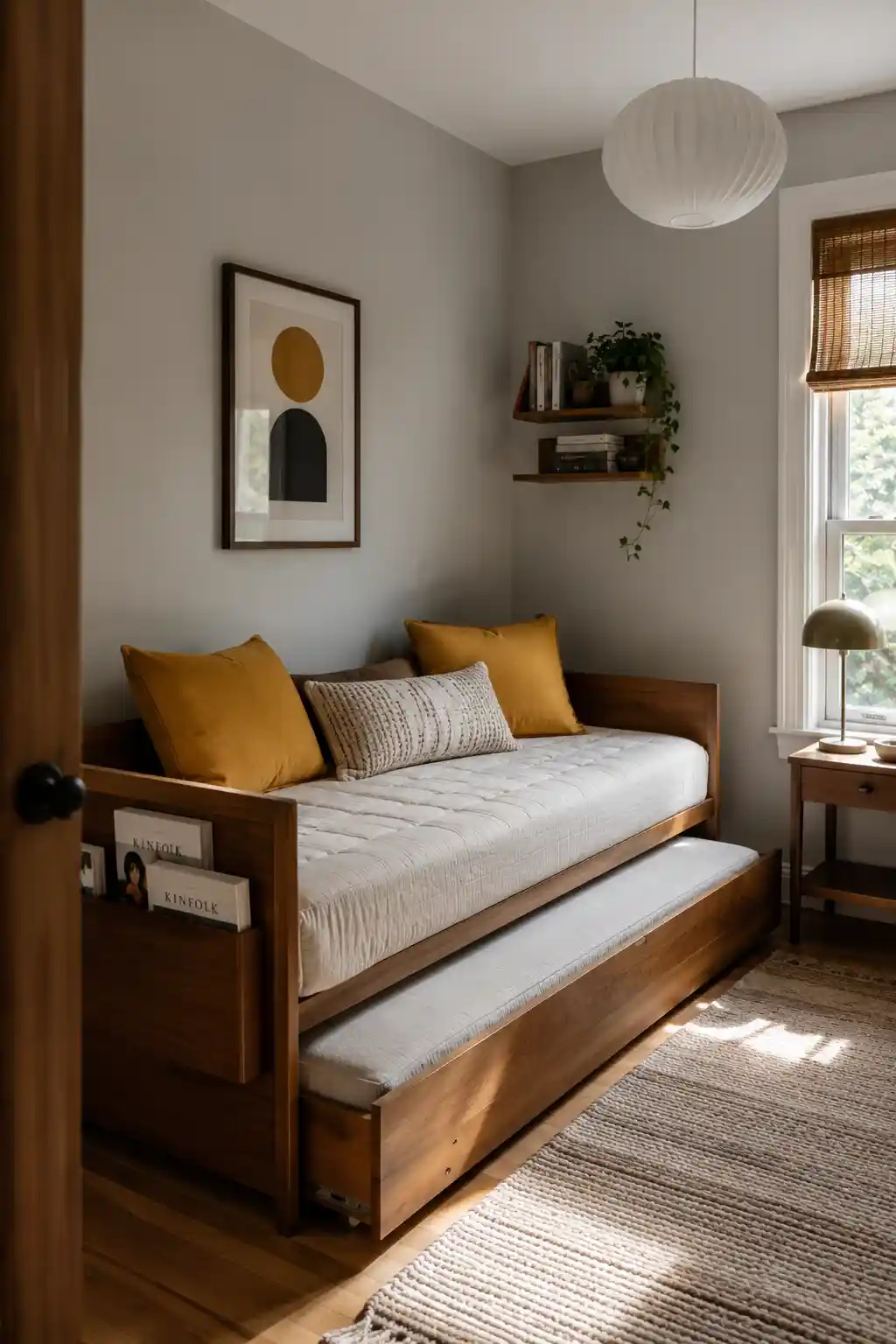
In a small bedroom, every piece of furniture must earn its keep. Multifunctional pieces, such as daybeds with trundle options or ottomans with hidden storage, are game-changers. A daybed can serve as a cozy sofa during the day and a comfortable bed at night, effectively turning a bedroom into a multi-purpose studio. When shopping for furniture, prioritize pieces with clean lines and hidden compartments. By reducing the total number of items in the room and choosing pieces that perform multiple roles, you maintain a streamlined aesthetic while ensuring all your practical needs are met without compromising on style.
Switch to Statement Pendant Lighting
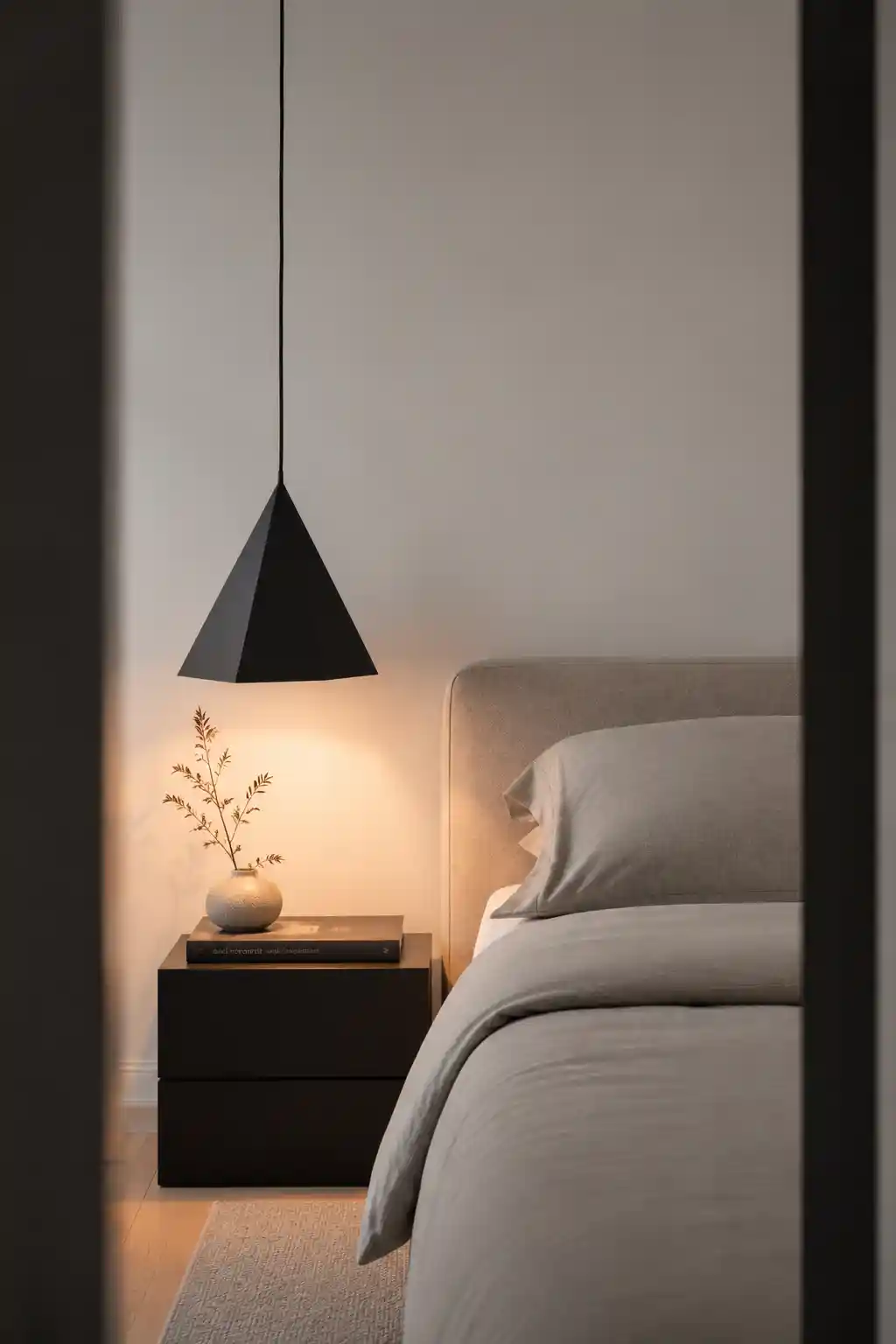
Bedside lamps are great, but they require space on your nightstand. By switching to pendant lights or wall-mounted sconces, you free up the entire surface of your bedside table for other essentials. A statement pendant light not only provides focused illumination for reading but also acts as a piece of art, adding a sophisticated focal point to the room. This design choice clears the visual clutter from the bedside and adds a layer of architectural interest. Choose a fixture that complements your room’s style—whether it is a sleek industrial metal dome or a soft fabric drum—to elevate the overall mood.
Use Minimalist Bedding
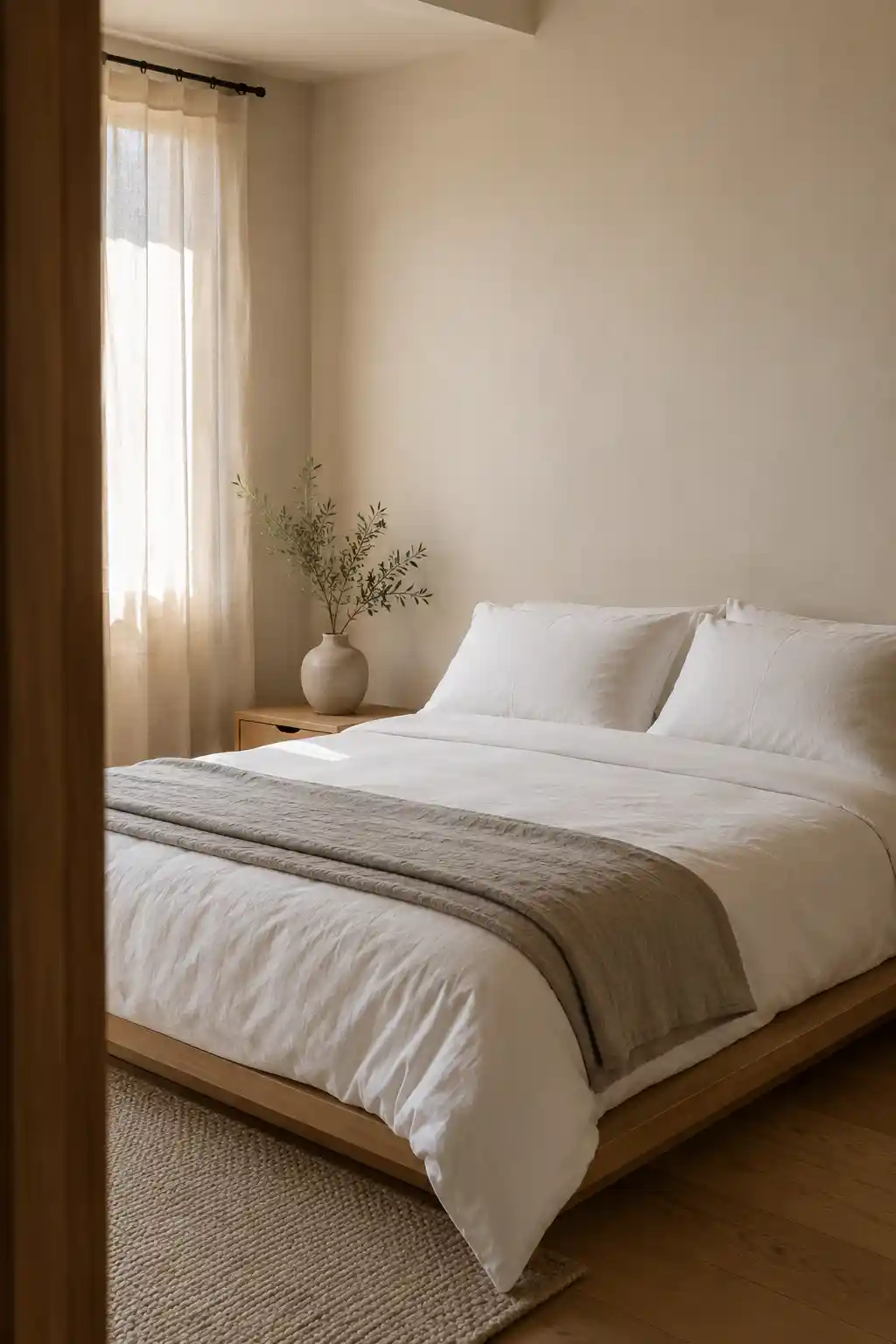
Overly bulky bedding, with too many oversized pillows and heavy comforters, can visually overwhelm a small bed and make the entire room feel cramped. To maintain a sense of lightness, opt for minimalist bedding. Use a crisp duvet in a neutral tone and limit the number of decorative pillows to two or three well-chosen accents. By choosing streamlined linens and a cohesive color scheme, the bed looks neat and inviting rather than imposing. This simplicity creates a calming environment and prevents the bed from dominating the room’s visual scale, making the space feel more breathable and organized.
Add a Subtle Accent Wall
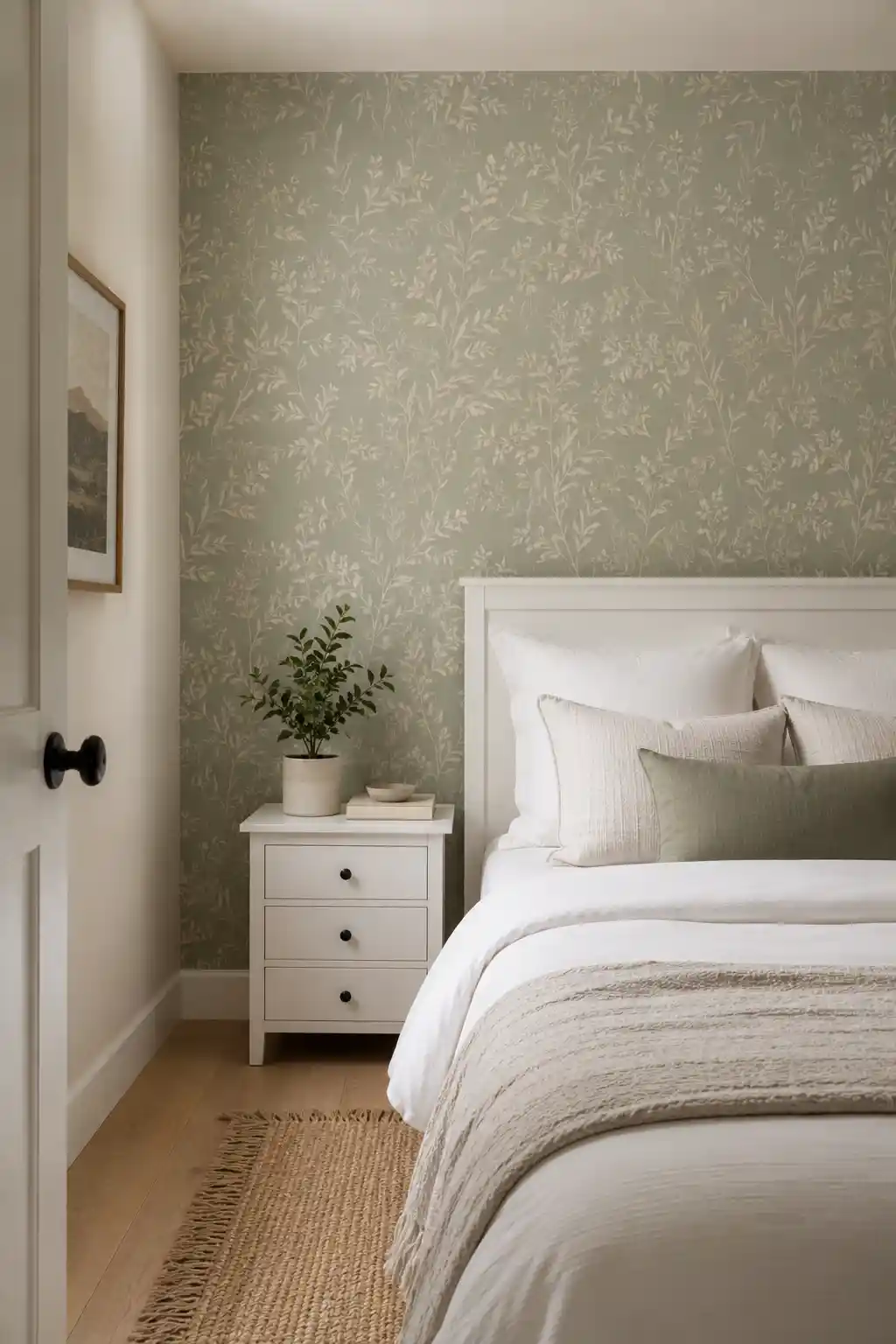
Many people fear adding color to a small room, thinking it will make the space feel smaller. However, a strategically placed accent wall can actually add depth and character. By painting or wallpapering just one wall—typically the one behind the headboard—you create a focal point that draws the eye and gives the room a defined personality. Choose subtle patterns or muted colors, such as sage green, dusty blue, or a soft terracotta, to keep the vibe relaxing. This technique prevents the room from feeling like a white box while maintaining the airy quality needed for a compact space.
Create a Corner Reading Nook
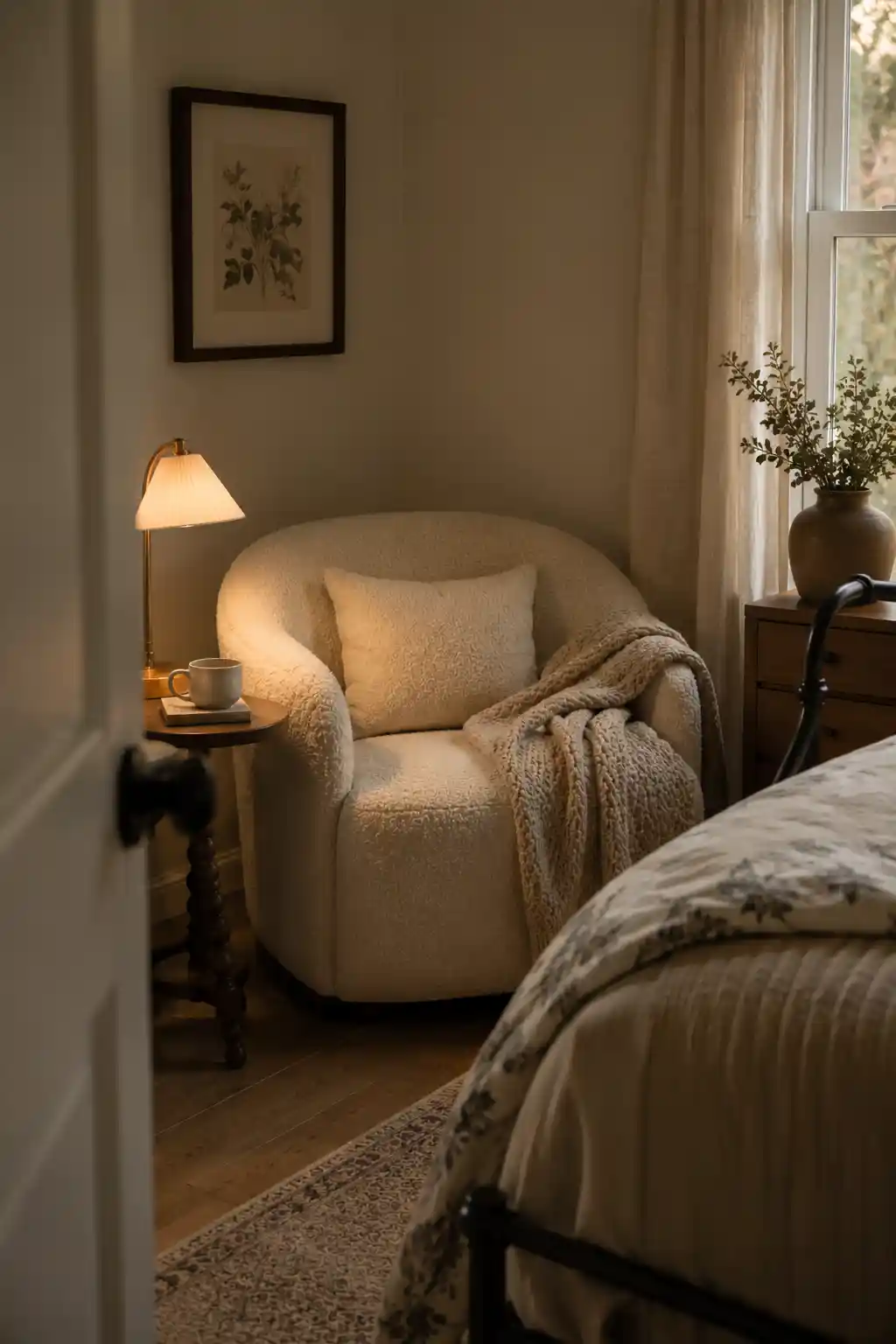
Even in the smallest bedroom, carving out a dedicated spot for relaxation can make the room feel more like a multi-functional suite. A corner reading nook can be achieved by placing a petite, comfortable armchair or a plush oversized floor cushion in an unused corner. Pair it with a small side table and a dedicated reading light to create a distinct zone for unwinding. This zoning technique makes the room feel larger because it suggests that the space has multiple purposes beyond just sleeping, adding a layer of luxury and intentionality to your interior design.
Invest in Acrylic Furniture
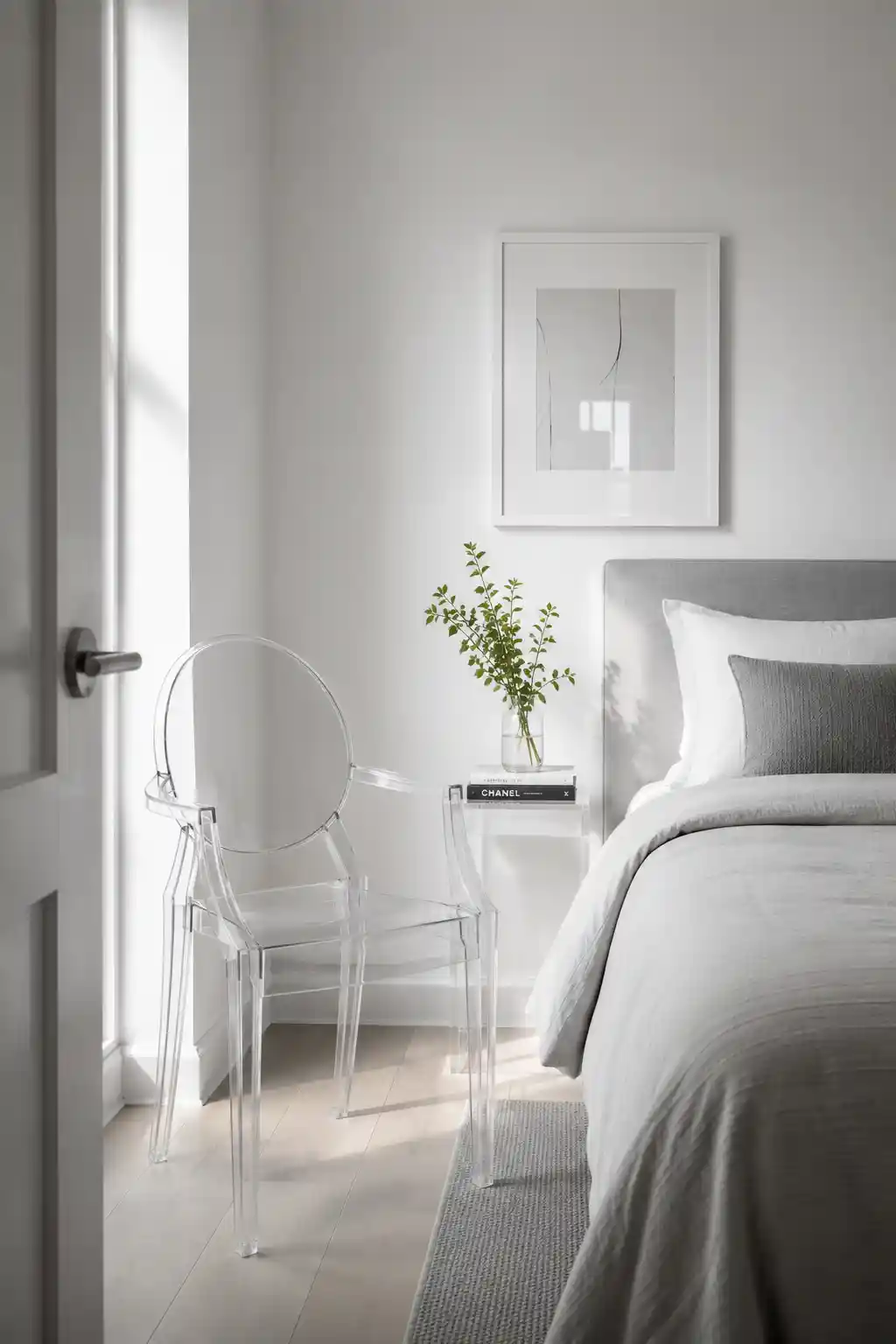
Acrylic or ‘ghost’ furniture is a secret weapon for small room design. Because these pieces are transparent, they provide the necessary functionality of a chair or table without taking up any visual space. This allows the eye to travel through the furniture to the walls and floor, maintaining an unobstructed line of sight. An acrylic side table or a clear vanity chair can provide the utility you need while remaining virtually invisible. This creates a high-end, modern aesthetic that prioritizes clarity and openness, ensuring that your decor doesn’t feel cluttered or overcrowded.
Use Over-the-Door Organizers
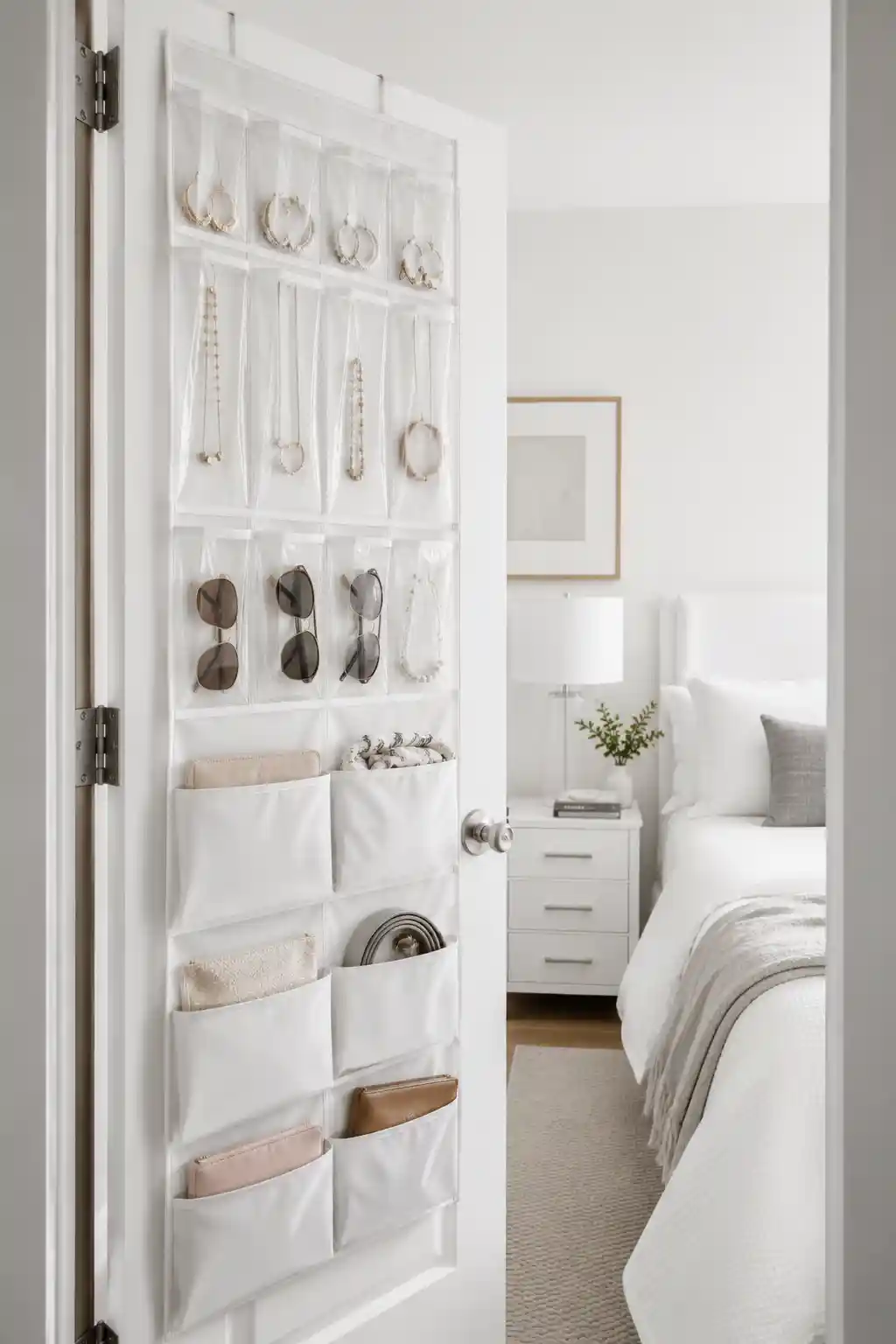
When every inch of wall and floor space is occupied, the back of the door is an often-overlooked opportunity for storage. Over-the-door organizers can be used for a variety of items, from shoes and handbags to jewelry and skincare products. By moving these smaller items off your dresser and into a vertical organizer, you clear up surface area and reduce visual noise. To keep this looking polished and not like a dorm room, choose organizers made from high-quality fabrics or sleek plastics that match your room’s color palette, blending utility with a clean, editorial aesthetic.
Build a Window Seat
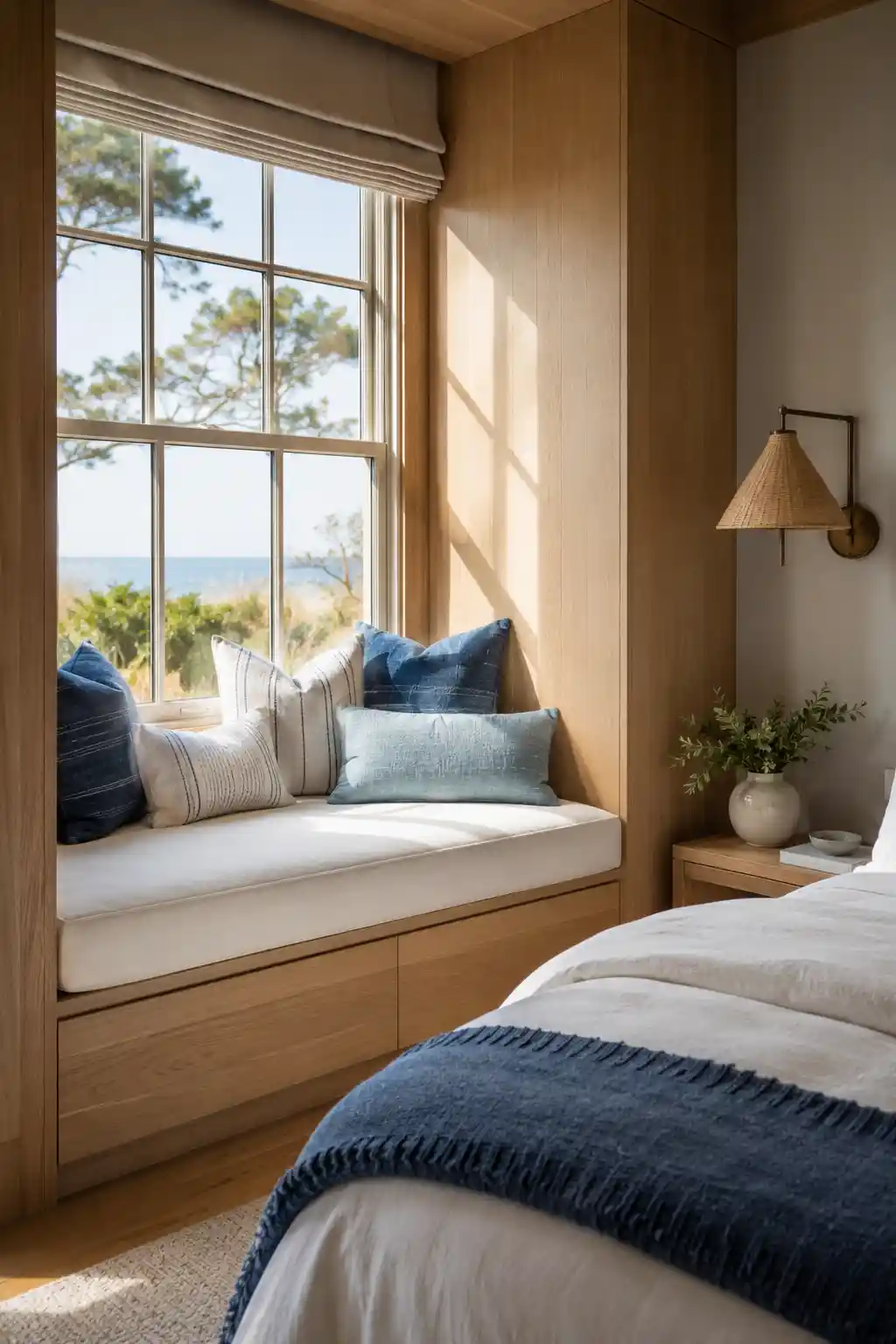
If your bedroom has a window, consider installing a built-in window seat. This adds a beautiful architectural element and provides a cozy spot for lounging without needing a separate sofa or chair. Many window seats are designed with drawers underneath, offering additional hidden storage for linens or books. This use of space is incredibly efficient as it utilizes an area that is typically wasted. The combination of natural light and a comfortable seating area creates an inviting atmosphere, making the bedroom feel like a curated retreat rather than just a place to sleep.
Strategically Place a Large Rug
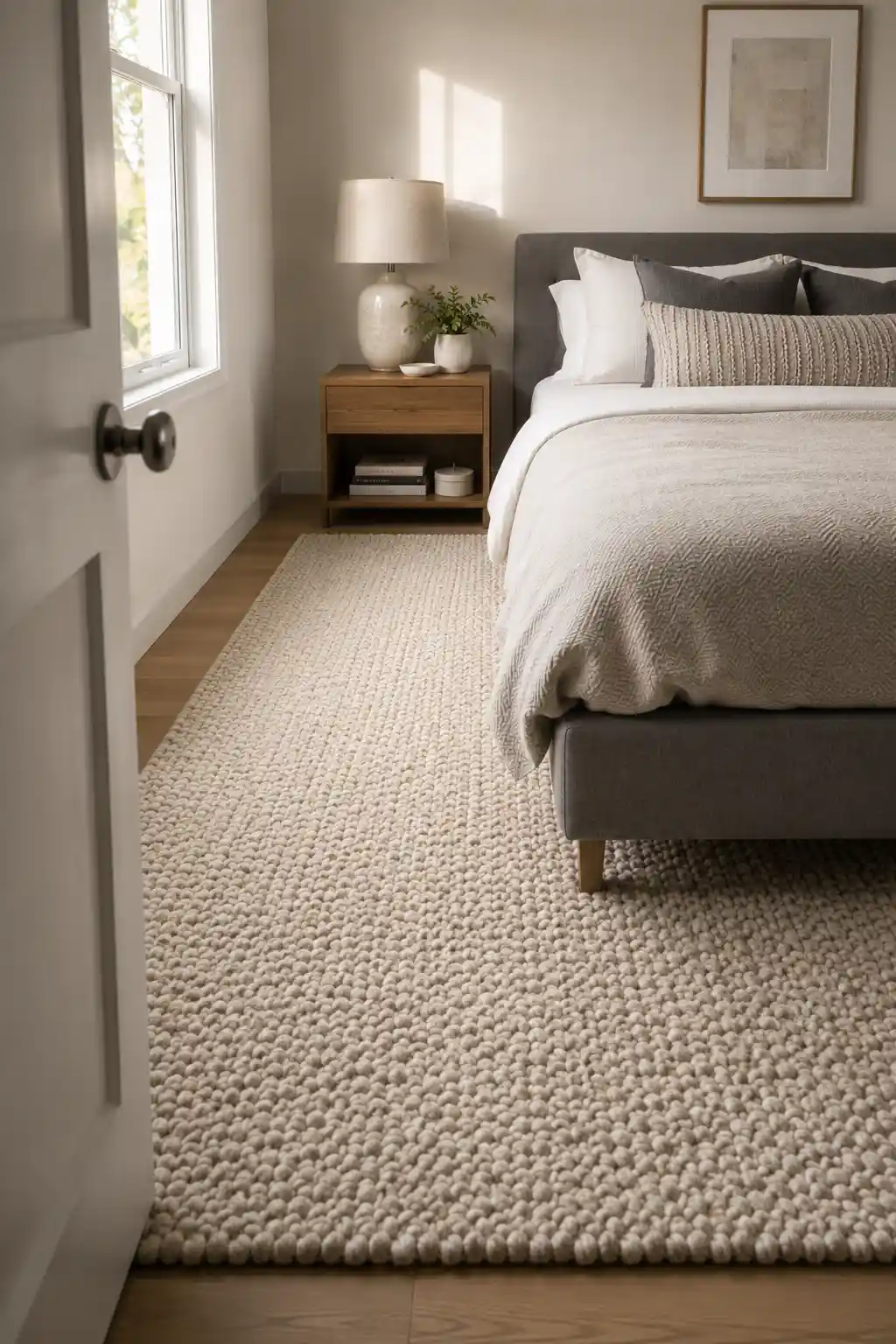
It may seem counterintuitive to put a large rug in a small room, but a tiny rug can actually make a space feel smaller and fragmented. A larger rug that extends well beyond the edges of the bed anchors the room and creates a cohesive foundation. By covering more of the floor with a single, light-colored texture, you trick the eye into perceiving the floor area as one continuous, expansive surface. Opt for a neutral tone with a subtle texture—like a low-pile wool or a jute blend—to add warmth and comfort while maintaining a clean, open feel.
Add a Floating Vanity or Desk
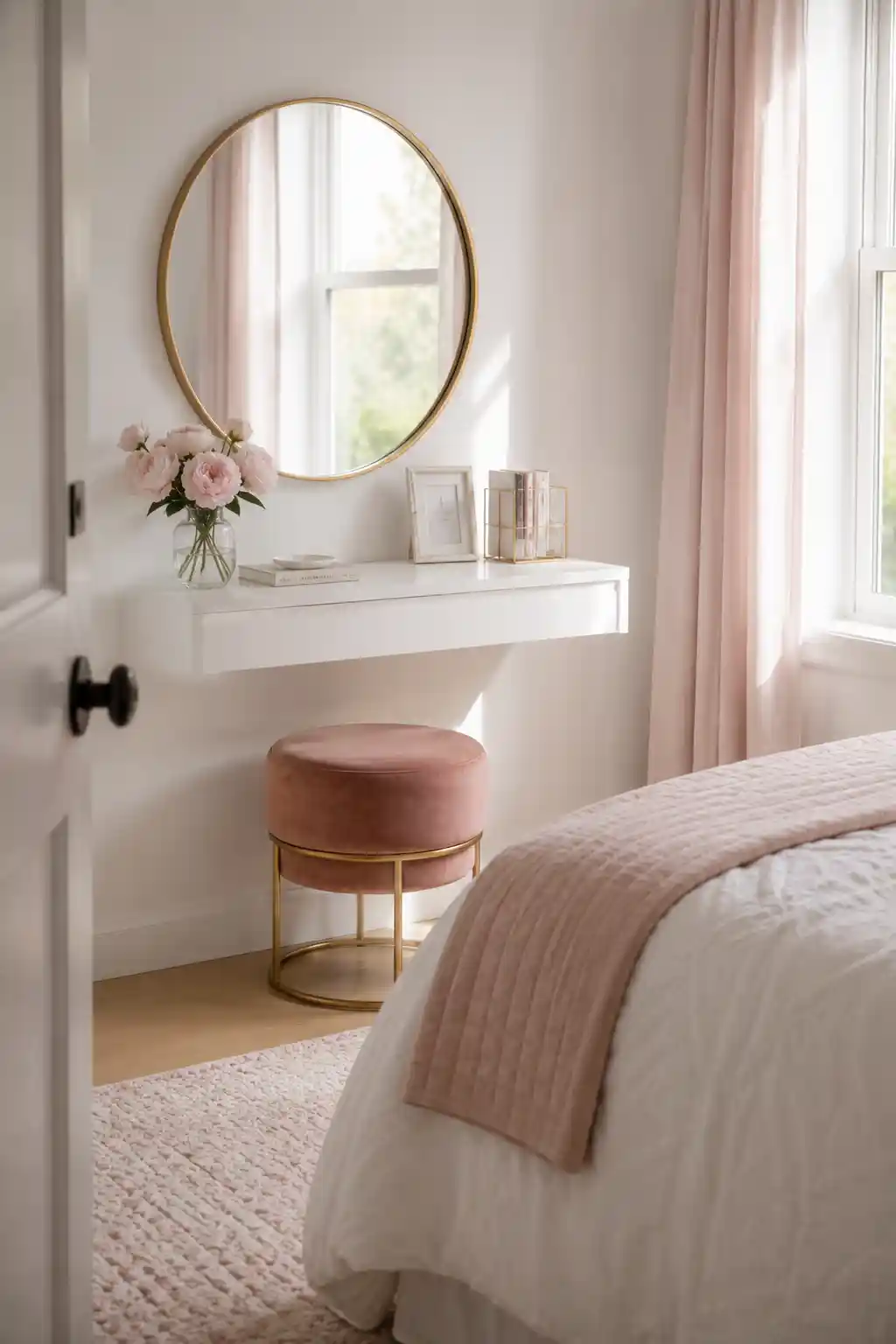
If you need a workspace or a makeup station in your bedroom, a floating vanity is the perfect solution. By eliminating the legs of a traditional desk, you maintain the flow of the room and keep the floor clear, which is essential for movement in tight quarters. Pair a slender floating shelf with a comfortable stool that can be tucked completely underneath when not in use. Adding a mirror above the desk not only serves a practical purpose but also helps bounce light around the room, further enhancing the feeling of space and brightness in your small bedroom.