
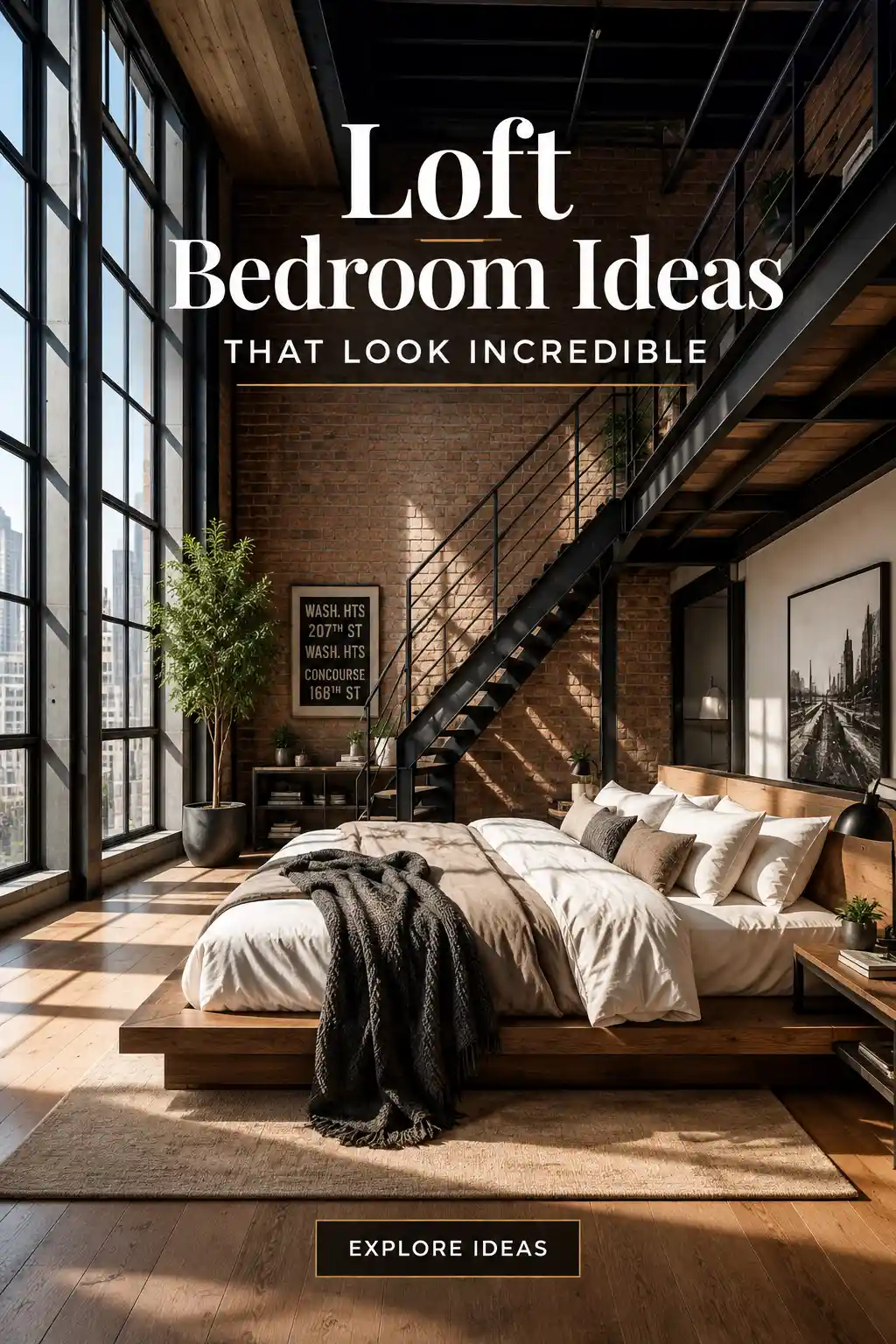
Transforming a loft space into a bedroom offers a unique opportunity to play with verticality and open-concept living. Whether you are working with a converted industrial warehouse or a cozy attic mezzanine, the goal is to balance the expansive feel of high ceilings with the intimacy required for a restful sleep sanctuary. From strategic lighting to clever zoning, these design approaches help maximize every square inch while maintaining a high-end, editorial aesthetic that feels both modern and inviting.
Industrial Rawness with Exposed Brick
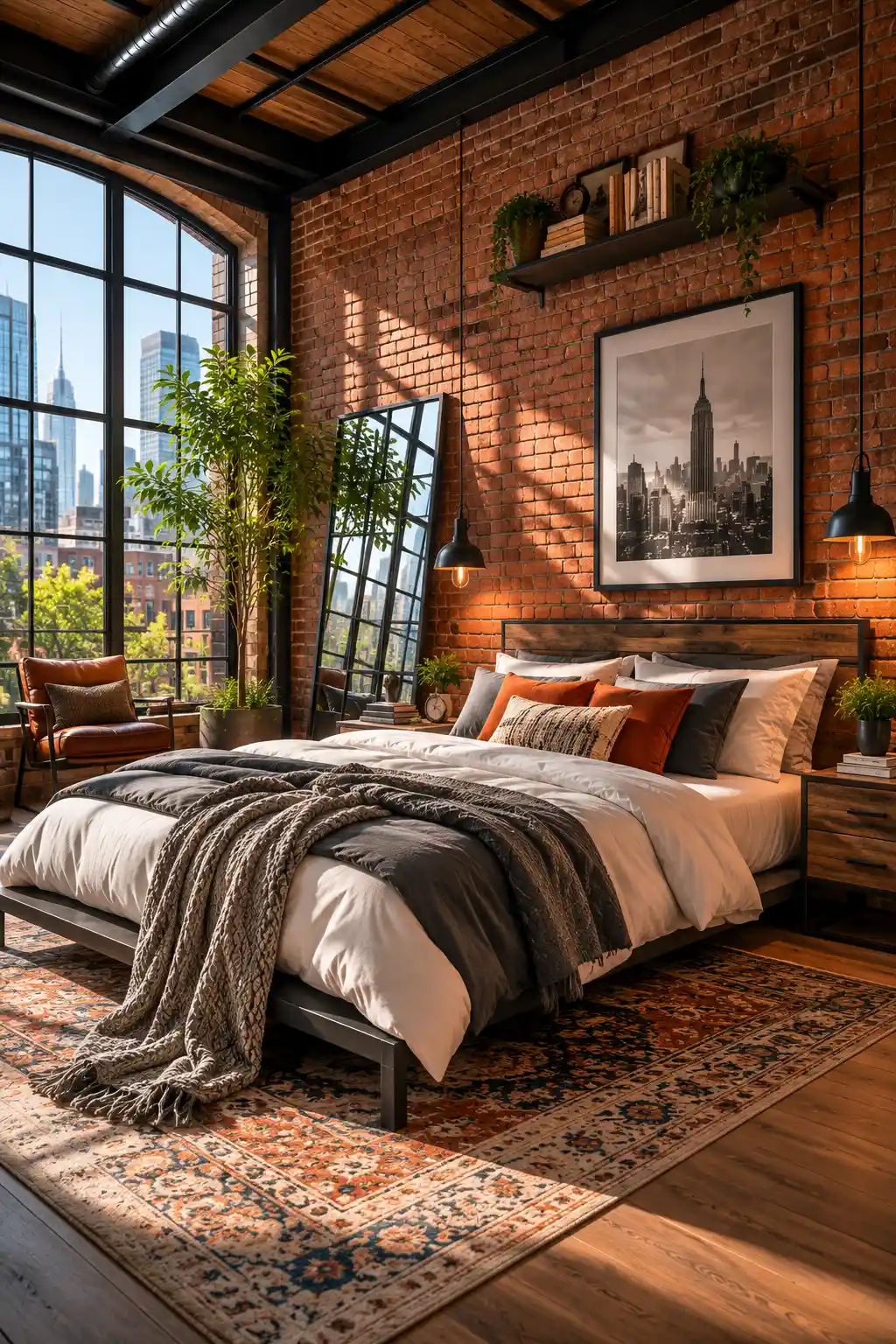
Embracing the industrial roots of a loft often begins with highlighting the architectural bones of the building. Exposed brick walls provide an instant sense of character and warmth, contrasting beautifully with the coolness of metal accents. To prevent the room from feeling too cold or sterile, layer in soft textures like chunky knit blankets and plush rugs. This balance between raw construction and cozy comfort creates a sophisticated urban retreat that feels grounded yet airy, making it a timeless choice for those who love the city aesthetic.
Scandinavian Minimalist Mezzanine
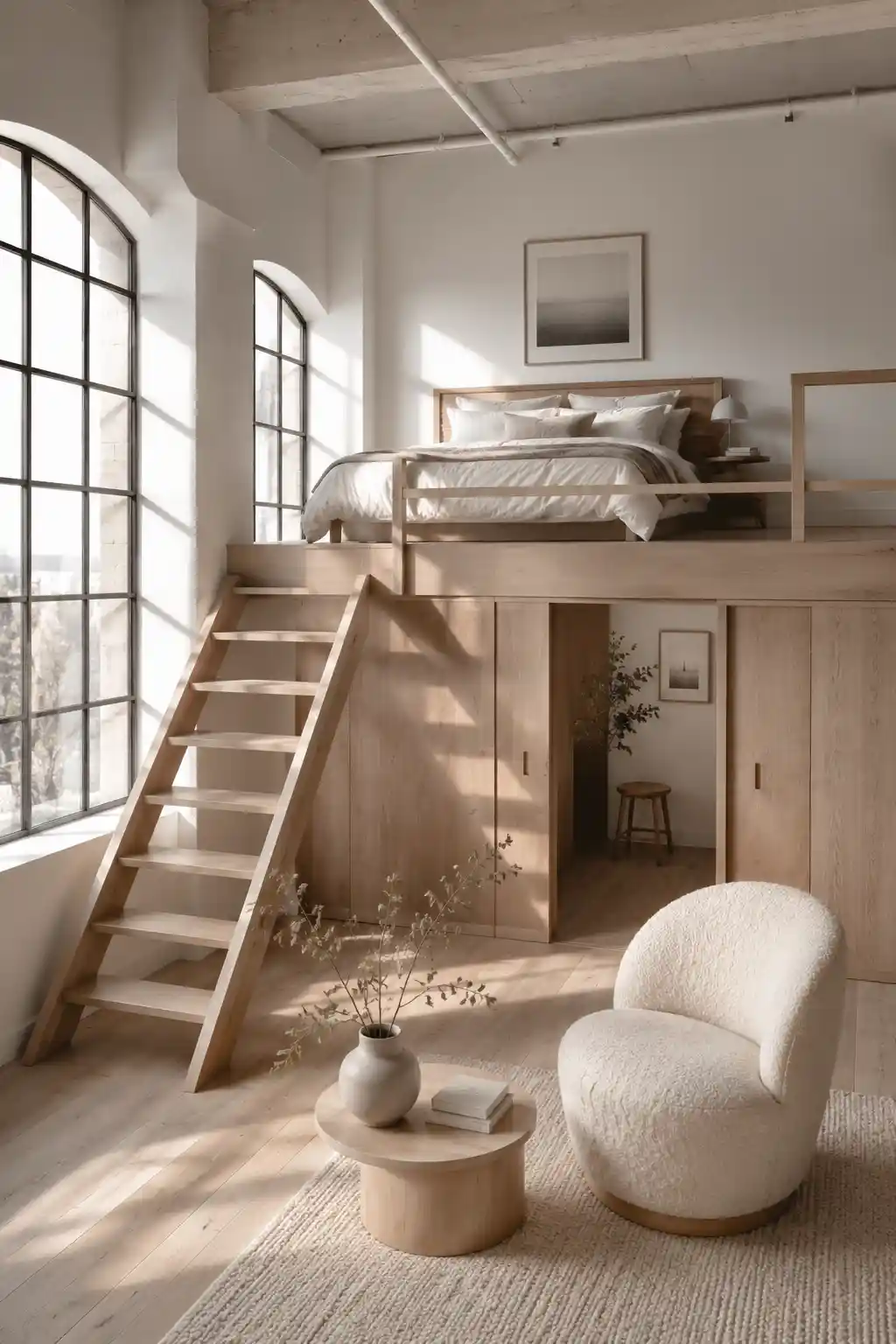
The Scandinavian approach to loft living is all about lightness and functionality. By utilizing a palette of whites, soft greys, and pale woods, you can make a high-ceilinged space feel incredibly serene and open. Focus on a ‘less is more’ philosophy, choosing a few high-quality pieces of furniture rather than overcrowding the area. The key to this look is the integration of organic materials and plenty of negative space, which allows the architecture to breathe and creates a calming environment perfect for winding down after a busy day.
Bohemian Jungle Retreat
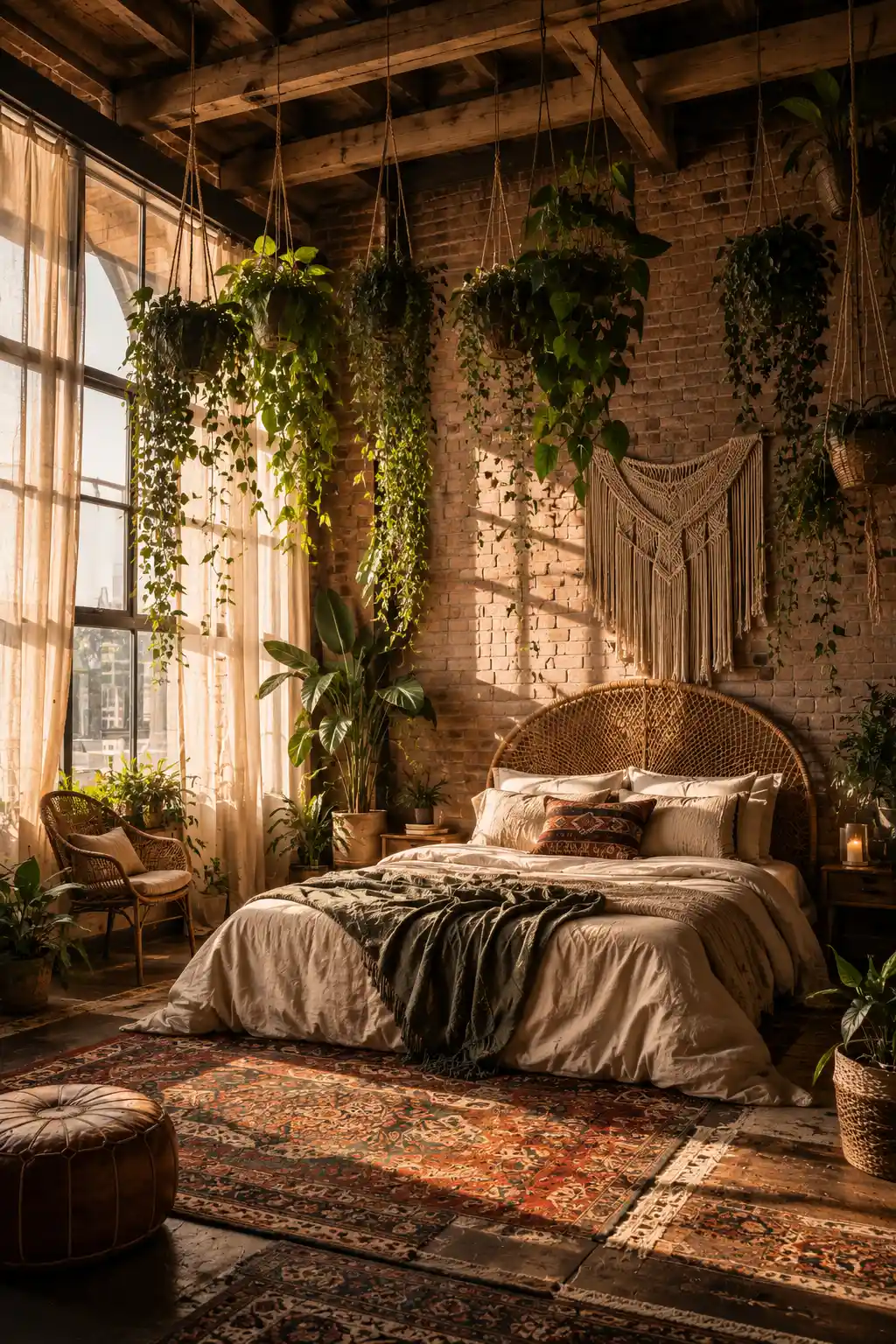
Bringing the outdoors inside is a fantastic way to soften the hard edges of a loft. A bohemian theme allows for a playful mix of patterns, textures, and vibrant greenery. Incorporating various heights of plant life, from trailing ivy on the rafters to large floor palms, creates a lush, immersive atmosphere. Use a variety of textiles, such as woven throws and mismatched pillows, to add depth and a lived-in feel. This approach turns a large, open space into a cozy sanctuary that feels personal, artistic, and deeply relaxing.
Moody Modern Charcoal Tones
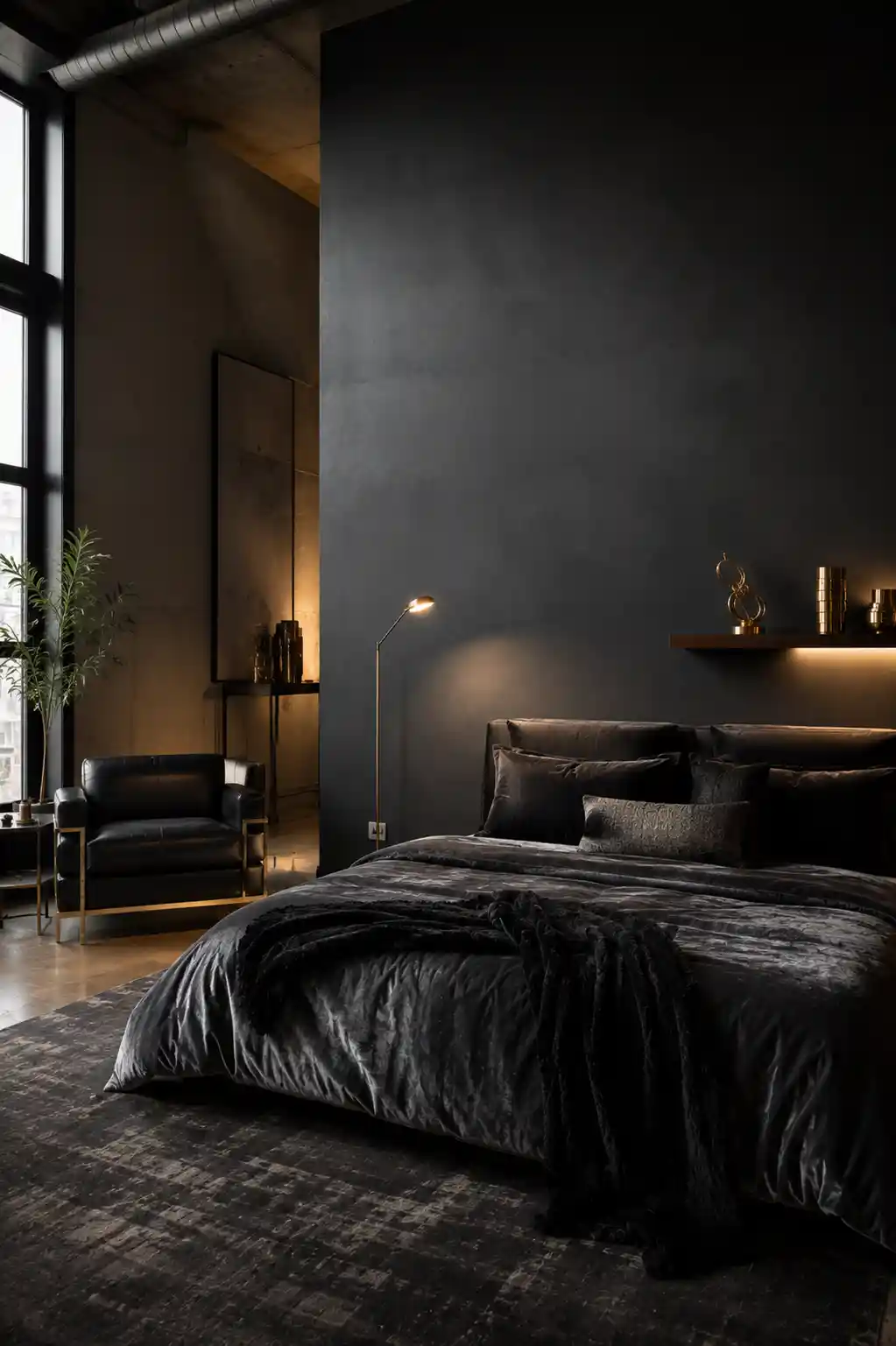
For those who prefer a more intimate and dramatic vibe, a moody color palette can transform a vast loft into a sophisticated cocoon. Using deep tones like charcoal, navy, or forest green on the walls helps to visually bring the high ceilings down, making the sleeping area feel more secure and private. To keep the room from feeling too dark, incorporate metallic accents in gold or brass and use layered lighting, such as warm bedside lamps and soft LED strips, to create a luxurious, hotel-like ambiance throughout the space.
Ethereal All-White Sanctuary
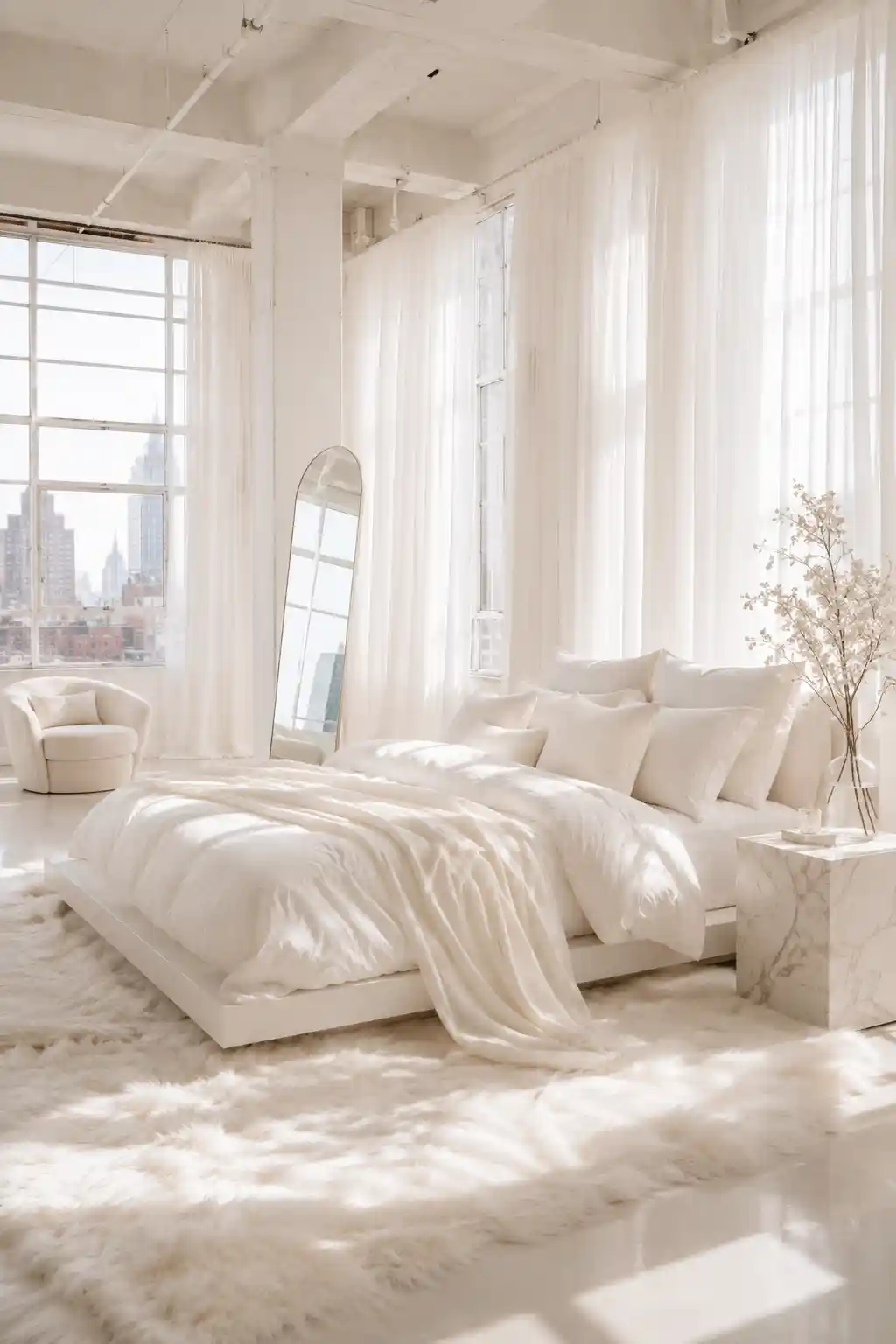
An all-white color scheme is a powerful tool for maximizing the sense of space and light in a loft. By layering different shades of white—from cream to alabaster—you can create visual interest without introducing jarring colors. The focus here is on texture; combine silk sheets with a chunky wool rug and sheer linen curtains to prevent the room from looking flat. This design creates a heavenly, weightless feeling that promotes peace and clarity, making the bedroom feel like a private cloud floating above the rest of the home.
Rustic Timber and Earth Tones
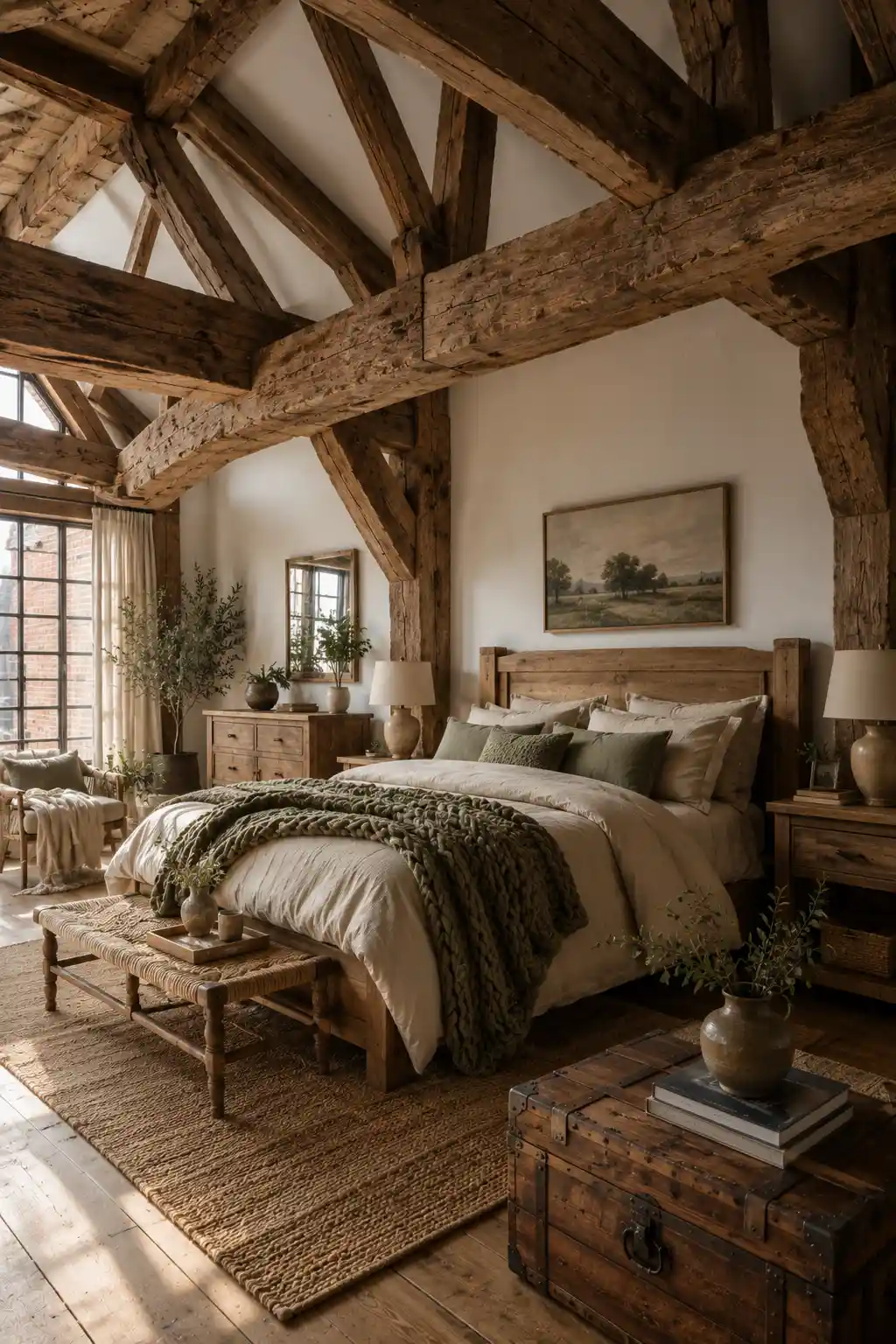
Rustic loft design celebrates the beauty of imperfection and natural materials. Highlighting heavy timber beams and using a palette of earthy greens and warm browns creates a grounded, organic atmosphere. To keep the look modern rather than dated, pair the heavy wood elements with clean-lined furniture and simple, high-quality linens. This style is particularly effective in lofts with a country or converted barn feel, as it emphasizes the connection to nature and provides a sense of enduring stability and warmth in the home.
Architectural Glass Partitioning
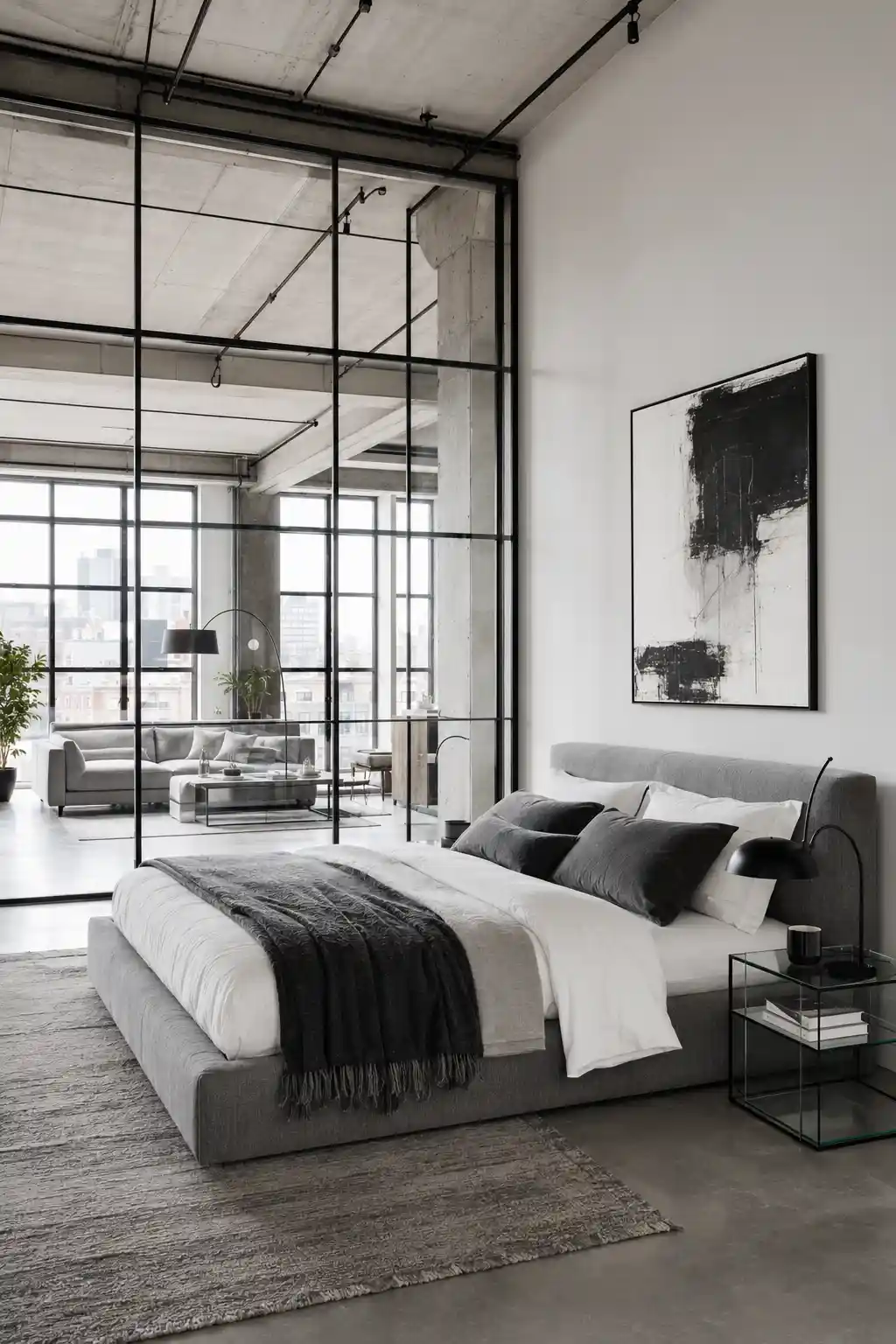
When you want the benefits of an open loft but need a bit more privacy and sound control, glass partitions are an elegant solution. Black-framed industrial glass walls maintain the visual flow of the space while physically zoning the bedroom. This allows natural light to penetrate deep into the room while creating a distinct boundary for the sleeping area. For added flexibility, you can install sheer curtains behind the glass, allowing you to switch between a fully open feel and a private sanctuary in seconds.
Custom Built-In Sleeping Nooks
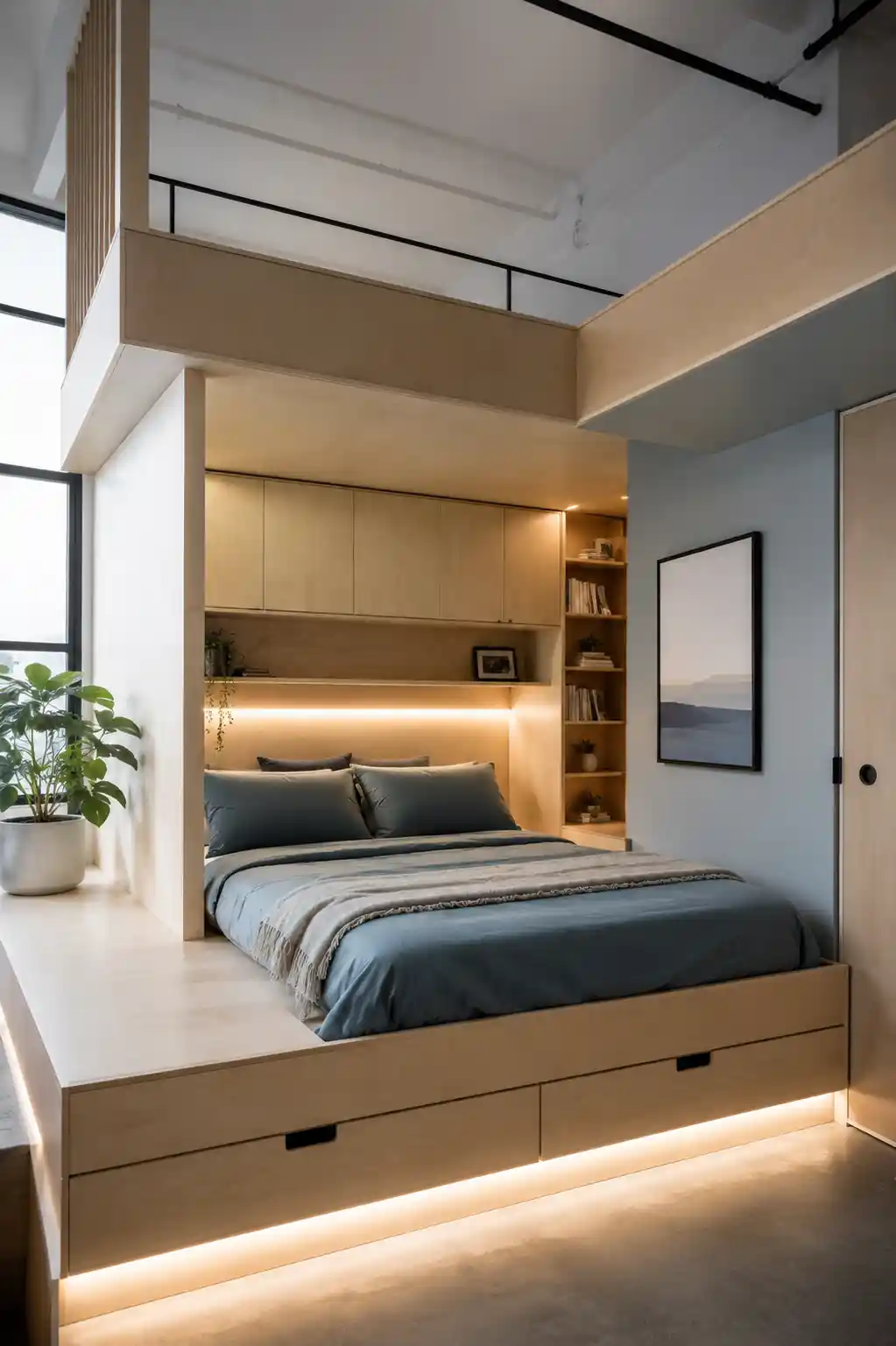
In smaller lofts or mezzanine levels, custom built-in furniture is the best way to maximize utility without sacrificing style. A raised platform bed with integrated storage drawers eliminates the need for bulky dressers, keeping the floor plan clean and open. By incorporating recessed shelving or a built-in headboard, you can create a cozy, nested feeling that makes the bed the undisputed focal point of the room. This architectural approach turns a simple sleeping area into a multifunctional piece of design that feels intentional and seamless.
Mid-Century Modern Loft Flair
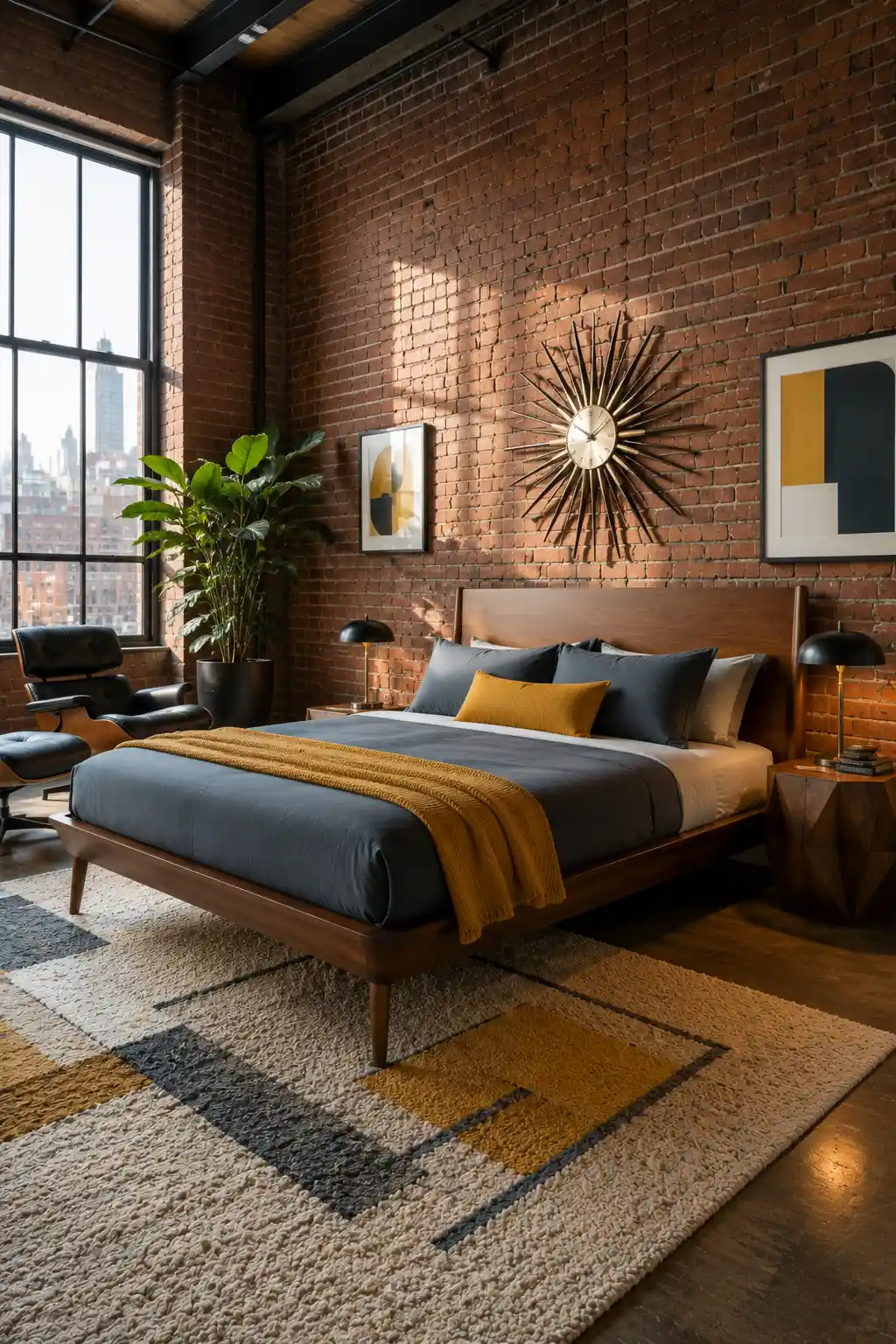
Mid-century modern design is a perfect match for the open layout of a loft, as its emphasis on clean lines and organic shapes complements high ceilings. Using a walnut wood bed frame with signature tapered legs adds a touch of vintage sophistication while keeping the room feeling light. Incorporate a few bold accent colors, like mustard yellow or teal, through pillows and art to bring energy to the space. This style bridges the gap between nostalgic charm and contemporary minimalism, resulting in a bedroom that is both timeless and trendy.
High-End Hotel Suite Opulence
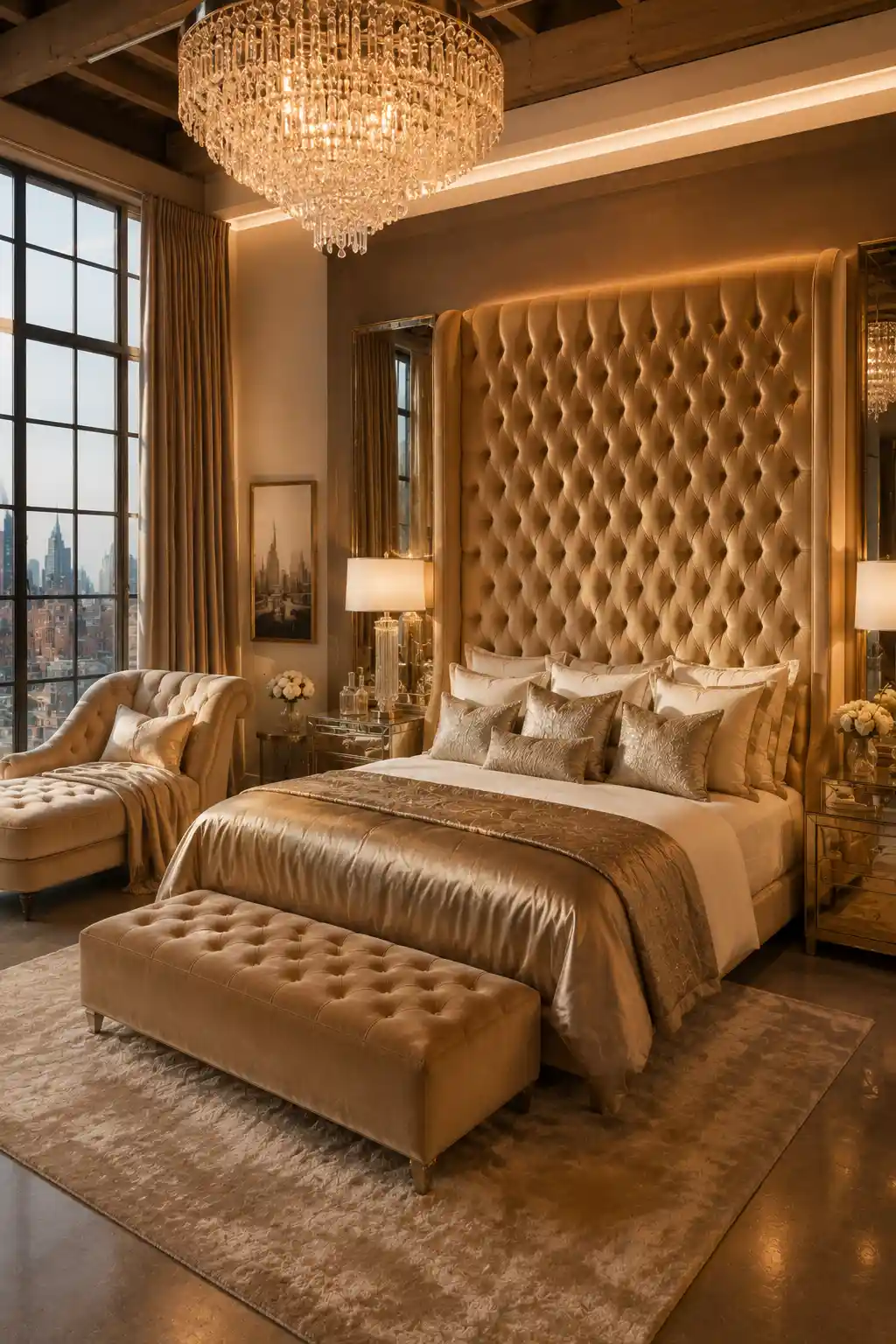
To achieve a luxury hotel feel in your loft, focus on opulence and symmetry. An oversized tufted headboard in a neutral metallic tone immediately elevates the room, while mirrored furniture adds a sense of glamour and reflects light throughout the open space. Layering high-thread-count linens with silk accents and a plush area rug under the bed creates a sensory experience of pure comfort. The goal is to create a space that feels indulgent and pampered, turning your daily routine into a five-star getaway without leaving your home.
Zen-Inspired Japanese Loft
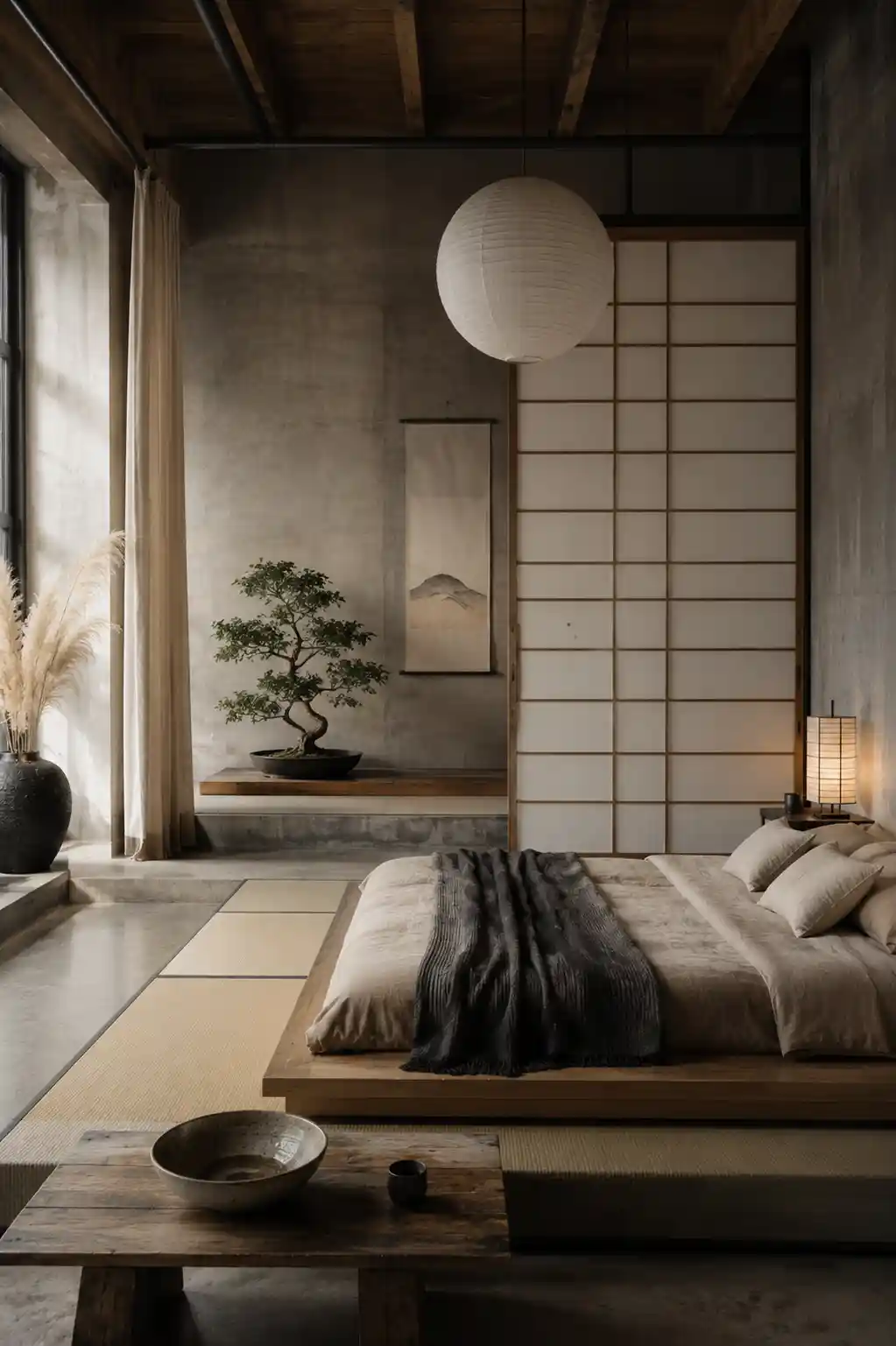
The Japandi style—a blend of Japanese minimalism and Scandinavian functionality—is ideal for creating a peaceful loft bedroom. By keeping the furniture extremely low to the ground, you emphasize the height of the ceilings and create a sense of groundedness. Use natural materials like bamboo and rice paper screens to introduce soft textures and a diffused quality of light. This design philosophy encourages a clutter-free environment, which reduces mental stress and turns the bedroom into a dedicated space for mindfulness, meditation, and deep rest.
Art Deco Glamour and Geometry
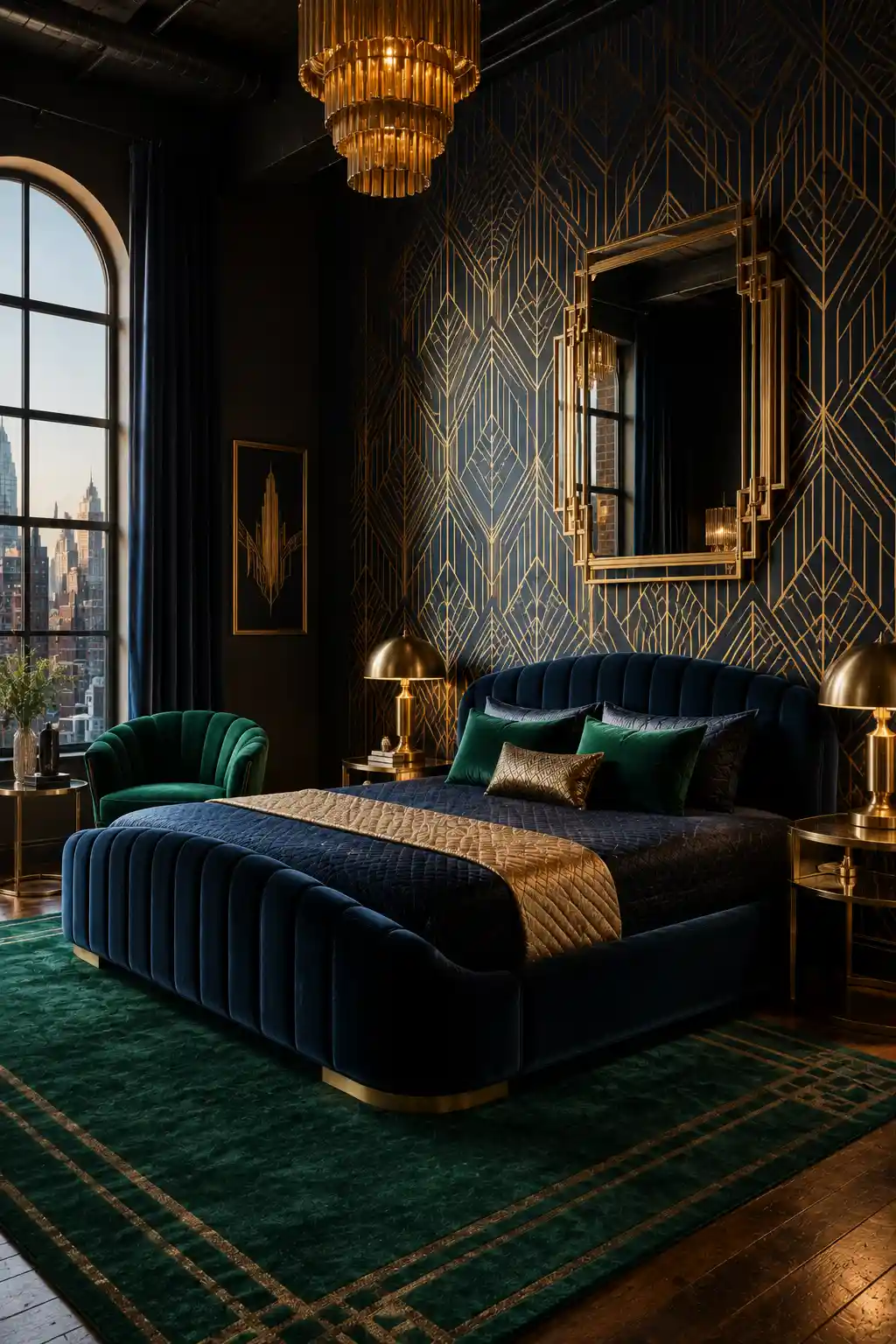
For a bold and expressive look, Art Deco elements can add a layer of high-fashion glamour to a loft. Focus on geometric shapes and rich, saturated colors like emerald and navy. A curved velvet bed frame acts as a sculptural piece of art, while brass accents provide the necessary shine to catch the light. This style thrives on contrast and luxury, making it a great choice for those who want their loft to feel like a sophisticated city penthouse. Balance the boldness with a few neutral elements to ensure the room remains restful.
Biophilic Greenery Sanctuary
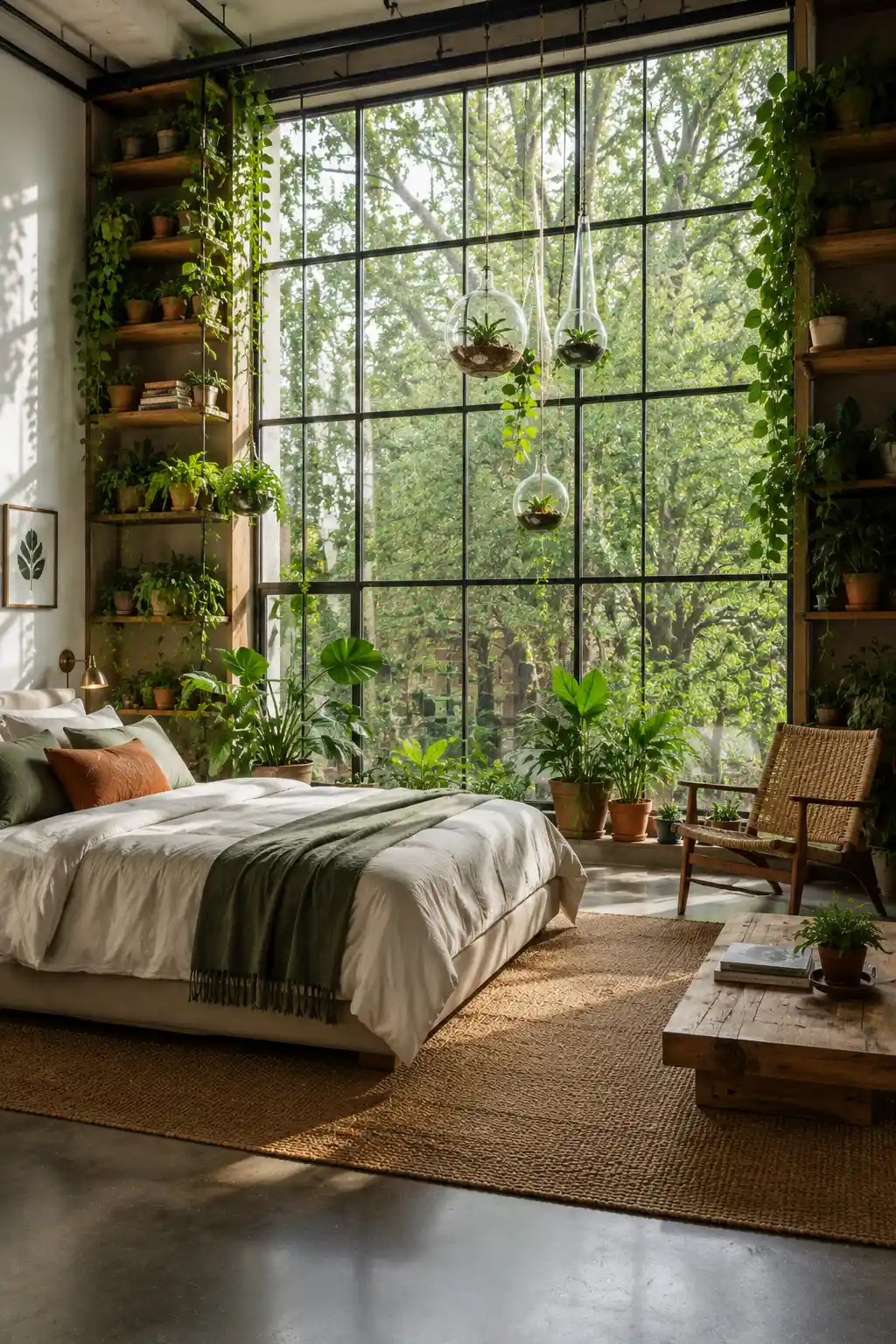
Biophilic design is more than just adding a few plants; it is about integrating nature into the very structure of the room. In a loft, this can be achieved by installing plant walls or using high shelving units that act as living dividers. Maximizing the use of natural light through large windows helps both the plants and the residents thrive. Using a color palette inspired by the forest and incorporating raw, tactile materials like jute and reclaimed wood creates a symbiotic relationship between the interior and the outdoors, fostering a deep sense of well-being.